I would like to share with you some quotes by Steve Biko himself. When I read Biko’s words, I realize that he was a true African leader who wanted good for all; he was really ahead of his time. I have also added, at the end, a documentary ‘The Return of Biko‘ by Jeff Ogola. Enjoy!
==========
“The greatest weapon in the hand of the oppressor is the mind of the oppressed.”Speech in Cape Town, 1971
“It is better to die for an idea that will live, than to live for an idea that will die.”
“At the time of his death, Biko had a wife and three children for which he left a letter that stated in one part: “I’ve devoted my life to see equality for blacks, and at the same time, I’ve denied the needs of my family. Please understand that I take these actions, not out of selfishness or arrogance, but to preserve a South Africa worth living in for blacks and whites.”
“The basic tenet of black consciousness is thatthe black man must reject all value systems that seek to make him a foreigner in the country of his birth and reduce his basic human dignity.”From Steve Biko’s evidence given at the SASO/BPC trial, 3 May 1976
“In time, we shall be in a position to bestow on South Africathe greatest possible gift – a more human face.“
‘I Write What I Like’ by Steve Biko
“Merely by describing yourself as black you have started on a road towards emancipation, you have committed yourself to fight against all forces that seek to use your blackness as a stamp that marks you out as a subservient being.”The Definition of Black Consciousness, I Write What I Like, 1978.
“Black man, you are on your own.”Slogan coined by Steve Biko for the South African Student’s Organization, SASO.
“We do not want to be reminded that it is we, the indigenous people, who are poor and exploited in the land of our birth. These are concepts which the Black Consciousness approach wishes to eradicate from the black man’s mind before our society is driven to chaos by irresponsible people from Coca-cola and hamburger cultural backgrounds.”The Quest for a True Humanity, I Write What I Like, 1978.
“It becomes more necessary to see the truth as it is if you realize thatthe only vehicle for change are these people who have lost their personality. The first step therefore is to make the black man come to himself; to pump back life into his empty shell; to infuse him with pride and dignity, to remind him of his complicity in the crime of allowing himself to be misused and therefore letting evil reign supreme in the country of his birth.“We Blacks, I Write What I Like, 1978.
Black Consciouness Movement flag
“You are either alive and proud or you are dead, and when you are dead, you can’t care anyway.”On Death, I Write What I Like, 1978
“Black Consciousness is an attitude of the mind and a way of life, the most positive call to emanate from the black world for a long time. Its essence is the realization by the black man of the need to rally together with his brothers around the cause of their oppression – the blackness of their skin – and to operate as a group to rid themselves of the shackles that bind them to perpetual servitude.“The Quest for a True Humanity, I Write What I Like, 1978.
Stephen (Steve) Bantu Biko was born on 18 December 1946 in Ginsberg township, in present-day Eastern Cape, in South Africa. Biko was the third of 4 children, and belonged to the Xhosa ethnic group. He was orphaned at the tender age of 4, after his father passing. As a child, he attended Brownlee Primary School and Charles Morgan Higher Primary School. He was sent to Lovedale High School in 1964, a prestigious boarding school in Alice, Eastern Cape, where his older brother Khaya had previously been studying. During the apartheid era, with no freedom of association protection for non-white South Africans, Biko would often get expelled from school for his political views. He was influenced by Frantz Fanon‘s and Aime Cesaire‘s works, and like Fanon, he first started as a medical doctor, before turning to politics.
Black Consciouness Movement flag
Steve Biko was not alone in forging the Black Consciousness Movement. He was nevertheless its most prominent leader, who with others, guided the movement of student discontent into a political force unprecedented in the history of South Africa. Can you imagine that: all alone they created a force that scared the apartheid regime, and started it on its end. Biko and his peers were responding to developments that emerged at the height of the hideous apartheid regime. This culminated with the Soweto uprising of 1976.
The Black Consciousness movement argued that blacks had to overcome the feelings of inferiority instilled into them by 300 years of domination, the “oppression within“, before they could deal with whites as equals. “It [BC] seeks to infuse the black community with a new-found pride in themselves, their efforts, their value systems, their culture, their religion and their outlook to life,” Biko explained in 1971.
Steve Biko was a very charismatic, tall, handsome, and articulate man. Once asked by a judge “Why do you call yourself black, when your skin is brown?” Biko replied “Why do you call yourself white, when you are actually pink?” – he bore himself with rare confidence that showed no hint of any “oppression within.” Remember his famous phrase “Black is Beautiful“, which was an inspiration to the civil rights movement in the USA, and to many other movements across the globe.
‘I Write What I Like’ by Steve Biko
In order for Black People to achieve their freedom being political and economical, Steve Biko believed that they should rally together; hence he said: “The realization by the Black man of the need to rally together with his brothers around the cause of their oppression – the blackness of their skin – and to operate as a group in order to rid themselves of the shackles that bind them to perpetual servitude.”
Biko understood that the system we are facing is not just a matter of laws and policies that suppresses us, he knew that the system seeks to undermine our thinking, ideas, values and beliefs, thus he said: “The most potent weapon in the hands of the oppressor is the mind of the oppressed.”
On 18 August 1977, Steve Biko was arrested at a police roadblock under the Terrorism Act No 83 of 1967 and interrogated by officers of the Port Elizabeth security police including Harold Snyman and Gideon Nieuwoudt. This interrogation took place in the Police Room 619 of the Sanlam Building in Port Elizabeth. The interrogation lasted twenty-two hours and included torture and beatings resulting in a coma. He suffered a major head injury while in police custody at the Walmer Police Station, in a suburb of Port Elizabeth, and was chained to a window grille for a day. On 11 September 1977, police loaded him in the back of a Land Rover, naked and restrained in manacles, and began the 1100 km drive to Pretoria to take him to a prison with hospital facilities. He died shortly after arrival at the Pretoria prison, on 12 September. The police claimed (and the apartheid government) his death was the result of an extended hunger strike, but an autopsy revealed multiple bruises and abrasions and that he ultimately succumbed to a brain hemorrhage from the massive injuries to the head, which many saw as strong evidence that he had been brutally clubbed by his captors.
‘Cry Freedom’ the movie on Steve Biko
Biko believed in the unity of the oppressed, he also knew we should constantly educate each other on what is happening in our society. Today, Biko’s views could be applied to almost every society where there are oppressed people, oppressed by unfair laws, unfair economics that favors extreme greed, forced into poverty, and dehumanization.
I watched the movie Cry Freedom which talked about Biko’s life, and also about his journalist friend Donald Woods who published the pictures of Biko’s beaten body after his death, thus showing to the entire world that he had been brutally murdered by the South African police. I do recommend it, the main actor is none other than Denzel Washington. To learn more about Biko, you could read his own book I Write What I Like, or the autobiographic book Biko by Donald Woods. In 1980 the singer Peter Gabriel had a world hit titled Biko, in which he sang: “You can blow out a candle/ But you can’t blow out a fire/ Once the flames begin to catch/ The wind will blow it higher.” Let us all, keep the fire of Steve Biko. Enjoy this rare video of Steve Biko talking!
The 2014 FIFA World Cup has brought a lot of surprises thus far: the sharp exit of the defending champions Spain, the exit of Italy and England, the advances of countries like Costa Rica, Belgium, Colombia, or Switzerland into the last round of 16. Above all, what has brought joy to me, a fellow African, is the advance of two African countries for the first time in the history of the FIFA World Cup into the last round of 16: namely, Nigeriaand Algeria(never mind that their names both finish with ‘geria‘). I am glad to see that my predictions of seeing Algeria move forward into the round of 16 came true, and agreed with Maradona’s. I am also thrilled to see Nigeria (whom I had thought were in a good group and had big chances of advancing) progress.
Flag of AlgeriaSchedule for 30 June 2014, FIFA World Cup Round of 16
Today, both countries will face France and Germany respectively (France – Nigeriaand Germany – Algeria). We wish them the very best as they carry the hopes of the entire continent up, and we hope to be elated by the strength of the Super Eagles of Nigeria, and the dexterity and perseverance of the Fennecs of Algeria. May the best teams win!
Tomorrow, the world will vibrate to the rhythm of samba, carnivals, and Copacabana… Yes tomorrow, the 2014 FIFA World Cup will start in Brazil, and 32 of the best soccer nations will compete at this great planetary event. This will one month of soccer, pure joy, fun, and above all talent; Talent expressed by players from around the globe. Legends will be made, new faces discovered, and dreams will take off.
Five African teams will grace the tournament: Algeria, Cameroon, Cote d’Ivoire, Ghana, and Nigeria.
We do hope that at least one African team will advance into the round of 16, and beyond. Here are some of the African stars to watch out for.
2014 FIFA World Cup groups
The Desert Foxes of Algeria are a good team to contend with, in another relatively easy group with Russia, South Korea, and Belgium. This should hopefully be an easy one. Maradona predicts Algeria “will cause a surprise”, while Rivaldo says “the possibilities of reaching the second round are abundant”.
Samuel Eto’o Fils, captain of Cameroon’s Indomitaple Lions, is incontestably one of the best forwards on the planet, and one of the greatest strikers of his generation. This might be his last world cup, and Cameroon’s first in 8 years. The Pichichi, and winner of several honors including African Ballon d’Or, will have to be ready to affront Brazil, the host country, Mexico, and Croatia in group A.
Didier Drogba, captain of Cote d’Ivoire’s Elephants, like Eto’o is also one of the best on the planet. After playing for Chelsea and winning countless trophies, he is now in Turkey with Galatasaray FC. This will probably be his last world cup. We wish him, and the Ivorian team the very best. They qualified with gusto to this competition. They have a relatively easy group with Colombia, Japan, and Greece. I will put my money on them moving to the next round in the tournament.
Armadillo, the 2014 FIFA World Cup mascot
Relying on their strength at the back, with captain and goalkeeper Vincent Enyeama, Nigeria will have to face Argentina, Bosnia & Herzegovina, and Iran. The Super Eagles have undergone a radical transformation under Stephen Keshi, which has made them win last year African Cup of Nations‘ tournament. With good discipline, they should be able to advance in the competition as well.
The Black Stars of Ghana were fancied to repeat, or even improve on, their run to the quarter-finals in 2010 in South Africa. That was until the draw was made and they were pitted with the world’s second and third-ranked sides. Asamoah Gyan and his teammates will play against Germany, Portugal, and the United States. This is the “group of death”. Ghana is a very good team; if they manage to make it to the round of 16, then they will quite far at the World Cup. We wish them the very best in the competition.
Brazil 2014 World Cup
Throughout the years, I have placed high hopes on African teams and have always been disappointed. I might once again be disappointed. However, this is planetary tournament, and the fun of it makes one root for any good team. For the world cup winner, I believe Brazil, the host country has home court advantage, as well as a pool of great talents. Let us hope that will be enough to make them winners. I also think Argentina of Lionel Messi will be a really great contender, as well as Spain, the last world cup winners. Overall, let the world cup start, with all the fun, and may the best team win!!!
I have to say a few things about the latest presidential elections in Malawi. Mrs. Joyce Banda lost the presidential elections in Malawi, coming out a distant third in the elections. She had become interim president of Malawi after her predecessor Bingu wa Mutharika died in office in 2012. Peter Mutharika, a former foreign minister and brother of the predecessor, won with 36.4% of the vote, Lazarus Chakwera came 2nd with 27.8%, while Mrs Banda came third with 20.2%. Peter Mutharika was sworn into office on Saturday. Mrs. Banda had denounced serious irregularities, and wanted the whole election to be annulled; the high court rejected her request to block the release of results. Mrs. Banda then issued a statement congratulating Mr. Mutharika on his “victory in a closely contested election” and said she was “leaving office a happy person.” We are all happy that Mrs. Banda is conceading victory, even though we are not quite sure how 36.4% vs. 20.2% can be called a “closely contested election.” She leaving office “peacefully” is to be saluted.
President Banda of Malawi kneeling to President Kikwete of Tanzania?
However, Mrs Banda lost my respect the day I saw a picture of her kneeling in front of President Jakaya Kikwete of Tanzania: she claimed that she was a custodian of Malawian culture which made Malawian women kneel down when greeting men as sign of respect. That was the day, she went down in history for me: how can the president of a country kneel in front of other presidents?Are they not equal?Is she saying her country is kneeling to all the others?Did she forget that Malawi’s population also comprises men, who, following her logic, should not be made to kneel to greet other men?Mrs Banda was named 71st most powerful woman on earth by Forbes magazine in 2012, and 47th in 2013! Even Mr. Kikwete could not boast such a ranking. Just because Malawi is small does not mean that its head-of-state should bow to neighboring countries’ presidents. Did she see Angela Merkel of Germany or Cristina Fernandez of Argentina kneel down to anybody? If not, men should be kneeling down at Angela’s feet as she is the strongest leader in the euro-zone.
Mrs Banda on the floor
I decided to give her the benefit of the doubt, and listen to those who said the picture had been ‘photoshopped’. That was until I saw other images of Mrs. Banda carrying buckets of water on her head, trying to “help” village women with their tasks of fetching water. Why not provide free water so that these women will never have to carry buckets of water on their heads again?Another image was of Mrs Banda seating on a floor mat in the dust at a village gathering, while her security guards (all men) were seating in chairs around her in three-piece suits. What in the world was that? Was that the position of the African woman? Was that “humility”? Somehow, I never heard of Queen Nzingha, or Ranavalona I, or Queen Amina, or Amanishakheto kneeling down to anybody. In fact, Queen Nzingha had one of her servant form a human bench so that she could sit in a position of equality with the Portuguese governor of Luanda (who had refused her a chair). So who was Mrs. Banda mimicking then?
President Banda carrying a bucket of water
As head-of-state, one should represent the nation, not seat in the dust and claim “humility”, or “closeness” to the people. The job requirement for president is not gender-specific: the job is not for a woman or a man, but for a leader. Once a leader, nobody cares how “humble” you are, but people care about you providing good healthcare, electricity, water, the minimum to lead a decent life, and negotiating at the table of nations in their best interest. Whoever is head-of-state, male or female, represents the sovereignty of the people of the country. I heard people saying “she is a quality African woman, well-trained by her culture.” Goodness gracious: she can stay a quality African woman in her house, but not as head-of-state, as she represents ALL the people of Malawi, not just women.
In all fairness, higher pressures are put on women when they become presidents. They are singled out, and their mistakes overblown… but as presidents, they should represent their ENTIRE constituency, and serve ALL fairly… not fetch water on their heads, or kneel down to greet men, or sit in the dust. This was (and still is) her time to teach, educate, and elevate women in the Malawian society. The time is for thinkers, and leaders, not paraders!
Mirambo, the Black Napoleon (Source: Les Africain, C.-A. Julien, Ed. J.A., Vol, 6, P. 137 (1977))Mirambo’s empire, Urambo (source: Les Africains, C.-A. Julien, Ed. J.A., Vol.6, P. 135 (1977))
Following up on the article on Mirambo, the Black Napoleon or the Black Bonaparte, I propose here a map of his zone of influence after conquest of different regions. I found a map of Mirambo‘s kingdom, the Nyamwezi empire, Urambo, in ‘Les Africains, C.-A. Julien, Editions J.A., Vol. 6, P. 135 (1977).’ You will find his capitals: Iseramagazi and Ikonongo, Tabora, Ujiji, Lake Victoria and Lake Tanganyika the northern and western borders respectively. Enjoy!
Today, I will talk about Mirambo, the man the explorer Henry Morton Stanley first referred to as a bandit, and later on as the Napoleon of Africa for his military prowess. Who was Mirambo?
Map of Tanzania
Born Mbula Mtelya, Mirambo is the man who revolutionized nineteenth century Tanzania, and made it hard for the Germans to conquer the region: he united the numerous Nyamwezi tribes, and gained control over Swahili-Arab trade routes. Mirambo was the leader of the Nyamwezi people on a 200,000 km2 territory south of Lake Nyanza (Lake Victoria), and east of Lake Tanganyika. He was not a vulgar chief of brigands as the Arab traders made Stanley believe in 1871, but his links to different families of Ntemi(kings) were a little bit blurred as many historians had mixed up dynastic and genealogical lineages, different in a matrilineal system such as that of the Nyamwezis. In 1858, Mirambo managed to inherit the chiefdom of Uyowa from his father, Kasanda, who was a renowned warrior; he was only 18 years old. In 1860, he joined two chiefdoms located 100 km west of Tabora, in the kingdom of Unyanyembe. He learned the Ngoni language (Ngoni people trace their origin to the Zulu people of KwaZulu Natal), as well as their military techniques. Later in 1860, he conquered the neighboring territory of Ulyankuru.
Map of Mirambo’s kingdom
He then moved his capital to Iseramagazi where he built a Boma, a fortified residence, with walls made up of dry bricks, retrenchments and hedges of euphorbia flowers. From his father and mother, he was a descendent of Mshimba (lion), the last ruler of the legendary kingdom of Usagali, and Mirambo was thus recreating the old empire. Thus in 1860, he created a new Nyamwezi state, the Urambo, from the name he had adopted for himself, ‘corpses‘ in kinyamwezi, Mirambo. From 1860 to 1870, he strengthened his authority along the banks of the river Gombe, i.e. on the road to Ujiji, thereby threatening to block the Arab commerce in the area. In 1871, he defeated the Arab traders at Tabora. The Sultan of Zanzibar, Barghash bin Said, retaliated by sending 3000 soldiers (2000 Swahili, and 1000 Balutchi). Mirambo’s resistance was one of the most fierce: Nyamwezi’s fighters would go as far as melting their copper bracelets to make bullets for their guns. A compromise was made to keep commerce flowing with the coast: caravans could pass after paying a tax (hongo) to Mirambo.
Illustration of the Ntemi of Urambo, Mirambo (from James William Buels Heroes of the Dark Continent (1890))
Every year, during the dry season, Mirambo would dispatch his ruga-ruga in all directions to continue the expansion of his territory. From 1876 to 1878, the territory was expanded to the north, up to the southern banks of Lake Victoria. From 1879 to 1881, expansion to the west toward Uvinza, for the control of Lake Tanganyika. The Muhambwe of King Ruhaga fell under Nyamwezi domination, and the Ruguru of King Ntare had to seek protection from Mirambo and agree to the presence of a ruga-ruga post on the eastern border of his kingdom. In 1879, there was also the expansion towards Burundi. His alliance with the Ngoni fell apart in the early 1880s. He was greatly hated by the Arabs who used to dominate the commerce in the region, and other neighboring kings who feared him, and the Europeans who saw in him as a powerful adversary. After 1881, the Arabs managed to convince the International African Association (AIA – Association Internationale Africaine), a European power created under King Leopold II’s initiative to inflict an embargo on arms and munitions on Mirambo (yup… European unions already inflicted embargo on arms back then). The goal of the AIA was to “open up central Africa to civilization.” At first Mirambo’s army succeeded in entering Burundi by surprise using a feud between the local king and his brother, but in 1884, his army was defeated by Burundi warriors (aided by Ngoni warriors). After his defeat in Burundi, and another defeat against the alliance of the Arabs and the Ntemiof Bukune, Mirambo’s troops were led by Mpandashalo as he was increasingly sick. Mirambo died on 2 December 1884.
Flag of Tanzania
Mirambo was a strong and ambitious leader. He expanded his authority and influence over a number of Nyamwezi chiefs. One of his challenges was to devise a political system that would allow him to consolidate his power, while ever expanding his territory. For that, he made sure not to change the structure of the Nyamwezi’s society: once in power, he would usually choose a successor from the same family. As long as the new chiefs pledged allegiance to him, they would be left to go about their political duties. The conquered chiefs had to provide troops at all times. His greatest strength was military. He used surprise as a tactical ploy. His capital was both a military and economic center. He had two residences: Iseramagazi from 1879, and Ikonongo from 1881.
Mirambo was actually a simple man, deeply rooted in his culture and traditions, but also very curious of the world. He was a man of order and progress, who will set the price of commodities in the capital’s markets, and regulated the consumption of alcohol in his kingdoms (he thought that alcohol weakened societies – just like Gungunyane), and meditated on the decadence of Africa in the 19th century. He was nostalgic of the magnificent ancient African capitals, and kingdoms. In essence, Mirambo had 4 faces: the traditional king, the warrior leader, the state builder, and the modernizer. To learn more, go to: ThinkAfricaPress.com, BlackPast.org, and Les Africains, Vol. 6, editions J.A, C.-A. Julien, P. 127-157, (1977).
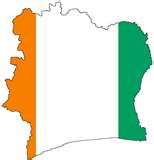
In memory of the victims of the post-electoral crisis of 2011 in Côte d’Ivoire, I selected this movie titled “A minute of silence from Côte d’Ivoire” for you. Everyone remembers those days in early April 2011, and in particular 11 April, when the planes of the ONUCI and the French army bombed all strategic sites in Abidjan including the military camps, the TV station, and the presidential palace, killing thousands, and dragging the president out like a mere bandit. Now, to have just one side of the post-electoral crisis present at the International Criminal Court (ICC) in The Hague is simply a farce! To have Laurent Gbagbo and Charles Blé Goudé at the Hague is a farce, when we all know that the violence grew out of a contentious presidential election between two parties. Where are Alassane Ouattara and Guillaume Soro? It is also sad to note that only Africans are being judged at The Hague, when crimes were also committed in Irak, Afghanistan, Syria, etc. This video is to all the victims of the post-electoral crisis of Côte d’Ivoire, to all those who stood for their convictions, to all those who believed in casting a peaceful vote, and to all those who believed in their beautiful country, peace to all.
Ahead of the 2014 FIFA World Cup in Brazil, I have decided to talk about Brazilians of African descent who have influenced their country in some way or fashion. I know this is rare, in a country where the plight of the Blacks is still very dire. Today, we will talk about Marina Silva.
Marina Silva (Jornalopcao.com)
If you were watching the Brazilian elections, you probably saw that it saw the election of the first woman president of Brazil Dilma Rousseff. Most importantly, the 2010 Brazilian presidential election not only saw a woman winning the election, but also a woman deciding the turn of the elections. I am talking about Marina Silva, a Black Brazilian from humble beginnings, who came from a family of rubber tappers, and only learned to read and write at the age of 16, and later became a senator, and then a minister in Brazil under President Lula. Hers is a story like none other! A beautiful story! A story of hardship and overcoming those hardships. Imagine that: a Black woman (in a country where Blacks almost have no say) who was once a maid, and lived by tapping rubber on plantations could become a senator, then a minister under president Lula, and then a presidential candidate, and more the balance maker of the 2010 Brazilian elections! Wow! Wow! Wow! Who said women had no voice? Who said Blacks had no say?
A Marina Silva’s campaign poster for the 2010 presidential election (marinasilvapresidente.ning.com)
Marina Silva grew up in Rio Branco the western province of Acre in Brazil in the Amazon rainforest. Silva helped create Acre’s first workers’ union, and led demonstrations with Chico Mendes to warn against deforestation and the outplacement of forest communities from their traditional locations. She has become an activist, a senator and a minister, entirely dedicated to securing the largest and richest ecosystem on earth: the Amazon rainforest. Her efforts, courage, and achievements are without comparison.
Hers was the defining moment of the 2010 Brazilian elections! Enjoy Marina Silva TEDX’s speech titled “Everyone can do it!” and feel the need to rise and unleash your inner genius!
I couldn’t help but notice the number of Africans or actors of African origin represented at this year’s Academy Awards. So I decided to give you an overview, before Sunday March 2nd. I think this is the most we have ever had Africans nominated in such key roles, and who could possibly win key awards.
In the ‘Best Actress in a Supporting Role’ category comes the stunning Kenyan Lupita Nyong’o nominated for her portrayal of Patsey in 12 Years a Slave. A Yale graduate, and a Kenyan actress (in the Kenyan series Shuga) and producer (of a documentary on the albino population in Kenya), 12 Years a Slave is Lupita’s first American film debut, and has already garnered her a Golden Globe and BAFTA nominations. Lupita won the Screen Actors Guild and Critics’ Choice Award for Best Actress in a Supporting Role for this performance. Imagine my joy when I will see a pure African beauty walk the red carpet on Sunday! No matter the outcome, I am just so proud of this gorgeous sister who will face fierce competition from Sally Hawkins (Blue Jasmine), Jennifer Lawrence (American Hustle), Julia Roberts (August: Osage County), and June Squibb (Nebraska) on Sunday. I must admit that she just reminds of a pure Luo (or Massai) beauty when she wears her hair really short!
Africa
Other Africans represented are Egyptians director Jehane Noujaim and producer Karim Amer for the documentaryThe Squareon the manifestations at Tahrir Square. This film was released on Netflix, thereby giving Netflix its first Oscar nomination.
I am just extremely proud of our brothers and sisters who are raising the African flag high at this year’s academy awards. Our prayers go with them, and we wish them the very best. We, Africans, have actors and actresses worthy of the greatest cinematographic accolade in the world!!!