
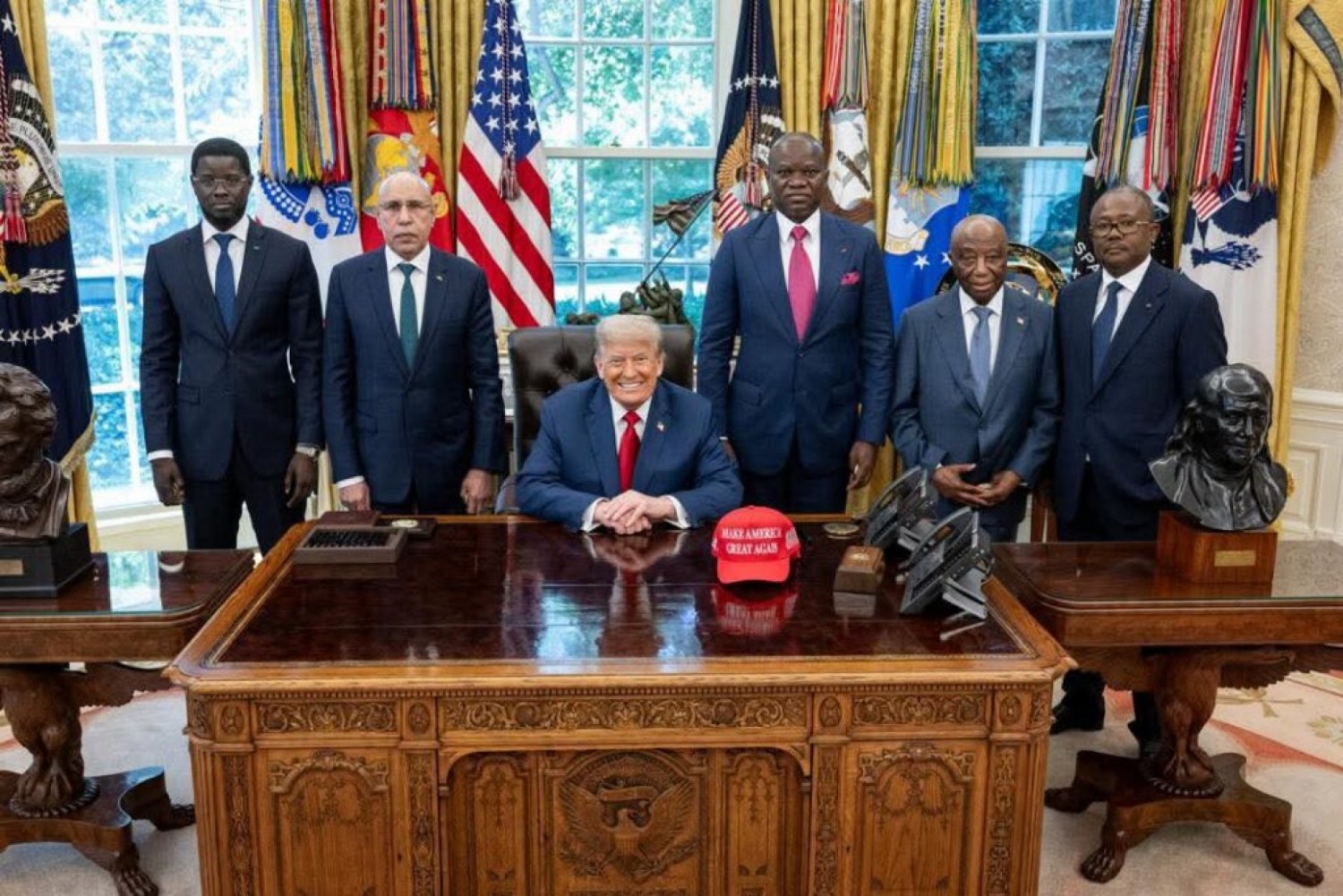
In July 2025, the presidents of 5 “unusual” African countries were invited to the White House to dine with the President of the United States at the US-Africa Summit. “Unusual” because these were not the normal countries used to being invited to the White House, they were less common choices : Senegal, Gabon, Liberia, Guinea-Bissau, and Mauritania. The choice of the countries was so surprising that even the American president was astonished that the Liberian president spoke such good English without a translator… seemingly forgetting that Liberia is the first African country established by free slaves from America with the capital Monrovia, named after American president James Monroe. In fact, Liberia was the only English-speaking country invited to the summit. Compared to other African heavyweights like Nigeria, Egypt or South Africa, these countries have rather small populations and economies. And in all honesty, how many Americans know that the capital of Mauritania is Nouakchott or can even say it? or that of Gabon is Libreville? Many speculated that the visit had something to do with trade; after all, these countries had, until then, very little trade with the US. So what is it? It is said that Senegal, Liberia, and Mauritania were seen as relatively stable and reform-oriented, making them attractive for: aviation and energy deals, private investment, and infrastructure partnerships.There is nothing wrong that we know of with those deals or development as a whole… but we need to understand why.
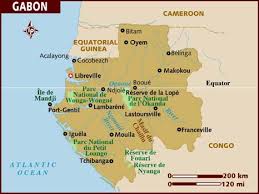
We will focus first on the only country invited to the summit which was not part of West Africa, Gabon. With a population a little over 2.5 million inhabitants, one could wonder what American interests in this little country of Central Africa look like, if not oil? After all, it is no secret that for many years, Gabon was the cash cow of France because of its large oil reserves and strong connections with the defunct Elf leadership. Gabon is also rich in uranium and manganese, and has one of the world’s largest iron deposit. Gabon has significant iron ore reserves, particularly in the Belinga area, which is estimated to hold about one billion tons of iron ore. Additionally, the Baniaka Iron Ore Project has an estimated reserve of 758 million tons with a grade of 36.7% iron.
To the visible answers. A few months ago, the president of Gabon Brice Clotaire Oligui Nguema, a former military man who came to power via a coup d’etat and whom the Western media have never called Junta but instead often acclaimed (Gabon and the Double Standards of the International Community), unveiled several infrastructure deals including the Belinga–Boué–Mayumba railway (901 km), a new deep-water port, the Boué hydroelectric dam, and a push for local processing of mineral resources. Gabon is an important oil producer in the region and its government is pursuing large-scale projects including railways, ports, and energy infrastructures. There were also visits with Exxon Mobil and Boeing.
The not-so visible answers. Gabon is trying to diversify away from oil. Introducing the Iboga plant, which many believe to be the plant much talked about in the Black Panther movie. The Iboga plant from which ibogaine is extracted is a psychoactive plant central to the Bwiti spiritual traditions of Gabon. It is no secret that the West is currently facing an opioid crisis, and several pharmaceutical companies have already been using iboga on the low, without giving much rights to the country of Gabon. The Iboga primarily grows in Gabon, and the country is attempting to transform the plant into a regulated, economically, valuable, and internationally recognized medicinal resource. The government’s strategy is based on 3 pillars: regulate and control cultivation, partner with pharmaceutical companies and position Gabon as the global hub, as it rightfully is, for legal ibogaine production. This is similar to the how Morocco positioned itself as the world’s leading exporter of medical cannabis. The task is not small, given that these same Western firms have already been manufacturing (without openly labeling) drugs with it. Let us pray we do not have a repeat of what happened to teff, the national grain of Ethiopia – The Need for Countries to Protect What is Theirs : How a Dutch Patented the Ethiopian National Grain. This looks like a part of The New Scramble for Africa: The US does not want to let China and Russia supplant its influence in Africa. Moreover, everything needs to be built in Africa, so to anyone this should be like golden opportunity. Everyone wants a piece of Africa! And you… why do you think Gabon was invited to this summit?


