The Ghana Empire: Great and Magnificent Ancient Kingdom of Africa

Map of the Ghana Empire ca 300 -1200

Let me tell you about one of the greatest Ancient kingdoms of Africa, the Ghana Empire, a place known to its northern neighbors as the “Land of Gold“. No, I am not talking about the modern-day country of Ghana, which used to be called the Gold Coast and was named in honor of the great long-gone Ghana Empire by its first president, Kwame Nkrumah.  

The Ghana Empire predates the modern-day country of Ghana by almost a millennium; it went from ca 300 to 1100 AD. It was a West African empire located in the area of present-day southeastern Mauritania, and western Mali. As you can see today, the Ghana Empire was actually located about 400 miles northwest of current Ghana, and was significantly bigger.

Folio from the Tarikh al-Fattash at the Mamma Haidara Library (Timbuktu, Mali) where Mahmud Kati chronicles the early years of the Ghana Empire

Its real name was Wagadou, but is known mostly by the title given to its ruler, the Ghana. It is not clear when the Ghana Empire ruling dynasty started, but explorer Muḥammad ibn Mūsā al-Khwārizmī gave us the first written records in 830, while in the 11th century the Cordoban scholar Al-Bakri traveled to the region and gave a detailed description of the kingdom. According to contemporary accounts such as those by al-Yakqubi (872  AD) al-Masudi (c. 944  AD), Ibn Hawqal (c. 977  AD), al-Biruni (c. 1036  AD), as well as Abu-Ubayd al-Bakri, the empire was a purely African kingdom, founded, and ruled by Africans, Soninke people. Ghana was said to be a sophisticated state with advanced methods of administration and taxation, large armies, large population, and lots of gold.
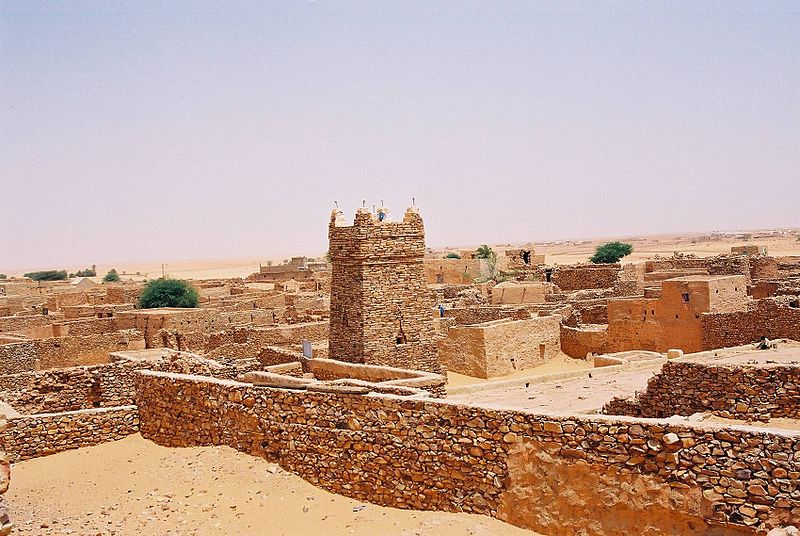
Chinguetti, a town which was part of the Ghana Empire (Wikipedia)

Its capital was Koumbi-Saleh, on the edge of the Sahara desert (when the Sahara was not as arid as today). According to the description of the town left by Al-Bakri in 1067/1068, the capital was actually two cities 10 kilometres (6 miles) apart from each other but, “between these two towns are continuous habitations“, so that they might be said to have merged into one. The king’s residence, known as El-Ghaba, was the major part of the city. It was protected by a stone wall; very similar to the Tata of Sikasso: an African Fortifying Wall. Like in many African states today, the city contained a sacred grove of trees where the priests lived. The king’s palace was the grandest structure in the city, surrounded by “domed buildings.” The other section of the city, which was the primary business district, was surrounded by wells with fresh water, where vegetables were grown. It was inhabited almost entirely by Muslims along with twelve mosques. During the time span of the Ghana Empire, Islam was introduced to the area. The king of the Soninke people who founded Ghana never fully embraced Islam, but had very good relations with Muslims. 

Aerial view of Oualata which was north west of Koumbi Saleh, and part of the Ghana empire. Ruins of the ancient city can be seen (Wikipedia)

The economy of the empire was based around gold, salt, copper, and other goods. The imports included textiles, ornaments, and other materials. Many of the handcrafted leather goods found in old Morocco also had their origins in the Ghana empire. As expected, the main center of trade was Koumbi Saleh. The introduction of the camel to the region around the 3rd century AD opened the way to increased and more efficient trans-Saharan trade. Today, Koumbi Saleh is being excavated, and many cities that were part of the Ghana Empire, such as Ouadane, Chinguetti,or Oualata, are also on the UNESCO World Heritage List.

Ghana Empire and its Trans-Saharan trade routes (Wikipedia)

The empire’s wealth and power made for a rich and stable economy which lasted several centuries.  The Ghana Empire was very populated and had many people from outside the kingdom travel through in order to trade with those from the Kingdom of Ghana or to trade with other outsiders, making Ghana a focal point trading center. The Empire of Ghana had many trade routes, and a very well-trained military to protect them, which encouraged further safe commerce and exchanges in the region. Ghana was essentially a melting pot, spreading ideas, culture, technology and other aspects of what makes different societies what they were.

The Moorish nobleman who visited the empire in the 11th century, Al-Bakri, wrote of the king: “He sits in audience or to hear grievances against officials in a domed pavilion around which stand ten horses covered with gold-embroidered materials. Behind the king stand ten pages holding shields and swords decorated with gold, and on his right are the sons of the kings of his country wearing splendid garments and their hair plaited with gold. The governor of the city sits on the ground before the king and around him are ministers seated likewise. At the door of the pavilion are dogs of excellent pedigree that hardly ever leave the place where the king is, guarding him. Around their necks they wear collars of gold and silver studded with a number of balls of the same metals.

Ghana appears to have had a central core region and was surrounded by vassal states. One of the earliest sources to describe Ghana, Al-Ya’qubi, writing in 889/90 (276 AH) says that “under his authority are a number of kings” which included Sama and ‘Am and so extended at least to the Niger valley. These “kings” were presumably the rulers of the territorial units often called kafu in Mandinka.

Ouadane old town – the city was part of the Ghana Empire (Wikipedia)

Al-Bakri mentioned that the king had officials (mazalim) who surrounded his throne when he gave justice, and these included the sons of the “kings of his country” which are presumably the same kings that al-Ya’qubi mentioned in his account nearly two hundred years earlier. Al-Bakri‘s detailed geography of the region shows that in his day, or 1067/1068, Ghana was surrounded by independent kingdoms, and Sila, one of them located on the Senegal River, was “almost a match for the king of Ghana.” Sama is the only such entity mentioned as a province, as it was in al-Ya’qubi’s day.
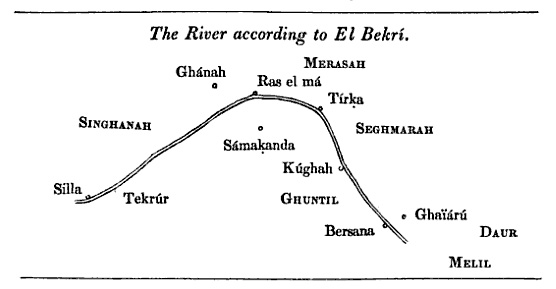
The Senegal River according to Al-Bakri, which shows some sites of the Ghana Empire

 Eventually the Ghana Empire’s power declined. It was attacked by other kingdoms in need of their resources. The Ghana Empire eventually merged with the Mali Empire, which became one of the largest empires in African history and one of the richest as well.

To find out more, please check out these articles on BBC, and the Ghana Empire (Ancient History Encyclopedia), and the books General History of Africa, Vol. 3, Africa from the Seventh to the Eleventh Century, ed. El-Fasi, M., UNESCO (1998), Haut-Sénégal-Niger: Le Pays, les Peuples, les Langues; l’Histoire; les Civilizations. by Delafosse, Maurice (1912) in 3 Volumes, Paris, and the article The question of GhanaJournal of the International African Institute, Mauny R., 24 (3): 200–213.

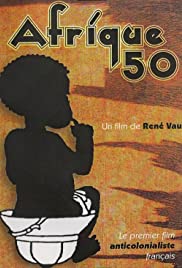
“Afrique 50” The First French Anti-Colonization Documentary

Afrique 50 by Rene Vautier

I recently watched a documentary made by René Vautier, Afrique 50. This documentary is the first French anti-colonization movie ever made.  Vautier was assigned to French West Africa to make an educational film, but upon arrival he witnessed the appalling conditions of the Africans and the crimes committed against them by the French troops. The result was Afrique 50. For making this documentary, he was thrown in jail, and the documentary was banned for 40 years.

I loved Afrique 50 because it showed West Africa in 1950, a different side of it, and the African society with some of its strong culture and identity. It was a society of togetherness. Vautier tried to show different aspects of a normal day: artisans, farmers, weavers, women cooking, a hairdressing for both boys and girls, men called for prayers, fishermen, boat makers, herders, just normal life under the African sun.

He also showed colonization and its nefarious effects on African cultures and the fact that colonization did not help, but rather empoverished the Africans. He says, “a school is opened when the big companies need an accountant” (On ouvre une école quand les grosses companies ont besoin de comptables), or “a doctor is sent, when the big colonial companies risk running out of manpower” (on envoie un médécin quand les grosses compagnies coloniales risquent de manquer de main d’oeuvre).

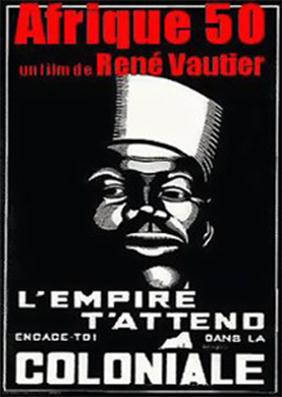
Afrique 50 by Rene Vautier – The Empire Awaits you, Join the colonial

In his documentary, Vautier shows how the French destroyed entire villages, killed people, women, kids, pregnant women, etc, because the people were not able to bring in a quota of bananas, or cocoa, or rubber, i.e. to pay the tax which was the penny sum of 3700F.

Vautier says, “colonization is the reign of the vultures,” and these vultures are the big multinationals. He cites, Société Commerciale de l’Ouest Africain (650 millions F of profit in 1949), Compagnie française de l’Afrique occidentale (actuelle CFAO) (365 millions of profit in 1949), Dabom (180 millions of profit), L’Africaine Française, le Niger Français, La Compagnie Française de la Côte d’Ivoire, Unilever who made 11 billions 500 millions of profit in a year / 40 millions a day. Not much has changed today!

It also shows why Africa always looks underdeveloped. Isn’t it surprising to notice that today, lots of large-scale agriculture is not industrialized in sub-saharan Africa? Well because it costs less to these multinationals to have Africans labor fields with hoes, machetes, and more, than buying and maintaining turbines, or tractors. This is cheap labor!

Vautier says “A machine will do the job of 20 Blacks of course, but 20 blacks for 50F a day cost less to the company than the machine, so let’s use the Black” (Une machine ferait le travail de 20 noirs bien sûr, mais 20 noirs à 50F par jour reviennent moins cher qu’une machine, alors usons le noir).

Banana plantation in Cameroon

To this day, 70 years later, not much has changed in the rubber plantations of Liberia, or the cocoa plantations of Côte d’Ivoire, or the banana plantations of Cameroon, or in the forests of Gabon.

Africans are still asking for their lands which were taken by the multinationals (Did You Know about the 999-year Lease granted to Europeans in Kenya ?), and to this day the reply is always brutal and violent; when in the past they had the French administrator and police burn down villages, today they have their puppet governments installed everywhere on the continent crushing the people.

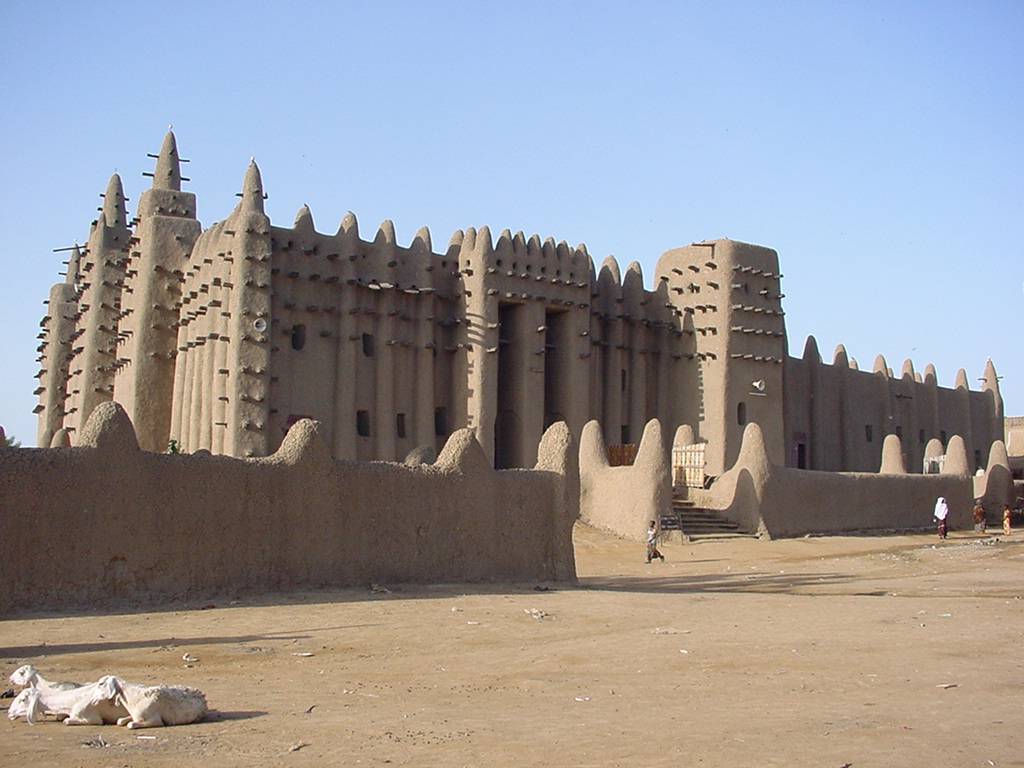
La grande mosquee de Djenne (Mali - heritage du grand empire du Mali)
La grande mosquee de Djenne (Mali – heritage du grand empire du Mali)

What I also liked in Afrique 50, was that in 1950, the architecture in Africa was still that of our ancestors. One can see Séguéla, Dimbokro, Kétékre, Daloa, Bouaflé, Palaka, etc… it still looks like the great architecture of Timbuktu and Djenné, sublime, and upstanding. The French came, destroyed, and burnt down those villages, and kingdoms. In the Bamiléké highlands of Cameroon, some kingdoms have no real palaces anymore, or the king’s house is made of zinc roofing, because the colonizers had them burnt down (such as the Bazou royal palace) in the 1950s during the maquis years (French President Acknowledges French Genocide in Cameroon) and before. The mud huts seen today across Africa are a result of years of being crushed and under constant attack by foreigners. When you are constantly attacked, you barely have time to rebuild the old ways, and also with time those with the architectural know-how pass away without passing on their knowledge, and more, we are told that building like the Europeans is sign of modernism even if it not adapted to our environment!

Please enjoy this documentary… It is a real eye-opener! Very little has changed in 70 years, the name has morphed from colonization to neo-colonization, to globalization, to cheap labor, and more!

Blombos Cave: Earliest Known Drawing by a Human found in Africa old of 73,000 years

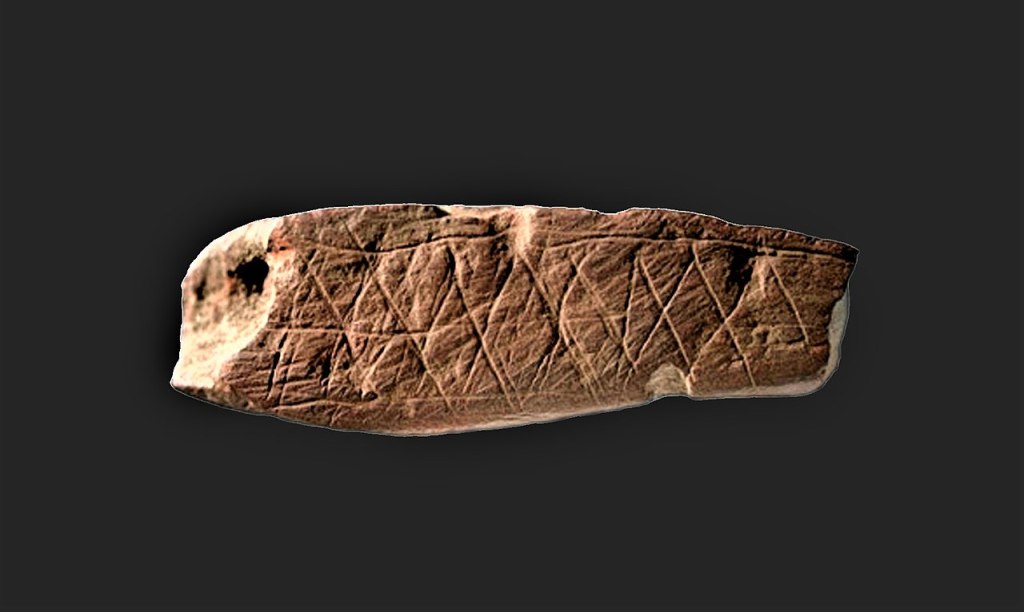
Rock Art from Blombos Cave (Source: C. Henshilwood, Wikipedia)

We take drawing for granted, and we know that our ancestors, ancient humans thought of drawings as a very good communication tool, as depicted in petroglyphs found in a thousand places on the African continent, in Europe, Asia, and the Americas.

This may be old news to some, but the earliest evidence of a drawing made by humans has been found in the Blombos Cave in the southern Cape province of South Africa. Blombos Cave contains material dating from 100,000—70,000 years ago.

The drawing, which consists of three red lines cross-hatched with six separate lines, was intentionally drawn on a smooth silcrete flake about 73,000 years ago. This predates previous drawing from Africa, Europe and Southeast Asia.

Oldest Drawing by Homo Sapiens, dated to be 73,000 years old, found in the Blombos Cave (Source: Wikipedia)

Excavations at the world-famous archeological Blombos Cave site, have yielded many important riches. These include delicately crafted stones and bone implements preceding comparable European artifacts by more than 80,000 years, and at least 8,000 pieces of ochre, used as colour pigment by early humans. This indicates that our ancestors already had an acute sense of colors, and the different properties of these oxidizing colors (ferrous oxide), suggesting a strong understanding of the chemistry behind the colors’ composition.

… the drawings were made with an ochre crayon, with a tip of between 1 and 3 millimetres thick. Further, the abrupt termination of the lines at the edge of the flake also suggested that the pattern originally extended over a larger surface, and may have been more complex in its entirety.

Before this discovery, Palaeolithic archaeologists have for a long time been convinced that unambiguous symbols first appeared when Homo sapiens entered Europe, about 40,000 years ago, and later replaced local Neanderthals,” says Pr. Christopher Henshilwood from the University of Witswatersrand. “Recent archaeological discoveries in Africa, Europe and Asia, in which members of our team have often participated, support a much earlier emergence for the production and use of symbols.”

The archaeological layer in which the Blombos drawing was found also yielded other indicators of symbolic thinking, such as shell beads covered with ochre, and, more importantly, pieces of ochres engraved with abstract patterns. Some of these engravings closely resemble the one drawn on the silcrete flake.

Bifacial silcrete point from M1 phase (71,000 BCE) layer of Blombos Cave, South Africa (Source: Wikipedia)

This demonstrates that early Homo sapiens in the southern Cape used different techniques to produce similar signs on different media,” says Henshilwood. “This observation supports the hypothesis that these signs were symbolic in nature and represented an inherent aspect of the behaviorally modern world of these African Homo sapiens, the ancestors of all of us today.

To find out more, please read this article written by Christopher Henshilwood and his team in Nature, as well as this article in the National Geographic.

Namibia Rightfully Rejects 10 million Euros Compensation for Genocide

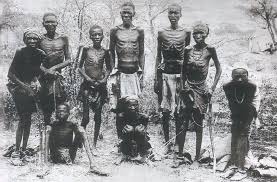
Survivors of the Herero genocide (Wikimedia)

The guts of these people sometimes! How can Germany after killing, and exterminating the Herero and San people of Namibia, thus perpetrating the First Genocide of the 20th Century, dare offer 10 million Euros for compensation to the Namibian government? Such an insult! Germany must really think that Namibians, Africans, are nobodies, below sub-humans… because it is quite unbelievable! They have almost eradicated an entire race, and to this day, Namibia is struggling because of this. And they give 10 million Euros? 10 millions Euros for torturing, killing, raping, destroying, displacing for years? Do you think they could have dared to make such an offer if the Namibians were Jews? This money is not even what they give as compensations to victims (and sometimes only one) during lawsuits against big companies. I clap for the Namibian government, and hope that they stand their ground; the rest of Africa is watching them! Excerpts below are from an article on the Guardian.

====

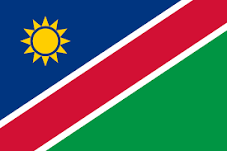
Flag of Namibia

Namibia has rejected a German offer of compensation for the mass murder of tens of thousands of indigenous people more than a century ago.

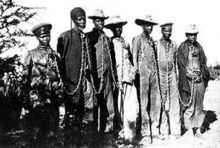
German occupiers in Namibia almost destroyed the Herero and Nama peoples between 1904 and 1908 as they consolidated their rule in the new colony in south-west Africa. Some historians have described the bloodshed as the first genocide of the 20th century.

The two countries have been discussing an agreement on an official apology from Germany and an increase in development aid, but the talks appear now to be running out of momentum.

Namibia’s president, Hage Geingob, said on Tuesday that the most recent offer “for reparations made by the German government … is not acceptable” and needed to be “revised”.

Chained (by German forces) Herero men

No details were provided on Berlin’s proposal, but unconfirmed media reports have referred to a sum of €10m.

…. Other countries in Africa are watching the negotiations between Namibia and Germany closely as they consider launching their own efforts to gain compensation for the violence and theft of decades of European rule.

The Power of Women in the Ancient Kongo Kingdom

Queen Nzingha of Angola

Below is a description of the power of women in the ancient Kongo Kingdom. Remember that a lot of African cultures are matriarchal. The description below is from 1704, and shows that there were women kings in Kongo, and also that the Kongo Empire had vassal kings who reported all to the one King of Kongo. There were also great queens like Queen Nzingha: Great Queen of Angola in neighboring kingdoms, to whom other kings reported. The text below has been translated to English by Dr. Y., Afrolegends.com.

=====

The power of women in the Ancient Kongo Kingdom

In the evening I received the visit from a matron who was chief of her locality [Tubii] and other villages of the Sogno [Soyo] principality. She does not recognize any other authority above her but that of the King of Kongo. These villages are always governed by women.

Lorenzo da Lucca, 7th relation, Soyo, 31 January 1704 in Jean Cuvelier

Les Africains Vol.9, Editions J.A, C.-A. Julien, P. 58, (1977)

Beatrice of Congo : A Physical Portrait in 1710

Beatriz Kimpa Vita
Beatriz Kimpa Vita

Today we will talk about Beatrice of Congo, also known as Kimpa Vita, who was an African priestess and prophet who held a lot of power. Born into a noble clan, the Mwana Kongo clan, she was baptized in her youth, and later created her own religious movement which used Christian symbols but revitalized traditional Kongo cultural roots. She is seen as a strong antislavery figure; think about this for a moment, the catholic priests preaching christianity, yet silently participating in the slavery of the Kongolese. Didn’t it make total sense for her to turn away from catholicism and create a true Kongo religion? Her movement which is among some of the best documented in Kongo’s history is seen a precursor to modern African democracy movements. Below is the physical portrait of Beatrice of Congo by a contemporary Father Bernardo da Gallo in 1710 (Translated to English by Dr. Y., Afrolegends.com).

======

Kongo Kingdom map
Kongo Kingdom map

This young woman was about twenty two years old. She was fairly tall and with fine features. On the exterior, she seemed very devout. She spoke with gravity, seeming to weigh all her words.  She predicted “the future and announced among other things that the judgment was near.”

She walked on tiptoes (toes), almost without touching the ground with the rest of her feet; she moved her flanks and whole body, like a snake, even though her body was tense, as if deprived of spirit, and with bulging eyes; spoke frantically with delirium.

Rapport du Père Bernardo da Gallo, Rome, 17 Decembre 1710, publié par Louis Jadin

Les Africains Vol.9, Editions J.A, C.-A. Julien, P. 58, (1977)

Mungo Park describes Ségou in 1795

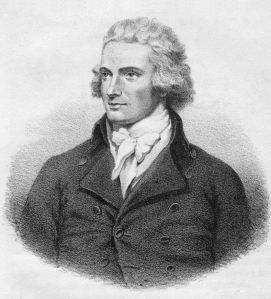
Mungo Park
Portrait of the Scottish explorer Mungo Park

Below is a description of the great city of Ségou (pronounce Segu) in Mali by the Scottish explorer Mungo Park in 1795. Here he describes the city’s population density, dynamism, architecture, and even their ways of life. He amply describes the roominess and surprised sturdiness of Ségou’s canoes which could host 4 horses. Mungo Park is simply astounded by the greatness of the civilization he encounters there, and concludes, “the crowded population and the cultivated state of the surrounding country, formed altogether a prospect of civilization and magnificence, which I little expected to find in the bosom of Africa.” Note that the city is surrounded by high mud walls probably similar to the Tata of Sikasso: an African Fortifying Wall.

=====

Mali_Ségou_La Mosquée (AOF)
The Mosque in Segou at the beginning of the 20th century

Sego, the capital of Bambarra, at which I had now arrived, consists, properly speaking, of four distinct towns ; two on the northern bank of the Niger, called Sego Korro, and Sego Boo and two on the southern bank, called Sego Soo Korro and Sego See Korro. They are all surrounded with high mud walls ; the houses are built of clay, of a square form, with flat roofs ; some of them have two storeys, and many of them are whitewashed.

Mali_Segou_Palais d'Ahmadou Tall
Entrance to Ahmadu’s palace in Segou-Sikoro published in the 1868 edition of the book by Eugene Mage Voyage dans le Soudan occidental (Sénégambie-Niger), Paris: Hachette

Besides these buildings, Moorish mosques are seen in every quarter ; and the streets, though narrow, are broad enough for every useful purpose, in a country where wheel-carriages are entirely unknown. From the best enquiries I could make, I have reason to believe that Sego contains altogether about thirty thousand inhabitants. The king of Bambarra constantly resides at Sego See Korro ; he employs a great many slaves in conveying people over the river, and the money they receive (though the fare is only ten cowrie shells for each individual) furnishes a considerable revenue to the king in the course of a year. The canoes are of a singular construction, each of them being formed of the trunks of two large trees, rendered concave, and joined together, not side by side, but end ways ; the junction being exactly across the middle of the canoe ; they are therefore very long and disproportionably narrow, and have neither decks nor masts ; they are, however, very roomy ; for I observed in one of them four horses, and several people crossing over the river. When we arrived at this ferry, with a view to pass over to that part of the town in which the king resides, we found a great number waiting for a passage ; they looked at me with silent wonder, and I distinguished, with concern, many Moors among them. There were three different places of embarkation, and the ferrymen were very diligent and expeditious ; but, from the crowd of people, I could not immediately obtain a passage ; and sat down upon the bank of the river, to wait for a more favourable opportunity The view of this extensive city ; the numerous canoes upon the river ; the crowded population and the cultivated state of the surrounding country, formed altogether a prospect of civilization and magnificence, which I little expected to find in the bosom of Africa.


Mungo Park, Travels in the Interior Districts of Africa: Performed Under the Direction and Patronage of the African Association, in the Years 1795, 1796, and 1797.

Sego = Ségou

Bambarra = Bambara

Sego Boo = Ségou-Bou

Sego Korro = Ségou-Koro

Sego See-Korro = Ségou-Sikoro

*The four cities mentioned here are actually on the southern shore, but there are on the northern shore some neighborhoods to which Mungo Park attributed excessive importance.

Mory Kante : So long to an Electrifying Griot

Mory Kante_2
Mory Kante with his kora (Source: RadioKing.com)

I remember dancing to the tunes of “Yé ké yé ké” as a child… I also have fond memories of seeing Mory Kante play his kora, and being amazed by his dexterity, finesse, and charisma. Every note transported me to different horizons. It did not matter that I did not understand his language, I could feel the emotions he conveyed with his voice and kora… it was like magic: one could travel all the way to Guinea and back within the confines of one’s room.

On May 22, 2020, an honorable member of the Griot (Djeli) family, Mory Kante, moved to the land of his ancestors. In reality, he just changed dimensions, and left us with the electricity of his music. Born in 1950 in a small town near Kissidougou in Guinea, Mory Kante came from a long family tradition of griots (Djeli). Both of his parents were griots, his father was from Guinea and his mother from Mali  Mory absorbed the singing of his parents and as a child learned to play the balafon. As a child, his family sent him to Mali to study the kora and other griot traditions. 

Mory Kante_3
Mory Kante with some of the instruments he played including the balafon, kora, and djembe (Source: Express.co.uk)

Mory Kante is often known as the “electronic griot” because he modernized local traditional instruments such as his kora which he electrified, and fused African music with styles and instruments from Western pop. Kante’s 1987 single “Ye Ke Ye Ke” was a hit, first in Africa and then across Europe. It became the first African single to sell more than a million copies and has been licensed frequently for commercials and film soundtracks. It has even been reworked by other musicians into German techno, Bollywood film music and Chinese Cantopop.

If you ever come across a kora, or listen to Ye Ke Ye Ke remember this great man who modernized the ancient ways to share with us his love of the music of his forefathers. His music has inspired countless singers from the new generation. The New York Times , BBC, and Guardian have written articles about this great man.

The Lost Libraries of Timbuktu

Mali_Timbuktu from a terrace by Heinrich Barth 1858
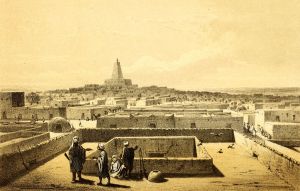
View of Timbuktu in 1858 by explorer Heinrich Barth 

As you all know Timbuktu was a great center of knowledge in search for  for many centuries starting at least in the 12th century. It was visited by people from around the world, in search of knowledge.

Timbuktu was one of the world’s first and oldest thriving universities! Students came from all over the world to study at Timbuktu. Imagine that, students from the middle east, and Europe coming to study in Africa! There are over 700,000 manuscripts at the great Sankore University in Timbuktu, and many more at other libraries including the  Ahmed Baba Institute, Al-Wangari Library, and others.

Enjoy this documentary about the lost libraries of Timbuktu commented by the Scottish/Sierra Leonean writer Aminatta Forna. Enjoy, and discover with me the treasures of Africa.

Egypt’s Tamed Crocodiles – in pictures

Egypt_Crocodile god Sobek
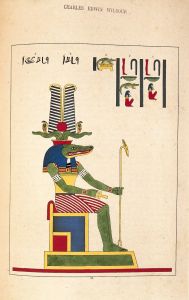
Sovk (Suchus, Cronos, Satrune); by Jean-François Champollion; 1823–25; Brooklyn Museum (New York City)

I really enjoyed this photojournal on The Guardian‘s website about crocodiles and the ancient art of crocodile raising in Nubia. Taming crocodiles was a part of the culture of ancient Nubia; and it is still done today in Nubia (northern Sudan /part of Southern Egypt). One of the deities of ancient Egypt was Sobek, who was represented with a human body and a crocodile head. He was associated with the Nile crocodile or the West African crocodile. Sobek was also associated with pharaonic power, fertility, and military prowess, but served additionally as a protective deity with apotropaic qualities, invoked particularly for protection against the dangers presented by the Nile, or intended to turn away harm or evil influences.

Sobekneferu_1
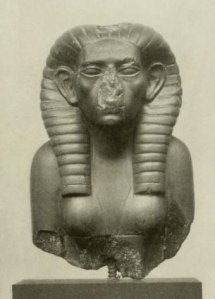
Head of ruling Pharaoh Sobekneferu

The strength and speed of the crocodile was thought to be symbolic of the power of the Pharaoh, and the word “sovereign” was written with the hieroglyph of a crocodile. It was thought that Sobek could protect the Pharaoh from dark magic. Coincidentally, when the cult of Sobek took off during the Twelfth and Thirteenth Dynasties, a number of rulers incorporated him in their coronation names, including the first fully attested female pharaoh – Sobekneferu. To learn more about Sobek and other deities of ancient Egypt, check out Wilkinson, Richard H., The Complete Gods and Goddesses of Ancient Egypt. (2003).

In ancient times, tamed crocodiles were kept in a sacred pool and hand fed choice cuts of meat and honey cakes and adorned with precious jewels. The pratique has not changed much over the centuries as you will see in the photojournal on The Guardian‘s website. Enjoy!

Crocodile_1
Nile Crocodile