
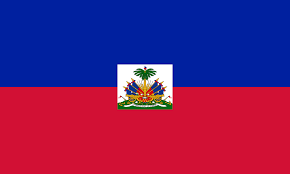
For more than a century, Haiti paid a crushing financial burden imposed by France for winning its freedom. The consequences reverberate to this day. Haiti was made to pay France for over a century for getting its freedom from its slave masters (When France extorted Haiti, the greatest heist in history). Because the past slaves had defeated the French masters, who represented the mightiest army of its time, they were forced to pay France for over a century the hefty sum of 90 million gold francs (equivalent to 21 billion U.S. dollars in today’s money)? And this adds to why Haiti is so poor today! Imagine this: Someone abuses you for years, not to say decades and generations, you finally free yourself, and now you are forced to compensate them because you freed yourself through a ruthless battle from their years of inhumanity. How fair is that?
In 1791, enslaved Africans in the French colony of Saint-Domingue, known as the pearl of the Caribbean, launched what would become the most successful slave revolt in human history. After years of fierce fighting against French, Spanish, and British forces, the revolution culminated in the creation of Haiti in 1804. It was an unprecedented achievement. Formerly enslaved people defeated one of Europe’s most powerful empires and established the very first independent Black republic in the modern world.

But freedom came at a price that no other newly independent nation had ever been forced to pay. For more than two decades after Haiti declared independence, France refused to recognize the new nation. Then, in 1825, French King Charles X sent a fleet of warships to Haiti and issued an ultimatum: Haiti would pay 150 million francs to compensate former French colonists for their lost plantations and enslaved laborers, or risk military intervention.[The Root of Haiti’s Misery: Reparations to Enslavers,
Debt, Coups & Colonialism in Haiti: France & U.S. Urged to Pay Reparations for Destroying Nation ] The amount was approximately thirty times Haiti’s annual government revenue at the time. The irony was profound. The enslaved people who had endured generations of forced labor and abuse received no compensation. Instead, they were forced to compensate the people who had enslaved them.
Of course, there was no way Haiti, a young nation, possessed the money necessary to meet France’s demands. To make the payments, it had to borrow from French banks (the irony!!!). This created what historians call a “double debt”: Haiti owed France, and it also owed interest to the French financial institutions that lent it the money [The New York Times Releases Historical Dataset of Haiti’s “Independence Debt” Payments to France, The Root of Haiti’s Misery: Reparations to Enslavers]. As a result, vast portions of Haiti’s national income flowed overseas for generations, depriving the young nation of resources that might otherwise have been invested in infrastructure, education, healthcare, agriculture, and economic development. This is exactly what happened to many of the French colonies in Africa: France had already perfected its ways in Haiti, and just replicated it on the continent. Many historians identify 1947 as the year Haiti finally completed the last payments associated with the independence debt. More than a century had passed since the country’s liberation.

The New York Times published a landmark investigative series titled “The Ransom.” between May 22 and May 25, 2022. The series drew upon thousands of archival documents from Haiti, France, and the United States to quantify the cost of the so-called independence debt. One of the most striking revelations in the Times investigation concerned the role of French banks. A major beneficiary of Haiti’s debt payments was Crédit Industriel et Commercial (C.I.C.), a French bank that helped finance the construction of the Eiffel Tower decades later. This bank, was founded in 1859 to finance industry, infrastructure, and large commercial ventures as France was rapidly industrializing under Napoleon III. Investigation into the bank showed that substantial profits generated through loans and financial arrangements linked to Haiti flowed to the bank and its investors. The initial loan to Haiti was issued in 1875. The NY Times found that the wealth extracted from Haiti generated significant profits for CIC, and CIC later helped finance the construction of the Eiffel Tower. Doesn’t this remind you of the Bank of Senegal and FCFA in Africa?
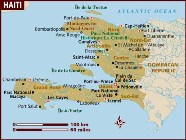
The story of Haiti’s independence debt serves as a reminder that colonial exploitation often did not end when colonies became independent. In Haiti’s case, economic extraction continued for generations under the guise of financial obligations imposed by military threat. As the New York Times series demonstrated, Haiti’s struggle cannot be understood without recognizing this history. The nation that successfully overthrew slavery was then forced to finance its former enslavers and their financial backers for more than a century: it was forced to pay for its freedom from its executioners!


