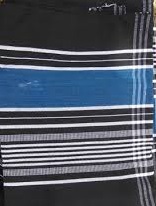
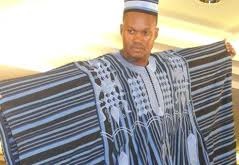
Today we will be talking about the Faso Dan Fani, known as Burkina Faso‘s national cloth. For starters, the Faso Dan Fanimeans “woven cloth of the homeland” (pagne tissé de la patrie). All the words are Dioula: Fani = cloth/wrapper(pagne), Dan = woven(tissé), Faso = homeland (patrie). It is known locally as FDF. As you have probably guessed, the Faso Dan Fani is a handwoven cotton cloth. The weaving style and patterns differ depending on the ethnic group. As you all know, weaving cotton is an ancient African tradition (African textiles): in the old days, the spinning was done by women, while the men were left with weaving the cotton threads into cloth. With time, women took over the weaving business as well.
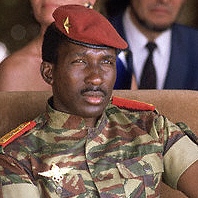
Thomas Sankara a Ouagadougou
In 1986, the President of the Faso, Thomas Sankara, declared that it was important to “produce and consume Burkinabé“. Thus, he declared “In all the villages of Burkina Faso, we know how to grow cotton. In all villages, women know how to spin cotton, men know how to weave it into cloth, and other men know how to sew those threads into clothes... [Dans tous les villages du Burkina Faso, l’on sait cultiver le coton. Dans tous les villages, des femmes savent filer le coton, des hommes savent tisser ce fil en pagnes et d’autres hommes savent coudre les pagnes en vêtements …]” and further “We should not be slave of what others produce[Nous ne devons pas être esclave de ce que les autres produisent].” For the president, “wearing the Faso Dan Fani is an economic act, cultural, and political to challenge imperialism[porter le Faso Dan Fani est un acte économique, culturel, et politique de défi à l’impérialisme].”
Faso Dan Fani
Thus under Thomas Sankara’s revolution, the traditional attire was imposed in work places. … Many were not pleased with it, to the extent that some had nicknamed the FDF, “Sankara is coming“ [Sankara arrive] since the PF was known to do impromptu visit of his ministries. Under him, the FDF had become the signature of Burkinabé outside the country. Sankara even made a speech at the United Nations where all the members of his delegation and himself were dressed with the Faso Dan Fani entirely made by local Burkinabé artists to be consumed by Burkinabe.
This is what Thomas Sankara uttered on April 21, 1982 in opposition to the regime’s anti-labor drift: “Misfortune to those who gag the people (Malheur à ceux qui baîllonnent le peuple)”. Funny how 33 years later, general Diendéré, one of those complicit of killing Sankara himself, had to face the people’s wrath. Indeed, Diendéré‘s coup and presidency lasted 7 days: 7 days when he took and gagged the people of Burkina Faso. At the beginning of the week when he took over, many ‘international’ newspapers (as usual, supporters of coups against the liberty of the African people) were writing about him, praising him as
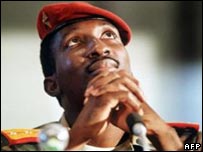
Thomas Sankara a Ouagadougou
one of Compaoré‘s boys, very calm, charismatic, courageous, etc. At the end of the 7 days, after the people of Burkina Faso, backed up by their army, rose up as a single man against the ugly coup, the same newspapers were calling him a ‘stupid’ general. Diendéré thought he could gag the people again and again and again. That time is long gone, because the people of Burkina Faso have decided against it, and have said, like Sankara: “Homeland or death, we shall overcome!” I used to wonder, sadly, why the people of Burkina Faso, who had had the great Sankara, could not rise against Compaoré… well it took them 27 years to overtake the tyrannical system, but they overtook it and now they are rising as a single man! “La patrie ou la mort, nous vaincrons!”
In view of recent events in Burkina Faso, and to continue our fight for democracy, for equal rights, for the right of a nation to choose its leaders without military/external forces dictating it, I live you with a quote by President Thomas Sankara, president of Burkina Faso. It was previously published in a “prayer for Cote d’Ivoire.” As the quote goes:
================
La patrie ou la mort nous vaincrons!
Telle était la devise de Thomas Sankara, notre grand Che africain, ce grand maitre de la révolution Burkinabé, le president du Faso. Telle est la devise que nous nous devons de garder dans nos coeurs en ce moment pour le Burkina Faso: savoir que nous nous battons pour notre liberté, pour notre patrie, pour la seule terre que le bon Dieu a bien voulu nous donner! Amandla!… Ngawethu!
Flag of Burkina Faso
Homeland or death, we shall overcome!
Such was the motto of Thomas Sankara, our great African Che, this great master of the Burkinabe revolution, the president of Burkina Faso. This is the motto that we must keep in our hearts for Burkina Faso right now: to know that we are fighting for our freedom, for our country, for the only land God ever gave us! Amandla! …Ngawethu! Power to the People!
Patria o muerte, venceremos!
Tal era el lema de Thomas Sankara, nuestro gran Che de África, este gran maestro de la revolución de Burkina Faso, el presidente de Burkina Faso. Este es el lema que debemos tener en nuestros corazones para Burkina Faso en este momento: saber que estamos luchando por nuestra libertad, para nuestro país, por la tierra sólo Dios nunca nos dio! Amandla!… Ngawethu!
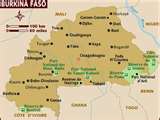
Burkina Faso
Pátria ou morte, venceremos!
Esse foi o lema de Thomas Sankara, o nosso grande Africano Che, este grande mestre da revolução burkinabe, o presidente do Burkina Faso. Este é o lema que devemos ter em nossos corações para Burkina Faso agora: saber que estamos lutando por nossa liberdade, para o nosso país, para a única terra que Deus já nos deu! Amandla!… Ngawethu!
Precious readers, may the year 2015 be the year of all great conquests, achievements, success, and greatness. I would like to express my sincere gratitude to all those who visited my blog, and to all future visitors. 2014 was a beautiful year: the number of subscribers on Afrolegends.com has tripled, the number of visitors on the blog has doubled, the article Burkina Faso was cited by TIME Magazine online, while the article La SAPE was cited by The Guardian, and many articles were reblogged on multiple sites. For 2015, I wish you wonders without borders, peace, grace, and love.
Happy 2015 (Illustration by Osee Tueam, for Dr. Y, Afrolegends.com)
Here were the top posts of 2014. Keep trusting, reading, sharing, and liking.
Like every year, I have to tell you about the good things that happen in Africa, and all the things we celebrated. Here are 10 of them.
1. I have to say it again: Blaise Compaore’s demotion. Blaise Compaoré was booted out of office in 2014. Thomas Sankara‘s murderer taught that he will be eternal in power, and on October 30th 2014, the people of Burkina Faso said ENOUGH!
2. Presidential Elections finally took place in Tunisia, 3 years after Ben Ali‘s toppling at the beginning of the ‘Arab Spring’, and the election of the people’s choice as president: Beji Caid Essebsi. We are glad the people of Tunisia’s choice was respected.
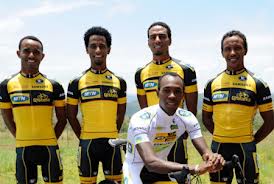
Some members of the South African Team – MTN Qhubeka(Source: bicycling.co.za)
3. Mrs Catherine Samba-Panza was sworn in as interim president of the Central African Republic on 23 January 2014. She was chosen as a neutral person to lead the country of the conflict that rages in the area; she is the first woman appointed in such a position in the history of the country.
4. For the first time in the history of Cycling, there was an African team competing in a great race. 6 Africans (two Erithreans and 4 South Africans) ran in Spain for the South African team, MTN-Qhubeka.
5. Two African teams advancing into the last round of 16 at the Brazil 2014 FIFA World Cup for the first time in the history of the FIFA World Cup: namely, Nigeria and Algeria. Even though both teams were eliminated in the last round of 16, Algeria particularly put up a good fight against Germany (who went on to win the World Cup) and made us proud.
6. The African version of Robocop designed by two female engineers in the Democratic Republic of Congo, one of them being Thérèse Inza. This is a traffic cop who regulates the traffic, and even gives tickets to the cab drivers, and those who do not want to follow the code of the road.
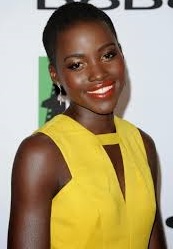
Lupita Nyong’o
7. There were 3 Africans nominated at the Oscars in main categories this year: Chiwetel Ejiofor(Nigeria) in the ‘Best Actor’ category, Barkhad Abdi (Somalia) in the ‘Best Actor in a Supporting role’ category and Lupita Nyong’o (Kenya) in the ‘Best Actress in a Supporting role’ category. Lupita made us proud by winning the Academy Award for ‘Best Actress in a Supporting role’ for her role in 12 Years a Slave. She was also named the ‘Most beautiful Woman’ by People magazine (I never really understood that People Magazine award: as if they had searched through the 3.5Billion women in the world before giving this award!) and ‘Woman of the Year’ in Glamour, and was announced as the ‘New Face’ of Lancôme, a first for a Black woman.
8. Nigeria became Africa’s # 1 economy after rebasing its Gross Domestic Product (GDP) from 1990 to 2010 constant prices. Nigeria just surpassed South Africa as Africa’s top economy, and the world’s 26th largest economy.
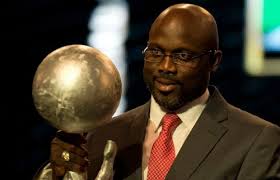
10. George Weah, the only African to have won a FIFA World Player of the Year (in 1995) and won Ballon d’Or, won a senate seat in Liberia yesterday Dec. 29th. The 2005 presidential contender (he had won the first round of the elections then) of Mrs. Johnson-Sirleaf won the senate elections against Robert Sirleaf (President Johnson-Sirleaf’s son). This was a landslide victory; it is a step forward, and progress is always to be acclaimed!
I have to do a recap of the year 2014. You already know that the number one person we said goodbye to was the dictator and murderer Blaise Compaoré, who was booted out of office the tail between his legs.
1. Blaise Compaoré, booted out of office in 2014. Thomas Sankara‘s murderer taught that he will be eternal in power, and on October 30th 2014, the people of Burkina Faso said ENOUGH!
2. Michael Sata, the President of Zambia, passed on in office on October 28, 2014. He was replaced by Guy Scott, the first white president (albeit interim president) of Zambia since independence.
President Joyce Banda
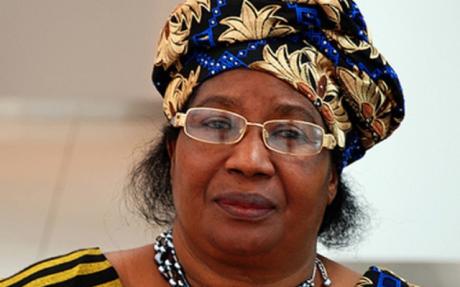
3. Joyce Banda, President of Malawi, who lost the elections this year. She became president of Malawi after Bingu wa Mutharika passed away in 2012. She is succeeded in office by Peter Mutharika. She had been Africa’s second female Head of State.
4. Nadine Gordimer, South Africa’s first Nobel prize of literature, passed away at the age of 90, on 13 July 2014. She was called the one of the great “guerilla of imagination” by poet Seamus Heaney.
Lapiro de Mbanga
5. Lapiro de Mbanga, the voice of the voiceless, the great Cameroonian musician, and activist, left us this year, in March. Lapiro sang for the people, talked about the youth’s shattered dreams, the division, the tribalism, the corruption, the decadence, and the ills of the country. So long Ndinga Man!
6. Abel Eyinga and Charles Ateba Eyene, both of Cameroon, passed away. These were strong outspoken voices of Cameroon, and will forever be remembered.
7. King Kester Emeneya, the king ofla Rumba, passed away on 13 February 2014. I had just recently gotten reacquainted with his music, and danced to Nzinziagain. So long King.
8. Mama Gbagbo, the mother of Laurent Gbagbo, passed away this year. Gbagbo who is currently detained by the CPI at the Hague was refused the opportunity to bury his mother. She was over 90 years old.
Maya Angelou
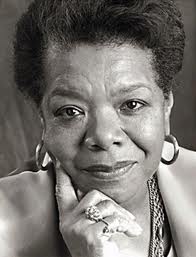
9. The world said goodbye to Maya Angelou in May of this year. Dr. Maya Angelou was one of the world’s best poets. My two favorite poems by Dr. Angelou are ‘Phenomenal Woman‘ and ‘Still I Rise.’ Her African roots are very deep as she was a journalist in Egypt and Ghana. Her life was an embodiment of Truth, and passion.
10. More than 160 immigrants were feared dead after a boat carrying about 200 African immigrants sank off the coast of Libya. How many Lampedusa shipwrecks are we going to have until the world realizes that feeding and destabilizing countries does not help global equilibrium?
15 jours et 27 ans, après avoir fait assassiner Thomas Sankara, Blaise Compaoré est à son tour forcé ou plutot jeté dehors. En effet, c’était le 15 Octobre 1987 que Thomas Sankara était assassiné par des hommes de Compaoré. Donc le fameux Compaoré est tombé le 30 Octobre 2014. Comme on le dit si bien, quiconque se sert de l’épée perira par l’épée. Maintenant, notre voeu le plus cher est que cette révolution populaire ne soit pas confisquée par l’armée qui est constituée d’hommes de Compaoré, et des bras de la France. Bye Bye Compaoré.
==========
Flag of Burkina Faso
15 days and 27 years, after having murdered Thomas Sankara, Blaise Compaoré is in his turn forced to resign or rather booted out of office. On 15 Octobre 1987 that Thomas Sankara was murdered by men of Compaoré. Now, Compaoré himself fell on 30 October 2014. As it so well said, anyone who uses the sword, will die by the sword. Now, our hope is that the people’s revolution will not be hijacked by the army who are Compaoré’s men and France’s men. Bye Bye Compaoré.
15 October 1987 was the day Africa lost one of his greatest sons: Thomas Sankara. Words cannot express the loss we’ve felt, and the loss Africa and the world suffered on that day. I would like to share with you some of Thomas Sankara’s famous declarations.
=====================
« Une jeunesse mobilisée est dangereuse, une jeunesse mobilisée est une puissance qui effraye même les bombes atomiques. Il y en a qui possède les bombes atomiques et qui ont des problèmes avec d’autres peuples qui, eux, ne possèdent pas la bombe atomique, mais pourquoi ils n’osent pas l’utiliser ? Parce qu’ils savent très bien, parce qu’ils savent très bien, que dans ces peuples que osent les attaquer, ils trouvent une jeunesse mobilisée, une jeunesse à mourir.» [A youth mobilized is dangerous, a youth mobilized is a power which scares even atomic bombs. There are those who own atomic bombs, and who have problems with other nations who do not own the atomic bomb, but why don’t they dare using it? Because they know very well, that in these people who they want to attack, they find a mobilized youth, a youth ready to die.] 14 mai 1983s’adressant aux jeunes de Bobo Dioulasso
« Nos ancêtres en Afrique avaient engagé une certaine forme de développement. Nous ne voulons pas qu’on assassine ces grands savants africains. » [Our ancestors in Africa were actively committed to a certain form of development. We do not want these great African wisemen to be assassinated.] 2 octobre 1984 à Harlem
Burkina Faso
«Il faut que l’école nouvelle et l’enseignement nouveau concourent à la naissance de patriotes et non d’apatrides.Mettre un enfant à l’école doit cesser d’être perçu comme un simple placement comptable, si tant est vrai que la transformation continue des sociétés qui incombe aux générations successives comporte des éléments quantifiables et non quantifiables. »[We need the new school and the new teaching concur with the birth of patriots and not stateless people. Putting a child in school should stop being conceived as a simple accounting investment, if indeed the ongoing transformation of societies which fall on successive generations has quantifiable elements and non-quantifiable.] 17 octobre 1986Appel de Gaouasur la qualité de l’enseignement.
« Il n’y a pas de révolution sociale véritable que lorsque la femme est libérée. Que jamais mes yeux ne voient une société où la moitié du peuple est maintenue dans le silence. J’entends le vacarme de ce silence des femmes, je pressens le grondement de leur bourrasque, je sens la furie de leur révolte. J’attends et espère l’irruption féconde de la révolution dont elles traduiront la force et la rigoureuse justesse sorties de leurs entrailles d’opprimées. » [There are no true social revolution until the woman is liberated. May my eyes never see a society where half of the people is maintained under silence. I hear the racket of this silence of women, I suspect the roar of their storm, I feel the fury of their revolt. I wait and hope for the fertile irruption of the revolution for which they will translate the force and rigorous righteousness coming from their oppressed bowels.] 8 mars 1987, Ouagadougou
«La Révolution démocratique et populaire a besoin d’un peuple de convaincus et non d’un peuple de vaincus, d’un peuple de convaincus et non d’un peuple de soumis qui subissent leur destin. » [The people’s democratic revolution needs a people that is confident and not defeated, a people of conviction and not a subjected people who suffer their fate.] 4 août 1987
African Venus, a sculpture by Charles-Henri Joseph Cordier 1851 (Source: Walters Art Museum)
«Je parle au nom des femmes du monde entier, qui souffrent d’un système d’exploitation imposé par les mâles.Pour ce qui nous concerne, nous sommes prêts à accueillir toutes les suggestions du monde entier, nous permettant de parvenir à l’épanouissement total de la femme burkinabè. En retour, nous donnons en partage à tous les pays, l’expérience positive que nous entreprenons avec des femmes désormais présentes à tous les échelons de l’appareil de l’État et de la vie sociale au Burkina Faso. Des femmes qui luttent et proclament avec nous, que l’esclave qui n’est pas capable d’assumer sa révolte ne mérite pas que l’on s’apitoie sur son sort.Cet esclave répondra seul de son malheur s’il se fait des illusions sur la condescendance suspecte d’un maître qui prétend l’affranchir.Seule la lutte libère et nous en appelons à toutes nos sœurs de toutes les races pour qu’elles montent à l’assaut pour la conquête de leurs droits. » [I speak on behalf of women from around the world, who suffer from an exploitation system imposed by the males. As far as we are concerned, we are ready to welcome all the suggestions from around the world, which will enable us to achieve the full development of the Burkinabe woman. In return, we will share with all the countries, the positive experience that we start with women now present at all levels of the state and the social life of Burkina Faso. Women who fight and proclaim with us, that the slave who is not capable of assuming his rebellion does not deserve that we feel sorry for himself. This slave will respond only to his misfortune if he is deluding himself about the suspect condescension of a master who claims to free him. Only fighting liberates and we call on all our sisters of all races so that they rise up to conquer their rights.] Discours de Sankara à l’ONU le 4 octobre 1984 (texte intégral)
Have you ever wondered about the name of the country Burkina Faso? Why would a country have two names, i.e. Burkina and then Faso? or even simply two names in its history: Upper Volta and then Burkina Faso? Well, the country named Upper Volta was given a new name in 1984 by then President Thomas Sankara, who chose the name Burkina Faso.
Flag of Upper Volta
Originally, Haute Volta or Upper Volta, was just given by the European colonizer, the French, more as an indicator or geographic pointer, and had no real attachment to the people of that region themselves. Thus Upper Volta was named for the region above the Volta river flowing in the area; the people of that country/area where thus known as the ‘Voltaics’ (Voltaiques in French). Since the river had three tributaries: the Black Volta, the white Volta, and the red Volta, Upper Volta’s flag also had those three colors. The Volta river also flew into Ghana, which was never known as the ‘Lower Volta’. No wonder the name needed to change, as it had no real meaning!
Thomas Sankara a Ouagadougou
Well, on 4 August 1984, Thomas Sankara, with his usual charisma and revolutionary spirit, decided to change the country’s name to Burkina Faso. He chose two names after two main languages of the country: the Moore (or Mossi language) and the Dioula. Burkinafrom Mòoré means ‘men of integrity‘, while Fasoin Diouala means ‘fatherland‘. Thus the Burkina Faso is ‘the land of upright people‘ or ‘the land of honest people‘. The people of the country are known as the Burkinabé, where the suffix ‘bé’ comes from the Foufouldé language spoken by the Peulh people (a tribe found in many countries across West Africa), and means ‘men or women’. Thus, Thomas used three of the main languages in his country to choose a name that was truly representative of the country and its people. Sankara was then addressed as the PF or the President of the Faso. The national cloth made up of woven strips of cotton or silk was called faso dan fani (this will be the subject for another post).
Enjoy this video, and travel to Burkina Faso, the land of the upright people.
May 3rd marks the World Press Freedom Day, or simply World Press Day. This day is to raise awareness of the importance of the freedom of the press and remind governments across the world to respect the right to freedom of expression. Today I would like to commemorate the life of an African journalist hailing from Burkina Faso, Norbert Zongo, who just like the great Cameroonian journalist Pius Njawe, stood for justice and fought injustice.
Norbert Zongo was the publisher and editor of Burkina Faso newspaper L’Independant. On 13 December 1998, Norbert Zongo was assassinated after his newspaper investigated the murder of a driver (David Ouédraogo) who had worked for the brother of the president Blaise Compaoré, François Compaoré. Zongo’s burned body was found along with the bodies of three other people: his brother Ernest Zongo, his chauffeur Ablasse Nikiema, and Blaise Ilboudo, in a vehicle near Sapouy, 100 km from the capital Ouagadougou. An investigation showed that Zongo was killed for political reasons. His murder rocked Burkina Faso, and manifestations arose within the country, and neighboring countries. The most violent manifestations took place in the city of Koudougou, Zongo’s birthplace, and government supporters organized a militia armed with clubs engaged to hunt protesters in many cities of the country.
Burkina Faso
Bowing to popular discontent, President Blaise Compaoré, had to open a judicial investigation where his brother was charged for murder and harboring the body of the victim in connection with the death of David Ouédraogo who died of torture. The charges were later dropped by a military tribunal. In August 2000, five members of the presidential guard were charged for the murder of Ouédraogo, were convicted and sentenced to lengthy prison terms, but all were later freed. In seven years of trial, one suspect, a member of the presidential guard was charged, but the accusing witness later recanted. The Zongo trial ended in July of 2006 with a non-place which caused an international outcry.
Norbert Zongo is also the writer of the book, The Parachute Drop (Le Parachutage), which was translated to English and published in 2004. Many of his articles can be found in the review Mobutuization of Burkina Faso.
Today, Norbert Zongo is celebrated as a martyr, one who stood for truth, in a country where not many dared to talk. This is why he should be the man of the day, for a day like World Press Day: He dared to talk, he expressed the truth to enlighten others, and sought justice for another man. In 2003, a documentary was made to talk about his murder: Borry Bana, the fatal destiny of Norbert Zongo. In 2012, a memorial was erected at the Highway N6 (Ouagadougou – Léo) near Sapouy, exactly where Zongo was murdered. Please watch this video of Norbert Zongo talking to African youths. His message is that of maintaining intrinsic values of principle, of growth, of conscience.












 African Heritage