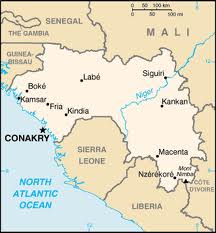
Last week was the second turn of elections in Guinea, and it only made sense to talk about Guinea. Well… Guinea is a country in West Africa whose capital is Conakry… it is a country rich in minerals such as bauxite, gold, diamonds, magnesium, etc. It is well-known for his first president Sekou Toure, who was the first to say ‘NO’ to France in 1958. In his own words, he said: “It is better to be poor and free, than to live in opulence and be a slave.” Guinea, thus became the only nation in French Africa to say ‘NO’ to the General de Gaulle and France. It was seen as a treason and an affront… and France never forgave Guinea, destroying files when leaving, withdrawing abruptly, destroying infrastructures, and breaking political and economic ties. I will not say much, but the video below says it all… Sekou Toure and the people of Guinea dared to say ‘NO’, and for that we, from French Africa, are forever thankful!
Sekou Toure
Je lance un appel à tous les Guinéens d’aller sur Wikipedia corriger l’histoire de leur pays. La définition sur Wikipedia est très incomplète! Nul part est-il mentionné le fait que la Guinée était le seul pays en Afrique Francophone à dire ‘NON’ à la France; et à cause de cela, ils ont été persécutés!
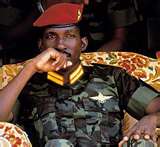
Thomas Isidore Sankara, notre héros africain, mort pour ses convictions et son amour de son peuple, et de sa patrie. Ce grand héros a fait l’un des plus beau discours que j’ai jamais entendu sur la dette africaine! Quelle éloquence mon Dieu! Quelle vérité! et quel humour! Je suis d’accord avec lui que la dette africaine ne peut pas être entièrement payée… et que les pays membres qui ne vont pas aux réunions de l’UA ne devraient pas recevoir les mêmes faveurs que ceux qui y assistent assidûment. De plus, il parle de consommer africain: toute sa délégation était habillée par des tisserands Burkinabés. Regardez, écoutez, et célébrez avec moi l’un des plus grands hommes qui ait foulé le sol du continent africain.
Burkina Faso
Thomas Isidore Sankara, our African hero, killed for his convictions, love of his people and his country. This great hero gave one of the greatest speech I have heard about the problem of African debt. Such an eloquence! Such Truth my Lord! Such humour! I do agree with him that the African debt cannot be entirely paid… and that the African nations who do not show up at the UA summit should not have favors extended to them the same as those who attend the meetings. Moreover, he talks about living and breathing African: his delegation and himself were entirely dressed by Burkinabes tailors with cotton from Burkina Faso. Please watch, listen, and celebrate one of the greatest man the African continent has ever seen!
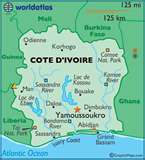
A la veille du deuxième tour des élections en Côte d’Ivoire qui verra soit Laurent Gbagbo ou Alassane Ouattara être élu président de la Côte d’Ivoire, j’ai trouvé qu’il n’y avait rien de tel qu’une petite historique sur le conflit qui sévit en Côte d’Ivoire depuis 2001, et ses principaux acteurs. Le documentaire que vous allez voir a été produit par la chaine Arte, et fait lumière sur la bataille pour le contrôle d’Abidjan. De nombreux acteurs tels le defunt président Houphouët Boigny, le defunt général Robert Guéï, le président actuel du CI Laurent Gbagbo, l’ancient PM Alassane Ouattara, et l’ancien président du CI Konan Bédié (et son ivoirité), la France, le Liberia de Charles Taylor, et le Burkina Faso de Blaise Compaoré y figurent.
Ivory Coast Flag
A few days before the second round of elections in Ivory Coast, which will see either Laurent Gbagbo or Alassane Ouattara become president, I thought that a little turn down memory lane will be more than appropriate. The following documentary is from the channel Arte, and details the battle for the control of Abidjan and its numerous actors among which the first president of Ivory Coast Houphouet Boigny, General Robert Guei, President Laurent Gbagbo, ex-PM Alassane Ouattara, ex-president Konan Bedie, France, Liberia of Charles Taylor, and the Burkina Faso of Compaore. Enjoy!
The Chinese presence and growth in Africa has not stopped amazing me… but this map from RFI tells it all… Africa is like a big field with great resources, great opportunities (for foreigners) for development, but very little progress. Look at this map and feel the Chinese presence in Africa… Welcome big sister from the East. I just wish Africans could learn from the hard-working and solidaritarian spirit of the Chinese people!
I choose the category ‘Great Moments’ because this map reveals the turning page from the European domination in Africa, and the beginning of a new dawn, the Chinese dawn in Africa.
Il était une fois un village ou la famine sévissait. Le roi se faisait beaucoup de soucis car les enfants mouraient et les villageois n’avaient plus assez de force pour aller cultiver la terre. C’était là que vivait Kakou Ananzè, l’Araignée. Malgré toute sa ruse, lui aussi souffrait de la faim. Tous les jours, il partait dans la brousse à la recherche de racines ou de graines qui puissent nourrir sa famille.
Un jour, Kakou Ananzè était en train d’errer au milieu des buissons. Epuisé de fatigue, il s’arrête pour se reposer. Alors il entend une petite voix qui sort d’un fourré et lui dit : papa Ananzè! papa Ananzè! Un peu effrayé et très curieux de savoir qui l’appelle ainsi, Kakou Ananzè entre au milieu des épines et découvre une calebasse posée sur le sol.
La Calebasse
Comme il l’examine de plus près, l’ustensile de cuisine lui adresse la parole en ces termes: Sors-moi de ce buisson d’épines et emmène-moi dans ta case. En récompense, je te rendrai la vie heureuse. Araignée ramasse la calebasse et la rapporte chez lui. A peine arrivé, il appelle sa femme et ses enfants. Leur montre l’ustensile et leur raconte son aventure. Tandis que tous s’étonnent, Kakou Ananzè se penche sur la calebasse et lui dit:
Chère amie, j’ai fait tout ce que tu souhaitais. A toi de tenir ta promesse. Les miens et moi mourons de faim et n’avons pas de nourriture; peux-tu nous aider?
A peine achève-t-il ces mots que la calebasse se trouve remplie de toutes sortes de mets: ignames frites, boules de pâte, bananes–plantains, poulet, sauce, etc. Ils remercient tous leur nouvelle amie, mangent jusque ce qu’ils soient rassasiés. Puis Kakou Ananzè prend la parole en ces termes :
Enfants, écoutez-moi bien et toi aussi femme! Je vais aller cacher soigneusement cette calebasse magique. Ne racontez cette histoire à personne, sous aucun prétexte. Car les gens jaloux de notre chance pourraient venir nous voler celle qui désormais, va tous nous nourrir.
Tous les membres de la famille jurent de garder le silence. Pendant quelques jours, tout se passe bien. Le soir, Araignée sort la calebasse de la cachette, lui demande poliment de la nourriture et, après que la famille ait mangé, remet l’ustensile à l’abri.
Beignets
Or, la femme de Kakou Ananzè était très gourmande. Elle avait caché dans son pagne quelques beignets de haricot comme provision pour la journée. Dans l’après-midi, elle sort dans la concession, s’assied sous un manguier et commence à manger. Mais sa voisine affamée, l’aperçoit. Elle s’approche sans faire de bruit et se met à crier: “comment peux-tu avoir des beignets de haricot alors que tout le monde meurt de faim et qu’il n’y a plus de nourriture dans le village? D’ailleurs, je ne t’ai pas vue piler la pâte ni faire la cuisine. A qui as-tu volé cela ?”
Madame Araignée est ennuyée. Elle donne immédiatement les beignets qui lui restent à la voisine en la suppliant de se taire. Celle-ci dévore tout puis recommence à faire du tapage: “Voleuse ! Voleuse! A qui as-tu pris cela ?”
Effrayée, madame Araignée lui raconte alors toute l’affaire de la calebasse magique trouvée par son mari, et lui jure que, désormais, elle lui portera tous les jours un peu de nourriture si elle garde le secret. Pendant la nuit, la voisine ne peut tenir sa langue et raconte tout à son mari qui s’en va aussitôt chez le roi dénoncer l’égoïsme de Kakou Ananzè.
Le roi envoie des soldats fouiller toute la concession de Kakou Ananzè. Mais ils ne trouvent rien. La calebasse magique a disparu. Et jamais plus personne ne l’a revue.
Adea, kue: La langue, c’est la mort.
Conte tiré de “Contes des Lagunes et Savanes” Collection ‘Fleuve et Flamme’, Edition Edicef, 1975.
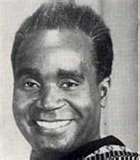
Affectionately known as KK, Kenneth Kaunda was the first president of Zambia.
Kenneth Kaunda with Nelson Mandela
While president of Zambia, Kenneth Kaunda nationalized the copper mines, and also worked towards freeing all the Black people of Southern Africa from white supremacy. He supported freedom fighters in the Portuguese colonies of Angola and Mozambique, in Southern Rhodesia (today’s Zimbabwe), Namibia, and South Africa. He even met with Pieter Botha and B.J. Vorster to solve the issue of apartheid in South Africa, but got no results. Being so close to all these countries and seeing what his fellow brothers were going through made him want to fight. He played a crucial part in the liberation of all of southern Africa from white supremacy. Zambia paid a price for its backing of those countries by being bombed by the Apartheid government.
KK on a Zambian currency note
One thing I remember clearly is the day KK went on national television to sensibilize the Zambian people about the danger of AIDS. He had just lost his son to AIDS, and he was on tears, and urged the people of Zambia to take precautions. I was impressed! How many presidents do you see doing that? or at least how many African presidents do that?
Please enjoy this interview given by Kenneth Kaunda to CNN African voices. One other special plus… Kenneth Kaunda is a great singer!
Don’t forget to watch Part 2 and 3 of the interview.
“I have been a journalist since the age of 15. I started as an errand boy at a newspaper called Semences africaines, in the city of Yaoundé, Cameroon. Over the past 34 years, I have been arrested 126 times while carrying out my profession as a journalist. Physical and mental torture, death threats, the ransacking of my newsroom, etc., has often been my daily lot in a situation where repression and corruption, even within the press, have become the norm. Woe betide the slightest dissenting voice in this context, for it attracts all kinds of wrath, even from so-called colleagues…”
“I have never felt like a prisoner when I have been behind bars. You can be in prison without being a prisoner; the real prisoners are those who imprison journalists whose only crime is to inform or to express an opinion… ”
“… my long stay in prison above all stimulated my sense of solidarity with others, particularly the poor and the outcast… strengthened my determination to use journalism as a weapon against all kinds of abuse. For there is no better weapon than words for restoring peace and justice among people…”
“To have the privilege of writing taken away from you overnight feels like being victim of a crime…”
“During a lecture I once gave to students from a well-known university in New York, the director of the school of journalism made the following remark: “Mr. Njawe, my students and I appreciated your brilliant exposé of the situation regarding press freedom in Cameroon and in Africa in general. But I cannot help wondering one thing: either you invented all these stories to impress us, which I could understand, or everything you have told us is true and I am dying to ask you why you continue to work in the profession in the suicidal situation you describe?”
“It is indeed difficult to understand why people persist in a profession that causes them so much misery and suffering. As regards my own case, I invariably reply to everyone who wonders this, that I entered journalism the way you enter a religion; journalism is my religion.I believe in it, and a thousand trials, a thousand arrests, a thousand imprisonments and as many death threats will never make me change job. On the contrary, the harder it is, the more you have to believe in it and cling to it.”
“Even in the depths of a prison cell you can feel good about being a journalist. How many times have I not rubbed my hands in my cell, my fingers itching to once again hold a pen between them, when thinking back over my career? How many times have I smiled when recalling an editorial or an article that helped foil the most atrocious plans against Cameroon and its people? If only for consolation, one sometimes ends up saying: “They’re right to take it out on me like this, after all, I haven’t spared them in my articles…“. ”
Respecting ethical standards is of fundamental importance for anyone wishing to be a journalist. It protects you against all kinds of people who would like to teach you a lesson. When you are facing a judge who is being manipulated, it is your irreproachable professional defense that makes that judge examine his or her own conscience. It is what wins your colleagues over to your cause when you are in difficulty. Doing your job properly therefore seems to be the best advice anyone can give a journalist operating in a context of constant harassment. And doing your job properly also, and above all, means avoiding “gumbo journalism“, a practice becoming increasingly widespread in our profession, where people write what they are paid to write instead of giving real information and the truth. While journalists have the right to earn a decent living, even in emerging nations,honest journalists never need pockets in their shrouds…
Journalists perform a social function, which gives them not immunity, but the right to look critically at the way a nation is being run. While playing this crucial role, it is important for them to be protected by the law, but also by the whole of society for which they work…Every time a journalist is silenced, society loses one of its watchdogs.
Yes… I am actually talking about Ferdinand Leopold Oyono, the Cameroonian writer mostly known for his novels ‘Une Vie de Boy‘ (Houseboy), ‘Le Vieux Nègre et la Medaille‘ (The Old Man and the Medal), and ‘Chemin d’Europe‘ (Road to Europe). I must admit that I have only read the first two. I have decided to focus only on Oyono literary achievement, even though his literary career was quite short, and he also served as ambassador and minister under different presidents of Cameroon for over 40 years.
Une Vie de Boy (Houseboy)
In his novels, Oyono uses satire to denounce the colonial system, the abuse Africans suffer in the hands of the European. Oyono writes ‘Une vie de boy‘ (Houseboy) as a diary, and casts a critical view on the relations between Africans and Europeans during the colonial era. The main actor is a young boy, who leaves his family where he was mistreated, and ends up with the French missionaries, and later on works as a houseboy for the ‘Commandant’; where he quickly becomes the center of querels between the Commandant and his wife, and is frequently beaten because of what he knows. In his second novel, ‘Le vieux nègre et la medaille‘ (The Old Man and the medal), Oyono evoked the deep sense of disillusionment felt by those Africans who were committed to the west, yet rejected by their colonial masters. Meka, the main protagonist, receives a medal for his services to the French colonial administration, for donating land to the French missionary church and above all for sending his two sons to the second world war where they are killed.
The Old Man and the Medal
It is interesting that despite his short literary career, Oyono has managed to write two of the most important African novels depicting the relationship between the European colonizer, and the African colonized, a relationship made up of disillusionment, abuse, modernism, education, and cohabitation of two worlds where one is imposed on the other. The British newspaper The Guardian wrote a really good article saluting this great Cameroonian and African writer.
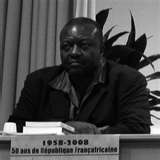
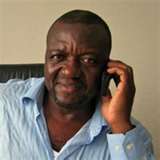
Le 3 Mai est la journée internationale de la liberté de presse. Pour moi, quand je grandissais à Douala, la liberté de presse avait toujours été symbolisée par Pius Njawe et son journal ‘le Messager‘. Qui au Cameroun n’a pas lu ‘le Messager’? Qui n’a pas souri sous les caricatures du ‘Messager Popoli‘? Je dévorais assidument chaque page de son journal… Au debut, quand j’étais toute petite, la rubrique ‘Takala et Muyenga‘ était la seule qui m’interessait car elle était amusante et il y avait de très belles carricatures (oui j’admets… j’aimais les dessins). Petit à petit, j’ai commencé à lire l’éditorial écrit par Pius Njawe lui-même, et puis finalement le journal tout entier. Mon père étais un abonné hors-pair, et c’est grâce à lui que le ‘Messager’ est devenu presque synonyme de ‘vraies‘ nouvelles (i.e. non contrôlée par l’etat) dans mes pensées. Pius Njawe avait un don, une passion: il aimait la vérité! Il était à la recherche de la vérité et du bien-être de la société civile. Il n’avait pas peur d’aller en prison pour avoir publier des articles poignants contre le gouvernement en place; il avait d’ailleurs été arrêté plus de 126 fois. En 2000, Njawe est nommé parmi les 50heros de la liberté de la presse des derniers 50 ans.
Le Messager
Quand je pense que Njawe avait créé ‘le Messager’ à l’age de 22 ans en 1979, sans même avoir fait d’études avancées… C’est surprenant!… non, impressionant! Il avait toujours était guidé par sa passion, et c’est certainement pour cela que ‘Le Messager’ était si différent de tous les autres journaux de la place: il était authentique, mû entièrement par la passion et la recherche de la vérité impartiale… bref par le journalisme à l’état pur! Que puis-je dire? La perte de Pius Njawe est comme la perte d’une perle precieuse, car Pius Njawe était effectivement une perle rare pour le Cameroun. Il avait résisté pendant 30 ans, et avait payé de cela par ses détentions arbitraires en prison, le saccage de ses bureaux par le gouvernement, l’exil au Benin (qui avait duré 1 an), la fausse-couche de sa femme (qui avait été battue en prison), la mort de sa femme, et ensuite lui-même. Il a payé de sa vie son amour de sa patrie, de la vérité, et du journalisme. Une chose est sûre et certaine, il a touché chacun d’entre nous, et son oeuvre continuera à jamais. Hasta la vista Pius, tu nous a ouvert les yeux à la cause de la démocratie et de la liberté. Tu resteras dans nos memoires comme étant le plus grand combattant, et opposant camerounais, car tu t’es opposé au népotisme, à la dictature, à l’injustice, et à la gabegie. Comme disait si bien Agostinho Neto: “La lutte continue et la victoire est certaine!”
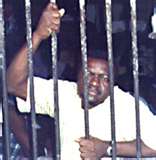
Pius Njawe in jail
May 3rd is the World Press Freedom Day. Pius Njawe and his journal ‘le Messager’ have come to symbolize this day to me. Pius Njawe’s pioneering work as the head of le ‘Messager‘ has marked me for as long as I can remember. His journal was not only the first true alternative to Cameroon Tribune (state-owned newspaper), but the real way to find news about what was truly going on in the country. In 2000, the Austria-based International Press Institute listed Mr. Njawe among its 50 world press freedom heroes of the past half-century. The institute called Mr. Njawe “Cameroon’s most beleaguered journalist and one of Africa’s most courageous fighters for press freedom.” Yes… Njawe was the quintessential freedom fighter in a country where the press was constantly controlled and held under the sword of Damocles by the regime. He was arrested over 126 times, most of the time simply for telling the truth and keeping the government under constant check. He embodied what true journalism is all about: the impartial search for truth. While resisting the regime for over 30 years, he had come to symbolize the true voice of the people, the voice of those who could not speak, those who had no one, the people of Cameroon. We salute you Pius, you were indeed a true freedom fighter, and the true representant of the people! You will sorely be missed!
En période de sécheresse, la terre aride ne produit presque rien, la famine s’étend dans le pays tant pour les hommes que pour les animaux. Cette année, les récoltes avaient été mauvaises et les greniers étaient vides.
Compère d’Azui, le lièvre aux mille ruses, malgré toute sa malice, souffrait de la faim comme les autres. Du matin au soir, il errait à travers la brousse, ramassant des graines de fruits sauvages, des racines: tout ce qui pouvait être mangé. Or, dans la savane, il aperçoit soudain un baobab.
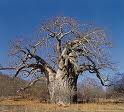
Baobab
Il s’en approche, espérant trouver du pain de singe mais il n’y en avait pas. Par contre, lorsqu’il s’approche de l’arbre, des abeilles sortent d’un trou dans le tronc en bourdonnant.
S’il y a des abeilles, il y a du miel se dit compère Azui.
Laissons-les travailler à cette heure! Ne les dérangeons pas! Nous reviendrons ce soir, quand elles seront fatiguées et prêtes à s’endormir. Il sera facile de partager leur repas. Et silence, lièvre s’en retourne chez lui.
Or il y avait dans la savane un génie qui raffolait de miel. Il vient à passer au pied du baobab, aperçoit les abeilles et se tient le même raisonnement qu’Azui.
Genie
Le lièvre a tellement faim qu’il se presse de revenir. Il arrive exactement au moment où les abeilles viennent de s’endormir. Il enfonce bras dans le trou du baobab, délicatement, et en retire tous les rayons de miel qu’il peut saisir. Il y en avait encore un peu au fond de la ruche mais le bras de compère lièvre était trop court et il ne pouvait l’attraper. Chargé des rayons de miel, Azui s’éloigne du baobab et s’en revient à sa maison. A peine s’est-il éloigné que le génie amateur de miel arrive. Il plonge le bras dans le trou de l’arbre ou nichaient les abeilles mais ne peut atteindre les rayons de miel qui restaient. Pendant qu’il fait des efforts pour y parvenir, il entend quelqu’un arriver. Pour ne pas être surpris, il entre dans la ruche et s’y blottit. Azui, car c’était lui qui revenait, ne voit donc rien. Il s’approche et enfonce le bras dans le trou. Aussitôt le génie comprend que le voleur de miel est de retour et saisit vigoureusement la main de celui-ci compère lièvre, se voyant pris au piège, se débat de toutes ses forces pour se libérèrent criant:
Qui tient mon bras? Lâchez-moi!
Le génie, le tenant toujours, répond:
C’est moi!
– Qui moi?
– Moi le génie-lanceur de la savane qui va te dévorer.
Abeille et Miel
– Ce n’est pas vrai! dit compère livre le rusé. Il n’y a pas de génie-lanceur. Si cela existait, puisqu’il m’a attrapé, il m’aurait déjà projeté très loin de la ruche! Or je suis toujours là mens! tu n’es qu’un petit voleur de miel!
– Ah? je ne suis pas le génie-lanceur de la savane? Ah! Je mens? C’est ce que nous allons voir! rétorque le génie, très vexé, et de toutes ses forces, il lance Azui le plus loin qu’il peut.
Compère lièvre tombe à bonne distance dans de hauts herbes qui amortissent le choc. Il se relève immédiatement et se met à crier:
Lievre content
Tu es vraiment le génie-lanceur de la savane, mais tu es trop bête! Quand tu me tenais solidement par le bras, j’étais ton prisonnier et tu pouvais me dévorer. Essaie donc de le faire maintenant que tu m’as projeté loin de toi et que je suis libre. A peine a-t-il achevé ces mots qu’il se sauve à toute vitesse vers son terrier. Et le génie, furieux et déçu, le voyant filer comme l’éclair comprend un peu tard qu’il a été berné.
C’est parce qu’il sait toujours se sortir d’affaire grâce à ses astuces que tout le monde, ici, dit que compère lièvre est le plus rusé de tous les animaux.
Conte tiré de “Contes des Lagunes et Savanes,” Collection ‘Fleuve et Flamme,’ édition Edicef, 1975.