When you love greatness… you come across greatness. A couple of years ago, I watched the Oscars, and one of the nominees for international movies was the South African operatic version of Carmen of Bizet. This made me wonder if there was another orchestra on the continent playing the arts of Mozart, Vivaldi, and Beethoven, to name just a few… and what would that be in an African language. Few days ago, I came across an article on the BBC talking about the Kinshasa Symphony Orchestra. I was so proud to see that this orchestra was entirely founded by Congolese themselves. The ‘Chef d’orchestre’ was a Congolese gentleman who had started the orchestra in 1993 (Armand Diangienda)… and kept it throughout the years. He merged two great musical traditions using Western musical instruments to create Congolese classical music. With time, the orchestra grew: in its early days, it started with 5 cellos for 12 people; now the orchestra counts over 100 members! They even compose their own music in Lingala! Isn’t it amazing? Orchestra members come from all works of life: from cooks, teachers, ‘vendeurs a la sauvette’ (bayam-selam), tailors, to journalists, professors, etc… They are from all ages: mothers, parents, singles… etc… So great was my surprise that I had to write this article and leave you with this great video… Enjoy: Symphony orchestra made in Congo, by Congolese people, for all! Delightful !!!
Please also check the official website for the documentary: Kinshasa Symphony
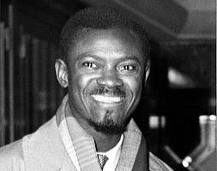
This Monday marked the 50 year anniversary of the assassination of the great African giant Patrice Lumumba. How could I pass on such an occasion to talk about him? 50 years later, his speech and his vision still ring true. Lumumba dared to defy the Belgian King Baudouin by telling him on independence day what he saw as the Belgian hold on Congo. He was blunt! He spoke the truth! He was not malleable… He could not be manipulated by Europeans! He was a menace because he was a free man proud to be Congolese.
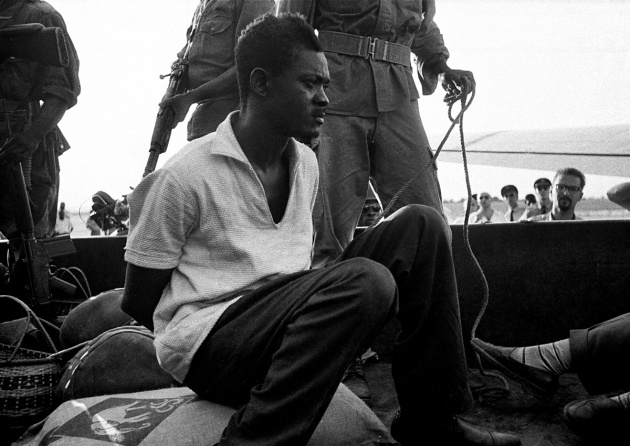
Lumumba detained
I always wondered what would have happened if Lumumba had not been so open about his ambitions for his country? What would have happened if he had played their game, and hidden his cards? Then we, Africans, would have never had our African hero! Someone had to say what we all felt: oppressed, hated, enslaved, diminished,… someone had to make us proud of being Congolese/African again… someone had to re-establish our dignity! That someone happened to be Patrice Emery Lumumba! Patrice died because he had great ideals, and because he trusted others. For the problem in the Katanga province, he went to the United Nations; he trusted that establishment to resolve the conflict peacefully, and to help solve the Katanga secession…. Instead they, with all the interests they represented (US, Belgium,France, etc…), refused to help him… the US of Kennedy refused to help him out, and thus he turned to the USSR to keep his country united. With the USSR, he was able to solve the rebellion in the Katanga and Kasai provinces… but the Americans and Belgians were mad that he had been helped by the Soviets; they decided to have him murdered after this affront (they used Mobutu, and Tshombe)! Once again, we Africans sold our own brother… I wonder where the Maurice Tshombe, or Kibwe, or the Joseph Mobutu are today… History will remember them as tyrants, dictators, and puppets of the West! Isn’t it interesting that history keeps repeating itself? Today the United Nations are starting a war in Ivory Coast in the name of installing a puppet-president in a soveraign country… Have you ever seen the UN so vehemently ask for war in a country? Only in Africa could this be possible… I used to dream that this was a peace organization! Actually, it is an organization to impose the will of the West on third world resource-rich countries.
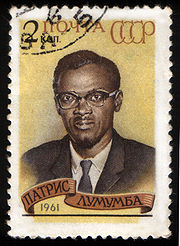
Lumumba on a USSR commemorative stamp in 1961
The following documentary will tell it all: how the Belgians did not like Lumumba because he was not a puppet, how they started the Katanga secession and supported it; how Lumumba went to the UN for help in keeping his country united and was refused help; how Lumumba went to the US to ask for help, and was not even received by president Kennedy; how he turned to the USSR to solve his problem in the Katanga and Kasai provinces; how that event precipitated his end. 50 years later, Lumumba’s ideals and vision are still actual. Lumumba is the symbol of aspirations of an entire continent. His spirit lives on, and his pride is ours!
Lumumba (2000)
I live you with an excerp from a letter he sent to his wife before his death: “… the future of the Congo is beautiful and [I] expect for each Congolese, to accomplish the sacred task of reconstruction of our independence and our sovereignty; for without dignity there is no liberty, without justice there is no dignity, and without independence there are no free men.” You can find the Integral version of this letter on AfricaWithin.com, as well as his famous 30 June 1960 independence day speech. Please don’t forget to check out: Wikipedia, The Guardian which deemed the assassination of Lumumba as the most important of the 20th century, The Daily Nation of Kenya deemed Lumumba the bright spark in a land of despair, and The New York Times which called it an assassination’s long shadow. At last, the movie Lumumba (2000) is what finally got the Belgian admitting their part in the assassination of Lumumba.
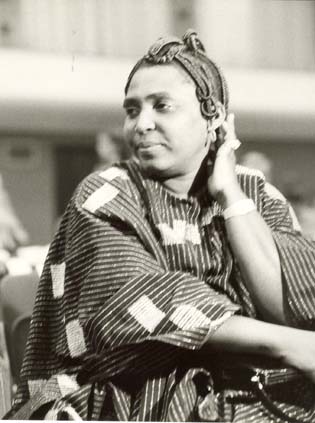
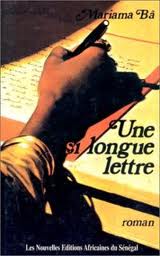
I have wanted to write about Mariama Bâ for the longest time. She is a writer from Senegal… she is the author of “Une Si Longue Lettre” [So Long a Letter], and “Chant Ecarlate” [Scarlet Song]. Her book “Une si Longue Lettre” [So Long a Letter] is considered by many as being the first truly African feminist book, as it describes the woman’s condition in an African and Muslim society. It talks about the place of the woman in society, the effect on polygamy on women and society, and the clash between modernism and traditions. It is written as a letter from a widow Ramatoulaye to her best friend Aissatou who left her husband when he decided to marry a second wife. This book really describes the feminine condition in Africa, and was truly the first to address so overtly the woman’s hurdle in African society. Six months after the publication of “Une Si Longue Lettre,” Mariama Ba passed away… and her novel “Chant Ecarlate” was published posthumously.
Une Si Longue lettre
Chant Ecarlate [Scarlet Song] also deals with feminine conditions, but addresses more the clash between two different cultures the European (of the protagonist Mireille), and the African (of Mireille’s husband), and again polygamy. I always felt deeply connected to Bâ’s first book, and always wondered what a great loss African literature suffered when she left. She will always be an inspiration for many: orphan from her mother, raised by her father and grand-parents, mother of nine children, divorcée, professor, highly educated woman, she embodied the strength and determination that can so clearly be seen in African women. Today, “Une Si Longue Lettre” is an African classic, read in all schools across the continent, and translated in numerous languages. We are forever grateful for her work… she opened the door to many bold young African female writers.
Scarlet Song
The following is an interview that Mariama Bâ gave to Alioune Toure Dia for the magazine Amina in November 1979: Interview de Mariama Bâ à Amina. Relax and enjoy!
Il était une fois un roi très puissant, redouté par toutes les tribus du voisinage et respecté par les siens. Il avait sept fils nés de plusieurs femmes. Mais son épouse préférée ne lui avait donné qu’une fille nommée Sika. Cette jeune princesse était aussi douce que belle. Elle aurait fait la joie de la vieillesse de son père si elle n’avait été victime d’un malheur épouvantable: à l’âge de quatorze ans alors que nulle jeune fille de la région ne pouvait rivaliser en beauté avec elle, elle était brusquement devenue sourde et muette. Car les coépouses, par jalousie de la préférence marquée du roi pour sa mère, avaient voulu atteindre celle-ci par sa Sika par un grand féticheur du pays.
Sika
Le roi ignorait naturellement les agissements de ses épouses mais les mauvaises langues du royaume avaient jasé. Et la rumeur s’était répandue dans le pays. Le roi a fait tout ce qui était en son pouvoir pour que sa fille bien-aimée guérisse. Il a consulté tous les sorciers de quelque réputation, a offert des présents somptueux à tous les marabouts du nord pour qu’ils viennent examiner son enfant. Mais nul n’a pu parvenir à rendre l’ouïe et la parole à Sika. Finalement le roi a résolu d’envoyer sa fille vivre dans un petit village à l’écart, car le spectacle du malheur de son enfant lui déchirait le cœur.
Tortue
Or, Tortue, à l’esprit fertile en inventions a entendu parler de l’affaire et a décidé d’intervenir afin d’en tirer un bon profit. Elle se rend à la cour et demande à parler au roi: “Seigneur, lui dit-elle, que me donnera tu si je réussissais à guérir la princesse? J’ai beaucoup d’expérience et je crois que cela est de mon devoir.”
L’espoir se réveille alors dans le cœur du malheureux père.
“Si tu parviens à rendre l’ouïe et la parole à Sika, je prends le conseil des anciens à témoin, je partagerai mon palais en deux et t’en donnerai la moitié.”
– J’ accepte ton offre, répond Tortue. Dès que j’aurai fait ce que je dois, je t’amènerai ta fille et tu constateras par toi–même qu’elle est redevenue normale.
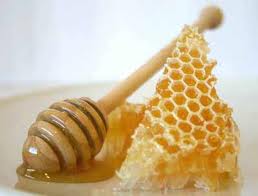
Miel
Tortue se rend donc dans la forêt qui entoure le village ou l’on avait envoyé la jeune princesse. D’une petite hauteur, elle surveille le chemin. Bientôt, elle aperçoit Sika qui se rend au marigot pour se baigner. Tortue, aussitôt, va déposer, bien en vue, sur une grosse pierre, une calebasse pleine d’un miel délicieux qu’elle s’était procuré. Puis, elle se cache dans un buisson tout près de là.
La princesse arrive au bord de la l’eau, cherche un endroit pour déposer son pagne et aperçoit la calebasse. Poussée par la gourmandise, elle y porte la main tortue sort alors précipitamment du fourré, s’élance sur Sika et la frappe au visage en hurlant:
“Voleuse ! Voleuse ! Comment peux-tu voler le miel que j’ai acheté pour mes enfants?”
La jeune fille abasourdie, se débat. Son indignation est si violente que la parole lui revient.
“Moi une voleuse? Comment oses-tu dire une chose pareille, étrangère? Ne sais-tu pas que je suis la fille unique du roi, la princesse Sika? Veux-tu me lâcher immédiatement!”
Mais Tortue, la très rusée, la ligote avec une corde et l’entraîne derrière elle sur le sentier qui va vers le village, en
Sika angry
criant à tue-tête: “Regardez tous la voleuse de miel! Wuu! Wuu! Sika, la fille du roi n’est qu’une voleuse! Wuu! Wuu! Sika préfère prendre le miel des autres pour le manger que d’aller au marché en acheter.”
A son tour, elle se met à crier: “La veille sorcière! La menteuse! La fille du roi ne doit pas être insultée ainsi. Frappez cette menteuse! Et délivrez-moi! Sika va rendre visite à la panthère de la forêt et la panthère est contente! Sika va visiter le seigneur éléphant ! Et le seigneur éléphant est fier de la recevoir. Honte! Honte! à la vieille qui veut déshonorer la fille du roi par ses mensonges!”
Mais Tortue semble ne vouloir rien entendre. Les habitants du pays sont tellement étonnés d’entendre ces accusations et de voir la princesse qui était muette auparavant, répondre par de grands cris, qu’ils n’osent intervenir.
African village
Tortue continue donc à traîner ainsi derrière elle la jeune fille, en direction de la ville royale. Avec malice, elle poursuit ses clameurs: “Wuu! Sika, la fille du roi est une voleuse de miel! Regardez-la tous! Wuu! Wuu! Sika, voleuse de miel!”
Tandis que la princesse en furie vocifère: “Vieille sorcière! Menteuse! Ce n’est pas vrai! Ce n’est pas vrai!”
Elles arrivent dans cet équipage et au milieu des mêmes hurlements jusqu’au palais. Attiré par le bruit, le roi sort dans la cour et pousse un cri de stupeur: “Ma fille muette parle! Miracle! Miracle!”
Aussitôt, prestement, Tortue détache les liens de Sika et s’incline respectueusement devant le roi.
Quand à la jeune princesse, toujours furieuse, elle se précipite aux pieds de son père: “Père! Père! Punissez cette vieille sorcière qui m’a insultée et humiliée, moi, votre fille unique! Père, punissez-la!”
Tortue victorieuse
Le roi voit que son enfant bien–aimée est complètement guérie et il la calme en disant: “Non ma fille! Je ne punirai pas Tortue. Au contraire, je vais la récompenser car elle a réussi là où les plus grand plus féticheur ont échoué. Elle ne t’a humilié que pour t’obliger à retrouver la parole. Sa ruse a été plus forte que tous les remèdes!”
Il s’approche ensuite de Tortue et déclare: “Grand merci savante Tortue, qui as sauvé mon enfant en la guérissant de son infirmité. La moitie de mon palais est à toi!”
Tortue réussit tout ce qu’elle entreprend car elle connaît bien le cœur des hommes!
Conte tiré de “Contes des Lagunes et Savanes,” Collection ‘Fleuve et Flamme,’ édition Edicef, 1975.
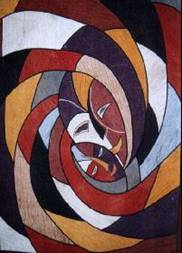
The Obom, in Fang-Beti (Cameroon) language, means tissue of the bark of the Aloa tree. The bark of the “aloa” tree – a widespread tree in the equatorial forest, particularly originating from Cameroon my home country, – was used in former times for the manufacture of loincloths. The Aloa tree has a fibery bark, and is a soft white wood; it grows quite fast, and once at maturity, its flowers drop seeds which grow around the tree. This natural fibre is obtained in Cameroon in traditional ways. The bark layers which have a thickness of 1 to 2 mm, are treated as intact sheets with water steam and are subsequently softened by beating. The full description on how the Obom is extracted can be read in full from the webpage of Etolo Eyah, a Cameroonian artist master of Obom.
Obom painting by Arlette D. Efang
The originality, beauty, and genuineness of the obom bark in combination with modern fabric and leather confers to any creations a touch of exclusivity, in a very ‘green’ manner, leading to sustainable development and handicraft.
Hat made out of Obom bark
The obom enjoys the reputation of being a material of great value and is therefore often also used as canvas for paintings, in witness of the riches of their owners; there are several Cameroonian painters who particularly use the Obom as canvas. This natural fibre can be machine washable and ironed. The use of the obom bark in modern couture is unique. I can testify of this because I have a hat made up of Obom which I have had for over 12 years! Please check out the websites of several stylists and painters, such as Martial Tapolo, Cornelia Orsucci, Peter Musa, Otheo, and Arlette Dorothee Efang, to name just a few. The video below just shows the processus of harvesting and cleaning the tree bark; the bark shown is not obom!
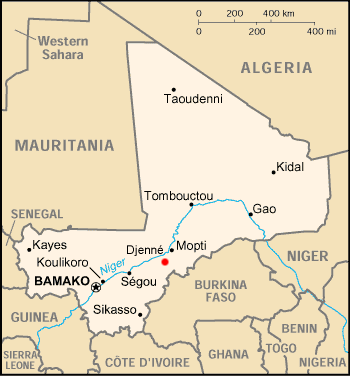
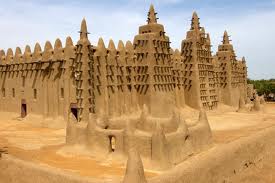
Djenné is a city of Mali whose history is closely linked to that of Timbuktu. It is well-renowned for its mud brick architecture, and today most of the city is considered a UNESCO World Heritage Site. In no place in the world do you have a civilization entirely built on mud! Maybe that is why Malians are so renowned for their work on mudcloth a.k.a. bogolan! The Djennenké say that nowhere in the world would you find people who can build in mud like Djenné’s masons: their work with mud is pure magic, as illustrated by the beautiful Great Mosque of Djenné. The masons’ family lines stretch back half a millenium! They mix the clay from the surrounding plains with the water from the Bani river, and bring to life an architecture purely from Djenné rising with splendor.
Great Mosque of Djenné
Djenné has fallen victim of time, erosion, and particularly rain which deteriorates the mud structure. Recently, as part of protecting this UNESCO world heritage, restoration started. For this process, Djenné masons divide up the work according to whose ancestors originally built the houses, the families that inhabit them, and themselves: dirt from old brick is reused only within the dwelling which it came from, since it is believed to carry a blessing which cannot be transferred; this is a practice whose roots date back to 250B.C.. Before the arrival of the French in 1900s, Djenné’s masons built using the technique of Djennefere or the art of building with cylindrical bricks, as opposed to rectangular bricks introduced by the French. Recently, a Malian-American team of archaeologists found in the base of wall fragments, from about A.D. 1400, of a type of bowl Djennenké still place in foundations for protection; another fragments with Arabic inscriptions dating back to A.D.
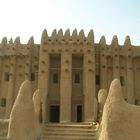
Entrance
1118. This is important, since before Djenné, there was Jenné-Jeno (before 200 B.C.), the “city without a citadel” which had no royal palace or ruler with an army, but was made up of different tribes or clans with different specialties which formed a sort of democracy where they came together to trade and decide community affairs. After 1100, Jenné-Jeno shrank, and by the 14th century, it felt and a new city, Djenné, grew from the trans-saharan trade in salt and gold. Djenné was later on invaded by Arab traders who introduced islam to the city. Later, Djenné was part of the great Mali Empire, the Songhai empire, the Ségou Kingdom, the Macina Empire, and the Toucouleur Empire. In essence, in Djenné, the old and the new merged, the mud from the earth grew, and the learning was passed on from generations to generations, making Djenné, the city built on mud rising from the splendors and knowledge of the past!
With all that is happening in Ivory Coast, and the willingness of the international community not to respect a country’s constitution, I have decided to post this video which shows what happened in 2005 in Ivory Coast with the French military. As a brief parenthesis… I have never seen the international community act so vehemently in Africa… when they last did, it was in Rwanda where they choose not to say a word. Why are they still treating Africans like children, like old colonies? Has any of us Africans, ever said a word about elections in France, or in the US (Bush vs. Gore 2000)? Why is it that when we organize elections, they all act like we cannot take care of our own business. They all say “Ouattara won, Gbagbo lost according to the electoral commission”… but according to the constitutional committee of Ivory Coast (founded on Ivory Coast’s constitution), Gbagbo won and Ouattara lost. In that case why trying to force Gbagbo out… why not just say ‘Re-organize the elections’! Why trying/wanting a military action when half of the people of Ivory Coast are with either one of the protagonists? When people care about the safety of others, and peace, and a solution cannot be found: why do they want to force one over the other? Why this obsession in imposing the West’s will? … why not since they are the United Nations, France, etc… ask for a recall? Are they afraid that we are actually going to find out who the real winner is?
Thanksgiving étant la fête de la Pintade, rien de tel qu’un conte à son honneur…
Cette année-là, la famine était grande. Les plantes mouraient desséchées par le soleil trop ardent. Les quelques animaux survivants étaient décharnés et affaiblis. Tous, sauf Compère Lièvre le très rusé. Celui-ci de bon matin la houe à la main, quitte sa maison, s’en va jusqu’à une grosse plate-forme de pierre et entreprend de sarcler. Or, en ce temps-là, nul ne se moquait d’autrui car les dieux avaient interdit de le faire, sous peine de mort. Voyant Compère Lièvre s’acharner à vouloir cultiver une plate-forme rocheuse, les animaux de la brousse s’assemblent autour de lui:
“Qu’arrive-t-il à notre compère? Est-il devenu fou? Hé ! Azui ! Travaille bien, frère ! Quelle magnifique récolte tu auras! c’est alors que la famine disparaîtra ! Ah le bon champ! Ah le bon cultivateur!”
Et tous rient aux éclats.
Plate-forme rocheuse
Mais les dieux entendent les railleurs et se fâchent:
“Comment ose-t-on nous désobéir? A mort, les sacrilèges !”
Tous les animaux qui se sont moqués d’Azui, tombent foudroyés sur le sol. Paisiblement, Compère Lièvre dépose sa houe, ramasse les animaux défunts et rentre chez lui très satisfait d’avoir obtenu des provisions pour un certain temps.
Or, non loin de là, habitait Pintade. Elle avait observé toute la scène sans rien dire et l’idée d’Azui lui avait paru bonne. Quelques jours plus tard, Compère Lièvre croise sur son chemin Pintade qui se dirige vers le village à pas pressés.
“Où vas-tu de ce pas rapide, voisine ?” demande t-il.
Pintade
– Ne me retarde pas, mon frère! répond Pintade, très sérieuse, j’ai rendez –vous avec Commère Guenon qui a accepté de me tresser élégamment les cheveux.
– Ah ! Ah ! Tresser les cheveux d’une pintade ! Ah ! quelle idée ! Chère sœur, où sont tes fameux cheveux, s’il te plaît? Mais tu es complètement folle ! Ah ! Je t’imagine très bien avec une belle coiffure de tresses !
Compère lièvre rit si fort qu’il se laisse tomber sur le sol, perdant son souffle. C’est alors que les dieux courroucés le foudroient.
Pintade, très contente, n’a plus qu’à ramasser le corps d’Azui et à l’emporter chez elle comme provision de nourriture.
Quand on fait des fourberies aux autres, cela leur donne des idées, parfois.
Conte Mina tire de “Contes des Lagunes et Savanes,” Collection ‘Fleuve et Flamme,’ édition Edicef, 1975.
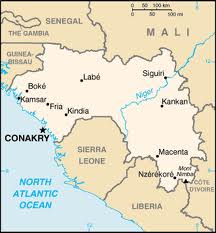
Last week was the second turn of elections in Guinea, and it only made sense to talk about Guinea. Well… Guinea is a country in West Africa whose capital is Conakry… it is a country rich in minerals such as bauxite, gold, diamonds, magnesium, etc. It is well-known for his first president Sekou Toure, who was the first to say ‘NO’ to France in 1958. In his own words, he said: “It is better to be poor and free, than to live in opulence and be a slave.” Guinea, thus became the only nation in French Africa to say ‘NO’ to the General de Gaulle and France. It was seen as a treason and an affront… and France never forgave Guinea, destroying files when leaving, withdrawing abruptly, destroying infrastructures, and breaking political and economic ties. I will not say much, but the video below says it all… Sekou Toure and the people of Guinea dared to say ‘NO’, and for that we, from French Africa, are forever thankful!
Sekou Toure
Je lance un appel à tous les Guinéens d’aller sur Wikipedia corriger l’histoire de leur pays. La définition sur Wikipedia est très incomplète! Nul part est-il mentionné le fait que la Guinée était le seul pays en Afrique Francophone à dire ‘NON’ à la France; et à cause de cela, ils ont été persécutés!
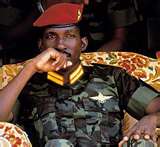
Thomas Isidore Sankara, notre héros africain, mort pour ses convictions et son amour de son peuple, et de sa patrie. Ce grand héros a fait l’un des plus beau discours que j’ai jamais entendu sur la dette africaine! Quelle éloquence mon Dieu! Quelle vérité! et quel humour! Je suis d’accord avec lui que la dette africaine ne peut pas être entièrement payée… et que les pays membres qui ne vont pas aux réunions de l’UA ne devraient pas recevoir les mêmes faveurs que ceux qui y assistent assidûment. De plus, il parle de consommer africain: toute sa délégation était habillée par des tisserands Burkinabés. Regardez, écoutez, et célébrez avec moi l’un des plus grands hommes qui ait foulé le sol du continent africain.
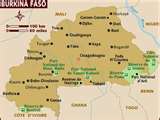
Burkina Faso
Thomas Isidore Sankara, our African hero, killed for his convictions, love of his people and his country. This great hero gave one of the greatest speech I have heard about the problem of African debt. Such an eloquence! Such Truth my Lord! Such humour! I do agree with him that the African debt cannot be entirely paid… and that the African nations who do not show up at the UA summit should not have favors extended to them the same as those who attend the meetings. Moreover, he talks about living and breathing African: his delegation and himself were entirely dressed by Burkinabes tailors with cotton from Burkina Faso. Please watch, listen, and celebrate one of the greatest man the African continent has ever seen!



















 African Heritage