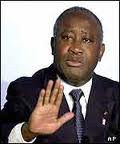
Laurent Gbagbo: Non au Silence Complice!

Laurent Gbagbo
Laurent Gbagbo

Je n’étais qu’un enfant lorsque Thomas Sankara a été assassiné… je ne pouvais rien comprendre aux larmes de douleur de mes parents. J’ai pleuré de douleur après avoir vu le film sur l’assassinat de Patrice Lumumba. Aujourd’hui… avec l’arrestation de Laurent Gbagbo, je me suis écroulé sous le poids de larmes d’amertume, de douleur, et de peine. Aujourd’hui, j’ai vu mon président et sa femme être traînés comme de vulgaires voleurs… Quelques soient leurs crimes, ni Moubarak, ni Chirac, ni Bush Jr., ni même Pinochet, n’ont été traîtés de la sorte. Est-ce parce que Laurent et Simone Gbagbo symbolisent l’Afrique forte? Le nègre éduqué? Le nègre qui veut sa liberté? Quel mal y a-t-il a demandé aux gens de discuter après un contentieux électoral? Quel mal y a-t-il a demandé aux gens de re-compter les votes?

L’année dernière encore, je me souviens de tous mes amis qui célébraient les 50 ans d’indépendance de l’Afrique… et je leur disais que je ne pouvais pas célébrer une farce. Aujourd’hui la farce se dévoile! Bombarder tout un pays, pillonner la résidence d’un chef d’état, une armée étrangère (la France) qui envoie plus de 300 soldats Français et plus de 50 chars de guerre pour aller déloger un président supporté par près de 50% de la population, et investi par la cour suprême de son pays! Et tout ça au vu et au su de tout le monde! J’ai crié: “mais pourquoi le Ghana voisin ne fait rien? Pourquoi l’Angola ne fait rien? Pourquoi l’Afrique du Sud ne fait rien? Mais pourquoi toute l’Afrique ne crie pas?” En 2011, mon pays se fait pillonner par la France et les autres nations africaines regardent! Quelle apathie! O Mon Dieu… ils pensent tous qu’on ne leur ferra pas cela à leur tour? Ne rien faire c’est se rendre coupable de ce crime contre la Côte d’Ivoire, de ce crime contre la race noire!
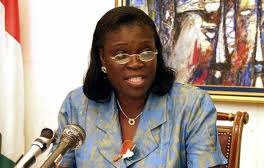
Simone Gbagbo
Simone Gbagbo

Je voudrais rendre hommage à Laurent et sa femme Simone Ehivet Gbagbo. Vous nous avez ouvert les yeux…

Laurent Gbagbo est un fier guerrier de l’Afrique. Il a défendu, et il défend la Côte d’Ivoire, et l’Afrique toute entière. Pour la première fois en Afrique, le president de la republique a à son bras une femme fière et forte, et de plus eduquée! Docteur en literature, Mme Gbagbo nous à montré a tous que être une première dame ce n’est pas faire un défilé de mode (comme la plupart des 1ères dames africaines) ou couper les banderoles… c’est aussi être député à l’assemblée nationale, et être membre actif d’un parti! C’est à cela que je voulais en venir: Laurent et Simone nous ont montré à travers leur combat qu’on peut être noir et digne… on peut être noir et éduqué, et nous avons le devoir de connaître la vérité! Gbagbo a toujours montré la vérité, et demander des arrangements pacifiques… c’est grâce à son equipe à la RTI que nous avons pu voir les détournements de la Françafrique… C’est grâce à lui que nous avons pu voir les débordements de la France en Côte d’Ivoire, les mensonges de Chirac, Sarkozy, etc… et même l’existence du tunnel liant la presidence de Côte d’Ivoire à l’ambassade de France… Maintenant que nous sommes éclairés, nous allons continuer la bataille!

Non à l’apathie! Non au silence complice! C’est notre devoir d’africain de se lever, et de voler au secours de la Côte d’Ivoire! Mais comment? Dénoncer le génocide perpetré par les rebelles de Ouattara soutenu par la France en Côte d’Ivoire… dénoncer le mal fait à notre president, à notre peuple? Mais comment? Ecrivez, priez, chantez, organisez, criez, marchez, résistez!… mais vous n’avez pas le droit de rester prostré… surtout pas en 2011, pas au 21ème siecle!

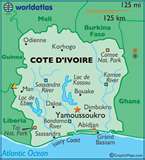
Cote d'Ivoire
Cote d'Ivoire

Quand on arrêtait Patrice Lumumba et qu’on le jettait dans un camion, et qu’on lui tirait les cheveux, et que les blancs le brûlaient, nous avions dit que nous ne savions pas… nous n’etions pas là. Aujourd’hui, nous savons; aujourd’hui nous voyons; aujourd’hui nous sommes presents: le mal fait à Gbagbo et à toute la Côte d’Ivoire est un mal profond… O peuple noir, lève-toi! Sort de ton apathie! Sort de ton sommeil! Réveille-toi! Il te reste encore quelque chose: la terre de tes ancêtres!

Je voudrais dire Merci à Laurent et Simone, car aujourd’hui nous savons tous que l’ONU est une organisation belliqueuse et belliciste qui sert à tuer le peuple africain, et qui sert les intérêts de la France, les US, et l’UE. C’est une organisation dont nous ne devons pas faire partie, car elle est là soit pour nous faire la guerre soit pour assister à notre massacre comme au Rwanda.

Je voudrais dire Merci à Laurent et Simone, car aujourd’hui, nous savons tous que c’est la France qui a soutenu Alassane Ouattara. Nous savons tous qu’Alassane a triché et c’est pour cela qu’il voulait une intervention militaire en Côte d’Ivoire, et non un règlement pacifique du contentieux électoral.
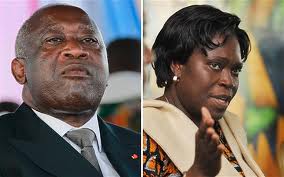
Laurent et Simone Gbagbo

Je voudrais dire Merci à Laurent et Simone, car aujourd’hui, nous savons que nous ne devons compter sur personne pour nous libérer. Nous sommes seuls! J’étais si amère, écoeurée, et dégoûtée  lorsque je voyais toutes les simagrées de la Cédeao et de l’union africaine (UA) qui sont aussi des marionnettes de l’occident!

Je voudrais dire Merci à Laurent et Simone, car aujourd’hui nous savons que les réunions de la Cédeao et de l’Union Africaine sont sponsorisées a 80% par l’UE, la France, les UK, et les US.
Je voudrais dire Merci à Laurent et Simone, car aujourd’hui nous savons ouvertement que le Franc CFA est une monnaie coloniale soutenue par la Banque de Paris, et que 60% de nos benefices aux exportations sont versés dans les comptes du Trésor Francais, et 20% nous sont pris comme TVA. C’est une monnaie dont nous devrons nous débarrasser.

Je voudrais dire Merci à Laurent et Simone, parce que instaurer un embargo sur un pays, est une declaration de guerre contre ce peuple.
Je voudrais dire Merci à Laurent et Simone, car aujourd’hui nous sommes fiers d’avoir un président comme lui; aujourd’hui nous avons pu nous exprimer ouvertement… nous avons pu crier haut et fort notre fierté, nos idéaux, par la voix des gens tels Charles Blé Goudé et Ben Soumahoro… merci votre bataille est la nôtre… et nous répondons présent!

Je voudrais terminer avec cette phrase de Laurent Gbagbo lui-même: « Chaque fois que ce pays sera confronté à des difficultés, il trouvera en moi un fils digne pour relever la tête »… et de dire à mon tour: Mon continent trouvera en moi, un(e) fils(le) digne… c’est mon devoir pour la postérité!


La vendeuse de beignets / The puff-puff seller

beignets
beignets

Je ne sais pas si vous vous êtes jamais assis pour observer une vendeuse de beignets.  L’adresse avec laquelle la vendeuse frappe la pâte entre ses mains avant d’en faire des boules qu’elle jette dans l’huile avec une main d’experte….  Cette adresse est digne des plus grands chefs du monde.  Elle jette les boules dans une grosse bassine d’huile chaude, avec une telle agileté, et un de ses arts, tout ça sans jamais se brûler!   Rien que la voir à l’oeuvre vous met l’eau à la bouche.  Prenez la peine de savourer cette video d’une vendeuse de beignets de Douala, au Cameroun et léchez-vous les babines!  Que ce soit des B.H. (beignet-haricot au Cameroun) ou des boflotos (de Côte d’Ivoire), ou des bédoumés (somnifères) Gabonais,… allez-y regalez-vous!

Have you ever taken the time to watch a puff-puff seller in full action.  The skill that she displays as she beats the dough in her expert hands before throwing the donuts (puff-puff) in the oil… this skill is comparable to that of the greatest chefs of this world.  She throws the donuts in a big basin of hot oil, with such agility and such a great mastery, all of that without ever getting burned!  Just looking at her makes your mouth watery.  Please take the time to enjoy this video of a puff-puff seller in Douala, Cameroon, and lick your lips with delight!  Whether you call it B.H. as in Cameroon, or boflotos  in Cote d’Ivoire, or even bédoumés in Gabon, go ahead and enjoy yourself!

Une prière pour la Côte d’Ivoire/ A prayer for Côte d’Ivoire

 
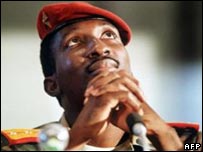
Thomas Sankara
Thomas Sankara

La patrie ou la mort nous vaincrons!

Telle était la devise de Thomas Sankara, notre grand Che africain, ce grand maitre de la révolution Burkinabé, le president du Faso. Telle est la devise que nous nous devons de garder dans nos coeurs en ce moment pour la Côte d’Ivoire: savoir que nous nous battons pour notre liberté, pour notre patrie, pour la seule terre que le bon Dieu a bien voulu nous donner! Amandla!… Ngawethu!

Homeland or death, we shall overcome!

La Cote d'Ivoire
La Cote d'Ivoire

Such was the motto of Thomas Sankara, our great African Che, this great master of the Burkinabe revolution, the president of Burkina Faso. This is the motto that we must keep in our hearts for Côte d’Ivoire right now: to know that we are fighting for our freedom, for our country, for the only land God ever gave us! Amandla! …Ngawethu! Power to the People!

Patria o muerte, venceremos!
Tal era el lema de Thomas Sankara, nuestro gran Che de África, este gran maestro de la revolución de Burkina Faso, el presidente de Burkina Faso. Este es el lema que debemos tener en nuestros corazones para Côte d’Ivoire en este momento: saber que estamos luchando por nuestra libertad, para nuestro país, por la tierra sólo Dios nunca nos dio! Amandla!… Ngawethu!

Pátria ou morte, venceremos!
Esse foi o lema de Thomas Sankara, o nosso grande Africano Che, este grande mestre da revolução burkinabe, o presidente do Burkina Faso. Este é o lema que devemos ter em nossos corações para Côte d’Ivoire agora: saber que estamos lutando por nossa liberdade, para o nosso país, para a única terra que Deus já nos deu! Amandla!… Ngawethu!

Sylvanus Olympio: Togo’s first president

Sylvanus Olympio
Sylvanus Olympio

Today I will be talking about Sylvanus Olympio, the first president of Togo, a small country in West Africa, which was once a German colony, and later became a French and British protectorate.  The story of Togo is a little bit like that of my country Cameroon which was once a German colony but was later divided between France and Great Britain as protectorates (this will be a story for another day).

Sylvanus Olympio really embodies what the singer Tiken Jah Fakoly said in one of his songs “They [Europeans] divided the world among themselves, nothing amazes me anymore: part of the Mandinka empire found its way in the Wolof empire, part of the Mossi empire found its way in the Ghana empire, part of the Soussou empire found its way into the Mandinka empire and part of the Mandinka empire found its way into the Mossi’s empire …” what do I mean by this? Sylvanus Olympio was from Dahomey (current day Benin) of Afro-Brazilian ancestry, born in Kpando in actual Ghana, and became president of Togo!  How was this possible? well because of the balkanization of Africa or rather the scramble for Africa which took place at the Berlin Conference in 1884 where Europeans split Africa among themselves dividing entire empires, people, villages, nations.  One of these people were the Ewe people in West Africa who found themselves split among three countries: Gold Coast (Ghana), Togoland (Togo), and Dahomey (Benin).

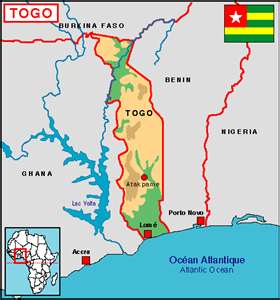
Map of Togo
Map of Togo

Sylvanus Olympio believed that the Ewe people should be reunited under one flag…. unfortunately he could never come to agreement with Kwame Nkrumah, his Ghanaian counterpart, and other powers at play.  Olympio tried to unite and educate the people about their new nation, and the needs for development.  From what a Togolese friend of mine once said, he used to ride a bike from villages to villages talking to people in their languages and educating them about politics, development, and patriotism, at a time when there was no radio (1950s) in most places.

Togo -- A History
Togo — A History

Sylvanus Olympio barely had a chance to execute anything politically.  He was assassinated in a military coup in the US embassy compound in Lomé in 1963, two years after Togo’s independence and his investiture as president.  The presidential palace was just next to the US embassy in Lomé.  When Olympio heard gunshots, he sent his family to safety, and climbed the wall that separated him to the American embassy.  Once there, he knocked at the door of the embassy to seek refuge… Unfortunately, the embassy was closed.  Sylvanus hid in one of the cars in the American compound.  The American Ambassador comes back to the compound and finds Olympio in the car who explains everything; the ambassador claimed not to have the keys to open the door… and asked him to wait while he would go find the keys.  Rumors says that the American ambassador probably called his French counterpart who then contacted the gunmen and sent them to the American compound.  Sylvanus was found in the car, and gunned by Eyadéma, one of Africa’s worst dictators backed by the West.  The Time magazine wrote an article on that day entitled Togo: Death at the Gate; JFK also had a statement about his death.  The journalist, Alain Foka, of RFI did a piece on Olympio.

Many wonder what Togo would have become under someone with such love, brilliance, and vision for his country.  No one will ever know.  Please enjoy this rare footage of an interview of Sylvanus Olympio to NBC in the US.

Don’t forget to watch the second part.

Palm wine: White Wine Made in Africa/ Le Vin de Palme: Vin Blanc Made in Africa

Palm Wine/ Le vin blanc

Today, I would like to talk about palm wine. Have you ever tasted palm wine? hummmmmh so sweet! So good! so delicious! or rather palmilicious! Palm wine or white wine made in Africa or raffia wine is wine from the sap of the palm or coconut tree. It is actually white in color, not transparent like its European counterpart.

Tapper harvesting palm wine

Palm wine sap is gathered in two ways. The first: A tapper extracts and collects the sap from the tree by making a triangular cut onto the raffia tree just like during the harvest of hevea: a receptacle is attached to the tree where the cut was made, and the sap can thus be collected. The second way involves cutting down the tree and allowing it to lie for two weeks. After, a rectangular well is cut in it. At this stage, a bamboo tube is inserted into the well to drain the sap as it collects. The quantity of sap that is extracted from one palm tree depends on the mode of extraction, the palm species, season and the fertility of the soil. The white liquid that comes out is at first very sweet and non-alcoholic: this is what we as kids would love to drink. Fermentation begins naturally and immediately after collection. After fermentation, the liquid becomes alcoholic and has some sourness and acidity to it. It could sometime happen that we would drink it two – three hours after collection, and it would still be good, but would have a sour after-taste to it. After one day, it is fully alcoholic, and more than one kid has certainly fallen to it!

The Palm Wine Drinkard by Amos Tutuola

In the old days, and at night in the village, children and adults will sit around the fire to hear storytelling from a village elder while enjoying some palm wine, grilled corn or grilled safou! It is drank at celebrations, weddings, etc… Chinua Achebe mentions palm wine in his novel “Things Fall Apart“, and it is the title of the novel by Amos TutuolaThe Palm Wine Drinkard“.  In Cameroon, it is harvested from raffia palm tree, and collected into a container communally called ‘dame-jeanne’. The traditional version of this container is also made from raffia or African bamboo wood! Palm wine is often called ‘matango‘ in the Cameroonian slang.  What is it called in your country?

Please enjoy this great video about the harvesting of palm wine from Cameroon!

I also liked this lady’s description of her first taste of palm wine: Palm wine drinkards.

Une Traîtrise de Tortue

Eklo, la tortue
Eklo, la tortue

Il était une fois une tortue nommée Eklo, qui avait lié grande amitié avec son voisin Adidi le chat.

Un beau jour, Eklo vient rendre visite à Adidi. A son arrivée, elle s’écrie :

Comme ta maison est vieille et mal entretenue, mon compère ! Ce n’est pas du tout convenable ! Regarde ! Il Ya des fentes dans tous les murs; la porte ne ferme plus; le bois est rongé de partout et plein de gros trous. J’en suis bien peinée car je comptais venir te voir avec quelques amis que tu aurais été très heureux de recevoir. Mais il faut accueillir les visiteurs convenablement.

Afi, la souris
Afi, la souris

Adidi entend les reproches de son amie. Il a honte et assure Eklo qu’il va se mettre immédiatement au travail pour réparer sa maison. Dans une quinzaine de jours, tout sera prêt pour qu’elle puisse lui amener les visiteurs annoncés. Mais la tortue avait une idée derrière la tête. Un peu avant la date fixée par Adidi, elle va rendre visite à Afi, la souris.

Chère amie, lui dit-elle, je viens te rendre visite, car tu es le chef de la communauté, afin de te transmettre une invitation. Adidi, mon compère, vient de remettre à neuf sa maison. Pour célébrer cet événement, il va donner une grande fête et il m’a chargée de te dire de venir y assister en compagnie de tous les tiens.

Souris pousse un cri de surprise et d’indignation voyons ! Est-ce que tu te moques de moi ? Crois-tu que je vais aller chez un individu qui a déjà tué mon grand-père et ma grand-mère, sans parler d’un bon nombre de membre de ma famille ?

Adidi, le chat, courant apres la souris

Tortue prend sa voix la plus doucereuse et la plus persuasive pour affirmer :

Mais tu n’as rien à craindre. Il n’arrivera rien de mal ni à toi ni aux tiens. Tout cela, c’est du passé ! Maintenant, il faut oublier. D’ailleurs, je te d’amitié qui existent entre Adidi et moi ?

Afi fut convaincue. Au jour dit, accompagnée de toute sa famille, elle suit tortue au domicile de Adidi, Eklo les fait tous entrer dans la maison, puis se précipite à l’extérieur et ferme la porte. Adidi, qui n’attendait que cela, s’élance toutes griffes dehors au milieu des infortunées souris qui, affolées, cherchent vainement une issue pour s’enfuir. En quelques instants, il les a toutes tuées. Ensuite, Adidi appelle la trompeuse Eklo et tous deux fêtent l’événement.

Croire que ceux qui vous ont fait toujours du mal vont devenir brusquement vos amis, c’est être bien sot !

Conte tiré de “Contes des Lagunes et Savanes,” Collection ‘Fleuve et Flamme,’ édition Edicef, 1975.

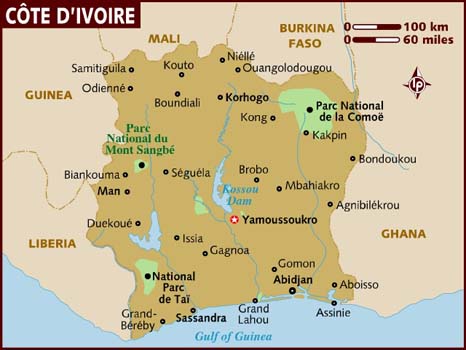
Carthago Delenda Est! Sinister plots against Cote d’Ivoire…

Map of Cote d'Ivoire

I saw this great article by Guy Kouame Gustave on the crisis in Ivory Coast. Such Truth!

“Carthago Delenda Est!” Carthage Must be Destroyed!

This terrible statement was made by Caton the Elder, a Roman citizen who, in his last days in 153 B.C., led a diplomatic mission to Carthage.  Impressed by the economic revival of Carthage, he adopted a systematic anti-Carthaginian attitude that led him to end all his speeches at the Senate by the phrase “Carthago delenda est!”, “Carthage must be destroyed!”. Caton the Elder advocated that Carthage, the competitive city to Rome during the Punic Wars had to be destroyed. Reading the biography of this multi-facet and hatred-filled individual, I couldn’t help but think of Cote d’Ivoire, our country. In fact, revisiting our history since Mr. Alassane Dramane Ouattara’s irruption in the Ivorian political life, one can paraphrase Caton the Elder saying: “Cote d’Ivoire delenda est!”.

The reason is that the successive events that the country has gone through since the election of President Laurent Gbagbo as Head-of-State in October 2000, demonstrate that there is a ferocious relentlessness to destroy the person chosen by the people to lead the country. But more tragically, the country itself, its choices, its soul, and all the institutions and laws on which the nation stands. There is an animalistic conspiracy to make Côte d’Ivoire a failed country.

“Cote d’Ivoire delenda est!”

Declarations such as “I will make this country ungovernable, we are going to gnagami it all!” by ADO, the media, military, political, social, cultural, diplomatic, financial and economic relentlessness (boy! To say the least!), multiple coups and other mistreatments the country is subjected to are all part of the sinister project of the destruction Côte d’Ivoire. Despite multiple sacrifices made by President Gbagbo and the people of Cote d’Ivoire for the sake of peace and democracy, the country continues on suffering since 2002. And the so-called post electoral crisis has just brought to light the sinister plot of destruction and submission against our country.  

For recall: December 1999, first coup d’Etat consecutive to the war for power between the heirs of Houphouët Boigny, the first President of Côte d’Ivoire. The coup went well: Bédié is exiled, but Ouattara did not succeed seizing power. General Guéi who led the military transition escaped two assassination attempts. He lost the October 2000 presidential elections and took refuge in his native village. Laurent Gbagbo, the people’s beloved, won the elections and came into office. From that day on a terrible and obnoxious lynching campaign against the country, its founding pillars, and its officials started. The nightmare of the Ivorian people was thus into motion.

Flag of Cote D'Ivoire

“Cote d’Ivoire delenda est!”, “Cote d’Ivoire must be destroyed ! »

The personality, the choices, and the relation and interactions that President Gbagbo has with his people for decades make many uncomfortable. His aspirations to diversify the economic partners of the country and to depart from the ongoing classic infantilizing paternalism from the former colonial power disturb and particularly worry.

ADO, the man of the outside world, has not given up his plans to seize power by all means necessary. He and his allies then decided to make Gbagbo undergo the same fate as Bédié. They set up, prepared, organized, financed, and implemented a coup d’Etat from and with the complicity of some countries of the sub-region and mainly with the help of a part of the international community. In the night of September 19th, 2002, assailants attacked the State. They failed to take over, fled from the economic capital Abidjan, and made up a cyst in Bouaké where they organized a rebellion.

“Cote d’Ivoire delenda est!”, “Cote d’Ivoire must be destroyed ! » … Click here to read more …

Cosmic Africa: Africans and Astronomy

Cosmic Africa
Cosmic Africa

Dear all,

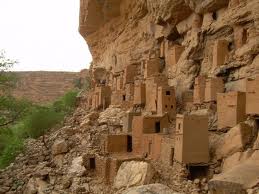
As a physicist, I could not pass on the opportunity to talk about the fellow South African astrophysicist Thebe Medupe ‘s work on Cosmic Africa. Cosmic Africa is a project/documentary about astronomy in African cultures, exploring astronomy among two of the oldest African tribes: the Namib (or Bushmen or San) of Namibia, and the Dogon people of Mali.  I heard this documentary one evening on PRI.  It felt so great hearing an elder from the Dogon tribe talking about their use of the moon, stars, etc, for their harvest.  People still study the sky and the stars to guide them during the hunting season; astronomy is an integral part of their daily lives, dances, and ceremonies.  This knowledge of the sky was passed on from generation to generations for the past 500 years.

Thebe Medupe
Thebe Medupe

The Dogon people knew certain celestial bodies that were just discovered/identified properly by Western science in the 50s and 60s.  They used the stars in spirituality and devised a divination system as discussed in the movie.  One of their great treasures is the knowledge of the star Sirius which Dogon elders confided about its existence to French anthropologists in the 1940s.  The Dogon elders said that Sirius had a companion star that was invisible to the human eye.

Dogon village
Dogon village

“They also stated that the star moved in a 50-year elliptical orbit around Sirius, that it was small and incredibly heavy, and that it rotated on its axis.  All these things happen to be true.  What makes this so remarkable is that the companion star of Sirius, called Sirius B, was first photographed in 1970.  While people began to suspect its existence around 1844, it was not seen through a telescope until 1862 — and even then its great density was not known or understood until the early decades of the twentieth century.  The Dogon beliefs, on the other hand, were supposedly thousands of years old.”  To read the full account, check out: The Sirius Mystery and the The Dogon Website.

San (Basarwa/Bushmen) hunters

The Bushmen of Namibia are the oldest people in Africa, as well as in the world.  They have lived in the Southern area of Africa for the past 20,000 years, and their celestial stories are just as old.  In the documentary, I love the way their celestial stories, and their story of creation was centered around the lion. Isn’t it interesting?  The lion, which is the king of the jungle,…purely African! I simply loved it.  The sky is interpreted in African terms: giraffes, lions, and zebras are seen among the stars where other people see bears and horses.  From the documentary, one sees that the Namib (Bushmen or San) healers welcome the bright evening star, the planet Venus, with a special dance….  The elders observe the shadows cast by the Sun and still count the days by the phases of the Moon, orient themselves, decide when to hunt, harvest, etc… with the sky.  They call the Milky Way the Spine of the Night and observe its three different positions during the night: it tells them about time and the changing seasons. Read more about the Khoisan people of Botswana and their fight for survival amidst government/Corporation’s menace.

To learn more check out the books: Sacred Symbols of the Dogon and The Sirius Mystery. Also check out the Foster brothers’ website (the producers): Sense Africa.

L’Araignée imite son Ami

Kakou Ananze
Kakou Ananze

Il était une fois dans un village deux amis si intimes qu’ils ne se quittaient jamais. A les voir toujours ensemble, on les aurait pris pour des frères jumeaux. L’un était Kakou Ananze, l’araignée, l’autre Gayagui. Chacun d’eux avait une épouse et quatre enfants.

Un jour, une terrible famine s’abat sur le pays. Les deux amis se lamentaient en cherchant nuit et jour un peu de nourriture. Mais bientôt il n’y a plus ni racine, ni tubercule, ni graine à cueillir dans la forêt. Pour ne pas mourir faim, Kakou Ananze et Gayagui décident de se séparer pour tenter de survivre, en quittant le pays pour en chercher un autre moins infortuné.

Village Africain - Parc de Waza (Cameroun)

Gayagui s’en va vers le nord-ouest, emmenant avec lui tous les siens. Chaque fois qu’au cours de son long voyage, il découvre un peu de nourriture, il en fait deux parts. Il partage la première avec son épouse et ses enfants. L’autre il la garde en réserve. Et ils poursuivent leur route. Enfin, ils arrivent dans un village lointain qui semble très prospère. Il demande au chef l’autorisation de s’y installer avec sa famille le chef, pris de pitié, accepte et lui donne un champ à cultiver. Gayagui se met aussitôt au travail. Mais sa femme, épuisée, meurt. Les villageois s’émeuvent devant ce malheur imprévu qui frappe un homme et des enfants si travailleurs et si gentils. Ils aident Gayagui à enterrer son épouse convenablement puis font une collecte dans toute la région pour lui venir en aide. Chacun donne ce qu’il peut: une poule, un mouton, une daba, des calebasses, des semences, de la nourriture etc. Ainsi Gayagui, grâce à leur aide, devient presque riche et peut mener avec ses enfants une vie convenable.

Pendant ce temps, Kakou Ananze s’était mis en marche vers le nord-est, suivi par son épouse et ses enfants. Lorsque Araignée trouvait quelque chose à manger, il le gardait pour lui et le dévorait aussitôt, tandis que le reste de sa famille survivait à grand-peine.

Champs Africains
Champs Africains

Un jour, sur le chemin, ils rencontrent un groupe de villageois qui venaient de la région ou s’était installé Gayagui …Et ceux-ci leur apprennent ce qui est arrivé et comment Gayagui a trouvé la fortune. Cette histoire donne à réfléchir à Kakou Ananzè. Lorsque, après bien des jours de marche il parvient avec les siens dans un gros bourg qui parait riche et heureux, Araignée tue sa femme et se met à se lamenter très fort pour éveiller la pitié des habitants: Quel malheur ! Oh ! Quel malheur !que vais-je devenir ! Mes pauvres enfants ont perdu leur tendre mère et moi, une bonne épouse qui m’aidait tant dans mon travail. Nous sommes trop pauvre pour lui faire des funérailles convenables. Quel malheur ! Quel malheur !

Les gens s’approchent pour venir à son venir à son secours Mais ils voient que Madame Araignée a été tuée d’un coup de coupe-coupe, que les enfants sont tout maigres et tout faibles alors que Kakou Ananzè a une mine florissante. Alors ils se méfient, prennent avec eux les enfants pour les nourrir mais laissent Araignée sans lui venir  en aide. Celui-ci doit emprunter de l’argent pour la cérémonie des obsèques. Et quand tout est fini, comme il ne peut rien rembourser, il doit se faire engager comme domestique chez de riches fermiers. Comme il est paresseux et égoïste, ses nouveau maîtres ne l’aiment pas et lui donnent plus de coups de bâton que de bonne nourriture. Araignée est bien puni ! C’EST Pourquoi le soir à la veille, il dit toujours à ses enfants: Ecoutez bien votre vieux papa ! N’imitez jamais les autres ! Car ce qui à bien réussi pour eux, peut avoir pour vous une funeste conséquence.

Conte tiré de “Contes des Lagunes et Savanes,” Collection ‘Fleuve et Flamme,’ édition Edicef, 1975.

Nasser: the Upholder of Egyptian, African, and Arab Rights

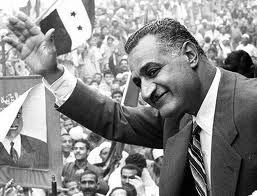
Gamal Abdel Nasser
Gamal Abdel Nasser

With this week’s event in Egypt, I thought that a trip down memory lane would be more than appropriate! One of the greatest political figures of modern Arab history and third world politics is the Egyptian president Gamal Abdel Nasser. Nasser was a pure political genius, and had great love and vision for his country, the Arab world, and developing countries in general. He was a strong player in the battle against imperialism in Africa, and in the Arab world. It was in Egypt that Um Nyobe and the UPC sought refuge to keep on working on Cameroon’s independence (this will be a story for another day).

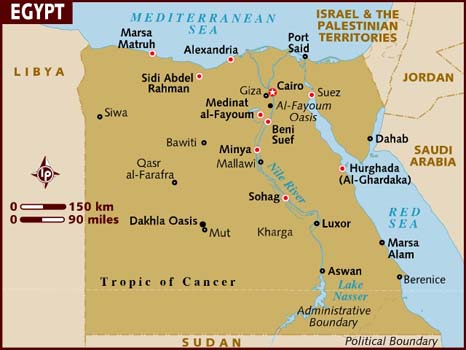
Map of Egypt
Map of Egypt

He was the first to negotiate the ownership/nationalization of the Suez Canal by Egyptians themselves. At its construction, as in most African countries, it belonged to the British since Egypt had been a British colony. He led the Egyptian Revolution of 1952 which overthrew the monarchy of Egypt and Sudan, and started a new period of modernization and socialist reforms. He was determined to wean Egypt of its dependency on Western Economies. He was one of the few leaders in the world to declare his neutrality in the Cold War, which was considered very ‘gutsy‘. He moved Egypt toward a socialist economic system and instituted huge land, education and health reforms. As president, he was determined to modernize and improve Egyptians’ standard of living.

Nasser
Nasser

After the humiliating Egyptian defeat during the Six-Day war against Israel, Nasser took responsibility for the debacle and resigned from the presidency (but thousands took to the street to demand that he returns to power). In his resignation speech he said: “I have taken a decision with which I need your help. I have decided to withdraw totally and for good from any official post or political role, and to return to the ranks of the masses, performing my duty in their midst, like any other citizen. This is a time for action, not grief…. My whole heart is with you, and let your hearts be with me. May God be with us—hope, light and guidance in our hearts.” You can read the entire speech on Al-Ahram Weekly. He died a couple of years later from a heart attack… many believe that the Six-day war defeat was a precursor.  More than 5 million people attended his funeral. Nasser always wanted the best for his people!

Flag of Egypt
Flag of Egypt

I wish more presidents, like Hosni Moubarak, in Africa could have the guts to resign from power, and could love their people so much as to want them to have the best. During an assassination attempt on Nasser’s life at a rally in Alexandria during the celebration of the British withdrawal from the Suez Canal, Nasser proclaimed: “If Abdel Nasser dies… Each of you is Gamal Abdel Nasser… Gamal Abdel Nasser is of you and from you and he is willing to sacrifice his life for the nation.” Moubarak today should learn from the past… like Dr. Zahi Hawass (world-renowned director of Egyptian Antiquities) said in a recent interview to BBC: “What will stay here after many years is Egypt… People will die, but Egypt will stay!” Moubarak should thus ask: “What would I be remembered by: those past few days of protests, or the love for my country?” If his answer is the second one, then he knows that he needs to pack his bags, and uphold Egypt’s liberty!

Check out the video below. To learn more about Nasser, click on Wikipedia, the Official Website of Nasser with speeches, pictures and documents, June 9 speech. I am probably missing many… if you find other good websites, feel free to send them to me.

Gamal Abdel Nasser Video