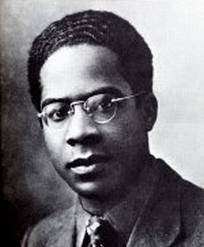
Aimé Césaire, le grand écrivain et poète Martiniquais, présente ici son Ôde à la Guinée… ce chant qui s’élève et embrasse la Guinée, ce pays si cher qui était le premier en Afrique francophone à reclamer son indépendance à la France, ce pays-là qui nous a montré à tous Africains, que comme disait si bien Sékou Touré: ‘nous préférons la pauvreté dans la dignité à l’oppulence dans l’esclavage.‘ C’est bien pour cela que Aimé Césaire a chanté pour la Guinée!
=========
Ôde à la Guinée
Et par le soleil installant sous ma peau une usine de force et d’aigles et par le vent sur ma force de dent de sel compliquant ses passes les mieux sues et par le noir le long de mes muscles en douces insolences de sèves montant et par la femme couchée comme une montagne descellée et sucée par les lianes et par la femme au cadastre mal connu où le jour et la nuit jouent à la mourre des eaux de sources et des métaux rares et par le feu de la femme où je cherche le chemin des fougères et du Fouta-Djallon et par la femme fermée sur la nostalgie s’ouvrant JE TE SALUE Guinée dont les pluies fracassent du haut grumeleux des volcans un sacrifice de vaches pour mille faims et soifs d’enfants dénaturés Guinée de ton cri de ta main de ta patience il nous reste toujours des terres arbitraires et quand tué vers Ophir ils m’auront jamais muet de mes dents de ma peau que l’on fasse un fétiche féroce gardien du mauvais oeil comme m’ébranle me frappe et me dévore ton solstice en chacun de tes pas Guinée muette en moi-même d’une profondeur astrale de méduses.
Aimé Césaire
======
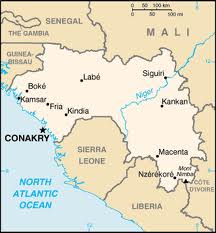
Guinea-Conakry
“Ode to Guinea” by Aimé Césaire
And by the sun installing a power and eagle factory under my skin and by the wind elaborating the passes it knows best over my power of tooth of salt and by the black rising along my muscles in sweet sap-like effronteries and by the woman stretched out like a mountain unsealed and sucked by lianas the woman with the little known cadastre where day and night play mora for springhead waters and rare metals and by the fire of the woman in which I look for the path to ferns and to Fouta Jallon and by the closed woman opening on nostalgia
I HAIL YOU
Guinea whose rains from the curdled height of volcanoes shatter a sacrifice of cows for a thousand hungers and thirsts of denatured children Guinea from your cry from your hand from your patience we still have some arbitrary lands and when they have me, killed in Ophir perhaps and silenced for good, out of my teeth out of my skin let the make a fetish a ferocious guardian against the evil eye as your solstice shakes me strikes me and devours me at each one of your steps Guinea silenced in myself with the astral depth of medusas
from The Collected Poetry of Aimé Césaire, translater by Clayton Eshleman and Annette Smith.
Today I will be talking about a great queen of Madagascar, Queen Ranavalona I who fought against French and British expansionism in Madagascar, and strongly believed in autarky (self-sufficiency).
Born by the name of Mavo(or Ramavo) around 1788, Ranavalona I will later be named Rabodonandrianampoinimerina(which means the smart grand-daughter of Andrianampoinimerina) in reverence to her uncle, the King Andrianampoinimerina. She became Queen of Madagascar after the death of her husband Radama I and was coronated on 12 August 1829. She was also designated by the title Ranavalo-Manjaka I (« Reigning Ranavalona »). She reigned over the Kingdom of Madagascar from 1828 to 1861.
Ranavalona I followed in the footsteps of her predecessors, with the territorial expansion of her kingdom, and led several expeditions to pacify conquered territories such as the meridional Menabe, the Boina, and the north-east regions of the island (Madagascar). Fervent nationalist, she fought against foreign influence, including that of Christian missionaries. During her reign, the power of some castes increased, like that of the andriana or the royal family, or that of the military chiefs, the hova.
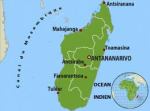
Madagascar
Ranavalona’s 33-year reign was distinguished by an ongoing struggle to preserve the political and cultural sovereignty of Madagascar in the face of increasing European influence and competing French and English bids for domination over the island. In the beginning of her reign, Ranavalona I tried to continue the work of modernization started by her predecessor. Very soon, she faced the hostility of the French, who in 1829, attacked different points on the oriental coast of the island. This unexpected aggression sharpened the queen’s distrust of European ambitions; especially since the British missionaries installed at the heart of the island since 1820 were converting many. Fearing the loss of the independence of her country, she denounced the anglo-malagasy treaty of 1820, and asked the British to give up on the religious extension in her country, and to focus only on the educational works she wanted for her people. However, the British refused, and in 1835, she had them expelled from the island. To counter-balance the European influence on the island, the monarchy created contacts between the ports of Majunga, and Zanzibar.
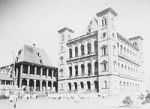
Manjakamiadana, the Royal compound built for Queen Ranavalona IManjakamiadana,encased in stone under the orders of Ranavalona II
Ranavalona I then hired the services of Jean Laborde who accomplished quite a lot of modern upgrades, the most important of these will be providing Madagascar with a metallurgic and chemical industry. He also built the queen a new residence known as the Manjakamiadana, which became the largest structure on the Rova grounds, the royal compound in Antananarivo. The residence was made entirely from wood and bore features of a traditional andriana home, including a central pillar (andry) to support the roof. The palace would eventually be encased in stone in 1867 by James Cameron of the London Missionary Society during the reign of Ranavalona II. The original wooden palace of Ranavalona I and virtually all other structures of the historic Rova compound were destroyed in a 1995 fire, leaving only the stone shell to mark where her palace had once stood. Renovation is on the way.
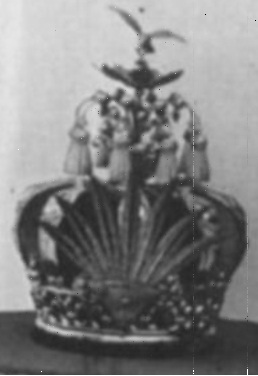
Royal Crown of Madagascar as worn by King Radama II, Ranavalona I’s successor (ca 1862)
Ranavalona pursued a policy of autarky (self-sufficiency) and isolationism, diminishing economic and political ties with European powers, repelling a French attack on the coastal town of Foulpointe, and taking vigorous measures to eradicate the small but growing Malagasy Christian movement initiated under Radama I by members of the London Missionary Society. She made heavy use of the traditional practice of fanompoana (forced labor in lieu of tax payments in money or goods) to complete public works projects and build a standing army of between 20,000 and 30,000 Merina soldiers, whom she deployed to pacify outlying regions of the island and further expand her realm.
Subsequently, to try to eradicate Christianity among her subjects, as she believed (and rightfully so) that this was a means of infiltration of the colonial ambitions of Europeans on the island, she had converts (considered as traitors) run off. As she declared in 1849: « Miala amiko ka mba ialako, mahafoy ahy ka mba foiko ! » (« they [christians] have denied me [ as a living symbol of their homeland], therefore I deny them as well; they have rejected me, I reject them! »).
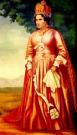
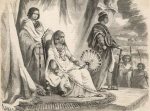
Ranavalona I on the throne
She said in a letter addressed to the Europeans: “To all Europeans, British and French, in recognition for the good you have done to my country by teaching European wisdom and knowledge, I would like to express my thanks. … You can keep following your customs. Have no fear for I have no intention of modifying your habits. But if I see some of my subjects trying to change the rules established by the twelve great kings, my ancestors, I will not possibly consent: because I will not allow men to come and change anything to all the ideas I have received from my ancestors, which I had accepted without shame or fear. You are free to teach my people science and wisdom, but when it comes to touching our ancestors’ customs, it is a vain work, which I will fully oppose….”
Ranavalona I continued the works of Andrianampoinimerina and Radama I. In her country, she is seen as a great sovereign, true symbol of patriotic and national pride. However for Europeans, she has been described as a tyrant… but like her so many great African kings and queens defending their country against foreign invasion/colonization have been portrayed as cruel, and ignorant. Faced with the contempt of Christian converts, she proudly stated: ”ny fomban-drazako tsy mba mahamenatra ahy na mampatahotra ahy!” (“I do not feel any shame or fear about my ancestors’ customs”). Enjoy this great video, and honor one of Africa’s earlier nationalist and independentist: Queen Ranavalona I.
My fellow friends may the year 2013 be the year of all greatness, success, harmony, and peace! I would like to thank all those who visited my blog, and all my future visitors … I am grateful for your trust and faith in my blog. We have more than tripled the number of viewers this year: keep on visiting, keep on sharing, and keep on commenting. I wish you all wonders without borders, grace, and peace for 2013. To all those who witnessed the horrible events in Mali, South Africa, Cote d’Ivoire, and Libya, to all those who felt powerless in 2012, it is time to rise and keep fighting, it is time to stay strong and keep loving our neighbors. We need to stay strong, alert, and open as always. Above all, we need to keep praying for 0ur beautiful continent. We are all agents of hope, we are all agents of good, and we need to be agents for the betterment of Africa. As Franklin Boukaka said of Mehdi Ben Barka, and would say to us now: ‘ our work is that of humanity.’
5. President Laurent Gbagbo‘s hearing at the International Criminal Court (ICC) was scheduled for June 18, 2012, but was postponed to August 13, 2012, and now has been postponed indefinitely. Apparently the ICC cannot find proofs of all their allegations against Laurent Gbagbo, and thus prefer stalling.
The VMK (Source: VMK)
6. Oussama Mellouli, of Tunisia, won Gold in the 10 km marathon open water, to become the first swimmer to ever win olympic medals in both the pool and open water (August 2012).
7. David Rudisha of Kenya, became the first man to break a record at the London Olympics, in the 800m (August 2012).
8. Alaeeldin Abouelkassem of Egypt won silver in fencing, becoming Africa’s first medal in fencing (August 2012).
2012 was a different year with a lot of disappointments, hurts, pains, coup d’etat, and all sorts of things in Africa. We said goodbye to quite a few people in 2012, including:
1. President John Atta Mills of Ghana, who joined his ancestors suddenly on 24 July 2012… So long Prof… May the land of Ghana hold you tight.
2. President Meles Zenawi of Ethiopia, who passed on 20 August 2012… leaving Ethiopia in turmoil.
3. President Bingu wa Mutharika of Malawi, who passed away on 5 April 2012… he is succeeded in power by the second woman president in Africa: Mrs. Joyce Banda.
4. Minister Paul-Antoine Bohoun Bouabre of Côte d’Ivoire left us on 10 January 2012; this is the man who single-handedly saved Cote d’Ivoire from a financial cliff.
5. Cameroonian legendary footballer Théophile Abega, nicknamed ‘The Doctor’, left us on November 15, 2012. He was voted as one of Africa’s top 200 players of the past 50 years.
6. Charles Taylor, former president of Liberia, was sentenced to 50 years for war crimes in May of this year.
7. A coup d’etat deposed the rightful president of Mali, President Amadou Toumani Toure (ATT) on 22 March 2012, one month before scheduled elections. This has left Mali in turmoil; the country is now going down the path of Cote d’Ivoire and Libya: split into two, and eventually … broken apart?
9. Abdoulaye Wade, the négrier of Senegal, was booted out of his presidency by the people of Senegal who voted for Macky Sall on 25 March 2012 (a true example of democracy in Africa).
10. Last but not least, the most hateful one of all: Nicolas Sarkozy, the ‘bourreau’ of Africa was booted out of the French presidency on 6 March 2012 … bye bye Sarko… you went for the recolonization and destruction of Cote d’Ivoire and Libya… and the deck of cards are still falling; now Mali… ? Sarko is gone… but his deeds are still going on.
I had to share this video… Although it is a satirical video, ‘ Africa for Norway ‘ raises such interesting points, points I have always thought about: what if Africa was the one sending aid to other continents? What if during hurricane Katrina, Africans had sent buckets of food? Truthfully, African resources have been feeding countries around the world, and saving some like France, from financial disasters … isn’t this video just reflecting that? After all, our resources keep many countries stuck in their ‘superiority’ complex: do westerners know that the wars waged in Cote d’Ivoire allow them to have cheap chocolate for Valentine day? that the war in Libya, is keeping automobiles in the US running at $3.40 a gallon when the rest of the world is suffering from oil scarcity? that the coltane from the Democratic Republic of Congo keeps everybody’s cell-phones running, etc… do they know? do people know? what if Africa was coming to the rescue of everybody (as it already is)? Enjoy ‘Africa for Norway.’
I salute the ingenuity of Congolese entrepreneur Verone Mankou, whose smartphone and tablet truly address the needs of Congolese in particular, and of Africans in general. Verone Mankou, the founder of VMK, tailors affordable smartphone and tablet to Africans. He said at the Tech4Africa conference in Johannesburg recently: “Only Africans can know what Africa needs. … Apple is huge in the US, Samsung is huge in Asia, and we want VMK to be huge in Africa.” … I totally agree with him, and I am proud to see an electronic product conceived and engineered by a Congolese for Congolese, and all Africans. Have fun, and enjoy!
Today I would like to talk about Mrs. Gloria Bongekile Ngema-Zuma who just gave an interview to BBC. She is Jacob Zuma (J.Z.)‘s fourth wife, married on April 2012. She is an accomplished woman, educated, and really I have to say it: a contradiction to many young African girls growing. She is an accomplished professional accountant, and IT manager… and for her to become the fourth wife of somebody, even if that somebody is the president of a nation, is simply tasteless. I know that it is prestigious to be a president’s wife, but come’ on for the sake of the young girls out there in South Africa, and Africa… is this really the example to be set? So as a woman, you can be as accomplished as you want, but you are only worth to be a man’s fourth wife? You cannot be your own person? Or he cannot love and respect you enough to leave all his other wives?
Jacob Zuma and his fourth wife, Bongi Ngema
Now, some may ask me if I would have preferred for her to be his mistress? Of course not, but I find it revolting to have a president who has four wives. I find it disgusting to have a president, in modern days, who holds onto the past, and who cannot make up his mind… because truly that’s is what it all boils down to: decisiveness, discipline, and control. No wonder there has been violent attacks on Africa ever since Jacob Zuma became president of South Africa: destruction of Côte d’Ivoire after the 180 degrees turn of Zuma, destruction of Libya under the vigilant eye of Zuma, massacre of defenseless miners at the Marikana’s mines, etc. Is promiscuity now allowed at the top of the state? There is really something to having one wife, committing to marriage to only that person, and above all, having the oneness of mind, or rather a ‘single’ vision. What should a young girl growing up think? She can only be powerful if she is in a polygamous marriage; even educated, she is only worth being somebody’s 2nd, 3rd, or 4th wife? Why can’t she be his only wife?
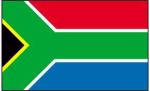
Flag of South Africa
As I listened to Mrs. Zuma’s interview, I have to admit that I was appalled, as she could not even answer the simple question as to why? The only answer was:” I am a grown woman, making my own choices.” Of course, there are lots of grown women around the world making their own choices, but when you are a first lady, you no longer make choices for yourself, you also have to acknowledge impacts on society. What about young girls? How can you talk about modernism when there is so much contradiction in your thoughts? Now, she says she is Zulu first, and then modern woman second. Yes that’s true, but does she abide by all Zulu rules? Are all Zulu women in polygamous marriages? I am African first, but does that mean that our daughters should undergo excision?I am African first, does it mean that servants in the kingdom should still accompany the king in his grave? I am African first, does that mean that albino children or twins (in some African traditions) should still be killed at birth?Of course not! For somebody, a first lady (or 4th lady), to blurt: “I am Zulu first, then xyz second,” … i.e. that’s why I live in prehistoric ages is simply disgusting. No offense to Mrs Zuma, but I do not want any of our daughters to see her as an example. Now, somebody could argue that: ‘maybe she wanted to influence young girls, and she could only do that as the president’s wife’… Sure, but she was already influencing young girls by being the great manager that she was. If President Zuma and her loved each other, could he not have divorced to marry her? Couldn’t she have waited till the end of his term to be with him? Couldn’t she have influenced the president by demanding that he divorces his other wives? Now, that would have been the symbol of a strong woman whose influence on young girls would have been strongly felt over generations!
Thank goodness there are still other great African women out there who stand for their very own convictions and inspire young African women. What next for J.Z.? A fifth wife for 2013?
Today, We will look at a poem by the most celebrated Ivorian writer Bernard Binlin Dadié. The poem below is titled “Dry your Tears Afrika” or “Sèche Tes Pleurs“. Published in 1967, this poem is basically about Africa and her sons and daughters returning home. It is about healing the wounds of slavery, colonialism, and neo-colonialism. This poem was actually translated into Mende, a language spoken by ~ 46% of Sierra Leone. It was also set to music by American composer John Williams for the Steven Spielberg movie, Amistad. Below is the original poem in French, written by Dadié. The English version can be found below. Enjoy the text, and the video of the poem sung in Mende with the English translation.
Sèche tes pleurs Afrique! Tes enfants te reviennent dans l’orage et la tempête des voyages infructueux. Sur le ris de l’onde et le babil de la brise, Sur l’or des levants Et la pourpre des couchants des cimes des monts orgueilleux Et des savanes abreuvées de lumière Ils te reviennent dans l’orage et la tempête des voyages infructueux. Sèche tes pleurs, Afrique Ayant bu À toutes les fontaines d’infortune et de gloire, Nos sens se sont ouverts à la splendeur de ta beauté à la senteur de tes forêts, à l’enchantement de tes eaux à la limpidité de ton ciel à la caresse de ton soleil Et au charme de ta verdure emperlée de rosée.
Sèche tes pleurs, Afrique! Tes enfants te reviennent Les mains pleines de jouets Et le coeur plein d’amour. Ils reviennent te vêtir De leurs rêves et de leurs espoirs.
Bee ya ma yee ah, bee len geisia bee gammah. Bee ya ma yee ah, bee len geisia tee yamanga. Baa wo, kah ung biah woie yaa. Baa wo, kah ung biah woie yah, yah. Oo be ya ma yee ah, bee len geisia tee yamanga. Mu ya mah mu yeh, Mu ya mah mu yeh, Mu ya mah mu yeh, Afrika. Mu ya mah mu yeh, Mu ya mah mu yeh, Mu ya mah mu yeh, Afrika.Bee ya ma yee ah, bee len geisia tee yamanga. Mu ya mah mu yeh, bee len geisia bee gammah. Oo bee ya mah yee ah Bee len geisia tee yamanga. Mu ya mah mu yeh, Mu ya mah mu yeh, Mu ya mah mu yeh, Afrika. Mu ya mah mu yah, Mu ya mah mu yah, Mu ya mah mu yeh, Afrika.
Be ya mah yee ah, bee len geisia tee yamanga. Be ya mah yee ah, bee len geisia bee gammah. Mu ya mah mu yeh, Mu ya mah mu yeh, Mu ya mah mu yeh, Afrika. Mu ya mah mu yeh, Mu ya mah mu yeh, Mu ya mah mu yeh, Afrika. Mu ya mah mu yeh, Mu ya mah mu yeh, Mu ya mah mu yeh, Afrika.
Où allez-vous chercher de quoi réparer la plomberie dans votre maison? Où achetez-vous les clous et le marteau nécessaires pour clouer un portrait sur votre mûr? et pour arranger la barrière dans votre cour? ou pour construire le petit étang de vos rêves? Aux Etats-Unis, la plupart des gens vont dans une de ces structures super-géantes telles ‘Home Depot’ ou ‘Lowe’s’. Au Cameroun, beaucoup vont dans une quincaillerie en plein air, ou une quincaillerie ambulante. Vous m’avez bien entendu: une quincaillerie en plein air, de la taille d’une chambre ou beaucoup plus petite, ou une entièrement ambulante placée sur un ‘pousse.’ La vidéo ci-dessous présente une quincaillerie en plein air, ou quincaillerie ambulante. Le jeune homme dans cette vidéo vend beaucoup de choses tels des clous, des fils de fer, des seaux, des marteaux, des haches, des houes, et tout ce qu’il vous faut pour deboucher votre douche, ou pour poncer votre sol. Il est basé dans un marché de la ville de Bafoussam. Le soir, il transporte sa boutique qui repose sur un ‘pousse’ et la ramène à la maison. Regardez cette vidéo d’une quincaillerie ambulante au Cameroun.
===========
Some nails
Where do you go when you need to fix plumbing in your house? Where do you go to purchase the nails and hammer needed for you to nail down a portrait on the wall? What about making a fence in your backyard? or to build your dream pond? In the USA most people will go to those super-giant hardware stores: either a ‘Home Depot’ or a ‘Lowe’s’. In Cameroon, many will go to an outdoor hardware store, or a mobile hardware store. You heard me right: an outdoor store, the size of a single room, or even smaller; or simply to a mobile one. The video below presents a mobile outdoor hardware store. The gentleman in the video sells a lot of things such as nails, to wires, to buckets, hammers, saws, and all those things needed to unclog your bathroom, or to sand down a floor. He is based in one of the markets of the city of Bafoussam. In the evening, he will wheel his store back to his home on a cart. Please enjoy the mobile hardware store in Cameroon.
















 African Heritage