Le panier du pecheur sent toujours le poisson(Proverbe Baluba – République Démocratique du Congo (RDC)). – Pas difficile de reconnaître les crapules; la caque sent toujours le hareng.
The fisherman’s basket always smell of fish(Baluba proverb – Democratic Republic of Congo (DRC)).- It is not difficult to recognize villains; the keg always smells of herring.
Originally posted on Good Black News.
Very happy to see the cover of Vogue Spain which claims ‘Black is Beautiful’ and to see model Aya Jones rocking cornrows (on a cover). See… this made me think of the poem ‘African Hair’ by Esmeralda Yitamben and its beauty, the photographs taken by J.D. Okhai Ojeikere of different African hairstyles posted on my blog recently. Enjoy!
For today, in celebration of millions, and billions of women out there, I choose to re-post this poem which always stood on the door to my Mother’s office for many years. This poem, “WOMAN” is from Gold Touch International, and was originally posted on March 8th, 2012 on Afrolegends. Enjoy, and yes salute all the strong women in your lives.
Ghanaian social entrepreneur Mabel Suglo is the co-founder of the Eco-ShoesProject, an initiative that assists artisans with disabilities to create marketable shoes from used tires and recycled African fabric. Started in 2013, the company currently employs 13 people. Her company is based in Kumasi, Ghana. It employs local able as well as artisans with disabilities to make shoes, bags, and accessories.
“There are millions of discarded car tyre stockpiles and waste materials in Ghana which pose an environmental and health hazard,” explains Suglo. “Eco-Shoes rescues some of the millions of tyres and other materialwaste creating an environmental nuisance, to make fashionable and comfortable shoes.” She, and two of her friends were inspired to start the business to challenge local perceptions of disabled people as burdens to society.
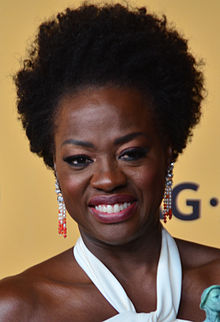
Last year, one journalist made fun of actress Zendaya’s hair because she wore dreadlocks to the red carpet; this reminded me of when Viola Davis had sported a short ‘afro’ to the Oscars … as if it was wrong for a Black woman to wear her hair in natural hairstyles. Why should an African woman be made to conform to something she is not? What is wrong with wearing our hair the way God made it?Without the relaxers, and perms made to straighten or rather beat the African-ness out? Every style should be celebrated.Our cultures are so unique… and the way we dress our hair is so unique, and should be loved and appreciated for what it is, a definition of who we are.
Viola Davis (Wikipedia)
It is high time, African women accept, appreciate, and embrace their heritage. It is impossible to beat the Afro out of oneself… just embrace it, and wear it as a peacock wears its feathers … with great pride! The poem below “African Hair” by Esmeralda Yitamben just says it all, and as I read it, I am proud to be African, born with this amazing hair. The author writes about the versatility of the African (Afro) hair, its beauty, its abundance, its richness, its kinkiness, and yes, its unruliness as well. True, I do not agree with the author’s mention of relaxers, but hey… every style should be valued. The original poem can be found on Kalaharireview.com. Enjoy! (The BBC also did a piece on Afro hair).
‘African Hair’
Kinky hair,
Picky hair,
Wavy hair,
Frizzy hair,
Hair the colour of ebony,
Sometimes sprinkled with hints of mahogany.
As splendid, lush, and full as the equatorial rainforest of Congo,
Woolen and soft like a sheep’s fur.
Shining with shea butter,
like a gem, under the moon’s smile.
O Sustaining Nature,
Blessed are our heads with beautiful hair:
Hair that can be braided, cornrowed, relaxed, and yes, even locked.
From Jamaican style dreadlocks, like Bob Marley’s hair,
To Jackson 5’s Afro,
To Maasai bald heads,
To Fulani princess corn rows,
To Bantu knots,
To Senegalese zillion braids,
To simple, hard-pressed, relaxed hair,
Precious Mother, Thou have blessed the Black race with a lion‘s mane.
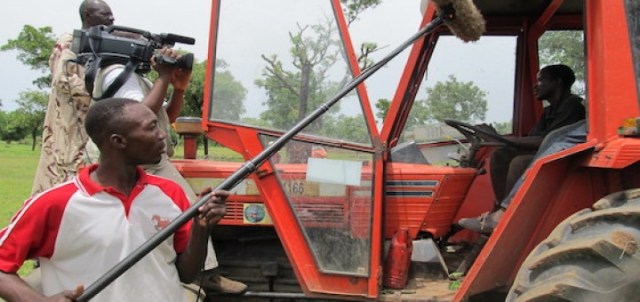
Yes… we are talking about the very first WebTV for mobile phones developed in Francophone Africa. This is an innovative project launched by Inoussa Maïga of Burkina Faso. Maïga’s specialty is in the agricultural sector, talking to farmers and addressing the problems of the land workers. This is an amazing idea, which can have impact in all sectors of their lives. Many countries in Africa are not poor, they actually have a lot of food, however, they lack the infrastructures (poor roads) to bring in their products in due time and in good quality to the city, or the best markets. So imagine, if one used the WebTV to inform said farmers about the latest roadblocks from one city to another; imagine if one used WebTV to tell breeders about ways to vaccinate their cattle, or the next time there will be a veterinary in town to vaccinate or take care of their herds. Maïga’s project will start with journalists based in 4 countries: Burkina Faso, Côte d’Ivoire, Cameroon and Benin.There are so many ways indeed. Enjoy the full article on Samsa.fr. Don’t forget to visit his blog at GoogolFarmer.
At work, interviewing a farmer in Africa (Source: GoogolFarmer)
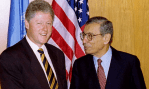
It seemed quite unfair not to say a few words about the passing of Boutros Boutros-Ghali, the first African to serve as the United Nations (UN) Secretary General. Boutros Boutros-Ghali was the first Egyptian, and the first African to serve in such a position from 1 Jan 1992 to 31 Dec 1996. True, he only served one term, and was faced with the wrath of the US because of his refusal to support NATO’s bombing in Bosnia, and the UN lame response during the genocide in Rwanda.
Bill Clinton and Boutros Boutros-Ghali (Source: The Guardian)
His five years in office were clouded by controversy, especially about perceived UN inaction over the 1994Rwandan Genocide and Angolan Civil War of the 1990s. He served at a time of crises in Somalia, Rwanda, the Middle East, and the former Yugoslavia. To some, he was an effective diplomat who was caught in a rift between the UN and the United States. Others, most notably in Washington, saw him as a symbol of all that was wrong with the United Nations. Boutros-Ghali wrote in his memoir, Unvanquished: A US-UN Saga (1999), about his tenure at the UN, and the disappointments he suffered there.
According to many, his biggest diplomatic accomplishment pre-dates his time as UN Secretary General, when he served as Egypt’s foreign minister under President Anwar El Sadat, and played a key role in negotiating the Camp David agreement brokered by the US president Jimmy Carter. The Guardian published a nice piece on Boutros Boutros-Ghali‘s life and legacy. So long to this son of Egypt.



 For today, in celebration of millions, and billions of women out there, I choose to re-post this poem which always stood on the door to my Mother’s office for many years. This poem, “











 Dieu ne donne pas à porter plus qu’on peut porter
 African Heritage