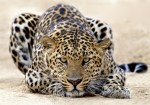
Chaque colline a son léopard. (Proberbe Bahaya – Tanzanie). – Chacun a son défaut dominant.
Every hill has its leopard (Proverb Bahaya – Tanzania).- Everyone has a predominant fault.

Chaque colline a son léopard. (Proberbe Bahaya – Tanzanie). – Chacun a son défaut dominant.
Every hill has its leopard (Proverb Bahaya – Tanzania).- Everyone has a predominant fault.
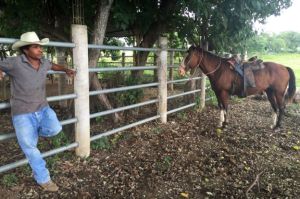
I found this article on the BBC this week about the Afro-Mexican people, or Black people of Mexico, and thought of reposting parts of it. For the full article, go to: the BBC .
===========
More than a million people in Mexico are descended from African slaves and identify as “black“, “dark” or “Afro-Mexican” even if they don’t look black. But beyond the southern state of Oaxaca they are little-known and the community’s leaders are now warning of possible radical steps to achieve official recognition.
[…] Black Mexicans have been living in the Costa Chica area, on the Pacific coast of Oaxaca, since their ancestors were brought from Africa as slaves in the 16th Century.
Colonial Spanish cattle ranchers often used them as foremen, in charge of indigenous Mexican workers who were not used to animals the size of cows or horses.
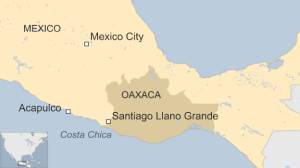
But outside the Costa Chica area there is little awareness of their existence.
An interim census in 2015 indicated a black population of 1.4 million, or 1.2% of the Mexican population. Even in Oaxaca state they only account for 5% of the total. By comparison, indigenous peoples made up nearly 10% of Mexico’s population, as measured in the 2010 census. The appearance of those who identify as black Mexicans varies considerably. Some are hard to distinguish from indigenous Mexicans.
[…] But there is frustration here that the Afro-Mexicans are not more widely known in Mexico and are not officially recognised as a minority by the Mexican government.
According to Humberto Hebert Silva Silva, head of the Bureau for Afro-Mexican Affairs in Oaxaca, this is because Afro-Mexicans speak Spanish, like most other Mexicans – they do not have their own language.
“When we go and ask [for recognition as a minority], they come up with excuses, or say that we don’t have an indigenous mother tongue. Language is the real criterion,” he says. “We are being discriminated against.”
If Afro-Mexicans were classified as a minority they would receive extra funding for promotion of their culture and public health programs.
But activists including Israel Reyes, a teacher, want more than money, it’s also important to them that the existence of Afro-Mexicans is recognized at the level of the Mexican state.
[…] “The story of the black population has been ignored and erased from history.”
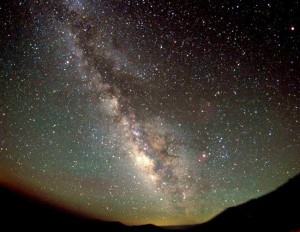 A strong-willed girl became so angry when her mother would not give her any of a delicious roasted root, that, she grabbed the roasting roots from the fire and threw the roots and ashes into the sky, where the red and white roots now glow as red and white stars, and the ashes are the Milky Way. And there the road is to this day. Some people call it the Milky Way; some call it the Stars’ Road, but no matter what you call it, it is the path made by a young girl many, many years ago, who threw the bright sparks of her fire high up into the sky to make a road in the darkness.
This is a South African tale about the origin of the Milky Way, from the Road Travel Africa.
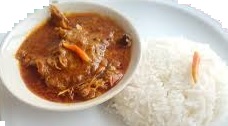 C’est l’histoire d’un évangéliste dans un village Bété en Côte d’Ivoire.
Il dit :” JESUS n’aime pas la SORC-E -LE-RIE“.
En appuyant sur le mot sorcellerie, le traducteur dit ceci en Bété : “Jésus n’aime pas la sauce et le riz.”
La foule répond “hin !C’est à koz de ça dans ses films, c’est pain seulement il mange !”
=======
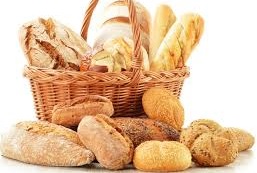 It is the story of an evangelist in a Bété village in Côte d’Ivoire.
He says: “JESUS does not like SOR-CE-RY“.
Putting an emphasis on the word sorcery, the translator says in Bete: “Jesus does not like sauce’n rice.”
The crowd responds “Ah ! That is why in his movies, he only eats bread!”
 La jambe est intelligente: elle met l’os devant et la chair derriere (Proverbe Bahumbu – République Démocratique du Congo). – Le plus fort protège le plus faible.
The leg is intelligent: it puts the bone in the front, and the flesh behind (Bahumbu proverb – Democratic Republic of Congo).- The strongest protects the weakest.
I thought of re-posting this great article on the Bogolan, the Malian fabric used for centuries. This article was first posted on Afrolegends.com on 11 Sept 2009. Enjoy!
==================
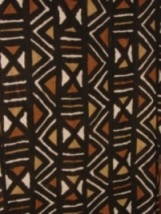
I would like to introduce you to Bògòlanfini commonly known as bogolan which is a traditional Malian fabric dyed with fermented mud, particularly associated with the Bamana people of Mali. The name is a Bamana word meaning “earthcloth” or “mud cloth” (Bogo = earth, lan = by means of, fini = cloth; the cloth obtained from the earth). Bogolan became mainstream when the genius stylist Chris Seydou (who worked with stylists such as Yves Saint Laurent) modernized its use in society, incorporating it into western coats, and dresses. Today, as you walk down the streets of New York City, you would definitely encounter beautiful African American ladies wearing Bogolan coats in the midst of winter. The Bamana people have used Bogolanfini in all parts of their lives for centuries, and the art of making it is centuries old, and is passed from generations to generations.

The Smithsonian made a beautiful page about the Bogolan and some of its artists, including the great Chris Seydou. One of the artists, Nakunte Diarra says that in the Bamana creation, “Since God created the world, … Bogolan was there.” What a beautiful way to emphasize the importance of Bogolan in the Bamana society, and in today’s Malian life.
Please check out the website by the Smithsonian, and get a chance to make your own bogolan: http://www.mnh.si.edu/africanvoices/mudcloth/index_flash.html
The video below was chosen particularly because the artist, Issiaka Dembele, gives a historical background to the art of making Bogolan. You will find shorter videos on how Bogolan is made, but this one was the most profound!
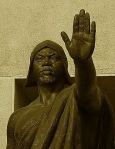
The presidential election last week in Benin stunned all. Most thought that the candidate of the hexagon Lionel Zinsou, the candidate of colonialism, was going to win. We all thought that, France, was going to crush the people’s will and have its man be handed the country. But the people of Benin said NO! The people of Benin resoundly said NO! The country of Béhanzin said NO! The country of the beloved Mathieu Kérékou said NO to France and its puppet and elected Patrice Talon. Vive la Démocratie! In some other African countries (I will not name them), France’s will would have been almighty… but in the land of the fierce Amazons said NO! We, the people has spoken!
I live you here with an excerpt of this victory, and its meaning to all Africans. We have a lot to learn from the people of Benin who have taken a hold of their destiny. Check out these articles by the Brookings Institute, AlJazeera and the BBC on this historic win. And of course, when ‘We the people’ wins, the imperialistic forces are bitter and unhappy, and want to brush it aside in the press.
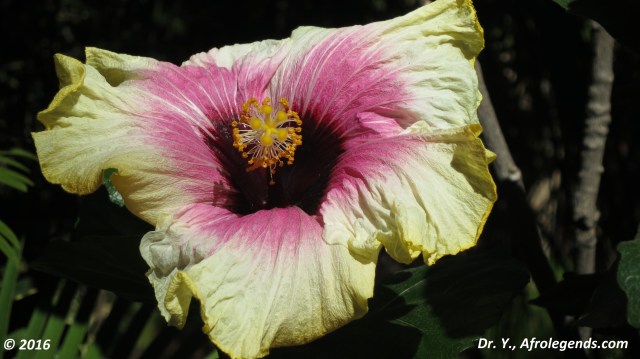
To all around the world, I would like to wish a Happy Easter or happy renewal day. This is celebration of renewal, restoration, and re-birth. I love this idea, particularly when spring comes or when the new harvest comes. The flower below shows all of it: it is slightly drooping on the sides, but still budding; it shows promises and life with its vibrant colors. This is the same for each one of us: a new day has arrived, a new dawn, a new chance at life; and this day is a gift, an opportunity to do right, to live life to its fullest, a new page. Enjoy! Happy Easter! Happy renewal!
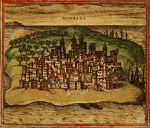
Have you ever wondered about the origin of the name of Kenya‘s oldest and biggest port city? Why? I am talking about Mombasa of course, the coastal and beautiful city of Mombasa; the city visited by the famous Moroccan scholar and traveller Ibn Battuta in 1331, as well as the great Chinese navigator Zheng He in the 1413.
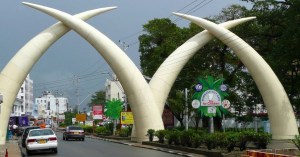
The earliest recorded mention of Mombasa is in the works of Diogenes, a Greek merchant in the First Century (supported by Ptolemy). Diogenes reported that he had been blown off course from his usual route to India, ending up in a port town he called Rhapta. Rhapta has never been conclusively identified, but Roman coins have been found on several islands that were part of, or near, what became the Sultanate of Zanzibar, of which Mombasa was a core town. In 1151, the Arab geographer Al Idrisi described it as prosperous trading town. Other pioneers of maritime exploration also visited Mombasa, including the Portuguese Vasco da Gama (1498), Pedro Álvares Cabral (1500) João da Nova (1505) and Afonso de Albuquerque (1507). 16th-century Portuguese voyager Duarte Barbosa claimed, “[Mombasa] is a place of great traffic and has a good harbor in which there are always moored small craft of many kinds and also great ships, …”
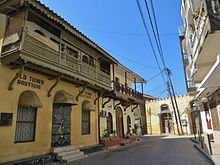
The island was first referred to as Manbaça or Manbasa in 1502, when the Sultanate became autonomous from Kilwa Kisiwani. Manbasa is the Arabic form of the Kiswahili name, Mvita, derived from Shehe Mvita, the founding father of the island city (not sure how Mvita made it into Manbasa – another case of a foreigner playing with phonetics, i.e. not hearing well). It is also known as the “Island of Mvita.” Some sources claim that Mvita is actually derived from Mombasa’s violent history over the centuries. The history supposedly earned the city the Kiswahili nickname “Kisiwa Cha Mvita”, or the “Island of War”.
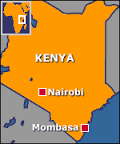
Most European travelers referred to it as Mombaz or close forms of the word. While it was a British Protectorate for 2 years between 1824 and 1826, Mombasa was turned over fully to the British Imperial East African Company in 1898. The Sultan of Zanzibar officially leased the town to the British government in 1895 as a follow-up to an 1885 agreement. Mombasa became the capital of the Protectorate of Kenya sometimes between 1887 and around 1906 until Kenya’s capital was moved to Nairobi around 1906. Technically, and legally, the coastal strip that is today the Kenyan coastline remained part of Zanzibar until it was ceded to independent Kenya in 1963.
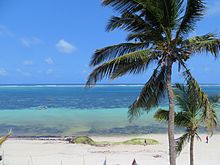
The town of Mombasa is centered on Mombasa Island, but extends to the mainland via two creeks, Port Reitz in the south, and Tudor Creek in the north. Today as always, Mombasa is a major trade center, and home to Kenya’s only large seaport. Because of its proximity to Zanzibar, Nairobi and the Indian subcontinent, Mombasa is a melting pot of diverse cultures and people. It is the center of the coastal tourism in Kenya. Enjoy this great video on Mombasa, the city of Mvita, named after its great leader and founding father.

Un fou tombe de son lit pendant qu’il dormait. Surpris, il se lève et se couche à nouveau. 30 minutes plus tard, il tombe encore à la même place. Heureux, il dit : « tchiééé !! Donc si je ne m’étais pas levé tout à l’heure, j’allais tomber sur moi-même. »
========
A madman falls from his bed while asleep. Astonished, he stands up and goes back to sleep. 30 minutes later, he falls again in the same place. Happy, he exclaims, “Kaï!! So if I had not woken up earlier on, I would have fallen on myself!”


 African Heritage