Bride Price Practices in Africa

Traditional-Weddings21-440x660
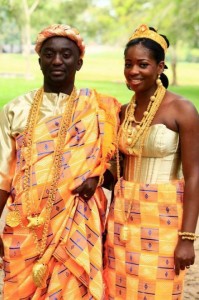
Traditional Ghanaian wedding (Source: Nairaland.com)

A few years back, I was privy to a traditional wedding ceremony where the groom and bride families came together and the groom paid the bride price. This is considered symbolic, and marks the union of the two families.

Before the arrival of Europeans and their church (white wedding), the bride price was the way to go, to get married. This is a practice as old as the world. It is a custom widely practiced across Africa. It plays a very important role in our traditions and cultures. It marks the coming together of two families. I loved the comment one of my friends made: “I found giving bride price to my wife’s family an enriching experience. Going to work and saving money gave me a sense of how precious she was to me. The contention I often hear against bride price often cite the greedy few who have spoken the loudest. There are millions who still respect the practice.” Yes… many still respect and value the practice.

It is a cultural practice which makes for stronger family relationships, and do help with arranging conflicts when they arise in marriage.
African wedding_VozAfrica
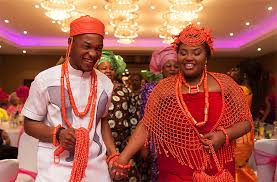
Traditional Nigerian wedding (Source: VozAfrica)

The bride price also known as bride token, is an amount of money or property which is paid by a groom and his family to the family of the bride. In many parts of Africa, the bride price confirms the validity of a traditional marriage and conditions the permission to marry in church or in a civil ceremony. Its power supersedes all other sorts of marriages. The marriage is considered invalid if the bride price has not been paid, and this actually affects the marriage, and the offspring from that couple as it is then considered that the groom and his family have despised and dishonored the bride’s family. The children from that union do not belong to the husband’s family, but rather to the woman’s, as he never paid the bride price, and thus has no right over them.

Last year, a friend of mine returned the bride price which had been paid for his sister’s hand to the groom’s family, as he (the groom) had dishonored the wife, almost beaten her to death, and cheated. In this instance, this was to mark a divorce. Now what will happen if the woman wanted the divorce and could not afford to reimburse the bride price? What if rupture was the only way out of this marriage, what should she do? Divorce is still highly frowned upon in African societies, and the stigma of it affects the woman deeply.

Although the bride price is a symbolic token, it has been described in many African countries as a license to own a family or to purchase a wife from a family often leading the man to receiving the “permission” to exercise economic control over his wife. It has also been criticized for being an “enrichment scheme” for the bride’s family. There are two serious questions that have arisen with the evolution of the bride price: has it truly become a source of income for families and does it have a negative impact on women?Does the practice of the bride price hinder the work of women’s rights and empowerment activists? Does the bride price create more bad than good by leaving newlywed couples with unfortunate financial problems which strip them of the joys of being newly married? Has the bride price truly become a source of enrichment for families and demeaning to women?
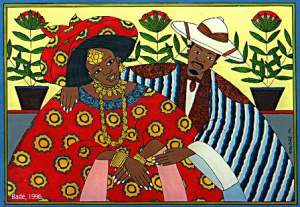
marriage_senegal
Senegalese Wedding (Source: Bade, 1996)

This is a tradition truly African which should be upheld… and it varies from country to country, and maybe should be checked to avoid excesses from the bride’s families… and to stop the groom’s families from depriving the bride of her rights once in the marriage.

Below are comments by African BBC correspondents about Bride Price practices across Africa. For the full article, check Bride price practices in Africa:

==========

Pumza Fihlani, South Africa:

A bride price here is known as “lobola“, where the groom’s family presents either money or cows or both to the bride’s family as a gesture of his willingness to marry her.

The payment of lobola is a sign of the man’s commitment to take care of his wife and is seen as a symbolic act and a necessary part of upholding culture, rather than a purchase.
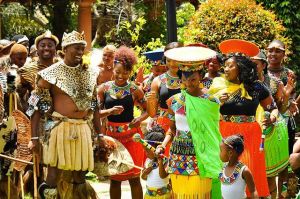
South_Africa_traditional_wedding
Traditional South African wedding (Source: Wikimedia)

Kim Chakanetsa, Zimbabwe:

The term “lobola” is also used in southern Zimbabwe, but in Shona communities it is known as “roora” and while the tradition is to give cattle, this is now often replaced by cash – the amount is subject to negotiation.

There are several stages to the tradition and it is seen as a way of thanking the bride’s family for bringing her up, but there is no sense that the bride is being bought.

Abdourahmane Dia, Senegal:

The payment of bride price is customary in Senegal but largely symbolic.

A small amount of money and a kola nut is given to the bride’s family at the mosque, after that the sum handed over can be anywhere from less than $100 to tens of thousands.

Angela Ngendo, Kenya:

The Kenyan constitution outlaws the obligation to pay a bride price but it is widely understood that it will be paid.

Pastoral communities insist that it is paid in cattle and it has been cited as a cause of cattle rustling, whereas families in other communities will accept cash.

There is a sense that a transaction has taken place over the bride.
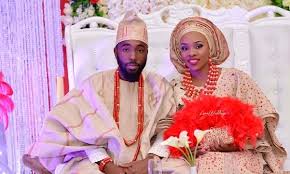
African wedding_Nigerian
African Wedding – Nigerian (Source: Naija.nj)

Leone Ouedraogo, Burkina Faso:

The bride price is commonly paid in Burkinabe culture and is largely a symbolic act.

There is no set amount and a little money is given, but it is mainly in goods such as Kola nuts, drinks, cigarettes – and some ethnic groups may give a goat.

However, a bride’s family is not normally too demanding.

Aichatou Moussa, Niger:

In Niger, there is an official maximum rate for a bride price of 50,000 CFA francs ($83, £54) but many pay much more than this.

The price is agreed between the families, but it is seen as a symbolic act rather than about buying the wife as Nigeriens say not matter how much is paid you cannot buy a human being.

Proverbe sur le bien / Proverb on Doing Good

Giving1
Donner / Give

Prête du bien, on te le rendra (proverbe Maure – Mauritanie, Algerie, Niger, Mali, Tunisie, Maroc, Sahara Occidental).

Lend good, and it will be returned to you (Moor proverb – Mauritania, Algeria, Niger, Mali, Tunisia, Morocco, Western Sahara).

Happy 2018!

20170920_1Million viewsDear readers, we wish you all an AMAZING new year. May the year 2018 mark the fulfillment of old and new dreams that will last a lifetime. We would like to express our profound gratitude for your constant support, as your readership has carried us forward. Thank you to all those who visited the blog, reblogged articles, commented, and to all future visitors. 2017 was a beautiful year: Afrolegends.com had lots of views, subscribers, and many articles reblogged on multiple sites. On September 19, 2017, we passed the cap of the 1 Million Views on the African Heritage Blog!!!

The top 6 posts of 2017 are listed below. For this new year, 2018, we will bring you even more amazing, fun, and rich articles. Keep trusting, reading, sharing, reblogging, and liking. We wish you a beautiful, full, and amazing new year, rich in blessings, and rich in greatness. May 2018 be the year of greatness! Keep your heads up, and may your year be as beautiful as the petals of this flower! As you can see, everything about this flower marks the beginning of something beautiful: a new start, a new life, and a new joy! As always, like Agostinho Neto said, “A luta continua … a vitória é certa!

Happy 2018_3
Happy 2018

1. History of African Fabrics and Textiles

2.  Samori Toure: African leader and Resistant to French Imperialism

3. ‘Love Poem for My Country’ by Sandile Dikeni

4.  Timbuktu, one of the world’s first and oldest university

5.  Adinkra Symbols and the Rich Akan Culture

6. Amanishakheto, Warrior Queen of Nubia

George Weah: From One of the Greatest Football Players Alive to President of Liberia

George Weah3
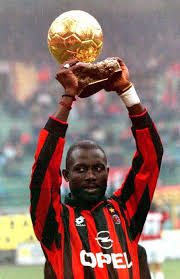
George Weah, president-elect of Liberia

This is a happy day, for George Weah is now president-elect of Liberia! Thinking about how long it took to get there, I am so proud of him. His consistency, his determination to serve Liberia at the highest office, and his love for his country are commendable. As a flashback, remember the Liberian presidential elections of 2005, when he had gone through the second turn of the presidential elections, and amidst election frauds many believed that he had won the election in lieu of Ellen Johnson Sirleaf. People told him that he was too young, he should let Mama run the country; that he was just a football (soccer) player, albeit a great one, but a baby in politics, an uneducated man, and should let those who knew it, run the country. After a month of deliberation, and a lot of strength and patriotism, Weah agreed to let Ellen Johnson-Sirleaf claim the victory. He could have said ‘NO’ and gone into protests which could have led Liberia into civil unrest, but he loved his country deeply, and chose peace! In subsequent years, he learned politics, learned how to serve the people better, even unsuccessfully ran as a VP candidate in the 2011 presidential elections, became a Senator of Montserrado County in 2014, and got a graduate degree. Today, he has won the presidential elections. Talk about perseverance, love, and determination!

George Weah4
George Weah won Ballon d’Or while playing for AC Milan

George Weah developed great football abilities early on, and after playing in the Liberian football domestic league at the beginning of his successful career, and winning several national honors (including the Liberian Premier League and the Liberian Cup), Weah went on to play in the Tonnerre of Yaoundé (one of the greatest football clubs of Cameroon) in Cameroon where he was discovered, and then took off for a very successful career in Europe. He is widely regarded as one of the greatest African players of all time, and in 1995 he was named FIFA World Player of the Year and won the Ballon d’Or, becoming the first and only African player to date to win these awards. In 1989, 1994 and 1995, he was named the African Footballer of the Year, and in 1996, he was named African Player of the Century. Known for his acceleration, speed, and dribbling ability, in addition to his goalscoring and finishing, Weah was described by FIFA as “the precursor of the multi-functional strikers of today”.  In 2004, he was named by Pelé in the FIFA 100 list of the world’s greatest living players.

Liberia_flag
Flag of Liberia

As you can see, it took him over 12 years from those failed elections of 2005, but he made it. He successfully went from an outstanding football player to the president of a nation. His story is that of perseverance, and particularly of excellence: Do what you are called for, whatever it is, with excellence, … you never know you could be called for greatness through that excellence! We salute his uncompromising, unflinching courage and determination, and we are happy for Liberia

Proverbe sur la Compassion / Proverb on Compassion in Time of Need

haircut5Même si on ne t’aime pas, tu trouveras toujours quelqu’un pour couper tes cheveux (Proverbe Kikuyu – Kenya). – Dans le malheur on n’est jamais seul!
haircut4aEven if no one likes you, you will always find someone to cut your hair (Kikuyu proverb – Kenya). – In misfortune, we are never alone!
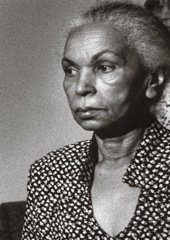
“If You Want to Know Me” by Noémia de Sousa

Noemia de Sousa
Noemia de Sousa (Source: Estudos Lusofonos)

Today I give you a poem by the world-renowned Mozambican author Noémia de Sousa. This poem gives vivid pictures: from the empty eye sockets which have lost hope, the mouth torn open in an anguished wound, a body tattooed with wounds unseen and seen… etc. Just reading it, one can feel the pain, see it, and touch it; it is so profound! Yet, she claims that this body is magnificent, that through the pain, it is beautiful. So what body is she talking about? Why, Africa, of course! She wrote this at a time when African countries were still under colonialism, and through this she introduces us to a beautiful Africa, which has gone through so much pain, but yet is still beautiful, and still rises. In general, I will take it a step further, and say that no matter what pain we go through today, we are still beautiful, and we will still rise! (* Maconde — uma das etnias de Moçambique.) Enjoy!


==========

Se Me Quiseres Conhecer
By Noémia de Sousa

Se me quiseres conhecer,
estuda com olhos de bem ver
esse pedaço de pau preto
que um desconhecido irmão maconde*
de mãos inspiradas
talhou e trabalhou
em terras distantes lá do Norte.

Ah, essa sou eu:
órbitas vazias no desespero de possuir a vida.
boca rasgada em feridas de angústia,
mãos enormes espalmadas,
erguendo-se em jeito de quem implora e ameaça,
corpo tatuado de feridas visíveis e invisíveis
pelos chicotes da escravatura…
Torturada e magnífica.
Altiva e mística.
Africa da cabeça aos pés
— Ah, essa sou eu!

Se quiseres compreender-me
vem debruçar-te sobre minha alma de Africa,
nos gemidos dos negros no cais
nos batuques frenéticos dos muchopes
na rebeldia dos machanganas
na estranha melancolia se evolando…
duma canção nativa, noite dentro…

E nada mais me perguntes,
se é que me queres conhecer…
Que eu não sou mais que um búzio de carne
onde a revolta de África congelou
seu grito inchado de esperança.

If You Want to Know Me
By Noémia de Sousa

If you want to know who I am,
Examine with careful eyes
That piece of black wood
Which an unknown Maconde brother
With inspired hands
Carved and worked
In distant lands to the North.

Ah, she is who I am:
Empty eye sockets despairing of possessing life.
A mouth slashed with wounds of anguish, huge flattened hands,
Raised as though to implore and threaten,
Body tattooed with visible and invisible scars
By the hard whips of slavery…
Tortured and magnificent.
Proud and mystical.
Africa from head to toe
-ah, she is who I am!

If you want to understand me
Come and bend over my African soul,
In the groans of the Negroes on the docks
In the frenzied dances of the Chopes
In the rebelliousness of the Shaganas
In the strange melancholy evaporating…
From a native song, into the night …

And ask me nothing more,
If you really wish to know me…
For I am no more than a shell of flesh
In which the revolt of Africa congealed
Its cry swollen with hope.

Proverbe sur l’immigration et la convoitise / Proverb on Immigration and Coveting

field_champ
Pâturages / Pastures

Si on te vante les pâturages d’un pays, continue à faire paître le tien (proverbe Maure – Mauritanie, Algerie, Mali, Niger, Maroc, Tunisie, Sahara Occidental).

If someone brags about the pastures of a country, continue to graze yours (Moor proverb – Mauritania, Algeria, Mali, Niger, Morocco, Tunisia, Western Sahara).

Blague Africaine: Lire le Journal … / African Joke: On reading the Newspaper

Beer

Il y a cinq ans que j’ai lu dans la presse que l’alcool tue ; j’ai arrêté de boire. Il y a un an que j’ai lu dans un journal que le tabac tue ; j’ai arrêté de fumer. Cette année, je lis que faire l’amour tue? ; là que faire ? Ah moi, j’ai arrêté de lire journal dèh ; c’est mieux.

======

tobaccoFive years ago, I read in the press that alcohol kills; I stopped drinking. A year ago, I read in the newspaper that tobacco kills; I stopped smoking. This year, I read that making love kills; then what to do? Ah! me, I decided to stop reading the newspaper; it is better.

Proverbe sur la Sagesse / Proverb on Wisdom

20150610_Pirogues_Senegal
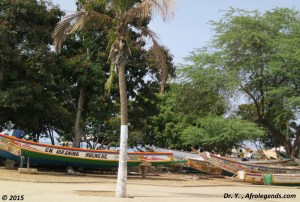
Pirogues de Pecheurs a Dakar, Senegal / Fishermen’s boats in Dakar, Senegal

C’est en voyage qu’on trouve la sagesse (Proverbe Bantou).

It is on a journey that wisdom is found (Bantu proverb).

‘Thiaroye Massacre’ by Ousmane Sembene

The great Senegalese filmmaker Ousmane Sembene made a movie about the Thiaroye massacre committed by French forces in Senegal during the night of 30 November – 1 December 1944! The movie, Camp de Thiaroye, was made in 1988. It took almost 20 years for a French president, Francois Hollande in 2012, to acknowledge it. A massacre which occurred because the Tirailleurs Senegalais asked to be given the pay they had been promised for services rendered, defending France in France against Hitler’s Nazi forces. Those Senegalese men were killed by French men for asking to be paid after defending France with their lives!