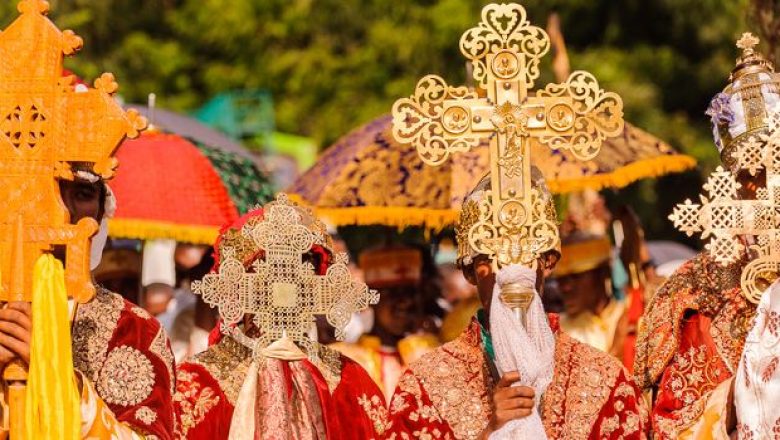
Ethiopian religious leaders carrying crosses during the Meskel celebration (Ethiopiaonlinevisa.com)
September 27th this year marks another big Ethiopian celebration. An even bigger festival than Enkutatash the Ethiopian New Year, is the Meskel “True Cross” Celebration which takes place on September 27th or 28th in leap year. Meskel 2021 is on September 27th . The festival commemorates the discovery of the “True Cross” on which Jesus was crucified, and is held annually in Meskel Square in Addis Ababa.
The word “meskel” is from the Ge’ez language which translates to “cross.” The festival is basically a celebration of the finding of the cross. The festival is held at the iconic Meskel square in Addis Ababa and draws out a large number of religious and civil leaders as well as public figures and Christian faithful. Meskel has been celebrated in Ethiopia for more than 1,600 years as an outdoor religious festival and has been registered at UNESCO since December 2013 as an Intangible World Heritage.
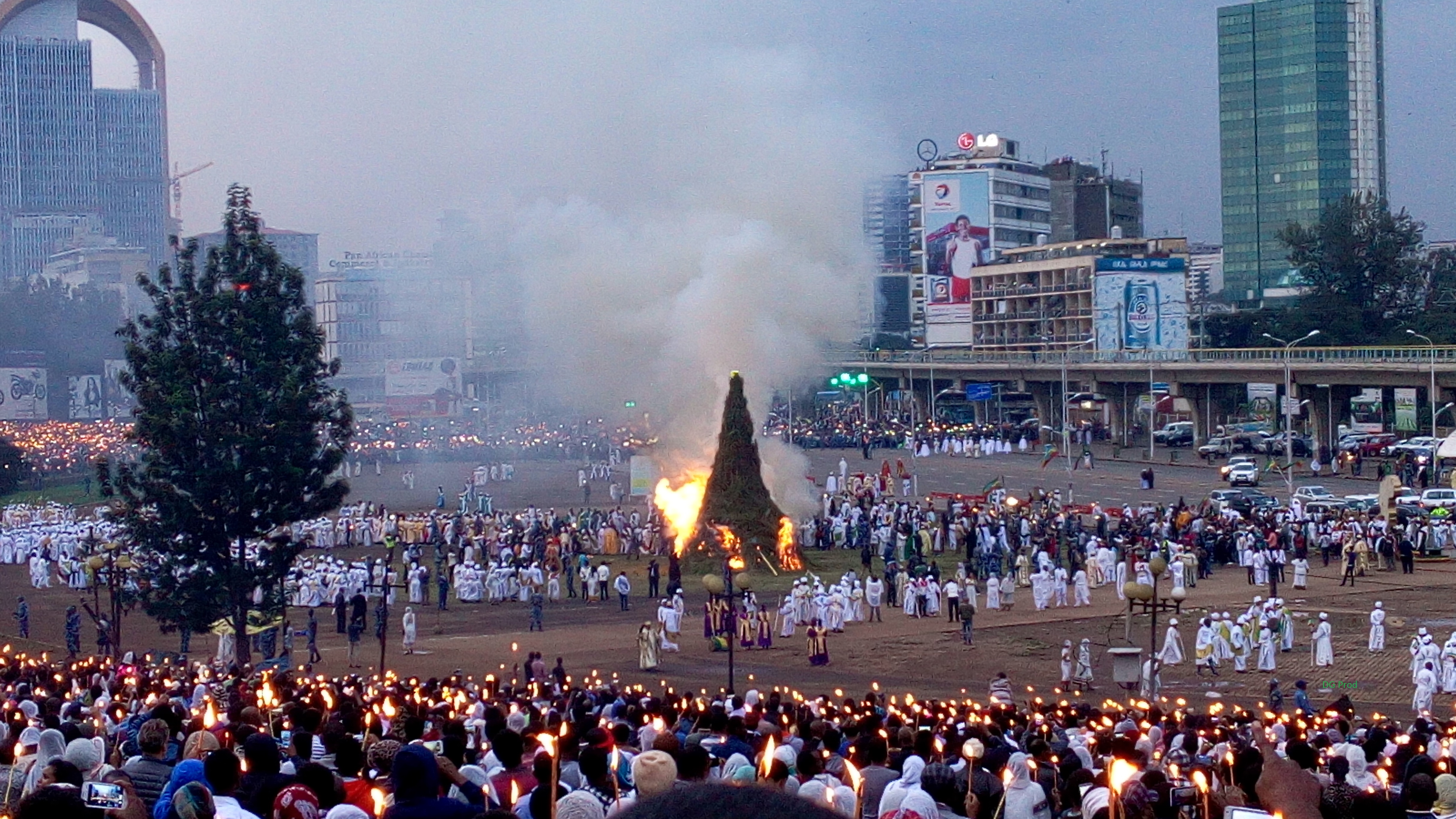
Meskel celebration in Addis Ababa (Source: Wikipedia)
The legend goes that in 4BC, the Roman Empress Helena (Queen Eleni) was able to locate the important artifact in Jerusalem by using the smoke from a huge fire. The celebration is especially important to Ethiopians as it is alleged that a piece of the cross Helena discovered was brought to Ethiopia, and hidden away somewhere in the mountains of Amba Geshen, which itself has a cross-shaped plan.
Ethiopians commemorate the find by building their own massive bonfire, the Meskel, which they decorate with yellow flowers known as Adey Abeba before burning. Ethiopia’s religious leaders lead colorful processions and prayer around the fire, and attendees intently watch to see which way the bonfire will collapse, as it is believed to predict the future.
As you can see, the month of September is a month of cultural and religious celebrations in Ethiopia.
A few days back, yours truly was invited to the celebration of the Ethiopian New year. Yes… this year Enkutatash, or the Ethiopian New year, was celebrated on September 11th, and my friend went on to tell me more about it. Did you know that we are currently in the year 2014 in the Ethiopian calendar?
The Ethiopian calendar is a solar calendar based on the ancient Egyptian calendar. The first month of the year is September, called Meskeremin Amharic, the local language. One of the reasons given is that during the month of September, the number of daylight hours and nighttime hours happen to be exactly equal in every part of the globe. Moreover, during this time of the year, the sun and the moon that are used to count time each have 12 hours before setting. Another reason often given is that it could be derived from the Bible, where the creation of the Heavens and Earth are said to have taken place in September. Lastly as in many world calendars, harvests must have been key in the setting up of the calendar.
Adey Abeba flower (Source: WikiCommons)
Enkutatashis the name for the Ethiopian New Year and means “gift of jewels” in Amharic. The story goes back almost 3,000 years to the Queen of Sheba of ancient Ethiopia who was returning from her visit to King Solomon of Israel, as mentioned in the Bible in I Kings 10 and II Chronicles 9. She had gifted King Solomon with 120 talents of gold (4.5 tons) as well as a large amount of unique spices and jewels. When the Queen returned to Ethiopia, her chiefs welcomed her with enkuor jewels to replenish her treasury. The name Enkumay also refer to the countryside, which is covered by bright yellow flowers known as Adey Abeba as this time of the year also marks the end of the raining season. The appearance of the bright yellow flowers also indicates the impending harvest which is to be celebrated (see… harvest).
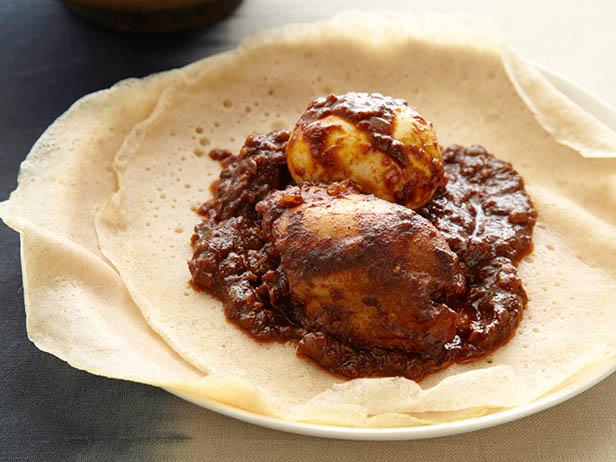
Doro wot on Injera (Source: cookingchanneltv.com)
The celebration is both religious and secular. The day begins with big church services, followed by the family meal. Young children will receive small gifts of money or bread after the girls gather flowers and sing, and boys paint pictures of saints. Families eat the famed national flat bread injerawith the national dish doro wot (chicken stew), which takes at least half a day to prepare, and is rarely missed during these celebrations; families visit friends, and adults drink Tej, the national Ethiopian wine made out of honey… reminds me so much of King Lalibela (bees)… is this where the tradition comes from?
This year in particular, the hope is for peace and harmony… to a happy new year. Enkuan Aderesachihu!
As we continue to learn more about Lucy, and the origin of mankind, I thought of sharing the video below. It is a short interview of Donald Johanson who found Lucy in 1974 in the Afar Triangle in Ethiopia. It is “In Conversation with Donald Johanson, a film by Pierangelo Pirak” on the BBC Earth. It is just a snippets, but it helps to perceive the change that occurred with the discovery of Lucy in our understanding of the human evolution and origin. There are definitely other documentaries, much longer that will give more information, but this is to wet your appetite. Since the discovery of Lucy, more Australopithecus afarensis have been found, and even older remains like those of the Kenyantropus platyops (3.5 million years) or the Ardipithecus (dated 4.4 million years). Enjoy!
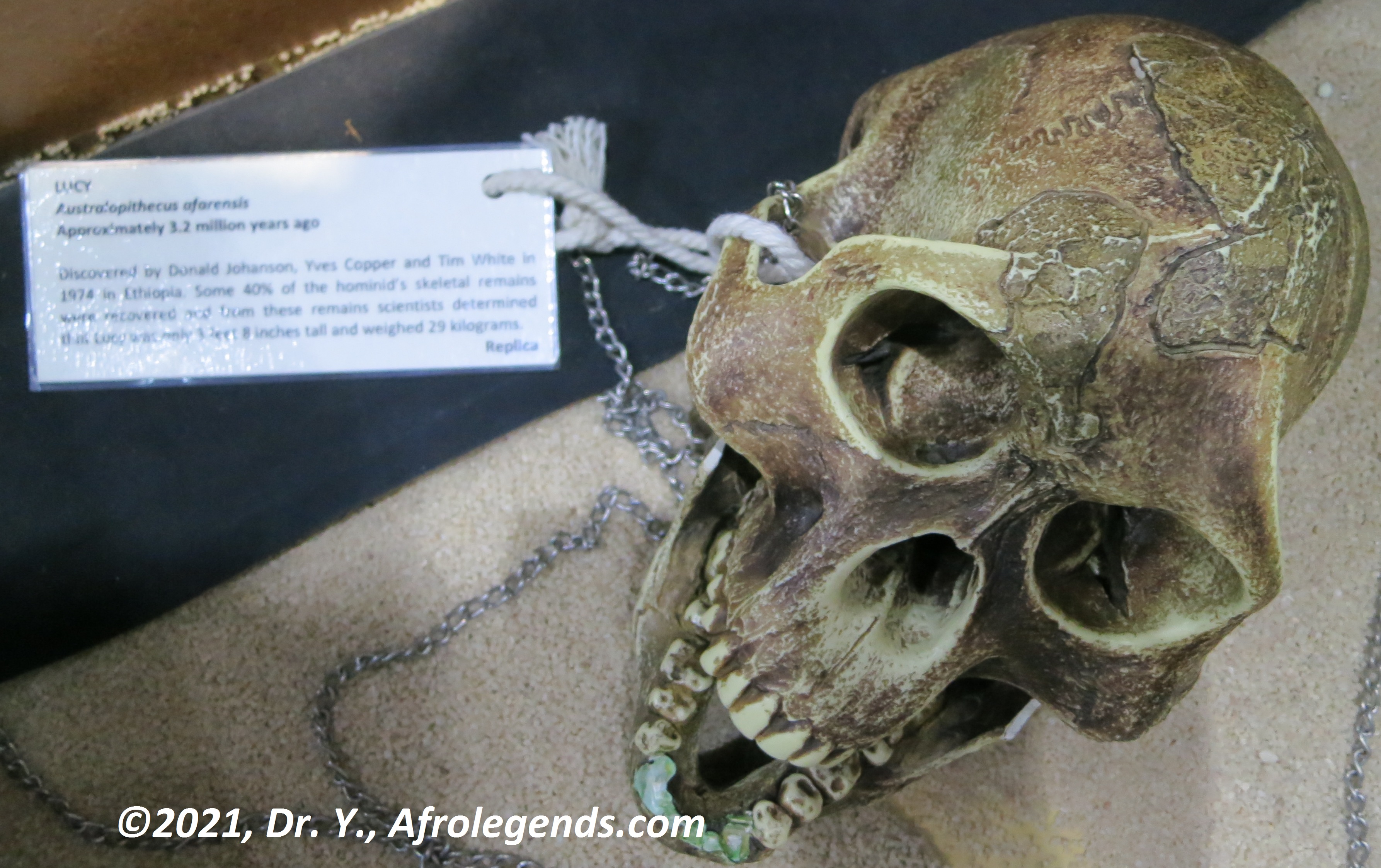
Lucy (Australopithecus Afarensis), approximately 3.2 million years ago (Replica of her skull at the Origins Museum)
How many of you have pondered upon the origin of humanity? Or who could have been the oldest ancestor to mankind? Or how we are all related to that ancestor?
I know some will say Adam and Eve… but what if it was Lucy and someone else instead? What if it was not somewhere in the Middle East but rather on the African continent?
Well, today, we will be talking about Lucy, the first human ancestor discovered in Ethiopia, in Africa, the cradle of humanity.
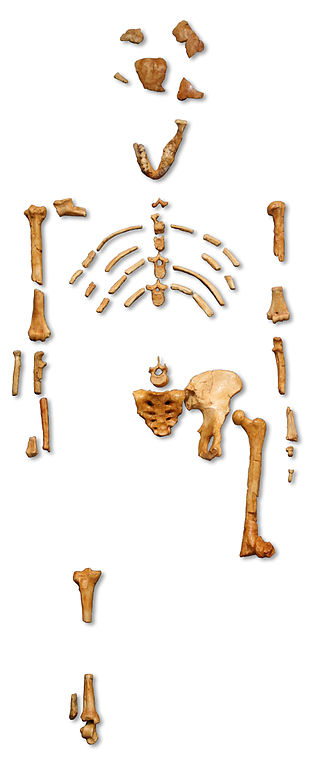
Lucy was discovered in 1974 in Africa, at Hadar, a site in the Awash Valley of the Afar Triangle in Ethiopia, by paleoanthropologistDonald Johanson of the Cleveland Museum of Natural History . In Ethiopia she is known as Dinkinesh, meaning the marvelous one in Amharic. The Lucy specimen is an early australopithecine and is dated to about 3.2 million years ago. At the time of the findings, it was the most ancient early human – or hominin – ever found. It was also the most complete: 40% of the skeleton had been preserved.
Reconstruction of Lucy’s skeleton, cast from Musee national d’histoire naturelle, Paris (Source: Wikipedia)
Now, you might ask, why is she called Lucy? Well, because the Beatles’ song “Lucy in the Sky withDiamonds” was playing on the radio when the archaeologists found her remains. Thus the name Lucy. Lucy belongs to the species of Australopithecus afarensis; afarensisfor the Afar region of Ethiopia where she was found. She is one of the most important fossils ever discovered. Her discovery helped solidify the idea that Africa was the cradle of humanity, and a crucial hub for human evolution. Before Lucy, the skeleton of the Taung child dated to about 2.8 million years old had been found in South Africa in 1924, but European archaeologists and scientists refused to admit (as always) that Africa could be important in the study of human evolution. As always, they thought that Europe and Asia were the centers. Aren’t we tired of this Eurocentric view of the world which pretends to give meaning to everything it does not understand? Oh Mama Africa, your beauty and splendor is truly too much for these people that they have to keep denying your place and importance in the world!
Lucy was an upright walker, i.e. she walked standing up, thus dating the bipedalism observed in humans to at least 3.2 million years. She was only about 1 meter tall (3.5 feet). Lucy was a full-grown adult, because she had wisdom teeth and her bones had fused. Unlike modern humans, it would seem that she had grown to full size very quickly, and was about 12 years old when she died. From a 2006 study, the findings of a 3-year-oldAustralopithecus afarensis suggested that their brains reached their full size much earlier than modern human’s does. Lucy was ape-like in appearance and brain size, but could walk upright like more advanced hominins that lived later like the Taung child (2.8 million years) or the Australopitecus sediba (2.2 million years old). She had powerful arms and long curved toes that paleontologists think allowed her to climb trees as well as walk upright.
Lucy’s finding marked a turning point in our understanding of humanity, and the human lineage. She is a treasure, and although older skeletons have since then been found like the Kenyantropus platyops (3.5 million years) or the Ardipithecus (dated 4.4 million years), she remains a treasure. No wonder, Ethiopians call her Dinkineshor “you are marvelous” or “marvelous one“, for Lucy truly is marvelous as she has allowed to place Africa back at the center as the cradle of humanity (Africa was always at the center, but some Eurocentric views would not let her shine). If you are ever in Addis Ababa, please do not forget to visit her (her cast) at the National Museum of Ethiopia . Enjoy!
For more, please check out the Institute of Human History at the Arizona State University (founded by Donald Johanson), the Smithsonian, and this very good article on The BBC website.
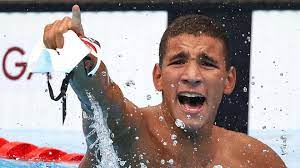
Ahmed Hafnaoui of Tunisia winning the Gold during the 400m freestyle at the Tokyo 2020 (Source: ca.sports.yahoo.com)
This week more history has been made for Africa at the Olympics. Records have been broken and Africans have responded present with strength.
Tunisia, with Ahmed Hafnaouioffered the African continent its first medal of the games, by winning gold in the 400m freestyle swimming. Then, Mohamed Khalil Jendoubi won silver in the Men’s 58kg Taekwondo.
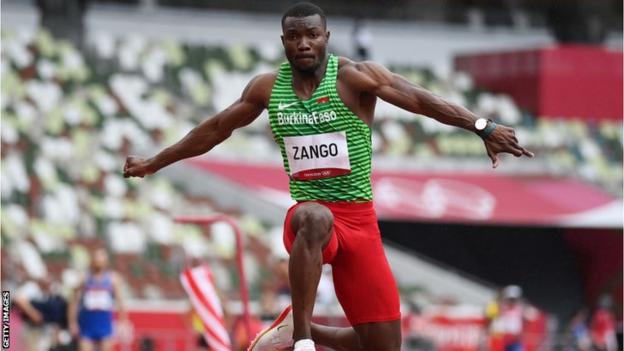
Hugues Fabrice Zango getting his triple jump (Source: bbc.co.uk)
Burkina Faso got its first ever medal since the creation of the Olympic games. Hugues Fabrice Zango won the bronze medal in the Men’s triplejump. It was really good to watch him, and I am proud for this son of the land of Thomas Sankara. Moreover, he won his medal, Burkina Faso’s medal on the 61st anniversary of the country’s independence (as you know most Francophone countries are not really independent from France because of the FCFA, but this is a story for another day).
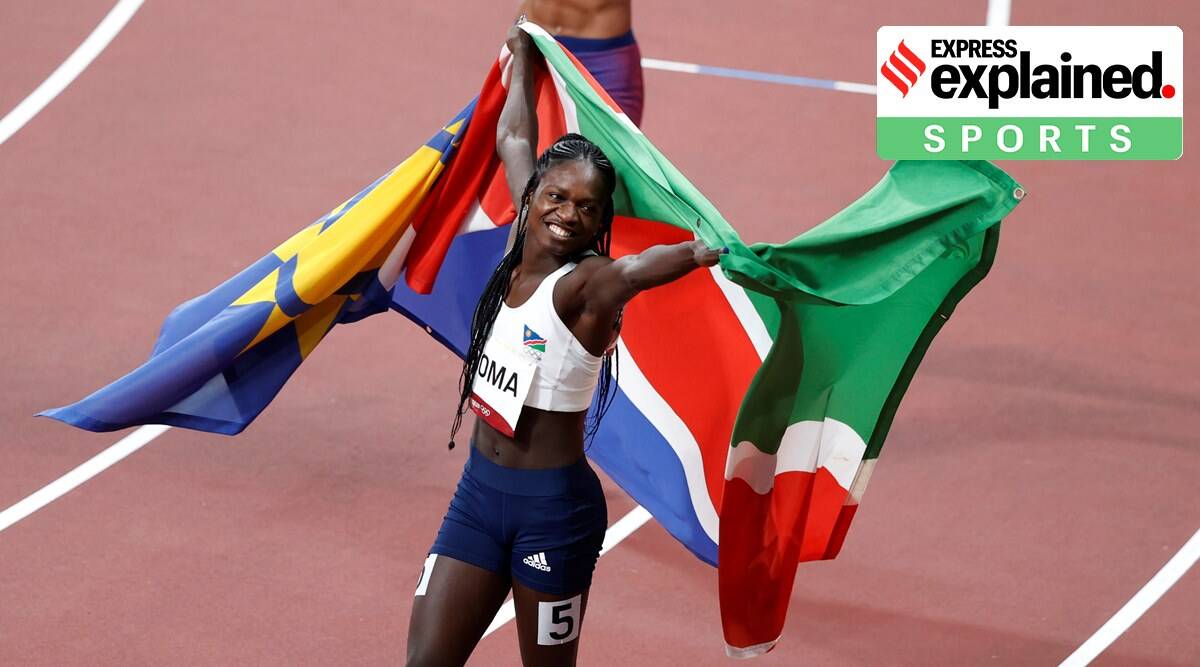
NamibiaChristine Mboma came back from behind to win silver in the Women’s 200m in front of some of the world’s best. Now remember that Christine Mboma and her compatriot Beatrice Masilingi were barred from running their favorite distance, 400m, just a month ago, and had to all of sudden readjust to run 200m. They were declared ineligible for the longer race because of a genetic condition that raises their testosterone levels. South African Caster Semenya, a two-time Olympic champion in the 800m (2016 and 2012), is the most famous DSD (difference in sexual development) athlete who has been stopped from running in Tokyo. All three 800m medallists at the 2016 Rio Olympics – Semenya, Burundi’s silver medallist Francine Niyonsaba and Kenyan bronze winner Margaret Wambui – were DSD athletes… I am not sure I understand the whole issue, because for me, I wonder how one can be born female and then one day some organization tells them that they are not female. I find it hard to fathom. So let’s see what will happen. Mboma is the first Namibian female to win an olympic medal… she is following in the tracks of the great Namibian athlete Frankie Fredericks (Frankie Fredericks: Sprinting to the Finish for Namibia).
Christine Mboma of Namibia (Source: indianExpress)
Blessing Oborududu of Nigeria won Silver in the Women’s freestyle 68kg. Ese Brume did not disappoint and won Nigeria’s first medal of the Tokyo Olympic Games, taking bronze in the women’s long jump.
Ethiopia Selemon Barega gave Ethiopia its first Men’s 10,000m gold since Kenenisa Bekele in 2008. Lamecha Girma won silver in the Men’s 3000m steeplechase. Gudaf Tsegay won bronze in the Women’s 5000m race, while Letesenbet Gidey won the bronze medal in Women’s 10000m.
Uganda Joshua Cheptegei, the World champion and world record holder, ran a controlled race to take the men’s 5000m gold; last week, he had also won silver in the Men’s 10,000m. Jacob Kiplimo won the bronze medal in the Men’s 10,000m race. Peruth Chemutai became the first Ugandan woman ever to win an Olympic gold medal on Wednesday – triumphing in the Women’s 3,000m steeplechase.
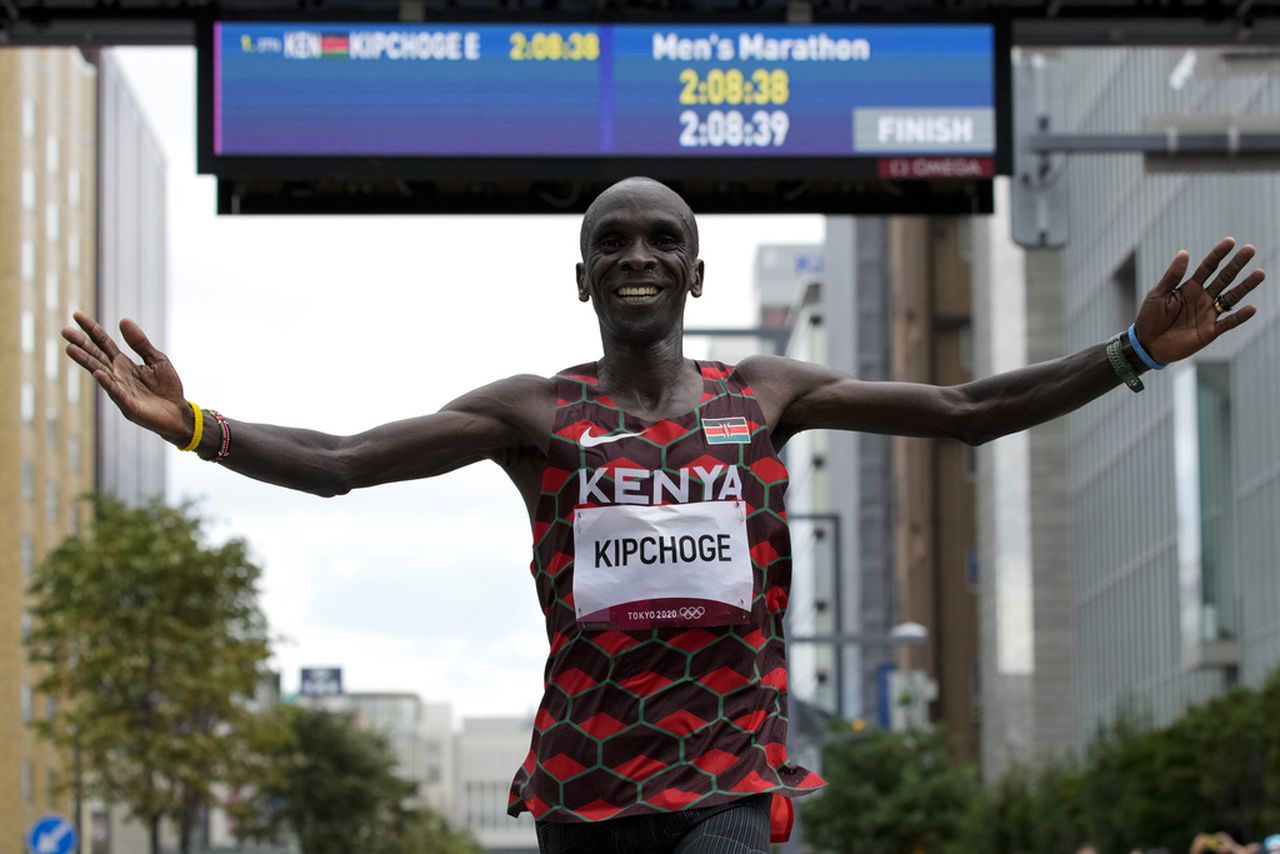
Eliud Kipchoge winning gold at the Men’s marathon (Source: OregonLive.com)
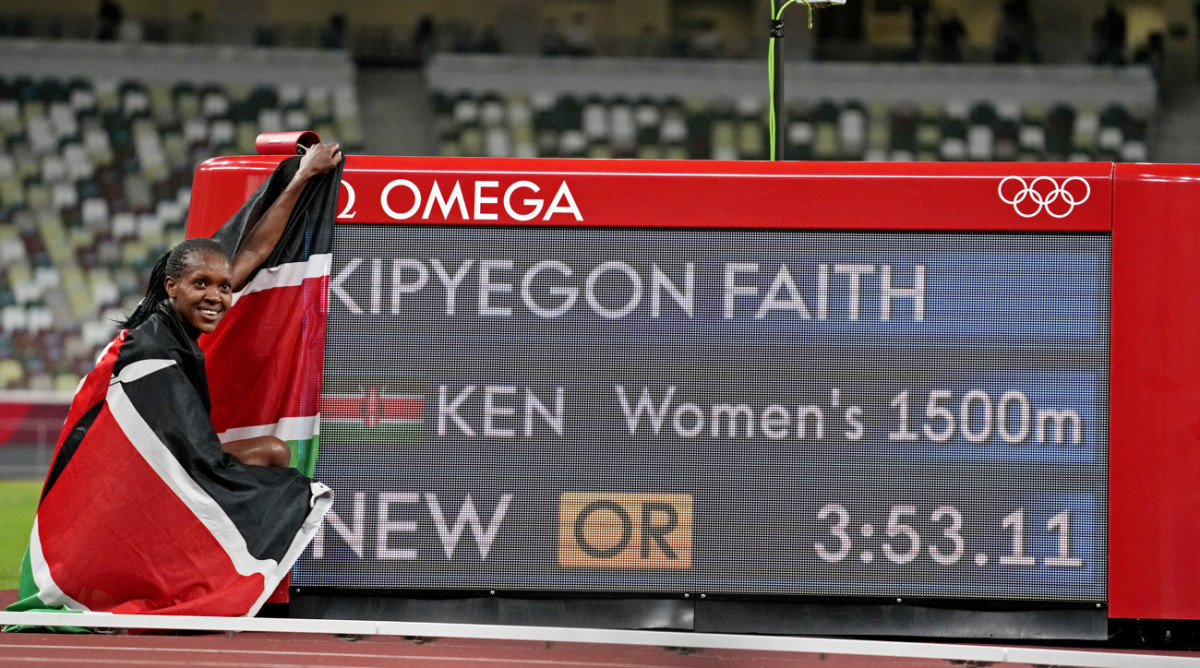
Kenya’s Faith Kipyegon, who had been training with legends like marathon world record holderEliud Kipchogethwarted World champion’s Sifan Hassan’s plans of winning a distance treble in Tokyo by retaining the women’s 1500m title by pulling ahead after the bell and winning gold. Her compatriot Peres Jepchirchir won the women’s marathon, defeating world record holder Brigid Kosgei in the closing stages and winning in 2h27min20s, and Kosgei had to settle for silver. Hellen Obiritook home silver in Women’s 5,000m, while Hyvin Kiyeng won bronze in Women’s3000m steeplechase. The men’s 800m gold went to Emmanuel Kipkurui Korir of Kenya, and his teammate Ferguson Rotich took silver. Timothy Cheruiyot took silver in the Men’s 1500m, while Compatriot Benjamin Kiven took bronze in the men’s 3000m steeplechase. Eliud Kipchoge successfully defended his olympic title at the marathon; he is only the 3rd person in the history of the games to win successive marathons.
South Africa’s Tatjana Schoenmaker won gold, and broke the Women’s 200m world record for breaststroke on Friday. This earned her a call from the President of South Africa, Cyril Ramaphosa, to congratulate her on her victory. Schoenmaker had previously won silver in the Women’s 100m breastrokes, while Bianca Buitendag took silver in surfing,
Morocco’s Soufiane El Bakkali triumphed in the Olympic Men’s 3,000m steeplechase – ending Kenya’s 41-year unbeaten run on the distance.
Egypt’s Giana Farouk (Lotfy) won bronze in the Women’s kumite karate. Seif Eissa, Hedaya Malak, and Mohammed Elsayed Elsayed all won bronze medals in the Men’s 80kg taekwondo, Women’s 67kg taekwondo and Men’s 67kg Greco-Roman wrestling respectively.
Faith Kipyegon winning the 1500m (Source: si.com)
Ruth Gbagbiof Cote d’Ivoire won bronze in the Women’s 67kg Taekwondo. She had won Bronze also in Rio 2016. Ghana also took home bronze in the Men’s Feather (52-57kg) boxing with Samuel Takyi.
Lastly, Team Botswana (Isaac Makwala, Baboloki Thebe, Zibane Ngozi, Bayapo Ndori) surprised everyone by giving a beautiful performance and winning the bronze amidst some of the world’s bests in the Men’s 4x400m relay.
Overall, it was a good game… As we turn the page of the Tokyo 2020 Olympics which took place in 2021, we do hope that the Paris 2024 Olympics will be better for Africa, and that the world will be in a better place.
Ahmed Hafnaoui of Tunisia winning the Gold during the 400m freestyle at the Tokyo 2020 (Source: ca.sports.yahoo.com)
Africa is well-represented at the Tokyo olympics this year. Even though it has only been 5 days, Africans have already won quite a few medals, starting with a gold metal from the Tunisian Ahmed Hafnaoui in 400m freestyle swimming, and silver medals for South Africans Tatjana Schoenmaker and Bianca Buitendag in 100m breastrokes and surfing, and Mohamed Jendoubi of Tunisia in Taekwondo; while Ruth Gbagbi of Ivory Coast, Hedaya Wahba and Seif Eissa both of Egypt all took bronze in Taekwondo.
This year, five new events have been added: surfing (not sure how many countries play this sport to be at the Olympics?), sport climbing (what sort of climbing is this? I have climbed so many trees I should be an olympian), baseball/softball (how many countries actually have teams for these, except those influenced by the US?), skateboarding (Olympics sport?) and Karate (It’s about time – always wondered why this global discipline was not part of the Olympics anyways).
There are quite a lot African athletes participating at the 2021 Tokyo 2020 olympics. Below are a few to keep an eye out on :
Algeria: Taoufik Makhloufi (gold in London2012 and 2 silvers Rio2016)
Tokyo 2020 Olympics logo (Olympics.com)
Botswana: London 2012 silver medalist Nijel Amos is highly anticipated
Cote d’Ivoire: Ruth Gbagbi (bronze at Rio 2016), Cheick Cisse (gold at the last Olympics – Ivory Coast’s first gold medal ever) in Taekwondo, and the amazing runner Marie-Josee Ta Lou.
Egypt: Azmy Mehelba in shooting, Giana Farouk in Karate, Seif Eissa (won bronze yesterday) in Taekwondo
Eritrea: Merhawi Kudus in cycling (Eritrea’s first participation in cycling)
Ethiopia’s star runners Letesenbet Gidey and Selemon Barega
Gambia: Gina Bass in running
Kenya: we are highly expecting the amazing Brigid Kosgei and Eliud Kipchoge (marathon world-record holder, gold medal in Rio 2016), and Rio 2016 silver Javelin winner Julius Yego.
Morocco: Khadija Mardi in boxing, Ramzi Boukhiam in surfing
Nigeria: the anticipated long jumper and runner Blessing Okagbare, and Ese Brume
Seychelles: Rodney Govinden in sailing (second participation for the Seychelles)
South Africa: the super star swimmer Chad Le Clos (2012 gold, 2 silvers in 2016), Akani Simbane in running, Caitlin Rooskrantz in gymnastics (first participation of South Africa), Tatjana Schoenmaker (swimming) and Bianca Buitendag (surfing), Erin Sterkenburg (surfing), Boipelo Awuah (skateboarding – she is the youngest African athlete at the Olympics this year)
Tunisia: Ons Jabeaur in Tennis, Ines Boubakri (2016 Rio bronze medal) in fencing, this year’s gold winner in 100m freestyle Ahmed Hafnaoui, and 2008 and 2012 Olympics gold medalist Oussama Mellouli (long-distance swimmer), Mohamed Jendoubi
Uganda: Runners Jacob Kiplimo and Joshua Cheptegei
Ahmed Hafnaoui of Tunisia winning the Gold during the 400m freestyle at the Tokyo 2020 (Source: ca.sports.yahoo.com)
The Olympic games, the 2020 games that were postponed to 2021 are currently under way in Japan. The event, Tokyo 2020 (not sure why it is still called Tokyo 2020, when it is taking place in 2021, but… hey I don’t make these rules) has started, with an African already taking home gold in… 400mfreestyle. That’s right, 18-year old Tunisian swimmer Ahmed Hafnaoui won a shock gold medal in the men’s 400m freestyle on Sunday.
=====
He won from the outside lane after qualifying slowest, but finished with stunning pace to beat Australia’s Jack McLoughlin with a time of three minutes 43.36 seconds. “I just can’t believe it. It’s a dream and it became true. It was great, it was my best race ever,” said Hafnaoui.
It was Tunisia’s fifth ever gold – and third in swimming.
US swimmer Kieran Smith took bronze at the Tokyo Aquatics Centre.
Hafnaoui, son of former Tunisian national basketball player Mohamed Hafnaoui, competed in the 2018 Youth Olympic Games, finishing eighth in the 400m and seventh in the 800m.
A recent case has had my head spinning with this fundamental question: how do we keep going when the movement has been decapitated? Or when the leader is no longer fit to lead? I do not claim to have the answers as this is a crucial question, but it is worth pondering.
Thomas Sankara
I recently read “The Cost of Sugar” by Cynthia McLeod, where she talks about the fight of the Maroons or Boni or Alukus of Surinam for freedom. Surinam was a Dutch colony, and so the Dutch crown sent troops to fight the rebellious slaves; they also hired local slaves to whom they promised liberty and land in return for fighting the Maroons. The Maroons never gave up! They were well organized, even though they had very little and were under-armed, and lived in the bush. Their leaders were very often killed, but they kept the fight… they were fighting for their freedom: men, women, and even children contributed to the fight. Yes… they terrorized the planters for many years, they were defeated, and fled to neighboring French Guyana, but kept the fight. Why? Because the prize of freedom is too great to lay on the shoulders of one man, one leader, or a few… the fight must continue in spite of some men (betrayers and others)… we do not follow men, we follow ideas… we are not fighting for men, we are fighting for our right to dignity, our right to humanity, our liberty.
Amilcar Cabral on a stamp with the flag of Guinea Bissau
We have to keep the fight. Yes, it is okay to cry, it is okay to fall, feel discouraged, but we have to rise up, and keep up the fight. We might be disappointed by the so-called leaders who may turn their backs on us and betray us [“The Cancer of Betrayal” by Amilcar Cabral, J.J. Rawlings in His Own Words: African Identity, Betrayal, and More], or we might get discouraged when our leaders and hopes have been killed, but we have to keep the fight. We rise up! Dust off ourselves, and keep on fighting! The enemy will try many tactics to distract us from our goals, because the enemy lives on our ignorance, the enemy flourishes on our divisions, our disappointments, and discouragements. We cannot afford to cry too long! When a leader no longer matches our ideals, we put him to the side and keep on fighting. We are not fighting for ourselves, we are fighting for our ancestors who died fighting, we are fighting for our children who should not be beggars on their own lands while the enemy feasts on it. We fight because it is more than just us. Dignity, freedom, is a divine right, and it is ours… we need to claim it!
It took 100 years for China to reclaim Hong Kong and Macao from the British… China was able to do so because its leaders kept telling them how Great Britain made them sign treacherous treaties and stole their lands, they did not hide it from their people like many African leaders do [Did You Know about the 999-year Lease granted to Europeans in Kenya ?]. As a result, 100 years later, the Chinese leaders went to the British, and said “time is up, give us back our lands”. The leaders who were forced to sign these treaties 100 years prior were no longer alive, but the history, the preparation, the muscling up, the battle continued!… so we have to plan over decades, generations, to ensure continuity in the battle, implying education, real knowledge of our history (our triumphs as well as our defeats and the causes), the stakes, and keeping a living memory of our history. It may take years, decades, even a century like China with Macao, but we have to grow, know, and muscle up… we cannot keep crying.
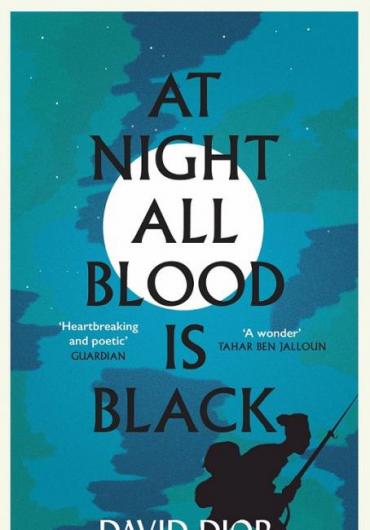
It is hard to keep up with the news, but this is one that we should celebrate. The Franco-Senegalese author David Diop won the International Booker Prize 2021 for his book, “At Night All Blood is Black“. I know, it is hard to keep up with all the different prizes, Man Booker Prize, International Booker Prize, and countless others. This one is nonetheless important because first of all, David Diop is the first African to win the prestigious prize, but also because his book “At Night All Blood is Black” talks about all those African soldiers who helped to free France, and yet were never recognized, and instead were insulted, laughed at and more. The book, originally published in French in 2018 under the title “Frères d’âme” or Soul Brothers, weaves the history of World War I with the history of colonialism. The novel describes the experiences of Senegalese Tirailleurs fighting for France in the trenches. The main character, Alfa Ndiaye, descends into madness following the death of his childhood friend Mademba Diop who had also been recruited as a tirailleur, and inflicts extreme brutality upon his German enemies. Diop was inspired to write the book by his French great-grandfather’s service during the war. Diop stated “He never said anything to his wife, or to my mother, about his experience. That is why I was always very interested by all the tales and accounts which gave one access to a form of intimacy with that particular war.”
As a side note, “tirailleur” was the name given by the French Army to indigenous infantry recruited in the various French colonies. They were not all Senegalese, even though the name always said “tirailleur senegalais,” but rather came from all over Africa. They served for France in a number of wars, including World War I, World War II, and several others. The name “Tirailleur” is a link of two words “tir ailleurs” to laugh and denigrate the indigenous troops by saying that the soldiers were not capable to shoot on target, more like to mean “shoot off target”; it could be translated as skirmisher.
It is also good to note that there is no family link between the great Senegalo-Cameroonian poet David Mandessi Diop [Afrique de David M. Diop / Africa by David M. Diop] and this David Diop… We applaud the success of both namesakes. So good to have such a an illustrious namesake and walk in his path.
Last Thursday, the first president of Zambia, Kenneth Kaunda, changed dimensional plane to join his ancestors. At 97 years old, he was one of Africa’s last surviving liberation leaders. To a generation of Africans, and to many of us, Kenneth Kaunda epitomized the African struggle for independence.
Born into a family of 8 children in Lubwa in the north of then Northern Rhodesia (now Zambia), Kaunda was the last born of parents who immigrated from Nyasaland (Malawi). He trained as a teacher, then became involved in politics, first as secretary of the local young men’s farming association and later as a founding member of the Northern Rhodesian African National Congress in 1949. In 1955, both him and Harry Nkumbula, party president were imprisoned for 2 months. Later Kaunda broke away from the ANC, to found his own party, the Zambian African National Congress (ZANC) in October 1958 which was short-lived. In March 1959, the ZANC was banned and Kaunda was sentenced to 9 months‘ imprisonment, which he spent first in Lusaka, then in Salisbury When he was freed from prison in 1960, he joined the principal nationalist party, the United National Independence Party (UNIP), which campaigned and fought against British colonial rule. He was influenced by Martin Luther King Jr. and Kwame Nkrumah, both of whom he met on different occasions. On 24 October 1964 he became the first president of an independent Zambia.
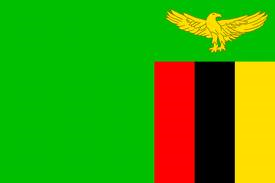
Zambian flag
Kaunda started with the great advantage of leading an African state with a stronger economic base than any of its neighbors but there was a shortage of native Zambians who had the skills and training to run the country [similar to so many African colonies… the Europeans were there to pillage and exploit the resources of the countries, and not build their local forces!]. The policy of sanctions imposed by the British government on the breakaway country proved at least as damaging to the Zambian economy (similar to what they did to Zimbabwe under Mugabe– Is Zimbabwe the New Haiti?) over the years, probably as punishment for his support for the liberation of his neighbors.
Affectionately known as KK, or Mzee, Kaunda worked tirelessly towards to the freedom of the whole of Southern Africa from white rule; he supported the fight of other countries against repressive, racist regimes in South Africa, Namibia, Angola, Mozambique and Southern Rhodesia (Why the name: Zimbabwe?). It took several years, but his support never faltered.
As a testimony, President Hage Geingob of Namibia said in a statement “Africa lost“a giant of a man. …Kenneth Kaunda was a generous, affable, and a resolute leader who freed our region from colonialism.”
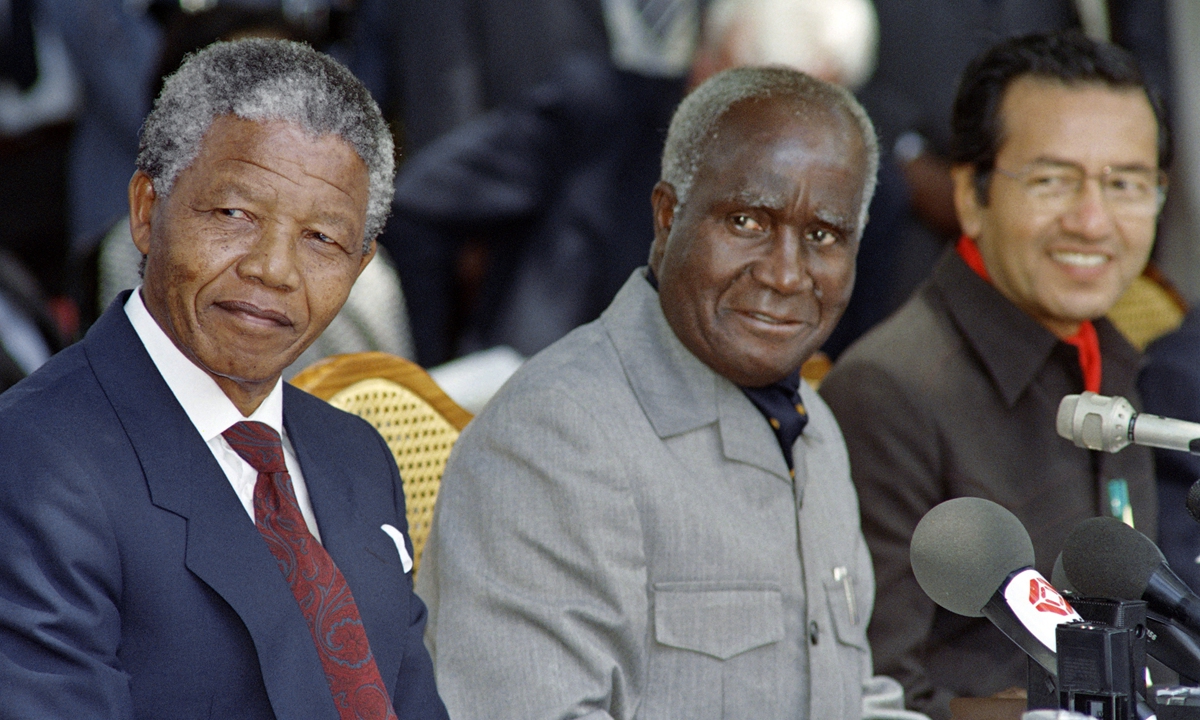
Photo taken on February 28, 1990 showing Zambia’s president Kenneth Kaunda (Center) and South Africa’s African National Congress (ANC) leader Nelson Mandela (L) attending a press conference at the Presidential House in Lusaka. (Source: AFP)
South Africa’s President Cyril Ramaphosa described Kaunda as a “rightfully revered father of African independence and unity… Under his leadership, Zambia provided refuge, care and support to liberation fighters who had been forced to flee the countries of their birth.” “He stood alongside the people of South Africa at the time of our greatest need and was unwavering in his desire for the achievement of our freedom. We will never be able to repay the debt of gratitude,” Ramaphosa added.
“For our founding father, it was not enough for his country Zambia to be liberated when the region and the African continent remained bonded in the shackles of colonialism and apartheid,” current Zambian President Edgar Lungu told mourners at Kaunda’s house in Lusaka … “[Kaunda] soldiered on to seek freedom for humanity.”
Please enjoy articles on the Al-Jazeera and the very good article by the Global Times [With love and respect, Chinese people cherish memory of Zambia’s Kaunda, ‘an old and good friend’]. Please watch the video I posted a few years ago on the great Kenneth Kaunda, Zambia’s first president.