Reinstating an African Writer: The Case of Yambo Ouologuem

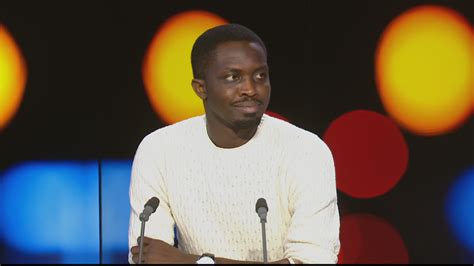
Mohamed Mbougar Sarr (Source: France 24)

At the end of 2021, we celebrated the win of Senegalese author Mohamed Mbougar Sarr, the first man from sub-Saharan Africa to win the prestigious literary Prix Goncourt, 100 years after René Maran who was the first person of African descent to win the prize for his controversial novel Batouala. Mbougar Sarr’s winning novel, La plus secrète mémoire des hommes (The Most Secret Memory of Men), tells the story of a young Senegalese writer living in Paris who stumbles by chance across a novel published in 1938 by a fictional African author named TC Elimane, nicknamed “the Black Rimbaud” by an ecstatic Paris media. The story, described as a reflection on the links between fiction and reality, follows the life of a cursed African writer echoing the real-life experience of the Malian writer Yambo Ouologuem who in 1968 was the first African winner of the prix Renaudot, but was later accused of plagiarism, and had to flee France back to his natal Mali, to live a reclusive life, and die in utter misery.
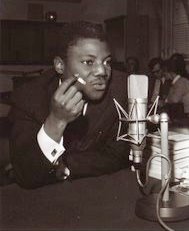
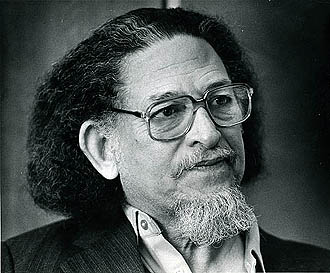
Malian writer Yambo Ouologuem in France in November 1968. Photograph: Yves Le Roux/Gamma-Rapho/Getty Images/The Guardian

Now thanks to Mbougar Sarr’s work, the publishing house Penguin Modern Classics is re-publishing the Yambo Ouologuem’s book over 50 years after his work was pulled out and banned. Le devoir de violence (published in English as Bound to Violence) was first published in 1968 by Editions du Seuil. After winning the Prix Renaudot that very year, Ouologuem became a celebrity equated to the likes of Leopold Sedar Senghor. “Ouologuem’s novel is harshly critical of African nationalism, and in fact reserves its greatest hostility for the violence Africans committed against other Africans” (Richard Posner on Plagiarism, the case of Yambo Ouologuem). For many critics, Africans in particular, Ouologuem’s book is a validation of the twisted views of the West on Africa who exonerate themselves of the violence they committed on Africans throughout centuries.

Excerpts below are from the Guardian. You can also check out the blog created by Ouologuem’s daughter or Richard Posner on Plagiarism, the case of Yambo Ouologuem at Amardeep Singh, or The Tortured Legacy of Yambo Ouologuem.

=====

In 1968 the books pages of the French newspaper Le Monde excitedly praised an uncompromising new novel, Bound to Violence, going on to salute its author as one of “the rare intellectuals of international stature presented to the world by Black Africa”.

The newspaper’s words, written in tribute to the young Malian writer Yambo Ouologuem, sound condescending today. Back then, however, the intended compliment was genuine and many European critics soon agreed: the publication of Ouologuem’s strange novel really did mark the arrival of a major new talent.

But the literary world can be brutal, and particularly so for a young African novelist living in Paris who was attempting a fresh twist on conventional storytelling.

Fellow African writers began to express shock at Ouologuem’s harsh parody of his own culture. Three years later damaging accusations of plagiarism had also emerged, including a public skirmish with Graham Greene, which ended Ouologuem’s short career. He retreated into the life of a recluse, returned to Mali and died in 2017, having never published again.

Now, 50 years after this scandal, Penguin Classics is to bring out a new English edition of Bound to Violence in a bid to rehabilitate the gifted author and introduce him to new readers.

…

“Hopes for a Better World” by Dennis Brutus

Dennis Brutus (Source: Sahistory.org.za)

I found this poem by the great South African writer, activist, educator, journalist, and poet, Dennis Brutus, “Hopes for a better world.” I found it quite appropriate in these times. Dennis Brutus is known as one of the most prolific South African writers. Born in then Southern Rhodesia (now Zimbabwe), Brutus grew up in Port Elizabeth (Gqeberha) where he was classified as “coloured” under South African apartheid codes. He was an activist against the apartheid government of South Africa in the 1950s and 1960s, best known for his campaign to have South Africa banned from the Olympic Games due to its institutionalized segregation system of apartheid. He is among Africa’s greatest and most influential modern poets.

This poem, “Hopes for a better world” was written on a trip from Caracas, Venezuela, to Durban, South Africa. At the beginning of the poem, Brutus stated, “There are lively political struggles in our time, particularly in Venezuela, Ecuador and Bolivia.” The poem is really about the outlook one has on life, the wish for simple joys, and the hope that something good will come. It highlights simple needs: the joys that come from a smile, the appreciation of frankness, openness, and friendliness.

=====

Hope

“Hopes for a better world” by Dennis Brutus

Walking those ragged, pitted sidewalks

where walkers, shoppers surged

one had a sense of buoyant hope

surges of confidence, unleashed desire:

the broad-grinned ice cream vendor

frank gazed waitress swabbing spills:

all had a friendliness and trust:

it was good to walk those cordial streets

companioned by one striving to serve

Caracas to Durban, 2008-09, for p.b.

“Refugee Mother and Child” by Chinua Achebe

Dry your tears African

Our hearts go out to those who have been displaced from their homes, and lands, because of conflicts, wars, famines, floods, etc., as we have seen with the conflicts in the East of the Democratic Republic of Congo, Sudan, the earthquake in Morocco, the floods in Libya, the western funded conflicts in Sub-Saharan Africa, and much more. Among the displaced, women and children are particularly at risk, as they face violence, maternal health, malnutrition, reproductive complications, inadequate access to water and sanitation, and other diseases.

An expectant mother, a pregnant woman’s belly

I found this gem of a poem by our venerated Chinua Achebe, “Refugee Mother and Child.” In this poem, Achebe highlights the case of the refugee mother who has to watch her child die because she cannot feed him, the one who still hopes for a miracle. Achebe particularly offers a comparison of a Madonna with her child in her arms, to the horrors of a refugee mother whose child is on death’s bead; or a normal day when this woman was not a refugee, to her life as a refugee. It is very heart-wrenching. This poem was written during the time of the Biafran war or Nigerian Civil War of the late 1960s; Achebe found poetry easier to write in the tough times of war. Let’s all send a prayer to our refugee mothers and children, and to refugees all over the world.

Enjoy!

=====

REFUGEE MOTHER AND CHILD
Chinua Achebe

No Madonna and Child could touch
that picture of a mother’s tenderness
for a son she soon will have to forget.

The air was heavy with odors
of diarrhea of unwashed children
with washed-out ribs and dried-up
bottoms struggling in labored
steps behind blown empty bellies.
Most mothers there had long ceased
to care but not this one; she held
a ghost smile between her teeth
and in her eyes the ghost of a mother’s
pride as she combed the rust-colored
hair left on his skull and then –
singing in her eyes – began carefully
to part it… In another life
this would have been a little daily
act of no consequence before his
breakfast and school; now she
did it like putting flowers
on a tiny grave.

Senegalese Couple Makes History by Winning Literary Caine Prize for African Writing

Woppa Diallo and Mame Bougouma Diene (Source: The Caine Prize/Guardian)

A Senegalese couple, Mame Bougouma Diene and Woppa Diallo, has made history this week by winning the Caine Prize for African Writing. It is the first time in the history of the prize that it is awarded to a couple. Diallo is a lawyer and activist while French-Senegalese American Diene is a humanitarian and a short-story writer. They are married.

Their winning story, “A Soul of Small Places,” drew inspiration from Diallo’s personal experience of gender-based violence in Senegal. Her story highlighted themes of violence, revenge, love, and loss, mirroring her own life experiences. She revealed to the BBC that her personal struggles served as the inspiration behind the story.

Congratulations to this couple, and excerpts below are from the BBC. Please take the time to also read articles at the Guardian and the Caine Prize.

=====

Flag of Senegal
Flag of Senegal

Senegalese writing duo Mame Bougouma Diene and Woppa Diallo have won this year’s prestigious Caine Prize for African writing, making it the first time a pair has won the award.

Their story A Soul of Small Places is inspired by Diallo’s experience of gender-based violence in Senegal.

Her story weaves through themes of violence, revenge, love and loss.

“The story is simply my life. It’s the struggles I’ve been through that have inspired me,” Diallo told the BBC.

It was praised for its deep storytelling and ability to celebrate love while also addressing pressing global issues.

… They met when Diene was visiting a shelter in northern Senegal where Woppa was speaking about her advocacy against gender-based violence.

“The co-authoring comes from the fact that the story could not have been written if I hadn’t met Woppa and if I hadn’t heard Woppa speak,” he says.

… The Caine Prize winners receive a cash gift of £10,000 ($12,000), as well as featuring their work in the 2023 Caine Prize anthology.

The award for a short story by an African writer published in English had a record-breaking 297 entries from 28 different countries this year.

‘Ils Sont Venus’ de François Sengat-Kuo / ‘They Came’ by François Sengat-Kuo

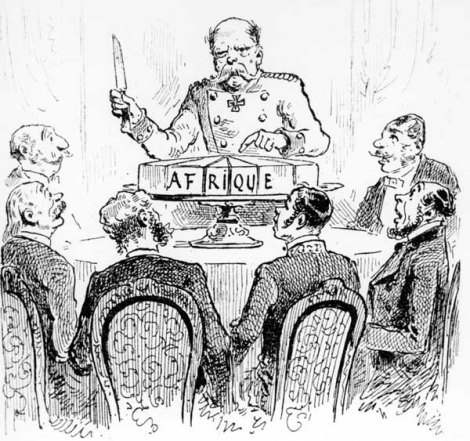
Le partage de l'Afrique a la Conference de Berlin de 1884
Le partage de l’Afrique à la Conférence de Berlin de 1884

As we talk about neo-colonialism, and the new scramble for Africa, I thought about sharing this poem ‘They Came‘ by Cameroonian writer François Sengat-Kuo published in Fleurs de Latérite, Heures Rouges Éditions Clé, 1971. I had previously shared this poem here.  In the poem, Sengat-Kuo talks about colonization and how Africans were fooled by European missionaries who were always preceding European explorers and armies.  I particularly like the sentence: “they came, … bible on hand, guns behind.” Jomo Kenyatta, first president of Kenya, said it slightly differently, “When the missionaries came to Africa they had the Bible and we had the land. They said ‘Let us pray.’ We closed our eyes. When we opened them we had the Bible and they had the land.” (Nobel Peace prize Laureate, Desmond Tutu, of South Africa, is said to have popularized the quote). How true! In the days of colonization, Europeans claimed to be bringing civilization and Christianity to pagans across the globe.  Today, they bring development, globalization, and democracy…  same ol’ thing → submission and slavery to the people.  Enjoy!

Ils sont venus

au clair de lune

au rythme du tam-tam

ce soir-là comme toujours

l’on dansait

l’on riait

brillant avenir

ils sont venus

civilisation

bibles sous le bras

fusils en mains

les morts se sont entassés

l’on a pleuré

et le tam-tam s’est tu

silence profond comme la mort


They came

by the light of the moon

to the rhythm of the tam-tam

that night as always

we were dancing

we were laughing

brilliant future

they came

civilization

bibles under the arm

guns in hand

the dead bodies piled up

we cried

and the tam-tam was silenced

profound silence like death

“Love the African Way” by Esmeralda Yitamben

L’amour / Love

Today, I will share with you a beautiful poem by author Esmeralda Yitamben, “Love, the African Way.” As you remember, I shared the poem ‘African Hair’ by Esmeralda Yitamben which, in my humble opinion, should be published in school books… and which I dearly love. Here is another one, for the lovers out there, and the historians as well. Every part of this poem is rich in history, history of the African continent, of the race, and combines the ancient and the modern faces of Africa : from the scholarly city of Timbuktu, one of the first universities of the world, to the second longest river of Africa, the Congo River and the great Congo Empire, to the libraries of Alexandria, to the sandy beaches of Senegal, from the dunes of The forgotten kingdom of Nubia to the streets of Douala. Imagine climbing the tallest mountain of Africa for someone you love, going to battle like Shaka Zulu, and winning them all like Menelik II (Battle of Adwa)… Imagine a love founded on the rock of the great Egyptian pyramids, and rising like the sphinx, never faltering. No doubt that this is a celebration of victory, of wealth, of the conquest of all battles, and above all… of love. The original poem can be found on Kalaharireview.com. Enjoy!

====

“Love, the African Way” by Esmeralda Yitamben

I want to love you in Bambara

And take you to the sacred city of Timbuktu.

“Nakupenda Malaika”

Is what I will tell you, my angel, in Kiswahili.

“Wapi Yo” my dear?

I will speak Lingala and navigate the Congo River looking for you from Kinshasa to Lubumbashi.

On my way, I will stop to contemplate the okapi, whose beauty and grace reminds me so much of yours.

I will climb Mt Kilimandjaro and stand fearlessly like a Maasai warrior.

I will rise on the wings of the sphinx at Thebes,

and revive the rolls of papyri from the burnt libraries of Alexandria,

to read you centuries’ old love poems

And walk the dunes of the ancient kingdom of Nubia at Meroë.

I will celebrate my long lost love on the beach of Dakar, and claim how much I miss you in Wolof “Namm naa la”.

Mase fi mi sile my love, don’t go, is what I will say in Yoruba, so that you never leave me.

You belong to me, natondi wa, I love you, and I will dance to the rhythm of makossa in the streets of Douala.

Like Chaka Zulu, I will be the warrior of your heart, I will fight a thousand battles for you.

And like Menelik II, great emperor of Ethiopia, I will win them all for you, precious one!

Together, we will build an empire as great as the Empire of Mali and our love will be talked about throughout the universe.

And when we finally meet again, I will say M’Bifé, I love you.

Glossary

Wapi Yo = “Where are you?” In Lingala (Congo)

Nakupenda Malaika = “I love you angel” in Kiswahili (Kenya, Tanzania)

Namm naa la = “I miss you,” in Wolof (Senegal, Gambia)

Mase fi mi sile = “don’t leave me” in Yoruba (Nigeria)

Na tondi wa = “I love you” in Douala (Cameroon)

Makossa is a musical style from Cameroon

M’Bifé = “I love you,” in Bambara (Mali)

‘L’Oiseau en Liberté’ / ‘The Free Bird’ de Claude-Joseph M’Bafou-Zetebeg

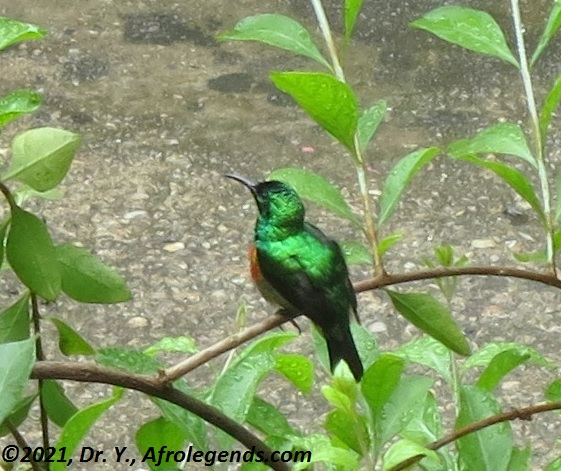
Souimanga bronze / Bronzy sunbird

Wouldn’t it be nice to be a bird? To take off and fly away, carefree? What comes to mind when observing a bird: a great sense of freedom; freedom to come and go, freedom to sing, no worries for tomorrow, and freedom to just be. Beauty also comes to mind, but liberty always prevail as one of the main descriptors. I recently stumbled upon this poem by Cameroonian author Claude-Joseph M’Bafou-Zetebeg, ‘The Free Bird’ which describes so well that sense of freedom which most of us aspire to. The author focuses on a bird, and describes the freedom the bird enjoys, the lightness, which is greater than all fortunes. I present here ‘L’Oiseau en Liberté‘ by Claude-Joseph M’Bafou-Zetebeg, published in Anthologie Africaine: Poésie Vol2, Jacques Chevrier, Collection Monde Noir Poche, 1988, and translated to English by Dr. Y. Afrolegends.com . Enjoy!

‘L’Oiseau en liberté’ / ‘The Free Bird‘ de Claude-Joseph M’Bafou Zetebeg

L’oiseau qui passe là-bas,

L’oiseau léger

Qui bat des ailes

Et fend l’air là-bas à l’horizon,

N’a rien à lui au monde,

Mais comme il est joli

En liberté !

Et c’est en chantant

Qu’il vit sur la branche,

Le bel oiseau voyageur

Qui rythme les saisons.

Car rien ne vaut la liberté :

C’est la plus digne

De toutes les fortunes,

La liberté dont jouit l’oiseau

Qui vit sur la branche !

La liberté au feu sacré,

La liberté naturelle,

O la sainte liberté

Dont devrait jouir

Tout être

Dans sa facture naïve !

The bird that passes by,

The light bird,

Who flaps its wings

And splits the air over there in the horizon,

Has nothing of its own in the world,

But how pretty it is

In liberty!

And it is by singing

That it lives on the branch,

The beautiful traveling bird

Who punctuates seasons.

‘Cause nothing beats freedom:

It is the most worthy

Of all fortunes

The freedom enjoyed by the bird,

That lives on the branch !

Freedom in the sacred fire,

Natural freedom,

O the holy freedom

That every being should enjoy

In its naive craftsmanship !

‘On Top of Africa’ by B. Tejani

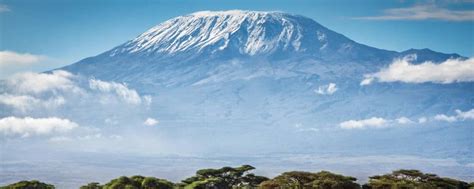
Mt Kilimanjaro, Tanzania

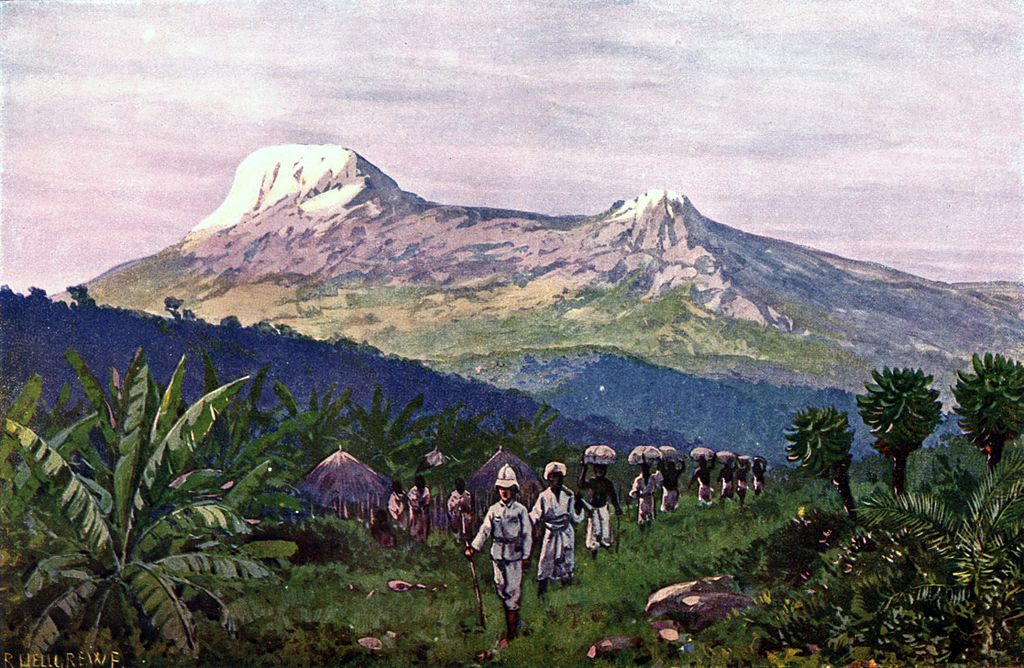
Have you ever dreamed of climbing Africa’s tallest mountain, Mt. Kilimanjaro? Of watching its snow-capped peaks under the tropics, near the equator? Mount Kilimanjaro rises to an elevation of 5,895 m above sea level and about 4,900 m above its plateau base in Tanzania; it is the largest and tallest free-standing mountain rise in the world, meaning that it is not part of a mountain range. The majestic Mount Kilimanjaro is an inactive snow-capped stratovolcano that extends for about 80 km from east-west and is made up of three principal volcanic cones namely Mawenzi, Kibo, and Shira. The highest summit of Kilimanjaro is located on the crater rim of Kibo volcano and has been named the Uhuru Peak, where ‘Uhuru’ means ‘freedom’ in the native Swahili language. Scientists estimate the glaciers may be completely gone in 50 years. Mount Kilimanjaro is often referred to as the “Roof of Africa”. Thus one can imagine what poet B. Tejani, and anyone who reaches the 4th tallest peak in the world, must have felt after ascending the mountain… on top of Africa, which is the title of Tejani’s poem about the joy of ascending Mt Kilimanjaro. Bahadur Tejani is a Kenyan author and poet, born of Gujarati parents in Kenya. He studied at the Makerere University in Uganda, Cambridge University, and the University of Nairobi. He later taught at the University of Nairobi in Kenya, as well as the University of Sokoto in Nigeria. As you read the poem, you are really transported to the slopes of the majestic mountain. As you watch the snow, ‘an ageless majesty‘ fills you. As you reach the summit, there is definitely at that moment ‘no great triumph in the soul‘, after the ‘agonied 20,000 steps upwards and onwards‘. Truly, only when the ordeal is finished ‘I shall remember the dogged voice of conscience self-pity warring with will‘. This poem is part of Poems from East Africa, ed. by D. Cook and D. Rubadiri (1971), p. 176. Enjoy!,

====

Mt Kilimanjaro in 1911

‘On Top of Africa‘ by B. Tejani

Nothing but the stillness

of the snow

and an ageless majesty

matched

by those enduring horizons that bridge the heights of you and me.

The phosphorescent sun gliding from the dark cloud under us

shone a brief once while we lay

retching in the rarefied air.

No great triumph in the soul of those

twenty thousand agonied steps upwards, always onward.

Only anguish of an ending -the vacuumed intestines shivering at

another onslaught of mountain sickness.

An ice-axe prod in the back and with it the terrible thought of the

awful retreat down the cold slopes of possible deaths; dumb eyes and

feet

lit by a single tireless search for slumber

which is as far away from us as we from the plains.

Only when the nightmare is over I shall remember the dogged voice of

conscience

self-pity warring with will

of the brown body

to keep up

with the black flesh

forging ahead

on the way

to Kilimanjaro.

The Importance of Nioussérê Kalala Omotunde’s Work

Today, education in Africa is Eurocentric, meaning that African history is rarely well-taught in African schools. In Francophone Africa, the school manuals are written by Frenchmen on the continent, or in France, so there is barely any emphasis on Africa. We learn about Europe, China, Japan, Napoleon, all the French dynasties, wars, etc, but very little about OUR history. Thus, most Africans grow up without knowing anything about the Ishango bone, the Blombos Cave, Lucy, the Lebombo bone, or the fact that Pythagoras or Thales theorems were actually written in Egypt by the scribe Ahmose over 1000 years before Pythagoras visited Africa; or even that C-sections were a normal part of African medicine for centuries while in Europe, women were still dying during pregnancies, or even that ancient Egyptians were black! There are countless examples showing that the falsification of African history has been ongoing for centuries, and that there is so much missing in African school manuals.

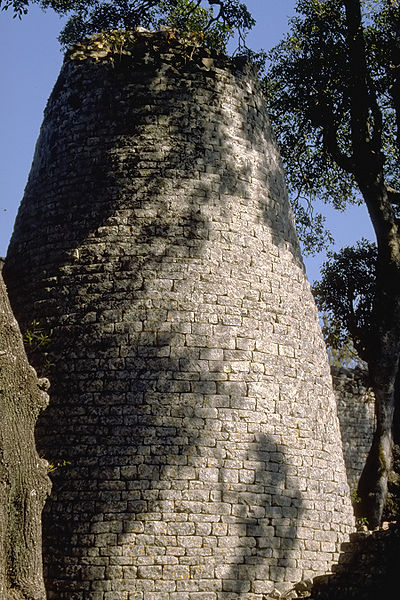
A Conical tower at Great Zimbabwe

Why is Nioussérê Kalala Omotunde’s work important for Africans? NKO’s work is fundamental because he, like some other illustrious Africans, worked tirelessly to restore Africa’s place in the world. However, his work was not just telling us Africans that we were once great, but more importantly focused on shaking the consciences of many: if my ancestor was great, if my ancestors built the great pyramids of Egypt, how can I, African today, believe that I am meant to live in tin shacks? If my ancestors were the great architects and metallurgists of Great Zimbabwe, why should I keep adopting the European materials for building when ours have lasted over centuries? how can I wait for foreign aid, when I have been blessed with fertile lands? How can I be eating wheat from Ukraine, when I could go back to ancient grains such as fonio, sorghum, millet which have always been a part of my diet for centuries (How Africa Copes with The War in Ukraine: Alternatives to Wheat – Ancient Grains?)? How can I import paper, when my ancestors developed the first support medium for writing (paper comes from papyrus)? How can I act like I do not know mathematics, when my ancestors where the amazing Egyptian mathematicians? How can I feel so lost in medicine or just focus on European medicine, when in Bunyoro kingdom, we had master gynecologists who could perform c-sections centuries before Europe? How can I be stuck with the FCFA when my ancestors invented currencies using silver? How can I, an African child, feel so small? How can I, an African child, focus only on misery, as opposed to what nature has given me? I need to raise my head, and see, and take the grain God has given me, and turn it into a tree!

I invite you to read some of his books, which can be found at: Anyjart.

So Long to a Baobab of African Classical Humanities and Mathematics: Nioussérê Kalala Omotunde

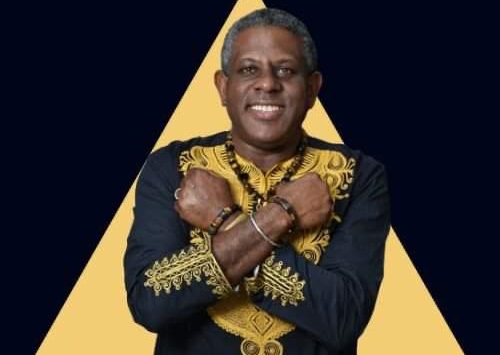
Jean-Philippe Nioussere Kalala Omotunde

A great man has left us. Yesterday, the great teacher, researcher, Egyptologist, historian, and brother, Jean-Philippe Nioussérê Kalala Omotunde changed dimension. Kalala Omotunde was a bright light who worked tirelessly to teach us, Africans, about our true heritage. He was conscious that our souls and spirits had been so broken by colonization, slavery, wars, foreign invasions, and so many other ailments, that we had lost sight of who we truly were, descendants of the great pharaohs of Egypt, descendants of Mother Africa, the cradle of humanity and sciences.

Kalala was the founder of the Anyjart institute and satellite institutes in Canada, Guyana, Martinique, Haiti, and many more around the world. Via his institute, he worked tirelessly to empower Africans, and particularly the Black youth in the diaspora and beyond. His great work focused on the African classical humanities, and African mathematics and sciences. He was also Chargé de mission at UNESCO. He specialized in making the Black (wo) man whole again by teaching him about his history, his origin, his ancestors. You see… Africa has been under attack for centuries now, and along the way, her children have lost their conviction, the knowledge of their greatness, traditions, and have erred away from her by adopting other religions and even others’ distorted views of themselves.

Nioussere Kalala Omotunde

I have been a fan of his work for over a decade. I remember one time when we talked, I showed him the blog, and coincidentally the article of the day was, “How do We Continue the Fight when the Head has been Cut Off?” He made some comments and gave me pointers.  In that conversation I learned so much: for instance, the picture of Amilcar Cabral pointed left, and Kalala told me that this was looking to the past, and when we have lost a leader, we need to look forward, and build for future generations. He embodied the article itself, working tirelessly to teach the next generations how to continue the battle through education. He had a strong presence, was so confident, and so generous in sharing his time and knowledge. Such a baobab! Such a dedication to Mother Africa… He was so welcoming, so selfless, always ready to help, addressing many with endearing words such as “mon très cher”, or “ma très chère”. His institute focused on teaching ancient hieroglyphs, the knowledge of African history, African mathematics and sciences, teaching the link between ancient Egypt (and beyond) and Africa today, and above all restoring the dignity of Africa. He focused on scientifically proving historical findings about Africa… he will often have at least 5 documents to prove the veracity of a claim he made; he was methodical. He had so many great projects! The geothermic project in Guadeloupe which he wanted to see extend to Africa, the Wakanda project, and countless others aimed at empowering Africans to be self-sufficient energetically, financially, agriculturally, technologically, and much more. I console myself in knowing that he has written so many books, and that we can all benefit from his teachings, and rise up as he wished. 

Having been influenced by Cheikh Anta Diop, Nioussere Kalala Omotunde worked tirelessly to show the deep wealth of African cultures, and often shared the fact that the history of Black people in the Caribbeans did not start with slavery. So long brother… May your seeds bring lots of fruits. I will remember your contagious laughter, your big smile, your intelligence, and above all your teachings. I feel so privileged to have had a chance to know you, and receive some of your teachings. You always talked about African Renaissance. You showed us the way, now we have to carry on your light. May the Ancestors receive and cherish you.