This month, African authors made great wins and firsts: they won the most important literary awards in French literature: the Goncourt prize, which was awarded to Kamel Daoud for his third novel titled «Houris», and the Renaudot prize awarded to Gaël Faye pour «Jacaranda». These two books focus on some of the dark periods in the histories of Algeria in one, and Rwanda in the 1990s.
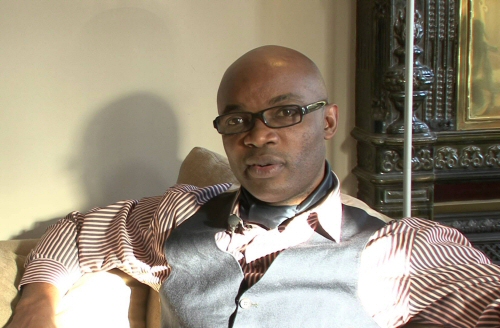
Kamel Daoud and his book Houris (Source: entrevue.fr)
Algeria writer and journalist Kamel Daoud wrote the novel Houris about Algeria’s 1990 civil war. The novel has been banned in his home country of Algeria. In 1994, he entered journalism working for the French daily newspaper Quotidien d’Oran, where he wrote a popular column “Raïna Raïkoum” (Our Opinion, Your Opinion). In parallel, he started writing novels, publishing his first one in 2013, TheMeursault, Investigation, a retelling of Albert Camus‘ famous novel The Stranger, which tells the story from the standpoint of the previously nameless Arab victim killed by Meursault; this first novel won the 2015Goncourt first novel prize, the 2014Prix François-Mauriac and the 2014Prix des cinq continents de la Francophonie. The current book, Houris is a story which focuses on themes such as religion, freedom and identity; the Algerian government sees it as a political gesture amid the current heightened tensions between Algeria and France. A couple of days ago, a woman in Algeria, Saada Arbane accused Daoud of using her personal story without her consent in the award winning novel Houris; thus, she is suing him. Like the heroine of the book, she survived one of the massacres, and had her throat cut in an Islamic attack that wiped out her family. She uses a tube to talk, and was in 2015 one of the patient of Daoud’s wife, psychiatrist Aicha Dahdouh. She said that many details in the heroine’s life – “her speaking tube, her scars, her tattoos, her hairdresser” – came directly from her confidences to Ms. Dahdouh during sessions. Are these accusations founded? What will happen to this year’s Goncourt novel?
Gael Faye and his book Jacaranda
The winner of the Renaudot prize this year is Gaël Faye for his second novel “Jacaranda” which centers around the dark years of Rwanda. Gaël Faye, is a Franco-Rwandan author, French by his father and Rwandan by his mother, who used to be a London financier, before quitting and returning to live in Rwanda to focus on music, and whose first novel Petit Pays (Small Country) set in Burundi won, among others, the Goncourt prize in 2016. This time, his comeback novel Jacaranda is set in Rwanda, as a powerful narrative exploring the effects of the 1994 genocide and impacts on current and future generations and the need to the keep the memory. The story encompasses 4 generations, and tells the terrible story of this country which slowly emerges from darkness to light.
A few years ago, after the horrors of the electoral crisis in Cote d’Ivoire and the bombing of its presidential palace with the capture of President Laurent Gbagbo and First Lady Simone Gbagbo, I watched a video interview of the Franco-Cameroonian journalist Charles Onana who was talking about his book “Côte d’Ivoire : le coup d’État, Duboiris, 2011 (with a preface by Thabo Mbeki).” At the end of the interview, Onana stated, “… Quand vous avez un pays riche qui est convoité par des multinationales, par des groupes mafieux, par des états, etc, vous devez décupler votre intelligence pour défendre votre pays. … En face vous avez des équipes de think-tanks qui sont là pour penser comment destabiliser le pays, donc les Africains ne peuvent pas faire l’économie d’un travail acharné, d’un travail surhumain pour s’en sortir … Pendant que la crise se calme ou s’apaise, les autres continuent de travailler pour vous destabiliser, ils refléchissent à d’autres stratégies, mais il faut que [les Africains] apprennent à refléchir à differentes stratégies de manière à ce que le Président de la République ne se retrouve pas toujours seul à penser à tout, seul à reflechir à tout, …” [When you are a rich country that is coveted by multinationals, by mafia groups, by states, etc, you must increase your intelligence tenfold to defend your country. … On the other side, you have think-tank teams that are thinking ways to destabilize the country, so Africans cannot avoid hard work, superhuman work to be free … When the crisis calms down or subsides, others continue to work to destabilize you, they think other strategies, but Africans too need to think different strategies so that the President of the Republic does not always find himself thinking not the only one think all by himself, …]
The New Scramble for Africa (Source: Source: Dr Jack & Curtis for City Press, National Institute African Studies (NIAS))
With the New Scramble for Africa, African countries should have think-tanks, the enemy has think-tanks strategizing over decades, how come we, Africans, do not? Even in times of peace, we should be strategizing… as we heard the French general, it is clear that they are already planning the defeat of Africa, and the return of Africans into their fold in 10 years… how come? When Sekou Toure said NO to the General De Gaulle and Guinea gained independence, not only were the French busy destabilizing his regime politically, militarily, arming his local opponents, but they even flooded his economy with fake currency to destroy his own free Guinean Franc (as he had said NO to the slave currency that is FCFA); the attacks were non stop for several decades, and honestly, are still going on. Thus, Africans, we need to gain our independence, and for our independence to be complete, we need to have strategies for the immediate day-to-day events, but also long-term, over 20-50 or even 100 years. It took China 100 years to get back Hong-Kong and Macau from Great Britain and Portugal… that happened because of a clear vision and strategy of defense against the enemy and reclaiming of lands.
As always, ahead of June 30, the ‘independence’ day of the Democratic Republic of Congo (DRC), we write about Patrice Emery Lumumba, the first Prime Minister of Congo. This time, we will take a trip down memory lane with the great article by the prominent anti-colonial thinker, activist and writer, Frantz Fanon, which was published earlier here on Afrolegends in French in 2011. (You will find the original here). In view of all the events occurring in Africa (The New Scramble for Africa, Creation of the AES and destabilization attempts) with the United Nations (UN) approval, I thought that this article, published in 1964, was so important that I had translated it into English for all to read! In the article, Fanon talks about the kind of Africans who betray their people, and the uselessness (to us, Africans) of the UN which only serves Western interests. The scenario is the same and has not changed over the past 6 decades: wherever the UN lands in a country, all of sudden there are troubles, tensions, massacres, (ONUCI, MINUSMA, MONUSCO, …), etc. Enjoy… For the full article, check out: Lumumba’s death: Could we (Africans) have acted differently?
—————————————————
Frantz Fanon
The great success of the enemies of Africa is to have corrupted the Africans themselves. It is true that these Africans had vested interest in the murder of Lumumba. Heads of puppet governments, in a fake independence, faced everyday by massive opposition from their peoples, it did not take long to convince themselves that the real independence of the Congo would put them personally at risk. And there were other Africans, a little less puppet, but who get frightened when it comes to disengaging Africa from the West. It seems as if these African Heads of State are still afraid to face Africa. These, also, though less actively, but consciously, contributed to the deterioration of the situation in Congo. Little by little, we were reaching the agreement in the West that there was a need to intervene in Congo, we could not let things evolve at this pace.
Gradually, the idea of a UN intervention was taking shape. So we can say today that two simultaneous errors were committed by Africans.
Patrice Lumumba
And first by Lumumba when he sought the intervention of the UN. He should have never called on the United Nations.The UN has never been able to properly solve problems brought to man’s consciousness by colonialism, and whenever it has intervened, it was to actually come to the aid of the colonial power to the oppressed country. Look at Cameroon. What kind of peace do the subjects of Mr. Ahidjo kept in check by a French expeditionary force, which most of the time, made its debut in Algeria, enjoy? The UN, however, controlled the autodetermination of Cameroon and the French government has set up a “Provisional Executive” there.
Look at Viet-Nam. Look at Laos.
It is not true to say that the UN fail because the causes are too difficult.
Map of the Democratic Republic of Congo
In reality the UN is the legal card used by imperialist interests when brute force has failed. The sharing, the mixed controlled joint committees, under guardianship are international means of torture to break the will of the people, cultivating anarchy, banditry and misery.
… Lumumba’s fault was then initially to believe in the impartiality of the UN. He forgot that the UN, particularly in the current state, is only a reserve assembly established by the Greats to continue, between two armed conflicts, the “peaceful struggle” for the balkanization of the world. …
Africans should remember this lesson. If outside help is necessary to us, let us call on our friends. Only they can truly and fully help us achieve our goals precisely because the friendship between us is a friendship of struggles.
… Our mistake, as Africans, is to have forgotten that the enemy never backs down sincerely. He never understands. He surrenders, but is not converted.
Our mistake is to have believed that the enemy had lost its militancy and its harmfulness. If Lumumba disturbs, Lumumba should disappear.
Hesitation in commiting murder has never been a feature of imperialism.
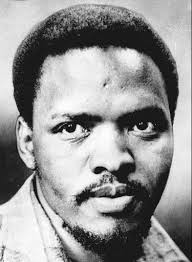
Steve Biko (Source: Britannica / Everett Collection)
The acclaimed South African poet Dennis Brutus wrote a poem in honor of Steve Biko; it was written on the anniversary of the Soweto Massacre a year later on June 16, 1978. Brutus said, “This poem written in tribute to Steve Biko reflects a long interest, including my founding of the Steve Biko Memorial Committee during exile in Chicago. Descriptions of the towns (including King Williamstown) were recalled from an earlier hitchhiking trip, from Port Elizabeth to East London. Twenty years later, Biko’s own fatal interrogation, in September 1977, occurred in the same building in Port Elizabeth in which I had been interrogated years earlier.” Steve Biko is known to many as the outspoken leader of the Black Consciousness (BC) movement. As the movement’s most prominent leader, he guided the movement of student discontent into a political force unprecedented in the history of South Africa that led to the end of apartheid in South Africa. He is known to Afro descendants around the world for his famous phrase “Black is Beautiful“, which was an inspiration to the civil rights movement in the USA, and to many other movements across the globe. Biko believed in the unity of the oppressed.
Tribute to Steve Biko
Poem composed for Steve Biko Day, San Antonio, June 16, 1978
The dusty roads from Peddie to King the yellow river choking with silt draining to i’Monti the dust-filmed bluegums poised and dreaming in the arid air the parching dust harsh in the throat and hurtful on the eyes the crude teutonic towns Hamburg, Berlin, Hanover with their ominous echoes — all these he knew their roads he traversed: they fired him with resolve and smoldering anger their racial hate seethed round him like the surge of shimmering heatwaves and laid a thousand lashes on his taut flesh: here he planned, dreamed, waged his struggle and hardened his will to confront the butchers to challenge their terror —even if they robbed him of his life.
Dennis Brutus 16/6/78
I found this gem of a poem by the great African poet David Mandessi Diop. Diop was born in France, of a Cameroonian mother from the royal Bell line with illustrious members such as Rudolf Duala Manga Bell and Ndumbe Lobe Bell (King Bell) both kings of the Duala people, and a Senegalese father. Although he died young, in a plane crash in 1960, he has left a strong imprint on African poetry. His most famous poem, Africa, has been one of my favorites growing up and was thought in schools throughout the continent. His work always focused on a condemnation of colonialism and slavery, while filled with hope for an independent Africa.
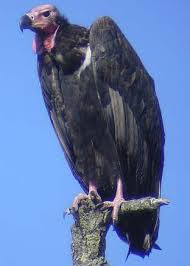
Vautour / Vulture
Thus, the poem Les Vautours (The Vultures) explores the horrors of colonialism and its impact on Africa. As one can guess, the Vultures are the colonizers who preyed on a fragile Africa, and exploited it with extreme violence. With the arrival of the Europeans, there was a clash of civilizations, Christianity was imposed upon our ancestors via machine guns as noted by the author’s reference to “monotonous rhythm of Pater-Nosters,” and slavery and later forced labor took a toll on them in the plantations or on the roads built referenced as “bloody monument.” When the author mentions “mutilated promises through machine guns,” it reminds us, for example, of the Thiaroye Camp where the tirailleurs were killed by French forces for simply asking for their pension after having served to free France from Nazi forces during World War II. As always, the author finishes on the high note of hope “Spring will put on flesh under our steps of light.” As one reads this poem, it appears that The Vultures are still at work on African soil, but the Spring is putting on flesh under Africans’ steps as we can see in the AES and more.
The original was published in Coups de pilon, Présence Africaine, 1956. Translated to English by Dr. Y., Afrolegends.com
=====
Les Vautours par David Mandessi Diop / The Vultures by David Mandessi Diop
Les VautoursEn ce temps là
A coups de gueule de civilisation
A coups d’eau bénite sur les fronts domestiqués
Les vautours construisaient à l’ombre de leurs serres
Le sanglant monument de l’ère tutélaire
En ce temps là
Les rires agonisaient dans l’enfer métallique des routes
Et le rythme monotone des Pater-Noster
Couvraient les hurlements des plantations à profit
O le souvenir acide des baisers arrachés
Les promesses mutilées au choc des mitrailleuses
Hommes étranges qui n’étiez pas des hommes
Vous saviez tous les livres vous ne saviez pas l’amour
Et les mains qui fécondent le ventre de la terre
Les racines de nos mains profondes comme la révolte
Malgré vos chants d’orgueil au milieu des charniers
Les villages désolés l’Afrique écartelée
L’espoir vivait en nous comme une citadelle
Et des mines du Souaziland à la sueur lourde des usines d’Europe
Le printemps prendra chair sous nos pas de clarté.
The VulturesIn that time
When civilization struck in a fit of anger
When holy water struck domesticated foreheads
The vultures built in the shadow of their claws
The bloody monument of the tutelary era
In that time
Laughter died away in the metallic hell of the roads
And the monotonous rhythm of Pater-nosters
Covered the screams on plantations run for profit
O sour memory of extorted kisses
Promises mutilated by machine-gun blasts
Strange men who were not men
You knew all the books you did not know love
Or the hands that fertilize the womb of the earth
The roots of our hands deep as the revolt
Despite your hymns of pride among graveyards
Villages laid to waste and Africa dismembered
Hope lived in us like a citadel
And from the mines of Swaziland to the heavy sweat of Europe’s factories
“How true! Life’s problems are like trees. We see the trunk, we see the branches and the leaves. But we can’t see the roots, hidden deep down under the ground. And yet it is their shape and nature and how far they dig into the slimy humus to search for water that we need to know. Then perhaps we would understand.”
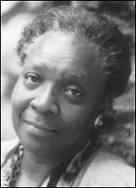
The great Guadeloupean writer, the Grande dame of Caribbean literature, Maryse Condé has transitioned to the land of our ancestors at the age of 90. Condé’s work has touched so many throughout the world, as it was a bridge between Africa, the Caribbean, and Europe. Her best work, Segu, has been one of my favorites. My first encounter with Maryse Condé’s work, was when I read her book “La Belle Créole.” Then I read Segu, and really that was it! I was sold… It was unforgettable, strong, and vivid. This book might actually be among the first historical fiction books written by a person of African descent on one of the ancient African kingdoms spanning several decades. Set in the 18th century, it followed the life of Dousika Traore, a royal adviser in an ancient historical kingdom based in Segu in modern-day Mali, torn apart by the arrival of the slave trade and Islam. It reminded me of the Alex Haley’s Kunta Kinte or Roots saga. It was deep, rich, and truly captivating.
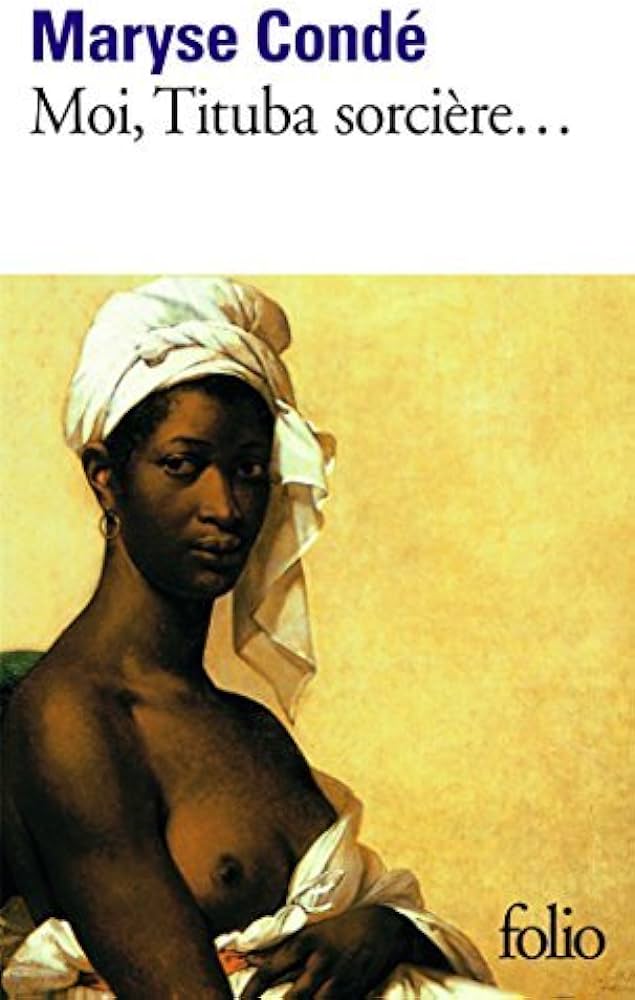
Moi, Tituba Sorciere de Maryse Conde
In “I, Tituba: Black Witch of Salem,” Condé told the story of a slave who was one of the first women to be accused of witchcraft during the 1692 Salem witch trials. It was based on the story of an American slave who was tried for witchcraft. Honestly, up until then, I could not fathom that a Black woman could have been on trial back then in the United States; but in reality, given how Africans were uprooted from the continent, and their religion, and spirituality, it should not have come as a surprise.
I read her other book, The last of the African Kings which is a fictional account following King Behanzin’s offsprings and entourage when he was in exile in Martinique, and their lives in the caribbeans and then the United States, after the French deported him there. It skillfully intertwined the themes of exile, memory, hope, loss, with Africa always in the background.
The Last of the African Kings, by Maryse Condé
After that, I read her other books A Season in Rihata, The Crossing of the Mangrove, La Vie Scélérate (Tree of Life: A Novel of the Caribbean), Desiderada.
Her themes always embraced motherhood, femininity, race relations, slavery, the Caribbeans, and Africa. Her novels drew upon African and Caribbean history. She has written over 20 novels,
Throughout her life, she was awarded France’s Legion of Honour in 2004, and twice nominated for the International Booker Prize – first for her entire body of work in 2015, then in 2023 for her final novel, The Gospel According to the New World. In 2018, she won an award set up in place of the Nobel Prize in Literature, which was engulfed in scandal. Condé was the first and remains the only winner of the New Academy Prize in Literature, whose judges praised the way she “describes the ravages of colonialism and post-colonial chaos in a language which is both precise and overwhelming“.
… Born Maryse Boucolon in Guadeloupe in 1934, the youngest of eight children, Condé described herself as a “spoilt child … oblivious to the outside world”. Her parents, she told the Guardian, never taught her about slavery and “were convinced France was the best place in the world”. She went to Paris at 16 for her education, but was expelled from school after two years: “When I came to study in France I discovered people’s prejudices. People believed I was inferior just because I was black. I had to prove to them I was gifted and to show to everybody that the colour of my skin didn’t matter – what matters is in your brain and in your heart.”
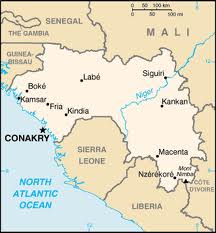
Guinea-Conakry
Studying at the Sorbonne, she began to learn about African history and slavery from fellow students and found sympathy with the Communist movement. She became pregnant after an affair with Haitian activist Jean Dominique. In 1958, she married the Guinean actor Mamadou Condé, a decision she later admitted was a means of regaining status as a black single mother. Within months their relationship was strained, and Condé moved to the Ivory Coast, spending the next decade in various African countries including Guinea, Senegal, Mali and Ghana, mixing with Che Guevera, Malcolm X, Julius Nyerere, Maya Angelou, future Ivory Coast president Laurent Gbagbo and Senegalese film-maker and author Ousmane Sembène.
Map and Flag of Ghana
Unable to speak local languages and presumed to hold francophile sympathies, Condé struggled to find her place in Africa. “I know now just how badly prepared I was to encounter Africa,” she would later say. “I had a very romantic vision, and I just wasn’t prepared, either politically or socially.” She remained outspoken until she was accused of subversive activity in Ghana and deported to London, where she worked as a BBC producer for two years. She eventually returned to France and earned her MA and PhD in comparative literature at Paris-Sorbonne University in 1975.
Her debut novel, Hérémakhonon, was published in 1976, with Condé saying she waited until she was nearly 40 because she “didn’t have confidence in myself and did not dare present my writing to the outside world”. The novel follows a Paris-educated Guadeloupean woman, who realises that her struggle to locate her identity is an internal journey, rather than a geographical one. Condé later recalled the Ghanaian author Ama Ata Aidoo telling her: “Africa … has codes that are easy to understand. It’s because you’re looking for something else … a land that is a foil that would allow you to be what you dream of being. And on that level, nobody can help you.” “I think she may have been right,” Condé later wrote.
… She gainedprominence as a contemporary Caribbean writer with her third novel, Segu, in 1984. The novel follows the life of Dousika Traore, a royal adviser in the titular African kingdom in the late-18th century, who must deal with encroaching challenges from religion, colonisation and the slave trade over six decades. It was a bestseller and praised as “the most significant novel about black Africa published in many a year” by the New York Times.
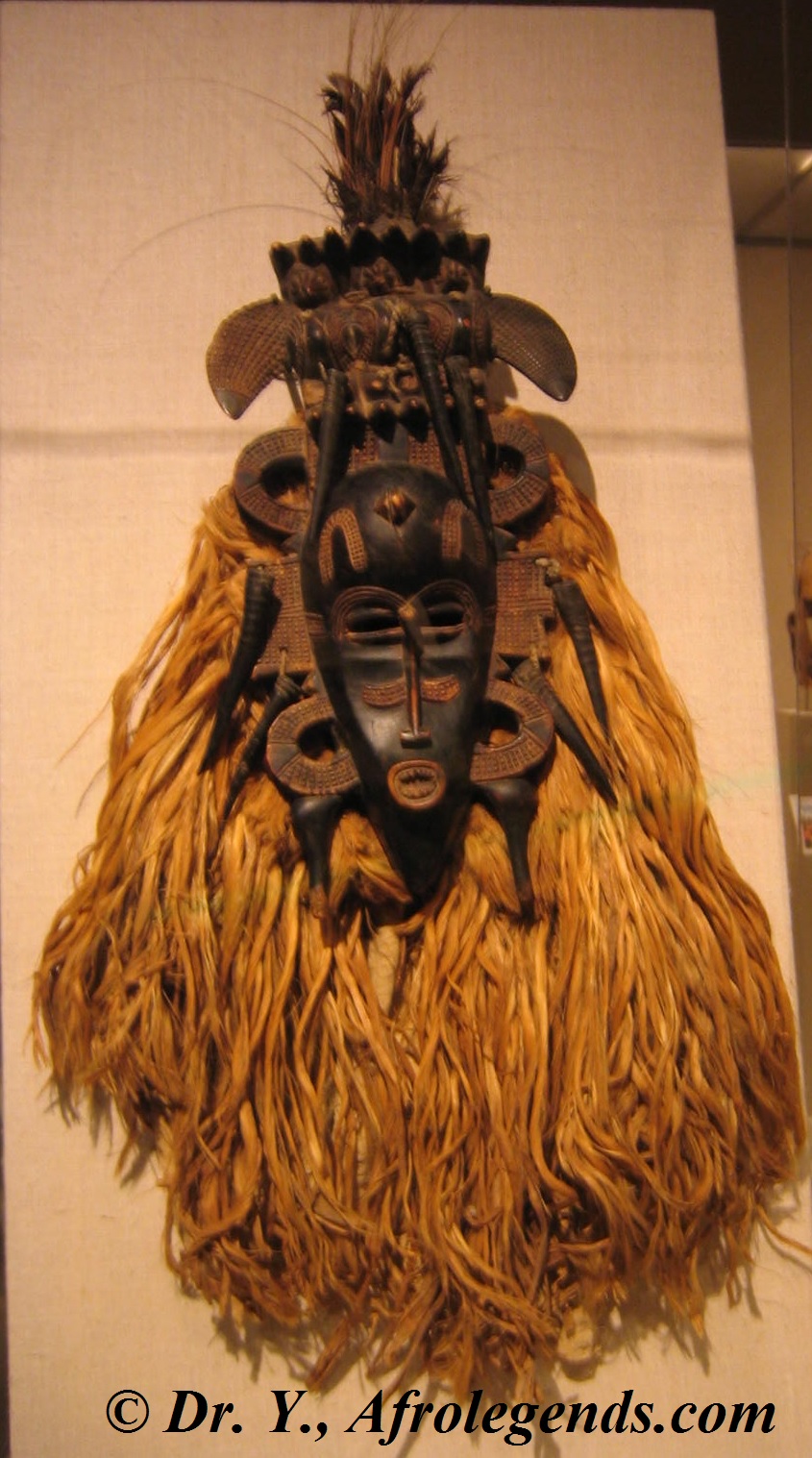
Slavery dealt a big blow to Africa. It dealt a big blow to her strength (imagine losing millions upon millions of some of your strongest children), to her self-confidence (imagine her children fearing for their lives chased into the depths of forests and savannahs), and to her soul. Then came colonization with forced labor, depersonnalization, confiscation of History, disregard for local cultures, cultural alienation, and colonial oppression. Slowly, the awakening is upon us; and slowly Africans are linking back to that glorious past of African civilizations, science, and cultures. The poem below by Ivorian author Véronique Tadjo is anchored upon that re-discovery of the African self in all its splendor, and connection to its roots in order to continue the legacy.
The poem “Raconte-moi” was published in Latérite / Red Earth, written in homage to Senufo culture, which won a literary prize from the Agence de Coopération Culturelle et Technique. The poem below was re-published re-published in Anthologie Africaine: Poésie Vol2, Jacques Chevrier, Collection Monde Noir Poche, 1988, and translated to English by Dr. Y.Afrolegends.com .
“Raconte-moi” de Véronique Tadjo / “Tell me” from Véronique Tadjo
Below is ‘Ma vie est une chanson‘ or ‘My Life is a Song‘, a love poem by Cameroonian author Francis Bebey, a poem celebrating his love for the African woman, in this case for his lover. As we remember that Francis Bebey was multi-talented as a journalist, writer, sculptor and musician, it is no surprise that the title of his poem is “My Life is a Song”. He even headed the UNESCO music department researching and documenting traditional African music. In the poem, he highlights that he was born from the love of the earth with the sun, thus a birth that was very celebrated and a life full of love. As we read the poem, Bebey’s love for his country is abundantly clear as he dreams of taking his lover there, and not only that, but lets her know that his country is where to find the love between the earth and the sun; it is almost as if he was telling all that he was born on the equator. Moreover, let’s face it, the link between the earth and the sun is undeniable, unbreakable, unavoidable, constant, and forever omnipresent. He is so taken by the love so much so that his life is a song that he will sing everyday to his precious one. Wouldn’t you all like to be loved like that? Enjoy!
The poem ‘Ma vie est une chanson‘ by Francis Bebey, was published in Anthologie africaine: poésie, Jacques Chevrier, Collection Monde Noir Poche, Hatier 1988. Translated to English by Dr. Y. Afrolegends.com.
Ma vie est une chansonOn me demande parfois d’où je viens
Et je reponds “je n’en sais rien
Depuis longtemps je suis sur le chemin
Qui me conduit jusqu’ici
Mais je sais que je suis né de l’amour
De la terre avec le soleil”
Toute ma vie est une chanson
Que je chante pour dire combien je t’aime
Toute ma vie est une chanson
Que je fredonne auprès de toi
Ce soir il a plu, la route est mouillée
Mais je veux rester près de toi
Et t’emmener au pays d’où je viens
Ou j’ai caché mon secret
Et toi aussi tu naîtras de l’amour de la terre avec le soleil
Toute ma vie est une chanson
Que je chante pour dire combien je t’aime
Toute ma vie est une chanson
Que je fredonne auprès de toi.
My Life is a SongI am sometimes asked where I come from
And I answer “I don’t know
For a long time I have been on the way
That leads me here
But I know that I was born from the love
between the land and the sun”
My whole life is a song
That I sing to tell you how much I love you
My whole life is a song
That I hum next to you
Tonight it has rained, the road is wet
But I want to stay close to you
And take you to the land where I come from
Where I hid my secret
And you too will be born from the love of the earth with the sun
Let’s open the year with this quote from Steve Biko, the leader of the Black Consciousness movement which guided the movement of student discontent into a political force unprecedented in the history of South Africa, culminating in the Soweto uprising of 1976, which helped in toppling the apartheid regime. His quote below applies to all societal problems, it is the issue of the haves and the have-nots, racism, classism, exploitation, and is of great actuality.
“The greatest weapon in the hand of the oppressor is the mind of the oppressed.” Speech in Cape Town, 1971














 Below is ‘


