“The Killing of the She-Camel” by Mohamed Ibrahim Warsame

Flag of Somalia

Last week, Somalia lost one of its greatest poets, Mohamed Ibrahim Warsame. Affectionately called Hadraawi, which means the “master, or father of speech”, Warsame was regarded as a pillar of modern Somali literature and a strong advocate for peace and democracy. In 1973, he spent 5 years in jail because he spoke against the revolution led by then president Siad Barre; this resulted in his work getting banned. Despite censure, Warsame remained undeterred and continued his work, composing poetry upon his release, songs, and verses. The poem, “The Killing of the She-Camel” led to his imprisonment without trial. In the 1990s, he called for an end of the civil war which has destroyed the country, and displaced countless people. Last week, Somali president, Hassan Sheikh Mohamud, said “Poet Mohamed Ibrahim Warsame (Hadraawi) was a symbol of unity and peace,”… “He was one of key pillars of Somalia’s art and literature who took a leading role in preserving the Somali culture and promoting the Somali language. His death is felt in every Somali household.”

Is there a better way to celebrate the life of Hadraawi than to share this poem? Against corruption, disrespect of the human condition, and nepotism,  Warsame says, “Never will I ever accept a single insulting slide from those grasping commissars…” For his everlasting fight for justice, he says “Until the grave’s prepared… I’ll keep rallying and calling until the Day of Judgment.” Enjoy The Killing of the She-Camel (Hal La Qalay) by Mohamed Ibrahim Warsame, translated to English by Said Jama Hussein and Maxamed Xasan ‘Alto’.

Hal la qalay raqdeedaa

    Hal la qalay raqdeedaa

     Lagu soo qamaamoo

     Qalalaasihii baa

     Nin ba qurub haleeloo

     laba waliba qaybteed

     Qorraxday ku dubatoo

     Qoloftiyo laftiibaa

     Lagu liqay qallaylkee

     Qosol wuxuu ka joogaa

     Qubannaa danbeeyee

     Weli qaba hamuuntee

     Buuraha qotada dheer

     Ka arkaaya qiiqee

     Qarka soo jafaayee


     Qalwadii masbaa galay

     Qodax baase hoos taal

     Fule quudhsigii diid

     Geesi qoorta soo dhigey

     Faras qaayihiisii

     Qurux buu ku doorsaday

     Qabqab dhaafay baa yimi

     Qosol qoonsimaad noqoy

     Qabyo waa halkeedii


     Qarandidu libaaxbay

     Ku qadhaabataayoo

     Soo qabo tidhaahdaa

     Qaankiyo biciidkoo

     Qaybtana shanlaabay

     Qoondeysataayoo

     Isagnaa qorshaha guud

     Qanjidhkiyo xumaystay

     Ha qawedin tidhaahdaa

     Aarkuna ma quustoo

     Ma qarsado xanuunkee

     Hadba qaran jabkiisiyo

     Qiirada xasuustuu

     Kolba dibin qaniinaa


     Qalwadii masbaa galay

     Qodax baase hoos taal

     Fule quudhsigii diid

     Geesi qoorta soo dhigey

     Faras qaayihiisii

     Qurux buu ku doorsaday

     Qabqab dhaafay baa yimi

     Qosol qoonsimaad noqoy

     Qabyo waa halkeedii


     Weligay cad quudheed

     Anna qaadan maayoo

     Qalanjadan faraa dheer

     Wax la qaybsan maayee

     Bal inay qabuuruhu

     Saddex-qayd ka maarmaan

     Ama qoor-tal jeexaan

     Labadaas mid quudhaan

     Xilka qaawan saaraan

     Hadba qaylo-doon baan

     Ka horow qiyaamaha

     Ku qulaamin maydkee

     Aan qoofallaadee

     Qarqarsiga ha iga furin.


     Qalwadii masbaa galay

     Qodax baase hoos taal

     Fule quudhsigii diid

     Geesi qoorta soo dhigey

     Faras qaayihiisii

     Qurux buu ku doorsaday

     Qabqab dhaafay baa yimi

     Qosol qoonsimaad noqoy

     Qabyo waa halkeedii


The Killing of the She-Camel (Hal La Qalay) 


How they came rushing to that place

   Where the carcass of the she-camel lay,

    and what a commotion there was

as each caught at her flesh

    pair by pair clawed off their share

    frying it in the glare of the sun

    and cramming down dry

    its crisp skin, crunching the bones.

    You’d bare your teeth too to see

    their scattered followers come

    still cramped with greed, ravenous

    at seeing the smoke ascend

    from the colossal mountain’s top,

    scrambling up cliffs and ravines.


    The snake sneaks in the castle:  

    Although it’s carpeted with thorns

     still the coward casts off his curses

     so the courageous must stretch out his neck;

     the cob stallion sells his values

     in order to cut a fine figure.

    When such cockiness struts forth

     and even laughter becomes a crime

     our country has unfinished business.


    When the aardvark tells the lion

    how it’s supposed to hunt

    and orders it, ‘Go catch

    the young camel and the oryx’;

    then carves five times its share

    setting this aside

    while granting for the lion’s role

    glands and offal,

    commanding it, ‘Don’t quibble,’

    the lion can’t cave in

    and doesn’t hide its hurt

    but now and then remembering

    the loss of its prestige

    it bites its lip in bitterness.


    The snake sneaks in the castle:

     although it’s carpeted with thorns

     still the coward casts off his curses

     so the courageous must stretch out his neck;

     the cob stallion sells his values

     in order to cut a fine figure.

     When such cockiness struts forth

     and even laughter becomes a crime

     our country has unfinished business.


     Never will I ever accept

     a single insulting slice

     from those grasping commissars –

     I won’t share a thing with them.

     Until the grave’s prepared

     to forego its three yard shroud 

     or a collar round the neck,

     since one at least is needed

     to cover the naked dead,

     I’ll keep rallying and calling

     until the Day of Judgement,

     pray my cries can comfort the dead:

     tie me to this task, and don’t 

     release me from its harness.


     The snake sneaks in the castle:

     although it’s carpeted with thorns

     still the coward casts off his curses

     so the courageous must stretch out his neck;

     the cob stallion sells his values

     in order to cut a fine figure.

     When such cockiness struts forth

     and even laughter becomes a crime

     our country has unfinished business.


“Blind” by Joseph Kariuki

Broken heart

Let’s end the week with the poem “Blind” by Kenyan writer Joseph Kariuki. Trained like many of the older East African generation at the prestigious Makerere University in Uganda, Kariuki is renowned for his poem celebrating the first president of Kenya, Jomo Kenyatta, “Ode to Mzee.” Today, we will explore the poem “Blind” which in essence describes a heartbreak and the regret of having made the mistake of loving an ‘ingrate’ or more generally the wrong person. One could call it an awakening: the lover is blinded by the fires of love, and after the romance fails, realizes the deception, and that there were no reason to cry over the loss of the other, for whom one were infatuated. Although short, the poem is quite deep, as it clearly describes a failed romance and heartbreak, the ensuing sadness, and the eventual realization that one was poorly matched, and loved someone who was an ingrate, or a lousy choice for a lover. The title “Blind” fits so well with the proverb ‘love is blind.’ Enjoy! It was published in Poems from East Africa, ed. David Cook and David Rubadiri (Nairobi: East African Educational Publishers, 1971), P. 69.

BLIND by Joseph Kariuki

When you left
Without a word,
My heart wept–

Not so much
For lost love
(And a touch),

But the more
For the blinkers
Which I wore

For so long.
For so late
Did I worship
Such an ingrate?

East African Words in the English Dictionary

Oxford English Dictionary

Drum rolls…  the Oxford English Dictionary has just selected 200 new words from East Africa to be part of its new edition. We all remember the 2020 Oxford English Dictionary which had introduced 29 Nigerian words to its lexicon. This year’s edition features the addition of almost 200 words from East African countries such as Kenya, Tanzania, and Uganda. Given that Swahili is the lingua franca in all three of these countries (to a smaller extent in Uganda), it is no surprise that the words added have a strong Swahili origin. The words added include: Asante Sana (thank you very much), pole sana (sorry), Kanga (cotton fabric from East Africa), Chapo (thin pancake eaten for breakfast), Nyama Choma (roasted/grilled meat), collabo (collaborate), tarmac (to work the streets in search of a job; job huntic), jembe (not to be confused with djembe drums – hand tool shaped like a hoe used for digging), sambaza (to send mobile phone credit to someone), duka (small neighborhood store sharing all sorts of goods)…  Isn’t it marvelous how each culture adds to another? With the growth of the Swahili language and its inclusion in schools across the continent, it is no doubt a forward strategy of OED to include these, even though a bit late in my opinion. Since the introduction of Nigerian words into the Queen’s English Dictionary, I have been wondering if these new words actually get used in England, Australia, or other places where English is spoken, or does their use remain just local, and the addition is more of a ‘political’ play on diversity?  Enjoy from the OED website.

=====

Region in East Africa where Swahili is spoken (linguisitics.illinois.edu)

Recent OED updates have included a significant number of new entries from South Africa and Nigeria. In this quarterly update, the OED continues to broaden its coverage of words from English-speaking Africa, with the publication of close to 200 new and revised entries for East African English. These additions and revisions are for words used chiefly or exclusively in Kenya, Tanzania, and Uganda, three countries which share a common Anglophone background despite their differing colonial histories.

Something else that Kenya, Tanzania, and Uganda have in common is their lingua franca, Swahili, and indeed several of the new and revised entries in the East African update are borrowings into English from this language. This includes the oldest of the new entries in this batch, jembe, referring to a hoe-shaped hand tool used for digging, which is first attested in an article by British explorer Sir Richard Francis Burton published in the Journal of the Royal Geographical Society in 1860. Over a hundred years later, renowned Kenyan writer and academic Ngũgĩ wa Thiong’o used the same word in his historical novel A Grain of Wheat, first published in 1967.

One of the newest words in this batch is also a Swahili loan word: sambaza, a verb originally used to mean ‘to send mobile phone credit to someone’, but now used more generally to mean ‘to share or send something’. …

Flag of Kenya

Other borrowings in this batch include Swahili forms of address such as mwalimu ‘teacher’ (first attested 1884), as well as Bwana (1860) and its abbreviation, Bw (1973), a title of courtesy or respect prefixed to the surname or first name of a man. There are also expressions and discourse markers of Swahili origin such as asante sana (1911) ‘thank you’, pole sana (1966) ‘sorry’, and ati (2010) ‘as someone said; reportedly, allegedly’.

… The vocabulary of East African English is characterized not just by loan words, but also by lexical innovations based on English elements, several of which have now made their way into the OED. They include words formed through suffixation, such as unprocedural (1929) ‘irregular, illegal’; through clipping, like the verb collabo  (2008) ‘especially of musicians: to collaborate’; and through compounding, such as deskmate (1850) ‘a person who sits next to another at school’. Some English words also have meanings specific to the region. In East African English, the noun tarmac (1982) is also used as a verb meaning ‘to walk the streets looking for work; to job hunt’. A person who is pressed (1958) needs to go to the bathroom, while a stage (1965) is a bus stop or a taxi rank.

In addition to words used throughout East Africa, the OED’s latest update also features words unique to the varieties of English spoken in Kenya, Tanzania, and Uganda. The lexicon of Kenyan English is represented by borrowings from a few of its many languages: for example, kiondo (1902) from Kikuyu and Isukuti (1972) from Luhya. A kiondo is a handwoven bag made from cord or string, now usually of sisal, with long handles or straps that can be slung over the shoulder, typical of the traditional handicraft of the Kikuyu and Kamba peoples of Kenya. An isukuti is a wooden drum, traditionally made from a hollowed log, which is usually hung over the shoulder and played by striking with the fingers and palms. Isukuti is also the name of a rhythmic, energetic traditional celebratory dance accompanied by drumming and singing, performed typically at festivals and weddings by the Luhya peoples of Western Kenya, such as the Isukha and Idakho.

Flag of Tanzania

… In Kenyan English, a biting (1997) is a bite-sized piece of food, a small snack, appetizer, or canapé; while a merry-go-round (1989) is an informal cooperative savings scheme, typically run by and for women, in which each participant regularly contributes an amount, and the whole sum is distributed to the members in turn. To shrub is to pronounce or write words in another language in a manner that is influenced by one’s mother tongue, and a shrub (2008) is a word pronounced or written in this manner. To shrub and shrub are colloquialisms chiefly used with reference to English or Swahili words pronounced in a manner characteristic of another Kenyan language.

… As for Tanzanian English, one of the most widely known words from this variety is daladala, the name of a  van or minibus that carries passengers for a fare as part of a local informal transport system. Dating back to 1983, the English word comes from Swahili, with daladala being a reduplication of dala ‘dollar’, perhaps originally as a bus driver’s call. Dala is also the nickname of the Tanzanian 5-shilling coin, which used to be the typical fare for daladala minibuses.

Flag of Uganda

… The vocabulary of Ugandan English draws primarily from Luganda, one of the country’s major languages. Examples of Lugandan borrowings in this batch are kaveera (1994)‘a plastic bag, plastic packaging’; kwanjula (1973)‘an engagement ceremony where the families of the bride and groom formally meet’; and nkuba kyeyo (1991) ‘a Ugandan person working overseas, especially one doing a low-paid or unskilled job’—the Lugandan phrase literally means ‘someone who sweeps’. Katogo (1940) is another loan word from Luganda—it is the name of a typical Ugandan breakfast dish consisting of matoke (banana or plantain) boiled in a pot with various other ingredients. The word later developed a figurative sense, as it began to be used to mean ‘a mixture or fusion of disparate elements; a mess, a muddle’.

Ugandan English also has its share of distinctive uses of existing English words. In Uganda, to cowardize (2003) is to act like a coward or to lose one’s nerve, while to extend (2000) is to move from one’s position so as to make room for someone else. Well done (1971) is used as a friendly greeting or salutation, especially when encountering a person at work or in a state of activity. You are lost! (2013) is also used as a greeting, or in response to a greeting, in a manner similar to ‘long time no see’.

…

Timbuktu Manuscripts now Available Online

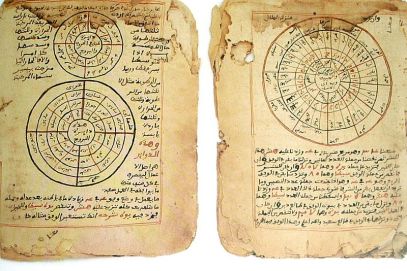
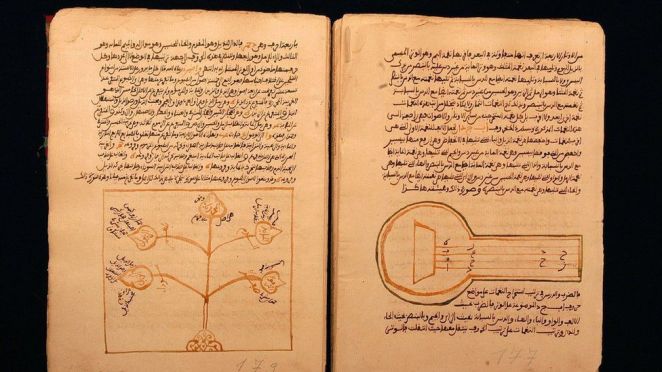
Manuscripts a Tombouctou (Mali) montrant de l'astronomie et mathematique
Manuscripts a Tombouctou (Mali) montrant de l’astronomie et mathematique

I am happy to announce that the Timbuktu manuscripts are now available online. Can you imagine that? Treasures of our ancestors, writings, judgments, mathematical concepts, architectural findings, from those great scribes of ancient times. Up to 40,000 pages will now be available online, covering wide topics from biology to music to religion. 

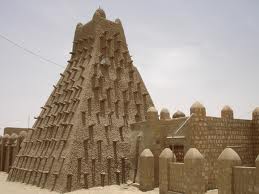
Sankore Mosque in Timbuktu

With the Islamic attacks on Mali, Timbuktu has been under occupation since 2012 (Tensions Escalating in Mali). As you all know Timbuktu was a great center of knowledge in search for many centuries starting at least in the 12th century. It was visited by people from around the world, in search of knowledge. There were over 700,000 manuscripts at the great Sankore University in Timbuktu, and many more at other public and private libraries including the  Ahmed Baba Institute, Al-Wangari Library, and others (Lost Libraries of Timbuktu, Timbuktu under Attacks: Arise to save African Treasures). Many families smuggled the manuscripts to safety from Timbuktu to the capital of Bamako. The manuscripts contain centuries of African knowledge and scholarship on topics ranging from mathematics to astrological charts, biology, geography, laws, etc. They were written on various materials ranging from ancient paper, goat, sheep and even fish skins. Some were written in verse, poetic meter, while others in narrative styles using dialogues, stories of kings, scribes, noblemen, fables, anecdotes. They were renowned in the world for their physical beauty and outstanding wisdom.

Timbuktu_Abdel Kader Haidara
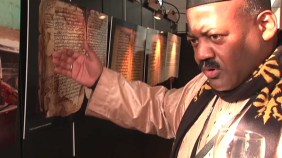
Dr Abdel Kader Haidara talking about the manuscripts of Timbuktu

In 2014, Dr Abdel Kader Haidara known for his work on the protection and preservation of the Timbuktu manuscripts and who smuggled over 350,000 manuscripts out of the city away from the jihadists, called on Google and invited the company to visit Mali and see the renowned manuscripts and join in the digitization of these treasures. Thus the collection Mali Magic was born as a collaboration between Google, local, and international partners. It took several years of combined efforts from Mali’s traditional leaders, historians, and digital archaeologists to digitize these ancient manuscripts, some dating back to the 11th century. 

Enjoy this article on the BBC website, and do not forget to visit the amazing work Mali Magic. The Library of Congress has also placed some manuscripts online. 

Timbuktu_Manuscript
Manuscript of Timbuktu (Google Arts and Culture)


100 years after René Maran, An African wins the Prestigious Prix Goncourt

Mbougar Sarr
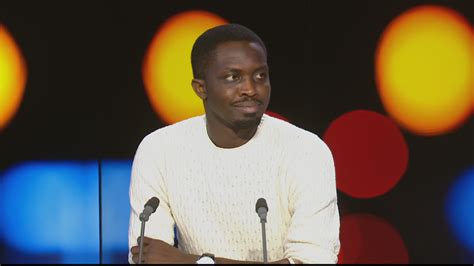
Mohamed Mbougar Sarr (Source: France 24)

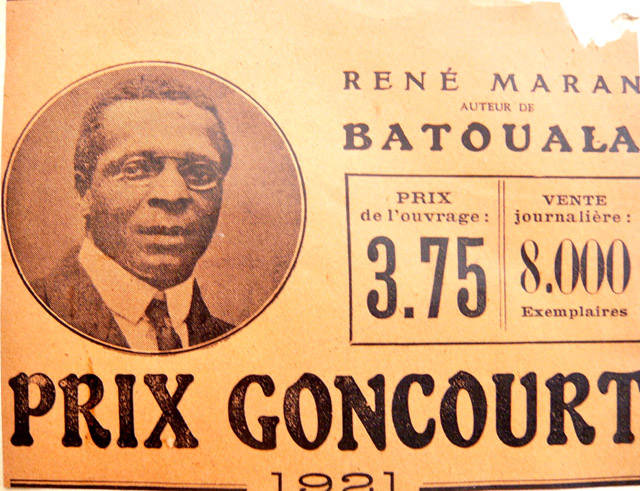
Meet Mohamed Mbougar Sarr, the Senegalese writer who has just won the Prix Goncourt, France’s oldest and most prestigious literary prize. This makes him the first writer from sub-Saharan Africa, a Black African, to win the prize. Isn’t it funny that I was recently reading about René Maran, the first person of African descent (from French Guyana) to win the prestigious Goncourt prize in 1921 for his novel Batouala? This was the first French novel to openly criticize European colonialism in Africa, which caused violent reactions and was banned in all French colonies. So 100 years later, we have the first African to win the prize.

Mbougar Sarr-la plus secrete memoire des hommes
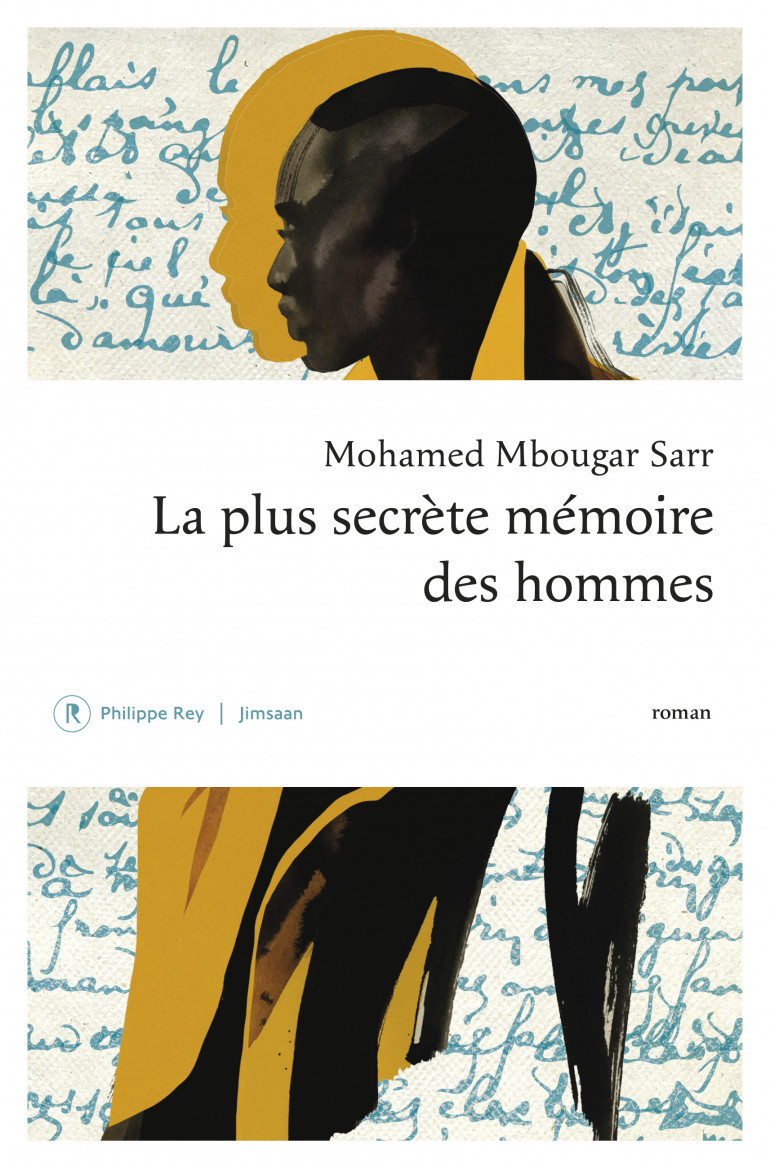
“La plus secrète mémoire des hommes” de Mohamed Mbougar Sarr

Mbougar Sarr is the youngest winner of the Goncourt since 1976. He hails from Senegal, where he grew up in the city of Diourbel, a small city located about 100 miles from the capital Dakar, before moving to France to study literature. His winning novel, La plus secrète mémoire des hommes (The Most Secret Memory of Men), tells the story of a young Senegalese writer living in Paris who stumbles by chance across a novel published in 1938 by a fictional African author named TC Elimane, nicknamed “the Black Rimbaud” by an ecstatic Paris media. The story, described as a reflection on the links between fiction and reality, follows the life of a cursed African writer echoing the real-life experience of the Malian writer Yambo Ouologuem who in 1968 was the first African winner of the prix Renaudot, but was later accused of plagiarism, and had to flee France and vanish from public

life.

Rene Maran_1
Posting of René Maran as he won the Prix Goncourt for Batouala

Previous works by Mbougar Sarr, Terre Ceinte (his first novel published in 2015) and Silence du choeur (2017) have won several prizes including the Prix Ahmadou-Kourouma, and the Grand prix du roman métis. Congratulations to Mohamed Mbougar Sarr for winning the 2021 Prix Goncourt. It took 100 years after René Maran for Sub-Saharan Africa to have a winner of the Goncourt !!! 

Tanzanian Abdulrazak Gurnah awarded Nobel Prize of Literature

Abdulrazak Gurnah, 2021 Nobel Prize in Literature winner (Source: FT.com)

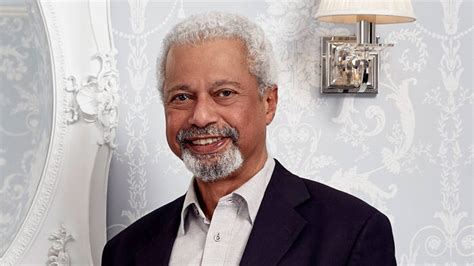
Today, we will celebrate the fifth African to join the illustrious lists of Nobel literature prize winners. Yes… you heard me right, the 2021 Nobel prize for literature has been awarded to the Tanzanian author Abdulrazak Gurnah, he is only the fifth African recipient behind Wole Soyinka of Nigeria (1986), Naguib Mahfouz of Egypt (1988), Nadine Gordimer (1991) and J.M. Coetzee (2003) both of South Africa. He is in good company.

To be honest, I had never heard of Abdulrazak Gurnah before the Nobel prize announcement, even though I try to keep up with African authors. Now, I will make sure to check out his most famous book Paradise which had been shortlisted for the Booker Prize in 1994.

Flag of Tanzania

Gurnah was born on the island of Zanzibar in 1948, before it was joined with Tanganyika to become Tanzania upon independence from Great Britain. He fled his country at the age of 18 and settled in England where he has lived since then. He is the author of numerous short stories and essays, and of as many as 10 novels. Some of his books have been shortlisted (Paradise) or longlisted (By the Sea) for the Booker Prize. He also writes in Swahili. The main focus of his work has been on the effects of colonialism and the fate of refugees as they reach new countries, continents, and cultures.

Cheers to another proud winner of the very prestigious prize, and this proud son of Mama Africa. For more on him, please check out the announcement on the Nobel Prize page, the Guardian, and NPR articles.

“Chant Funèbre Bangou / Bangou Requiem” by Etienne Noumé

Dry your tears African

There has been so much loss this year that I thought to introduce you to the “Bangou Requiem,” a poem written by the Cameroonian poet and author Etienne Noumé. Bangou (pronounce Ban-gu in English) is a town in the Western province of Cameroon, and is part of the Bamiléké grassfields. Noumé’s description of his loss is so profound, and uses typical Bamileke imagery, “My body is numb… the palms have dried under the moonlight“, “My sun went down“, my joy, my everything, “… blown away by the wind.” It is hard to lose someone dear, especially one’s child. In Bamileke culture, the parent is supposed to bury his child and not the contrary, so you can imagine the heart wrenching pain… that numbs you. “The palms have dried under the moonlight“… think about it for a minute: … can a palm dry under the moonlight?… this is Bamileke imagery for you. “My reddened pot burst” my hope blown away in an instant, without any notice, the impossible has happened. This here is a Bangou Requiem, “Chant Funebre Bangou” by Etienne Noumé, first published in Angoisse quotidienne, Le Flambeau, Yaoundé, re-published in Anthologie Africaine: Poésie Vol2, Jacques Chevrier, Collection Monde Noir Poche, 1988, and translated to English by Dr. Y. Afrolegends.com . Enjoy!

=====

Chant funèbre Bangou


Mon corps est engourdi

et je me meurs de froid;

mon enfant est allé

couper du bois, hélas

et n’est pas revenu

Les palmes

ont séché

à la lueur

de la lune

Sur le foyer ardent

mon pot rougi éclate :

à l’aube au marigot

mon enfant est allé

et n’est pas revenu.

Les palmes

ont séché,

à la lueur

de la lune

Mon soleil s’est couché :

mon enfant est allé

derrière la colline

emporté par le vent

et n’en reviendra jamais plus

Les palmes

ont séché,

à la lueur

de la lune

Bangou Requiem


My body is numb

and I am dying of cold;

my child went

to cut wood, alas

and did not come back

the palms

have dried

under the

moonlight

On the fiery hearth

my reddened pot burst :

at dawn in the backwater

my child went

and did not come back.

The palms

have dried

under the

moonlight

My sun went down :

my child went

behind the hill

blown away by the wind

and will never come back

the palms

have dried

under the

moonlight


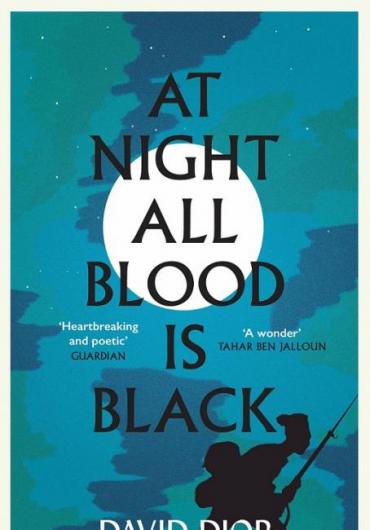
David Diop Wins International Booker Prize for “At Night All Blood Is Black”, Book on Tirailleurs Senegalais

“At Night All Blood is Black” by David Diop

It is hard to keep up with the news, but this is one that we should celebrate. The Franco-Senegalese author David Diop won the International Booker Prize 2021 for his book, “At Night All Blood is Black“. I know, it is hard to keep up with all the different prizes, Man Booker Prize, International Booker Prize, and countless others. This one is nonetheless important because first of all, David Diop is the first African to win the prestigious prize, but also because his book “At Night All Blood is Black” talks about all those African soldiers who helped to free France, and yet were never recognized, and instead were insulted, laughed at and more. The book, originally published in French in 2018 under the title “Frères d’âme” or Soul Brothers, weaves the history of World War I with the history of colonialism. The novel describes the experiences of Senegalese Tirailleurs fighting for France in the trenches. The main character, Alfa Ndiaye, descends into madness following the death of his childhood friend Mademba Diop who had also been recruited as a tirailleur, and inflicts extreme brutality upon his German enemies. Diop was inspired to write the book by his French great-grandfather’s service during the war. Diop stated “He never said anything to his wife, or to my mother, about his experience. That is why I was always very interested by all the tales and accounts which gave one access to a form of intimacy with that particular war.”

As a side note, “tirailleur” was the name given by the French Army to indigenous infantry recruited in the various French colonies. They were not all Senegalese, even though the name always said “tirailleur senegalais,” but rather came from all over Africa. They served for France in a number of wars, including World War I, World War II, and several others. The name “Tirailleur” is a link of two words “tir ailleurs” to laugh and denigrate the indigenous troops by saying that the soldiers were not capable to shoot on target, more like to mean “shoot off target”; it could be translated as skirmisher.

It is also good to note that there is no family link between the great Senegalo-Cameroonian poet David Mandessi Diop [Afrique de David M. Diop / Africa by David M. Diop] and this David Diop… We applaud the success of both namesakes. So good to have such a an illustrious namesake and walk in his path.

I live you here with the link to the article on The Conversation., and more importantly on the video of the Massacre of Thiaroye [Thiaroye: A French Massacre in Senegal, ‘Thiaroye Massacre’ by Ousmane Sembene] showing the poor treatment and sometimes massacre of these tirailleurs by the French, when they returned home after serving France.

Zimbabwean Author, Tsitsi Dangarembga, Wins PEN Pinter Prize

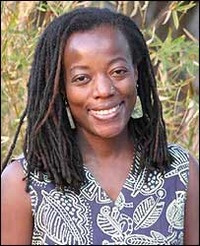
Tsitsi Dangarembga (Source: Goodreads.com)

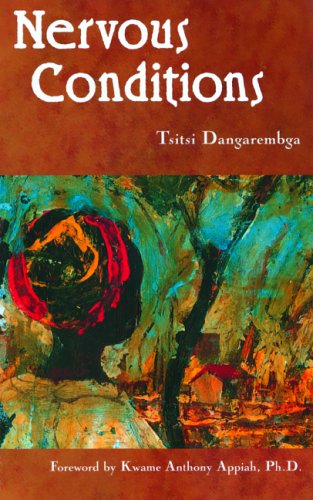
Tsitsi Dangarembga, the Zimbabwean author of Nervous Conditions, was awarded the 2021 PEN Pinter prize last week. As a background, Dangarembga’s debut novel, Nervous Conditions, was the first novel published in English by a Black woman from Zimbabwe. Remember that before independence, Zimbabwe was known as Rhodesia, and was under white rule. Coincidentally, I just bought her final book in the trilogy “This Mournable Body” which was a finalist for the Man Booker prize last year. Dangarembga is an author, a playwright, and a filmmaker. She was also arrested last year. Her first novel was named by the BBC in 2018 as one of the top 100 books that have shaped the world. Excerpt below are from the Guardian. Please check out the article also on AfricaNews.

=====

Author, who was arrested last year in Harare while protesting against corruption, is hailed by judges as a ‘voice of hope we all need to hear’

Tsitsi Dangarembga, the Booker-shortlisted Zimbabwean writer who was arrested last year in Harare while protesting against corruption, has been awarded the PEN Pinter prize, praised for her “ability to capture and communicate vital truths even amidst times of upheaval”.

Nervous Conditions by Tsitsi Dangarembga

The prize is given by free speech campaigners English PEN in memory of the Nobel laureate Harold Pinter. It goes to a writer of “outstanding literary merit” who, as Pinter put it in his Nobel speech, shows a “fierce intellectual determination … to define the real truth of our lives and our societies”. Previous winners include Chimamanda Ngozi Adichie, Margaret Atwood and Linton Kwesi Johnson.

Dangarembga is the author of Nervous Conditions, which she wrote when she was 25, and which was described by Doris Lessing as one of the most important novels of the 20th century. The story of a village girl called Tambudzai, it was followed by The Book of Not, about Tambu’s teenage years, and the Booker-shortlisted This Mournable Body, the third part of the trilogy, set in the postcolonial Zimbabwe of the 1990s. …

“I am grateful that my casting – in the words of Harold Pinter – an ‘unflinching, unswerving gaze’ upon my country and its society has resonated with many people across the globe and this year with the jury of the PEN Pinter prize,” said Dangarembga. “I believe that the positive reception of literary works like mine helps to prove that we can unite around that which is positively human.”

…

Dry Your Tears African! – Words from Bernard Dadié

Dry your tears African

I love this poem by  Bernard Dadié which I have posted earlier “Seche tes pleurs, Afrique / Dry Your Tears, Afrika“. The imagery is so clear and the words so deep: O Africa, “our senses are now opened to the splendor of your beauty, the smell of your forests, … your charms…” Africa is so rich,… and it is about time that her sons and daughters stand up to reclaim their inheritance, and feel her beauty, and enjoy her bounty-ness… Yes there is so much adversity, but dry your tears African… and rise up!


Sèche tes pleurs, Afrique
Ayant bu
À toutes les fontaines
d’infortune
et de gloire,
Nos sens se sont ouverts
à la splendeur de ta beauté
à la senteur de tes forêts,
à l’enchantement de tes eaux
à la limpidité de ton ciel
à la caresse de ton soleil
Et au charme de ta verdure emperlée de rosée.

Dry your tears, Africa!
We have drunk
From all the springs
of ill fortune
and of glory,
Our senses are now opened
To the splendor of your beauty
To the smell of your forests,
To the charm of your waters
To the clearness of your skies
To the cares of your sun
And to the charm of your foliage pearled by the dew.


The poem below is titled “Dry your Tears Afrika” or “Sèche Tes Pleurs,” published in 1967, by Bernard Binlin Dadié (So long to an African Literary Genius: Bernard Dadié).