
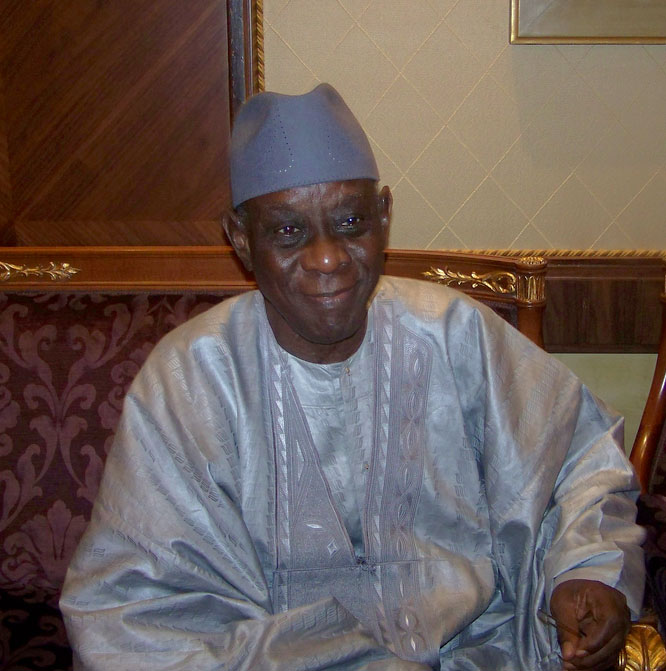
A few days ago, on October 3, Senegal and Africa lost one of its great intellectual voices. Cheikh Hamidou Kane, writer, statesman, and author of L’Aventure ambiguë, died in Dakar at the ripe good age of 98. His passing brought me back to a novel I had to study in school, and which was on the curriculum of most schools across the continent. The question at the heart of his most celebrated novel: How do we open ourselves to the knowledge of the world without losing who we are fundamentally?
Cheikh Hamidou Kane lived this question in many ways. Born in Matam, northern Senegal, in 1928, he descended from a prominent family of traditional Fulani chiefs and muslim scholars. He grew up between Qur’anic teaching and French schooling, later studying law and philosophy in Paris. He returned home before independence and went on to serve Senegal in senior government positions, including as a minister of both Léopold Sédar Senghor and Abdou Diouf. He was a good friend of Senegal’s first president Senghor who was one of his professors while in France, and Mamadou Dia (one of Senghor’s prime minister) whom he tried to reconcile. While in France he met some who would later become leaders in Africa and the Caribbeans, such as Aimé Césaire, Félix Houphouët-Boigny (president of Cote d’Ivoire), Joseph Ki-Zerbo (Burkinabe historian), Abdoulaye Wade (president of Senegal), and many more.
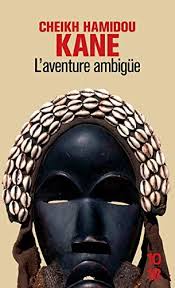
Published in 1961, his novel, L’Aventure ambiguë tells the story of Samba Diallo, a young Senegalese man whose education takes him from a deeply spiritual Islamic upbringing to the French school and eventually to Paris. The novel received the Grand Prix littéraire d’Afrique noire in 1962 and went on to be translated into at least 40 languages. But the real journey is not from Senegal to France. It is from one way of understanding the world to another, how to absorb in Samba’s case, Western knowledge without cultural self-erasure. This dichotomy remains relevant to Africa’s current negotiations over money, governance, geopolitical autonomy, and existence as a whole.
That is what I find so moving about Kane’s book. We often think of education as simply gaining knowledge. But Kane asks a harder question: What if learning something new also changes how we understand what we already knew? He doesn’t give us an easy choice between Africa and Europe, tradition and modernity, or faith and reason. Instead, he leaves us with the ambiguity.
Following Kane’s death, Senegalese President Bassirou Diomaye Faye beautifully captured his legacy as the question of opening ourselves to the world’s knowledge“sans rien perdre de ce que nous sommes“, without losing who we are. More than sixty years later, the question remains. Perhaps that is the mark of a great writer. He doesn’t simply leave us answers. He leaves us questions worth carrying forward. And looking at the world around us today, I wonder whether we are all beginning to live our own aventure ambiguë.


