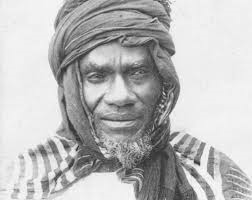
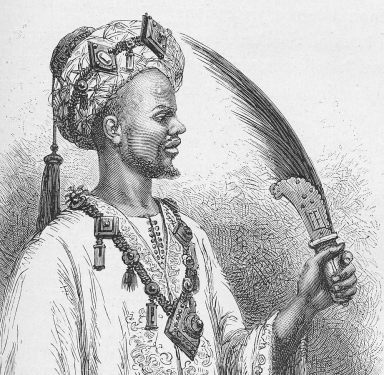
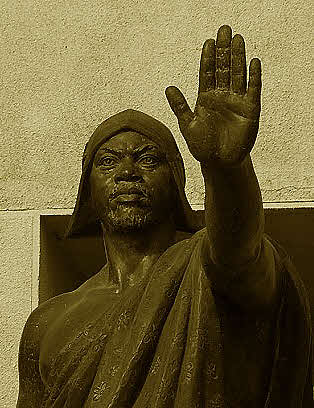
All, I am giving you below a portrait of Samori Touré made by Commandant Binger, a contemporary of Samori Touré, one of the great kings and fighters for African freedom. Bear in mind that this description is certainly tainted by the European (Binger) colonizer’s stereotypes of Africans. The original text in French is found on page 255 of Les Africains, Tome 1. Translation to English by Dr. Y. Afrolegends.com. Enjoy!
=============
Samori Touré
The almamy is a tall handsome manof about50 years of age; his features are a bit hard, and, unlike men of his race, he has a long slim nose, which gives a refined expression to his entire physiognomy; his eyes are very mobile, but he does not often look across his interlocutor.
His exterior appears to me affable rather than hard: very attentive when a compliment is made to him, he can be distracted and indifferent when he does not want to answer a question categorically. He speaks with great volubility, and I think him capable of being warm and persuasive when the occasion arises.
Sitting in a cotton hammock with white and blue rays brought to him from Paris by his son, he holds in his hands, a big piece of tender wood which is called inBambaraniendossila, or ngossé (it is sotiou inWolof) and with which he cleans his teeth.
“L’Almami Samori Toure” de Khalil Fofana
He is dressed with a big doroké in purple florence, of inferior quality, and wears indigenous cotton pants with black and red rays of European make; his legs, a brown chocolate lighter than his face, are coated with shea butter; he is wearing indigenous red leather sandals.
On his head is a red fez of sharpshooter around which is wrapped a thin white turban which goes on his mouth and frames his black face. On his shoulders, he negligently wears a haïk of low price.
Imaginary portrait of Samori Touré
Sitting at his feet are: an old kokisi who never leaves him, two marabouts, a few griots, and the four captives assigned to the hammock, the chair, the camping bowl in which he washes his hands, and the kettle containingwater for occasional rinsing of the mouth. These objects and captives rarely leave his side; wherever he goes, this paraphernalia follows.
Within his reach, and under the same shelter (sort of shed to which the hammock is docked), two tailors are busy sewing yellow florence for his wives. One of the griots carries a big red umbrella, while the other one carries a crank-rod gun. All the objects mentioned above are of English make, except the hammock and the camping bowl, which is a regular bowl.
Here are letters written by King Behanzin to the French president about his kingdom, his land, and French attacks to force him into war. The originals can be found in French archives, and Benin Archives; the translations from French to English are by Dr. Y., afrolegends.com . Enjoy!
==============
“Our desire is that you have the kindness to send us an officer of your house to deal with litigation issues. As for Cotonou, my father never signed it away, and never will we sign it away. It is impossible for us, because if we do, it will be a great prejudice to us, and thunder will crush anyone who would dare dwell on that territory.”
Behanzin, to the President of the French Republic, 30 April 1890, Archives of the Marines, Paris.
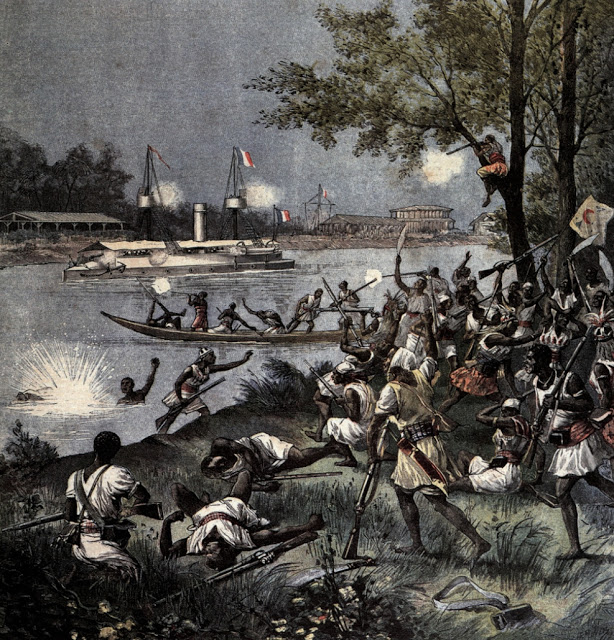
French invasion of the Dahomey along the Oueme River in 1892
“I have just been informed that the French government has declared war on the Dahomey (…). You could start on all the points you want (…) I, too, will do the same. About what happened at the Ouémé River, you caused it (…). If you had not come to start war against me on the Atchoupa way, I would not have done anything to you first (…). Now, I come to tell you that, if you remain calm, I too will remain calm and we will have peace(…).
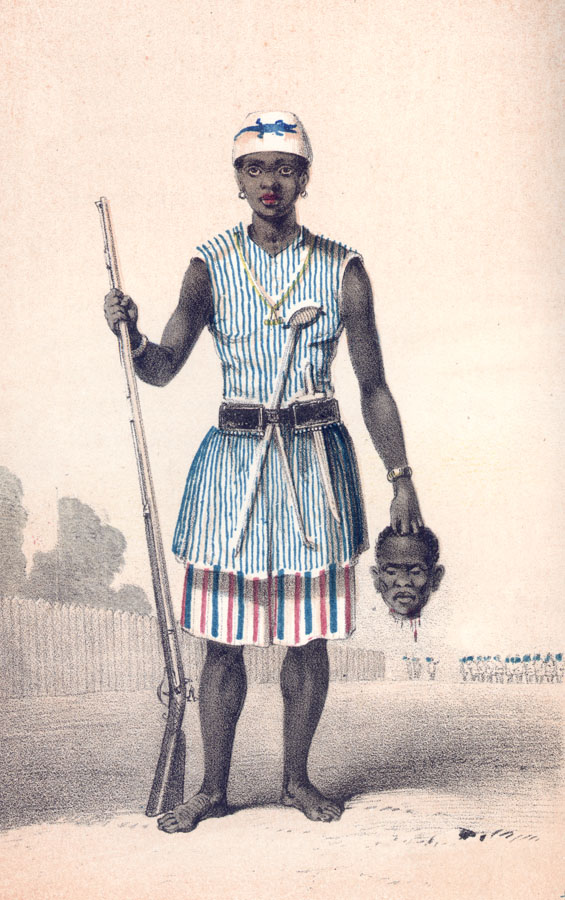
Seh-Dong Hong-Beh, leader of Dahomey Amazons (painted by Frederick Forbes in 1851)
The first time I did not know how to fight a war, now I know. If you start war, I have troops ready. My men are as numerous as works coming out of the earth. I am the king of the Africans and the Europeans have no say in what I do. The villages you are talking about do actually belong to me, they belong to me and wanted to become independent (under your influence), so I gave orders for them to be destroyed (…).
I desire to know how many independent French villages were destroyed by me, King of Dahomey. Remain calm, so your trade in Porto-Novo, this way we will always remain in peace as in the past. If you want war, I am ready. I will not end it even if it lasts a hundred years or kills 20,000 men.”
Behanzin, to Victor Ballot in Porto-Novo, 10 Avril 1892, Archives of the Popular Republic of Benin.
Image of a young woman’s face (agnautacouture.com)
These days, many of my fellow African brothers and sisters sport tattoos of some European or foreign symbols on their skins. These symbols are usually alien to our cultures, traditions, thinking, and history. So I thought about talking about scarification, which could be called an “ancient” African culture of tattoos.
For starters, Africa has a rich culture of scarification. Many cite HIV, and ugliness as being the reason why they would not do scarification and why the practice has been abandoned. I neither agree nor disagree with them, but I would like to give a history of scarification and why, this is something to be cherished as part of our history, even if it is no longer practiced and/or needed today.
Sculpture of a Mangbetu person, in Congo (exposed at the MET)
In the past, a woman or man would have scarification marks that will distinguish her/him from anyone else, tell her/his rank in society, family, clan, and tribe, and symbolize her beauty or strength. In some African tribes, it was like wearing your identity card on your face. True, some may hate that, but this was a mark of pride, not shame. In most African cultures, it was a major aesthetic and cultural componentas can be seen on sculptures in museums around the world. Scarification patterns on sculptures are not only marks of beauty, but marks of one’s lineage as well, and in some cases protection against evil spirits. Lastly, in Africa like in Polynesia, scarification is more visible on darker skinned people than say, tattoos.
Diamond and Rectangular patterns on the forehead and temples of a Tikar mask from Cameroon (exposed at the MET)
What is scarification? Scarification is the practice of incising the skin with a sharp instrument such as a knife, glass, stone, or coconut shell, in such a way as to control the shape of the scar tissue on various parts of the body. Cicatrisation is a special form of scarification where a gash is made in the skin with a sharp instrument, and irritation of the skin caused by applying caustic plant juices forms permanent blisters. Dark pigments such as ground charcoal are sometimes rubbed into the wound for emphasis. These cuts, when healed, form raised scars, known as keloids. The most complicated cicatrisation was probably found in the Congo Basin and neighboring regions, and among the Akan people of West Africa.
Pendant Ivory mask representing Queen Idia, Iyoba of Benin City (16th Century)
Scarification is a long and painful process, and a permanent modification of the body, transmitting complex messages about identity and social status. Permanent body markings emphasize social, political, and religious roles.Beautiful and complex designs depend on the artist’s skills but also on a person’s tolerance to pain. Facial scarification in West Africa was used for identification of ethnic groups, families, individuals but also to express beauty; scars were thought to beautify the body. It was also performed on girls to mark stages of life: puberty, marriage, etc. These marks assisted in making women more attractive to men, as the scars were regarded as appealing to touch as well as to look at, but also as testimony that women could withstand the pain of childbirth. Princesses in many places, including West Cameroon, used to sport amazingly beautiful and intricate marks. The sculpted face of Queen Idia of Benin Kingdom sports two marks on her forehead. For the Karo people of Ethiopia, men scar their chests to represent killing enemies from other tribes; women with scarred torsos and chests are considered particularly sensual and attractive.
Intricate patterns on a Dogon mask from Mali (exposed at the MET)
Today, the art of scarification is changing in Africa, and can mostly be spotted on elders. Mostly because of fears of HIV transmission via blades, and also because of the shame encountered. It is a culture which was once loved and is now despised. Ironically, people in western societies go under the knife to perfect their bodies; they prefer to hide their scars (it is also not on their faces)! Moreover, with the advent of identification cards, the need for scarification has also reduced.
I just wanted us to cherish and not frown upon an ancient culture which had its purpose, and was an integral part of our society, history, and traditions. For more on scarification in African cultures, check out Ezakwantu.com and RandAfricanArt which have amazing images of scarification in Africa, and these articles on the Huffington Post, National Geographic, and Lars Krutak‘s article on the Bétamarribé people of Benin.
I would like to share with you letters from Ndate Yalla Mbodj, the last Lingeer (Queen) of the Waalo, addressed to the French Governor of Senegal in the 1850s. These are treasures from history, and I thought it very interesting to translate them from French to English. Reading these letters, one can see the duplicity of the French who would take lands from the Waalo people without asking, and will treat the people of the Waalo with great disdain. These are from the National archives of Senegal. For the French version, visit: Seneweb.
=========
National Archives of Senegal 13 G 91
Correspondence of the Kings of the Waalo
Letter number 85 received by the governor
of Saint Louis on May 23rd, 1851
Ndatte Yalla to Mr. the Governor,
The goal of this letter is to let you know that the island of Boyo* belongs to me, from my grandfather down to me today. There is nobody who can claim that that country belongs to them; it belongs to me only. I did not sell this country to anybody. I did not entrust it to anybody, nor to any white person. The people to whom I entrusted my land have to right to do anything to it, I will have nothing to say. Nobody can take this land without their authorization; to prove to you that this letter comes from me, when the dispute had been settled in Lampsar, you went back to the fort. There I came to see you with my husband, you were accompanied by Mr. Alsace and de Bamar, you told me that you wanted to see me alone to talk, I told you that there was only my husband and brother present.
You also asked me who was the King of the Waalo today. I replied that the King of the Waalo was me. If this is true, and this letter comes from me, I desire that no one should take possession of my territory.
The island of Boyo is located in Mauritania, 15 km north of Saint-Louis in Senegal. It houses the village of N’Diago. It is the cradle of the Boye family of Saint-Louis.
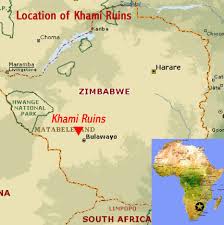
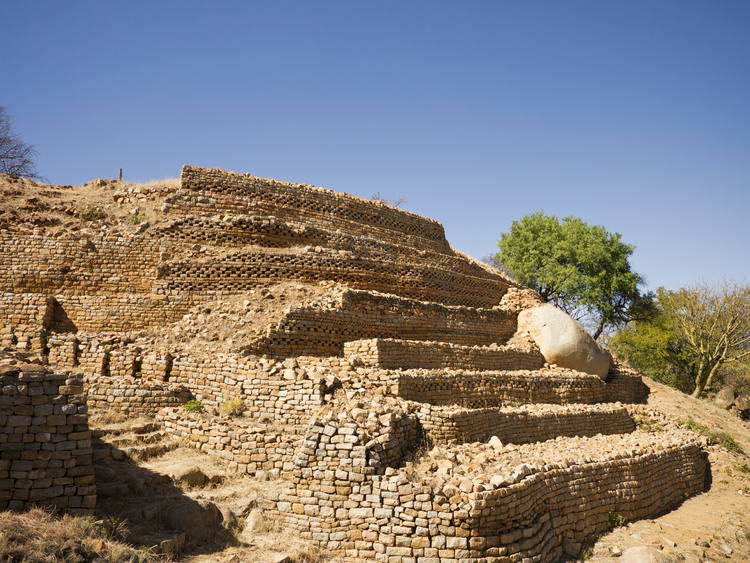
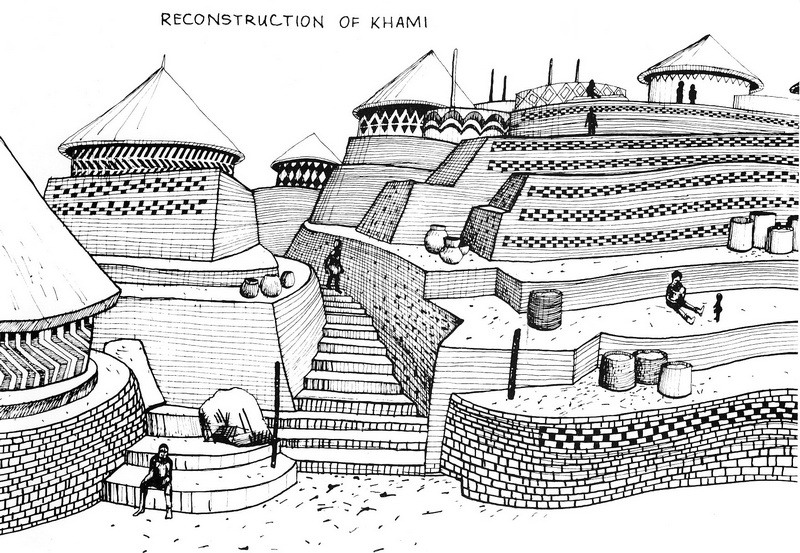
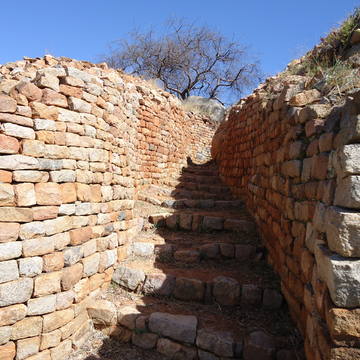
Today, the site of the Khami ruins is a national monument and a UNESCOWorld Heritage Site since 1986. The site is dominated by a series of terraced stone ruins, often highly decorated. It reveals seven built-up areas occupied by the royal family with open areas in the valley occupied by the rest of the population. The complex comprises circular, sometimes terraced, artificial platforms encased by dry stone walls. The beautifully decorated 6m-high by 68m-longretaining wall of the Precipice ruin bears a checkerboard design along its entire length. The imposing front façade marked the main entrance. The Precipice Ruin was a ritual center with the longest decorated stonewall of its kind in the entire sub-region. Nearby are the Cross Ruin with its mysterious stone Dominican Cross, believed to have been placed by a contemporary missionary, and the Northern Platform once used to process gold. The nearby Passage Ruin consists of two adjoining semicircular platforms accessed by a narrow passageway. The platforms, rising 2-7 m above ground, carried clay huts and courtyards where the rest of the populations lived. The remnants of cattle kraals and huts for ordinary people can be seen from the Hill Complex. The ruins include a royal enclosure forming the Hill Complex located on higher grounds, stone walls and hut platforms. There are also ruins on the eastern side of the Khami River.
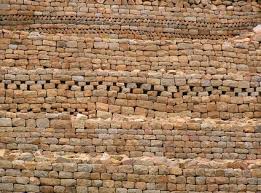
A wall at the Khami site showing the herringbone and checkerboard patterns
To build the structures at Khami required engineering and architectural feats, since the stone found at Khami (laminar granite) was different from that found in other areas of Zimbabwe (biotite). This stone was harder to quarry and produced shapeless building stone; over 60% of the stone produced at these quarries would not have been of building quality. The building blocks thus needed to be shaped, but even then the stones were not suitable for building free-standing dry stone walls. The builders of Khami thus made an innovation and produced retaining walls instead. Moreover, building platforms made the houses cooler than those in the open areas below. Khami’s architecture conforms to that of Great Zimbabwe in a number of archaeological and architectural aspects but it possesses certain features particular to itself and its successors such as Danangombe and Zinjanja. Retaining walls and elaborate decorations were first expressed in the architectural history of the sub-region at Khami.
Artist rendition of what the city of Khami would have looked like (historum.com)
Archaeological finds include 16th century Rhineland stoneware, Ming porcelain pieces which date back to the reign of Wan-Li (1573-1691), Portuguese imitations of 17th-century Chinese porcelain, 17th-century Spanish silverware, etc. These indicate that Khami was a major centre of trade, presumably linked (like Mapungubwe and Great Zimbabwe before it) to the Swahili ports on the East Africa coast.
A passageway at Khami (WHC-UNESCO website)
Unfortunately, Khami was invaded by Changamire Dombo, around 1683, who led a Rozwi army from the Mwenemutapa (Monomotapa) state. The Rozwi made Danangombe (Dhlo-Dhlo) another area of the Khami site as the new capital of their empire, the Rozwi Empire. In the 1830s, Ndebele raiders displaced the Rozwi from Khami. A small site museum provides useful background information to the site itself. If you are ever in the vicinity, do not forget to visit this amazing site, remnant of a great stone civilization.
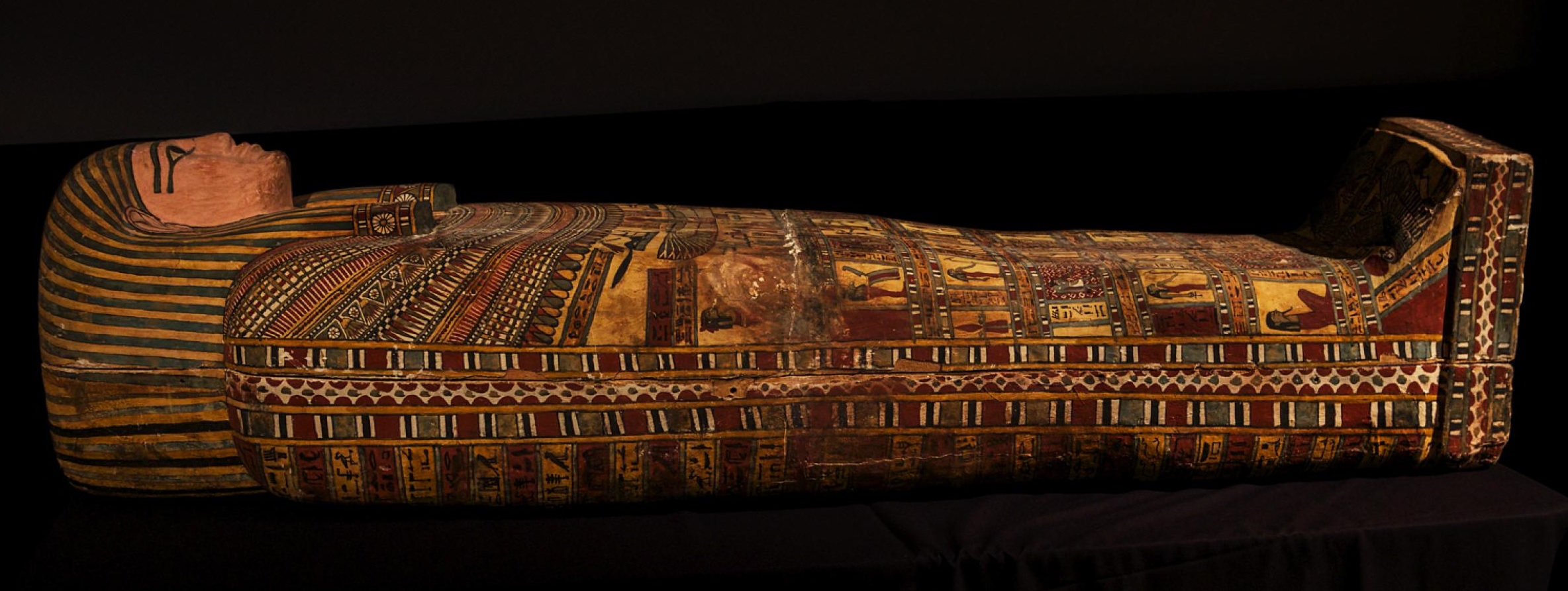
Coffin of Shesepamuntayesher, mummified 2600 years ago (Source: National Geographic)
It is true: some ancient Egyptian artifacts smuggled into the US are returning home. For many years, people looted the graves of pharaohs in Egypt and smuggled their finds by express shipping to the US (and other countries – particularly in Europe). Excerpt of an article in National Geographic reads:
“Some 2,600 years ago, an Egyptian woman named Shesepamuntayesher was mummified and laid to rest in an elaborate three-part coffin to ensure the continuation of her life force and the beginning of an eternal afterlife.
Stylized face of Shesepamuntayesher depicted on her coffin (Source: National Geographic)
Shesepamuntayesher’s afterlife has unfortunately included a trip to Dubai, in the United Arab Emirates, and an ignominious stop in a garage in Brooklyn, New York. On Wednesday, thanks to a five-year investigation by U.S. Homeland Security Investigations (HSI) and Immigration and Customs Enforcement (ICE), the empty sarcophagus that once cradled her mummy is being returned to Egypt, where it will be housed in the Grand Egyptian Museum in Cairo.”
The damages done to Egyptian culture, and many African cultures, by art smugglers and looters cannot be quantified. It is important to fight to preserve these ancient cultures which tell us so much more about some of the world’s greatest civilizations, and about humanity in general. So it feels good to see art going back to their land of origin: like the looted art from Benin Kingdom which was returned to its people, or the great Obelisk of Axum, which was stolen by the Italians in 1935, and later returned after countless demands from the Ethiopian government in 2005. Please do check out the rest of the article on National Geographic.
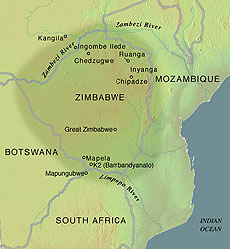
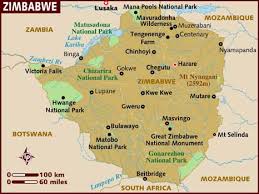
Map of the area including the Kingdom of Mapungubwe and Great Zimbabwe to the north- and the whole Kingdom of Zimbabwe (sahistory.org.za)
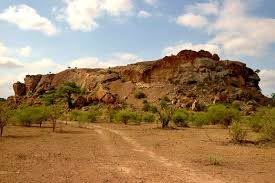
After talking about the origin of the name of the country Zimbabwe, named after Great Zimbabwe, the capital of the Kingdom of Zimbabwe which flourished in southern Africa from the 13th to 17th century, I thought it only wise to talk about some of the kingdoms that flourished in that area, starting with the Kingdom of Mapungubwe, a predecessor to the Kingdom of Zimbabwe. The Kingdom of Mapungubwe was a rich iron age civilization that flourished in the area of modern-day Zimbabwe, Botswana, and South Africa, from the 10th to the 13th century AD. It was a pre-colonial state located at the confluence of the Shashe and Limpopo rivers. The kingdom’s development culminated in the creation of the Kingdom of Zimbabwe in the 13th century, as a normal evolution of itself, and with gold trading links to Rhapta and Kilwa Kisiwani on the African east coast.
Mapungubwe Hill (Wikipedia)
From archaeological searches, the people of Mapungubwe were of the Venda and Kalanga people ancestry, and were attracted to the Shashe-Limpopo area because of its fertile soils for agriculture, and also because it was an area rich with elephants, thus rich with ivory. The area of Mapungubwe was also rich in gold, and the people traded in gold and ivory, snail shells, pottery, wood, and ostriches’ eggs (eggshells), with places as far as Egypt, Persia, India, and China.
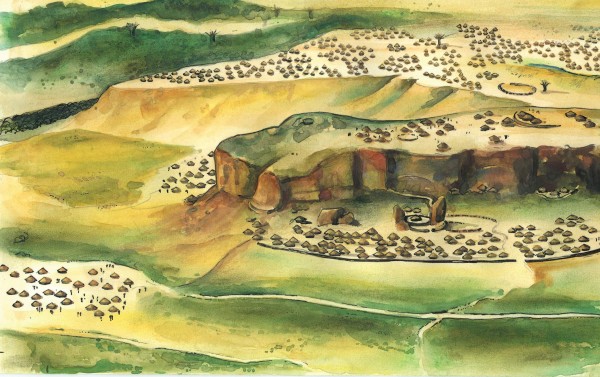
An artist impression of Mapungubwe (Source: newhistory.co.za)
Stone walls were used to demarcate important areas, and important residences were built with stone and wood. Life in Mapungubwe was centered around family and farming. The kingdom, as well as the way people lived, was divided into a three-tiered hierarchy, with the commoners inhabiting low-lying sites, district leaders occupying small hilltops, and the kingdom’s elites residing at the capital at Mapungubwe hill as the supreme authority. Important men maintained prestigious homes on the outskirts of the capital.
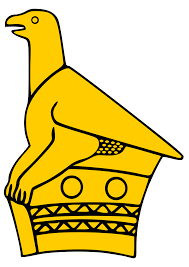
Bateleur Eagle on the flag of Zimbabwe
The kingdom was named after its capital city, the city of Mapungubwe. Several theories have been put forward for the meaning of the name itself. For some, Mapungubwe means “place of Jackals,” or “place where jackals eat,” or “hill of jackals.” In Shona, the language spoken by the majority of people in Zimbabwe, Mapungubwe means “rocks of the Bateleur eagle,” a bird which has deep spiritual connotations in the Shona culture (ma= many; pungu=suffix for chapungu= bateleur eagle, the massive bird which once graced the entrance of the royal complex of Great Zimbabwe; bwe= diminutive for ibwe= stone).
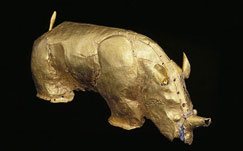
Mapungubwe’s famous gold foil rhinoceros (Source: Univ. of Pretoria)
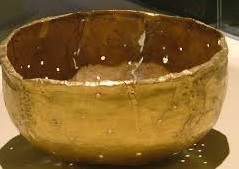
The site was rediscovered in 1932. At the top of Mapungubwe, they found many golden objects: bangles, beads, nails, miniature buffalo, rhino, a skeleton, and gold anklets, about 2.2 kg of gold and many other clay and glass artifacts. Between 1933 and 1998, the remains of about 147 individuals were excavated from the Mapungubwe Cultural Landscape. These findings were kept quiet for a long time, as they provided contrary evidence to the racist ideology of black inferiority underpinning apartheid.
Golden bowl found at Mapungubwe (golimpopo.com)
So any time you think about southern Africa only being populated by pastoralists, nomadic peoples, think again. There were very rich, and strong empires, such as the kingdom of Mapungubwe which was the first major iron age kingdom in Southern African, and traded with places as far as Egypt, Persia, India and China. For more information, check out the very rich Mapungubwe National Park website, South Africa.info, the Metropolitan Museum (MET) article, South African History Online, the Mapungubwe Kingdom website, and the UNESCO World Heritage website as Mapungubwe is listed. Enjoy the video below!
One of my very first articles on this blog was on Great Zimbabwe, the capital city of the Kingdom of Zimbabwe, a kingdom which flourished from approximately 1220 to about 1420 in Southern Africa. The modern-day country of Zimbabwe is named after this great kingdom, and it is only befitting that we explore together the origin of its name. Why would a country which was named Southern Rhodesia change its name to Zimbabwe? Why bother changing names?
Flag of Zimbabwe
Well, for starters, I find it a bit sad for a country to only be known as ‘Southern something’ without no real name of its own… I know, … things happen (like countries splitting apart). Secondly, Rhodesia was named after Cecil Rhodes, the British man who committed the greatest atrocities in Southern Africa, while establishing British rule over the different African countries in the late 19th century. Therefore, once the people of Southern Rhodesia became independent from British rule, it was only normal to claim a name that was theirs, and not the name of some foreign oppressor who committed the worst atrocities in their country. It’s like seeing yourself through someone else’s lens; you only become free once you can look through your own lens, and appreciate and value yourself.
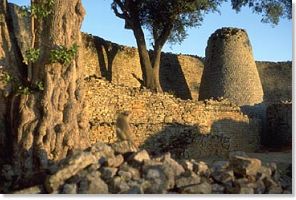
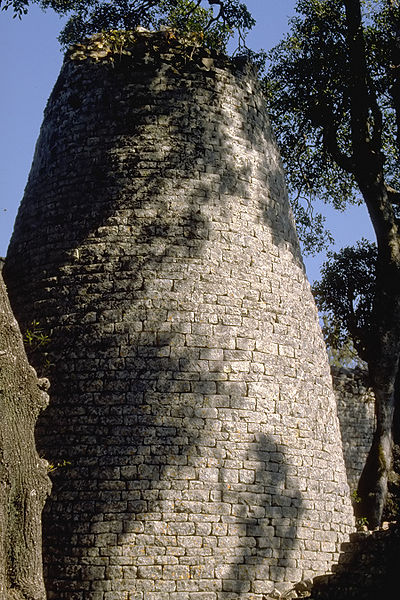
Great Zimbabwe ruins
Thus the name Zimbabwe was chosen. The name “Zimbabwe” is a Shona term for Great Zimbabwe, an ancient ruined city in the country’s south-east whose remains are now a protected site, in the modern-day province of Masvingo. There are two theories on the origin of the word. The first theory holds that the word is derived from dzimba–dza–mabwe, translated from the Karanga dialect of Shona as “large houses of stone” (dzimba= plural of imba, “house“; mabwe= plural of bwe, “stone“). The second theory claims that “Zimbabwe” is a contracted form of dzimba-hwewhich means “venerated houses” in the Zezuru dialect of Shona, and is usually applied to chiefs’ houses or graves. In your opinion, which of these two theories is closer to the truth?
A Conical tower
Zimbabwe was formerly known as Southern Rhodesia (1898), Rhodesia (1965), and Zimbabwe Rhodesia (1979). The first recorded use of the name “Zimbabwe” as a term of national reference was in 1960, when it was coined by the black nationalist Michael Mawema, whose Zimbabwe National Party became the first to officially use the name in 1961. According to Mawema, black nationalists held a meeting in 1960 to choose an alternative name for the country, and the names Machobana and Monomotapa were proposed before his suggestion, Zimbabwe, prevailed. I am so glad the name Zimbabwe was chosen. Enjoy this video about Zimbabwe, the country which held the great civilization of stones. I will talk about the different great kingdoms and civilizations that flourished in the area in later posts.
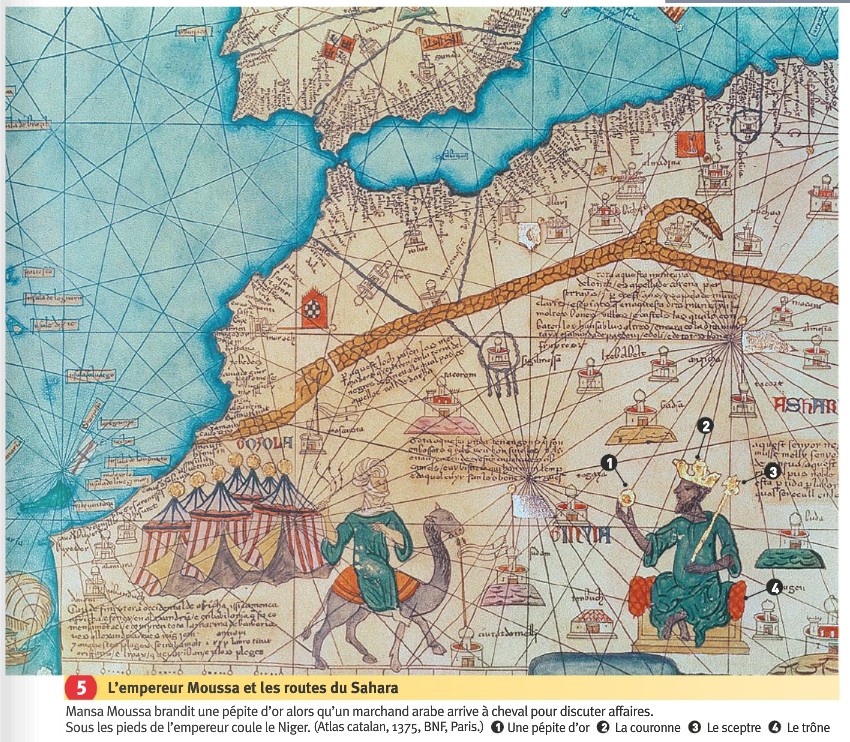
Today, I would like to talk about the richest man planet earth has ever seen… yes, you heard me right, the richest man whose fortune was estimated to be over 400 billion dollars, or 310 billion euros. Did you guess who that was ? If you thought Bill Gates, I am sorry to disappoint you. It is the great Emperor of Mali, Kankan Musa, also written Kankan Moussa, or Mansa Musa, or MansaMoussa, or KankouMoussa.
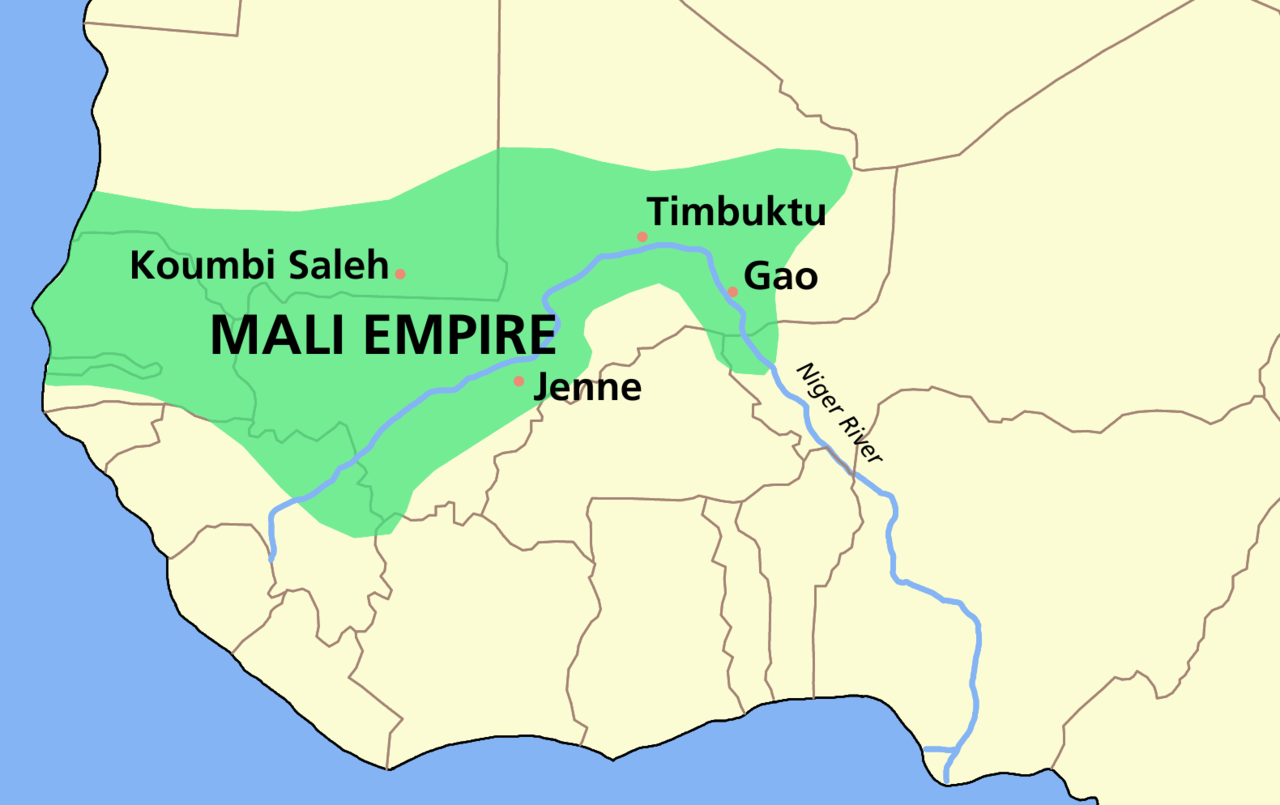
Kankan Musa was the tenth Mansa, King of Kings, or Emperor of the great Empire of Mali from 1312 to 1337. At the time of Musa’s accession to the throne, the Empire of Mali consisted of territories which had belonged to the Empire of Ghana and Melle, and surrounding areas.
Emperor Kankan Musa
His name, Kankan Musa or Kanga Musa meant « Musa, son of Kankou Hamidou », in reference to his mother (In those days, the Mandinka people were a matriarcal society). Kankan Musa is often referred to, in literature, as Mali-koy Kankan Musa, Gonga Musa, and Lion of Mali. He had lots of titles, including Emir of Melle, Lord of the Mines of Wangara, Conqueror of Ghanata, Fouta Djallon (also written Futa Jallon), and at least a dozen other areas.
Empire of Mali (Wikipedia)
He took the Empire of Mali to its peak, from the Fouta Djallon to Agadez (in northern Niger), including the ancient Ghana, and Songhai Empires. He established diplomatic relationships with Portugal, Morocco, Tunisia, and Egypt. His reign corresponds to the golden era of the Malian Empire.
Assemblée constitutive de l’empire du Mandé (Source: Wikipedia.fr)
Kankan Musa’s pilgrimage to Mecca made him popular in North Africa, and in the Middle East. Musa made his pilgrimage to Mecca in 1324, with a procession of 60,000 men, 12,000 servants who each carried four pounds of gold bars, heralds dressed in silks who bore gold staffs, organized horses and handled bags. Also in the train, were 80 camels, which carried between 50 and 300 pounds of gold dust each (Gold was the currency in Mali). He gave away gold to the poor along his route. Musa not only gave gold to the cities he passed on his way to Mecca, includingCairoandMedina, but he also traded gold for souvenirs. Moreover, he would also build a new mosque every Friday in any city he so happened to pass by. Musa’s journey was documented by several eyewitnesses along his route, who were in awe of his wealth and extensive procession, and records exist in a variety of sources, including journals, oral accounts and histories. Musa’s visit with the Mamluk sultanAl-Nasir Muhammad of Egypt in July 1324 is well-recorded.
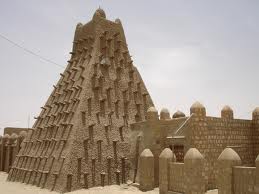
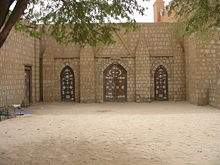
Sankore Mosque in Timbuktu
Musa’s generosity, however, inadvertently devastated the economy of the region. In the cities of Cairo, Medina and Mecca, the sudden influx of gold devalued the metal for the next decade. Prices on goods and wares greatly inflated. To rectify the gold market, Musa borrowed all the gold he could carry from money-lenders in Cairo, at high interest. This is the only time recorded in history that one man directly controlled the price of gold in theMediterranean. Imagine a single man controlling the economy of not only one country, but of an entire region!
Sankore University in Timbuktu
Mansa Musa was a great builder. He had several mosques and madrasas built in Timbuktu and Gao. The most important of its constructions is the University of Sankore. In Niani, his capital, he built an Audience Hall, a building communicating directly with the royal palace through an interior door. It was “an admirable Monument” surmounted by a dome, adorned with arabesques of striking colours. The windows of the upper floor were plated with wood and framed with silver, while those of a lower floor were plated with wood, framed in gold. This palace no longer exists. Like the Great Mosque, the Hall was built in cut stone. The Italian art and architecture scholar Sergio Domian said: “At the height of its power, Mali had at least 400 cities, and the interior of theNiger Deltawas very densely populated.” Can you imagine that? In this day and age, how many countries in this world can boast 400 densely populated cities? Yet, the Mali of Kankan Musa claimed it all.
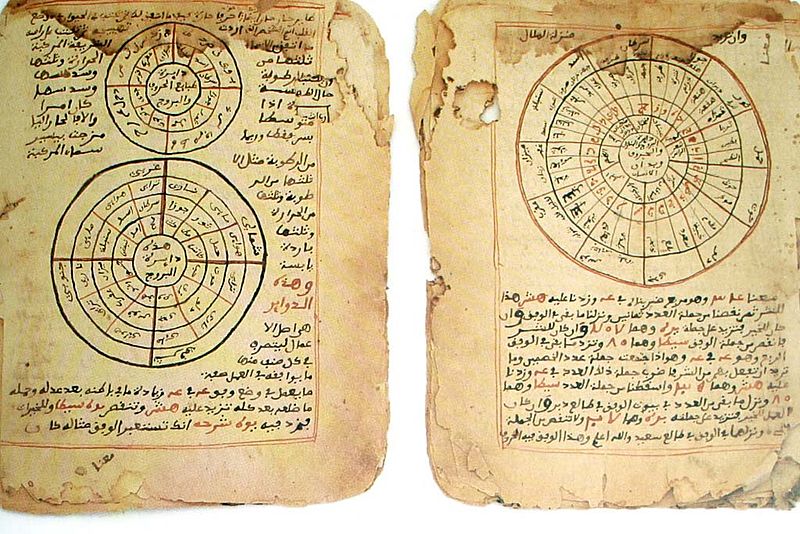
Manuscripts a Tombouctou (Mali) montrant de l’astronomie et mathematique
At the end of his life, in 1332 or 1337, the Empire of Mali limits were from the Atlantic Ocean to the Eastern shores of the Niger River, and to the forests of Taghaza in the middle of the Sahara. Kankan Musa was not only a rich man who gave to all, built mosques, and great places of worship, he was also a just conqueror, and a great builder. He took the Empire Mali to its peak, and made it the talk of places as far as the Middle East and Europe. Many Europeans and Middle Easterns would send delegations of architects, merchants, writers, astronomers, mathematicians and teachers, to study in his great university at Timbuktu. So next time someone asks you who was the richest man on planet earth, remember to tell them that before Bill Gates, there was Kankan Musa!
Growing up, the prominent option for dolls in the market were European dolls with European features, like Barbie dolls. The only other option was to make our own dolls with wool, bamboo, wood, raffia, and other materials. For a parent looking to offer his daughter, or niece, a “hip” doll, he/she basically had to get these European dolls that looked nothing like us (nothing wrong with that, but self-love starts with seeing one’s likeness in the most basic daily toy). Some of my friends resorted to coloring those dolls chocolate, so that the doll would look just like them, or braiding their hairs, and dressing them with left-over fabric from their Mommy’s wrappers or Boubou. I was quite pleased by the work of entrepreneur’s Taofick Okoya who created two lines of dolls: the Naija Princess, and the Queens of Africa. The Naija princess is more affordable for the average Nigerian family, and the Queens of Africa is the ‘haut-de-gamme’ of his collection.
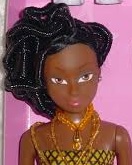
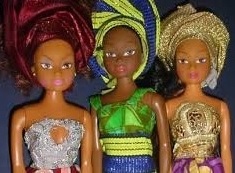
Queens of Africa dolls
His dolls basically have ‘African’ features, and are from three of the main tribes of Nigeria: Nneka is from the Igbo region, Azeezah is Haussa, while Wuraola is Yoruba. The dolls all wear African clothing from their particular regions, and have their hairs in braids, Afro, or plated. It is simply beautiful. As Mr. Okoya said himself, he first started because his daughter was getting confused about her skin color wishing hers to be just like that of her doll. See… how, even as kids, we get brainwashed? This is where we teach young girls to love and appreciate who they are, their skin colors, and the gorgeous hair they were endowed with naturally and divinely. I am so proud of Okoya’s dolls, which has beaten Mattel’s Barbie on the Nigerian market, and are now sold around the globe. I raise my hat to him, and wish for him to keep up the work, and for others to make dolls more representative of our different cultures: i.e. having Maasai dolls, Bushmen dolls, Bamileke dolls, or making them more “hip” for our daughters. Please do check out the website of Taofick Okoya, Queens of Africa Dolls.