French President Macron Admits French Repression in Cameroon’s Independence Struggle

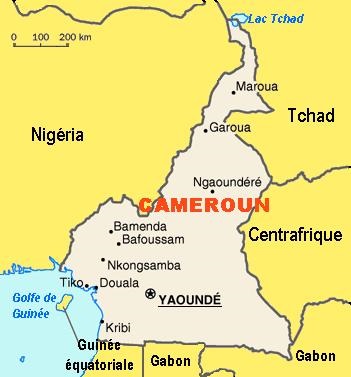
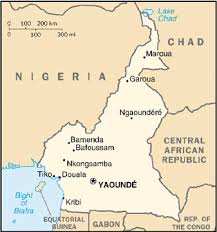
Map of Cameroon, with the capital Yaoundé

This past Tuesday, the French President, Emmanuel Macron, acknowledged the violence committed by France in Cameroon during and after the country’s “independence” in 1960. The French repression of Cameroonian independence movements went from 1945 to 1971 and thousands of lives were taken, and the country set back several years back! Just imagine, hundreds of villages bombed with napalm! Unlike Vietnam, where people knew about this, in Cameroon, a country in central Africa, it was a total media blackout; and the silence went on for decades! This acknowledgment comes after the publication of a joint report by Cameroonian and French historians (France Delivers Classified Colonization Documents to Cameroon).
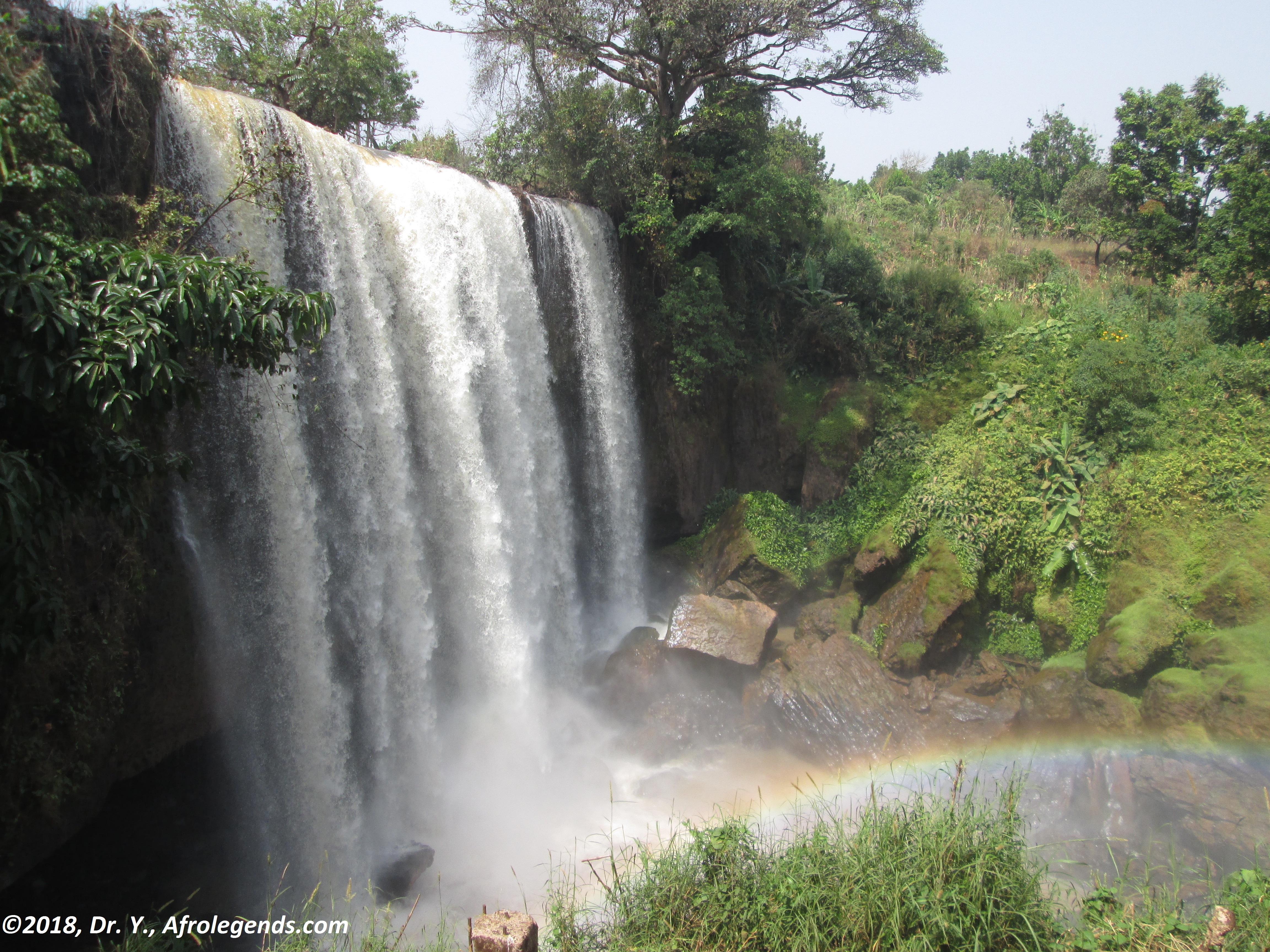
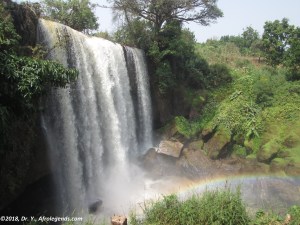
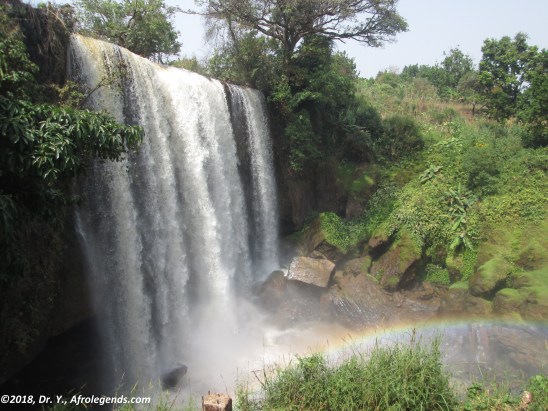
Metche Waterfalls in Cameroon was the site of French genocide there

In a letter to Cameroon’s President Paul Biya made public on Tuesday August 12, 2025, Macron said the report made clear “a war had taken place in Cameroon [like we did not already know that], during which the colonial authorities and the French army exercised repressive violence of several kinds in certain regions of the countryIt is up to me today to assume the role and responsibility of France in these events” .

Why do we get this sentiment of déjà vu? Well, because in 2015, Francois Hollande, then French President Acknowledged French Genocide in Cameroon. Not too long ago, Emmanuel Macron acknowledged the massacre of Thiaroye (Thiaroye: A French Massacre in SenegalA French Commission to investigate the Thiaroye Massacre ?), and the Algerian murders (France Admits Murder of Algerians … A Step Forward?), … but again fell short of apologizing. What next for Macron? An acknowledgment of the massacres in Madagascar? These French presidents are in the business of acknowledging, admitting, and then stopping short of apologies. Why bother?
Flag of Cameroon

Lastly, why is this acknowledgment coming now, in the middle of the electoral turmoil in Cameroon? when France could have simply said something, in good faith, to its puppets of Yaounde last week after the main opposition candidate’s name was removed from the election list? Or is this a way to distract people again? Why now, 10 years after Hollande… are they waiting for most of the survivors to die like for Thiaroye? At this point, it is safe to tell these French presidents to shove their “acknowledgments,” for they are meaningless!… Words, words… no action! It’s more a mockery of our pain!

To learn more check the articles in BBC and RFI. Excerpts below are from the BBC.

=====

French President Emmanuel Macron has acknowledged the violence committed by his country’s forces in Cameroon during and after the Central African nation’s struggle for independence.

However, Macron fell short of offering a clear apology for the atrocities committed by French troops in its former colony, which gained independence in 1960.

UPC Leaders (L. to R.) front row: Castor Osende Afana, Abel Kingué, Ruben Um Nyobé, Felix Moumié, and Ernest Ouandié

The French leader cited four independence icons who were killed during military operations led by French forces, including Ruben Um Nyobe, the firebrand leader of the anti-colonialist UPC party [somehow they refused to acknowledge their hands in the murder of Félix Moumié in Geneva by one of their agents – talk of a case of selective amnesia!]. France pushed hundreds of thousands of Cameroonians into internment camps and supported brutal militias to quash the independence struggle, the AFP news agency quotes the report as saying. Tens of thousands of people were killed between 1956 and 1961, the historians’ report said.

… Commenting on Macron’s lack of apology, one of the historians who contributed to the report said it was their job to “establish the facts and figures after having gone through the archival documents” and not to “recommend apologies“.

… While Macron did not address calls for reparations, it is likely to be a key talking-point in Cameroon going forward [like after Hollande’s 2015 visit? – Bro… it has been 10 years already!]….

Poster commemorating the 80th anniversary of the Thiaroye Massacre (Source: Seneplus.com)

… Last year, [France] acknowledged for the first time that its soldiers had carried out a “massacre” in Senegal in which West African troops were killed in 1944

… France has also made several attempts over the years to reconcile with its former colony Algeria, but has stopped short of issuing a formal apology. In 2017, Macron, then a presidential candidate, described the colonisation of Algeria as a “crime against humanity“, but two years later, he said there would be no “repentance nor apologies” for it [See… in the business of acknowledging, but not apologizing].


Cameroon – History Repeats Itself ?

Flag of Cameroon

Africans, it is so important to know our history, so as to be better equipped so it does not repeat itself again and again and again. I would like to publish here the words of the Cameroonian filmmaker Jean-Pierre Bekolo, who highlights the fact that history is repeating itself in Cameroon. Although many may not totally agree with him, the similarities between the events of 1955 and 2025 are numerous. In 1955 in Cameroon, the Union of the People of Cameroon (UPC) of Um Nyobe (Ruben Um Nyobé: Fighting for the independence of Cameroon), was shut down as it was fighting for the total independence of Kamerun. In reality, Cameroon never got its independence as the then colonial regime and later the puppet government killed the independence movement, and Cameroon’s freedom was confiscated. Today, the same thing is happening again: the main candidate who represents a change, whatever it is, a new chapter in the life of the country (the current leader has been in power for 43 years now, and was in the high levels of power – minister and prime minister – 20 years before that) has been blocked from participating in the upcoming elections by some “magic” trick. The 12 October 2025 elections will go on without him even though he has a major support of the population, and this is starting to look like a carbon copy of the events of 1955. Truth be told, Cameroon, like many Francophone African countries never got its independence. Thus, maybe the real battle is to break the chains of bondage, and resume the fight our forefathers started? Let’s have Millions of African Leaders: Be the Leader You Want to Have!

The excerpts below is from Actu Cameroun based on Jean-Pierre Bekolo Facebook’s post. Enjoy!

=====

Map of Cameroon, with the capital Yaoundé

“Is it possible to compare what happened in 1955 in Cameroon with what we are experiencing today? Yes, we can say—with all the caution required for such a historical comparison—that the Cameroon of 2025 resembles, in many ways, that of 1955. If we need our history, it is not to complain, but to move forward. However, in Cameroon, history has not freed us: it has chained us. The events we are experiencing today, and which we will experience until October 12, could well be an almost exact repetition of a drama already played out during the colonial era—and never closed.

… It’s 1955. Two camps are facing off. On one side, those who want Cameroon to belong to its children. On the other, a colonial power that gives nothing away without repression. And between the two: collaborators, opportunists, wheeler-dealers, those who know where the truth lies but hope for crumbs. These don’t really believe in the system, but they find it to their advantage. They don’t support the regime out of conviction, but out of comfort, cowardice, or calculation. They know exactly what needs to be done for this country to change—but they prefer to wait for their appointment, their per diem, their prestigious position. They are the same people Fanon described: local elites who serve domination without bearing its name, intellectuals who rent from the established order, journalists of silence. In 1955, the colonial power identified two targets to be destroyed: the radicals, who must be killed, and the moderates, who must be bought or neutralized. Any voice in favor of an independent Cameroon is then a threat. We must divide, oppose, buy, crush…

… In May 1955, while Cameroon is still officially under French rule, the Union of the People of Cameroon (UPC) embodies a strong desire for independence. Its vision is clear: to build a free, sovereign nation, free from colonial rule and compromise. But this ambition is perceived as subversive. On May 20, 1955, the colonial government banned the UPC. In the following days, many cities go up in flames: Douala, Yaoundé, Ebolowa… The repression is brutal. It marks the beginning of what is now called the war of liberation, with its trail of violence, clandestinity, and sacrifices. Um Nyobè and his comrades are forced to flee, then to engage in armed struggle. In July 1955, the official ban on the UPC is confirmed. The nationalist movement is criminalized, the 1956 elections take place without it, and the independence project carried by the Cameroonian people is confiscated.”

“Fashion the Revolution with the People” by Sekou Toure

Sekou Toure, Cover Time Magazine, Feb. 16, 1959

Every September we celebrate the lives of some of Africa’s great leaders who were either born or assassinated during that month, Ruben Um NyobeAgostinho Neto, Amilcar CabralKwame NkrumahGamal Abdel Nasser, and Steve Biko. I found this quote in Steve Biko’s book I Write What I Like p.32, by Sekou Touré, the Guinean leader who said NO to the France of General De Gaulle (Guinea: the country who dared say ‘NO’ to France). This quote by Sekou Touré is so on point, as it matches the revolutionary spirit that should be found in each African who fights to free his land. Each one of us is needed for the revolution, but we cannot just be bystanders, but need to add our hands to the fight. African leaders need to fashion the revolution with the people, if they want to free their lands.

To take part in the African revolution, it is not enough to write a revolutionary song; you must fashion the revolution with the people. And if you fashion it with the people, the songs will come by themselves and of themselves.

In order to achieve real action you must yourself be a living part of Africa and of her thought; you must be an element of that popular energy which is entirely called forth for the freeing, the progress and the happiness of Africa. There is no place outside that fight for the artist or for the intellectual who is not himself concerned with, and completely at one with the people in the great battle of Africa and of suffering humanity.”

On the 65th Commemoration of Ruben Um Nyobe’s Murder, His Widow Passes Away

Ruben Um Nyobé
Ruben Um Nyobé

Marie Um Nyobe (born Marie Ngo Ndjock Yebga), the widow of one of Cameroon’s greatest opposition fighters and freedom fighters, the real Father of Cameroonian independence, Ruben Um Nyobé, has passed away on the exact same day that her husband was murdered 65 years ago, on 13 September 1958. This comes just as Cameroon and the Union des Populations du Cameroon (UPC) is commemorating the 65th year of his murder by the French forces in Cameroon.

Her son, Daniel Ruben Um Nyobe, communicated in a press release (Journal Du Cameroun) « the family of Mpodol Ruben Um Nyobe, the greater family Nlog Ngond, the greater family Ndog Soul have the grief to announce the passing of Widow Marie Um Nyobe born Ngo Ndjock Yebga on 13 September 2023 in … Yaoundé. »

UPC Leaders (L. to R.) front row: Castor Osende Afana, Abel Kingué, Ruben Um Nyobé, Felix Moumié, and Ernest Ouandié

Marie Um Nyobe is the spouse from a second union with the leader, Ruben Um Nyobé: Fighting for the independence of Cameroon. Um Nyobe had a first union in 1944 with Marthe Ngo Mayack which produced 3 daughters, and when the union fell apart, married Marie Ngo Ndjock Yebga with whom he had the son, Daniel, who was born a year before his death. We hope that Cameroonian historians had had a chance to talk to Mpodol’s wife to learn more about the man himself and Cameroon during the days of the fight for independence.

Flag of the UPC
Flag of the UPC

Mpodol, the one who carries the demands or who defends the cause, was a Cameroonian freedom fighter, and an anti-imperialist leader. During his fight, he wrote, “la colonisation, c’est l’esclavage ; c’est l’asservissement des peuples par un groupe d’individus dont le rôle consiste à exploiter les richesses et les hommes des peuples asservis“( “Colonization is slavery; it is an enslavement of the populations by a group of individuals whose role is to exploit the riches and the men of the enslaved populations.”). He further wrote, Political Constant of Unity Practiced by Ruben Um Nyobe – 1959, and Ruben Um Nyobe and Liberation.

For this commemoration, as Cameroonians and Africans, celebrate the lives of Ruben and Marie Um Nyobe, they should also, above all, stand on the message of Mpodol and fight for the total independence of Africa [Remember Ruben: A Rare Video Biography of Ruben Um Nyobé].

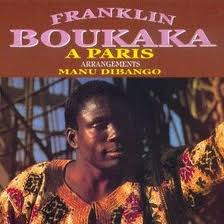
“The Immortals” by Franklin Boukaka

Franklin Boukaka
Franklin Boukaka

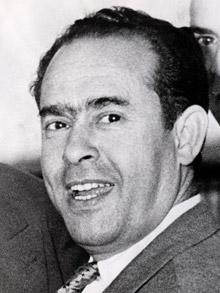
Let’s do a trip down memory lane. Several years ago we published a post on the song Les Immortels” / “The Immortals written and composed by the late Congolese singer Franklin Boukaka. The song honored the great Moroccan leader Mehdi Ben Barka, African resistants, and world revolutionaries. For those who do not know or remember Franklin Boukaka, you have probably heard his song “Aye Africa” which has been repeated by so many singers on the continent (one of my favorite renditions is the one by the group Bisso na Bisso). Franklin Boukaka was a freedom fighter, a poet, composer, activist, and fought for the independence of Africa both politically and in all his songs. He was ahead of his time, and a new patriot. So sad that he was murdered during the coup that deposed Ange Diawara during the night of 23-24 February 1972. He was clearly a threat to many.

Mehdi Ben Barka
Mehdi Ben Barka

As the title says it all, The Immortals honors our great leaders of the past, those who fought for our liberties, and who have become martyrs. They are now immortal. The song was so popular in those days that it was sung in schools. No wonder Boukaka was murdered for this. Please find below, the English version. Enjoy!

« The Immortals » by Franklin Boukaka

Africa mobimba e ……… The whole of Africa
Tokangi maboko e …….. crossed her arms
Tozali kotala e …….. We observed powerless
Bana basili na kokendeThe loss of her children
Bana basili na kotekama eThe traffic of her children
Na banguna a ……………… near ennemies
Tolati mokuya ata maloba teSilent, we have carried the black veil of mourning
Congo na bana Africa baleliCongo and Africa burst into tears
(2X)
Oh O Mehdi Ben BarkaOh ! Mehdi Ben Barka
Mehdi nzela na yo ya bato nyonsoMehdi, your way is that of all humanity
Mehdi nzela na yo ya LumumbaMehdi, your way is that of Lumumba
Mehdi nzela na yo ya Che GuevaraMehdi, your way is that of Che Guevara
Mehdi nzela na yo ya Malcolm XMehdi, your way is that of Malcolm X
Mehdi nzela na yo ya Um NyobéMehdi, your way is that of Um Nyobé
Mehdi nzela na yo ya Felix MoumiéMehdi, your way is that of Felix Moumié
Mehdi nzela na yo ya Nguyen Van ChoiMehdi, your way is that of Nguyen Van Choi
Mehdi nzela na yo ya TsorokiMehdi, your way is that of Tsoroki
Mehdi nzela na yo ya Camilo CienFuegosMehdi, your way is that of Camilo CienFuegos
Mehdi nzela na yo ya Hoji Ya HendaMehdi, your way is that of Hoji Ya Henda
Mehdi nzela na yo ya Camilo TorresMehdi, your way is that of Camilo Torres
Mehdi nzela na yo ya Abdel KaderMehdi, your way is that of Abdel Kader
Mehdi nzela na yo ya CoulibalyMehdi, your way is that of Coulibaly
Mehdi nzela na yo ya André MatsouaMehdi, your way is that of André Matsoua
Mehdi nzela na yo ya Simon KibanguMehdi, your way is that of Simon Kibangu
Mehdi nzela na yo ya Albert LuthuliMehdi, your way is that of Albert Luthuli
Mehdi nzela na yo ya BogandaMehdi, your way is that of Boganda
Oh ya Tiers-mondeOh ! Third world
Oh ya libération ya ba peupleOh ! that of the liberation of the people

Words: An old man, whom I consider always young, said to me one day : « My son, all men
should die one day ; but not all deaths have the same meaning »

Mehdi Ben Barka (XXX)

Let’s have Millions of African Leaders: Be the Leader You Want to Have!

Africa

Recently, I was having a conversation with a friend about leadership in Africa: the endless complaints about our poor leadership, or the killing of our good leaders, and then my friend said talking about Mali, “I wish we had more Assimi Goïta, Choguel Maïga, Abdoulaye Maïga, … on the continent.” Although my heart warmed at this statement, it reminded me that the fight starts at the bottom with each of us. We have to be the leader we want to see; we have to be the Assimi we want to have as a leader. Leadership starts with us, at the individual level. We cannot leave all the task to Assimi or whoever is at the head, we have to do our part; that is the only way to move forward. Otherwise, if something happens to the leader, what will become of our cause? In the article “How do We Continue the Fight when the Head has been Cut Off?”, I wrote, “the prize of freedom is too great to lay on the shoulders of one man, one leader, or a few… we do not follow men, we follow ideas… we are not fighting for men, we are fighting for our right to dignity, our right to humanity, our liberty.

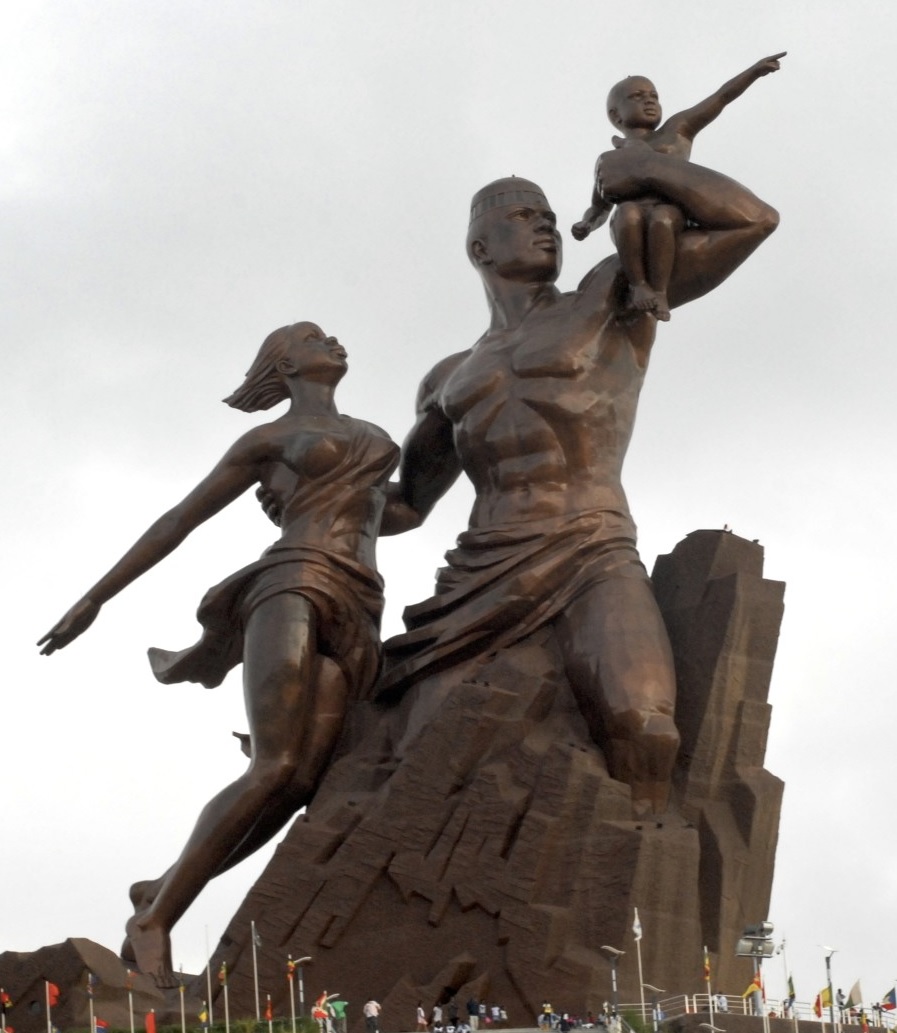
African Renaissance Monument in Dakar (Wikipedia)

Very often it is said among Africans, that we have the leaders we have because that is, at the root, who we are. When you have watched Thomas Sankara, Amilcar Cabral, Patrice Lumumba, Samora MachelModibo KeitaKwame NkrumahRuben Um NyobeFelix MoumieSylvanus OlympioErnest OuandieBarthelemy BogandaMehdi Ben BarkaMuammar Kadhafi, and many others get assassinated by or in conjunction with foreign forces because of their vision for their countries, it is easy to cower away, and just bend the heads and accept whatever comes in silence. However, cowering in silence, perpetuates the problem endlessly. People often say, we all come on earth and will have to leave at some point, why not leave with dignity? Why cower away? If we start at our level, getting involved in our communities, doing our part (whatever our talents are), being there for each other, do you really think corruption will persist? Let us not wait for Messiahs (and we know how rare those are), but let us start laying the bricks to the foundation of the home we want to live in.  If you are an educator, make sure to lay the foundation for the best education possible; if you are a brick layer, do your work with integrity; if you are an okada driver, drive with integrity; if you are a housewife, raise the next leader; if you are a business man, make sure honesty is at the core of your business; if you are a student, arm yourself to be the next leader; … If you want to be led by honest people, then deal with honesty in your daily encounters; if you want to have a transparent government, start with transparency at your level, etc. As my favorite quote by Dr. Martin Luther King Jr goes, “ If you are called to be a street sweeper, sweep streets even as Michelangelo painted, or Beethoven composed music or Shakespeare wrote poetry. Sweep streets so well that all hosts of heaven and earth will pause to say, “Here lived a great sweeper who did his job well.” ” We all play a part in this whole that is our homeland, and each one of us is needed!

Thomas Sankara once said in one of his interviews, if you kill Sankara, you will have a million Sankaras.” Let’s have a million Assimi Goïta, a million Choguel Maïga! Let us have millions of African leaders! Let us have a billion exemplary leaders and more!

Ruben Um Nyobe and Liberation

Ruben Um Nyobé
Ruben Um Nyobé

A while back, I asked a serious question: “How do We Continue the Fight when the Head has been Cut Off?” The struggle is big, and we cannot afford to live it in the hands of one person.

Ruben Um Nyobé said it so well, “The colonial peoples can neither do the policy of a party, nor that of a state, nor a fortiori that of a man. Colonial peoples make their own policy which is the policy of liberation from the colonial yoke and in their struggle for this so noble objective, the colonial peoples observe and judge. They observe the government, the parties, the persons, the media, not on their ideology or their program, but only and only on their attitude towards the demands of the people of our countries.

This is the position of the U.P.C. [Union des Populations du Cameroon (Cameroon People’s Union] at the service of the people of Cameroon.”

(« Les peuples coloniaux ne peuvent faire ni la politique d’un parti, ni celle d’un Etat ni à plus forte raison celle d’un homme. Les peuples coloniaux font leur propre politique qui est la politique de libération du joug colonial et dans leur lutte pour cet objectif si noble, les peuples coloniaux observent et jugent. Ils observent les gouvernements, les partis, les  personnages, les organes de presse, non sur leur idéologie our leur programme, mais seulement et seulement sur leur attitude à l’égard des revendications des populations de nos pays.

Voilà la position de l’U.P.C. au service du peuple camerounais. »)

Ruben Um NyobéCe que veut le people camerounais p. 103

As you can see, his answer does not just apply to Cameroon, or Africa, but to the entire world. The real government should be of the people by the people, for the people, and no person should stand against the will of the people or muffle its will, or sit on top of the people.

How do We Continue the Fight when the Head has been Cut Off?

Patrice Lumumba

As we celebrate the independence of the Democratic Republic of Congo from Belgium, I cannot help but think of Patrice Lumumba, gone too soon, assassinated by the imperialist forces that were Belgium, the CIA and more. As I think about him, I cannot help but think of Amilcar Cabral, killed for his fight for the independence of his country, or Thomas Sankara the legendary President of the Faso… and then I think about how long it took for Burkina Faso to wake up from its slumber after Sankara’s murder: 27 years! Samora Machel, Modibo Keita, Kwame Nkrumah, Ruben Um Nyobe, Felix Moumie, Sylvanus Olympio, Ernest Ouandie, Barthelemy Boganda, Mehdi Ben Barka, Muammar Kadhafi, … the list is so long…The question is great: How do we continue the fight when the head has been cut off? How do we continue fighting when the leader has been killed, or incapacitated, or as in some cases has been corrupted or coerced or turned over by the enemies?

A recent case has had my head spinning with this fundamental question: how do we keep going when the movement has been decapitated? Or when the leader is no longer fit to lead? I do not claim to have the answers as this is a crucial question, but it is worth pondering.

Thomas Sankara

I recently read “The Cost of Sugar” by Cynthia McLeod, where she talks about the fight of the Maroons or Boni or Alukus of Surinam for freedom. Surinam was a Dutch colony, and so the Dutch crown sent troops to fight the rebellious slaves; they also hired local slaves to whom they promised liberty and land in return for fighting the Maroons. The Maroons never gave up! They were well organized, even though they had very little and were under-armed, and lived in the bush. Their leaders were very often killed, but they kept the fight… they were fighting for their freedom: men, women, and even children contributed to the fight. Yes… they terrorized the planters for many years, they were defeated, and fled to neighboring French Guyana, but kept the fight. Why? Because the prize of freedom is too great to lay on the shoulders of one man, one leader, or a few… the fight must continue in spite of some men (betrayers and others)… we do not follow men, we follow ideas… we are not fighting for men, we are fighting for our right to dignity, our right to humanity, our liberty.

Amilcar Cabral on a stamp with the flag of Guinea Bissau

We have to keep the fight. Yes, it is okay to cry, it is okay to fall, feel discouraged, but we have to rise up, and keep up the fight. We might be disappointed by the so-called leaders who may turn their backs on us and betray us [“The Cancer of Betrayal” by Amilcar Cabral, J.J. Rawlings in His Own Words: African Identity, Betrayal, and More], or we might get discouraged when our leaders and hopes have been killed, but we have to keep the fight. We rise up! Dust off ourselves, and keep on fighting! The enemy will try many tactics to distract us from our goals, because the enemy lives on our ignorance, the enemy flourishes on our divisions, our disappointments, and discouragements. We cannot afford to cry too long! When a leader no longer matches our ideals, we put him to the side and keep on fighting. We are not fighting for ourselves, we are fighting for our ancestors who died fighting, we are fighting for our children who should not be beggars on their own lands while the enemy feasts on it. We fight because it is more than just us. Dignity, freedom, is a divine right, and it is ours… we need to claim it!

It took 100 years for China to reclaim Hong Kong and Macao from the British… China was able to do so because its leaders kept telling them how Great Britain made them sign treacherous treaties and stole their lands, they did not hide it from their people like many African leaders do [Did You Know about the 999-year Lease granted to Europeans in Kenya ?]. As a result, 100 years later, the Chinese leaders went to the British, and said “time is up, give us back our lands”. The leaders who were forced to sign these treaties 100 years prior were no longer alive, but the history, the preparation, the muscling up, the battle continued!… so we have to plan over decades, generations, to ensure continuity in the battle, implying education, real knowledge of our history (our triumphs as well as our defeats and the causes), the stakes, and keeping a living memory of our history. It may take years, decades, even a century like China with Macao, but we have to grow, know, and muscle up… we cannot keep crying.

Writings by Ruben Um Nyobe: Political Constant of Unity Practiced by Ruben Um Nyobe – 1959

Ruben Um Nyobé
Ruben Um Nyobé

In celebration of the life of  Ruben Um Nyobé, I chose to share with you his writings below on this day, 13 September, the day of his assassination in 1958 by French troops in Cameroon. These writings by  Ruben Um Nyobé, leader of the UPC, were published in 1959. The book was published as “Constante politique d’unité pratiquée par Ruben Um Nyobe – 1959,” by Union des Populations du Cameroun (UPC). The text below by Ruben Um Nyobe served as a preface to the book, and has been translated to English by Dr. Y. Afrolegends.com . For the original, go to gallica.fr

======

Flag of the UPC
Flag of the UPC

Political Constant of Unity practiced by Ruben Um Nyobe – 1959

 Author: Union des Populations du Cameroon

Inform to Enlighten by Ruben Um Nyobe, General Secretary of the Union the Populations du Cameroun (UPC), Leader of the National Resistance for the Liberation of Cameroon

The national aspiration, which has just cumulated in the recognition of our independence, Is the concrete and objective expression of the result of the struggle of our people. No one can claim that independence has been granted to us, we have conquered it. All those who fought for this national liberty, whether dead or alive, have sealed their names in the history of our motherland, their glory will be immortal! But now at the term of a crowned struggle, instead of concord uniting all members of the coalition, a storm of jealousy and hatred, still sweep over our poor little country. Until when obscene passions and the most execrable hypocrisies cease to brave virtue and honesty! Why will cruel selfishness and blind ambitions not recoil before the honor and national dignity? In this flood of provocations and hatreds, where is the future of our children, the tranquility of our homes, the future of the country? Is it possible to build a country without its population? Is there independence without independent citizens? Answer! Yes answer! All those who oppress our people and those who aim to exploit it.

I say that we must give the people the means to hope and the opportunity to have confidence in them. To reach that goal we have some preliminary work to do.

  1. Present the people with clear options for his future.
  2. Prepare for the people a climate of cordiality and put an end to insecurity.
  3. Train the people’s judgment through civic and political culture / instruction.

All this is feasible/possible, so long as it is wanted. No need to dodge the work by creating tribal oppositions.   

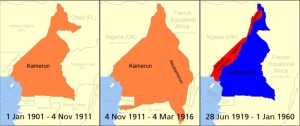
Kamerun_Map 1901-1960
Map of Kamerun from 1901 to 1960 (Wikipedia)

I add that all those who sow hatred and call for crimes, throw the boomerang, which unfortunately does not clarify the future. In politics, there is good sense and virtue, notwithstanding the apprentices of Machiavelli! In politics, truth is also necessary, even if it hurts and displeases because we do not define the future of the people in lies and slanders! Yes, we have to be realistic! To all my compatriots, I formally repeat this: our enemies in this crucial hour of our history, are those who divide us, because they expose us weakened to the solicitations and appetites of the foreigner…

When one reflects on current events, one reaches a first observation: it is the conception of power and sovereignty which is at stake. If it is true (and it cannot be otherwise) that power comes from the people, is it not up to the people to freely designate their interlocutors? Why pretend to take the place of the people? Why seek to abuse and deceives the masses? To get elected and impose a dictatorship, isn’t it? Finally, we believe that the events of the past should make the darkest adventurers retreat. It is only in ignorance that a dictatorship can be imposed, even if it is subtle. In these conditions our task is clear: to enlighten the people. We must do it and we will do it against all adventures. Our goal is to safeguard the national dignity and sovereignty of Kamerun.

Fossi Jacob: A Cameroonian Hero and France’s Genocide in Cameroon

Cameroun_Chutes de la Metche_1
Chutes de la Metche (Metche Waterfalls)

I have to talk about Fossi Jacob, the Chutes de la Métché (The Metché Waterfalls), and the Bamiléké genocide perpetrated by France in Cameroon (French President Acknowledges French Genocide in Cameroon). Fossi Jacob is a hero, and should be celebrated throughout Cameroon. A monument should be erected at the Chutes de la Metché to celebrate his memory and those of countless others who lost their lives there, just outside Bafoussam on the way to Mbouda, in the Western province of Cameroon.

Cameroun_Chutes de la Metche_4.jpg
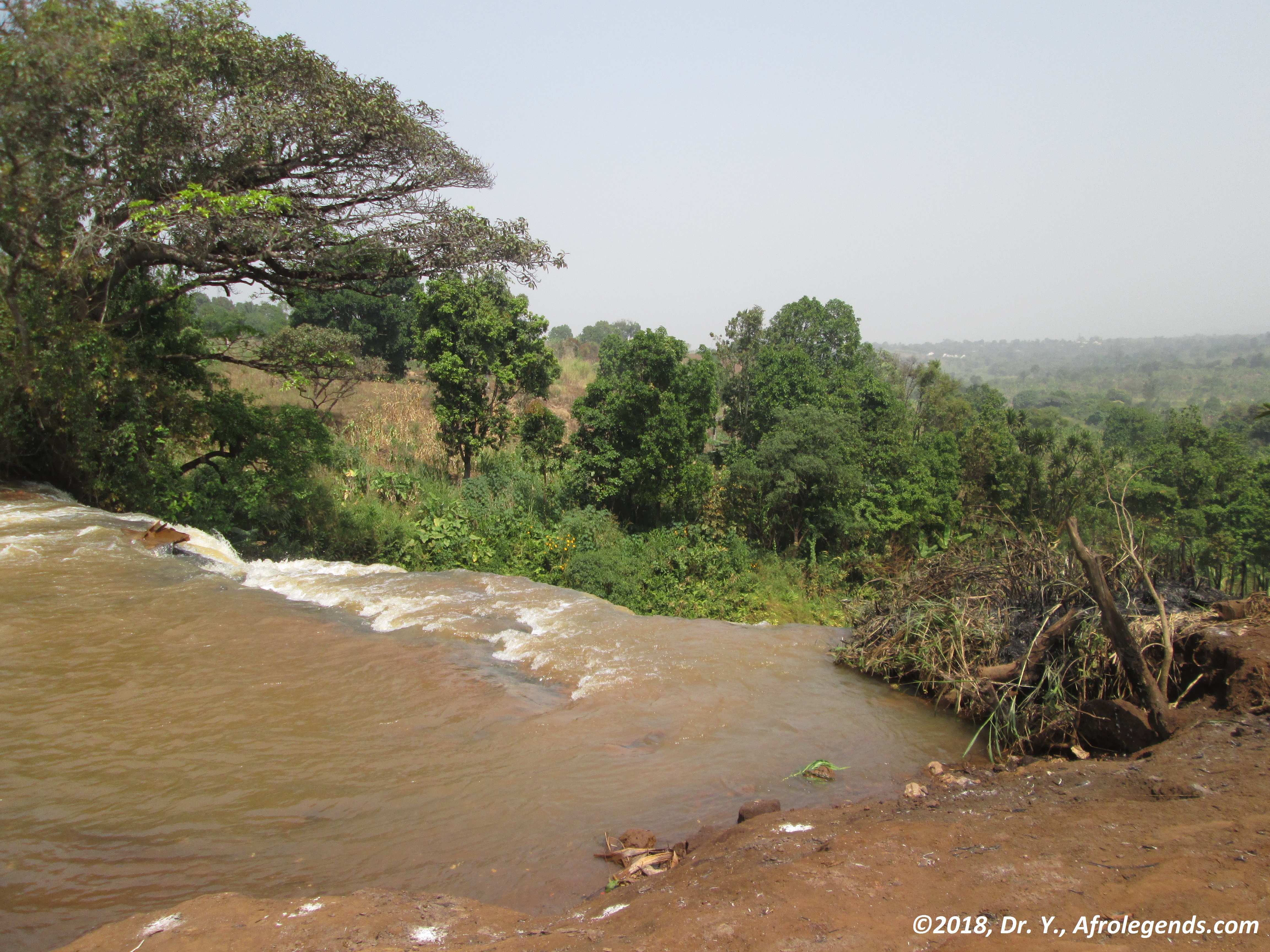
The top of the Chutes de la Metche

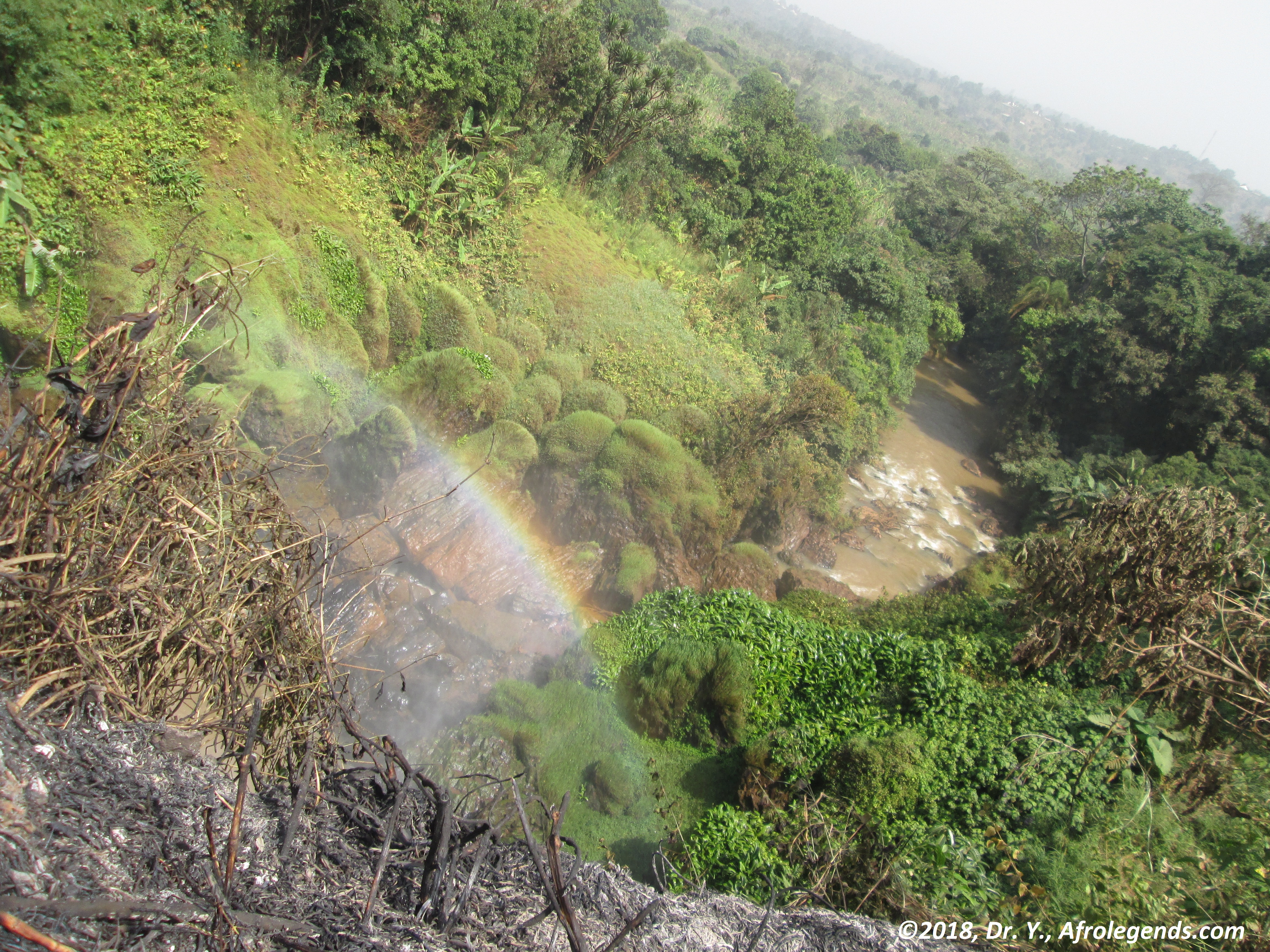
When I visited the Chutes de la Metché, I finally understood the magnitude of the entire thing. Picture this: you are forcefully pushed from a 20 m tall waterfalls, with giant sharp-edged volcanic boulders at its bottom; there is no way anybody thrown down those waterfalls can come out alive; either you die from the fall, or your head hits one of those giants sharp boulders. This is what French officials did to so-called ‘rebels’ between 1950 and 1970 in Cameroon; in reality, most of these ‘rebels’ were simple peasants. During my visit, I was speechless! It was like visiting Gorée island, or Elmina Castle, it felt so sinister, yet so beautiful! Sinister, because it was as if I could feel the souls of all those who had been pushed there. It was as if I could hear their screams, feel their pain! Beautiful because the paths were covered with salt and palm oil, and you could tell that this was a place of pilgrimage, a place where people came to commune with their ancestors, who disappeared there, without sepulchers.

Cameroun_Chutes de la Metche_3.jpg
Chutes de la Metche, view from the top

Why should we celebrate Fossi Jacob? Jacob Fossi had been imprisoned like countless others in the prison of Bafoussam during the dark days of Cameroon; he was a member of the UPC. Every night, the French officers would fill trucks with ‘rebels’ (from accounts, at least 350 every night), and drive them to the edge of the Chutes de la Metché, where, with a gun in hand, they would push the ‘rebels’ one by one down the waterfalls. Those who did not die from the falls were shot!

Cameroun_Chutes de la Metche_5
Chutes de la Metche, at the bottom

On that fateful day of 12 September 1959, when it was Jacob Fossi‘s turn (he was second to last), he called for the French official and told him to get close and that he would tell him where all the other ‘rebels’ were hiding. He promised to tell him everything. When the French official came close, Fossi Jacob held onto him, and jumped with him into the waterfalls. They were killed instantly. This caused the French colonial government to stop taking people to the Chutes de la Metché to be killed. The story of Fossi Jacob is known because on that fateful day, Fo Sokoudjou, the actual King of Bamendjou, who was going to be the last one to be pushed down the fall was not pushed in because of Fossi’s courageous act. Lucky one! Imagine the many lives saved because of one man’s selfless act!

Chutes de la Metche_1
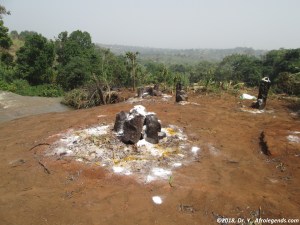
Salt and palm oil offerings to commemorate the ancestors at the Chutes de la Metche waterfalls

Today, the Chutes de la Metché has become a place of pilgrimage for countless people, particularly Bamiléké people. During that dark era of the history of Cameroon, many lost their sons, husbands, fathers, relatives, and this is the only place where they can come and pray to their ancestors. Salt and palm oil strew the path as people come to make offerings to commemorate their long-gone loved ones. A monument should be erected there to celebrate the courage of Fossi Jacob who, thanks to his actions, stopped the horrendous actions of the French colonial government in those waterfalls. The Chutes de la Metché should be a place of pilgrimage for all Cameroonians, and beyond!

Cameroun_Chutes de la Metche_1.jpg