 Des hyènes en groupe osent crier de jour (Proverbe Lunyoro – Ouganda). – Se dit des lâches.
Hyenas in a group dare to shout by day (Lunyoro proverb – Uganda). – Said of cowards.

Des hyènes en groupe osent crier de jour (Proverbe Lunyoro – Ouganda). – Se dit des lâches.
Hyenas in a group dare to shout by day (Lunyoro proverb – Uganda). – Said of cowards.

A Ugandan author based in Great Britain whose debut novel was initially rejected by British publishers for being ‘too African‘, has won one of the world’s richest literary prizes.
Jennifer Nansubuga Makumbi, the winner of the 2014 Commonwealth short fiction prize from Uganda but now living in the UK, has won one of the Windham Campbell Prizes from Yale University in the US.

She will receive $165,000 (£119,000). The prize money is more than double the amount that the Booker Prize winner gets, and organizers say it’s the richest award dedicated to literature after the Nobel Prize. Makumbi’s debut novel Kintu was first published in Kenya four years ago after British publishers rejected it for being “too African”. It was finally released in the UK this January. In Ugandan culture, Kintu is a mythological figure who appears in a legend of the Baganda of Uganda as a creation myth. According to this legend, Kintu was the first person on earth, the father of all people. Although her book is not about this Kintu, it follows a family who believes that there is a curse on them which has followed them over several generations, spanning more than 250 years.
I loved Makumbi’s Commonwealth short story, and lived through the pain of her main character. Now I cannot wait to read her first book and regal in Ugandan history and culture.
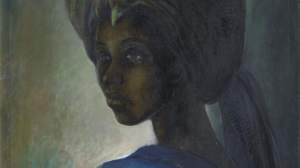
Tutu is what people have recently termed the African Mona Lisa. It is the portrait of a Yoruba princess made by the renowned Nigerian painter Ben Enwonwu. The brainchild of Enwonu, who created it during the aftermath of Nigeria’s bloody civil war, “Tutu” is the painting of an Ile Ife princess Adetutu Ademiluyi (“Tutu”); it is said that he met her as he was driving . It had disappeared right after being painted in 1974, and resurfaced over 40 years later in a flat in London. On March 1st 2018, it fetched $1.6M in auction and has been celebrated by Nigerians around the world. The London auction house initially predicted a price tag of between £200,000 and £300,000 ($275,000 to $413,000), less than a quarter of the final bid. It sold for $1.6 million (£1,205,000), and has been dubbed the “African Mona Lisa.” So good to know that the princess whose painting it is, is still alive in Nigeria today, so maybe Mona Lisa may not be the appropriate name after all.
Please check out The Ben Enwonwu Foundation, and these articles on CNN (Ben Enwonwu’s ‘Tutu’ painting sells for $1.6M), BBC (Ben Enwonwu’s Nigerian masterpiece ‘Tutu’ sold at auction), and The Guardian (‘African Mona Lisa’ fetches £1.2m at auction in London). The Nigerian Booker prize-winning novelist Ben Okri said last month that “He [Ben Enwonu] wasn’t just painting the girl, he was painting the whole tradition. It’s a symbol of hope and regeneration to Nigeria, it’s a symbol of the phoenix rising.”

Growing up, 8 March also known as International Women’s Day, was always a day of marches. Women will go on marches or parades wearing uniforms, celebrating women. But I never felt like there was a real follow-up to that day. It felt like just another day, or rather a day invented to act as if for once women’s issues were important. I don’t remember much, but it was always a colorful, happy day, with women parading, singing, even sometimes allowed a day off from work or house chores. I don’t remember men doing much except helping women celebrate that day with flows of alcohol in the evenings in bars, or some quick news flash about it, etc. So I was quite surprised and happy to see what the Spanish women did on 8 March this year: protesting and stopping work for the entire day throughout the entire country of Spain, protesting for equal pay: International Women’s Day: ‘Millions’ join Spain strike, More than 5m join Spain’s ‘feminist strike’, unions say, Spain grinds to a halt as millions of women join unprecedented strike. To me, it was beautiful! The entire country was crippled, with public transportation being affected, and even air flights delayed. In South Korea, I saw a picture of men marching alongside women demanding equal pay, and I was moved.
 The question of equal pay is a global or rather a human question. It does not just affect women, but men as well, and the entire society. Imagine a working couple with a family; imagine what that equal pay to the woman in that couple would do to that couple’s entire income? If women are paid 20% less than men, imagine what 20% more will do to the bills in a family, to the college funds for the kids, to the healthcare, and even to those long overdue family vacations? Now think about single household which are mostly held by women… 20% more is like a lifeline! It is everything! So we should all, men and women, fight for equal pay, instead of acting as if it was a female ‘thing’, because equal pay is a basic human need, and not doing it is an infringement on everybody’s rights out there! My salute to all those Spanish women, this is what International Women’s Day should be all about!
Femme de qualité, femme de quantité (
Proverbe maure – Mauritanie, Niger, Mali, Maroc, Algerie, Tunisie, Sahara Occidental).
Woman of quality, woman of quantity (Moor proverb – Mauritania, Niger, Mali, Maroc, Algerie, Tunisie, Western Sahara).
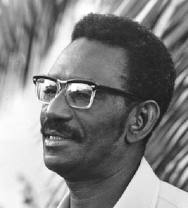
A few weeks ago, we woke up to the face of Cheddar man, the ancestor of the modern-day Briton: he was a Black man with curly hair, and blue eyes! If this was a shock to many, to us who had long espoused the ideas of Cheikh Anta Diop with the African Origin of Civilization, this came as no surprise. Africa is the cradle of humanity, so it is only normal that the ancestors of anybody out there should be black, and that in reality, the idea of race as we know it today should be abolished, since in reality we are all brothers and sisters, with the same blood flowing through our veins, and now (officially) the same ancestors.
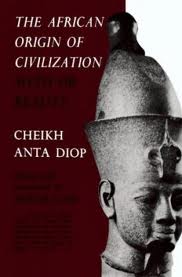
O Cheikh Anta Diop, you, so despised by Western researchers who hated your work, because you said that Africa was the cradle of humanity; that everything started in Africa, and that Egypt and modern day Africans descended from the same ancestors, in other words, were the same people, you have now been vindicated many many years after!
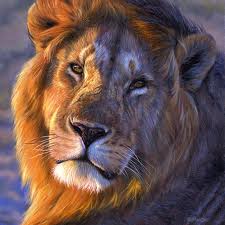
Le lion ne prête pas ses dents à son frère (Proverbe Basuto – Lesotho, South Africa).
The lion does not lend its teeth to its brother (Sotho proverb – Lesotho, South Africa).
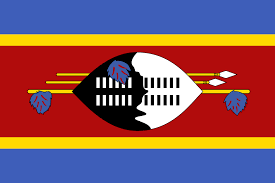
Have you ever wondered about the meaning of Mbabane, the name of the capital of Swaziland? Have you ever wondered what the local people called their land, before the arrival of European settlers? Well, I have. It sounds so off, to be called Swaziland, or the land of the Swazi people. Very often in world history, it seems as if a place or people gets its name from foreigners, rather than the indigenous people, i.e how could a place be called Léopoldville (Kinshasa), when the locals do not call it? How could a place be called Cote d’Ivoire? Was there not a local name for that area? After digressing a bit, I wondered about the name Swaziland, or the land of the Swazi people. How do the Swazi know themselves? Or how do they call their land? How do they call their capital?
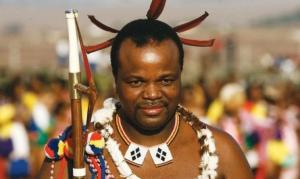
The city of Mbabane gets its name from a local king, Mbabane Kunene, who lived in the region when the British colonizers first arrived there. It is the capital of Swaziland, and the country’s largest city. It is located on the Mbabane River and its tributary the Polinjane River in the Mdzimba Mountains. It is located in the Hhohho Region, of which it is also the capital. The average elevation of the city is 1243 meters. Swaziland is a monarchy headed by King Mswati III, who was crowned King on 25 April 1986 and Ingwenyama of Swaziland. He reigns with his mother, Queen Mother Ntfombi Tfwala, the Ndlovukati and Joint Head of State of Swaziland since 1986. The country, Swaziland, gets its name from King Mswati II who helped expand and unify the area in the 19th-century. Today, most people belong to the Swazi tribe, and the country is also known as kaNgwane, after King Ngwane III.
Whenever you find your way in Swaziland, do not forget to visit Mbabane, King Mswati III’s capital, and enjoy Swazi culture.
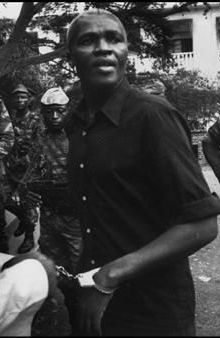
A while back, I published an interview of Ernest Ouandié: A Cameroonian and African Hero and Martyr, on the murder of Félix Moumié. In this Rare Interview, which he gave with Marthe Moumié, the wife of Félix Moumié, in 1960, he said:
“When you have chosen the struggle, the path of struggle, for a true independence, you must necessarily expect to receive anytime the hard knocks that the imperialists will give you. But we are used to say that it is because the imperialists are beating us so much that we have become and are becoming stronger in our daily struggle.” [“Lorsque vous avez choisi la lutte, la voix de la lutte, pour une indépendance véritable, vous devez nécessairement vous attendre à tout moment aux coups durs que vous portent les impérialistes. Mais nous avons l’habitude de dire que c’est parce que les impérialistes nous portent beaucoup de coups que nous sommes devenus et nous devenons chaque jour un peu plus aguerris pour la lutte.”] Ernest Ouandié.
 Qui a de l’eau à la bouche, ne souffle pas dans le feu (Proverbe Ewe – Ghana, Togo). – On ne fait pas deux choses à la fois.
Who has water in the mouth does not blow on the fire (Ewe Proverb – Ghana, Togo). – Do not do two things at once (no multitasking).


 African Heritage