NATO’s debacle in Libya

Libyan flag
Libyan flag

This article by Alexander Cockburn is on the Pambazuka website.

———-

After three and a half months of bombing and arms supply to various rebel factions, NATO’s (North Atlantic Treaty Organisation) failure in its efforts to promote ‘regime change’ in Libya is now glaring. Obviously NATO’s commanders are still hoping that a lucky bomb may kill Gaddafi, but to date the staying power has been with the Libyan leader, whereas it is the relevant NATO powers who are fighting among themselves.

The reports from Istanbul of the deliberations of NATO’s contact group have a surreal quality as Secretary of State Hillary Clinton and British Foreign Minister William Hague gravely re-emphasise their commitment to regime change and the strengthening of ties to the Transitional Council in Benghazi, while the humiliation of the entire NATO expedition is entering the history books as an advertisement of the dangers of political fantasy in the service of ‘humanitarian interventionism’, appalling intelligence work, illusions about bombing and air power and some of the worst press coverage in living memory.

[….] Cameron, like Sarkozy, Clinton and Barack Obama presumably had intelligence assessments of the situation in Libya. Did any of them say that Gaddafi might be a tougher nut to crack than the presidents of Tunisia or Egypt, might even command some popular support in Tripoli and western Libya, historically at odds with Benghazi and the eastern region? If they did, did they pay any attention?

The Western press, along with al-Jazeera, was no help. The early charges of Gaddafi committing ‘genocide’ against his own people or ordering mass rapes were based on unverified rumour or propaganda bulletins from Benghazi and have now been decisively discredited by reputable organisations such as Amnesty International and Human Rights Watch. Any pretensions the International Criminal Court (ICC) might have had to judicial impartiality have been undermined by the ICC’s role as NATO’s creature, rushing out indictments of Gaddafi and his closest associates whenever NATO’s propaganda agenda has demanded it. […]

All history shows that the dropping of thousands of bombs and missiles, with whatever supposed standards of ‘pin point accuracy’, never elicits the enthusiastic support of civilians on the receiving end, even if a certificate of humanitarian assistance and merciful intent is stamped on every projectile. Recent pro-government rallies in Tripoli have been vast. Libya has a population of about 6 million, with 4 million in Tripoli. Gaddafi barrels around the city in an open jeep. Large amounts of AK-47s have been distributed to civilian defence committees. Were they all compelled to demonstrate by Gaddafi’s enforcers? It seems unlikely. […]

In early March, Sarkozy, languishing in the polls, believed the counsel of ‘new philosopher’ Bernard-Henri Lévy, after the latter’s 6 March excursion to Benghazi, that Libya and its oil were up for grabs. On 11 March Sarkozy took the precipitate step of recognising the Benghazi gang as the legitimate government of Libya and awaited Gaddafi’s collapse with a confident heart. In a hilarious inside account of the NATO debacle, Vincent Jauvert of Le Nouvel Observateur has recently disclosed that French intelligence services assured Sarkozy and Foreign Minister Alain Juppé ‘from the first [air] strike, thousands of soldiers would defect from Gaddafi’. They also predicted that the rebels would move quickly to Sirte, the hometown of Gaddafi and force him to flee the country. This was triumphantly and erroneously trumpeted by the NATO powers, which even proclaimed that he had flown to Venezuela. By all means opt for the ‘big lie’ as a propaganda ploy, but not if it is inevitably going to be discredited 24 hours later.

We underestimated al-Gaddafi,’ one French officer told Jauvert. ‘He was preparing for forty-one years for an invasion. We did not imagine he would adapt as quickly. No one expects, for example, to transport its troops and missile batteries, Gaddafi will go out and buy hundreds of Toyota pick-up in Niger and Mali. It is a stroke of genius: the trucks are identical to those used by the rebels. NATO is paralysed. It delays its strikes. Before bombing the vehicles, drivers need to be sure they are whose forces are Gaddafi’s. “We asked the rebels to a particular signal on the roof of their pick-up truck,” said a soldier, “but we were never sure. They are so disorganised…?”’

Read the rest here → Pambazuka: Nato’s debacle in Libya

Small trades: Selling African Ice Cream/ Vente Ambulante de la Glace Africaine

Ice cream
Ice cream

It is extremely hot today! When I think that temperatures could go up to 40C… I have a shiver or rather a sweat. This makes me think of having ice cream, African ice cream. Today I am introducing you to a small trade in Cameroon… that of selling ice cream…  When we were growing up, we used to call them ‘lapon‘… How did you call them in your country?  Enjoy! and cool down!

Aujourd’hui, il fait très chaud! Quand je pense que les temperatures pourraient avoisinner les 40C… je grelotte… oh pardon, je transpire! Mais cela me donne envie d’une bonne glace rafraîchissante, une glace africaine.  Aujourd’hui, je vous introduit à un petit métier au Cameroun, celui de vendre de la glace (vente ambulante)… Quand nous étions petits, nous les appellions ‘lapon‘… comment les appelliez-vous chez vous?  Savourez! et rafraîchissez-vous!

Devoir de Mémoire: Gbagbo dans le tourbillon du Golfe de Guinée

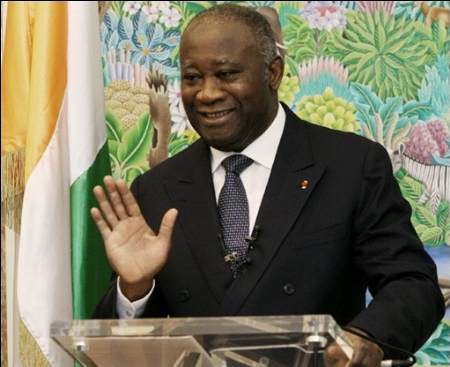
Laurent Gbagbo
Laurent Gbagbo

Aujourd’hui, nous allons faire un rappel mémoire, et regardé ce très beau documentaire qui discute des enjeux géopolitiques et économiques de la Côte d’Ivoire, et les  liens avec la République Démocratique du Congo (RDC).  Une chose très importante à retenir c’est que les enjeux du 21 ème siècle se jouent en Afrique, et que la survie des Etats-Unis et de l’Europe face à l’avancée du géant chinois se jouera en Afrique. Alors, il est primordial pour les américains et européens d’éliminer tous ceux qui voudraient ouvrir leurs frontières aux Chinois, ou qui voudraient pour une fois négocier des contrats justes et la dignité de leurs peuples tels Gbagbo. Attention, les élections en RDC auront lieu en Novembre, et nous prions de tous nos coeurs pour la paix et la survie de notre continent.  Nous, Africains, devons rester dignes et exiger d’ être traités comme des egaux et non des subalternes. Nos sous-sols regorgent de richesses, et nous rêvons de les partager avec tous, mais nous sommes désireux d’être traités comme des partenaires économiques et non des colonies. Continuons nos prières pour la Côte d’Ivoire, pour Laurent et Simone Gbagbo et tous leurs collaborateurs qui se sont battus pour la dignité de leur pays, pour la Libye et le Guide Kadhafi qui fait face à la plus grande armée mondiale transformée en gangster, et prions également pour la RDC et pour toute l’Afrique.  Ce n’est pas parce que certains pays qui nous avaient colonisés hier, sont ruinés financièrement aujourd’hui, que nous devons continuer d’être leur chasse gardée.  Arrêtons de nous faire piétiner.  Faisons preuve de lucidité, de vision, de courage, d’unité, et surtout de force.  N’Krumah rêvait d’une Afrique unie… Le Guide Libyen rêve d’une Afrique unie… rallumons cette flamme… arrêtons de nous diviser, et levons-nous comme un seul homme! (Les Etats-Unis avec 50 états forment un seul pays).

N’oubliez pas de regarder les parties 2, 3, et 4.

Comment l’Araignée a été punie de sa Malhonnêteté

Panthère
Panthère

Il était une fois un petit village perdu dans une grande forêt. Et dans cette forêt, vivait une panthère très rusée qui chaque nuit, venait dévorer les animaux domestiques des villageois. Le chef avait beau envoyer les meilleurs chasseurs poursuivre la bête féroce, nul ne parvenait seulement à l’approcher. Et, malgré les pièges tendus, malgré les soldats qui faisaient le guet, tous les matins, une chèvre, ou un mouton, ou une génisse avaient disparu, emportés par la panthère.

Le chef fait retentir le gong qui convoque tous les habitants du pays et lorsque tout le monde est rassemblé, il déclare: “Villageois, il faut nous débarrasser de cette bête féroce qui dévaste nos troupeaux! En tant que chef de la communauté et maître de la terre, je jure de donner la donner la moitie des richesses du village au chasseur assez fort pour la ruer et nous apporter sa peau comme preuve de sa prouesse.

Malgré cette promesse, aucun chasseur ne se présente car tous avaient tenté de poursuivre l’animal, mais nul n’était un génie invincible.

Kakou Ananze
Kakou Ananze

Mais Kakou Ananzè, l’Araignée, se trouve passer dans le village on lui raconte l’affaire et il va trouver le chef: “Dans sept jours à partir d’aujourd’hui, je t’apporterai la peau de ton ennemie”, déclare-t-il soigneusement.

Kakou Ananzè est très rusé, et grand inventeur  de fourberies; tout le monde sait cela. C’est pourquoi il quitte le village, prend le chemin de la forêt, armée de flèches et de sagaies. Mais au lieu de se lancer sur les traces de la panthère, il se rend dans une ville assez éloignée et, pendant la nuit, vole la peau de panthère qui décore la case du roi. Puis, il repart sans être vu.

Le matin du septième jour, Kakou Ananzè revient triomphalement trouver le chef qui a promis la moitie des richesses de la communauté et jette la peau de panthère à ses pieds. Les gens s’émerveillent de son habilité et de son courage.

J’ai suivi la bête féroce sept jours et sept nuits sans me lasser, déclare-t-il, d’une voix forte. Et au milieu de la septième nuit, je l’ai tuée ! Continue reading “Comment l’Araignée a été punie de sa Malhonnêteté”

African Puppeteer

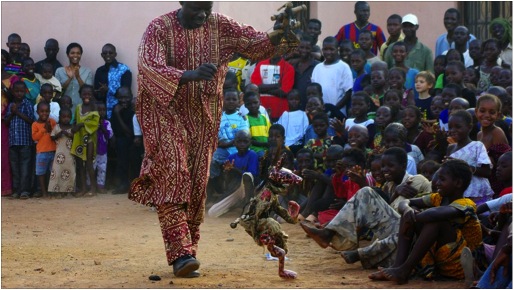
Yaya Coulibaly during a performance (source: BBC)

A few days ago, I came across a photo-article on BBC about the life of an African puppeteer.  I thought that this fits well with the section ‘Great Art’ of this blog.  Indeed, the craft of African puppeteer in Mali, and many other African countries (Niger, Angola, DRC, Togo, South Africa, etc), is passed on from generation to generation.  The man interviewed in the BBC photo article, Yaya Coulibaly, said that his family had been African puppeteers since the 11th century.  He learned the craft at the age of 12, and greatly cherishes the opportunity to make children and adults laugh in villages across Mali and the world.  He has an entire collection of thousands of puppets accumulated over the years, and passed to him by his forefathers.  He is not only a puppet master, but an adept storyteller, leaning on centuries of Malian legends, and tales.  The puppets are made of wood, and in some areas of Africa, raffia is also used to make the puppets’ dresses.  The art of puppeteering was first recorded in 2000 BC in Egypt, where most puppets were painted with natural colors using plants and roots; some puppets made of clay and ivory have been found in some ancient Egyptian tombs.  Today, Mr. Coulibaly uses acrylic paint, and covers his puppets with bright colors (his own signature).  His performances usually last about 1 h, and as always in African ceremonies, drums play a major part of the show.  He has his own puppet company called Sogolon, which employs about 15 people.

Check out this great photo-article on BBC, and enjoy the work of an African puppet master!  I also found great videos of a South African puppet master harmoniously choreographing a dance with two puppets and a performance by a Togolese puppet group… Simply outstanding!  Check out the Museum for African Art discussing African puppetry, puppets in Kenya, the Rand African Art and the puppetry news blog which published the video below.  Enjoy African puppetry!

Patrice Lumumba: ’30 June 1960′ Independence Speech

Today, we will do a Memory recall… Please enjoy this great independence speech delivered by Patrice Lumumba in 1960 to the people of Congo, few months before his assassination. It is a pure jewel! The French version is here  LUMUMBA discours. Don’t forget to watch the video!!!

——————-

Men and women of the Congo,

Victorious fighters for independence, today victorious, I greet you in the name of the Congolese Government. All of you, my friends, who have fought tirelessly at our sides, I ask you to make this June 30, 1960, an illustrious date that you will keep indelibly engraved in your hearts, a date of significance of which you will teach to your children, so that they will make known to their sons and to their grandchildren the glorious history of our fight for liberty.

For this independence of the Congo, even as it is celebrated today with Belgium, a friendly country with whom we deal as equal to equal, no Congolese worthy of the name will ever be able to forget that is was by fighting that it has been won, a day-to-day fight, an ardent and idealistic fight, a fight in which we were spared neither privation nor suffering, and for which we gave our strength and our blood.

We are proud of this struggle, of tears, of fire, and of blood, to the depths of our being, for it was a noble and just struggle, and indispensable to put an end to the humiliating slavery which was imposed upon us by force.

This was our fate for eighty years of a colonial regime; our wounds are too fresh and too painful still for us to drive them from our memory. We have known harassing work, exacted in exchange for salaries which did not permit us to eat enough to drive away hunger, or to clothe ourselves, or to house ourselves decently, or to raise our children as creatures dear to us.

We have known ironies, insults, blows that we endured morning, noon, and evening, because we are Negroes. Who will forget that to a black one said “tu“, certainly not as to a friend, but because the more honorable “vous” was reserved for whites alone? Read the full speech here → Patrice Lumumba Independence speech


African Small trades: the Static Shoemaker/ Les Petits métiers africains: le Cordonnier Statique

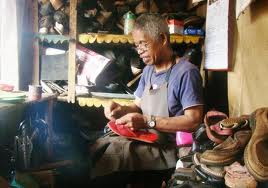
African shoemaker
African shoemaker

Dear All,

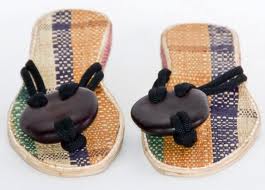
The other day, I realized that my favorite shoe’s sole was falling apart. I thought about taking it to some shoemaker, but my friends said ‘here in the west, there are barely any shoemaker… it will cost you more to repair a pair of shoes than buying… we just throw that shoe away, and then better just buy another one!’ I know in the West, capitalism prevails… but I don’t see the point in throwing away such a rare shoe (out-of-stock) and buying a not-so confortable one. For those with particularly delicate feet, when one finds a good pair of shoes, one tries to hang to it as much as possible. Then I thought about shoemakers back home. Oh, how I wish I was back home. There are shoemakers everywhere! In every neighborhood, there are shoemakers. Today, I will expose you to the small trade of shoemaker in Cameroon (Central Africa). It is actually an art… not everyboday can be a good shoemaker. In Cameroon, there is the static shoemaker who has a shop in almost every neighborhood, and then the mobile shoemaker who just has a tool box and walks around the neighborhoods with his tools. The static shoemaker also makes shoes of his own, usually by using goat skin to make shoes known as ‘Samara‘ or rubber to make those known as ‘tchang shoes‘. It is beautiful to watch them at work. It is really an art! Enjoy this video about the static shoemaker. Next time, it will be the mobile shoemaker.

Des Samaras
Des Samaras

L’autre jour j’ai realisé que ma paire de chaussures préferée tombait en lambeau. J’ai pensé  à l’apporté chez un cordonnier, mais mes amis m’ont dit: ‘Ici en Occident, il y a très peu de cordonniers… ca va te plus coûter  cher de reparer ta chaussure que d’acheter une nouvelle… Nous on jette ces paires-là, et on en achete de nouvelles!’ Je sais qu’en occident, le capitalisme prévaut… mais je ne comprends pas pourquoi je devrais jeter une paire de chaussures aussi rare et encore en bon etat, et acheter une autre moins confortable. Pour ceux qui ont les pieds délicats, dès qu’on trouve une bonne paire de chaussures, on essaie de la garder aussi longtemps que possible. Et cela m’a fait pensé aux cordonniers là-bas au pays. Oh combien j’aimerais être au pays! Il y a des cordonniers partout… dans tous les quartiers! Aujourd’hui, je vais vous parler du métier de coordonnier au Cameroun (Afrique Centrale). C’est en fait un art… ce n’est pas tout le monde qui peut être coordonnier. Au Cameroun, il y a le cordonnier statique qui a une boutique ou échoppe et qu’on retrouve dans tous les quartiers, et le cordonnier ambulant qui a juste sa boîte à outils et se promène dans tous les quartiers de la ville avec ses outils. Le cordonnier statique fabrique aussi des chaussures, en utilisant soit la peau de chèvre tannée ou du raffia avec lesquels il fabrique des chaussures communément appelee ‘Samara‘, ou du caoutchouc pour faire celles qu’on appelle ‘tchang-shoes‘. Aujourd’hui, je vous offre de regarder une vidéo sur le coordonnier statique. Le cordonnier ambulant sera pour la prochaine fois!

L’origine de l’igname

L'igname (yam)
L'igname (yam)

Y a – t-il quelque chose de plus important que l’igname dans nos village? Pourrait-on vivre sans des cérémonies : la fête des ignames; C’est comme si on célébrait l’anniversaire de ces gros tubercules à la brune et à la chair  blanche. Sans eux les hommes perdraient leur force, les femmes deviendrait  malades, les villages se dé-peupleraient. Et pourtant, vous aurez sans doute du mal à le croire ; C’est un chasseur courageux  qui l’a apportée aux hommes. Voici comment les choses se sont passées, ou du moins voici ce qu’on raconte à ce sujet, le soir, dans nos villages.

Selon la coutume, le cinquième jour de la semaine ne ressemble pas du tout aux autres: en effet, ce jour-là il est interdit de travailler. Personne ne peut donc se rendre en brousse pour y chasser ou cultiver la terre. On dit que les génies de l’eau et de la forêt se sont réservés ce jour pour faire leurs cérémonies. Alors, gare à celui qui ose s’aventurer en brousse: il court de graves dangers.

Gossan, le plus fameux des chasseurs de la région, n’ignore pas ces dangers quand il décide d’aller à la chasse, le cinquième jour de la semaine. Il est très brave. Il ne connaît ni la peur ni la fatigue. Il veut savoir si la coutume de ne pas travailler durant le cinquième jour de la semaine est justifiée ou non.

Au lever du soleil il prend son arc et ses flèches. D’un pas décidé, il s’enfonce dans la forêt. Peu de temps après, il est déjà si loin que les cocoricos des coqs du village ne lui parviennent plus. Il continue à marcher, s’enfonçant toujours plus profondément  dans la forêt mystérieuse. Le soleil est maintenant au plus haut dans le ciel. Continue reading “L’origine de l’igname”

Beatrice of Congo: the African Priestess and Prophet

Beatriz Kimpa Vita
Beatriz Kimpa Vita

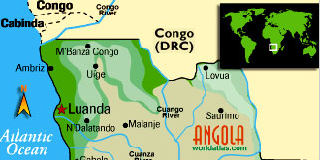
Beatriz Kimpa Vita, also known as Beatrice of Congo, or Dona Beatriz, or Tchimpa M’vita, was an African prophet (yeah… a female prophet) or priestess born around 1684 in the Kingdom of Kongo in a territory near Mt Kibangu which is in modern day Angola.  She created her own religious movement which used Christian symbols but revitalized traditional Kongo cultural roots. Born into a noble clan, the Mwana Kongo clan, she was baptized in her youth. In her childhood, Kimpa Vita was already having visions and dreams of playing with angels, and it is said that these as well as her high spirits caused her two youthful marriages to fail. This made her lean deeper into spiritual life. She was trained as a nganga marinda or as a person able to communicate with spirits (the supernatural world). However, she soon renounced that role to move closer to the catholic faith.

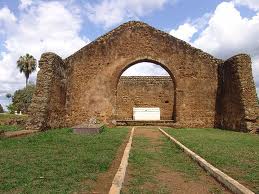
Church of Mbanza Kongo, ca 1549

She received visions of St Anthony of Padua, and believed to be a medium for his spirit. She started preaching soon after, in the city of Mbanza Kongo (which means ‘City of Kongo‘) or Sao Salvador. She occupied the old church of Mbanza Kongo. She said that God wanted Mbanza Kongo to be restored as the capital of the Kongo kingdom; she called it the biblical Bethlehem. She had direct revelations from God on her side; apparently, she died every Friday and spent each weekend in Heaven conferring with the Heavenly Father about the affairs of Kongo. From these sessions in Heaven she learned the stories of Jesus being born in Nsundi, baptized in Sao Salvador and Mary being a slave of a Kongo marquis. She basically made the catholic religion a Kongo religion based on Kongo’s rich culture for the Kongo people: she made God closer to the Kongo people! She healed people, and was able to make sterile women conceive.

Map of Angola showing Mbanza Kongo

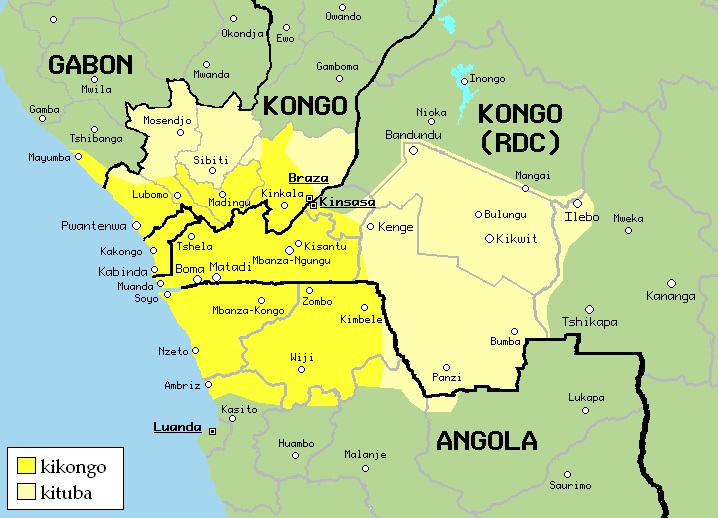
Her call to unity drew strong support among thousands of peasants, who flocked to the city. She told her followers that Jesus, Mary and other Christian saints were really Kongolese. In one of her visions, she saw that Kongo (which had been divided and under wars after the death of King Antonio I, with slave ships increasingly taking people to Brazil, Surinam, etc) must reunite under one king in order to prosper. She was ordered by God to build a specific Kongolese Catholicism and unite the Kongo under one king. Her message became so popular it could be called a Spiritual renaissance. This threatened the influence of the Catholic Church amongst the African people. Her Movement was called Antonian. Even though it integrated Kongolese culture with catholicism, the catholic priests drove the supporters of Kimpa Vita away. Some were imprisoned and beaten daily for their convictions. This is quite similar to the fate of the early apostles of Jesus Christ.

Kongo Kingdom map
Kongo Kingdom map

In 1706 Kimpa Vita gave birth to a son after two miscarriages. She continued to emphasize the closeness of God to the African people, which was a unifying factor amongst Antonians. The establishment of the Antonian movement and its consequent success led to the arrest of Kimpa Vita, her son and her followers. They were charged with heresy. The miracles performed by Kimpa Vita were denounced as “kindoki” or the use of supernatural powers. Kimpa Vita and her infant son were burned at the stake as a “witch” under the watchful eye of capuchin priests who had helped convicting her. The Antonian movement started by Kimpa lived throughout times and outlasted her. The Kongo king Pedro IV used it to unify and renew his kingdom. Her ideas remained among the peasants, appearing in various messianic cults until, two centuries later, it took new form in the preaching of Simon Kimbangu. It was also exported to the new world, in Brazil, Surinam, Haiti, Jamaica, and the US. It is said that the Haitian revolutionaries during their fights were screaming “Kanga Mundele, Kanga Ndoki” which are words used in the salva Antonina, one of Mama Kimpa Vita’s prayers.

Check out the writings of Norman C. Brockman, the book The Kongolese Saint Anthony: Dona Beatriz Kimpa Vita and the Antonian Movement, 1684-1706 by Pr. John K. Thornton and his very insightful interview to the website Execute Today, and R.S. Basi’s book “The Hand of God.” The article Kongo dia Ntotila posted on the website of ‘Le Front National Kongolais’ is a true jewel. The city of Mbanza Kongo which is the first church ever built south of the equator is now part of UNESCO World Heritage. There is piece of theatre made in Kimpa Vita’s great honor.

Truth Dispatch: Update on Libya

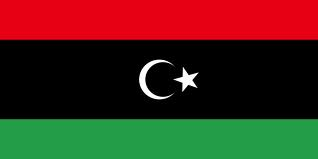
Flag of Libya
Flag of Libya

This article is by Cynthia McKinney on Pambazuka’s website.  You can read the full article there or watch videos.

——–

DAY ONE: On Libyan–Tunisian border, it’s back to the future with refugees
3–4 June 2011 – Djerba, Tunisia

During the last air sanctions against Libya, imposed by the United Nations in 1992 over alleged Libyan involvement in the bombings of PanAm 103 and UTA 772, many Libyans travelling to and from Tripoli were forced to fly through Tunisia, travelling overland to and from the Tunisian border to their homes in Libya. With European Union sanctions now imposed on Libya, the old travel regime is back in force.

However, there is a new dimension to the air embargo on Libya. Attracted to the Libyan–Tunisian border by refugees, most African guest workers from sub-Sahara and pan-Sahel African nations, fleeing the fighting in their country, find that scores of international aid workers now occupy the tourist hotels of Djerba, the once popular Tunisian resort that has fallen on hard times after tour operators cancelled excursions following the Tunisian revolution earlier this year.

Today, prior to crossing into Libya, this reporter is witnessing representatives of the ‘misery industry’, young international aid workers with groups like the International Committee of the Red Cross, EU and International Organisation for Migration, lounging around the tourist hotels mingling with German and French pensioners eager to take advantage of the special travel packages being offered by a depressed Tunisian tourist industry.

Not only is war good for the weapons industry but refugee crises brought about by Western-implemented wars, fattening the wallets of NGOs anxious to cash in on the human misery created by Pentagon and NATO (North Atlantic Treaty Organisation) overt and covert military operations. Meanwhile, here in Djerba, near the Libyan frontier, it’s pool-side and cold Heinekens for the NGO community here to ‘save’ the Libyan refugees.

DAY TWO: Western Libya portrait is not what is being painted by the Western media
4–5 June 2011 – Tripoli, Libya

Western media reports continue to indicate that Libyan rebels trying to oust Libyan leader Muammar Gaddafi from power, backed by daily NATO airstrikes, are gaining ground in western Libya. During a six-hour drive from the Tunisian border to Tripoli, the Libyan capital, this reporter saw no signs of Libyan rebel successes in western Libya. In fact, I witnessed a spontaneous pro-Gaddafi demonstration on the main Tunisia–Tripoli highway in a town about one and a half hours west of Tripoli.

The green flag of the Libyan Arab Jamahiriya not only adorn flag poles in towns from Tripoli to the Tunisian border, but a number of private residences are flying the green flag from their rooftops, on flag poles and even from outside of top-floor windows in medium-size and small towns alike along the main highway.

There are some telltale signs of previous fighting in the western part of the country – bullet holes in the walls of some buildings and even some more extensive structural damage – but there are no signs that the rebels, backed by the United States, NATO and the European Union, have any substantial support in western Libya.  …..

To read more go to Pambazuka