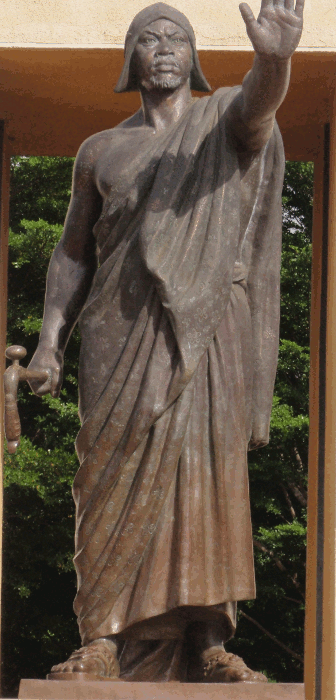
Béhanzin, King of Dahomey, one of the last African Resistant to French Colonization

Behanzin, king of Dahomey

Béhanzin (Gbêhanzin) Hossu Bowelle or the ‘King Shark‘ was one the most powerful kings in West Africa at the turn of the 19th century.  He was the eleventh king of Dahomey, and the last independent ruler of Abomey before French colonization.  Who was really Béhanzin?

Born in 1844 in Abomey, Béhanzin was the eleventh king of Dahomey from 1889 to 1894.  His name, Kondo, was changed to Béhanzin after he succeeded to his father GlèlèHis personal symbols were the shark, the egg, and two coconut palm trees, while those of his father were the lion and the ritual knife of Gu.  His name actually meant ‘the egg of the world or the son of the shark‘.  His great love for the freedom of his country, culture, and people led him to courageously and fiercely defend the land of his ancestors.  He led the resistance and fight for the Dahomey’s freedom.
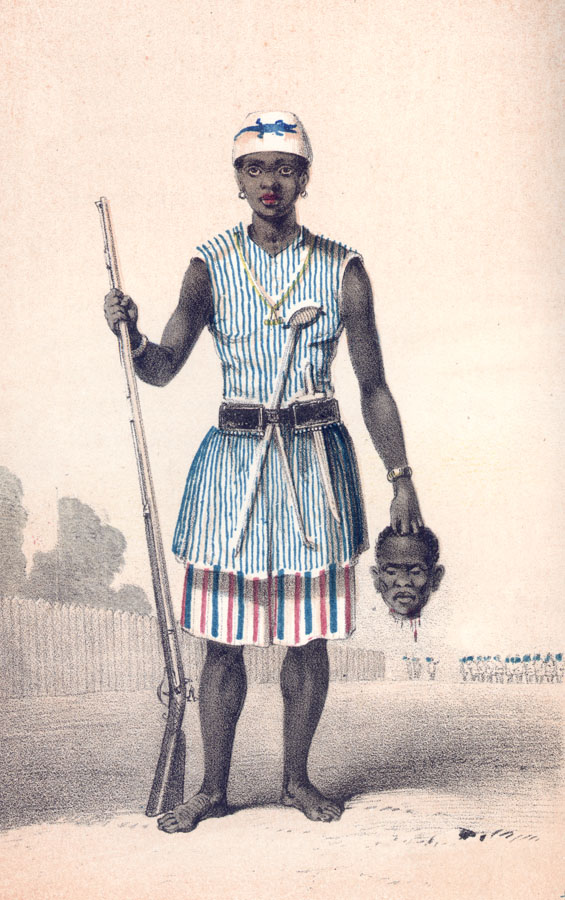
Seh-Dong Hong-Beh, leader of Dahomey Amazons (painted by Frederick Forbes in 1851)
Seh-Dong Hong-Beh, leader of Dahomey Amazons (by Frederick Forbes in 1851)

Dahomey was one of most powerful kingdoms of West Africa, deriving its power from trade and its superior army.  Dahomey’s army was one of the strongest and best-organized armies in West Africa and was comprised of both men and women, including the Amazons, a superior and dreaded fighting force of female warriors.  At the time, Béhanzin masterfully led an army of 15000 men and 5000 amazon women.  One of the Amazon leaders was Seh-Dong Hong-Beh (which means “God speaks true“) who led an army of 6000 amazons against the Egba fortress in Abeokuta in 1851.

In 1882, France declared a protectorate over Porto Novo, a vassal state of Abomey, without consulting with the indigenous people, as was (and still is) the practice with Europeans colons.  By 1885, the French occupied the entire coastal strip West of Porto Novo.  In 1889, King Glèlè and his son Béhanzin, who considered these coastal areas to be part of the kingdom of Dahomey, declared that the Fon people could no longer tolerate France’s actions.
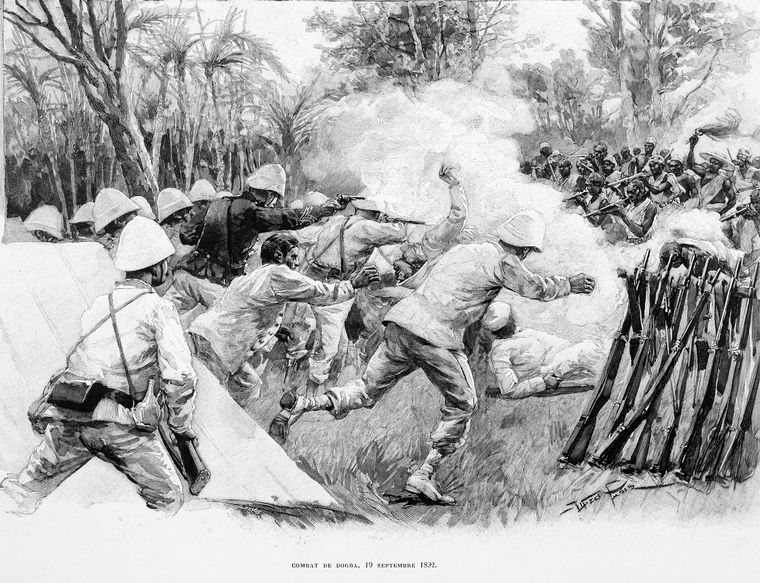
Combat de Dogba au Dahomey le 19 Septembre 1892
Combat de Dogba au Dahomey, 19 September 1892

In February 1890, the French occupied Cotonou; Béhanzin, now king after Glèlè’s sudden death, prepared for war.  Béhanzin’s army, with rifles supplied by the Germans, were getting too strong for neighboring French colonies.  Béhanzin’s forces attacked the French simultaneously on two fronts—militarily at Cotonou and economically by destroying the palm plantations at Porto Novo.  The latter precipitated an early end to the hostilities.  A treaty was signed, with the French continuing to occupy Cotonou, for which Béhanzin exacted an annuity; he made France pay for the use of Cotonou portThe peace lasted for two years.  However, France was determined to annex Dahomey before the British or Germans did.  Béhanzin, knowing that he would have to defend his sovereignty, continued upgrading his army in preparation for renewed war.
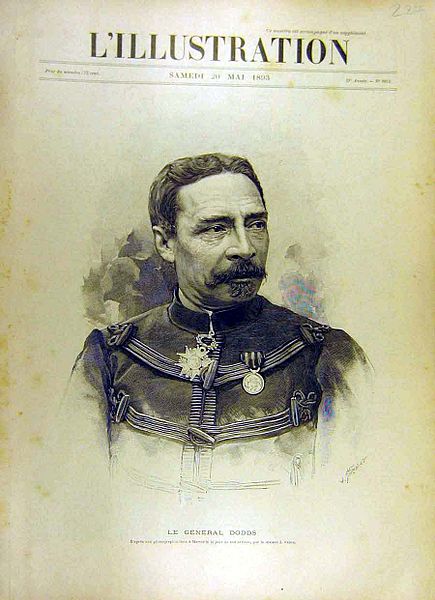
le general Alfred-Amedee Dodds
General Alfred-Amedee Dodds on the cover of ‘L’Illustration’ 20 May 1893

He declared a treaty made with France by his father, Glèlè, in 1868 null and void, from this war began.  In 1894, Béhanzin was defeated by Colonel Alfred-Amédée Dodds, a Senegalese mulatto, who was sent to fight against him with powerful French armed forces.  Béhanzin, not wanting his people to be massacred, surrendered his person to Dodds, without signing any instrument of national surrender or treaty.  Béhanzin thought that he will get a chance to talk to the French president and find a way or sign a conciliation agreement for his country, unfortunately, the French tricked him and instead of going to France, Behanzin was exiled to Martinique.  With Béhanzin and his immediate family adamantly refusing to sign a treaty making Dahomey a French protectorate, the French installed their choice, Agoli-Agbo, as king; Agoli Agbo, the puppet, did not last more than 6 years (when he asked for more freedom to rule, he was deported to Gabon).  Dahomey was then placed under France’s protection and it eventually became a French colony.  Béhanzin died in 1906 in Algeria.  In 1928, his son, Ouanilo (who was also France’s first African attorney in 1920) had his body moved to Dahomey. Ouanilo’s remains will be restituted to Benin almost 80 years after his death.
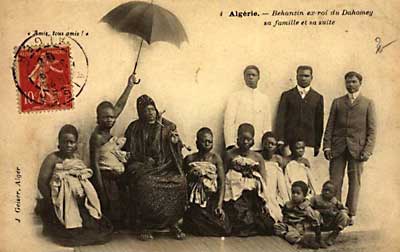
King Behanzin in exile in Algeria

Béhanzin once said: «Vous pouvez arracher l’homme de son pays, mais vous ne pouvez arracher son pays du cœur de l’homme, ni arracher un grand homme de l’histoire.» [You can remove a man from his country, but you can never remove his country from a man’s heart, or erase a great man from history].  Béhanzin truly loved his people, and when he saw that his army was being massacred by the French, he cried for his beautiful and strong amazons, and pronounced the most beautiful ode to them [Où sont maintenant les ardentes amazones qu’enflammait une sainte colère? … Qui chantera leurs splendides sacrifices? Qui dira leur générosité? … comment accepterais-je sans eux une quelconque abdication? Comment oserais-je me présenter devant vous, braves guerriers, si je signais le papier du Général? pour la survie de mon peuple, [j’accepte] de rencontrer dans son pays, selon sa promesse, le président des Français.

Behanzin, the Last King of independent Dahomey

Where are now the ardent amazons who were inflamed by a mighty anger? … Who will praise their splendid sacrifices? … Who will tell about their generosity? … How could I accept any sort of abdication without them? How could I dare presenting myself to you, brave warriors, if I signed the general’s paper?… for the survival of my people, [I agree] to meet in his country, according to his promise, the president of the French].  Please watch this great documentary about the life of Béhanzin, the last king of the Dahomey (part 1 – 4), and one of the last resistant to French colonization.  Why was he defeated?  He said himself: «malgré la justesse de notre cause, notre vaillance et notre détermination, ils n’ont pu l’emporter et s’accaparer de la terre de nos aïeux que par la force de leur science» [despite the legitimacy of our cause, our courage, and determination, they could only win and take the land of our forefathers because of the force of their science].  Check out the website djime.com entirely dedicated to Béhanzin and his heritage.  To learn more about Dahomey’s Amazons, check out the Smithsonian blog.  This facebook page provides details about the organization of the amazons in the army.  Don’t forget to offer your support to the Agongointo Musée du passé vivant dedicated to the kingdom of Dahomey.

‘Un ennemi de l’Afrique est tombé’ – Bye Bye Sarko

Nicolas Sarkozy battu

Avec la défaite de Nicolas Sarkozy battu Dimanche par Francois Hollande, j’ai trouvé bon de vous faire lire cet éditorial de Théophile Kouamouo du Nouveau Courrier. Je n’aurais pas pu mieux le formuler. Retrouvez l’intégralité de l’article sur Le blog de Théophile Kouamouo.

=========

L’Histoire retiendra que Nicolas Sarkozy aura été, après Valéry Giscard d’Estaing, le second président en exercice en France à perdre le pouvoir après un seul mandat. Comme Giscard, il laisse le pouvoir à la gauche, après avoir échoué à réunir les droites. Comme Giscard, il n’incarnait pas vraiment le gaullisme historique français, mais représentait une droite ouvertement libérale et atlantiste (alignée sur les Etats-Unis). Giscard est tombé avec en bruit de fond «l’affaire des diamants» de Jean-Bédel Bokassa, dont il avait complaisamment orchestré le sacre avant de le renverser. Sarkozy s’en va alors que s’enchaînent les révélations sur les 50 millions d’euros que Muammar Kadhafi lui aurait promis, pour financer sa campagne victorieuse de 2007… On connait la suite de l’idylle !

Nicolas Sarkozy, by Zapiro (source Grigrinews.com)

Bon débarras ! Un ennemi de l’Afrique indépendante s’en est allé, un adversaire déclaré des Africains vivant en France, Subsahariens et Maghrébins, est tombé. Ni remords, ni regrets. La carrière politique de cet homme qui aura amené la droite républicaine vers une impasse idéologique fascisante est finie. Nicolas Sarkozy est avocat, ça tombe bien pour lui. Il risque fort désormais d’avoir beaucoup de travail avec toutes les procédures judiciaires qui visent déjà ses proches – et qui l’atteindront bientôt – et qui témoignent toutes du rapport problématique à l’argent de sa coterie de profiteurs.

Dire que Nicolas Sarkozy a été un bourreau de l’Afrique n’est ni mentir ni exagérer. Cet homme a brisé tous les tabous et a fait de la souveraineté de la Côte d’Ivoire et de la Libye de simples chiffons de papier. Violent, il a lancé des milices assassines à l’assaut de ces nations. L’insécurité, les actes de génocide dans l’Ouest, l’activisme meurtrier des miliciens dozos en Côte d’Ivoire en témoignent. Le chaos libyen, la prolifération d’armes lourdes, la poussée salafiste, le Mali livré à des hordes salafistes dont certaines ont part liée avec Al-Qaida… tel est l’héritage mortifère de l’ancien maire de Neuilly dans la bande sahélo-saharienne. Nicolas Sarkozy aura été le président français le plus détesté en Afrique depuis les indépendances. Et sur le continent, on fêtera plusieurs jours sa fabuleuse débâcle. […] Lire la suite ici

The Zebra Stallion

Zebras
Zebras

The Baboons, it is said, used to disturb the Zebra Mares in drinking.  But one of the Mares became the mother of a foal.  The others then helped her to suckle (the young stallion), that he might soon grow up.  When he was grown up and they were in want of water, he brought them to the water.  The Baboons, seeing this, came, as they formerly were used to do, into their way, and kept them from the water.

While the Mares stood thus, the Stallion stepped forward, and spoke to one of the Baboons, “Thou gum-eater’s child!”

Baboon
Baboon

The Baboon said to the Stallion, “Please open thy mouth, that I may see what thou livest on.” The Stallion opened his mouth, and it was milky.

Then the Stallion said to the Baboon, “Please open thy mouth also, that I may see,” The Baboon did so, and there was some gum in it. But the Baboon quickly licked some milk off the Stallion’s tongue.  The Stallion on this became angry, took the Baboon by his shoulders, and pressed him upon a hot, flat rock.  Since that day the Baboon has a bald place on his back.

The Baboon said, lamenting, “I, my mother’s child, I, the gum-eater, am outdone by this milkeater!”

South African Folktales, J.A. Honey, 1910, Baker and Taylor Company.

Discours de Sarkozy à Dakar: le Début de la Recolonisation?

Nicolas Sarkozy, by Zapiro (source Grigrinews.com)

Avec les élections présidentielles en France, et surtout après le renversement des gouvernements légitimes et légaux de la Côte d’Ivoire et de la Libye par la France sous le commandement de Sarkozy, j’ai décidé de re-poster ici le discours de Sarkozy à Dakar le 26 Juillet 2007.  Il admet la faute historique de la colonisation, tout en rappelant ses “aspects positifs.” Mais la faute semble s’arrêter au lendemain des indépendances. Comme si, depuis 50 ans que les anciennes colonies françaises ont accédé à “l’indépendance”, la politique menée par la France, l’action de son armée, de ses services secrets, de ses entreprises n’avaient pas façonné l’Afrique contemporaine.  Si nous savions ce que nous savons aujourd’hui à ce moment-là, peut-être aurions-nous réagit différemment face au pillage de la Côte d’Ivoire et Libye?  Qu’à cela ne tienne, vous verrez dans son discours l’ampleur du cynisme, soif du pouvoir, racisme, condescendance, et mépris de l’Africain. Vous verrez aussi qu’il était déjà clair a ce moment-là, bien avant la chute financière de Wall Street, et de la zone Euro, que la recolonisation de l’Afrique avait commencé… L’ecrivain Achille Mbembe en fait une critique, et plutard aussi dans le Messager du 10 Août 2007.  Pour l’intégrale du discours, cliquez ici: Discours de Sarkozy a Dakar.

=========

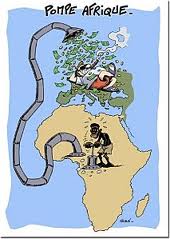
Le pillage de l'Afrique
Le pillage de l’Afrique

“Je ne suis pas venu effacer le passé car le passé ne s’efface pas.
Je ne suis pas venu nier les fautes ni les crimes car il y a eu des fautes et il y a eu des crimes.
Il y a eu la traite négrière, il y a eu l’esclavage, les hommes, les femmes, les enfants achetés et vendus comme des marchandises. …
Et l’homme noir qui éternellement « entend de la cale monter les malédictions enchaînées, les hoquettements des mourants, le bruit de l’un d’entre eux qu’on jette à la mer ». Cet homme noir qui ne peut s’empêcher de se répéter sans fin « Et ce pays cria pendant des siècles que nous sommes des bêtes brutes ».[…]

Le colonisateur est venu, il a pris, il s’est servi, il a exploité, il a pillé des ressources, des richesses qui ne lui appartenaient pas. Il a dépouillé le colonisé de sa personnalité, de sa liberté, de sa terre, du fruit de son travail. […] Continue reading “Discours de Sarkozy à Dakar: le Début de la Recolonisation?”

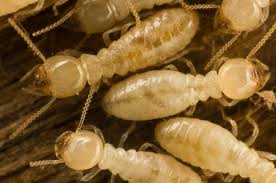
Small Trades: Eating Termites for Snack / Les Petits Métiers: Savourer les Termites au Goûter

African termites (Source: Larousse.fr)

Have you ever tried termites for lunch? Hmmmmhhhh it is so delicious, you will keep asking for more!  Termites are a delicacy sold in Cameroon, and other countries in West, Central, and Southern Africa.  Termites are delicious, nutricious, with a good store of fat and proteins.  They are quite tasty with a nutty flavor, and have a crunchiness when grilled.  Termites are usually gathered at the beginning of the rainy seasons as they are attracted to the light, and swarm to it; once there, a net is set… and voilà! Delicacy for dinner!  The wings are then shed by winnowing, and then they are grilled/roasted.  I remember having some termites in the village, as we, the children, will gather around the fire and listen to grandfather tell us ancient tales or stories of his youth. We will have these alongside some grilled corn, or safou… These memories bring water to my mouth.  Please enjoy watching a termite seller at work in the mountainous region of Western Cameroon; she will go through the set up, and yes even the painful experience of blowing the smoke from the little charcoal oven and having her eyes itch after it… you might want to try some termites! Have you ever tried termites before? Where, and what was the feeling? What kind of memories does this bring?

=============

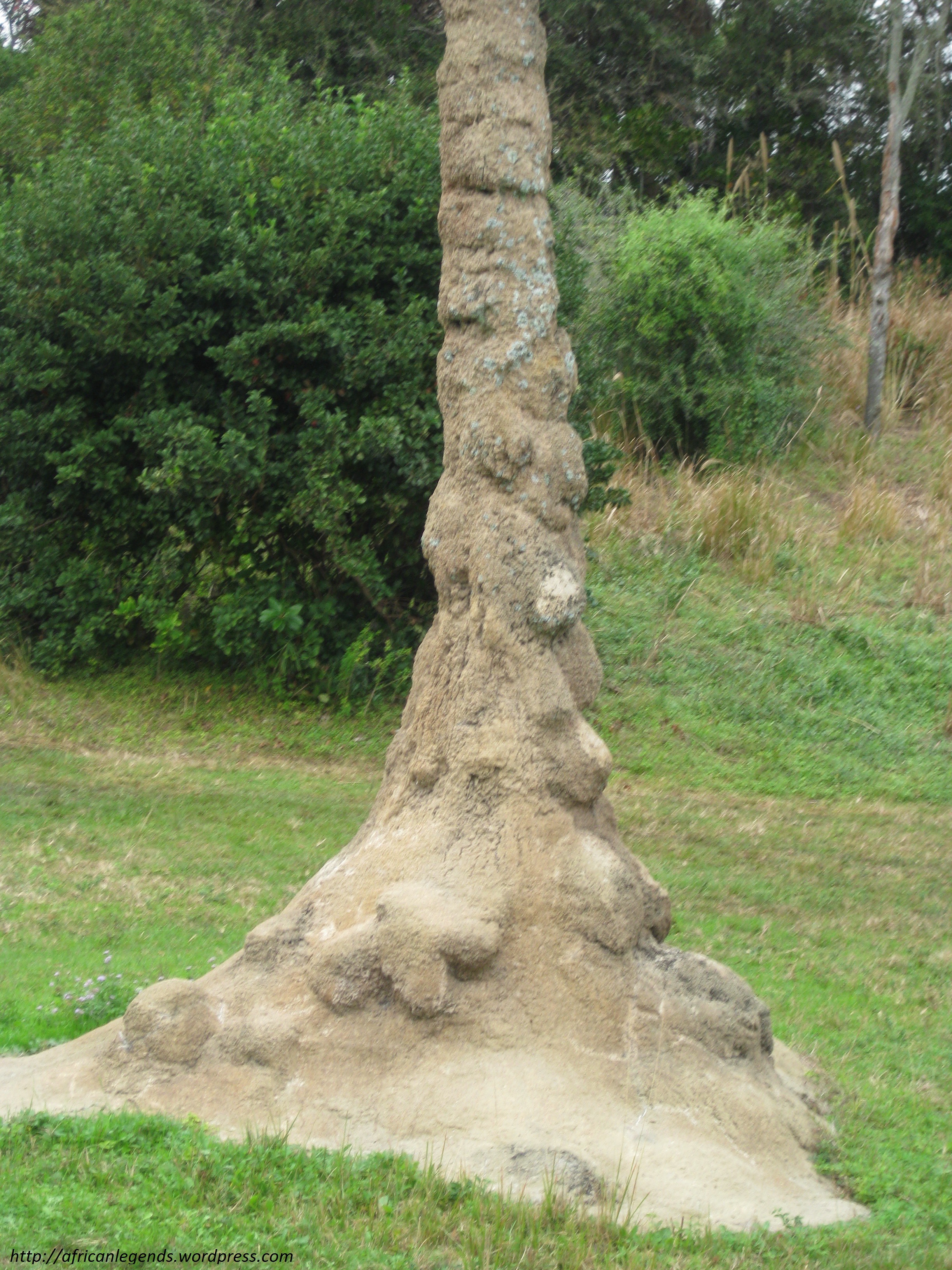
Une termitiere (A termite mound)
Une termitière (A termite mound)

Avez-vous déjà savouré des termites au déjeuner? hhhhmmmmmmmhhhhh, c’est si délicieux, que vous en demanderez encore plus.  Les termites sont une délicatesse consommée au Cameroun, en Afrique de l’Ouest, Centrale et méridionale. Elles sont délicieuses, nutricionelles, et pleines de lipides et protéines. Une fois sur le palais, elles ont un goût de noisette, et sont croustillantes une fois grillées.  Les termites sont attrapées au debut de la saison des pluies, et comme elles sont attirées par la lumière, il suffit de préparer son filet juste au dessus d’une lampe… et hop! délicatesses à gogo! Les ailes des termites sont enlevées par l’utilisation d’un tamis, et les termites sont ensuite grillées sur un feu de bois.  Je me souviens d’avoir savourer des termites autour du feu au village, quand nous étions enfants, tout en écoutant grand-père raconter des légendes anciennes ou des histoires de son enfance.  Les termites étaient généralement dégustées avec du maïs grillé ou du safou grillé.  Ces mémoires me donnent l’eau à la bouche. Regardez cette vidéo d’une vendeuse de termites dans les régions montagneuses de l’Ouest du Cameroun; vous verrez tout en détail, et même la pénible experience d’allumer un feu de bois lorsque la fumée vous picote les yeux.  Avez-vous jamais goûté aux termites? Où, et qu’avez-vous ressentis? Quelles genres de souvenir cela évoque-t-il?

Abel Kingué, Short but rising Tall for the Independence of Cameroon

UPC Leaders (L. to R.) front row: Castor Osende Afana, Abel Kingué, Ruben Um Nyobé, Felix Moumié, and Ernest Ouandié

Today, I will be talking about an almost forgotten leader of the UPC (Union des Populations du Cameroun), its vice president, Abel Kingué.  Who was Abel Kingué?

Well, Abel Kingué was born Abel Kegne, in Fokoue near Bamendou (in the Menoua department) in 1924, into a polygamous household.  Soon, he would live his home and move to the city of Dschang where he worked as a tennis ball boy for a while before getting spotted and given a chance to attend school.  After school in Dschang, Bafang, and Nkongsamba, he went on to attend the Nursing school of Ayos.  In 1947, he moved to Douala, and work in a big commercial center.

In April of 1950, Abel entered the direction of the UPC directly after its first congress in Dschang.  He entered the spotlight when, despite his short height, he publicly denounced the political embezzlement of prince Ndoumbe Douala Manga Bell.  Not only was Abel Kingué a great orator, but he also showed great firmness, great organization skills, great work ethics, and kindness.

Flag of the UPC
Flag of the UPC

He was re-elected vice president of the UPC during its 2nd congress in Eséka, in September 1952.  He was also chief editor of the ‘Voix du Kamerun‘ (Voice of Kamerun), UPC’s main organ of expression.  In december 1953, he went to the United Nations, to represent the JDC (Jeunesse Démocratique Camerounaise – Cameroonian Democratic Youth) of which he was a founding member.  On his return, while touring the country to share his report with others, he was attacked in Mbouroukou, near Melong, and was seriously injured and left for dead.

The crackdown on the UPC movement intensified dramatically in 1954 with the arrival of the new French High Commissioner, Roland Pré. Roland Pré said in one of his interviews about his crackdown on the UPC that he implemented techniques he had learnt in nazi concentration camps to crush UPC’s leaders in Cameroon… One just shivers while imagining the brutality and atrocity that our courageous independence fighters had to face.  On April 14th 1954, Kingué ran for elections into the ATCAM (Assemblée territoriale du Cameroun – Territorial Assembly of Cameroon), and despite his huge popularity, will be declared a loser by the colonial administration. Click here to Continue reading “Abel Kingué, Short but rising Tall for the Independence of Cameroon”

‘Love Poem for my Country’ by Sandile Dikeni

An antelope at dusk
An antelope at dusk in the African Savannah

In the past I have always wished that we, Africans, could be patriotic.  I came across this beautiful poem ‘Love poem for my country‘ by South African writer Sandile Dikeni.  I really enjoy the way the author describes his country, the valleys, the birds, the ancient rivers, and its beauty.  He feels the peace, the wealth, and the health his country brings.  He is one with his country.  He is at home!  His country is not just words or food, or friends, or family, it is more, it is his essence!  That is true patriotism, the bond that links us to the bone to our motherland.  Enjoy!

My country is for love
so say its valleys
where ancient rivers flow
the full circle of life
under the proud eye of birds
adorning the sky.

My country is for peace
so says the veld
where reptiles caress
its surface
with elegant motions
glittering in their pride

My country
is for joy
so talk the mountains
with baboons
hopping from boulder to boulder
in the majestic delight
of cliffs and peaks

My country
is for health and wealth
see the blue of the sea
and beneath
the jewels of fish
deep under the bowels of soil
hear
the golden voice
of a miner’s praise
for my country

My country
is for unity
feel the millions
see their passion
their hands are joined together
there is hope in their eyes

we shall celebrate

by Sandile Dikeni

Anton-Wilhelm Amo, African Professor in Germany in … 1700s

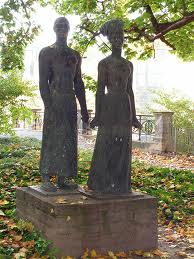
Sculpture of Anton-Wilhelm Amo in Halle

Anton-Wilhelm Amo was a respected Ghanaian German philosopher who taught at the Universities of Halle and Jena in Germany in the 1730s… That’s right… you read it well, 1730! This man is said to be the first African to be awarded a doctorate degree from a European university, and to later teach there. Who was Anton-Wilhelm Amo?

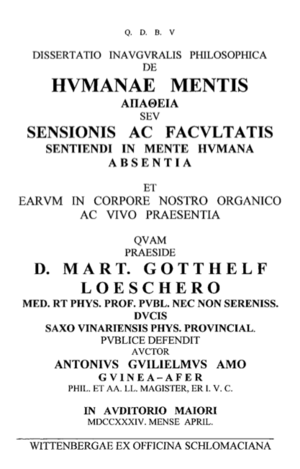
Anton-Wilhelm Amo was born in 1703 in Awukena near the town of Axim in Ghana.  At the young age of 4, he was taken to Amsterdam; some accounts say that he was taken into slavery, others that he was sent to Amsterdam by a missionary based in Ghana.  Either way, he was given as a present to the Duke of Brunswick-Wolfenbüttel.  Amo was raised as a member of the family, and attended the Wolfenbüttel Ritter-Akademie from 1717 to 1721, and then the University of Helmstedt from 1721 to 1727.  He also met with the great German mathematician and philosopher Gottfried Leibniz who was a frequent visitor of the Wolfenbüttel palace.  He then attended the Law school at the University of Halle in 1727, and finished his preliminary studies in two years at the end of which he wrote a dissertation thesis titled “The Rights of Moors in Europe.” He went on to further study philosophy and earn a doctorate degree in philosophy from the University of Wittenberg in 1734.  Amo was a learned man, and a true polyglot as he mastered six languages: French, English, German, Dutch, Latin and Greek.

Anton-Wilhelm Amo's Dissertation 1st Page (Source: www.jehsmith.com)
Anton-Wilhelm Amo’s Dissertation 1st Page (Source: http://www.jehsmith.com)

He was appointed professor of philosophy at the University of Halle in 1736, and went by his preferred name Antonius Guilelmus Amo, Afer of Axim.  He taught psychology, ‘natural law‘, and the decimal system.  He then published his second major work: ‘Treatise on the Art of Philosophing Soberly and Accurately (Tractatus de Arte Sobrie et Accurate Philosophandi).  In 1740, he joined the University of Jena in Jena, central Germany.  During the early years of the reign of Frederick II of Prussia, Amo was invited to the court in Berlin as a government councilor.  Amo was also elected a member of the Dutch Academy of Flushing.

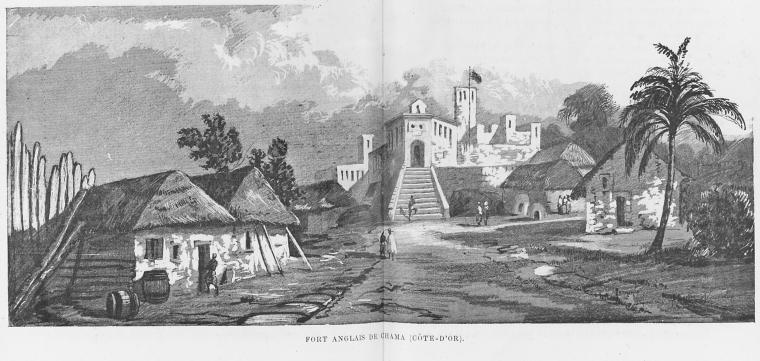
There were lots of social changes in Germany in the 1740s, and people were becoming less liberal, xenophobe, racist, and Amo himself was subject to public threats from his ennemies.  Eventually, Amo returned to his land of birth, Ghana, and settled back in Axim where he was honored as a traditional doctor and worked as a goldsmith (by some accounts).  He was laid to rest in Fort San Sebastian in Shama, Ghana, in 1759.  Today, the University of Halle-Wittenberg annually awards the Anton-Wilhelm Amo prize to deserving students. There is also a statue in Halle in his honor. This man was at the time thought to be among the most prominent German thinkers of his times.

Fort San Sebastian or Fort Shama in Ghana, Henri Frey 1890

For more on this great man, please check out Anton Wilhelm Amo by Marilyn Sephocle (Journal of Black Studies Vol. 23, No. 2, Special Issue: The Image of Africa in German Society (Dec., 1992), pp. 182-187), Anton-Wilhelm Amo from SUNY Buffalo, The Life and Times of Wilhelm Anton Amo by W. Abraham, Transactions of the Historical Society of Ghana 7 (1964) P. 60-81, Anton Wilhelm Rudolph Amo, Anton-Wilhelm Amo, a Ghanaia Philosopher in 18th Century Germany on the blog of Justin E. H. Smith, and lastly Black History Month in Europe 2007: Amo’s Ghost where the blog’s author asks very poignant questions about the life of Amo.  Everytime you think of Africa as the dark continent, or think that Africans were illiterate people, or had no ‘light’, think about Anton-Wilhelm Amo the great Ghanaian-German philosopher of the 1700s who taught great minds in Europe, and was among the most prominent German philosphers of his time.

Africa’s Second Female Head of State: Meet Joyce Banda of Malawi

Malawi
Malawi
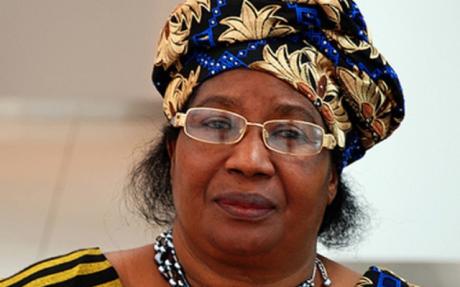
President Joyce Banda

Malawi has a new president: it is her excellency Joyce Hilda Mtila Banda. The passing of president Bingu wa Mutharika of Malawi was announced last Saturday. As written in the constitution, the vice president stepped in as head of state. On Saturday, April 7th 2012, Joyce Banda became Malawi’s first female president, and Africa’s second female head of state after Ellen Johnson Sirleaf of Liberia. Immediately after being invested, Banda called on the nation to mourn Mutharika with dignity and she thanked Malawians for staying calm during the power transition period. She said she was accepting the presidency with total humility and that she would strive to serve the nation earnestly.

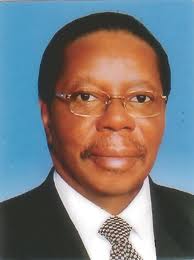
President Bingu wa Mutharika

Joyce Banda is stepping into the shoes of Bingu wa Mutharika who had recently been disavowed by the ‘international community’, and Malawi was put under embargo from UK, US, and EU. I wonder which way she will go: restore and do the good will of the international community, or try to restore Malawians’s rights to happiness (could the two be linked?)… Tough choice isn’t it? Only time will tell which way the balance will tip!

11 April 2011 – The Day the Re-colonization of Africa started!

Flag of Côte d'Ivoire

Today, I would like to remind everybody that April 11th, 2011 is the day the re-colonization and balkanization of Africa started anewOn 11 April 2011, Africa was raped in broad daylight… the presidential palace of Côte d’Ivoire, the national television, the siege of parliament, were bombed, and the president of the country, Laurent Gbagbo, and his entourage, were captured like vulgar thieves by the French army, ONUCI forces, and rebel forces (Laurent Gbagbo – No to a Complicit Silence, Côte d’Ivoire- 20 ans de destabilisation mis a nu).   Many Ivorians had to seek refuge in neighboring countries, Ghana and Liberia, while the genocide of the Guéré and Wê people occurred.  All this was done in broad daylight, as other African heads of state clapped and saluted France and the ‘international community’ for restoring democracy (see Africans and the Trap of Democracy)… or rather tyranny in Côte d’Ivoire.   One year on, Côte d’Ivoire, the beautiful, looks like a ghost of herself.  I remember crying, praying, marching against the inferno that descended upon Côte d’Ivoire the beautiful.  Yes… fire descended upon Côte d’Ivoire.  Here is the video which Gregory Protche, of Gri-Gri International, published and which I particularly enjoyed, making a retrospect on what really happened during the post-electoral crisis in Côte d’Ivoire: how an entire country was put under siege, embargoed, no banks, no medicine… just bombs, and how Alassane Ouattara never won the elections.  A few weeks later, this was also done to another country just north of Côte d’Ivoire, Libya. I still cannot believe that many Africans saw the bombing of a country by external forces as good, and still see it as such… How could anyone applaud when their neighbor’s house is on fire? Today Mali is in turmoil… who will be next (Failure of African Leadership)?

Enjoy “5 reasons not to march for the victory of Ouattara” by Gregory Protche.