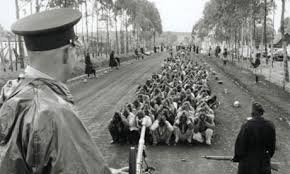
In a prison camp in Kenya during the Mau Mau rebellion (Source:The Guardian)
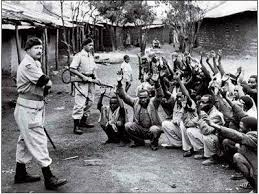
The British government finally recognized its wrong-doings in Kenya, during the Mau Mau uprising, and publicly apologized for it. The British colonial forces thoroughly tortured and murdered thousands of people during the Mau Mau revolt against British rule in Kenya in the 1950s. The British foreign secretary admitted last Thursday (06/06/2013) that: … ” on behalf of Her Majesty’s government, that we [the British government] understand the pain and grievance felt by those who were involved in the events of the emergency in Kenya.”… “The British government recognizes that Kenyans were subject to torture and other forms of ill-treatment at the hands of the colonial administration. The British government sincerely regrets that these abuses took place and that they marred Kenya’s progress towards independence.”
Under British guns, during the Mau Mau rebellion in Kenya in the 1950s
So today’s surviving victims, 5228 people will receive a payment of £19.9m for compensation. The compensation amounts to about £3,000per victim and applies only to the living survivors of the abuses that took place. As I read this… first I was happy that after so many years (over 60 years), the British government could finally acknowledge their atrocities in Kenya, and I think this opens the door for other colonial powers to openly recognize atrocities they perpetrated in their colonies: such as the massacre and genocides perpetrated by the French in Cameroon, Algeria, and Madagascar during the colonial era and after independence. However, when I read the amount given to every victim, I gasped in shock: 3000 pounds per person? what is that? Is that a joke? What would £3,000 do to somebody who has been tortured, raped, and beaten to death? Would it erase the debilitating pain, and all those years spent fighting for the British to acknowledge their wrongdoings? Finally what is money compared to the pain? What is the British government doing to ensure that no such thing would ever happen again? As we know, paying quickly so that nobody bothers you is easy, but has anything been put in place for this never to occur again? Or would other citizens of the world have to fight 50 or 100 years from now for yet another apology?
Enjoy the documentary below on the Mau Mau rebellion… no amount of money can erase this! The case in court used some of the work by Harvard professor Caroline Elkins.
The BBC recently had a photojournal article on the lost Africans of India, and I thought it wise to talk about our brothers from the Indian subcontinent. The Sidi or Siddi, or Sheedi, or Habshi, are said to have first arrived on the Indian subcontinent around 628 AD at the Baruch port. Several others followed; most Siddis are believed to be descendants of traders, sailors, soldiers, servants, and merchants of East Africa. The biggest wave of migration is said to have lasted between the 12th and 19th centuries. Most Siddis are Bantu descendants from southeast Africa. In the 13th and 14th centuries, most slaves were mainly drawn from countries in the Nile region: lower Egypt, Ethiopia, Somalia, and Sudan. Due to their fighting prowess, many became soldiers in the armies of conquerors and sultans all over India’s princely states. They were wanted mostly because of their loyalty and strength, and received grants of land in return for their valorous services. With the arrival of the Europeans, especially the Portuguese, into the slavery scene in the 16th century, Siddis were now drawn from the inner continent in regions such as the Congo, and as far down the East African coast as Mozambique, Malawi, and Tanzania.
The origin of the word Siddi is very controversial. Some believe that it was a term of respect in North Africa similar to the word sahib used in India; others believe that it derived from the title borne by the captains (known as sayyib) of the Arab vessels that first brought Siddi settlers to India; while others believe that the word habshi (another term for siddi) is derived from the common name for the captains of the Ethiopian/Abyssinian ships that also first delivered Siddi slaves to the subcontinent.
Siddi dancers of Goma music
Today, many Siddis reside in the Western states of Karnataka, Gujarat and Maharashtra, with some in the city of Hyderabad in India and Makran and Karachi in Pakistan. India counts about 20,000 to 50,000 Siddis. Their communities are very poor, and many have kept together, and do not marry outside. Siddis are mostly muslims, but some are christians; with few adopting Hindu as they could not fit appropriately in the Hindu caste society. Today, the Siddis are called a ‘scheduled caste‘, or ‘scheduled tribe‘, which simply gives them access to reserved quotas of government jobs, quotas in state schools, bursaries and subsidized housing. As is the case with the descendants of black slaves in the Americas, most of the Siddis of India do not know where their ancestors came from in Africa, but, amazingly, they have somehow preserved some of the musical and dance traditions of their long-lost forefathers (again, similar to Africans in the Western Hemisphere). Their African-derived music is known as the Goma and is clearly African in origin.
Siddi man from Karnataka
Many of the well-known Siddis in Indian history were war generals. One of them was Jamal-ud-Din Yaqut who rose to prominence in the Delhi Sultanate period prior to the rise of the Mughals of India, as a close confidant of Razia Sultana (1205–1240CE); it has been speculated that he was her lover. Many of the kingdom’s noblemen resented the relationship between Razia Sultana and Yaqut, first since she was the first female ruler of the Delhi sultanate, but also because she elevated him to the great title rank of Amir of Amirs. Other important Siddis have been Yakut Khan, a naval admiral and administrator of Janjira fort who served under the reign of the Mughal EmperorAurangzeb; and Malik Ambar who created an army of over 1500 men on his own; and general Hoshu Sheedi, who was a Supreme Commander of Sindh‘s Talpur army, who fought with valor against the British in the Battle of Dabbo and laid down his life in defense of his country.
Lastly, it is good to note that Africans have influenced civilizations around the world, and continue to influence them to this day: many great cities and empires were built thanks to them. Imagine that some of the great generals and confidants of the Mughal empire were of African descent… doesn’t that make you proud? To learn more about the Siddis of India, don’t forget to check out BBC’s photojournal. Please read the article on The Lost Indians on NigerianMasterweb.com, India’s Sidis on The East African journal, as well as the article in the International Business Times.
What comes to mind when I say Marrakesh? Well, for starters, when I hear the name Marrakesh, my mind is immediately submerged by thoughts of Arabian nights, Mediterranean scents, spices and flavors, camels, oasis, couscous, men in gabar, beautiful mosques, beautiful women, sandy dunes, etc… So how far am I from the truth and what is the origin of the name Marrakesh?
Located near the foothills of the snow-capped Atlas mountains in Morocco, Marrakesh was the most important of the four former imperial cities in Moroccan history. Spelled Merrakecin Berber or Marrakech in French, the name has its origin from the Amazigh (Berber) words ‘mur(n)akush‘ which means “Land of God.” Another interpretation will call it ‘thelandof journey.’ From Neolithic times, the city had been inhabited by the Amazighs people, and was founded in 1062 by Abu Bakr ibn Umar, sovereign and cousin of Yusuf ibn Tashfin. Led by the Almoravids, and later the Almohads, many mosques including the world-renowned Koutoubia mosque were built during the 12th century with Andalusian influence. Several palaces were built whose main characteristics were the carved domes, and lobed arches. The Andalusian influence merged with Saharan elements as well as West African, and all that was synthetized to give a very original architecture specially adapted for the weather of Marrakesh. The city became the capital of the Almoravid emirate which went from the shoreline of the Senegal river to the center of Spain, and from the atlantic littoral up to Algiers. The red walls of the city, built by Ali ibn Yusuf in 1122-1123, were built from red sandstone gave Marrakesh’s nickname as the ‘RedCity‘ or the ‘Ochrecity‘, as well as the ‘pearlofthesouth‘ or the ‘doortothesouth.’
A souk in Marrakesh
Marrakesh grew rapidly and established itself as a cultural, religious, and trading centre for the Maghreb and sub-Saharan Africa; Jemaa el-Fnaa or Djemaa el-Fnaa is one of the most famous squares in all of Africa and is the center of the city activity and trade, and has been declared UNESCO World Heritage site since 1985. After a period of decline, the city was surpassed by Fez, in the early 16th century, Marrakesh again became the capital of the kingdom and reestablished its former glory especially during the reigns of the wealthy Saadian sultans Mohammed El Mahdi, Abu Abdallah al-Qaim and Ahmad al-Mansur who embellished the city with sumptuous palaces such as the El Badi Palace (1578), and restored many ruined monuments. Under the Saadian reign, Marrakesh regained its position as a central point linking the Maghreb, the Mediterranean basin, and Sub-Saharan Africa via its caravan routes.
Today, Marrakesh is one of the busiest cities in Africa; it is a big tourist destination, and a major economic center. It has the largest traditional Berber market (souk) in Morocco, with over 18 souks selling anything from traditional Berber carpets to modern consumer electronics. It is also home to the Cadi Ayyad University, which is one of the major universities of Morocco.
I remember listening to this song on one of the Putumayo‘s CDs. Here is ‘So Long’ by Majek Fashek. This is a song to all Africans, and children of Africa, to arise and awake from their sleep. This is a song about unity, and remembrance of our great heritage. I had to share it with you all. Enjoy! and remember what Majek Fashek says: “Arise from your sleep Africa … There’s work to be done Africa … if we unite, we will be free … we’ve been sitting down for so ooo long …”
Arise from your sleep Africa Arise from your sleep America
There’s work to be done Africa There’s work to be done America
if we unite, we will be free so long, for too long so long, for too long
we’ve been sitting down for so oooo long we’ve been fooling round for too oooo long we’ve been sitting down for so oooo long
so long, so long for too long, for too long
Oh Lord, can you hear me now Oh Lord
Remember, remember, long long time ago when we used to live like prince and princess
Remember, remember, the pyramids of Egypt when we used to live like prince and princess
Remember, remember, Who had a dream for you Africa
Remember, remember, Martin luther King Who had a dream for you America
They say you are black, they say you are brown They say dem white, they say you are brown
But only the Angels of God is white But only the Angels of God is white
so long, so long for too long, for too long we’ve been sitting down for so oooo long we’ve been fooling round for too oooo long
Arise from your sleep Africa Arise from your sleep America
There’s work to be done Africa There’s work to be done America
if we unite, we will be free so long, for too long so long, for too long
Remember, remember, Who had a dream for you Africa
Remember, remember, Martin luther King Who had a dream for you America
Remember, remember, King Selassie Who was betrayed by his people
Remember, remember, Lord Jesus Christ Who died for you and I for salvation
They say you are black,[do you believe?] they say you are brown [do you believe?]
But only the Angels of God is white But only the Angels of Jah is white
we’ve been sitting down for so oooo long we’ve been fooling round for too oooo long
Avec l’approche de l’été, j’ai trouvé bon de vous introduire à un rafraîchissant favori des africains, et en particulier des camerounais. Durant les mois chauds de l’année, les camerounais adorent les fruits: les oranges, les pastèques, et les ananas (en fonction de la saison). Les marchands ambulants au bord des routes vous pèlent et vendent des oranges à longueur de journée. Je me suis toujours dit que la façon dont les oranges étaient pelées était très artistique: le marchand vous pèle l’orange à une de ces vitesses de telle sorte que les épluchures tombent sur le sol de façon géometrique; aucune machine ne pourrait competir avec cela. Dans la ville de Douala, en plus des oranges, les ananas et les pastèques sont particulièrement en vogue, et les vendeurs épluchent et coupent ces fruits et les arrangent géometriquement dans un contenaire géant en plastique transparent a la forme d’un seau cylindrique, et rempli de glaçons. Une tranche d’ananas ou de pastèque, aura tres vite fait de vous téléporter vers d’autres cieux. Amusez-vous à regarder cette video d’une vendeuse de fruits au Cameroun, et prêtez attention à la vitesse et précision avec laquelle elle épluche ses oranges!
==================
Pineapple (ananas)Watermelon (pastèque)
As summer approaches, I thought it wise to talk about one of the favorite refreshers of people in Africa, and most particularly of Cameroon. During the hot months, people in Cameroon particularly enjoy fruits: oranges, watermelons, and pineapples depending on the season. So the street hawkers will peel and sell you oranges. I always thought that the way the oranges were peeled was quite artistic: the seller peels it in a quick succession, and no machine could even compete. In the city of Douala, pineapples and watermelons are particularly en vogue, and the street hawkers will peel and cut the fruits and lay them out in an artistic and geometric way inside a transparent plastic in the shape of a cylindrical bucket full of ice. Once the customer places the order, one slice of pineapple or watermelon, and you are suddenly transported to heaven! Enjoy a video of a fruit seller in Cameroon, and pay attention to the precision with which she peels the oranges.
I would like to share with you this poem of the late president of Senegal, Léopold Sédar Senghor. This poem is an ode to the Black woman, but above all, to Senegal his country. Yes… after reading it several times, one realizes that Senghor was writing an ode to the Black woman, his mother, his sister, his daughter, but above all to Senegal which could be loved just like a woman, and whose “beauty stroke him to the heart like the flash of an eagle”, and whose “Savannah stretch[ed] to clear horizons, savannah shuddering beneath the East Wind’s eager caresses.” This poem was published in ‘Chants d’Ombre’ (1945), English translation by Melvin Dixon (in The Collected Poetry (CARAF books …)). As you read Senghor’s poem, do you see other meanings? who do you think was the intended audience? Do you feel, like me, that he is praising Senegal, the land of his ancestors? or is he talking about the woman of his dreams? Enjoy!
Femme noire
Femme nue, femme noire Vétue de ta couleur qui est vie, de ta forme qui est beauté J’ai grandi à ton ombre; la douceur de tes mains bandait mes yeux Et voilà qu’au cœur de l’Eté et de Midi, Je te découvre, Terre promise, du haut d’un haut col calciné Et ta beauté me foudroie en plein cœur, comme l’éclair d’un aigle
Femme nue, femme obscure Fruit mûr à la chair ferme, sombres extases du vin noir, bouche qui fais lyrique ma bouche Savane aux horizons purs, savane qui frémis aux caresses ferventes du Vent d’Est Tamtam sculpté, tamtam tendu qui gronde sous les doigts du vainqueur Ta voix grave de contralto est le chant spirituel de l’Aimée
Femme noire, femme obscure Huile que ne ride nul souffle, huile calme aux flancs de l’athlète, aux flancs des princes du Mali Gazelle aux attaches célestes, les perles sont étoiles sur la nuit de ta peau.
Délices des jeux de l’Esprit, les reflets de l’or ronge ta peau qui se moire
A l’ombre de ta chevelure, s’éclaire mon angoisse aux soleils prochains de tes yeux.
Femme nue, femme noire Je chante ta beauté qui passe, forme que je fixe dans l’Eternel Avant que le destin jaloux ne te réduise en cendres pour nourrir les racines de la vie.
Black Woman
Naked woman, black woman Clothed with your colour which is life, with your form which is beauty
In your shadow I have grown up; the gentleness of your hands was laid over my eyes. And now, high up on the sun-baked pass, at the heart of summer, at the heart of noon, I come upon you, my Promised Land, And your beauty strikes me to the heart like the flash of an eagle.
Naked woman, dark woman Firm-fleshed ripe fruit, sombre raptures of black wine, mouth making lyrical my mouth Savannah stretching to clear horizons, savannah shuddering beneath the East Wind’s eager caresses Carved tom-tom, taut tom-tom, muttering under the Conqueror’s fingers Your solemn contralto voice is the spiritual song of the Beloved.
Naked woman, dark woman Oil that no breath ruffles, calm oil on the athlete’s flanks, on the flanks of the Princes of Mali Gazelle limbed in Paradise, pearls are stars on the night of your skin
Delights of the mind, the glinting of red gold against your watered skin
Under the shadow of your hair, my care is lightened by the neighbouring suns of your eyes.
Naked woman, black woman, I sing your beauty that passes, the form that I fix in the Eternal, Before jealous fate turn you to ashes to feed the roots of life.
Very often, Africans are depicted on old pictures as naked people, walking around without any clothing. This seems to be quite at odd with the fact that the Dutch textile company VLISCO has been installed in Africa, more precisely in Togo, since 1846. So how could pictures from the 1800s and early 1900s only show naked Africans? The BBC recently ran a story on VLISCO and African textile tradition actually being European. The New York Times claimed that Africa’s fabric was entirely Dutch. I find this quite appalling, and I call this a falsification of history.
For starters, before VLISCO, Africa had a very rich textile industry as noted by Kankan Moussa‘s entire delegation being clothed from cotton woven with golden threads in 1300s during his pilgrimage to the Mecca (this will be a story for another day), or the Kanembu clothing tradition which dates as far back as the 800s. It is misleading to believe that the Wax hollandais is the only fabric worn by Africans, when we know that the Bogolan rises from a long tradition of weavers in Mali, or the Kente cloth of Ghana.A piece of Bogolan cloth
So what is the history of African fabric? Is there an African history of textile?
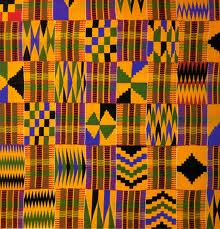
As pointed earlier, the African fabric industry is very old, and dates as far back as 5,000BC when ancient Egyptians began cultivating flax and weaving it into linen. An ancient pottery found at Badari shows an ancient depiction of a loom dating back to this period, while a 12th dynasty image from the tomb of Khnumhotep shows weavers using a horizontal loom (ca 2400 BC). Moreover, pyramids, sculptures, and hieroglyphs clearly show all Egyptians clothed.Even their neighbors to the south, the Nubians, had a flourishing textile industry, as can be seen on images on pyramids at Meroë, and images of the great queen Amanishakheto, as well as those of pharaoh Piye.Later on, as several civilizations flourished throughout Africa, cotton became a more commonly used fabric. The explorer Ibn Battuta does mention the presence of weavers in the Mali empire, and in Timbuktu, in the 1300s. As Islam was introduced in West Africa, many began wearing today’s version of the boubou.Kente cloth
Today, one can find a full tradition of textile flourishing throughout Africa. The Bogolan or ‘mud cloth’ is hand-woven fabric hailing from Mali. Kente cloth, is Ghana’s national fabric, with the most expensive ones made with golden threads for kings only (in the olden days). It is said that the British explorers were amazed by the beauty of the Ashanti king’s attire. Cameroon has a long history of cloth made from the bark of trees, with some fabric particularly made from the obom. Fibers from the raffia are still commonly used to make bags, and clothing. Moreover, in West Cameroon, Kings are dressed with finely woven clothing made by the best weavers of the kingdom embellished with beads. The Pygmies use bark cloth made from tropical fig trees, while people from Chad and the Central African Republic weave cotton strips on horizontal looms; they use a variety of natural dyes.
Ndebele woman
The Kuba people of the Democratic Republic of Congo, use raffia and make some of the most beautiful hand-woven blankets, clothing, and sculptures. The Ndebele of South Africa and Zimbabwe have a rich tradition of gorgeous colorful quilts and blankets entirely hand-made. Many would envy the elegance, color, and presentation of well-dressed Ndebele women.
So why are the New York Times and the BBC trying to falsify history?Even VLISCO patterns are not Europeans, as they are inspired by Africans, and made to address the needs of the African population. Yes, Africans wear have worn VLISCO textiles and many Nana Benz have prospered from it, but that doesn’t mean that they do not have their own rich tradition of textile. Africans have their textile industry which dates back millennia, and has probably inspired many in the world. So today as you wear a wax hollandais, remember that there are Kente cloth, Bogolan, and many other beautiful garments made by local artists well-deserving of praise.I am leaving you with a documentary video on Kente cloth weaving. Enjoy!
Hunger and want forced Monkey one day to forsake his land and to seek elsewhere among strangers for much-needed work. Bulbs, earth beans, scorpions, insects, and such things were completely exhausted in his own land. But fortunately he received, for the time being, shelter with a great uncle of his, Orangutan, who lived in another part of the country.
When he had worked for quite a while he wanted to return home, and as recompense his great uncle gave him a fiddle and a bow and arrow and told him that with the bow and arrow he could hit and kill anything he desired, and with the fiddle he could force anything to dance.
The first he met upon his return to his own land was Brer Wolf. This old fellow told him all the news and also that he had since early morning been attempting to stalk a deer, but all in vain. Then Monkey laid before him all the wonders of the bow and arrow that he carried on his back and assured him if he could but see the deer he would bring it down for him. When Wolf showed him the deer, Monkey was ready and down fell the deer. They made a good meal together, but instead of Wolf being thankful, jealousy overmastered him and he begged for the bow and arrow.
Brer Wolf
When Monkey refused to give it to him, he thereupon began to threaten him with his greater strength, and so when Jackal passed by, Wolf told him that Monkey had stolen his bow and arrow. After Jackal had heard both of them, he declared himself unqualified to settle the case alone, and he proposed that they bring the matter to the court of Lion, Tiger, and the other animals. In the meantime he declared he would take possession of what had been the cause of their quarrel, so that it would be safe, as he said. But he immediately brought to earth all that was eatable, so there was a long time of slaughter before Monkey and Wolf agreed to have the affair in court.
Monkey’s evidence was weak, and to make it worse, Jackal’s testimony was against him. Jackal thought that in this way it would be easier to obtain the bow and arrow from Wolf for himself. And so fell the sentence against Monkey. Theft was looked upon as a great wrong; he must hang. The fiddle was still at his side, and he received as a last favor from the court the right to play a tune on it.
He was a master player of his time, and in addition to this came the wonderful power of his charmed fiddle. Thus, when he struck the first note of “Cockcrow” upon it, the court began at once to show an unusual and spontaneous liveliness, and before he came to the first waltzing turn of the old tune the whole court was dancing like a whirlwind. Over and over, quicker and quicker, sounded the tune of “Cockcrow” on the charmed fiddle, until some of the dancers, exhausted, fell down, although still keeping their feet in motion. But Monkey, musician as he was, heard and saw nothing of what had happened around him. With his head placed lovingly against the instrument, and his eyes half closed, he played on, keeping time ever with his foot.
African fiddle
Wolf was the first to cry out in pleading tones breathlessly, “Please stop, Cousin Monkey! For love’s sake, please stop!”
But Monkey did not even hear him. Over and over sounded the resistless waltz of “Cockcrow.”
After a while Lion showed signs of fatigue, and when he had gone the round once more with his young lion wife, he growled as he passed Monkey, “My whole kingdom is yours, ape, if you just stop playing.”
“I do not want it,” answered Monkey, “but withdraw the sentence and give me my bow and arrow, and you, Wolf, acknowledge that you stole it from me.”
“I acknowledge, I acknowledge!” cried Wolf, while Lion cried, at the same instant, that he withdrew the sentence.
Monkey gave them just a few more turns of the “Cockcrow,” gathered up his bow and arrow, and seated himself high up in the nearest camel thorn tree.
The court and other animals were so afraid that he might begin again that they hastily disbanded to new parts of the world.
South African Folk Tales, by James A. Honey, 1910, Baker & Taylor Company.
May 3rd marks the World Press Freedom Day, or simply World Press Day. This day is to raise awareness of the importance of the freedom of the press and remind governments across the world to respect the right to freedom of expression. Today I would like to commemorate the life of an African journalist hailing from Burkina Faso, Norbert Zongo, who just like the great Cameroonian journalist Pius Njawe, stood for justice and fought injustice.
Norbert Zongo was the publisher and editor of Burkina Faso newspaper L’Independant. On 13 December 1998, Norbert Zongo was assassinated after his newspaper investigated the murder of a driver (David Ouédraogo) who had worked for the brother of the president Blaise Compaoré, François Compaoré. Zongo’s burned body was found along with the bodies of three other people: his brother Ernest Zongo, his chauffeur Ablasse Nikiema, and Blaise Ilboudo, in a vehicle near Sapouy, 100 km from the capital Ouagadougou. An investigation showed that Zongo was killed for political reasons. His murder rocked Burkina Faso, and manifestations arose within the country, and neighboring countries. The most violent manifestations took place in the city of Koudougou, Zongo’s birthplace, and government supporters organized a militia armed with clubs engaged to hunt protesters in many cities of the country.
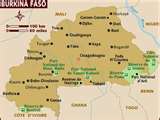
Burkina Faso
Bowing to popular discontent, President Blaise Compaoré, had to open a judicial investigation where his brother was charged for murder and harboring the body of the victim in connection with the death of David Ouédraogo who died of torture. The charges were later dropped by a military tribunal. In August 2000, five members of the presidential guard were charged for the murder of Ouédraogo, were convicted and sentenced to lengthy prison terms, but all were later freed. In seven years of trial, one suspect, a member of the presidential guard was charged, but the accusing witness later recanted. The Zongo trial ended in July of 2006 with a non-place which caused an international outcry.
Norbert Zongo is also the writer of the book, The Parachute Drop (Le Parachutage), which was translated to English and published in 2004. Many of his articles can be found in the review Mobutuization of Burkina Faso.
Today, Norbert Zongo is celebrated as a martyr, one who stood for truth, in a country where not many dared to talk. This is why he should be the man of the day, for a day like World Press Day: He dared to talk, he expressed the truth to enlighten others, and sought justice for another man. In 2003, a documentary was made to talk about his murder: Borry Bana, the fatal destiny of Norbert Zongo. In 2012, a memorial was erected at the Highway N6 (Ouagadougou – Léo) near Sapouy, exactly where Zongo was murdered. Please watch this video of Norbert Zongo talking to African youths. His message is that of maintaining intrinsic values of principle, of growth, of conscience.
I came across this article on Nigeria, which can be applied to many countries in Africa. This is more of a wake up call, rather than just a critic. This expresses a need for re-building the minds, the brains, and the experiences of Africans. This is very close to the poem ‘No More‘ by Kelvin Karani. You can read the entire article on African Spotlight. So, after reading this article, I would like to you to answer these questions: Do African countries need re-branding or re-building? How do we stop importing and start producing ourselves? Since we have all that is needed to feed ourselves, how do we get to the level where every child is well-fed? How do we improve our infrastructures, etc…? Thomas Sankaramanaged, in less than 4 years as president, to bring his country to the level of food self-sufficiency. How do we get rid of our debts? How do we create jobs for our youths? What is needed to come out of this inferno cycle? While you are at it, please watch Thomas Sankara’s speech on eliminating the debt.
============
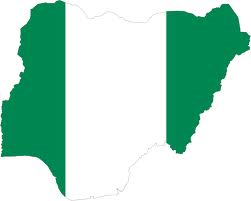
Few days ago, I spent 10 billion Naira to celebrate my 52nd birthday! I am Nigeria!!!.
I am divided into 36 unequal states, plus my capital territory, christened ABUJA . I have millions of acres of arable land and billions of cubic litres of water, but I cannot feed myself. So I spend $1 billion to import rice and another $2 billion to import milk. I produce rice, but don’t eat it.I have 60 million cattle but no milk.I have the capacity to feed the whole of Africa but I import most food instead. I am hungry, please help and re-build me. […]
I wanted change so I stood all day long to cast my vote. But even before I could vote, the results had been announced. When I dared to speak out, silence was enthroned by bullets. My rulers are my oppressors, and my policemen are my terrors. I am ruled by men in mufti, but I am not a democracy. I have no verve, no vote, no voice, please re-build me.
I have over 50 million youths with no jobs, no present and no future. So my sons in the North have become street urchins and their brothers in the South have become militants. My nephews die of thirst in the Sahara and their cousins drown in the waters of the Mediterranean. My daughters walk the streets of Lagos, Abuja and Port Harcourt , while their sisters parade the streets of Rome and Amsterdam. I am inconsolable, please re-build me.
Bend Skin in Cameroon (known as Okada in Nigeria)
My people cannot sleep at night and cannot relax by day. They cannot use ATM machines, nor use cheques. My children sleep through the staccato of AK 47′s, see through the mist of tear gas, while we all inhale Carbon Monoxide, poisonous CO-2 from popular ‘I better pass my neighbour’ (portable generators) and ‘Okada’ (motorbike taxis) The leaders have looted everything on ground and below. They walk the land with haughty strides and fly the skies with private jets (28 of which were bought in the last 12 months). They have stolen the future of generations yet unborn and have money they cannot spend in several lifetimes, but their brothers die of hunger. I want justice, please re-build me.
I can produce anything, but import everything. So my toothpick is made in China; my toothpaste is made in South Africa; my salt is made in Ghana; my butter is made in Ireland; my milk is made in Holland; my shoe is made in Italy; my vegetable oil is made in Malaysia; my biscuit is made in Indonesia; my chocolate is made in Turkey and my table water made in France. My taste is far-flung and foreign. I no longer cook at home but take pride in eating at take-away outlets fashioned after the Western style of living. Anything made in my land is inferior; I prefer those made in England, America or Europe . To crown it all, items made in my land but specifically sent abroad with made in England labels are brought back from ‘Oyinbo’ land at 5 times the original price it would have gone for had it been sold as home made, please re-brand me. […]
… I have four (4) refineries, but prefer to import fuel, so I waste more billions to import petrol and diesel. I have no security in my country, but would rather send troops to keep the peace in another man’s land. I have 160 dams, but cannot get water to drink, so I buy ‘pure’ water that broils my inwards. I have a million children waiting to enter universities, but my ivory dungeons can only take a tenth (10 %). I have no power (electricity), but choose to flare gas, and vote billion of dollars every year to generate electricity but not a single watt has come from it. So, my people have learnt to see in the dark and stare at the glare of naked flares. I have no direction, please re-build me.
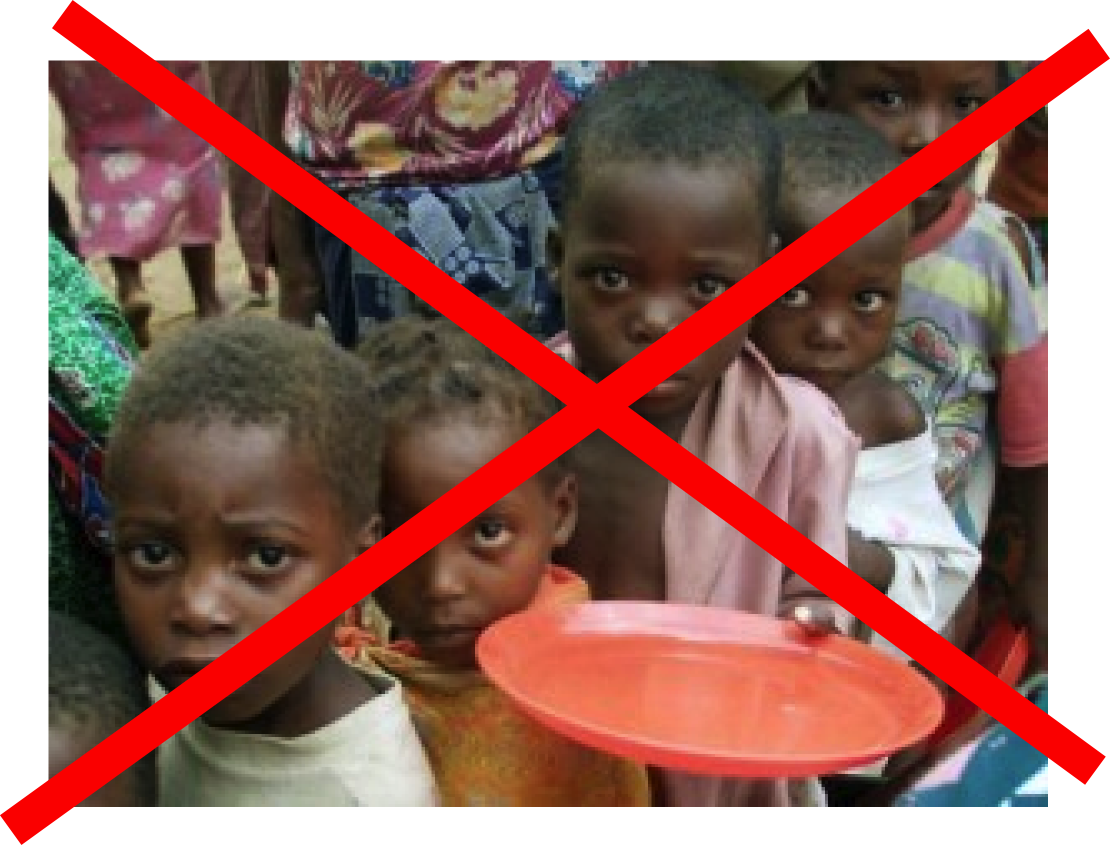
Children begging
My people pray to God every morning and every night, but commit every crime known to man because re-branded identities will never alter the tunes of inbred rhythms. Just as the drums of heritage heralds the frenzied jingles, remember – the Nigerian soul can only be Nigerian – fighting free from the cold embrace of a government that has no spring, no sense, no shame. So we watch the possessed, frenzied dance, drenched in silent tears as freedom is locked up in democracy’s empty cellars. I need guidance, please re-build me.
But then, why can I not simply be me, without being re-branded? Or does my complexion cloud the colour of my character?Does my location limit the lengths of my liberty? Does the spirit of my conviction shackle my soul? Does my mien maim the mine of my mind? And is this life worth re-branding? Is it re-branding that I need or complete re-building?…
To re-build a wobbling structure, there is need for dismantling of existing one (remember, if the foundation can be destroyed, what can the righteous do?).. Shall I then consider the idea muted by some of my own who have fled abroad? Some call for ‘Separation for Co-operation’ , others call for true Federalism – while others are yet asking for the return to Parliamentary system. Which way do I go? on October 1, 2009, I celebrated my 50th birthday and my 52nd was just celebrated. I do not want to carry on in my golden age without direction, … so, please, help me God. Re-mould and Re-Build me.








 African Heritage