Proverbe Ntomba sur les apparences / Ntomba Proverb on apparences

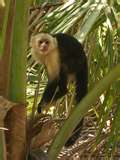
La poule / The hen
La poule / The hen
Cancrelat / Cockroach

Cancrelat, continue de t’enduire de fard noir, la poule ne s’y trompera pas (Proverbe Mongo, Ntomba – République Democratique du Congo). – Un malfaiteur sera vite demasqué, ses manières le trahiront.

Cockroach, keep coating yourself with black mascara, the hen will not be deceived (Mongo, Ntomba proverb – Democratic Republic of Congo). – A thief will quickly be unmasked, his manners will betray him. 

Maya Angelou in Her Own Words

Maya Angelou
Maya Angelou

Here are some quotes by Maya Angelou herself.  Feel and enjoy the wisdom!

==========

“I’ve learned that people will forget what you said, people will forget what you did, but people will never forget how you made them feel.”Interview for Beautifully Said Magazine (2012)

If you don’t like something, change it. If you can’t change it, change your attitude.”

Never make someone a priority when all you are to them is an option.”

“I believe that each of us comes from the creator trailing wisps of glory.”Interview with the Academy of Achievement (1990)

You may not control all the events that happen to you, but you can decide not to be reduced by them.”  – Excerpted from Letter to My Daughter, a book of essays (2009)

My mission in life is not merely to survive, but to thrive; and to do so with some passion, some compassion, some humor, and some style.” – Angelou’s Facebook (2011)

Maya Angelou
Maya Angelou

Try to be a rainbow in someone’s cloud.”Letter to My Daughter, a book of essays (2009)

“I’ve learned that you shouldn’t go through life with a catcher’s mitt on both hands; you need to be able to throw something back.”Interview with Oprah for Angelou’s 70th birthday (2000)

We may encounter many defeats but we must not be defeated.”The Art of Fiction No. 119, the Paris Review

It’s one of the greatest gifts you can give yourself, to forgive. Forgive everybody.”

Love recognizes no barriers. It jumps hurdles, leaps fences, penetrates walls to arrive at its destination full of hope.” – Angelou’s Facebook (Jan. 11, 2013)

“Nothing can dim the light which shines from within.”Date unknown

“I believe that every person is born with a talent.”Date unknown

“One isn’t necessarily born with courage, but one is born with potential. Without courage, we cannot practice any other virtue with consistency. We can’t be kind, true, merciful, generous, or honest.”Interview in USA TODAY (March 5, 1988)

If you’re always trying to be normal, you will never know how amazing you can be.”

Listen to yourself and in that quietude you might hear the voice of God.”  – This was her final tweet, posted on 23 May 2014.


“Still I Rise” by Maya Angelou

Maya Angelou
Maya Angelou

Yesterday, the world lost one of its greatest poets: Dr. Maya Angelou.  The first poem of Maya Angelou I came across was “Phenomenal Woman,” which really resonated with me.  It was read at a bridal shower I attended in Harlem, and I just loved every single word of it.  Before that, I had read Maya Angelou’s first book I Know Why The Caged Bird Sings and also watched the movie.  Maya Angelou’s life was not easy: she was raped at age 7, a teenage mother at age 17, a restaurant cook, a prostitute, and a pimp.  She turned her life around, was a professional dancer, singer, actress, and a journalist in Egypt and Ghana.  She won several Grammy awards.  She walked with the greats of this world: Malcolm X whom she met while in Ghana and was going to work with before his assassination, Dr. Martin Luther King Jr., James Baldwin, Billie Holiday, Oprah Winfrey, and so many others.  President Bill Clinton asked her to read a poem at his inauguration ceremony in 1993, making her the second poet in American history to do so.  Her reading of that poem, “On the Pulse of Morning” won a Grammy award.  President Obama presented her with the presidential medal of freedom in 2011.  She was a professor at Wake Forest University.

Maya Angelou
Maya Angelou

To think that this woman never went to college, never had a PhD, and yet she was a bestselling author, and a professor at a major university.  Billie Holiday once told Maya Angelou that she would be known in this world, but not for her music.  Indeed, Maya Angelou was known throughout the world, definitely not for her music, but for her writings, and particularly for her poetry.  Her life is a testament to truth, and passion: live your passion, do what you are most passionate about, and it does not matter where you come from, or how many degrees you have, you will excel and touch countless lives.  Here is one of my favorite of Maya Angelou’s poems: “Still I Rise.”

Still I Rise

You may write me down in history
With your bitter, twisted lies,
You may tread me in the very dirt
But still, like dust, I’ll rise.

Does my sassiness upset you?
Why are you beset with gloom?
‘Cause I walk like I’ve got oil wells
Pumping in my living room.

Just like moons and like suns,
With the certainty of tides,
Just like hopes springing high,
Still I’ll rise.

Did you want to see me broken?
Bowed head and lowered eyes?
Shoulders falling down like teardrops.
Weakened by my soulful cries.

Does my haughtiness offend you?
Don’t you take it awful hard
‘Cause I laugh like I’ve got gold mines
Diggin’ in my own back yard.

You may shoot me with your words,
You may cut me with your eyes,
You may kill me with your hatefulness,
But still, like air, I’ll rise.

Does my sexiness upset you?
Does it come as a surprise
That I dance like I’ve got diamonds
At the meeting of my thighs?

Out of the huts of history’s shame
I rise
Up from a past that’s rooted in pain
I rise
I’m a black ocean, leaping and wide,
Welling and swelling I bear in the tide.
Leaving behind nights of terror and fear
I rise
Into a daybreak that’s wondrously clear
I rise
Bringing the gifts that my ancestors gave,
I am the dream and the hope of the slave.
I rise
I rise
I rise.

Maya Angelou

The Story of a Dam

Inga Falls on the Congo river

HERE was a great drought in the land; and Lion called together a number of animals so that they might devise a plan for retaining water when the rains fell.

The animals which attended at Lion’s summons were Baboon, Leopard, Hyena, Jackal, Hare, and Mountain Tortoise.  It was agreed that they should scratch a large hole in some suitable place to hold water; and the next day they all began to work, with the exception of Jackal, who continually hovered about in that locality, and was overheard to mutter that he was not going to scratch his nails off in making water holes.

Jackal
Jackal

When the dam was finished the rains fell, and it was soon filled with water, to the great delight of those who had worked so bard at it.  The first one, however, to come and drink there, was Jackal, who not only drank, but filled his clay pot with water, and then proceeded to swim in the rest of the water, making it as muddy and dirty as he could.  This was brought to the knowledge of Lion, who was very angry and ordered Baboon to guard the water the next day, armed with a huge knobkerrie.  Baboon was concealed in a bush close to the water; but Jackal soon became aware of his presence there, and guessed its cause.  Knowing the fondness of baboons for honey, Jackal at once hit upon a plan, and marching to and fro, every now and then dipped his fingers into his clay pot, and licked them with an expression of intense relish, saying, in a low voice to himself, “I don’t want any of their dirty water when I have a pot full of delicious honey.”  This was too much for poor Baboon, whose mouth began to water.  He soon began to beg Jackal to give him a little honey, as he had been watching for several hours, and was very hungry and tired.  After taking no notice of Baboon at first, Jackal looked round, and said, in a patronizing manner, that he pitied such an unfortunate creature, and would give him some honey on certain conditions, viz., that Baboon should give up his knobkerrie and allow himself to be bound by Jackal.  He foolishly agreed; and was soon tied in such a manner that he could not move hand or foot. Continue reading “The Story of a Dam”

Proverbe Bamiléké sur plaire à tout le monde / Bamileke Proverb on Trying to Please Everyone

Cosby3Ce qui plaît aux chefs, ne plaît pas toujours aux notables (proverbe Bamiléké – Cameroun).  Impossible de contenter tout le monde à la fois.

What pleases the kings, may not always please the dignitaries (Bamileke proverb – Cameroon).  It is impossible to please everyone at the same time.

Why the name: Malawi?

Malawi
Malawi

I have been thinking about the meaning of the name Malawi for a while now.  For starters, Malawi is a country located in southern Africa, and it is the second country in Africa to have a female President, Joyce Banda.  So what does Malawi mean?

The origin of the name Malawi is a bit uncertain; it was originally attributed to the lake itself: Lake Malawi.  However, its origin is believed to be linked to the ancient Kingdom of Maravi which flourished in the area in the 15th century AD.  In reality, Malawi means ‘Fire flames‘, evoking the rising sun scintillating on the waters of the lake.  This is clearly drawn on the flag of the country.

Flag of Malawi
Flag of Malawi

Malawi is a landlocked country bordered by Zambia, Tanzania, and Mozambique.  It is a country of high plateaux, with the Shire Highlands in the South, and the Nyka uplands in the north.  The Great Rift Valley runs through the country from north to south.  Lake Malawi, Africa’s third largest lake and second deepest, runs to the east of the valley.  The total area of the lake occupies approximately 20% of the country, and forms its eastern border with Mozambique and Tanzania. Lake Malawi is affectionately called the Lake of Stars.

Lake Malawi
Lake Malawi

The first Europeans in the regions were Portuguese in the 16th century, and later on David Livingstone made it up the Shire River up to Lake Malawi in 1859 to establish a British presence in the region.  The lake was then called Lake Nyasa, with Nyasa meaning Lake in Yao language.  In 1891, the British established the British Central Africa Protectorate, which included Malawi and the protectorate was renamed Nyasaland in 1907.  The country gained independence from the British on 6 July 1964, renamed itself Malawi, with Hastings Kamuzu Banda as president.  Lilongwe is the capital of Malawi, and is located in the central region of the country.  The country’s currency is the Kwacha, which means ‘dawn‘ in local Nyanja and Bemba languages.

Malawi is affectionately known as the warm heart of Africa. Enjoy the fire flames country located in the highland of southeastern Africa, between Zambia, Mozambique, and Tanzania.


‘Women of Africa’ by Sekou Touré

Sekou Toure
Sekou Toure
African Woman
African Woman

So many of our revolutionary leaders have written books, poems, and essays.  The great Thomas Sankara, our African Che and president of Burkina Faso, wrote about empowering women, people, getting away from debt, and the Burkinabé revolution.  Amilcar Cabral not only wrote poems, but also revolutionary essaysAgostinho Neto, the first president of Angola, also wrote poetry, just as Senegal’s first president Leopold Sedar Senghor.  So it seems quite natural to find out that Sekou Touré, the grandson of Samori Touré, the only African president to say ‘NO‘ to France and de Gaulle, also wrote poetry.  So here, I leave you with a poem by Sekou Touré, on Women of Africa, and their rightful place in the revolution.

Women of Africa,

Women of the Revolution!

You will rise up to apex

You will journey endlessly

At a walking pace of the social Revolution,

To the rhythm of cultural progress,

In the train of economic boom

To the great and beautiful city

Of the exacting ends

And were in leading

Your brothers, your husbands and

your children…

Women of Africa,

Women of the Revolution!

Equality is not offered,

It must be conquered.

To emancipate the women

Is to rid the society

Of its blemishes, its deformities

The conquest of science,

The mastery of Techniques

Will open to the Women the way

That of intra-social combat

Rendering her “subject and no longer object”.

-Ahmed Sekou Toure

Proverbe sur le respect des autres / Proverb on respect of others

Poivre / pepper
Poivre / pepper

Quoique petit, le poivre est fort par sa saveur piquante (Proverbe Bayombe – Republique Democratique du Congo). – Tout homme a sa valeur, on lui doit du respect.

Although small, the pepper is strong by its pungent flavor (Bayombe Proverb – Democratic Republic of Congo). – Every man has his worth, he should be respected.

Mirambo’s Empire: Urambo

Mirambo, the Black Napoleon
Mirambo, the Black Napoleon (Source: Les Africain, C.-A. Julien, Ed. J.A., Vol, 6, P. 137 (1977))
Mirambo's empire, Urambo (source: Les Africains, C.-A. Julien, Ed. J.A., Vol.6, P. 135 (1977))
Mirambo’s empire, Urambo (source: Les Africains, C.-A. Julien, Ed. J.A., Vol.6, P. 135 (1977))

Following up on the article on Mirambo, the Black Napoleon or the Black Bonaparte, I propose here a map of his zone of influence after conquest of different regions.  I found a map of Mirambo‘s kingdom, the Nyamwezi empire, Urambo, in ‘Les Africains, C.-A. Julien, Editions J.A., Vol. 6, P. 135 (1977).’  You will find his capitals: Iseramagazi and Ikonongo, Tabora, Ujiji, Lake Victoria and Lake Tanganyika the northern and western borders respectively.  Enjoy!

Proverbe sur le travail / Proverb on hard work

Chien / Dog
Chien / Dog

Le chien aussi transpire, mais la sueur est absorbée par ses poils (Proverbe Ndebele – Afrique du Sud). – Un travail dur n’est pas toujours remarqué ou apprecié.

The dog also sweats, but its sweat is absorbed by its fur (Ndebele Proverb – South Africa). – A hard work is not always noticed or appreciated.