Il était une fois un caméléon très généreux et très charitable. Il vivait du produit de son travail dans son champ, avait une grande concession sur laquelle il avait construit une belle case spacieuse.
Araignée, le plus grand paresseux de la région, aimait bien vivre d’expédients, sans se fatiguer à travailler, grâce à ses ruses malhonnêtes. Il entend vanter autour de lui la générosité de caméléon et décide de l’exploiter. Il se rend jusqu’à l’habitation de celui-ci, suivi de sa femme et de ses enfants couverts de haillons. « Ayez pitié de pauvres malheureux sans abri ! Se lamente-t-il. Ayez pitié, Caméléon ! La saison des pluies va commencer ! Nous n’avons pas de maison ! Mes enfants vont mourir de faim et froid, faibles comme ils sont ! »
N’écoutant que son bon cœur, Caméléon invite Araignée et sa famille à s’installer chez lui et met à leur disposition la moitié de sa belle maison. Un jour, alors que Caméléon est parti aux champs, Araignée tue l’épouse de son bienfaiteur et vole tous ses pagnes et tous ses bijoux. Au retour de son hôte, il lui raconte que des bandits ont assassiné Madame Caméléon et emporté tout ce qui se trouvait dans la maison. Araignée ajoute qu’il aurait défendu la malheureuse s’il n’avait été assommé à coups de gourdin. Caméléon est très fâché car, malgré tous ses mensonges, il a compris ce qui s’est passé. Il se jure à lui-même qu’il se vengera cruellement et qu’Araignée mourra en châtiment de son crime.
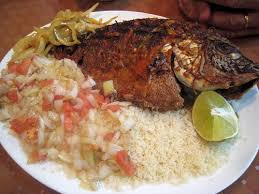
Un plat de Yeke-yeke
Une semaine plus tard, il rapporte à la maison un énorme plat de yéké-yéké (*). Araignée, son épouse et ses enfants en mangent tant qu’ils peuvent et se régalent. Lorsque le plat est vide, Araignée demande : « Où avez-vous trouvé cette nourriture succulente, mon frère ? »
Caméléon répond : « C’est un génie qui me l’a préparée ! Si, toi aussi, tu tues ta mère en sacrifice aux « Togbesikpé » (**), tu recevras le même cadeau. »
Plein de convoitise, Araignée exécute ce nouveau crime affreux. Mais, contrairement à son attente, il ne reçoit point de yéké-yéké. Le cœur de Caméléon se réjouit de cette vengeance et il murmure : « Si tu n’avais pas été aussi bête qu’avide, tu n’aurais pas fait cela ! » Continue reading “L’Araignée et le Caméléon”→
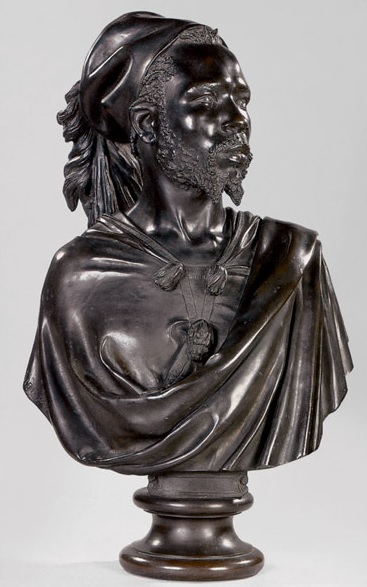
Said Abdullah of the Mayac – Kingdom of Darfur, by Charles Cordier, 1848
In honor of the upcoming Father’s day, I found this poem “He is … Father” by Epiphany. I loved her poem, and so I dedicate it to my father, and to all the great fathers out there.
================
He is … Father
by Epiphany
…He is
the shine in a little girl’s eyes
the icon of a son in the mirror
a husband to his woman
a provider & a leader
the endearing traits of a real man
personified in how He lives
…He is
the strength of the family unit
the shelter in a raging storm
a patriarch to the ancestral tree
his seed produces legacies
to carry on his dynasty
…He is
stability in the midst of adversity
He rules with a gentle hand
teaches his daughter how to be loved
to accept nothing less than a true man
He instills pride in his son
to be the best Man that He can be
Once a year is not enough to give credit where it is due
After talking about one of the great queens of Senegal, Queen Ndate Yalla Mbodj, it made total sense to explore the meaning of the capital and largest city of Senegal: Dakar. Is the name a local Wolof name? or does it have a French origin? Is the name’s meaning linked to Dakar’s strong fishing tradition or something else?
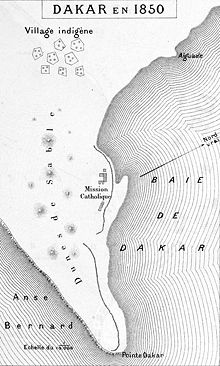
Map of Dakar in 1850
The name Dakarcould be the French version of Ndakaarou (Ndakaaru), local name whose etymology still remains uncertain. It could be derived from the wolofdeuk rawmeaning “whoever settles here will be in peace,” or dekk-rawfrom dekk(country), and raw (to escape) because of the afflux of populations from the Cayor and Baol regions after the Lebous settled there. It could also arise from the wolof dakhar, the name for the tamarind tree: it is said that upon arrival in the area, the Lebou people were impressed by the huge numbers of Tamarind trees they saw, and thus named the area after it, dakhar. However, some historians think that the area was named after a French marine officer Accar or d’Accard, who lived there at the end of the 17th century, and was mentioned on maps of that era. The name Dakar first appeared on a 1750 map of the Cap-Vert Peninsula, drawn by French botanist Michel Adanson.
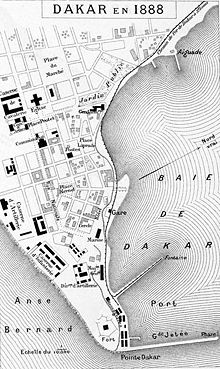
Map of Dakar in 1888
The Cap-Vert peninsula was settled, no later than the 15th century, by the Lebou people, an aquacultural ethnic group related to the neighboring Wolof and Serer. The original villages: Ouakam, Ngor, Yoff and Hann, still constitute distinctively Lebou neighborhoods of the city today. In 1444, the Portuguese reached the Bay of Dakar, initially as slave-raiders, but were repulsed by the natives on the shores. Peaceful contact was finally opened in 1456 by Diogo Gomes, and the bay was subsequently referred to as the “Angra de Bezeguiche” (after the name of the local ruler). Due to its key location, the bay of “Bezeguiche” would eventually serve as a critical stop for the Portuguese India Armadas of the early 16th century.
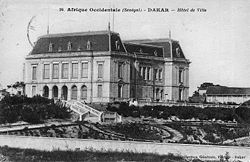
Hotel de Ville of Dakar, 1920
The Portuguese eventually founded a settlement on the island of Gorée (then known as the island of Bezeguiche or Palma), which by 1536 they began to use as a base for the export of slaves. The mainland of Cap-Vert, however, was under control of the Jolof Empire, as part of the western province of Cayor which seceded from Jolof in its own right in 1549. A new Lebou village, called Ndakaaru, was established directly across from Gorée in the 17th century to service the European trading factory with food and drinking water.
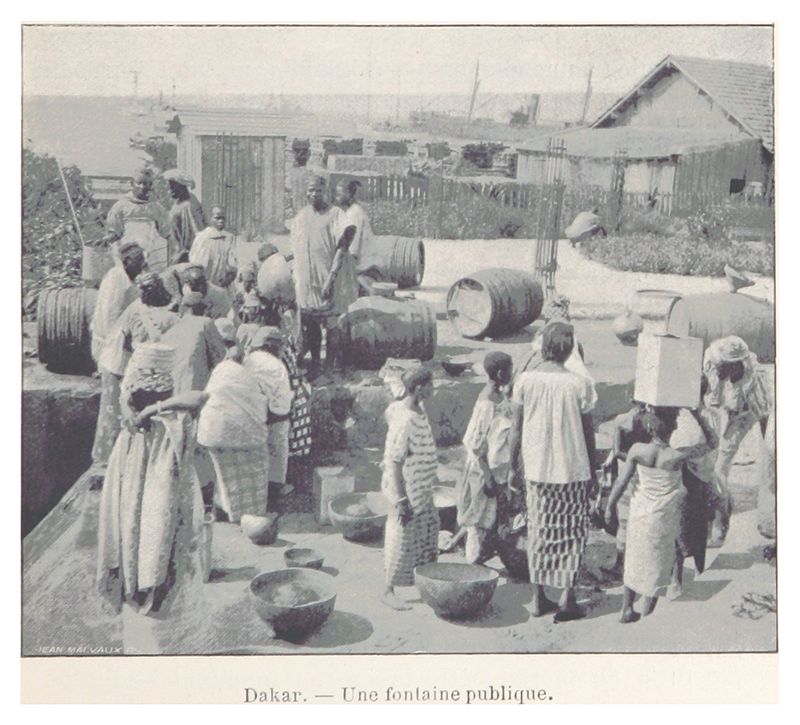
Public well in Dakar in 1899
The city of Dakar is a commune, one of the 67 communes of Senegal. The commune of Dakar was created by the French colonial administration on June 17, 1887 by detaching it from the commune of Gorée. The commune of Dakar is also a department, one of the 34departments of Senegal; this is quite similar to Paris, which is both a commune and a department. Dakar was also the capital of the short-lived Mali Federation from 1959 to 1960, before becoming the capital of independent Senegal in 1960. The poet, philosopher and first President of Senegal,Léopold Sédar Senghor, tried to transform Dakar into the “Sub-Saharan African Athens” (l’Athènes de l’Afrique subsaharienne).
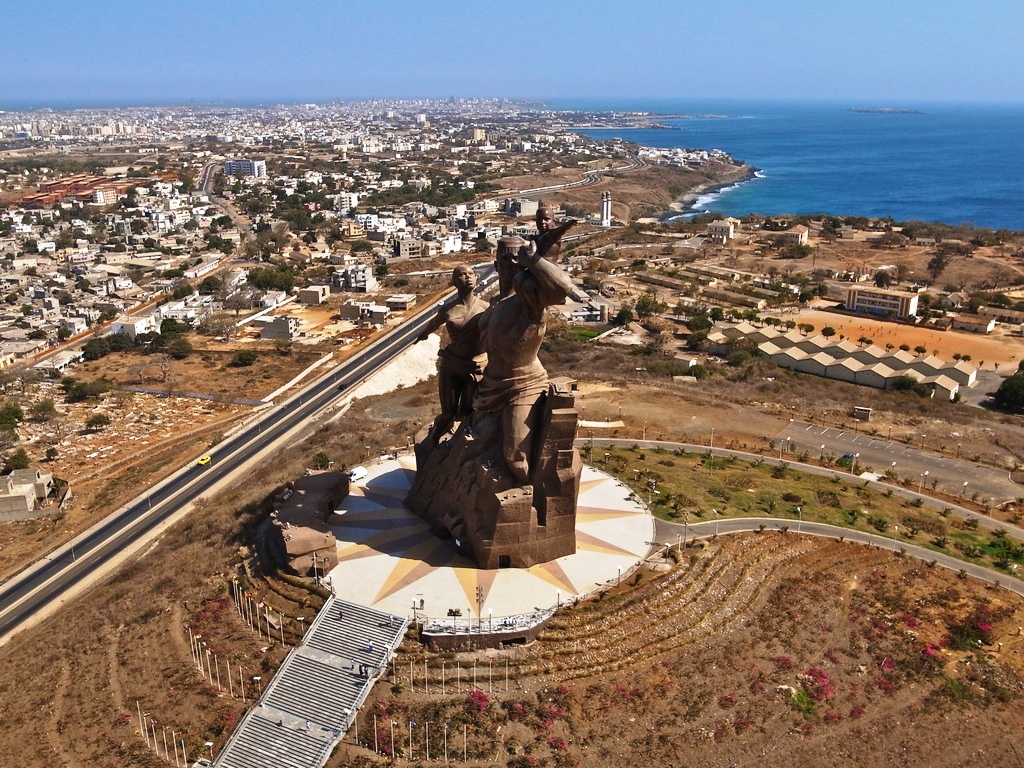
The African Renaissance Monument with a view of Dakar and the ocean (Carrapide.com)
In its colonial heyday Dakar was one of the major cities of the French Empire, comparable to Hanoi or Beirut. French trading firms established branch offices there and industrial investments (mills, breweries, refineries, canneries) were attracted by its port and rail facilities. Today, Dakar is a major financial center, home to national and regional banks, and numerous international organizations, NGOs and international research centers. Beginning in 1978 and until 2007, Dakar was frequently the ending point of the famous Dakar Rally. It is also home to the IFAN Museum of West African culture, and the tallest sculpture in Africa, the African Renaissance Monument.
Dakar is a vibrant and cosmopolitan city. Located on the shores of the Atlantic Ocean, its numerous sandy beaches and the warmth of its people make it a rare pearl. Enjoy the video below, and if you get a chance, do visit this “Athens of Sub-Saharan Africa”, and do not forget to taste the amazing fish, and world-renowned Senegalese cuisine, and feel the spirit of the teranga (hospitality).
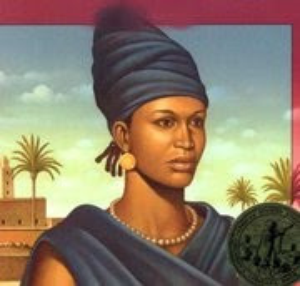
Queen Ndate Yalla Mbodj (from the cover of Kings and Queens of West Africa, by S. Diouf)
In 1855, when the French arrived to colonize Senegal, the first power of resistance they encountered was a woman. Her name was: Ndate Yalla Mbodj. While in France, women were not recognized as citizens until 90 years later, the French were stunned by this woman of beautiful stature, face, and strong body, and who headed an immense army. She was a beautiful and proud warrior, who inherited a rich tradition of bravery and gallantry.
The Lingeer or Queen Ndate Yalla Mbodj (1810 – 1860) was the last great queen of the Waalo, a kingdom in the northwest of modern-day Senegal. She was a heroine of the resistance against French colonization and Moors invasion. She was also the mother of Sidya Leon Diop or Sidya Ndate Yalla Diop, who went on to become one the greatest resistants to the colonization of Senegal.
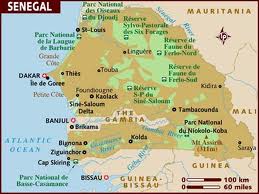
Map of modern-day Senegal
Queen Ndate succeeded to her sister Ndjeumbeut Mbodj. She was officially crowned Queen of the Waalo on October 1st 1846 in Ndar (now called Saint-Louis), the capital of the Waalo. Her reign was marked by an ongoing defiance of the French against which she fought a fierce battle. By 1847, she opposed the free passage of Sarakolé people by sending a letter to the governor expressing her willingness to defend the respect of her sovereignty over the valley in these terms: “We guarantee and control the passage of cattle in our country and we will not accept it the other way. Each leader governs his country as he pleases.“
Warrior from the Waalo Kingdom, 1846
She fought both the Moors who happen to encroach on her territory, and the colonialist army led by Louis Faidherbe, the butcher, and bandit, who later became governor of Saint-Louis and colonial head of administration and army. Almost 10 years into her reign in 1855, she encountered the greatest colonialist pirate Faidherbe, with an army of 15,000 strong, fully armed and ready to fight her, dethrone her, and colonize Waalo and Senegal. Faidherbe defeated her army in bloody battles, before capturing Saint-Louis. In February 1855, while the Faidherbe’s troops were entering the Waalo, the Lingeer spoke to the principal dignitaries of her country as such: “Today, we are invaded by the conquerors. Our army is in disarray. The tiedos of the Waalo, as brave warriors as they are, have almost all fallen under the enemy’s bullets. The invader is stronger than us, I know, but should we abandon the Waalo to foreign hands?” (Aujourd’hui nous sommes envahis par les conquérants. Notre armée est en déroute. Les tiédos du Walo, si vaillants guerriers soient-ils, sont presque tous tombés sous les balles de l’ennemi. L’envahisseur est plus fort que nous, je le sais, mais devrions-nous abandonner le Walo aux mains des étrangers?) … “This country is mine alone!”
She eventually lost the battle, but not the war; which continued to be a war of resistance until the early part of the twentieth century by Lat Dior Diop, and many other ‘Gelewars’. This conquest would forever change the trajectory of her reign and the geopolitical, military, and geographical road map of Senegambia, “Ganaar” (now called Mauritania), Mali (formerly called French Sudan), and Fouta.
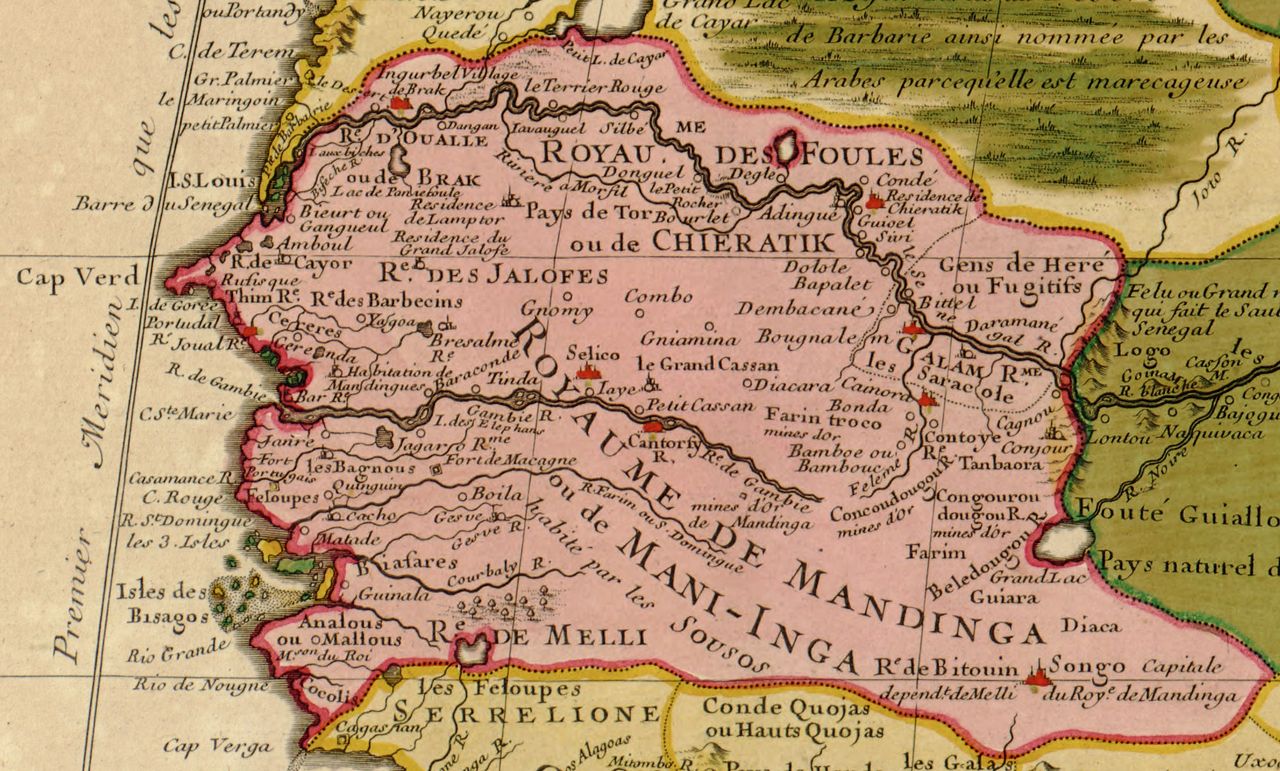
Senegambia in 1707, with the Kingdom of Waalo written as ‘R. d’Oualle ou de Brak’
Her father was Brak (King) Amar Fatim Borso Mbodj, and mother was Lingeer (Queen) Awo Fatim Yamar Khuri Yaye Mboge. Her son, Sidya Leon Diop, who would later too become an anti colonialist, and fight the French until his capture, and exile to die in Gabon in 1878. Her son Sidya was captured as a hostage in Saint-Louis by General Faidherbe during their bloody war with Ndate, and was baptized ‘Leone’ and sent to Algiers for schooling in 1861. When he returned to Senegal two years later in 1863, he was enlisted in the French colonial army; the first African or Senegalese to hold such a post. But as the saying goes —like mother, like son, he refused to do their dirty job of joining forces with the European colonial foreigners and mercenary apparatus, against his mother’s kingdom and people. He then changed strategy and rallied with Lat Dior Diop and others, which resulted in his betrayal, and capture by the colonial forces; and exile to Gabon (just like Samori Toure).
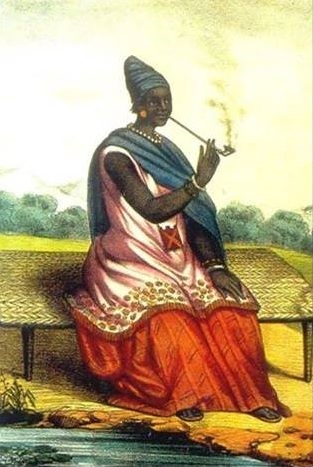
Ndate Yalla Mbodj
Queen Ndate Yalla Mbodj, as a true ‘lingeer’, developed the women’s army as one of the most formidable forces to recon with in her reign. The story of this Senegambia Queen is best amplified in oral tradition by the local griots. Her women army was similar to the “Amazon” women army of Benin, Behanzin’s fearless protective women’s army. She later went into exile in Ndimb in the northern part of the Waalo and died in Dagana, where today a statue has been erected in her honor (the only one erected in honor of a queen nationwide). To learn more, check out: Maafanta.com, Matricien.org, au-Senegal.com; the book Kings and Queens of West Africa by Sylviane Diouf has an entire chapter dedicated to this great queen.
The first UK’s Royal Academy of Engineering ‘AfricaPrizefor EngineeringInnovation‘ was awarded to Tanzanian chemical engineer Askwar Hilonga for his water filter. His filter uses nanotechnology and sand to clean water; it adsorbs anything from copper and fluoride to bacteria, viruses and pesticides.
Hilonga’s invention should help the 70% of households in Tanzania that do not have clean drinking water. This is a very important invention in a world where clean water is becoming rare, whether in developed countries where their water is spoiled by major pollution from oil or heavy elements such as uranium or radium, or in developing countries where water may have been soiled by big oil, or simply not clean. Moreover, his invention will provide a low-cost alternative to water filtering.
The prize is worth £25,000 ($38,348). Congratulations to Dr. Askwar Hilonga, and don’t forget to read the article on BBC.
Ce que les racines décident, elles ne le disent pas aux branches (Proverbe Ekonda – République Démocratique du Congo). – Ce que le supérieur à l’intention de faire, l’inférieur n’en sait rien.
Branches
What the roots decide, they do not share it with the branches(Ekonda Proverb – Democratic Republic of Congo). – What the superior intends to do, the subordinate knows nothing about it.
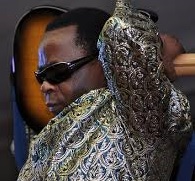
Most people have heard of Stevie Wonder, the American blind R&B virtuoso, who was discovered at the tender age of 11. Most people versed in classical music have probably heard of the Italian classical tenor Andrea Bocelli, who was born with poor eyesight, and turned blind by the age of 12. But how many of you have heard of the Cameroonian blind singer André Marie Tala who influenced an entire generation of Cameroonian and African artists? the singer who was even plagiarized by the mighty James Brown?
Andre Marie Tala and Sam Fan Thomas (Source: Rfi)
To those who visit my blog, you have probably listened to two of his classic songs, which are odes to some of Africa’s beautiful capitals: Yaoundé, and N’Djamena, the capitals of Cameroon and Chad respectively. Only after I wrote about N’Djamena did I realize that André Marie Tala had performed at the Olympia (with Sam Fan Thomas, another giant of Cameroonian music) on May 17th to celebrate his 45year anniversary in the music industry.
André Marie Tala
Unlike all the singers cited earlier, Tala plays the guitar. Born in the mountains of the Western province of Cameroon in 1950, Tala loses his mother at the tender age of 4, and then his father at 16. He totally loses sight at the age of 15, and will be taken in by his grandmother. He builds his very first guitar with threads made out of nylon, and bamboo, and works on reproducing sounds from his favorite musicians. He starts his first group, the Rock Boys, with which he goes on to have immediate success. The Rock Boys later morphed into the Black Tigers in 1967 with his friend, guitar player, Sam Fan Thomas. At the age of 20, he moves to Paris and collaborates with the great Cameroonian saxophone player Manu Dibango; he lands his first big musical contract. Thus were born the titles Sikati, Po tak Si nan(laissez Dieu tranquille ! – leaveGod in peace), and Namala Ébolo. Big success! Po tak Si nanis a mixture of soul, jazz, and rhythm n’ blues, blend in with a mix of Cameroonian musical styles such as Makossa and Bikutsi. Tala calls his style “Tchamassi”.
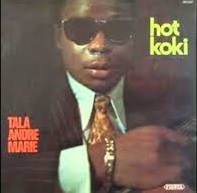
The album “Hot Koki” by André Marie Tala
In 1973, his album “Hot Koki” knows international success, and his single “Hot Koki” is even plagiarized by the great James Brown under the new title “The Hustle”. In 1978, after 4 years of judiciary struggles, Tala is awarded justice, and James Brown is condemned to pay him back all his rights.
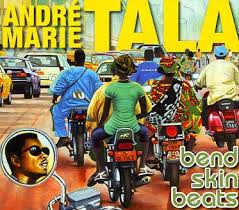
The big themes of Tala’s music are peace, love, and harmony. In the 90s, he brings Bend Skinto the forefront of Cameroonian music, a folkloric fusion of styles from the grasslands of Cameroon. It is often associated with the moto-taxis which are called by the same name Bend-Skin.
Album of André Marie Tala
By choosing the Olympia (the quintessential stage for music in France), for his musical jubilee, André Marie Tala wants to launch a new beginning for the Cameroonian music which has always been rich and influenced millions, but for the past decade has stagnated. Happy 45th-anniversary to Andre Marie Tala, and to many more albums of great music. I live you here with one of my favorite Tala’s song, Nomtema. Do not forget to check out “HOT KOKI” and check out the similitude with James Brown’s “THE HUSTLE“; it is the same, just in English!
“N’Djamena … Oh Oh Oh Oh N’Djamena… N’Djamena … J’irai un jour à N’Djamena en passant par le Lac Tchad” (I will one day go to N’Djamena, via Lake Chad) says Cameroonian singer Andre Marie Tala with his great song “N’Djamena”. Have you ever wondered what the name of the capital of Chad might mean? Is it a Ngambaye’s name? Daza? Hausa? Arab? Sara? or Kotoko? or does it come from the ancient Kanem-Bornu, or Bornu Empires that flourished in the region centuries ago? or is it simply a mix of Arabic with some local language?
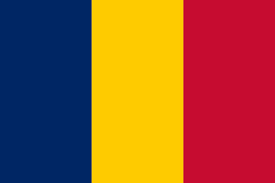
Flag of Chad
In reality, N’Djamena means “the city where one rests” (la ville où l’on se repose), or “the city where one finds rest.” Thinking about it, it is somewhat similar in meaning to that of Tunis, the capital of Tunisia, whose name means “to spend the night,” or “to lie down,” or “the area where one spends the night.”
Place de la Nation, N’Djamena
The city was not always called N’Djamena. In fact before 1973, it was called Fort Lamy, after a French army officer who had been killed in the Battle of Kousséri on May 29, 1900, Amédée-François Lamy. It was a major trading city and became the capital of the region and nation. It is located on the Chari River, near the confluence with the Logone River, and directly faces the Cameroonian city of Kousséri, to which it is connected by a bridge, just like Brazzaville and Kinshasa, the capital cities of the two Congos. N’Djamena is a regional market for livestock, salt, dates, and grains. Meat, fish, and cotton processing are the main industries, and the city is the economic capital of the country as well as its political capital. It is Chad’s largest and most populous city.
On April 6, 1973, President François Tombalbaye changed the name of the city from Fort Lamyto N’Djamena. The name N’Djamena was taken from the Arab name of a nearby village, Nijamina or Am Djamena, meaning “place of rest“. Enjoy the great song by André Marie Tala, and like he says “I will one day go to N’Djamena… to discover its beautiful landscape.” Enjoy this great place of rest!