Huda Sha’arawi: Egypt’s Great Feminist

Huda Sha'arawi
Huda Sha’arawi

Today, we will be talking about Huda Sha’arawi (also Hoda Shaarawi, or Hoda Charaaoui), one of Egypt’s top feminists. She was a pioneering Egyptian feminist leader, nationalist, and founder of the Egyptian Feminist Union. Sha’arawi’s work was immense in redefining the place of the woman in Egyptian society, and led to a new dawn for Egyptian women.
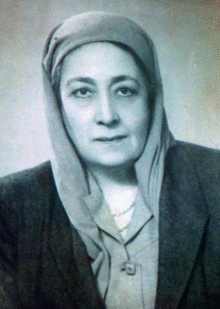
Huda Sha'arawi (Wikipedia)
Huda Sha’arawi (Wikipedia)

Sha’arawi was born in a wealthy family in Minya on 23 June 1879. Her father was Muhammad Sultan, the first president of the Egyptian Representative Council, and the first Egyptian to rise through all the ranks of government at the time. Her father passed away when she was 4 years old. She was married at the tender age of 13 (very common in those days) to Ali Sha’arawi, a widower, cousin, and tutor with 4 children. The independent teen could not stand the austere life with her spouse and ran back to her mother where she stayed for the next 7 years. During those years of separation, she got further education and grew more independent. At the end of the 7 years, she returned to her husband with whom she later had 2 children. Her husband, Ali Sha’arawi was a political figure, and he associated his wife to his fight against British rule.

Hatshepsut (Wikipedia - MET Museum)
Hatshepsut (Wikipedia – MET Museum)

At the end of the 19th and beginning of the 20th centuries, women in Egypt were confined to houses or harems, and wore veils… This, in an Egypt which had seen Hatshepsut the female Pharaoh, Queen Cleopatra and Sultana Shajar al-Durr. As seen in all her pictures, Huda is wearing a Hijab. Sha’arawi resented such restrictions on women’s movements, and started organizing lectures for women on topics of interest to them. This brought many women out of their homes and into public places for the first time. Sha’arawi even convinced them to help her establish a women’s welfare society to raise money for the poor women of Egypt. In 1910, Sha’arawi opened a school for girls where she focused on teaching academic subjects rather than practical skills such as midwifery.

After World War I, as Egyptian men started to rise loudly for their rights, many women took part in political actions against the British rule as well. In 1919, Sha’arawi helped organize the largest women’s anti-British demonstration. In defiance of British orders to disperse, the women remained still for three hours in the hot sun. Such a thing had never been heard of in the history of Egypt and even of Islam.

The first 3 Egyptian Ladies to abandon the veil: Nabaireya Moussa, Hoda Chaaraoui, and Ceza Nabaroui

Sha’arawi made a decision to stop wearing her veil in public after her husband’s death in 1922. In March 1923, Sha’arawi founded and became the first president of the Egyptian Feminist Union, after returning from the International Woman Suffrage Alliance Congress in Rome she removed her face veil in public for the first time, a signal event in the history of Egyptian feminism.

She fought for the suppression of precocious marriage for young girls, giving them access to all levels of education. She led Egyptian women pickets at the opening of Parliament in January 1924 and submitted a list of nationalist and feminist demands, which were ignored by the Wafdist government, whereupon she resigned from the Wafdist Women’s Central Committee. The Egyptian Feminist Union campaigned for various reforms to improve women’s lives. Among them were raising the minimum age of marriage for girls to sixteen, increasing women’s educational opportunities and improving health care. Egypt’s first secondary school for girls was founded in 1927 as a result of this pressure. In 1933, a new law is agreed in parliament (through her push) regulating the work of women in industry: making sure a woman could not be made to work more than 9 hours per day, giving her a rest day, one month of maternity leave, and 15 days of leave at half-salary after delivery of a child. This was a victory for the Union.
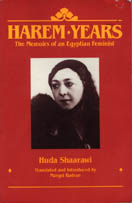
'Harem Years ...' by Huda Sha'arawi
‘Harem Years: The Memoirs of an Egyptian Feminist’ by Huda Sha’arawi

She continued to lead the Egyptian Feminist Union until her death, publishing the feminist magazine L’Égyptienne (and el-Masreyya), and representing Egypt at women’s congresses in Graz, Paris, Amsterdam, Berlin, Marseilles, Istanbul, Brussels, Budapest, Copenhagen, Interlaken, and Geneva. She advocated peace and disarmament. Even if only some of her demands were met during her lifetime, she laid the groundwork for later gains by Egyptian women and remains the symbolic standard-bearer for their liberation movement. In 1943, King Farouk decorated Huda Sha’arawi with the Order of  Kamal. Sha’arawi wrote poetry in both Arabic and French. In 1944, she founded the All-Arab Federation of Women. Huda Sha’arawi died in 1947.  Sha’arawi later recounted her early life in her memoir Harem Years: The Memoirs of an Egyptian Feminist, 1879-1924. To learn more about her, check out her memoir, read Casting Off the Veil: The Life of Huda Shaarawi, Egypt’s First Feminist by Sania Sharawi Lanfranchi, this article on Forbes, and this amazing chapter dedicated to her in Les Africains, Tome 10, ed. J.A. 1978, P. 107-141. With her strong personality, unique blend of western-style feminism with her own country’s customs, culture, and Egyptian nationalism, Huda Sha’arawi influenced millions of Egyptian and Arab women and people all around the world.

‘We Should All Be Feminists’ by Chimamanda Ngozi Adichie

Chimamanda Ngozi Adichie (Source: The Guardian)

What is the definition of feminism? Is it the same when applied to African women? Is there such a thing as African, or Asian, or European feminism? Why should feminism be dismissed as something only good for women, and not men as well? The condition of the woman is closely linked to that of the man, and as a woman is empowered, as she is given her rightful place in society, then are we ALL empowered as a human species. I live you here with a TED speech by Chimamanda Ngozi Adichie, the Nigerian author of the Top New York Times Bestseller book of the year 2014. Yes, she talks about feminism, but in reality, she talks about the reason why ALL of us should be feminists: including MEN. Imagine for instance a working couple, where the woman in the couple is paid lower than men doing the same job, imagine the impact of that salary on the entire family budget if she was paid the same as a man, the opportunities for her children, healthcare, vacation, well-being, etc. Enjoy! Adichie’s speech ‘We Should All Be Feminists‘ has now been made into a book, which is going to be thought in schools in Norway and Sweden (The Guardian article). And yes feminism is not about angry females or beating men out of the world, it is about girls being given the same chances as boys, women being recognized for their impact on society, being allowed to rise, being intelligent and bright.

Happy 2016!

Fellow readers, I wish you all an AMAZING new year, may the year 2016 be the year of all great achievements, joys, successes, and awesomeness. I would like to express my sincere gratitude to all those who visited my blog, reblogged articles, and to all future visitors. 2015 was a beautiful year: the number of subscribers on Afrolegends.com has tripled, with over 200,000 new visitors viewing the blog, and many articles getting reblogged on multiple sites. For 2016, I wish you wonders without borders, peace, grace, and love. May there be peace and happiness in the world.

The 5 top posts of 2015 can be seen below. For the first time in 3 years, the article on Samori Toure was surpassed as the top post for the blog Afrolegends.com; the article on Adinkra symbols was also particularly loved. Keep trusting, reading, sharing, and liking. Keep your heads up, and may your year be as beautiful as the petals of this flower!

Happy 2016
Happy 2016

1.  ‘Love Poem for My Country’ by Sandile Dikeni

2. Samori Toure: African leader and Resistant to French Imperialism

3. Adinkra Symbols and the Rich Akan Culture

4.  ‘My Name’ by Magoleng wa Selepe

5. ‘Femme Noire/Black Woman’ by Leopold Sedar Senghor

The Faso Dan Fani: Woven Cloth of the Homeland

Flag of Burkina Faso

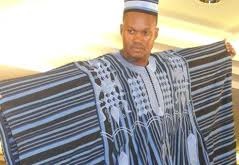
Today we will be talking about the Faso Dan Fani, known as Burkina Faso‘s national cloth. For starters, the Faso Dan Fani means “woven cloth of the homeland” (pagne tissé de la patrie). All the words are Dioula: Fani = cloth/wrapper (pagne), Dan = woven (tissé), Fasohomeland (patrie). It is known locally as FDF. As you have probably guessed, the Faso Dan Fani is a handwoven cotton cloth. The weaving style and patterns differ depending on the ethnic group. As you all know, weaving cotton is an ancient African tradition (African textiles): in the old days, the spinning was done by women, while the men were left with weaving the cotton threads into cloth. With time, women took over the weaving business as well.

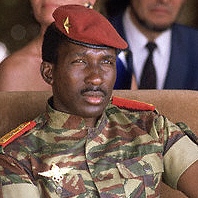
Thomas Sankara
Thomas Sankara a Ouagadougou

In 1986, the President of the Faso, Thomas Sankara, declared that it was important to “produce and consume Burkinabé“. Thus, he declared “In all the villages of Burkina Faso, we know how to grow cotton. In all villages, women know how to spin cotton, men know how to weave it into cloth, and other men know how to sew those threads into clothes... [Dans tous les villages du Burkina Faso, l’on sait cultiver le coton. Dans tous les villages, des femmes savent filer le coton, des hommes savent tisser ce fil en pagnes et d’autres hommes savent coudre les pagnes en vêtements …]” and further “We should not be slave of what others produce [Nous ne devons pas être esclave de ce que les autres produisent].” For the president, “wearing the Faso Dan Fani is an economic act, cultural, and political to challenge imperialism [porter le Faso Dan Fani est un acte économique, culturel, et politique de défi à l’impérialisme].”

Faso Dan Fani
Faso Dan Fani

Thus under Thomas Sankara’s revolution, the traditional attire was imposed in work places. … Many were not pleased with it, to the extent that some had nicknamed the FDF, “Sankara is coming [Sankara arrive] since the PF was known to do impromptu visit of his ministries. Under him, the FDF had become the signature of Burkinabé outside the country. Sankara even made a speech at the United Nations where all the members of his delegation and himself were dressed with the Faso Dan Fani entirely made by local Burkinabé artists to be consumed by Burkinabe.

Model wearing Faso Dan Fani (Ecodufaso.com)

Today, the Faso Dan Fani is seen as a symbol of national pride, and people are starting to wear it again. Check out ThomasSankara.net to learn more about it, and this article “Faso Dan Fani: what if Thomas Sankara was right?” and this article on AfriqueFemme.com. Enjoy!

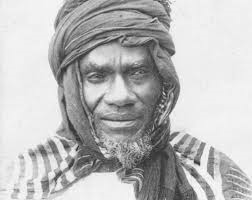
Portrait of Samori Touré

Samori Toure holding the Coran

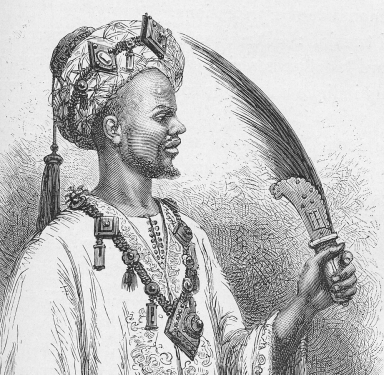
All, I am giving you below a portrait of Samori Touré made by Commandant Binger, a contemporary of Samori Touré, one of the great kings and fighters for African freedom. Bear in mind that this description is certainly  tainted by the European (Binger) colonizer’s stereotypes of Africans. The original text in French is found on page 255 of Les Africains, Tome 1. Translation to English by Dr. Y. Afrolegends.com. Enjoy!

=============

Samori Touré
Samori Touré

The almamy is a tall handsome man of about 50 years of age; his features are a bit hard, and, unlike men of his race, he has a long slim nose, which gives a refined expression to his entire physiognomy; his eyes are very mobile, but he does not often look across his interlocutor.

His exterior appears to me affable rather than hard: very attentive when a compliment is made to him, he can be distracted and indifferent when he does not want to answer a question categorically. He speaks with great volubility, and I think him capable of being warm and persuasive when the occasion arises.

Sitting in a cotton hammock with white and blue rays brought to him from Paris by his son, he holds in his hands, a big piece of tender wood which is called in Bambara niendossila, or ngossé (it is sotiou in Wolof) and with which he cleans his teeth.

"L'Almami Samori Toure" de Khalil Fofana
“L’Almami Samori Toure” de Khalil Fofana

He is dressed with a big doroké in purple florence, of inferior quality, and wears indigenous cotton pants with black and red rays of European make; his legs, a brown chocolate lighter than his face, are coated with shea butter; he is wearing indigenous red leather sandals.

On his head is a red fez of sharpshooter around which is wrapped a thin white turban which goes on his mouth and frames his black face. On his shoulders, he negligently wears a haïk of low price.

Imaginary portrait of Samori Touré

Sitting at his feet are: an old kokisi who never leaves him, two marabouts, a few griots, and the four captives assigned to the hammock, the chair, the camping  bowl in which he washes his hands, and the kettle containing water for occasional rinsing of the mouth. These objects and captives rarely leave his side; wherever he goes, this paraphernalia follows.

Within his reach, and under the same shelter (sort of shed to which the hammock is docked), two tailors are busy sewing yellow florence for his wives. One of the griots carries a big red umbrella, while the other one carries a crank-rod gun. All the objects mentioned above are of English make, except the hammock and the camping bowl, which is a regular bowl.

Commandant Binger

“From Niger to the Gulf of Guinea”

Proverbe Douala sur la punition / Duala proverb on punishment

Lezard
Lézard / Lizard

Si le lézard trébuche, le caméléon se brise-t-il pour cela le dos? (Proverbe Douala – Cameroun).- Punir seulement le coupable.

Caméléon / Chameleon

If the lizard stumbles, does the chameleon also break its back? (Duala proverb – Cameroon).- Only punish the culprit.

Crocodile’s tears

Crocodile
Crocodile

In the old days, when the animals could talk, Crocodile was king of the water creatures. One year, there was a drought, and the water in the river ran dry. Crocodile sent Otter to scout for a new home, and two days later, he returned to say there was a deeper river on the far side of the farmer’s fields.

When he heard this, Crocodile called upon Tortoise and Alligator, and he explained they must go see Lion, king of the land creatures. “The veldt is dry,” he said, “and it will be a difficult journey, but we must make peace with the Lion and all his subjects, or we will die. They must help us cross the land to reach the other river.”

Tortoise and Alligator set off at once to see Lion. They carried along a peace treaty Crocodile had composed. When they arrived, they handed Lion the treaty.

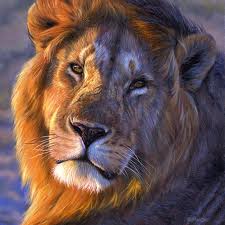
Lion
Lion

Lion read it and decided he must consult with his associates, and then all the animals would hold a meeting. “Let us meet this evening at the willow tree at the far end of your river, where Crocodile has his headquarters,” Lion said. “There we can discuss the plan.”

So Tortoise and Alligator gave the news to Crocodile, who was very pleased to hear about this turn of events. “We must prepare some treats to woo our friends,” he said, so he and the others prepared many fish delicacies.

That night, with Otter and Beaver and Tortoise and Alligator, Crocodile traveled to the willow tree. There they met Lion and Wolf and Jackal and Baboon.

Crocodile was so pleased to see this gathering, a tear of joy dropped down his face and landed in the sand. “We have brought you some treats!” he announced, and Wolf and Jackal pounced with delight on the bounty. Continue reading “Crocodile’s tears”

Why the name: Bamako?

Map of Mali with its capital Bamako

What does Bamako have in common with London, Paris, Amsterdam, Berlin, or Madrid? Of course it is the capital of a country, Mali, like all those other cities. However, the real similarity, is that it is located on the banks of a major river (like all those cities): the third largest river on the African continent, the Niger River, also known as Joliba (or the river of blood), near the rapids that divide the upper and middle Niger valleys in the southwestern part of the country. The city first grew on the north banks of the river, and later spread to the south banks as well.

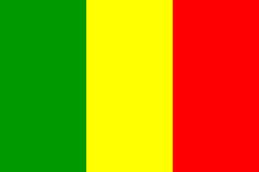
Flag of Mali
Flag of Mali

The name Bamako comes from the Bambara word Bàmakɔ̌ meaning “river of crocodile“. It was founded at the end of the 16th century by the Niaré people, also called Niakaté, who are Sarakolés. The crocodile being the fetish of Bamako, in the olden days, a virgin girl was offered to it every year… however this tradition was abandoned a long time ago. A hunter from Lambidou (Kayes region) by the name of Simballa Niakaté chose the city’s site. However, it was his eldest son Diamoussa Niakaté who founded the city Bamako. The 3 crocodiles which symbolize Bamako found their origin in the 3 creeks that crossed Bamako: Lido, Diafarana, and Bèlèsôkô. The creeks come together in the city to flow into the Niger river. Just as the city’s symbol is 3 crocodiles, and so 3 creeks/rivers, it also comprises 3 major bridges which link both banks of the Niger River.

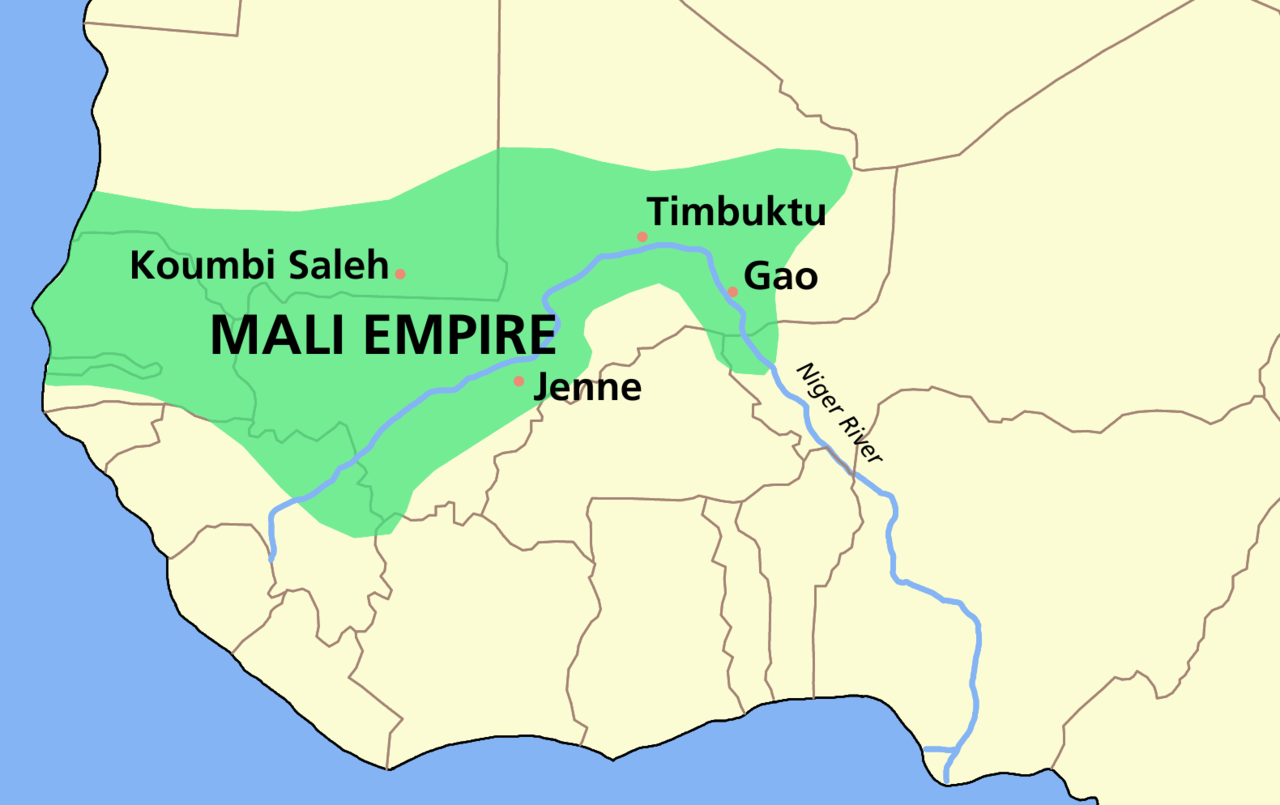
Mali Empire (Wikipedia)

The area of the city has been continuously inhabited since the Palaeolithic era for more than 150,000 years. The fertile lands of the Niger River Valley provided the people with an abundant food supply and early kingdoms in the area grew wealthy as they established trade routes linking across West Africa, the Sahara, and leading to northern Africa and Europe. The early inhabitants traded gold, ivory, kola nuts, and salt. By the 11th century, the Empire of Ghana (this will be the subject of a post soon) became the first kingdom to dominate the area. Bamako had become a major market town, and a pathway to Timbuktu the center of knowledge via the Niger river. Later, the Mali Empire grew during the early Middle Ages and replaced the Empire of Ghana as the dominant kingdom in West Africa, dominating Senegal, Gambia, Guinea, Mali, and Mauritania. In the 14th century, the Mali Empire became increasingly wealthy because of the trade of cotton and salt. It was eventually succeeded by the Songhai Empire.

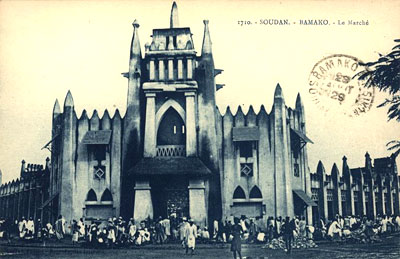
The Pink Market (Le Marche Rose) in Bamako ca 1900s

By the late 19th century, the French dominated much of western Africa, and in 1883, present-day Mali became part of the colony of French Sudan, and was its capital in 1908. Cotton and rice farming was encouraged through large irrigation projects and a new railroad connected Bamako to Dakar on the Atlantic coast. Mali was annexed then into French West Africa, a federation which lasted from 1895 to 1959. Bamako remained the capital of Mali after independence in 1960.

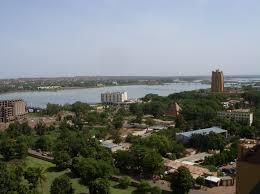
Bamako on the banks of the Niger River (Wikipedia)
Bamako, on the banks of the Niger River (Wikipedia)

Bamako is known as the crossroads of West Africa, since it is located 1000 km from Dakar (Senegal) and Abidjan(Côte d’Ivoire), 850 km from Ouagadougou (Burkina Faso), and 120 km from the border with Guinea. With a population of 1.8 million, Bamako is viewed today as the fastest growing city in Africa and sixth-fastest in the world. It is a buoyant city full of life. Enjoy a visit to the “river of crocodiles,” the crossroad of West Africa, and don’t forget to bathe in the centuries’ old history of great West African kingdoms in Mali, and its rich traditions.

Proverbe Bambara sur la force/ Bambara proverb on strength

PirogueMême une grande pirogue peut se renverser (Proverbe Bambara – Mali). – Même le fort est mortel.

Even a large boat can overturn (Bambara Proverb – Mali). – Even the strongest is mortal.

To a Colorful day!

My wish for you today dear friend is to have a colorful day! What do I mean by colorful? The colors on the petals of this flower remind me often of what a good day is, and what a colorful day is: full of joy, of empathy, difference, surprises, full of unexpected good events and simple. Yes… it is the simple things that most make us happy by their simplicity and subtleness. So today, enjoy the subtle things, and let color filter into your life.

20151124_Fleur