Un vieillard reste assis et voit; l’enfant se tient debout et ne voit rien(Proverbe Peul – Afrique de l’Ouest et une partie de l’Afrique centrale). – Expérience de la vie.
An old man sits down and sees; the child stands up and sees nothing (Fula proverb – West Africa and part of Central Africa). – Life experience.
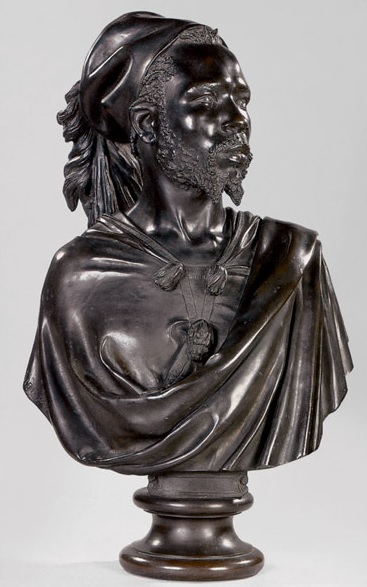
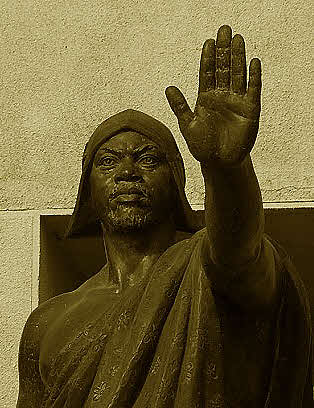
Here are letters written by King Behanzin to the French president about his kingdom, his land, and French attacks to force him into war. The originals can be found in French archives, and Benin Archives; the translations from French to English are by Dr. Y., afrolegends.com . Enjoy!
==============
“Our desire is that you have the kindness to send us an officer of your house to deal with litigation issues. As for Cotonou, my father never signed it away, and never will we sign it away. It is impossible for us, because if we do, it will be a great prejudice to us, and thunder will crush anyone who would dare dwell on that territory.”
Behanzin, to the President of the French Republic, 30 April 1890, Archives of the Marines, Paris.
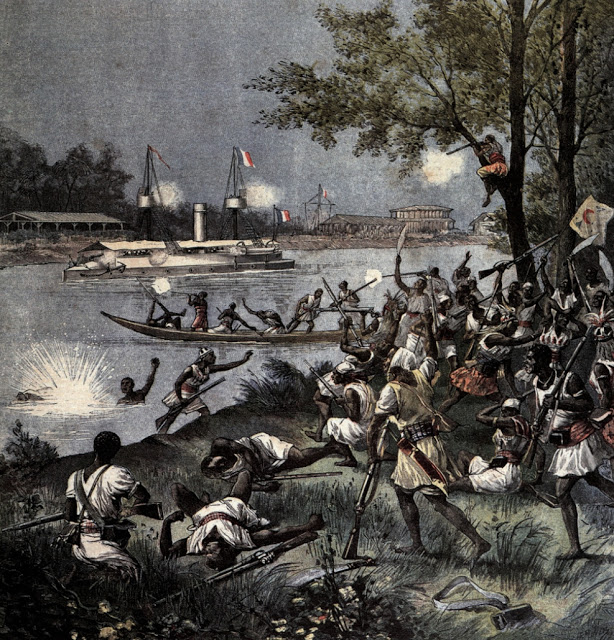
French invasion of the Dahomey along the Oueme River in 1892
“I have just been informed that the French government has declared war on the Dahomey (…). You could start on all the points you want (…) I, too, will do the same. About what happened at the Ouémé River, you caused it (…). If you had not come to start war against me on the Atchoupa way, I would not have done anything to you first (…). Now, I come to tell you that, if you remain calm, I too will remain calm and we will have peace(…).
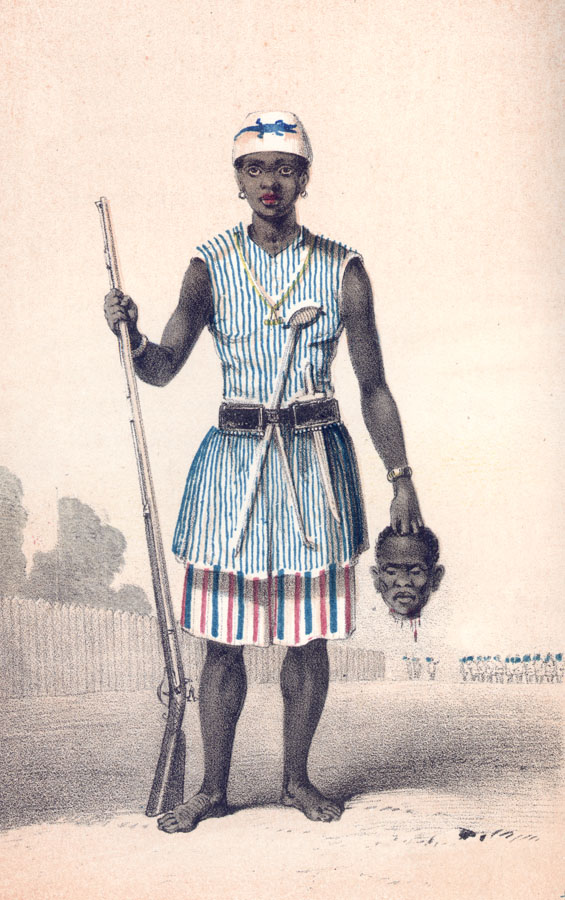
Seh-Dong Hong-Beh, leader of Dahomey Amazons (painted by Frederick Forbes in 1851)
The first time I did not know how to fight a war, now I know. If you start war, I have troops ready. My men are as numerous as works coming out of the earth. I am the king of the Africans and the Europeans have no say in what I do. The villages you are talking about do actually belong to me, they belong to me and wanted to become independent (under your influence), so I gave orders for them to be destroyed (…).
I desire to know how many independent French villages were destroyed by me, King of Dahomey. Remain calm, so your trade in Porto-Novo, this way we will always remain in peace as in the past. If you want war, I am ready. I will not end it even if it lasts a hundred years or kills 20,000 men.”
Behanzin, to Victor Ballot in Porto-Novo, 10 Avril 1892, Archives of the Popular Republic of Benin.
Les fourmis se sont dit: Réunissons-nous, nous réussirons à transporter l’éléphant(Proverbe Mossi – Burkina Faso). – S’entraider les uns les autres dans tous les travaux.
The ants said to themselves: Let us unite, we will succeed in moving the elephant(Mossi proverb – Burkina Faso).- Help each other in all works.
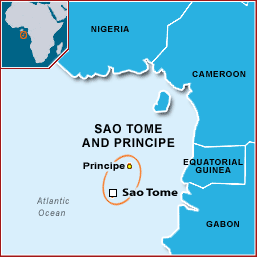
I used to love the sound of it: São Tomé e Príncipe… and always wondered: why have two names for one country? why the joined names? why not just name it São Tomé? Just like Trinidad and Tobago, São Tomé and Príncipe is in fact two islands, and just like T&T, the largest one is the first one in the combo name: São Tomé. However, unlike Trinidad and Tobago whose capital is Port of Spain, São Tomé and Príncipe’s capital is named … you guessed it: São Tomé!
So why the combo name and what does it mean? São Tomé was founded by Álvaro Caminha in 1493, who received the land as a grant from the Portuguese crown to grow sugar. The island was uninhabited before the arrival of the Portuguese sometime around 1470. (I always doubt these accounts which state an island as uninhabited; after all didn’t Christopher Columbus discover America even though it was already inhabited?). Príncipe was settled in 1500 under a similar arrangement. São Tomé was right on the equator and wet enough to grow sugar in wild abundance. Its proximity to the African Kingdom of Kongo provided an eventual source of slave laborers to work the sugar plantations. The dates of discovery, by explorers João de Santarém and Pêro Escobar, are sometimes given as 21 December (St Thomas’s Day) 1471 for São Tomé, and 17 January (St Anthony’s Day) 1472 for Príncipe. Thus São Toméstands for Saint Thomas. Príncipe was initially named Santo Antão(“Saint Anthony”), changing its name in 1502 to Ilha do Príncipe(“Prince’s Island”), in reference to the Prince of Portugal to whom duties on the island’s sugar crop were paid. Thus Principestands for Prince. Hence São Tomé e Príncipereally stands for Saint Thomas and Prince.
Principe in 1727
Attracting European settlers to the islands proved difficult, and most of the earliest inhabitants were “undesirables” (like in so many colonies) sent from Portugal, mostly Jews. In time these settlers found the volcanic soil of the region suitable for agriculture, especially the growing of sugar, and brought slaves from the neighboring Kingdom of Kongo to work those plantations.
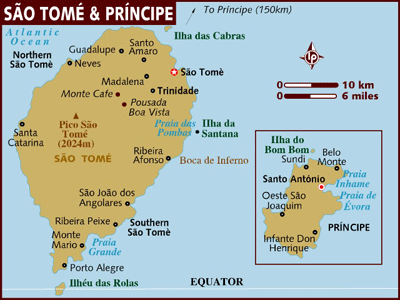
Sao Tome and Principe today
São Tomé is centered on a sixteenth-century cathedral. Another early building is Fort São Sebastião, built in 1575 and now the São Tomé National Museum. In 1599, the city as well as the islands were taken by the Dutch for two days and again in 1641 for a year. It was the capital of the Portuguese colony of São Tomé and Príncipe and, since São Tomé andPríncipe‘s independence on 12 July 1975, capital of the sovereign nation.
The country’s economy is centered around cash crops: sugar, cocoa, and coffee. Tourism is also another big economic driver for the country.
A reconstruction of Homo naledi’s face by paleoartist John Gurche (Source: National Geographic)
I know this is old news, but I had to go back to the discovery of the Homo naledi a few months ago. For starters, the word naledimeans “star” in the Sotho language, and comes from the name of the Dinaledi chamber (chamber of stars) of the Rising Star cave system where the fossils were found. South African researchers unveiled Homo naledi last September after discovering the remains of 15 individuals in the Rising Star Cave near Johannesburg. The bones have yet to be dated, making it hard to evaluate where the Homo naledi would fit within the history of the human kind. However, a few information have been gathered.
Homo naledi skeletal specimen (Source: Wikipedia)
Homo nalediwas small and slender with a tiny brain compared to modern humans, but with a human-like skull. The adult males stood at about 150 cm (5 ft) tall, with the females a little shorter. The physical characteristics of H. naledi are described as having traits similar to the genus Australopithecus, mixed with traits more characteristic of the genus Homo, and traits not known in other hominin species. From the first excavations, the hand and feet bones looked unusual, bearing the hallmarks of a creature that made and used stone tools, was an accomplished climber, and stood upright. Studies on the wrist and thumb show that Homo naledi had a powerful grasp.
Until further dating, many questions arise: where does the homo naledi fit in the human evolution? How long ago did the species emerge, and did it live in parallel with other species, in isolation? How related is it to the Homo erectus? Could the Homo naledi and the Home erectus ever have lived in the same era? With these findings in South Africa, it seems that we, humans, are just scratching the surface of so much mystery and know so little! There is so much to learn, and so much to uncover! (Just a parenthesis: as a scientist, I am just stupefied that the people in the video below would touch these fossils with bare hands… and wear no gloves… come’ on this is a million years old specimen!)
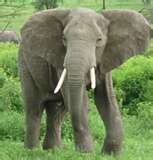
L’éléphant ne se fatigue pas de porter ses défenses(Proverbe Douala – Cameroun, Sotho – Lesotho – Afrique du Sud, Wasambaa – Tanzania, Mongo – RDC, Bangala – RDC). – Ne pas décliner ses responsabilités.
The elephant never tires from carrying its tusks(Proverb Duala – Cameroon, Sotho – Lesotho- South Africa, Wasambaa – Tanzania, Mongo – DRC, Bangala – DRC).- Do not decline one’s responsibilities.
I would like to share another poem ‘Ilsm’ontdit‘ by François Sengat-Kuo published in Fleurs de Latérite, Heures Rouges Éditions Clé, 1971. This poem ‘They told me’ is all about reclaiming African-ness. I know it doesn’t quite sound like it, but here is someone who left all to please others, in this case the European masters, and in the end decides to reclaim what is his, his culture, and above all himself. The poem deals with colonization times, the service of African soldiers in World war I and II, and then independence or rather the quest to find oneself. And yes, once he decides to put himself first, they tell him that he is a traitor. I bring you here “Ils m’ont dit” (They Told Me) translated to English by Dr. Y. on Afrolegends.com
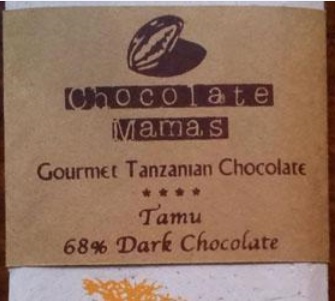
A chocolate bar from Chocolate Mamas (chocolatemamas.com)
Today, I would like to introduce you to Chocolate Mamas, Tanzania‘s first and only indigenous Chocolate company and producer of gourmet chocolates. It was co-founded by Jaki Kweka, when she quit her job as a practicing attorney to launch Chocolate Mamas and become a full-time chocolatier. All of their products are local: cocoa beans, milk, etc, which is quite rare for chocolate making on the African continent (some others across the continent use local beans, but import milk powder and sugar).
Flag of Tanzania
Even the packaging, made with corn husk, is produced by a local NGO for disabled persons. They serve organic chocolate, containing no emulsifiers, fat additives, gluten, or other chemicals. After opening stores in Dar es Salaam, Arusha, and Zanzibarin the country, Jaki Kweka, the director of Chocolate Mamas, is now looking to expand to other countries in East Africa, and maybe one day to the entire continent and the world. Enjoy a beautiful, pure, organic chocolate bar from Tanzania!
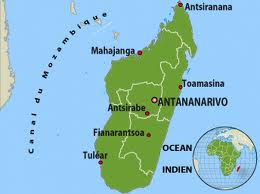
Here is part of a Malagasy tale which is several hundred years old: it is part of the Ibonia, an epic Malagasy poem told in various forms across Madagascar. The Ibonia is like Homer‘s epic poem the Odyssey for the people of Madagascar. One could say that it is the story of creation. You can find more about it here.
=========
Ibonia and Joy-Giving Girl stayed married about ten years. About three years before his death, he gave his will to his father and mother, his wife and children, and all the people in an around Long-Standing. He said,“This I declare to you: soon I am to return to the place of lying down.’ Close at hand is the day when Ibonia will be removed, and Inabo [another of his names] will go the way of all those whose doors face west [the dead]. That is a fate to take down one’s manhood. For to the earth we return and lie in state. Inabo is not to be buried to rot; he is to be planted to grow — to die by day and live by night.
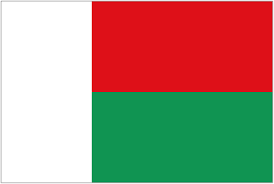
Madagascar
“I declare that Inabo’s return is coming. These then are the orders I leave you.
“The first and most important thing is marriage.
If you are a prince,
if you are a ruler,
if you are a governor,
if you are a spokesman,
do not untie the bonds of marriage.
The road of marriage is binding even unto death.
Do not divide it.” (This admonition, they say, strengthened people’s marriages.) “Second: listen. I shall change my name, for one’s name on earth does not got back to heaven. Before the lord of heaven all things are new. My grandfather is holy. These will be my names:
Spouts-from-Half-the-Earth,
Pierced Earth,
Sound-of-his-Steps-Deafens-Even-the Distant. Now, listen, all of you.
When there is thunder,
when the skies weep,
and when the rain falls,
lament, O Beautiful-Rich,
for that will be your son,
whose footsteps deafen even the distant.” (That, they say, was the first time it was said, “It is a bad day for old women,” when it thunders.) And when the three years had passed — Ibonia had said, “I will die when three years have passed” — then he died.

 An old man sits down and sees; the child stands up and sees nothing (Fula proverb – West Africa and part of Central Africa). – Life experience.










 African Heritage