African Naming Tradition

Africa
Africa

Africa has a rich naming tradition, which varies across the continent.This article by the BBC goes over some of the African naming traditions. I added a few more, and removed their ‘celebrity culture’ section, given that naming children after celebrities is not an African thing but a world thing, and dates as far back as the world. Don’t forget to check out the article I wrote on ‘My Name’ by Magoleng wa Selepe. You can read the full article on BBC.

================

Traditional African names often have unique stories behind them. From the day or time a baby is born to the circumstances surrounding the birth, several factors influence the names parents choose for their children. Whichever ethnic group you look at, these local names reveal a wealth of information about the bearer. Here are [eight] different ways African parents name their children:

Events surrounding birth

femme-africaine1
African Woman

Among several ethnic groups, picking out names can be influenced by positive or negative circumstances the family finds themselves in around the time a child is born. Often, such names are complete sentences.

  • Ayodele (joy has come home) is a unisex name for a baby whose birth brought happiness to their Yoruba parents in Nigeria.
  • Adetokunbo (crown/wealth has come back home) is a unisex Yoruba name often given to a child born abroad.
  • Ajuji (born on a rubbish heap) is a Hausa name given to a baby after those born before it failed to survive. It is believed that giving the child a “terrible” name will deceive evil spirits into thinking the child is not loved and as a result, allow it to live.
  • Kgomotso and Pumza (comfort) are given to babies born shortly after a death or tragedy in Sesotho and Xhosa families in South Africa.
  • Kiptanui and Cheptanui are often given to babies whose mothers may have suffered extreme difficulties during childbirth among the Kalenjin ethnic group in Kenya.
  • Lindiwe (we have waited) is an isiZulu name often given to a baby girl after a long line of boys.

Emotional warnings
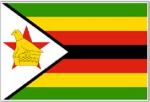
Flag of Zimbabwe
Flag of Zimbabwe

Some names, especially in Zimbabwe, [and Nigeria] reflect the mood or circumstance of the family at the time of birth. Some of them serve as warnings or rebukes.

  • Nhamo means misfortune
  • Maidei asks the question “What did you want?”
  • Manyara tells someone “You have been humbled
  • Yananiso means bringing the family together

  But this is not unique to Zimbabwe. [It can be found across the continent, from Malawi, to Nigeria, to Ghana, etc.]

Order of birth

In many African cultures, there is no need for someone to explain whether they are the eldest or youngest of their siblings. This is because their names can reveal that much. This is especially true of twins.
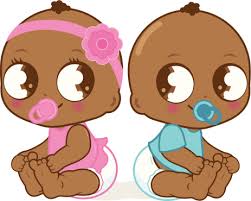
Twins3
Twins

If you meet a Ugandan boy or man called Kakuru or Wasswa, he is likely to be an elder twin. The younger male twin is usually called Kato. These are names specially reserved for twins.

Similarly, the Kalenjins in Kenya refer to the first born as Yator (first to open the way) and the last born Towett meaning last.

The Yorubas call the first twin Taiwo (taste the world) and the second Kehinde (came after).

In Ghana, the unisex names Panyin and Kakra, which basically mean older and younger, are used for twins.

[In Cameroon, in the Bamileke culture, the child who follows directly after twins is given names such as Kenfack, Kengne or Kammagni. While the parents of twins are given the special names of Magne (mother of twins) and Tagne (father of twins), and the Magne used to have a special place in the society just like the twins. Moreover, babies born breach are also given a particular name, Tcheutchoua, to show how difficult the delivery had been.]

Day-born names

calendar Among some Ghanaian [and Ivorian] ethnic groups like the Akan, Ga, Ewe and Nzema, a name is automatically assigned based on the day the child is born. These day names correspond to the day of the week someone is born and so by default, everybody has one – though the name may not necessarily appear on official documents.

  • MondayKojo (male), Adwoa (female)
  • TuesdayKwabena (male), Abena (female)
  • WednesdayKwaku (male) [Kouakou in Cote d’Ivoire], Ekua (female)
  • ThursdayYaw (male) [Yao in Cote d’Ivoire], Yaa (female)
  • FridayKofi (male), Efua (female), [Kafui (unisex)]
  • Saturday – Kwame (male) [Kouame in Cote d’Ivoire], Ama (female)
  • SundayAkwesi (male), Akosua, (female)

These day names can vary slightly depending on the ethnic group.

Faith-based names

Across the continent, several local names have religious links. Among the Igbo and Yoruba ethnic groups in Nigeria, a name that starts or ends with Chi (Igbo), Chukwu (Igbo) or Oluwa (Yoruba) has some kind of reference to God.

  • Olusegun means God conquers (Yoruba, Nigeria)
  • Hailemariam means the power of Mary (Ethiopia)
  • Makafui means I will praise God (Ewe ethnic group in Togo, Ghana, Benin)

Day and night

Among some groups in eastern and southern Africa, certain names are selected depending on the time of the day or season a child is born.

  • Kibet means day and Kiplagat means night (Kalenjin in Kenya)
  • Mumbua and Wambua means rainy season for boys and girls (Kamba in Kenya) …
  • Yunwa means hunger or time of famine (Hausa)

African tree at dusk

While the Luos are very specific:

  • Omondi (dawn)
  • Okinyi (morning)
  • Onyango (mid-morning)
  • Ochieng‘ (sunny midday)
  • Otieno (night)
  • Oduor (midnight)

Girls are given the same names but starting with an A instead of an O. [For instance, Atieno (night).]

Meet the ancestors

Respected elders of the family may be dead but they continue to live on through their grandchildren. Parents often name babies after senior members of the clan whether dead or alive. But it is considered disrespectful to casually shout or call out the name of a senior family member that has been given to a child, so instead it is common to hear a child affectionately called Ouma (grandma) or Oupa (grandpa) in southern Africa.

Similarly in Senegal, a child who is named after a grandfather tends to bear the grandfather’s nickname as well. So a baby boy often ends up being called Vieux (old man), [or Pape, or Papa].
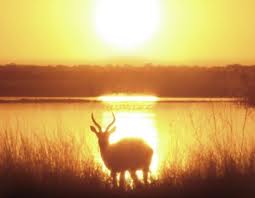
An antelope at dusk
An antelope at dusk, with the African sun

Rude nicknames

Somalia has a unique system. Most people have three namesthe ones they were given, as well as that of their father and grandfather [same in Sudan]. But many also have nicknames, which are so common that they can find their way onto official ID cards.

These nicknames often pick on the negative physical traits of the bearer, if he is male. Some common nicknames for men include Langare (limpy), Coryaan (handicapped), Lugay (one leg) or Genay (missing tooth).

Women, however, mostly get flattering nicknames like Lul (diamond), Macanay (sweet), Cod Weyne (rich voiced), Dahable (golden) and Indho Daraleey (gazelle eyes).

Happy 2017!

Fellow readers, I wish you all an AMAZING new year, may the year 2017 mark the fulfillment of old and new dreams that will last a lifetime. I would like to express my profound gratitude to all those who visited my blog, reblogged articles, commented, and to all future visitors. 2016 was a beautiful year: Afrolegends.com had lots of new views, new subscribers, and many articles getting reblogged on multiple sites. We also ended the year with a book getting published on Kindle, and started new collaborations. For 2017, I wish you wonders without borders, peace, joy, and love.

The 5 top posts of 2016 can be seen below. For this new year, we will bring you even more amazing, fun, and rich articles. Keep trusting, reading, sharing, reblogging, and liking. Keep your heads up, and may your year be as beautiful as the petals of this flower! As always, like Agostinho Neto said, “A luta continua … a vitória é certa!

happy-2017_1
Happy 2017!

1. Adinkra Symbols and the Rich Akan Culture

2. ‘Love Poem for My Country’ by Sandile Dikeni

3. Samori Toure: African leader and Resistant to French Imperialism

4. History of African Fabrics and Textiles

5. Timbuktu, one of the world’s first and oldest university

Proverbe sur les secrets du métier / Proverb on Trade Secret

poule3
La poule / The hen

La poule pond ses oeufs quand les gens ne la regardent pas (Proverbe Libinza, Mongo – RDC). – On cache les secrets du métier.

The hen lays eggs when no one is looking (Libinza proverb, Mongo – DRC). – Trade secrets are hidden.


The Hare, The Princess, and the Hot Chili Sauce

Tis’ the season of blessing, joy, happiness, and merry-ness. I would like to share with you a book which will make you all laugh to tears. A king, a beautiful princess, and a pot of hot chili sauce… the combination is bound to make you laugh. Enjoy this book, an African Children’s book, for young and young at heart, perfect for Christmas and to spice it up the African way! It is on kindle e-book. Enjoy and Happy Holidays!

cover-image

Bonnes Fêtes de Fin d’Année

Que de couleurs, que de rires, que d’astuces, que d’intelligence dans ce livre! Le Lièvre, la Princesse, et la marmite de piment est un livre véritablement adapté a toute période enjouée! Je vous garantis qu’il vous fera passer de bons moments. C’est sur Amazon Kindle. Bonnes fêtes de fin d’année!

cover-image

Why the Name: Alexandria?

alexandria_-_egypt
View of the Corniche of Alexandria (Wikipedia)

It is about time we talked about Alexandria, the light of Egypt. So why the name Alexandria? If you thought about Alexander the Great, then you are absolutely right! Yes. The second largest city and major economic center of Egypt was named and founded by Alexander the Great.

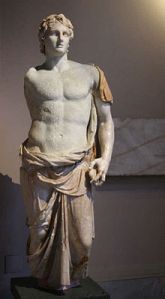
alexander-the-great
3rd century BC bust of Alexander the Great (Wikipedia)

Alexandria was founded around a small Ancient Egyptian town around 331 BC by Alexander the Great. It became an important center of the Hellenistic civilization and remained the capital of Hellenistic and Roman and Byzantine Egypt for almost 1000 years until the Muslim conquest of Egypt in AD 641, when a new capital was founded at Fustat (later absorbed into Cairo). Hellenistic Alexandria was best known for the Lighthouse of Alexandria (Pharos), one of the Seven Wonders of the Ancient World; its Great Library (the largest in the ancient world; now replaced by a modern one); and the Necropolis, one of the Seven Wonders of the Middle Ages. Alexandria was the second most powerful city of the ancient world after Rome. Ongoing maritime archaeology in the harbor of Alexandria, which began in 1994, is revealing details of Alexandria both before the arrival of Alexander, when a city named Rhacotis existed there, and during the Ptolemaic dynasty.

alexandria_library
The Great Library of Alexandria

To me, Alexandria, has always had a special place in my heart because of its Great Library. Imagine thousands upon thousands of ancient papyri, scrolls, and books on mathematics, philosophy, medicine, architecture, etc. Just the thought of it makes my eyes shine with light. Isn’t it thrilling? And then to know that this library had been burnt down by the army of Julius Caesar in 48 BC (more like a repeat of history: Palmyra, The giant Buddhas of Afghanistan, Timbuktu, …) also makes my heart ache at the thought of all this knowledge gone down in flames. Today, we remember the Great Library of Alexandria thanks to what poets and writers of the past said about it, but there are no vestiges of it. I also remember Alexandria because of the brilliant female mathematician Hypatia who chaired a department of philosophy and astronomy, and the world-renowned mathematician Euclid.

Today, Alexandria is Egypt’s largest seaport, serving approximately 80% of Egypt’s imports and exports. It is an important industrial center because of its natural gas and oil pipelines from Suez. Alexandria is also an important tourist destination. Enjoy the video below about Alexandria, the beautiful!

How Crocodile got Its Ugly Skin

crocodile
Crocodile

This story is from a book called “The Secret of the Crocodile“, a Namibia Oral Tradition Project, published by New Namibia Books. (Paraphrased)
=========

The crocodile originally had a beautiful smooth golden skin, and it stayed that way because the crocodile would spend all day in the muddy waters and only come out at night.

During the day all the other animals would come and admire it’s beautiful golden skin.

The crocodile became very proud of its skin and started coming out of the water to bask in the other animals’ admiration, even while the sun was shining. He began thinking he was better than the other animals and started bossing them around.

The other African animals became bored with his change in attitude and fewer and fewer started showing up to look at his skin.

But each day that the crocodile exposed his skin to the hot African sun, it would get uglier and bumpier and thicker, and was soon transformed into what looked like bulging armor.

Crocodile never recovered from the humiliating shame and even today will disappear from view when others approach, with only his eyes and nostrils above the surface of the water.

Colonial Treaties in Africa: British Protection Treaty with the Itsekiri of Nigeria 1884

Le partage de l'Afrique a la Conference de Berlin de 1884
Le partage de l’Afrique a la Conference de Berlin de 1884

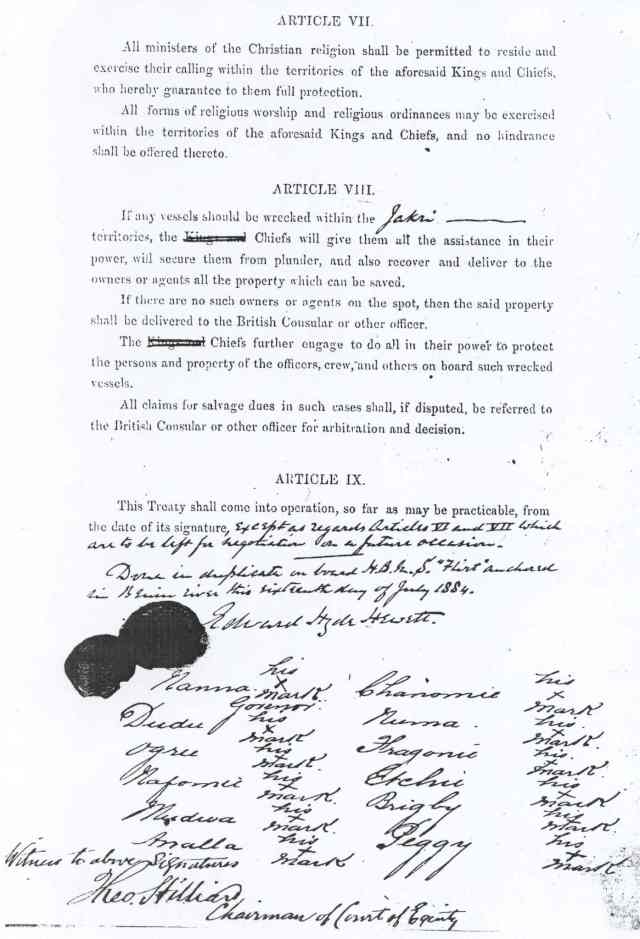
First of all, I would like to raise my hat to Peter Ekeh, the editor of the website Waado.org who has done an amazing job archiving and analyzing some of the treacherous treaties signed between the British and the local populations of Southern Nigeria. I am publishing here a protection treaty signed on 16 July 1884; this was the first treaty signed by the British in that area. Here is what Ekeh says, “Although the first clause, Article I,  of these pro forma  Protection Treaties claimed that the British were engaging in their agreements in “compliance with the request of the Chiefs and People” of the political communities concerned, it was clear that the Foreign Office from London and its assigned imperial agents, in the Niger Delta and beyond, were driving the terms and purpose of the treaties.

nigeria_delta-map
Nigeria delta map

Indeed, it is doubtful that the Chiefs of any Nigerian communities understood the letter, let alone the spirit, of these Treaties of Protection whose pro forma texts were printed in England, written in English, and “interpreted” by British imperial agents to the signatory chiefs. However, the consequence of their signing the Treaties  was that these Chiefs and their people lost their sovereignty.” Below is one of them. Check out Waado.org to read an in-depth analysis of the 16 July 1884 British colonial treaty with the Itsekiri people, as well as to see the appendix to the 1884 Treaty between the British and the Itsekiri.


==========

british-treaty-in-nigeria_itsekiri-1884_0british-treaty-in-nigeria_itsekiri-1884_0_1british-treaty-in-nigeria_itsekiri-1884_0_2

Proverbe sur les Plaisirs du Monde / Proverb on World’s Pleasures

salt2
Sel / Salt

Le sel est bon à la bouche, mais pas au coeur (Proverbe Ekonda – RDC). Les plaisirs du monde ne donnent pas le bonheur.

Salt is good in the mouth, but not for the heart (Ekonda proverb – DRC). The world’s pleasures do not give happiness.

Le Message de Serena Williams aux Femmes

serena3_mirror
Serena Williams (The Mirror)

Sous l’insistance de mes nombreux amis, je publie ici le message très important de Serena Williams à toutes les femmes du monde. Ceci est de Yahoo News website.

==========

«A toutes les femmes incroyables qui aspirent à l’excellence,

Plus jeune, j’avais un rêve. Je suis sûre que vous en aviez un aussi. Mon rêve n’était pas celui d’un enfant normal, mon rêve était de devenir le meilleur joueur de tennis au monde. Pas la meilleure joueuse “femme” de tennis au monde. J’ai eu la chance que ma famille me soutienne et m’encourage à poursuivre ce rêve. J’ai appris à ne pas avoir peur. J’ai appris combien il est important de se battre pour ses rêves et, plus important encore, de rêver grand. Mon combat a commencé quand j’avais trois ans et je n’ai pas pris une seule pause depuis.

Mais toutes les femmes n’ont pas cette chance, ne sont pas assez soutenues ou sont découragées dans la voie qu’elles ont choisi. J’espère que toutes ensemble, nous pouvons changer ça. Pour moi c’est une question de résistance. Ce que les autres montraient de moi comme des défauts – ma couleur de peau, mon genre – je m’en suis servie pour mon succès. Je ne laisse rien ni personne définir ce que je suis ou mon potentiel. J’ai choisi mon futur. Alors quand le sujet de l’égalité salariale revient sur le tapis, cela me frustre car je sais que, comme vous, j’ai fait le même travail et les mêmes sacrifices que mes homologues masculins. Je ne voudrais pas que ma fille soit moins payée que mon fils pour le même travail. Vous non plus

Nous le savons, les femmes doivent abattre de nombreuses barrières pour sur la route qui mène au succès. L’une de ses barrières, c’est la manière dont on nous rappelle constamment que nous ne sommes pas des hommes, comme si c’était un défaut. On dit de moi que je suis “l’une des meilleures athlètes féminines”. Est-ce qu’on dit de LeBron [James] qu’il est “l’un des meilleurs athlètes masculins” ? Dit-on cela de Tiger [Woods] ? Ou de [Roger] Federer ? Pourquoi pas ? Ils ne sont pourtant certainement pas des femmes. Nous ne devrions jamais laisser ce genre de choses arriver. Nous devrions être jugés sur nos résultats, non sur notre sexe.

Pour tout ce que j’ai accompli dans ma vie, je suis profondément reconnaissante d’avoir eu des bas et des hauts, qui accompagnent toujours le succès. Et j’espère que mon histoire, et les vôtres, inspireront toutes les jeunes femmes, les encourageront à donner le meilleur d’elles-même, à suivre leur rêve avec une ténacité inébranlable. Nous devons continuer à rêver grand, et en faisant cela, nous encourageons la prochaine génération de femmes à être aussi audacieuses que leurs rêves. »

Serena Williams