Taytu Betul: the Great Ethiopian Empress who Said ‘NO’ to Colonization

Empress Taytu Betul of Ethiopia

After learning about the origin of the name Addis Ababa, from Empress Taytu Betul‘s visit to its location, I could not help but talk about the Empress herself.  Who was Taytu Betul?

Well, Taytu Betul was Emperor Menelik II‘s third wife and was thereby Empress of Ethiopia.  She was his confidante, a loyal wife, a commander, and a brilliant military strategist.

Taytu Betul (also Taitu Betul), whose name Taytu means Sunshine, was a sunshine for her nation when it was about to fall into the hands of the Italian colonizer.  Perhaps, there would not have been the famous Battle of Adwa on March 1, 1896, which marked the Ethiopian victory against colonialism, without Empress Taytu, for she inspired it.

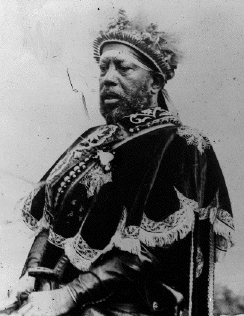
Emperor Menelik II, of Ethiopia

Empress Taytu Betul was born in Wollo from a Christian and Muslim family.  She had a comprehensive education and was fluent in Ge’ez, the classical Ethiopian language; which was a rare achievement for a woman at the time, as education was mostly reserved for boys.  Taytu was the third of four children in an aristocratic family related to the Solomonic dynasty of Ethiopia.  Her uncle, Dejazmach Wube Haile Maryam, was the ruler of Tigray and much of Northern Ethiopia in the 1840s, and a rival of Emperor Tewodros II.  Her father’s family were the ruling family of Semien province, claiming descent from Emperor Susenyos I.  Her grandfather was Ras Gugsa, a member of the powerful ruling family of Yejju, of Oromo origin, which had ruled as Regents in Gondar during the Zemene Mesafint (“Era of the Princes”).  After four failed marriages, Taytu Betul was married to Emperor Menelik II (he was still King of Shewa at the time) in 1883 in a full communion church service and thus fully canonical and insoluble, which Menelik had not had with either of his previous wives (whom he had divorced).  Their marriage was not just about romance but was also a political marriage sealing alliances with the northern regions of Begemder, Lasta, Semien, and Yeju.  She remained his wife until his death in 1913.

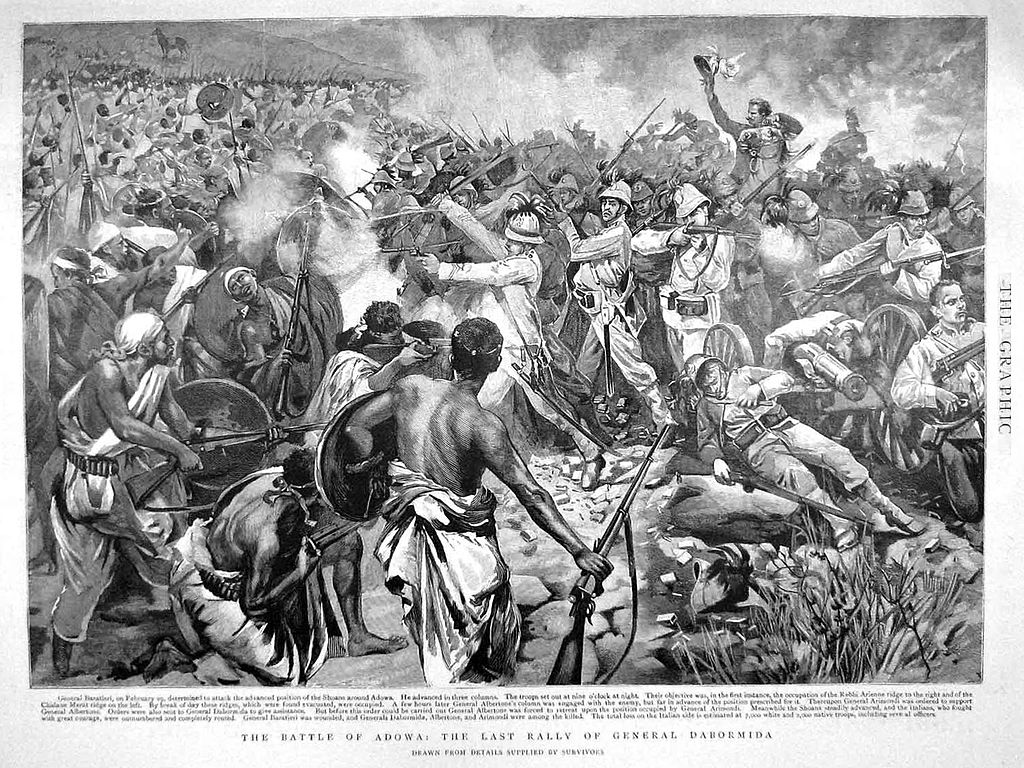
The Battle of Adwa, 1896

Empress Taytu was a loyal and respectful wife to her husband Emperor Menelik II.  According to royal historians, she was co-equal with Menelik, who always consulted her prior to making important decisions.  She was the one who pushed him to declare war against Italy at the Battle of Adwa—tearing up the 1889 Treaty of Wuchale between the Ethiopian Empire and Italy, a treaty whose article 17 had two different meanings in Amharic and Italian versions: The Amharic version recognized the sovereignty of Ethiopia and its relationship with Italy as just a diplomatic partnership, while the Italian version made Ethiopia Italy’s protectorate.  The moment that discrepancy was uncovered, Empress Taytu was the first to agitate the hesitant Emperor and other men to stand up for liberty, dignity and against Italian aggression. 

Edition of the Petit Journal of August 1896 titled: "Negus Menelik II at the Battle of Adwa"
Edition of the Petit Journal of August 1896 titled: “Negus Menelik II at the Battle of Adwa”

Empress Taytu, as a military strategist, facilitated the downfall of Italy at the Battle of AdwaShe had her own battalion, which she bravely commanded in the battlefield, fighting in the frontline and motivating men against retreat.  She also mobilized women, both as fighters and nurses of wounded soldiers.   At the Battle of Mekelle, she advised Ras Mekonen to cut off the water supply to the Italians in order to disgorge them from their entrenched and heavily fortified positions at Endeyesus Hill on the eastern part of Mekelle City.  Taytu was also the receiver and analyzer of intelligence information collected by spies, which historians have characterized as of crucial importance to the Ethiopian victory at the battleThis information enabled Menelik to attack the Italians, at a site of his choosing, at Adwa instead of Adigrat, near the Eritrean border where the Italians expected to have a relative logistical advantage.  The Italians were hoping that Menelik would meet them in Adigrat, close to where they had a well-protected military base.

Empress Taytu Betul in Le Petit Journal of March 1896

Independence and cooperation defined Taytu’s relationship with Emperor Menelik II.  Their marriage was that of equals characterized by trust, respect and reciprocity.  After Menelik was incapacitated due to strokes in 1906, she essentially governed the country, angering all the rivals to the throne.  She was ousted from power in 1910.  After Menelik II’s death in 1913, she was banished to the old palace at Entoto.

Taytu Betul was an authentic Ethiopian leader.  Her deeds at a critical moment in Ethiopian history not only saved Ethiopia from European colonization, but it also paved the way for the decolonization of Africa.  Her advice and action resulted in the defeat of the Italian army at the 1896 Battle of Adwa, a mighty European army defeat at the hands of Africans.  Taytu strongly defended national interests by overcoming challenges both from within and from without.  Just as there was no Menelik II without Taytu Betul, there would have been no Ethiopia without Taytu’s great strength, courage, devotion, and determination. Taytu Betul was truly Ethiopia’s sunshine, and should forever be remembered as one of the greatest empresses of Ethiopia and of Africa as a whole.  Please check out Tadias.com which has outstanding information on this great empress.  Enjoy this video about the Battle of Adwa.


Thomas Sankara: the Speech he would have given on 15 Oct 1987

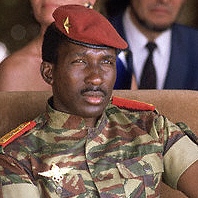
Thomas Sankara
Thomas Sankara a Ouagadougou

Here is the complete text of a hand-written speech that the revolutionary Burkina Faso President and African statesman Thomas Sankara was set to deliver on the evening of the day he was assassinated, October 15, 1987.  Enjoy this rare jewel!  The original in French is on ThomasSankara.net, while the translated English version appeared on Pambazuka.

=========

Dear Comrades,

The Revolution’s prestige, and the confidence with which the masses have devoted themselves, has suffered a serious shock. The consequences are a remarkable decline in enthusiasm for the revolution amongst activists, a serious decrease in the commitment, determination, and mobilization of our grassroots base; finally, distrust and suspicion everywhere and factionalism amongst our leadership.

What are the causes of this?

Burkina Faso
Burkina Faso

There are, on one hand, significant questions which could divide us pertaining to the operating structures and the internal functioning of the CNR based on ideological positions.  On the other hand, there are questions regarding the relationships between the principal actors, as each of us is a leader.  However, as important as ideological and organisational questions are, they are shown to be less important in our current situation.  Indeed, at the soul of any organisation, there is a clash of opposites followed by union of these same oppositesThe unity of these opposites is always academic, it is never absolute; it is both relative and temporary.  “The unity of opposites is consequently an absolute, exactly as development and motion are absolutes”.  This is why balance itself is temporary.  It can be questioned at any time.  It is our responsibility to preserve it as long as possible, to restore it each time it has been threatened or broken.  In the case of organizational and ideological questions, we have benefited each time that someone considered it necessary to raise an opinion different from mine, to defend a position different than mine; you did this with freedom and confidence.  These I have adopted and implemented, along with advice, suggestions, and recommendations. Moreover, resolution of disputes between men is always simple when trust exists.  This means that as long as the revolution is governed by principles, open debate, criticism and self-criticism, it will succeed in resolving any misunderstandings, provided that trust is maintained. Continue reading “Thomas Sankara: the Speech he would have given on 15 Oct 1987”

Poem by Dennis Brutus on Friendship

Dennis Brutus
Dennis Brutus

Friends, today, I want to introduce you to a poem by the great South African author Dennis BrutusDennis Brutus broke rocks next to Nelson Mandela when they were imprisoned together on the notorious Robben Island.  He spent 18 months there.  His crime, like Mandela’s, was fighting the injustice of racism, and challenging South Africa’s apartheid regime.  His weapons were his words: soaring, searing, poetic.  He was banned, he was censored, he was shot.  However, this poet’s commitment and activism, his advocacy on behalf of the poor, never flagged.  Brutus inspired, guided and rallied people toward the fight for justice in the 21st century; his poetry was his way of protesting against the injustices of the apartheid regime and the world, while celebrating the freedoms all men deserved.

The poem below poem is a call to friendship without borders, freedom, love, and peace.  Enjoy!!!

There will come a time
There will come a time we believe
When the shape of the planet
and the divisions of the land
Will be less important;
We will be caught in a glow of friendship
a red star of hope
will illuminate our lives
A star of hope
A star of joy
A star of freedom

by Dennis Brutus

The Return of Steve Biko and Quotes

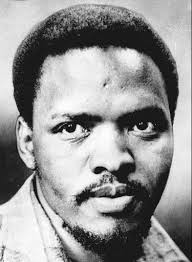
Steve Biko
Steve Biko

I would like to share with you some quotes by Steve Biko himself.  When I read Biko’s words, I realize that he was a true African leader who wanted good for all; he was really ahead of his time.  I have also added, at the end, a documentary The Return of Biko‘ by Jeff Ogola. Enjoy!

==========

The greatest weapon in the hand of the oppressor is the mind of the oppressed.” Speech in Cape Town, 1971

It is better to die for an idea that will live, than to live for an idea that will die.

“At the time of his death, Biko had a wife and three children for which he left a letter that stated in one part: “I’ve devoted my life to see equality for blacks, and at the same time, I’ve denied the needs of my family. Please understand that I take these actions, not out of selfishness or arrogance, but to preserve a South Africa worth living in for blacks and whites.”

“The basic tenet of black consciousness is that the black man must reject all value systems that seek to make him a foreigner in the country of his birth and reduce his basic human dignity.” From Steve Biko’s evidence given at the SASO/BPC trial, 3 May 1976

“In time, we shall be in a position to bestow on South Africa the greatest possible gift – a more human face.

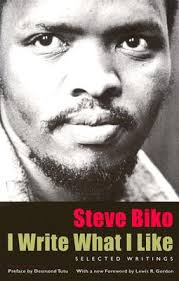
'I Write What I Like' by Steve Biko
‘I Write What I Like’ by Steve Biko

Merely by describing yourself as black you have started on a road towards emancipation, you have committed yourself to fight against all forces that seek to use your blackness as a stamp that marks you out as a subservient being.” The Definition of Black Consciousness, I Write What I Like, 1978.

Black man, you are on your own.”  Slogan coined by Steve Biko for the South African Student’s Organization, SASO. 

We do not want to be reminded that it is we, the indigenous people, who are poor and exploited in the land of our birth. These are concepts which the Black Consciousness approach wishes to eradicate from the black man’s mind before our society is driven to chaos by irresponsible people from Coca-cola and hamburger cultural backgrounds.”  The Quest for a True Humanity, I Write What I Like, 1978.


“It becomes more necessary to see the truth as it is if you realize that the only vehicle for change are these people who have lost their personality. The first step therefore is to make the black man come to himself; to pump back life into his empty shell; to infuse him with pride and dignity, to remind him of his complicity in the crime of allowing himself to be misused and therefore letting evil reign supreme in the country of his birth.  We Blacks, I Write What I Like, 1978.
Black Consciouness Movement flag

You are either alive and proud or you are dead, and when you are dead, you can’t care anyway.”  On Death, I Write What I Like, 1978

Black Consciousness is an attitude of the mind and a way of life, the most positive call to emanate from the black world for a long time. Its essence is the realization by the black man of the need to rally together with his brothers around the cause of their oppression – the blackness of their skin – and to operate as a group to rid themselves of the shackles that bind them to perpetual servitude.  The Quest for a True Humanity, I Write What I Like, 1978.

There are also several articles on this African martyr: articles by South African History, The Independent, Time, and Black Agenda Report.  Enjoy!!!

Steve Biko: An Outstanding Leader and the Black Consciousness Movement

Steve Biko
Steve Biko

The month of September is sadly quite a busy month when it comes to African martyrs: many of our martyrs were either born or assassinated that month, Ruben Um Nyobe, Agostinho Neto, Steve Biko, Amilcar Cabral, Kwame Nkrumah, Gamal Abdel Nasser, to name just a few.  Today, I have decided to talk about Steve Biko.

Steve Biko, is known to many as the outspoken leader of the Black Consciousness (BC) movement.

Stephen (Steve) Bantu Biko was born on 18 December 1946 in Ginsberg township, in present-day Eastern Cape, in South Africa.  Biko was the third of 4 children, and belonged to the Xhosa ethnic group.  He was orphaned at the tender age of 4, after his father passing.  As a child, he attended Brownlee Primary School and Charles Morgan Higher Primary School.  He was sent to Lovedale High School in 1964, a prestigious boarding school in Alice, Eastern Cape, where his older brother Khaya had previously been studying.  During the apartheid era, with no freedom of association protection for non-white South Africans, Biko would often get expelled from school for his political views.  He was influenced by Frantz Fanon‘s and Aime Cesaire‘s works, and like Fanon, he first started as a medical doctor, before turning to politics.

Black Consciouness Movement flag

Steve Biko was not alone in forging the Black Consciousness Movement.  He was nevertheless its most prominent leader, who with others, guided the movement of student discontent into a political force unprecedented in the history of South Africa.  Can you imagine that: all alone they created a force that scared the apartheid regime, and started it on its end.  Biko and his peers were responding to developments that emerged at the height of the hideous apartheid regime.  This culminated with the Soweto uprising of 1976.

The Black Consciousness movement argued that blacks had to overcome the feelings of inferiority instilled into them by 300 years of domination, the “oppression within“, before they could deal with whites as equals. “It [BC] seeks to infuse the black community with a new-found pride in themselves, their efforts, their value systems, their culture, their religion and their outlook to life,” Biko explained in 1971.

Steve Biko was a very charismatic, tall, handsome, and articulate man.  Once asked by a judge “Why do you call yourself black, when your skin is brown?” Biko replied “Why do you call yourself white, when you are actually pink?” – he bore himself with rare confidence that showed no hint of any “oppression within.”  Remember his famous phrase “Black is Beautiful“, which was an inspiration to the civil rights movement in the USA, and to many other movements across the globe.

'I Write What I Like' by Steve Biko
‘I Write What I Like’ by Steve Biko

In order for Black People to achieve their freedom being political and economical, Steve Biko believed that they should rally together; hence he said:  The realization by the Black man of the need to rally together with his brothers around the cause of their oppression – the blackness of their skin – and to operate as a group in order to rid themselves of the shackles that bind them to perpetual servitude.

Biko understood that the system we are facing is not just a matter of laws and policies that suppresses us, he knew that the system seeks to undermine our thinking, ideas, values  and beliefs, thus he said:  The most potent weapon in the hands of the oppressor is the mind of the oppressed.

On 18 August 1977, Steve Biko was arrested at a police roadblock under the Terrorism Act No 83 of 1967 and interrogated by officers of the Port Elizabeth security police including Harold Snyman and Gideon Nieuwoudt.  This interrogation took place in the Police Room 619 of the Sanlam Building in Port Elizabeth.  The interrogation lasted twenty-two hours and included torture and beatings resulting in a coma.  He suffered a major head injury while in police custody at the Walmer Police Station, in a suburb of Port Elizabeth, and was chained to a window grille for a day.  On 11 September 1977, police loaded him in the back of a Land Rover, naked and restrained in manacles, and began the 1100 km drive to Pretoria to take him to a prison with hospital facilities.   He died shortly after arrival at the Pretoria prison, on 12 September.  The police claimed (and the apartheid government) his death was the result of an extended hunger strike, but an autopsy revealed multiple bruises and abrasions and that he ultimately succumbed to a brain hemorrhage from the massive injuries to the head, which many saw as strong evidence that he had been brutally clubbed by his captors.

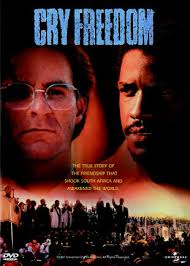
'Cry Freedom' the movie on Steve Biko
‘Cry Freedom’ the movie on Steve Biko

Biko believed in the unity of the oppressed, he also knew we should constantly educate each other on what is happening in our society.  Today, Biko’s views could be applied to almost every society where there are oppressed people, oppressed by unfair laws, unfair economics that favors extreme greed, forced into poverty, and dehumanization.

I watched the movie Cry Freedom which talked about Biko’s life, and also about his journalist friend Donald Woods who published the pictures of Biko’s beaten body after his death, thus showing to the entire world that he had been brutally murdered by the South African police.  I do recommend it, the main actor is none other than Denzel Washington.  To learn more about Biko, you could read his own book I Write What I Like, or the autobiographic book Biko by Donald Woods.  In 1980 the singer Peter Gabriel had a world hit titled Biko, in which he sang: “You can blow out a candle/ But you can’t blow out a fire/ Once the flames begin to catch/ The wind will blow it higher.”  Let us all, keep the fire of Steve Biko. Enjoy this rare video of Steve Biko talking!


Fasilides Castle: a Pure Gem of Ethiopia’s Rich History

Map of Ethiopia
Map of Ethiopia

Throughout human history, every great empire has had great builders and phenomenal architectural fits: The Romans with Emperor Titus who built the Colosseum, the Inca builders of Machu Picchu, the Egyptian pharaohs with the great sphinx of Giza and the great pyramids, the first emperor of China and the Ming dynasty with the Great Wall of China.  However, few today know of the Abyssinian builder Fasilides and his work.

Ethiopian Emperor Fasilides is one of most remarkable rulers of Abyssinia, the ancient name of Ethiopia.  A member of the Solomonic dynasty, emperor Fasilides ruled over Abyssinia from 1632 to 1667.  He founded the city of Gondar in 1636 which became the capital of Abyssinia, in the northwestern part of Ethiopia.  He was known as Alam Sagad or ‘To whom the world bows.’  Today, thousands bow to his work, and his footprints have marked the history of Ethiopia forever.

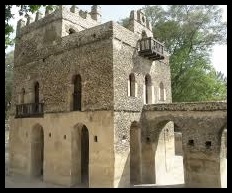
Fasilides' Castle
Fasilides’ Castle

Among the buildings he constructed there are the beginnings of the complex later known as Fasil Ghebbi, as well as some of the earliest of Gondar’s famous 44 churches: Adababay Iyasus, Adababay Tekle Haymanot, Atatami Mikael, Gimjabet Maryam, Fit Mikael, and Fit Abbo.  Fasilides is also credited with building seven stone bridges in Ethiopia.  Sebara Dildiy (broken bridge in Amharic) was one of two stone bridges built over the Blue Nile River during Fasilides reign.  Sebara Dildiy was later repaired during Emperor Menelik II‘s reign in 1901.  Emperor Fasilides also built the Cathedral Church of St Mary of Zion at Axum.  Fasilides’ church is known today as the “Old Cathedral” and stands next to a newer cathedral built by Emperor Haile Selassie.

Fasilides' Bath
Fasilides’ Bath

When King Fasilides made Gondar the seat of his empire in 1636, he constructed a palace that would eventually sprawl into a large complex, as succeessors added their own buildings to the compound.  Set in the heart of what is now one of Ethiopia’s largest cities, the palace complex is a mixture of beautifully-preserved period architecture with European and Moorish influences, and rambling ruins.  Interestingly, Fasilides’ Castle itself is the best-preserved, with its lower halls, reservoirs and steam-baths, remains of kitchens and stables, and even enclosures for leopards and lions that used to grace the grounds.  The castle is located near the city center.  Its structure is purely made of stone.  Today, Fasilides baths are used for baptism during the Timkat festival, the epiphany, in late January; they are only filled with water for the festival.  The castle can be found in Gondar, Amhara regionFasilides’ Castle is definitely a representation of Ethiopia’s great and rich history.


Habib Benglia and French Theater

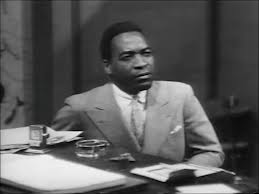
Habib Benglia on a set

Today, I would like to talk about Habib Benglia, one of the pioneers of Black theater and cinema in France.

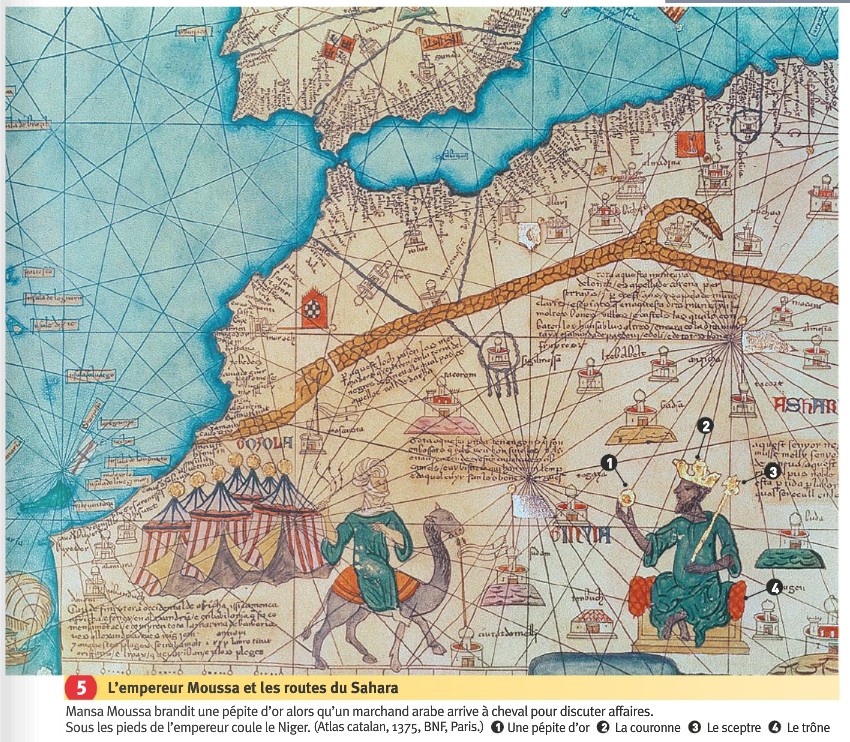
Habib Benglia was an African artist born in Oran, Algeria, on 25 August 1895.  He was originally from Mali, and lived in Timbuktu throughout his childhood.  He then moved to France for studies.  After high school, he wanted to become an agricultural engineer.  However, one evening in 1913, at the Café Riche, while describing his love for theater and having fun with his friends reciting prose, he was noticed by Régine Flory who presented him to Cora Lapercie.  That same year, she made him star at the Renaissance in Le Minaret of Jacques Richepin, then he went on to play in Aphrodite by Pierre Frondaie, and L’Homme riche of Jean-José Frappa and Dupuy-Mazuel.

Sculpture of Habib Benglia by Evariste Jonchere (Les Amis du Musee des annees 30)
Sculpture of Habib Benglia by E. Jonchere (Source: Les Amis du Musee des annees 30)

The first world war of 1914 started, and Benglia joined the French troops as many other skirmishers (tirailleurs).  Demobilized just before the end of the war, he resumed theater with Firmin Gémier, in L’Oedipe Roi de Bouhélier.  In 1923, he became the first black actor to star in the main role at the national French theater at the age of 27: it was in The Emperor Jones whom Gaston Baty put in scene at the Odéon.  Benglia always dreamt of seeing Black theater unveiled in France, which would reveal evidence of an African/Black art.  He also wrote a few plays: one of them, Un soir à Bamako (An evening in Bamako) was broadcasted in 1950.  He passed away in 1960 after having starred in over hundreds of plays.

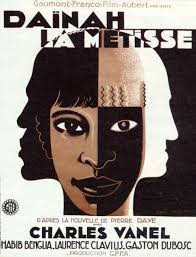
Benglia in "Dainah la Metisse" (source: www.filmweb.pl)
Poster of “Dainah la Metisse” (source: filmweb.pl)

Benglia was a versatile and prolific actor, who was confined to secondary and codified roles in colonial cinema, and as a result was largely ignored by critics.  This was both the fate of many actors (particularly Black actors in his time), overshadowed by stars, and the result of prejudice and racism.  Benglia’s roles were always very traditional.  Colonial cinema, both as propaganda or exotic entertainment, made proficient use of his abilities.  Originally a conveyor of stereotypes, this genre gradually evolved toward more truth and realism, but never gave Benglia the opportunity to rise to stardom.  A few plays where Benglia held the main role was Dainah la Métisse, then Sola, and Les Mystères de Paris, as well as in les Enfants du Paradis.

Nadine Gordimer: South African First Literature Nobel is no Longer

Flag of South Africa

Few countries in the world, apart from European and American (as if writing was only part of the western world) countries, can claim several Nobel prizes in literature. South Africa is one of those countries: with Nadine Gordimer and J.M. Coetzee.

The South African Nobel-prize-winning author Nadine Gordimer, one of the literary world’s most powerful voices against apartheid, died today at the age of 90. She passed away peacefully at her home in Johannesburg. She was the first winner of this prize for South Africa.

Nadine Gordimer
Nadine Gordimer

Born in Gauteng, South Africa, in 1923 to immigrant European parents, Gordimer was awarded the Nobel prize for literature in 1991 for novels and short stories that reflected the drama of human life and emotion in a society warped by decades of white-minority rule.

Many of her stories dealt with the themes of love, hate and friendship under the pressures of the racially segregated system that ended in 1994, when Nelson Mandela became South Africa’s first black president.  She became active in the then banned African National Congress (ANC) after the arrest of her best friend Bettie du Toit in 1960, and the Sharpeville Massacre on 21 March 1960.  Thereafter, she was a close friends with Mandela’s defense attorneys (Bram Fischer and George Bizos) during his 1962 trial; she actually helped Mandela edit his famous speech I am prepared to die. She was one of the first people president Mandela asked to see after his release from prison in 1990.

Nadine Gordimer and President Nelson Mandela

She was called one of the great “guerrillas of the imagination” by the poet Seamus Heaney, and a “magnificent epic writer” by the Nobel committee.  Her intense, intimate prose helped expose apartheid to a global readership and continued to illuminate the brutality and beauty of her country long after the demise of the racist government.  “She makes visible the extremely complicated and utterly inhuman living conditions in the world of racial segregation,” Sture Allen, permanent secretary of the Swedish Academy, said while awarding Ms. Gordimer the Nobel Prize for literature in 1991. “In this way, artistry and morality fuse.”

"Burger's Daughter" by Nadine Gordimer
“Burger’s Daughter” by Nadine Gordimer

She had three books banned under the apartheid regime’s censorship laws, along with an anthology of poetry by black South African writers that she collected and had published.  The first book to be banned was ‘A World of Strangers,’ the story of an apolitical Briton drifting into friendships with black South Africans in segregated Johannesburg in the 1950s.  In 1979 Burger’s Daughter was banished from the shelves for its portrayal of a woman’s attempt to establish her own identity after her father’s death in jail makes him a political hero.

I never read any of her work, and now plan to start.  Thank you to Nadine Gordimer for her brightness, and for her endless fight for freedom through her works.

“Still I Rise” by Maya Angelou

Maya Angelou
Maya Angelou

Yesterday, the world lost one of its greatest poets: Dr. Maya Angelou.  The first poem of Maya Angelou I came across was “Phenomenal Woman,” which really resonated with me.  It was read at a bridal shower I attended in Harlem, and I just loved every single word of it.  Before that, I had read Maya Angelou’s first book I Know Why The Caged Bird Sings and also watched the movie.  Maya Angelou’s life was not easy: she was raped at age 7, a teenage mother at age 17, a restaurant cook, a prostitute, and a pimp.  She turned her life around, was a professional dancer, singer, actress, and a journalist in Egypt and Ghana.  She won several Grammy awards.  She walked with the greats of this world: Malcolm X whom she met while in Ghana and was going to work with before his assassination, Dr. Martin Luther King Jr., James Baldwin, Billie Holiday, Oprah Winfrey, and so many others.  President Bill Clinton asked her to read a poem at his inauguration ceremony in 1993, making her the second poet in American history to do so.  Her reading of that poem, “On the Pulse of Morning” won a Grammy award.  President Obama presented her with the presidential medal of freedom in 2011.  She was a professor at Wake Forest University.

Maya Angelou
Maya Angelou

To think that this woman never went to college, never had a PhD, and yet she was a bestselling author, and a professor at a major university.  Billie Holiday once told Maya Angelou that she would be known in this world, but not for her music.  Indeed, Maya Angelou was known throughout the world, definitely not for her music, but for her writings, and particularly for her poetry.  Her life is a testament to truth, and passion: live your passion, do what you are most passionate about, and it does not matter where you come from, or how many degrees you have, you will excel and touch countless lives.  Here is one of my favorite of Maya Angelou’s poems: “Still I Rise.”

Still I Rise

You may write me down in history
With your bitter, twisted lies,
You may tread me in the very dirt
But still, like dust, I’ll rise.

Does my sassiness upset you?
Why are you beset with gloom?
‘Cause I walk like I’ve got oil wells
Pumping in my living room.

Just like moons and like suns,
With the certainty of tides,
Just like hopes springing high,
Still I’ll rise.

Did you want to see me broken?
Bowed head and lowered eyes?
Shoulders falling down like teardrops.
Weakened by my soulful cries.

Does my haughtiness offend you?
Don’t you take it awful hard
‘Cause I laugh like I’ve got gold mines
Diggin’ in my own back yard.

You may shoot me with your words,
You may cut me with your eyes,
You may kill me with your hatefulness,
But still, like air, I’ll rise.

Does my sexiness upset you?
Does it come as a surprise
That I dance like I’ve got diamonds
At the meeting of my thighs?

Out of the huts of history’s shame
I rise
Up from a past that’s rooted in pain
I rise
I’m a black ocean, leaping and wide,
Welling and swelling I bear in the tide.
Leaving behind nights of terror and fear
I rise
Into a daybreak that’s wondrously clear
I rise
Bringing the gifts that my ancestors gave,
I am the dream and the hope of the slave.
I rise
I rise
I rise.

Maya Angelou

‘Women of Africa’ by Sekou Touré

Sekou Toure
Sekou Toure
African Woman
African Woman

So many of our revolutionary leaders have written books, poems, and essays.  The great Thomas Sankara, our African Che and president of Burkina Faso, wrote about empowering women, people, getting away from debt, and the Burkinabé revolution.  Amilcar Cabral not only wrote poems, but also revolutionary essaysAgostinho Neto, the first president of Angola, also wrote poetry, just as Senegal’s first president Leopold Sedar Senghor.  So it seems quite natural to find out that Sekou Touré, the grandson of Samori Touré, the only African president to say ‘NO‘ to France and de Gaulle, also wrote poetry.  So here, I leave you with a poem by Sekou Touré, on Women of Africa, and their rightful place in the revolution.

Women of Africa,

Women of the Revolution!

You will rise up to apex

You will journey endlessly

At a walking pace of the social Revolution,

To the rhythm of cultural progress,

In the train of economic boom

To the great and beautiful city

Of the exacting ends

And were in leading

Your brothers, your husbands and

your children…

Women of Africa,

Women of the Revolution!

Equality is not offered,

It must be conquered.

To emancipate the women

Is to rid the society

Of its blemishes, its deformities

The conquest of science,

The mastery of Techniques

Will open to the Women the way

That of intra-social combat

Rendering her “subject and no longer object”.

-Ahmed Sekou Toure