George Weah: From One of the Greatest Football Players Alive to President of Liberia

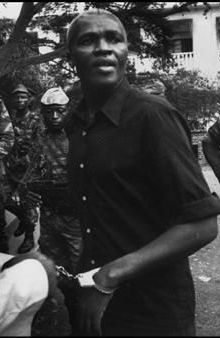
George Weah3
George Weah, president-elect of Liberia

This is a happy day, for George Weah is now president-elect of Liberia! Thinking about how long it took to get there, I am so proud of him. His consistency, his determination to serve Liberia at the highest office, and his love for his country are commendable. As a flashback, remember the Liberian presidential elections of 2005, when he had gone through the second turn of the presidential elections, and amidst election frauds many believed that he had won the election in lieu of Ellen Johnson Sirleaf. People told him that he was too young, he should let Mama run the country; that he was just a football (soccer) player, albeit a great one, but a baby in politics, an uneducated man, and should let those who knew it, run the country. After a month of deliberation, and a lot of strength and patriotism, Weah agreed to let Ellen Johnson-Sirleaf claim the victory. He could have said ‘NO’ and gone into protests which could have led Liberia into civil unrest, but he loved his country deeply, and chose peace! In subsequent years, he learned politics, learned how to serve the people better, even unsuccessfully ran as a VP candidate in the 2011 presidential elections, became a Senator of Montserrado County in 2014, and got a graduate degree. Today, he has won the presidential elections. Talk about perseverance, love, and determination!

George Weah4
George Weah won Ballon d’Or while playing for AC Milan

George Weah developed great football abilities early on, and after playing in the Liberian football domestic league at the beginning of his successful career, and winning several national honors (including the Liberian Premier League and the Liberian Cup), Weah went on to play in the Tonnerre of Yaoundé (one of the greatest football clubs of Cameroon) in Cameroon where he was discovered, and then took off for a very successful career in Europe. He is widely regarded as one of the greatest African players of all time, and in 1995 he was named FIFA World Player of the Year and won the Ballon d’Or, becoming the first and only African player to date to win these awards. In 1989, 1994 and 1995, he was named the African Footballer of the Year, and in 1996, he was named African Player of the Century. Known for his acceleration, speed, and dribbling ability, in addition to his goalscoring and finishing, Weah was described by FIFA as “the precursor of the multi-functional strikers of today”.  In 2004, he was named by Pelé in the FIFA 100 list of the world’s greatest living players.

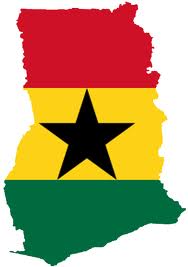
Liberia_flag
Flag of Liberia

As you can see, it took him over 12 years from those failed elections of 2005, but he made it. He successfully went from an outstanding football player to the president of a nation. His story is that of perseverance, and particularly of excellence: Do what you are called for, whatever it is, with excellence, … you never know you could be called for greatness through that excellence! We salute his uncompromising, unflinching courage and determination, and we are happy for Liberia

“If You Want to Know Me” by Noémia de Sousa

Noemia de Sousa
Noemia de Sousa (Source: Estudos Lusofonos)

Today I give you a poem by the world-renowned Mozambican author Noémia de Sousa. This poem gives vivid pictures: from the empty eye sockets which have lost hope, the mouth torn open in an anguished wound, a body tattooed with wounds unseen and seen… etc. Just reading it, one can feel the pain, see it, and touch it; it is so profound! Yet, she claims that this body is magnificent, that through the pain, it is beautiful. So what body is she talking about? Why, Africa, of course! She wrote this at a time when African countries were still under colonialism, and through this she introduces us to a beautiful Africa, which has gone through so much pain, but yet is still beautiful, and still rises. In general, I will take it a step further, and say that no matter what pain we go through today, we are still beautiful, and we will still rise! (* Maconde — uma das etnias de Moçambique.) Enjoy!


==========

Se Me Quiseres Conhecer
By Noémia de Sousa

Se me quiseres conhecer,
estuda com olhos de bem ver
esse pedaço de pau preto
que um desconhecido irmão maconde*
de mãos inspiradas
talhou e trabalhou
em terras distantes lá do Norte.

Ah, essa sou eu:
órbitas vazias no desespero de possuir a vida.
boca rasgada em feridas de angústia,
mãos enormes espalmadas,
erguendo-se em jeito de quem implora e ameaça,
corpo tatuado de feridas visíveis e invisíveis
pelos chicotes da escravatura…
Torturada e magnífica.
Altiva e mística.
Africa da cabeça aos pés
— Ah, essa sou eu!

Se quiseres compreender-me
vem debruçar-te sobre minha alma de Africa,
nos gemidos dos negros no cais
nos batuques frenéticos dos muchopes
na rebeldia dos machanganas
na estranha melancolia se evolando…
duma canção nativa, noite dentro…

E nada mais me perguntes,
se é que me queres conhecer…
Que eu não sou mais que um búzio de carne
onde a revolta de África congelou
seu grito inchado de esperança.

If You Want to Know Me
By Noémia de Sousa

If you want to know who I am,
Examine with careful eyes
That piece of black wood
Which an unknown Maconde brother
With inspired hands
Carved and worked
In distant lands to the North.

Ah, she is who I am:
Empty eye sockets despairing of possessing life.
A mouth slashed with wounds of anguish, huge flattened hands,
Raised as though to implore and threaten,
Body tattooed with visible and invisible scars
By the hard whips of slavery…
Tortured and magnificent.
Proud and mystical.
Africa from head to toe
-ah, she is who I am!

If you want to understand me
Come and bend over my African soul,
In the groans of the Negroes on the docks
In the frenzied dances of the Chopes
In the rebelliousness of the Shaganas
In the strange melancholy evaporating…
From a native song, into the night …

And ask me nothing more,
If you really wish to know me…
For I am no more than a shell of flesh
In which the revolt of Africa congealed
Its cry swollen with hope.

‘Thiaroye Massacre’ by Ousmane Sembene

The great Senegalese filmmaker Ousmane Sembene made a movie about the Thiaroye massacre committed by French forces in Senegal during the night of 30 November – 1 December 1944! The movie, Camp de Thiaroye, was made in 1988. It took almost 20 years for a French president, Francois Hollande in 2012, to acknowledge it. A massacre which occurred because the Tirailleurs Senegalais asked to be given the pay they had been promised for services rendered, defending France in France against Hitler’s Nazi forces. Those Senegalese men were killed by French men for asking to be paid after defending France with their lives!

Amilcar Cabral on Racism

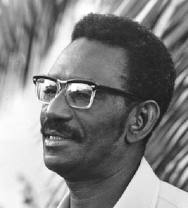
Amilcar Cabral
Amilcar Cabral

We are not racists. We are fundamentally and deeply against any kind of racism. Even when people are subjected to racism we are against racism from those who have been oppressed by it. In our opinion – not from dreaming but from a deep analysis of the real condition of the existence of mankind and the division of societies – racism is a result of certain circumstances. It is not eternal in any latitude in the world. It is the result of historical and economic conditions. And we cannot answer racism with racism. It is not possible. In our country, despite some racist manifestations by the Portuguese, we are not fighting against the Portuguese people or whites. We are fighting for the freedom of our people – to free our people and to allow them to be able to love any kind of human being. You cannot love when you are a slave… In combating racism we don’t make progress if we combat the people themselves. We have to combat the causes of racism. If a bandit comes into my house and I have a gun I cannot shoot the shadow of this bandit. I have to shoot the bandit. Many people lose energy and effort, and make sacrifices combating shadows.”

Amilcar Cabral, 20 October 1972, New York, Pambazuka

Robert Mugabe and Zimbabwe, a Short Biography

Flag of Zimbabwe
Flag of Zimbabwe

Here is a documentary about Robert Mugabe and his history, his life, and his leadership. This video talks about him, the fight for independence, the loss of his first son while imprisoned by the British in Rhodesia, and the renaming of the country from Rhodesia to Zimbabwe, after the Great Zimbabwe  Empire. I only recently found out that Mugabe had been influenced by Kwame Nkrumah: African Visionary and Ghana’s First President. He had lived and trained at the Takoradi Teacher Training College in Ghana, where he met his first wife Sally Hayfron Mugabe. It is sort of a short biography.

You Shall Rise Again

Angelique Kidjo2
Angelique Kidjo (Source: World Music Central)

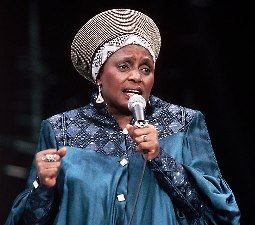
“It doesn’t matter what challenge you face, the most important thing is, when you fall, how you rise and how high you want to go, where you want to go from that, rise on.” Angélique Kidjo


Butterfly

African Women and Revolution

Winnie Mandela_5
Winnie Mandela

Very often history books suffer from amnesia: they forget women’s contributions to revolutions. History acts as if the men had been all alone, as if only men were there, as if only men stood against injustice.

When people talk of the struggle for independence in Africa, and around the world, only the great men are cited. As one browses from country to country, only men are cited, as if women had been silent spectators. Do you think apartheid would have collapsed without the critical and vital input of women? Do you think without Winnie Mandela, Nelson Mandela’s name would have been anchored in our heads today? What do you think these women were doing while their husbands were in prison? History wants us to think that they were ‘just’ raising children as if that was not an enormous contribution already, but in the case of Winnie Mandela and countless others, they took up the fight, and were jailed, harassed, beaten, and humiliated by the system (some were even raped). Yet today, the world acclaims only the men! And when a woman raises too strong a voice, then she is vilified, told that she acts like a man, or is an ‘angry’ woman. How could you face injustice day after day, and just keep quiet? There comes a time when, as Bob Marley says, “You can fool some people some time, but you can’t fool all the people all the time…” people will rise up!”

Thomas Sankara family
Mariam and Thomas Sankara, with their children

I am so sick of the saying, “behind every great man, there is a great woman.” I think it is again quite sexist, and should rather read, “ALONGSIDE EVERY GREAT MAN IS A GREAT WOMAN.” Raising children, and pumping somebody’s ego after a day’s fight, taking up the fights, and then keeping the men’s memory so that the world does not forget them, are no easy fit; these are extraordinary fits. Alongside Nelson Mandela, there is Winnie Mandela. Alongside Thomas Sankara, there is Mariam Sankara. Alongside Patrice Lumumba, there is Pauline Lumumba. Alongside Felix Moumié, there is Marthe MoumiéRosa Parks had to be defiant and sit in the front of the bus, for the movement to be taken over by Martin Luther King Jr.; without her part in the fight, there would have been no movement!

Ernest Ouandié, Marthe Moumié, and Abel Kingue in Geneva after Felix Moumié's death
Ernest Ouandié, Marthe Moumié, and Abel Kingue in Geneva after Felix Moumié’s death

It is our duty to remember this, and to claim it. The world and history wants us to think that men are the only ones in the world, when we know that 50% of the world’s population is female; men are not the only ones fighting for independence, liberation, freedom, revolution, democracy, … Can one make a revolution without the remaining 50%? NO! It is our duty to remember Women’s contributions to history, and stop the global historical amnesia!


Anton-Wilhelm Amo by Elikia M’Bokolo

Amo_1
First page of Anton-Wilhelm Amo’s dissertation (Source: http://www.jehsmith.com)

The renowned historian and journalist Elikia M’Bokolo did a short piece on Anton-Wilhelm Amo, the outstanding African philosopher who taught at a university in Germany in the 1700s. This reminded me of the piece I wrote a while back, Anton-Wilhelm Amo, African Professor in Germany in … 1700s.

Amo Anton Wilhelm earned his doctorate degree in philosophy from the University of Halle in Germany. He was a respected Ghanaian German philosopher who taught at the Universities of Halle and Jena in Germany in the 1730s… That’s right… you read it well, 1730! His thesis was the rights of Africans in Europe! He is said to have been the first African person born in Africa to be awarded a doctorate degree from a European university, and to later teach there. Enjoy the Elikia M’Bokolo’s piece, on RFI, on Anton-Wilhelm Amo, also known as Amo Guinea Afer!

Great Warrior Queen and Builder of Nubia: Amanitore

Amanitore
Amanitore at Wad ban Naqa

How many of you know that two great African queens have been cited in the Bible? Most people know about the Queen of Sheba who was the queen of a kingdom in modern-day Ethiopia, and gave birth to a son to the Great King Solomon (Solomon was taken by her beauty). The second queen, who most people ignore or forget, is the Candace, or queen, of Nubia, Amanitore. She is mentioned in the Bible, Acts 8:26–40, or should we say her finance minister is, and so by ramification she is cited. So who was Amanitore, this African queen who was cited in the Bible?

Candace (queen) Amanitore is the daughter of the Nubian warrior queen Amanishakheto and grand-daughter to another warrior queen, Amanirenas. She descends from a long line of kings and queens who ruled over the ancient Kushitic Kingdom of Meroë, which also is referred to as Nubia in many ancient sources. In Egyptian hieroglyphics the throne name of Amanitore reads as Merkare. Like all her predecessors, she was a warrior queen who led forces to battle. Her rule extended over the area between the Nile and the Atbara rivers.

Amanitores pyramid in Meroe
Amanitore’s pyramid in Meroe (Wikipedia)

Kandace Amanitore is often mentioned as co-regent with Natakamani although the evidence does not show whether she was his wife or his mother. Many believe that she might have been his mother. Images, on pyramids, of Natakamani frequently include an image of Amanitore. Her royal palace was at Gebel Barkal in modern-day Sudan, which is now a UNESCO heritage site.

Amanitore is mentioned in a number of texts as a ruler. These include the temple at the Nubian capital of Napata in present-day Sudan, in a temple in Meroë near Shendi, again in Sudan, and at the Naqa Lion Temple.

She was part of the Meroitic historical period and her reign began in 1 BC. The rule of her successor, Amanitaraqide, was complete by 50 AD. She is buried in her own pyramid in Meroë. The tomb is approximately 6 m square at its base, and not a pyramid in the mathematical sense.

Nubia_Pyramids of Meroe
Nubian pyramids at Meroe (Wikipedia)

Amanitore was among the last great Kush builders. She, and Natakamani, were involved in restoring the large temple of Amun at Meroë and the Amun temple at Napata after it was demolished by the Romans. Reservoirs for the retention of water also were constructed at Meroë during her reign. The two rulers also built Amun temples at Naqa and Amara. At Naqa, the great centre of the steppe-country south of Meroe: the frontal approach to the temple of Amun became a pylon whose decoration combines Egyptian influences and purely Meroitic features, while the most famous building is the Naqa lion temple whose reliefs are among the most representative examples of Meroitic art.

The quantity of buildings that was completed during the middle part of the first century indicates that she led the most prosperous time in Meroitic history. More than two hundred Nubian pyramids were built, most plundered in ancient times.

She led a wealthy country, with large resources of gold, and exported jewelry, exotic animals, and textiles.

Nubia_Archaeological Sites of the Island of Meroe_Sculpted gantry
Sculpted palace? on the facade of the temple in the background, a king and queen – could this be King Natakamani and Queen Amanitore? (Wikipedia – UNESCO)

The pyramids of the king, the queen and the princes have been identified at Meroë. The king and queen liked to be portrayed with one of the royal princes, ArikankharorArikakhatani or Sherkaror, varying according to the monument; perhaps the princes were viceroys of the provinces in whose principal temples they were pictured. Sherkaror seems to have ascended the throne in succession to his parents shortly after the opening of the Christian era; a rock carving at Gebel Qeili in the south of Butana shows him triumphing over innumerable enemies under the protection of a solar deity.

To learn more, please check out, the UNESCO funded book General History of Africa Vol.2, Ancient Civilizations of Africa, P. 307-30850 Greatest Africans — Pharaoh Natakamani and Queen Amanitore & Ngola Ann Nzinga , The Kingdom of Kush by László Török, P. 198 and 461, ISBN 90-04-10448-8.

Africa’s Forbidden Pyramids: Meroe, Nubia, and Sudan

Nubia_Pyramids of Meroe
Pyramids at Meroe (Wikipedia)

As I already told you about Nubia, and the Meroitic civilization which dominated Egypt for over 3 centuries, I also have to add that there are more pyramids in Nubia, modern-day Sudan, than in the whole of Egypt. Remember the great queen Amanishakheto and King Taharqa who ruled over Egypt.

Nubia_Sphinx of Taharqa
Sphinx of King Taharqa (Wikipedia)

Enjoy the video below, made by a BBC journalist to get acquainted with Sudan’s rich history and pyramids!