“A ma Patrie / To my Homeland” by Huda Sha’arawi

HudaShaarawi1
Huda Sha’arawi

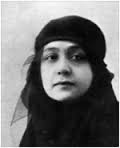
Today I am sharing a poem by the great Egyptian feminist Huda Sha’arawi. As we saw earlier, Sha’arawi’s work was immense in redefining the place of the woman in Egyptian society, and led to a new dawn for Egyptian women. This woman who influenced millions of Egyptian and Arabic women was also a poet with a great love for her country and its people. She dedicated her life for the betterment of women in the Egyptian society, and immensely loved the land of her forefathers.

The poem “A ma Patrie” was published in  L’Égyptienne number 69, Mai 1931. Translated to English by Dr. Y. Afrolegends.com.


A ma Patrie

J’ai fait voeu de t’offrir tout ce qui m’appartient

                O ma belle Patrie,

Mon bras, mon coeur, mon âme ainsi que tous mes biens

                Sans excepter ma vie.

J’ai fait voeu de peiner, de lutter, de souffrir,

                De braver l’infamie.

Sans froncer le sourcil, sans poser au martyre,

                Sans même une aide amie.

J’ai juré de franchir les frontières des mers

                Si ton honneur l’exige,

Afin de rehausser, aux yeux de l’univers,

                Ton nom et ton prestige.

J’ai juré d’oublier les affronts des déments

                Et la haine et l’insulte

Que l’envie incita, contre mon dévouement

                A ta cause et ton culte.

Peu m’importe l’exil, leur courroux, la prison,

                J’accepte la mort même.

Puisque leurs vils exploits n’auront jamais raison

                De l’humble coeur qui t’aime.

To my Homeland

I made a wish to offer you all that I have

                O my beautiful homeland,

My arm, my heart, my soul, as well as all my belongings

                Not excepting my life.

I vowed to struggle, to fight, to suffer,

                To brave infamy.

Without frowning, without asking for martyrdom,

                Without even a friend’s help.

I have sworn to cross the borders of the seas

                If your honor depends on it,

To enhance, in the eyes of the universe,

                Your name and your prestige.

I have sworn to forget the offenses of the demented

                And the hatred and insult

Which prompted envy, against my dedication

                To your cause and your worship. 

I do not care about exile, their anger, the prison,

                I will accept even death.

Because their vile deeds will never win over

                The humble heart that loves you.


So Long Manu Dibango: Your Saxophone will Enlighten our Lives

Dibango_1
Manu Dibango (Source: JacarandaFM)

For me, Manu Dibango is like a person with whom I grew up… well because his song “Bienvenu, Welcome to Cameroon” was played on national television endlessly when growing up. It was a special song, and it made everybody know what a beautiful country he came from, and how welcoming the people of that land were. He also had a thunderous and contagious laughter.

Emmanuel N’Djoké Dibango was born in DoualaCameroon, on 12 December 1933. He was an outstanding saxophone and vibraphone player. He was sent early to France for high school. I remember an interview he gave about his first time in Europe. As a kid, he had never seen snow, and he was in such awe of the snow that he wanted his mother back home to see it; so he mailed her some snow… but as you might have guessed, all his mother received was a wet, all dried up, empty envelope! While in France, his studies got derailed by music, as he got introduced to the saxophone and as a results he failed his high school exams (Baccalauréat) to his father’s disappointment. However, this launched him in what became an internationally acclaimed career.

Cameroon_flag
Flag of Cameroon

In the late 50s and in the 60s, Dibango was a member of the seminal Congolese rumba group African Jazz with the great “Grand Kalle” and recorded many African hits such as “Independence Cha-Cha.” He collaborated with many other musicians, including Fania All StarsFela KutiHerbie HancockBill LaswellBernie WorrellLadysmith Black MambazoKing Sunny AdéDon Cherry, and Sly and Robbie.

Dibango_6
Manu Dibango’s album “Soul Makossa”

His hit song, “Soul Makossa,” came out in 1972, and propelled him to international fame. His fusion of African rhythm and sounds on the saxophone created a sort of fusion that was new, modern, and hip. The song “Soul Makossa” on the record of the same name contains the lyrics “makossa“, which means “(I) dance” in his native tongue Duala language. The song has influenced popular music hits, including Kool and the Gang‘s “Jungle Boogie.” In 1982, Michael Jackson picked up a version of a line that Dibango sang on “Soul Makossa” — which Jackson sang as “mama-se, mama-sa, ma-makossa” — on his song “Wanna Be Startin’ Somethin’ ” from the album Thriller. Dibango sued the American megastar; Jackson settled out of court for an undisclosed amount of money. In 2007, Rihanna sampled Jackson‘s version of the “Soul Makossa” line on her song “Don’t Stop the Music,” as Jackson had given her permission, but not Dibango. Two years later, Dibango sued Jackson again, as well as Rihanna in France; that time, his case failed, due to the earlier settlement.

Dibango_5
Manu Dibango’s album “Wakafrica” (Source: Amazon)

In recent years, he collaborated on his album Wakafrika (which I have in my collection) with the then new guard of African singers: Youssou N’dour, Angélique Kidjo, Salif KeïtaPapa Wemba, Ladysmith Black Mambazo, and King Sunny Adé.

So long to the artist… like Fela Kuti, Manu Dibango has influenced countless singers around the world, and has brought in a new generation of African saxophone players. Your saxophone filled with soulful tunes from Cameroon and Africa, will continue to fill our souls. Enjoy these very good articles on The Guardian and NPR.

Kenyan Music Teacher Makes His own Trombones!

Kenya_flag
Flag of Kenya

Meet Dan Abisi, a Kenyan music teacher who makes his own trombones from scratch. I was moved by his love and passion for music which has made him consider cheaper alternatives such as building his own trombone, and thus making it widely available in Kenya. Given that in Kenya, and probably in many African countries, there are very few shops selling these brass instruments (and they are not cheap!), manufacturing it locally is definitely a winner. I don’t know what it takes to manufacture a musical instrument, but I bet spending hours trying to make it sound right is important. Kudos to Dan Abisi who has been making his own trombones and sharing his love of music and the instrument with local Kenyan children!

Enjoy his interview with the BBC!

The Tata of Sikasso: an African Fortifying Wall

Mali_Tata de Sikasso
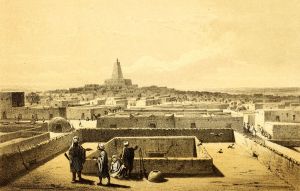
The tata of Sikasso, illustration by Édouard Riou published in Du Niger au golfe de Guinée, Hachette, 1892, by L.G Binger, p. 95

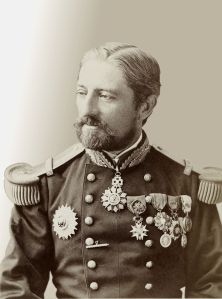
Have you ever heard about the Tata of Sikasso or Sikasso Tata, a fortifying wall built in Mali which sustained attacks by some of the greatest conquerors of its time, including none other than the great Samori Touré ? and which was destroyed by the French colonial army ? This structure was probably stronger than some forts found in Europe. This defensive wall is quite reminiscent of the Great Wall of China.

Mali_Tieba Traore
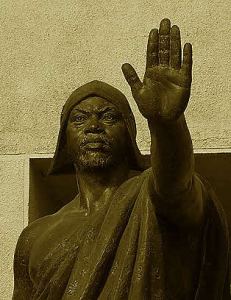
Monument of Tieba Traore in Sikasso (Source: Wikipedia)

The Tata of Sikasso, locally known as Tarakoko, is a fortress built during the reign of King Tieba Traoré between 1877 and 1897, in modern Mali. Tieba Traoré, whose mother came from Sikasso, became King of the Kénédougou Empire and moved its capital to the city of Sikasso. He established his palace on the sacred Mamelon hill and constructed a tata or fortifying wall to defend against the attacks of both the Malinke conqueror Samori Touré and the French colonial army. The city withstood a long siege from 1887 to 1888 but fell to the French in 1898. This fortified wall was reinforced by Babemba Traoré, Tieba Traoré’s brother, who had succeeded him as king.

The Tata of Sikasso was built for the protection of the city, in a military style. It used to extend through an area of 41 hectares, with its walls reinforced with the addition of earthen walls, bars, and alternate stone beds; the intervals of which were filled with ferrous gravel, earth, and stones. At the time of Samori Touré’s unsuccessful siege, which lasted 15 months from March 1887 to June 1888, the tata had three concentric enclosures.

The exterior of the tata was 9 km long, 6 m (∼20 ft) wide at the base and 2 m (∼7 ft) high at the summit. Its height varies between 4 to 6 m.

Samori
Samori Touré

The intermediary tata walls were not as big, and also not as wide. Those were meant for merchants, soldiers and nobles.

The inner enclosure encircled the Dionfoutou, which was the part of the city inhabited by the king and his family.

The fortress is still visible today in the actual landscape of the city of Sikasso in neighborhoods such as Mancourani, Medina, Wayerma, Bougoula city and Fulasso. Seven monuments, in the shape of doors, have been built with modern materials on the site of the passages of yesteryear to preserve their memory.

The Tata of Sikasso has been inscribed in the UNESCO World Heritage Tentative list: « Le Tata de Sikasso ».

Ladysmith Black Mambazo and Joseph Shabalala

Ladysmith-Black-Mambazo_5
Ladysmith Black Mambazo with its leader Joseph Shabalala at the center (Source: US.Napster.com)

A few years ago, I had the privilege to attend a concert offered by Ladysmith Black Mambazo. To say that I am a fan is an understatement… I have always danced to the tunes of Ladysmith Black Mambazo. It was special in so many ways because I saw the entire group including their leader Joseph Shabalala, I heard their harmony which had been part of my life, and I also danced to some South African music (extra, extra bonus)… For those who are not familiar with the group, Ladysmith Black Mambazo is an a capella group of male vocalists founded in the early 1960s by Joseph Shabalala in South Africa. The group fuses indigenous Zulu songs and dances with South African isicathamiya, an a capella tradition that is frequently accompanied by a soft, shuffling style of dance. The name of the group can be broken down as: Ladysmith for the city where they grew up in KwaZulu-NatalSouth Africa; Black for the black oxen who is the strongest animal on the farm; and Mambazo which is Zulu for an axe which represents the ability for the group to cut down competition.

Michael Jackson_Moonwalker
Poster of the movie Michael Jackson Moonwalker (Wikipedia)

They were introduced to the global stage by Paul Simon with their collaboration on his 1986 Graceland album. They are seen dancing and singing in the last scene of Michael Jackson‘s movie ‘Moonwalker,’ where their entrancing song goes as, “Come and see. The moon is dancing.”  Not to be in awe of their amazing songs, the harmony, their voices, is truly not possible.

Ladysmith-Black-Mambazo_3
Ladysmith Black Mambazo in a move (Source: Timeslive.co.za)

It is with great sadness that I heard of the passing of the founder of Ladysmith Black Mambazo, Joseph Shabalala. I am just so glad that his legacy, the Ladysmith Black Mambazo, leaves on, and that his voice will still serenade countless people around the globe. Long Live Joseph Shabalala’s legacy! Long Live Ladysmith Black Mambazo!

Description of African Dressing in 1400s

Van Sertima_They came before Columbus
‘They Came Before Columbus, The African Presence in Ancient America’ by Ivan Van Sertima

As I have always said in the past, I truly despise the claim of  The New York Times that Africa’s fabric is Dutch. This is simply a case of falsification of history. As I have proven before, African Fabrics and Textiles traditions is large, existent, and real; it is not just VLISCO-based. Below is an account by a European of African dressing in the 1400s! And yes… the Africans he met wore garments.

They numbered seventeen, of considerable size. Checking their course and lifting up their oars, their crews lay gazing. … We estimated on examination that there might be about one hundred and fifty at the most; they appeared very well-built, exceedingly black, and all clothed in white cotton shirts: some of them wore small white caps on their heads, very like the German style, except that on each side they had a white wing with a feather in the middle of the cap, as though to distinguish the fighting men.

“A Negro stood in the prow of each boat, with a round shield, apparently of leather, on his arm. They made no movement towards us, nor we to them. Then they perceived the other two vessels coming up behind me and advanced towards them. On reaching them, without any other salute, they threw down their oars, and began to shoot off their arrows.

Bogolan
A piece of Bogolan

This encounter between the Portuguese and the boatmen on the Gambia occurred in 1455. It is the only account of West African riverboats documented by Europeans before the coming of Columbus.

G.R. Crone, The Voyages of Cadamosto, London, the Hakluyt Society, 1937, pp. 57-59

Ivan Van Sertima, They Came Before Columbus, The African Presence in Ancient America, Random House, 1976, p.54

‘I am Black Mamba’ : Arrivederci Kobe Bryant

Lakers at Wizards 12/2/15
Kobe Bryant in 2015 (Source: Wikipedia)

I was too young to be in awe by the likes of Michael Jordan  or Magic Johnson. To me basketball was revealed through Kobe Bryant, LeBron James, and all their pairs.

Yes… I am the generation of the Black Mamba. It is with sadness that I learnt of his passing yesterday. I became an amateur basketball lover and player thanks to the ‘Black Mamba’. As an African, I always liked his nickname ‘The Black Mamba‘ because his speed on the court was so similar to that of the animal itself which I was familiar with, and he was especially lethal to his adversaries who never saw him coming. His aura and awesomeness seemed to pervade his life, especially with that big grin of his… always ready to smile and seemingly make others comfortable. Moreover, I was sold when I learnt that he was an American who was tri-lingual, and loved soccer, and just like me was a huge fan of Barcelona and A.C. Milan. Could I ask for more? I was hooked on Basketball then! To me Kobe Bryant was one of the greatest Basketball players the game ever saw!

Kobe Bryant handling ball in 2014
Kobe Bryant handling a ball on court in 2014 (Source: Wikipedia)

Being on the world stage like Kobe, you become somewhat super-human and everyone gets an opinion of you; it is tough not to fall under the pressure. What I liked the most about Kobe Bryant, was his determination, and his drive for perfection. To me, that epitomizes what all of us should strive for: awesome work ethics, tenacity, perfection, and desire to be great. Once you have found a passion in life, you should strive to be a Black Mamba, be like Kobe Bryant: perfect your craft, and go all the way out. Arrivederci Kobe… You have inspired so many of us, given us great memories,… You have made us all ‘Black Mambas’!

Bernard Dadié on African Immigration and the Return

African tears
Dry your tears Africa
Sèche tes pleurs Afrique!
Tes enfants te reviennent
dans l’orage et la tempête des voyages infructueux.

Sèche tes pleurs, Afrique!
Tes enfants te reviennent
Les mains pleines de jouets
Et le coeur plein d’amour.
Ils reviennent te vêtir
De leurs rêves et de leurs espoirs.

Dry your tears, Afrika!
Your Children come back to you
Out of the storm and squalls of fruitless journeys.

Dry your tears, Afrika!
Your children come back to you
Their hand full of playthings
And their heart full of love
They return to clothe you
In their dreams in their hopes


With the end of the ‘year of return‘, I think parts of the poem above by Bernard Binlin Dadié are appropriate and perfect to talk about African immigration and illustrate the return. Africa’s children are coming back, and they are coming to contribute, and also to build her… this applies to those of the diaspora whose ancestors made it to the new world in ships of the Mali emperor’s (Kankan Musa‘s predecessor) or via slave ships, or simply to recent African immigration to other part of the world: Africa needs you, and together, united, we have the potential to usher in a new positive era.  Excerpts above are from the poem titled “Dry your Tears Africa” or “Sèche Tes Pleurs,” published in 1967 by Bernard Dadié“Seche Tes Pleurs” de Bernard Binlin Dadié / “Dry your Tears Afrika” by Bernard B. Dadié

French Colonial Treaty in Madagascar : 18 January 1896

Madagascar
Madagascar

The treaty below with the Queen of Madagascar marked the full possession of Madagascar by France. It also marked the end of the Kingdom of Madagascar, or Merina Kingdom, officially known as Kingdom of Imerina. In essence, Ranavalona III, the last monarch of the Kingdom of Madagascar, tried to stave off the French colonization of her land by strengthening trade and diplomatic relations with the United States and Great Britain throughout her reign; however, French attacks on coastal port towns and an assault on the capital city of Antananarivo ultimately led to the capture of the royal palace in 1895, ending the sovereignty and political autonomy of the century-old kingdom. France officially annexed Madagascar on January 1, 1896.

As you read the treaty below, you could see the beginning of the schemes for the FCFA and the 11 Components of the French Colonial Tax in Africa we talked about a while back. Note that Madagascar was banned from dealing directly economically with foreign powers: everything had to go through France… isn’t this a predecessor to the FCFA?

=====

Ranavalona_III_of_Madagascar
Queen Ranavalona III of Madagascar

H.E. the Queen of Madagascar, after reading the declaration of possession of the Island of Madagascar by the government of the French Republic, declares to accept the following conditions below:

Article I

The government of the French Republic will be represented to the Queen of Madagascar by a Resident General.

Article II

The government of the French Republic will represent Madagascar in all external relations.

The resident general will be in charge of relations with the agents from foreign powers. Matters of interest to foreigners pertaining to Madagascar will be dealt with by through him.

The diplomatic and consular agents of France in foreign countries will be in charge of the protection of Malagasy subjects and interests.

Article III

The government of the French Republic reserves the right to maintain in Madagascar the military forces necessary for its authority.

Article IV

Ranavalona III conceded defeat to the French in Sept 1895
Ranavalona III conceded defeat to the French in September 1895

The Resident General will control the internal administration of the Island.

H.E. the Queen of Madagascar commits herself to proceed to the reforms that the French government will judge useful for the economic development and the progress of civilization.

Article V

The government of H.E. the Queen of Madagascar is prohibited from contracting any loan without the authorization of the government of the French Republic.

Antananarivo, January 19, 1896

Hoy Ranavalomanjaka III

Mpanjakany Madagascar

‘Antsa’ by Jacques Rabemananjara

rabemananjara
Jacques Rabemananjara (Project for Innovative Poetry – PIP)

Today, we will join the poet Jacques Rabemananjara in singing the praises of the Great Island… you know the one and only, Madagascar! Published in 1956 in Présence Africaine, Antsa is an ode to the Great island, a love song to Rabemananjara’s land of birth, Madagascar. Jacques Rabemananjara, like Léon Gontran Damas, was also part of the Negritude movement in France; he was said to be the most prolific writer of the negritude generation after Léopold Sédar Senghor, and he had the first négritude poetry published. He was a Malagasy politician, playwright and poet, who served as a government minister,  and later rose to the rank of Vice President of Madagascar under Philibert Tsiranana. He was one of the heroes of the Malagasy independence.


Madagascar
Madagascar

As you read Antsa, enjoy the island of syllables of flame, feel the love, the sweetness sweeter than honey, the patriotism expressed like the most ardent lover, the most faithful, feel the oneness with the homeland as no owl’s cry or burning could disturb the love the author feels for his motherland. Enjoy it, and try expressing it for the land of your birth… not the people… the land and its beauty!


Antsa par Jacques Rabemananjara


Ile !

Ile aux syllabes de flammes !

Jamais ton nom

Ne  fut plus cher à mon âme !

Ile,

Ne fut plus doux à mon cœur !

Ile aux syllabes de flamme,

Madagascar !


Quelle résonnance !

Les  mots

fondent dans ma bouche :

Le miel des claires saisons

Dans le mystère de tes sylves,

Madagascar !


Je mords la chair vierge et rouge

Avec l’âpre ferveur

Du mourant aux dents de lumière

Madagascar !


Un viatique d’innocence

dans mes entrailles d’affamé,

Je m’allongerai sur ton sein avec la fouge

du plus ardent de tes amants,

du plus fidèle,

Madagascar !


Qu’importent le hululement des chouettes

le vol rasant et bas

des hiboux apeurés sous le faîtage

de la maison incendiée !oh, les renards,

qu’ils lèchent

leur peau puante du sang des poussins, du sang auréolé des flamants-roses !

Nous autres, les hallucinés de l’azur,

nous scrutons  éperdument tout l’infini de bleu de la nue,

Madagascar !


Antsa by Jacques Rabemananjara


Island!

Island with syllables of flames!

Never your name

Was so dear to my soul!

Island,

So sweet to my heart!

Island with syllables of flames,

Madagascar!


Such resonance!

The words

Melt in my mouth:

The honey of clear seasons

In the mystery of your forests,

Madagascar!


I bite the virgin and red flesh

With the bitter fervor

Of the dying with bright teeth

Madagascar!


A viaticum of innocence

In my guts filled with hunger,

I will lie on your breast with the passion

Of the most ardent of your lovers,

Of the most faithful,

Madagascar!


No matter how much the owls hoot,

The low flying and frightened owls under ridge

Or the burning house! Oh the foxes,

May they lick

Their pungent skin from the chicks’ blood, the haloed blood of pink flamingoes!

We, the hallucinated of the azure,

We madly scour the infinite of the blue from the clouds

Madagascar!


Antsa, 1956, Présence Africaine

Jacques RABEMANANJARA