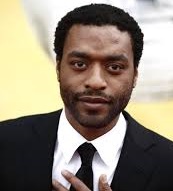
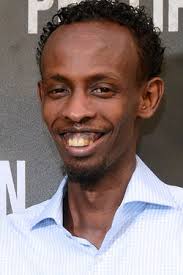
I couldn’t help but notice the number of Africans or actors of African origin represented at this year’s Academy Awards. So I decided to give you an overview, before Sunday March 2nd. I think this is the most we have ever had Africans nominated in such key roles, and who could possibly win key awards.
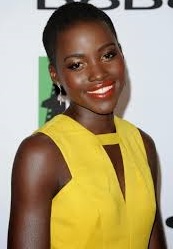
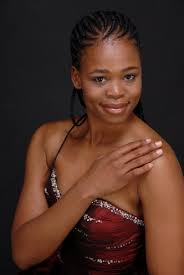
In the ‘Best Actress in a Supporting Role’ category comes the stunning Kenyan Lupita Nyong’o nominated for her portrayal of Patsey in 12 Years a Slave. A Yale graduate, and a Kenyan actress (in the Kenyan series Shuga) and producer (of a documentary on the albino population in Kenya), 12 Years a Slave is Lupita’s first American film debut, and has already garnered her a Golden Globe and BAFTA nominations. Lupita won the Screen Actors Guild and Critics’ Choice Award for Best Actress in a Supporting Role for this performance. Imagine my joy when I will see a pure African beauty walk the red carpet on Sunday! No matter the outcome, I am just so proud of this gorgeous sister who will face fierce competition from Sally Hawkins (Blue Jasmine), Jennifer Lawrence (American Hustle), Julia Roberts (August: Osage County), and June Squibb (Nebraska) on Sunday. I must admit that she just reminds of a pure Luo (or Massai) beauty when she wears her hair really short!
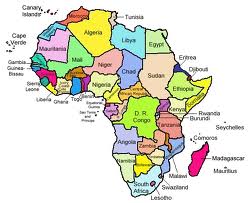
Africa
Other Africans represented are Egyptians director Jehane Noujaim and producer Karim Amer for the documentaryThe Squareon the manifestations at Tahrir Square. This film was released on Netflix, thereby giving Netflix its first Oscar nomination.
I am just extremely proud of our brothers and sisters who are raising the African flag high at this year’s academy awards. Our prayers go with them, and we wish them the very best. We, Africans, have actors and actresses worthy of the greatest cinematographic accolade in the world!!!
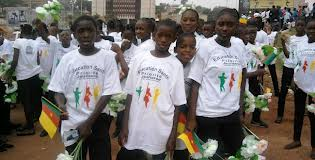
Today happens to be the Cameroonian National Youth Day. I have been thinking about the true meaning of a youth day. For as long as I can remember, it has always been a speech from the President, and marches/parades from children across the nation. But is that really what the National Youth Day is all about? Well, for starters, I must admit that growing up, I was always really proud of marching on that day. It was as if somehow, I suddenly mattered to the country… as if, from my child’s world, I could somehow influence changes in my country: bring clean water, stop the electricity cuts, build bridges, make better roads, build airports, etc. It was as if, by marching, I had a say in the direction of my country, I was important; I mattered! 11 February was not just a day off to watch the parade on TV, it was a special day, a day dedicated to me, to my needs as a youth, to my well-being, to my inner desires, and to my potentials.
Youths during the parade celebrating Cameroon’s National Youth Day
As a teenager, the thought started to thaw a little bit, was 11 February only about the President’s speech? was it just a time to cajole me as a youngster into thinking that I was important? that there was light at the end of the tunnel? that I was the future of the country, when around me, adults were feeling like the future had been beaten out of them? How was I supposed to make changes, when looking at big brothers ahead, I could only see unemployment looming in the horizon? How was I supposed to concentrate into doing well in school or achieving all these great things I was asked to, when the future looked so grim? What was the future going to look like with me in the picture?
Today, I see that it was actually necessary to acquire all this education, to read, and to focus, because in reality, even if the president’s speeches were empty words… I have the obligation, no the duty, to think of my elders: Ruben Um Nyobe, Felix Moumié, Abel Kingué, Osendé Afana (who was Cameroon’s first PhD in economics), Ernest Ouandié, and countless others who sacrificed themselves so that I could be better. Yes… it sounds so easy, but to think about it should bring fire, no, rage into our hearts. Just thinking about all the great minds we have, all this great potentials, talented musicians who influence the world (like Ekambi Brillant who produced Angélique Kidjo who is now a world star), footballers, writers (Mongo Beti), comedians, doctors, scientists, journalists (Pius Njawe), who live and die like paupers, should give extra, ten times, 100 times more fire into our hearts, and really make us realize that we are the indeed the future of our country, and nobody else will build it for us, not even 80 years-old ministers. I live you here with K’naan hymn to the youth which was sung during the 2010 FIFA World Cup: “Out of the darkness, I came the farthest, … Learn from these streets, it can be bleak. Accept no defeat, surrender, retreat. So we struggling, fighting to eat, And we wondering when we’ll be free ... we patiently wait for that fateful day… it is not far away… when I get older, I will be stronger, they’ll call me freedom just like a waving flag“.
Yes, I know… you are probably going to say what? Africans? Blacks at the Winter Olympics? Given that most of us, Africans, grew up without any snow, how could we possibly compete at the Winter olympics? Well, I wanted to have you give a shout out to some of our sisters from Togo at Sochi 2014 : Alessia Afi Dipol competing in alpine skiiing (born and raised in Italy, check out Alessia’s website to learn more), and Mathilde Amivi Petit Jean competing in cross country skiing (she represented France at the Junior level, before switching to compete for Togo in 2013). Mathilde said “If I was told I would one day compete at the Olympic Games, I would never have believed it would be in the colours of Togo.” Representing another African country is Luke Steyn from Zimbabwe in Alpine skiing. Sadly, this year, there will be no snow leopard from Ghana: Kwame Nkrumah-Acheampong to cheer us.
Now, the big one to look out for will be American super star (or at least mine) Shani Davis who wowed us in Turin 2006, and Vancouver 2010. I have been waiting for him for the past 4 years, and really look forward to seeing him speed skate to gold in Sochi making him the first male speed skater to win gold at three (3) consecutive winter olympics.
The American women’s bobsleigh team features six athletes and five of them are African-American. For the first time in women’s bobsled history, the teams will feature black women in the front, piloting. Watch out for Elana Meyers, Jazmine Fenlator, Aja Evans, Lauryn Williams with the biggest olympic pedigree of the 5, and of course the ever famous Lolo Jones.
Robin Szolkowy & Aliona Savchenko
Another athlete to watch out for will be Robin Szolkowy of Germany, whose father is from Tanzania and mother from Germany. Szolkowy is a German pair skater, who skated with partner Aliona Savchenko to win the Bronze medal at the Vancouver Olympics in 2010. Canadian Bobsleigh Lascelles Brown will also be present this year. Sister Nkeiruka Ezekh, is a Russian Federation curling athlete which has participated at all olympics since Salt Lake 2002. Just raise your hat to all these brothers and sisters proudly representing the continent, and other countries. There are probably more athletes of African ancestry at Sochi 2014, and if you find any… just share with me as well.
Today, I will tell you about the Battle of Isandlwana, the battle where the mighty Great Britain lost to African warriors… Yes you heard me right: Great Britain lost to Zulu warriors in South Africa on 22 January 1879. The battle of Isandlwana remains the single greatest defeat of the British army at the hands of a native army. This occurred in KwaZulu-Natal, where approximately 22,000Zulu warriors defeated a contingent of approximately 1,350 British and Native troops (notice… the real number for the native forces cannot be found anywhere) in one of the first engagements of the Anglo-Zulu war. The Zulu force was under King Cetshwayo, a nephew of King Shaka Zulu.
Zulu King Cetshwayo, ca 1879
The Battle of Isandlwana is a battle of pride as it reminds us that our ancestors did not quietly accept colonization, and were not easily defeated. They fought, and even defeated the European colonizers, as is the case for Cetshwayo’s forces. The battle was a decisive victory for the Zulus and caused the defeat of the first British invasion of Zululand. For the first time, the British Army suffered its worst defeat against a technologically inferior indigenous force. Isandlwana resulted in the British taking a much more aggressive approach in the Anglo–Zulu War, leading to a heavily reinforced second invasion and the destruction of King Cetshwayo’s hopes of a negotiated peace.
A depiction of the Battle of Isandlwana, taken from the London News
The Zulus were equipped mainly with the traditional assegai (iklwa) iron spears and cow-hide shields. The British and colonial troops were armed with the state-of-the-art Martini-Henry breech-loading rifle and two 7 pounder artillery pieces as well as a rocket battery. He he he… Despite a vast disadvantage in weapons technology, the numerically superior Zulus commanded by inDunas(Princes) Ntshingwayo kaMahole Khoza and Mavumengwana kaNdlela Ntuli ultimately overwhelmed the British, killing over 1,300 troops, including all those out on the forward firing line. The Zulu army wiped six (6) companies of the 24th regiment as well as volunteers from the Natal province and Basotho auxiliaries under Colonel Durnford. The Zulu army suffered around a thousand killed.
Zulu warriors at Isandlwana, 1879
The primary reason for the Zulu victory is that the Zulus, unlike the British, kept their main fighting force concentrated. Further, they made a very successful effort to conceal the advance and location of their force until they were within a few hours’ striking distance of their enemy. See… my ancestors were military geniuses too!! Created by King Shaka, the Zulu army or Zulu impi was the most powerful war machine the British ever faced in Southern Africa. The combat strategy was perfected by King Shaka himself, who added great organization and discipline to the traditional qualities of courage and mobility cultivated within African armies. During the battle, the Zulu army would organize itself as an arc facing the adversary. At the center (known as the chest in Zulu) were found the most seasoned regiments; on the wings (or horns) were found the regiments of younger warriors. The latter used their speed and agility to outflank the enemy by attacking him on the flanks while trying to encircle him, while the chest warriors engaged him in the front. Behind the chest, and with their back turned so as to keep their calm, were the veteran regiments (also known as the kidneys) who will wait as reserves, intervening only to switch the battle to victory. Every man knew his place, moves, and maneuvers with extreme precision.
A Zulu regiment attacking at Isandlwana (C. Fripp)
Finally, when the location of the main Zulu Impi was discovered by British scouts, the Zulus, without hesitation, immediately advanced and attacked, achieving tactical surprise. This tactical surprise prevented the British, although they now had some warning of a Zulu advance, from concentrating their central column. The Zulus had outmanoeuvred Chelmsford, and their victory at Isandlwana was a decisive defeat of the British invasion that forced the main British force to retreat out of Zululand until a far larger British army could be shipped to South Africa for a second invasion. During this battle, there was also a solar eclipse; this however did not stop the warriors from fighting.
I have to admit that I was quite proud to learn about the battle of Isandlwana, the battle the British lost to technologically inferior Zulus warriors (so it is said). I just think that, on that day, the Zulus despite not having the technological advantage, had the strategic advantage. They were well-trained, well-prepared, and they were also fighting for their land. To learn more about the Battle of Isandlwana, please check out Military history which debunked some of the myths about the battle, British Battles, and this article on the BBC.
My fellow friends, may the year 2014 be the year of all greatness, success, joy, love, happiness, abundance, harmony, and peace! I would like to thank all those who visited my blog, and all my future visitors … I am grateful for your trust and faith in my blog. We have more than doubled the number of viewers, and subscribers this year: keep on visiting, keep on sharing, and keep on commenting. I wish you all wonders without borders, grace, and peace for 2014!
There was a lot to celebrate in Africa in 2013. Here are some of those things.
– In January, South African opera singer, Pretty Yende, was the first African to perform at the Metropolitan Opera House in New York City. You can watch her interview on BBC.
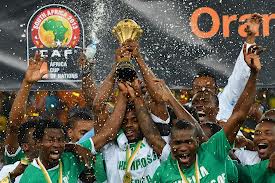
– On February 10, Nigeria’s Super Eagles won this year’s African Cup of Nations. Stephen Keshi’s team made us all proud.
– In March, FESPACO 2013 was a success and featured movies and documentaries from across the continent.
FESPACO 2013
– On March 14, Uhuru Kenyatta won Kenya’s presidential elections. These elections were the people’s choice, and Uhuru Kenyatta defeated the ‘machine’-chose guy Raila Odinga (Obama’s cousin); a very good example of democracy by Africans for Africans.
– In April, Cecile Kyenge became the first Black minister nominated in Italy. Dr. Kyenge is originally from the Democratic Republic of Congo.
– On 31 July, Zimbabwe general and presidential elections went peacefully with the full re-election of Robert Mugabe.
– In August, 12 political figures from Laurent Gbagbo‘s FPI were released in Côte d’Ivoire. Among them was Pascal Affi N’Guessan, previous prime minister of Gbagbo, who was unjustly detained without hearing for 2 years.
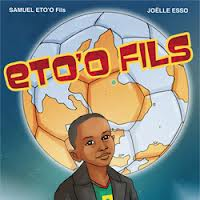
Samuel Eto’o Fils ‘Birth of a Champion’
– NoViolet Bulawayo was the first black African woman and Zimbabwean author to be shortlisted for the prestigious Man Booker Prize for her novel We need new names.
– In September, Samuel Eto’o Fils (Cameroonian and one of Africa’s best soccer forward) came out with an autobiographic comic book. Birth of a Champion is the first comic book on an African football player, and will hopefully inspire many youths around the globe.
– In November, Cameroonian author Léonora Miano won the 2013 Feminina Prize for her novel La Saison de l’Ombre, which talks about slavery from those who lived after seeing their relatives captured.
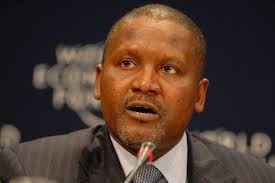
Aliko Dangote
– Nigerian billionaire Aliko Dangote, Africa’s richest man, vowed to build the largest privately owned refinery in Nigeria, which produces more oil than any other African country but must import most of the motor fuel and diesel it uses because existing refineries are dilapidated and inefficient.
Folorunsho Alakija
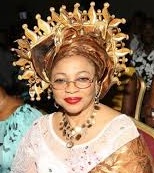
– This year also saw two African women cross the billionaire bar: Isabel Dos Santos of Angola, and Folorunsho Alakija of Nigeria. Alakija is actually the richest black woman billionaire ahead of Oprah.
– Five (5) African nations won their tickets to the World cup in Brazil 2014. The 5 countries are: Algeria, Cameroon, Cote d’Ivoire, Ghana, and Nigeria.
In the year 2013, we said goodbye to some people, some events, and some things. Here are 10 of those:
– Well, in January, we said goodbye to rebels in Mali thanks to the French intervention with the Operation Serval (the Françafrique is back, and very well).
– The South African athlete, Oscar Pistorius made us almost regret ever celebrating Valentine’s Day with his arrest for the murder (or not?) of his girlfriend Reeva Steenkamp on 14 February.
– On 5 March, El Commandante, Hugo Chavez left us. Lots of tears cannot express how we all felt, and how many Africans felt about his passing.
Kofi Awoonor
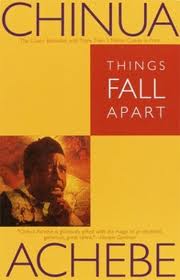
– Chinua Achebe made our world fall apart when he left us on 22 March. We did cry, but above all we reconnected with his great work so that ‘Things [would not] fall apart.”
– On 3 July, Egyptian President Mohamed Morsi was ousted by the army which was supported by millions of people.
– There were another rebels in Central African Republic (CAR) with the ousting of president François Bozizé.
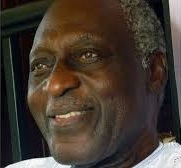
– We said goodbye to yet another writer, this time Ghanaian writer/diplomat Kofi Awoonor who was killed during the scandalous Westgate shopping mall shootings in Nairobi on 21 September.
Tabu Ley Rochereau
– In 3 October, a boat carrying 500 illegal immigrants toppled in the Mediterranean sea near Lampedusa killing 366 people. Italy declared a national day of mourning.
– The M23 rebels in Democratic Republic of Congo (DRC) were defeated by the Kabila government with help from the UN troops (remember the UN used to be in the region, and never did anything – I wonder what changed this time) at the end of October and beginning of November.
Nelson Rohlilahla Mandela
– Le ‘Seigneur’ Tabu Ley Rochereau left us on 30 November2013. We are still celebrating the maestro’s work and his influence on generations of Congolese and African artists.
– We said goodbye to Nelson Mandela on 5 Dec. 2013. Madiba left us, and we all cried for this great symbol of strength, forgiveness, and greatness in Africa.
Nelson and Winnie Mandela, on Nelson’s release from prison on 11 Feb. 1990
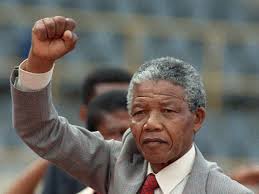
I remember the day Nelson Mandela was freed from jail after 27 years of imprisonment. It was on 11 February 1990. This being a national holiday in Cameroon, we were all at home, and could watch live as Nelson Mandela was released from prison and walked hand in hand with Winnie Mandela, both with their fists raised high up. Later that day, Mandela stood outside the balcony with his fist raised high up, and said: “Amandla!” to which the overjoyed crowd replied “Ngawethu!”, in other words, “Power to the People!” And he finished “iAfrika!” I am leaving you here with some words by Mandela himself.
========
“I raised my right fist and there was a roar. I had not been able to do that for 27 years and it gave me a surge of strength and joy.” Describing the day of his release from prison in 1990 – Long Walk to Freedom, Nelson Mandela, 1994.
“I am fundamentally an optimist.Whether that comes from nature or nurture, I cannot say. Part of being optimistic is keeping one’s head pointed toward the sun, one’s feet moving forward. There were many dark moments when my faith in humanity was sorely tested, but I would not and could not give myself up to despair. That way lays defeat and death.” Long Walk to Freedom, Nelson Mandela, 1994.
Nelson Mandela ca 1955
“I learned that courage was not the absence of fear, but the triumph over it. The brave man is not he who does not feel afraid, but he who conquers that fear.” Long Walk to Freedom, Nelson Mandela, 1994.
“Everyone can rise above their circumstances and achieve success if they are dedicated to and passionate about what they do.” Long Walk to Freedom, Nelson Mandela, 1994.
“Education is the most powerful weapon which you can use to change the world.” Long Walk to Freedom, Nelson Mandela, 1994.
“Resentment is like drinking poison and then hoping it will kill your enemies.”Long Walk to Freedom, Nelson Mandela, 1994.
“I like friends who have independent minds because they tend to make you see problems from all angles.” Long Walk to Freedom, Nelson Mandela, 1994.
Madiba
“I found solitary confinement the most forbidding aspect of prison life. There is no end and no beginning; there is only one’s own mind, which can begin to play tricks. Was that a dream or did it really happen? One begins to question everything. Did I make the right decision, was my sacrifice worth it? … But the human body has an enormous capacity for adjusting to trying circumstances. I have found that one can bear the unbearable if one can keep one’s spirits strong even when one’s body is being tested. Strong convictions are the secret of surviving deprivation; your spirit can be full even when your stomach is empty.“ On Prison – Long Walk to Freedom, Nelson Mandela, 1994.
Zindzi Mandela reading her father’s refusal to leave prison – 1985
“In the name of the law, I found myself treated as a criminal… not because of what I had done, but because of what I stood for, because of my conscience. No-one in his right senses would choose such a life, but there comes a time when a man is denied the right to live a normal life, when he can only live the life of an outlaw because the government has so decreed to use the law. … The question being asked up and down the country is this: Is it politically correct to continue preaching peace and non-violence when dealing with a government whose barbaric practices have brought so much suffering and misery to Africans?I cannot and will not give any undertaking at a time when I, and you, the people, are not free. Your freedom and mine cannot be separated. I will return.” Message read by his daughter, Zindzi Mandela, at a rally in Soweto in 1985.
“It seems the destiny of freedom fighters to have unstable personal lives… to be the father of a nation is a great honour, but to be the father of a family is a greater joy. But it was a job I had far too little of.” Talking about fatherhood – Long Walk to Freedom, Nelson Mandela, 1994.
“A man who takes away another man’s freedom is a prisoner of hatred, he is locked behind bars of prejudice and narrow-mindedness… The oppressed and the oppressor alike are robbed of their humanity.” On prison – Long Walk to Freedom, Nelson Mandela, 1994.
Nelson Mandela raising the freedom fist
“The value of our shared reward will and must be measured by the joyful peace which will triumph, because the common humanity that bonds both black and white into one human race will have said to each one of us that we shall all live like the children of paradise… But there are still some within our country who wrongly believe they can make a contribution to the cause of justice and peace by clinging to the shibboleths [dogmas] that have been proved to spell nothing but disaster. It remains our hope that these, too, will be blessed with sufficient reason to realize that history will not be denied and that the new society cannot be created by reproducing the repugnant past, however refined or enticingly repackaged.” On receiving the Nobel Peace Prize with F.W. de Klerk, 1993.
“There is no passion to be found playing small – in settling for a life that is less than the one you are capable of living.” Presidential Inauguration, 10 May 1994.
“Never, never, and never again shall it be that this beautiful land will again experience the oppression of one by another… The sun shall never set on so glorious a human achievement. Let freedom reign. God bless Africa!” Presidential inauguration, 10 May 1994.
“There is no easy walk to freedom anywhere, and many of us will have to pass through the valley of the shadow of death again and again before we reach the mountaintop of our desires.” Long Walk to Freedom, Nelson Mandela, 1994.
Nelson Rolihlahla Mandela (18 July 1918 – 05 Dec 2013)
“I am confident that nobody … will accuse me of selfishness if I ask to spend time, while I am still in good health with my family, my friends, and also with myself.” On stepping down after his first term as president.
“Sometimes it falls upon a generation to be great. You be that great generation. Let your greatness blossom. Of course the task will not be easy. But not to do this would be a crime against humanity, against which I ask all humanity now to rise up.” Message at the Live 8 Concert in Edinburgh, July 2005.
On August 8th, 1914, a proclamation signed by Governor Karl Ebermaier was posted on all the principal places of the town of Douala, stating:
“People of Douala, I am here to announce thatManga (Rudolf) Bellis condemned today to death by hanging because he has betrayed the Kaiser and the empire.”
That same day, at 5PM (17:00) in the evening, the respondent was executed by hanging, with his relative and secretary Ngosso Din.
The official statement from the governor stating the charges incriminating the Bell king, continues as follows:
Adolf Ngoso Din, Assistant to Rudolf Manga Bell
“He [Manga Bell] admitted, at the last minute, that he had been led by the fear of revenge from his countrymen, from those whom you know, who, by fear, secretly remain in the background, those who brood poison and seduce the people. May the blood of Manga fall back on those who led him on the path of crime! He who does not want to become a traitor, like Duala Manga and his aids, should pull away from his seducers, who secretly remain in the background preparing poison! Whoever has fair intentions will be welcome. The government of Kaiser will always be just and grateful to the loyal aids and loyal subjects.
What we deplore is the result of machinations carried by these of men of darkness who – the governor says – have always been at work to excite the people, to maintain it in terror with their poisons and kept under the yoke to their benefit. T ear yourself from them and you will be happy. Manga himself, in his last hour, prayed his people that with his death, loyalty to the Kaiser and obedience towards the government may return into the heart of the Douala people.”
The translation to English is offered to you here by Dr. Y., www.afrolegends.com. You can find the original published in French by the Cameroonian Quotidien Mutations on Bonaberi.com. Don’t forget to read the article by Suzanne Kala-Lobé on NjanguiPress.com.
Today, I would like to talk about one of the heroes of Cameroonian history, Rudolf Douala Manga Bell, who stood against the Germans in the 1910s in Kamerun. His courage, and strong determination earned him the right of martyr and hero in the history of the Douala (or Duala) people, and thus of Cameroon.
Rudolf Douala Manga Bell was born in 1872, and studied in Cameroontown (modern-day Douala). He was the first son of King Manga Ndumbe Bell, of the Douala people. After completing his primary education and part of his secondary school in Cameroon, he went to study at the Lycée of Aalen in Bonn (Germany) finishing secondary school. He later went on to study law at the university there.
Kamerun (German Cameroon)
Manga Bell married Emily Engome Dayas, the daughter of an English trader and a Douala woman after his return home in 1896. He also became a civil servant. On 2 September 1908, he succeeded to his father as Paramount Chief (Chef Supérieur) of the Bell dynasty (founded since 1792) which encompassed the Bonamandone, Bonapriso, Bonadoumbe, all owners and inhabitants of the Plateau Joss in Douala. In those days, Douala was composed of several tribes: Bakole, Bakweri, Bamboko, Isubu (or Isuwu), Limba (or Malimba), Mungo, and Wovea. Among those chiefs, some of them including the famous King Akwa, signed a Germano-Douala treaty on 12 July 1884, which placed Cameroon under German protection. Cameroontown thus became Kamerunstadt.
Rudolf Douala Manga Bell, Leader of Douala people
In 1910, the German governor of Cameroon, Theodor Seitz, approved an urbanization project for the city of Douala (Kamerunstadt had been renamed Douala) set to turn it into one of the largest ports of Africa. The project outlined a plan to relocate the Douala people inland from the Wouri river to allow European-only settlement of the area. Neighborhoods such as Neu Bell, Neu Akwa, and Neu Deido were to be created for the indigenous people; these new allotments were going to be separated from the ‘European city’ by a barrier 1km wide (early version of apartheid!). The expropriations affected most of the Douala clans, who were angered and formed a united front behind Manga Bell. Rudolf Douala immediately refused, and told the Germans that the treaty signed in 1884 did not stipulate the removal/expulsion of the locals from their lands, and that this separation constituted a form of apartheid. Manga Bell then enlisted the help of Hellmut von Gerlach, a German journalist. Gerlach managed to secure a suspension order from the Reichstag Budget Commission in March, but the order was overturned when Colonial Secretary Wilhelm Solf convinced elements of the press, businessmen in the colony, politicians, and other groups to finally rally behind the expropriation. Manga Bell and the Douala requested permission to send envoys to Germany to plead their case, but the authorities denied them. In secret, Manga Bell sent Adolf Ngoso Din to Germany to hire a lawyer for the Douala and pursue the matter in court.
Adolf Ngoso Din, Assistant to Rudolf Manga Bell
Manga Bell then turned to other European governments and to leaders of other African ethnic groups for support. His envoys to other Cameroonian leaders reached Bali, Balong, Dschang, Foumban, Ngaoundéré, Yabassi, and Yaoundé. Charles Atangana (Karl Atangana), leader of the Ewondo and Bane peoples, kept Manga Bell’s plan secret but urged the Douala leader to reconsider. In Bulu lands on the other hand, Martin-Paul Samba agreed to contact the French for military support if Manga Bell petitioned the British. However, there is no evidence that Manga Bell ever did so. In Foumban, Ibrahim Njoya, sultan of the Bamum people, rejected the plan and informed the Basel Mission on 27 April 1914 that Manga Bell was planning a pan-Kamerun rebellion. The missionaries alerted the Germans.
Noticing the German lack of respect of the signed law, who started removing locals from their lands, Bell allied with other chiefs of Cameroon to counter the colonial plans. During the mutiny, the Germans arrested the Douala leader and Ngoso Din on 10 May 1914 accusing him of high treason. Their trial was held on 7 August 1914. World War I had just begun, and an attack by the Allied West Africa Campaign in Kamerun was imminent; accordingly, the trial was rushed. On 8 August 1914, Rudolf Douala Manga Bell and Ngoso Din were hanged.
Let us all celebrate Rudolph Douala Manga Bell, the Tét’èkombo (the king of kings in Douala), the first, the uniter of Cameroon (already reaching out to other kings), and one of Cameroon’s biggest resistant. Enjoy this old rendition by Charles Ewandje (probably recorded in the 70′s) of Tet’Ekombo an ode to resistance and to the land. The song was written in 1929 in memory of Rudolf Douala Manga Bell.