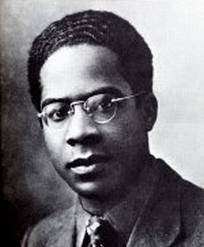
Today I stumbled upon a poem by Ghanaian author Michael Dei Anang which made me think a lot about Cheikh Anta Diop‘s work of re-educating the world about the place of Africa in history as the cradle of humanity. Michael Dei-Anang was a member of President Kwame Nkrumah‘s (Ghana’s first president) main secretariat and was concerned with the liberation of the rest of Africa still under colonial rule, at the time. Enjoy!
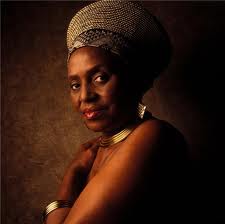
A true African beauty: Mama Africa, Miriam MakebaQueen Nzingha of Angola
I read this love poem written by the Cameroonian writer Patrice Kayo. I thought it so deep, beautiful, and worth sharing with all. Enjoy this poem ‘A la princesse / To the princess’! The original was published in Paroles intimes 1972, P.-J. Oswald. The French version of the poem was taken from ‘Anthologie Africaine: Poesie, Jacques Chevrier, Hatier 1988, P.129.‘ Translated to English by Dr. Y., afrolegends.com .
A la Princesse
Tu es l’innocence des fleurs et le sourire de l’aurore
tu es le doux éclat du soir
et la virginité de l’inconnu
tu es la gaiété du ciel etoilé
la candeur des clairs de lune.
Tu es la douceur des nuages des belles saisons
tu es la corolle qui s’ouvre
sur l’humble hauteur de ma colline
mais le chemin est long
qui mène jusqu’à toi
tu es l’aube lourde de promesses
et ton sourire, le murmure joyeux
du vent sur la savane
tu es le havre de mon Coeur déchiré
lorsqu’y volète le papillon
du doute et de l’angoisse.
Tu es la fertilité de la terre
et la limpidité du matin
tu es le beau pays de mes rêves
le champignon
que je voudrais cueillir
au lever de l’aube de l’amour
tu es l’eau pour ma soif tenace
et dans le gouffre de mon silence
je ne murmure que pour toi.
Tu es la hutte élevée par le destin
sur mon chemin sans abri.
Tu es l’oiseau posé
sur l’arbre de ma solitude
et quand tu t’envoleras
tu emporteras mon espoir.
Tu es le kolatier
planté dans l’étroit champ de mon destin
laisse tomber pour moi
le salutaire fruit de l’accord
pour que par le même chemin
nous titubions ensemble
vers la grande mer
la mer de l’éternité
Ecoute je t’aime comme on meurt
innocemment, totalement
et je t’attendrai comme le bonheur :
tous les jours.
To the Princess
You are the innocence of flowers and the smile of the dawn
you are the soft evening glow
and the virginity of the unknown
you are the gaiety of the starry sky
the candor of moonlights.
You are the clouds’ gentleness on beautiful seasons
I just stumbled upon this poem by Vernon J. Davis Jr., and wanted to share with all. It is an ode to the beauty of the black woman; I love the comparison to the shining sun. Enjoy!
========
Beautiful black woman,
Your beauty is surpassed by none.
Beautiful black woman,
Your sensuous splendor is like the shining sun
Your wondrous ways come from your soul
Which no one man may hope to control
Beautiful black woman,
You are the guiding hope of our people
Beautiful black woman,
your mind maintains your glorious power.
Beautiful black woman,
Your spirit is like a shining church tower
which points the way to heaven above
and which seeks to find true love.
Beautiful black woman,
you are the guiding hope of our people.
Beautiful Black woman,
Your time is like a precious commodity.
Beautiful Black Woman,
Your ebony will is strong and free,
so take your precious time,
and your determined will,
and use them both to emphasize what you really feel.
Friends, today, I want to introduce you to a poem by the great South African author Dennis Brutus. Dennis Brutus broke rocks next to Nelson Mandela when they were imprisoned together on the notorious Robben Island. He spent 18 months there. His crime, like Mandela’s, was fighting the injustice of racism, and challenging South Africa’s apartheid regime. His weapons were his words: soaring, searing, poetic. He was banned, he was censored, he was shot. However, this poet’s commitment and activism, his advocacy on behalf of the poor, never flagged. Brutus inspired, guided and rallied people toward the fight for justice in the 21st century; his poetry was his way of protesting against the injustices of the apartheid regime and the world, while celebrating the freedoms all men deserved.
The poem below poem is a call to friendship without borders, freedom, love, and peace. Enjoy!!!
There will come a time
There will come a time we believe
When the shape of the planet
and the divisions of the land
Will be less important;
We will be caught in a glow of friendship
a red star of hope
will illuminate our lives
A star of hope
A star of joy
A star of freedom
I liked this poem “Mother to Son” by Langston Hughes… although it is a bit bitter, it is a mother advising her son on life. Enjoy!
=======
Mother to Son
Well, son, I’ll tell you: Life for me ain’t been no crystal stair. It’s had tacks in it, And splinters, And boards torn up, And places with no carpet on the floor— Bare. But all the time I’se been a-climbin’ on, And reachin’ landin’s, And turnin’ corners, And sometimes goin’ in the dark Where there ain’t been no light. So, boy, don’t you turn back. Don’t you set down on the steps. ‘Cause you finds it’s kinder hard. Don’t you fall now— For I’se still goin’, honey, I’se still climbin’, And life for me ain’t been no crystal stair.
I know Rudyard Kipling is not an African, but I always liked his poem ‘If‘. I first read it in secondary school, and to me it has always represented a way of living life without being too frazzled. This symbolizes a way of living, that we should all aspire to. Kipling apparently wrote it as advice to his son. There is so much stoicism in it. Enjoy!!
Few countries in the world, apart from European and American (as if writing was only part of the western world) countries, can claim several Nobel prizes in literature. South Africa is one of those countries: with Nadine Gordimer and J.M. Coetzee.
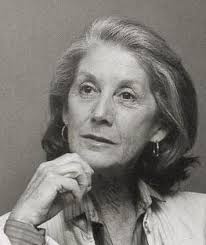
The South African Nobel-prize-winning author Nadine Gordimer, one of the literary world’s most powerful voices against apartheid, died today at the age of 90. She passed away peacefully at her home in Johannesburg. She was the first winner of this prize for South Africa.
Nadine Gordimer
Born in Gauteng, South Africa, in 1923 to immigrant European parents, Gordimer was awarded the Nobel prize for literature in 1991 for novels and short stories that reflected the drama of human life and emotion in a society warped by decades of white-minority rule.
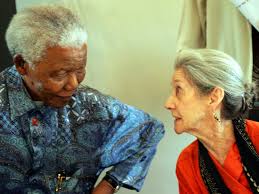
Many of her stories dealt with the themes of love, hate and friendship under the pressures of the racially segregated system that ended in 1994, when Nelson Mandela became South Africa’s first black president. She became active in the then banned African National Congress (ANC) after the arrest of her best friend Bettie du Toit in 1960, and the Sharpeville Massacre on 21 March 1960. Thereafter, she was a close friends with Mandela’s defense attorneys (Bram Fischer and George Bizos) during his 1962 trial; she actually helped Mandela edit his famous speech I am prepared to die. She was one of the first people president Mandela asked to see after his release from prison in 1990.
Nadine Gordimer and President Nelson Mandela
She was called one of the great “guerrillas of the imagination” by the poet Seamus Heaney, and a “magnificent epic writer” by the Nobel committee. Her intense, intimate prose helped expose apartheid to a global readership and continued to illuminate the brutality and beauty of her country long after the demise of the racist government. “She makes visible the extremely complicated and utterly inhuman living conditions in the world of racial segregation,” Sture Allen, permanent secretary of the Swedish Academy, said while awarding Ms. Gordimer the Nobel Prize for literature in 1991. “In this way, artistry and morality fuse.”
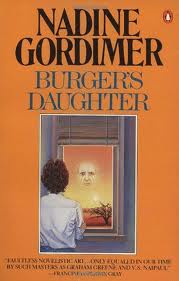
“Burger’s Daughter” by Nadine Gordimer
She had three books banned under the apartheid regime’s censorship laws, along with an anthology of poetry by black South African writers that she collected and had published. The first book to be banned was ‘A World of Strangers,’ the story of an apolitical Briton drifting into friendships with black South Africans in segregated Johannesburg in the 1950s. In 1979 Burger’s Daughter was banished from the shelves for its portrayal of a woman’s attempt to establish her own identity after her father’s death in jail makes him a political hero.
I never read any of her work, and now plan to start. Thank you to Nadine Gordimer for her brightness, and for her endless fight for freedom through her works.
I am posting here, a poem by the great poet founder of the negritude movement, the Francophone poet Aimé Césaire from Martinique. The breadth of Césaire’s work is amazing. He has published over 100 poems. The poem “Scalp” is one of them. Enjoy!
SCALP
Il est minuit
les sorciers ne sont pas encore venus
les montagnes n’ont pas fondu
ai-je assez dit à la terre
de ne pas s’installer par crainte de l’insolation?
Me serrerai-je la gorge avec une corde faite du lierre de mes murmures?
poissons cueilleuses de l’eau et son réceptacle
c’est par-dessus vos têtes que je parle
comme les étoiles dans la bave du miel de ses mauvais rêves et la terre elle a enfanté sous nous
C’est vrai que j’ai laissé mes ongles
en pleine chair de cyclone
parmi le fracas des hannetons gros et jusqu’à faire jaillir le jaune neuf d’un sperme me jetant sous son ventre pour mesurer mon rut
Maintenant
par le sang dur du viol
entre deux criminels
je sais l’heure celui
qui meurt
celui qui s’en va
Mais un mais moi
enserré dans la touffe qui m’endort
et par la grâce des chiens
sous le vent innocent et déplisseur des lianes
héros de chasse casqué d’un oiseau d’or
SCALP
It is midnight
the sorcerers have not yet come
the mountains have not melted
have I sufficiently told the earth
not to set itself up in fear of sunstroke?
Shall I tighten my throat with a cord made from the ivy of my mutterings?
fish gatherers of water and its receptacle
it is above your heads that I speak
like the stars in the honey drool from my bad dreams and the earth it has birthed beneath us
It is true that I left my fingernails
full in the flesh of the cyclone
amongst the brawl of huge cockchafers even to making spurt a new yellow semen throwing myself under its belly to measure my rutting
Here are some quotes by Maya Angelou herself. Feel and enjoy the wisdom!
==========
“I’ve learned that people will forget what you said, people will forget what you did, butpeople will never forget how you made them feel.” – Interview for Beautifully Said Magazine (2012)
“If you don’t like something, change it. If you can’t change it, change your attitude.”
“Never make someone a priority when all you are to them is an option.”
“I believe thateach of us comes from the creator trailing wisps of glory.” – Interview with the Academy of Achievement (1990)
“You may not control all the events that happen to you, but you can decide not to be reduced by them.” – Excerpted from Letter to My Daughter, a book of essays (2009)
“My mission in life is not merely to survive, but to thrive; and todo so with some passion, some compassion, some humor, and some style.” – Angelou’s Facebook (2011)
Maya Angelou
“Try to be a rainbow in someone’s cloud.” – Letter to My Daughter, a book of essays (2009)
“I’ve learned that you shouldn’t go through life with a catcher’s mitt on both hands; you need to be able to throw something back.” – Interview with Oprah for Angelou’s 70th birthday (2000)
“We may encounter many defeats but we must not be defeated.” – The Art of Fiction No. 119, the Paris Review
“It’s one of the greatest gifts you can give yourself, to forgive. Forgive everybody.”
“Love recognizes no barriers. It jumps hurdles, leaps fences, penetrates walls to arrive at its destination full of hope.” – Angelou’s Facebook (Jan. 11, 2013)
“Nothing can dim the light which shines from within.” – Date unknown
“I believe that every person is born with a talent.” – Date unknown
“One isn’t necessarily born with courage, but one is born with potential.Without courage, we cannot practice any other virtue with consistency. We can’t be kind, true, merciful, generous, or honest.” – Interview in USA TODAY (March 5, 1988)
“If you’re always trying to be normal, you will never know how amazing you can be.”
“Listen to yourself and in that quietude you might hear the voice of God.” – This was her final tweet, posted on 23 May 2014.
Yesterday, the world lost one of its greatest poets: Dr. Maya Angelou. The first poem of Maya Angelou I came across was “Phenomenal Woman,” which really resonated with me. It was read at a bridal shower I attended in Harlem, and I just loved every single word of it. Before that, I had read Maya Angelou’s first book I Know Why The Caged Bird Sings and also watched the movie. Maya Angelou’s life was not easy: she was raped at age 7, a teenage mother at age 17, a restaurant cook, a prostitute, and a pimp. She turned her life around, was a professional dancer, singer, actress, and a journalist in Egypt and Ghana. She won several Grammy awards. She walked with the greats of this world: Malcolm X whom she met while in Ghana and was going to work with before his assassination, Dr. Martin Luther King Jr., James Baldwin, Billie Holiday, Oprah Winfrey, and so many others. President Bill Clinton asked her to read a poem at his inauguration ceremony in 1993, making her the second poet in American history to do so. Her reading of that poem, “On the Pulse of Morning” won a Grammy award. President Obama presented her with the presidential medal of freedom in 2011. She was a professor at Wake Forest University.
Maya Angelou
To think that this woman never went to college, never had a PhD, and yet she was a bestselling author, and a professor at a major university. Billie Holiday once told Maya Angelou that she would be known in this world, but not for her music. Indeed, Maya Angelou was known throughout the world, definitely not for her music, but for her writings, and particularly for her poetry. Her life is a testament to truth, and passion: live your passion, do what you are most passionate about, and it does not matter where you come from, or how many degrees you have, you will excel and touch countless lives. Here is one of my favorite of Maya Angelou’s poems: “Still I Rise.”
Still I Rise
You may write me down in history With your bitter, twisted lies, You may tread me in the very dirt But still, like dust, I’ll rise.
Does my sassiness upset you? Why are you beset with gloom? ‘Cause I walk like I’ve got oil wells Pumping in my living room.
Just like moons and like suns, With the certainty of tides, Just like hopes springing high, Still I’ll rise.
Did you want to see me broken? Bowed head and lowered eyes? Shoulders falling down like teardrops. Weakened by my soulful cries.
Does my haughtiness offend you? Don’t you take it awful hard ‘Cause I laugh like I’ve got gold mines Diggin’ in my own back yard.
You may shoot me with your words, You may cut me with your eyes, You may kill me with your hatefulness, But still, like air, I’ll rise.
Does my sexiness upset you? Does it come as a surprise That I dance like I’ve got diamonds At the meeting of my thighs?
Out of the huts of history’s shame I rise Up from a past that’s rooted in pain I rise I’m a black ocean, leaping and wide, Welling and swelling I bear in the tide. Leaving behind nights of terror and fear I rise Into a daybreak that’s wondrously clear I rise Bringing the gifts that my ancestors gave, I am the dream and the hope of the slave. I rise I rise I rise.