Robert Mugabe and His Contribution to Africa

Robert Mugabe Ave in Namibia_3
Robert Mugabe Avenue, next to the Parliament, in Windhoek, Namibia

Namibia’s Founding President Sam Nujoma has described the late Zimbabwean President Robert Gabriel Mugabe as one of the continent’s most iconic leaders who fought for the liberation of his country and that of Africa at large. “He will be remembered as one who stood firm when others wavered. He was an iconic Pan-Africanist,” Nujoma said.

Robert Mugabe_7
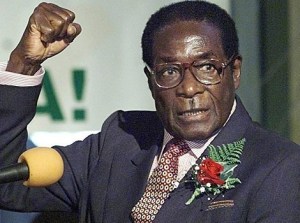
Zimababwe’s President Robert Mugabe chants Zanu PF slogans with supporters gathered at the Harare International Conference Centre in Harare, Wednesday May 3, 2000. Mugabe launched the Zanu PF’s election manifesto which bears the slogan “Land is the Economy and the Economy is Land”. (AP Photo/Christine Nesbitt)

Robert Mugabe’s contribution to the freedom of Namibia, and all of Southern Africa and Central Africa is so immense that there are streets named after him throughout the region; for instance, an avenue bears his name in downtown Windhoek, the capital of Namibia. He worked tirelessly for the liberation of most of Southern Africa, including his very own country of Zimbabwe. Many countries such as Mozambique, Namibia, South Africa (with the fall of the Apartheid regime), Angola, owe their freedom to his unwavering support. Even in the  Democratic Republic of the Congo, (DRC), his support, sending troops there, helped avert total chaos. Joseph Kabila, former president of the DRC said, “We will forever remember the worthy son of Africa, who came to our rescue when our country was victim of a foreign aggressor. The continent has lost one of its pan-African leaders, a hero of independence.

Don’t agree with everything you read online, in the Western newspapers. When an African leader stands for his people and is fighting for their freedom, the western press calls him a dictator, a heretic: Laurent Gbagbo, Muammar KadhafiKwame Nkrumah at the end of his life, Sekou TouréPatrice Lumumba, … When he serves western interests in pillaging his country, he is a democrat and a friend: Paul Biya, Omar BongoAlassane Ouattara,  Mobutu Sese Seko, and countless others. Pay attention and you will see… and since the media are controlled by the west, we get a different version, very far from reality.

Robert Mugabe - Fidel Castro in Namibia1
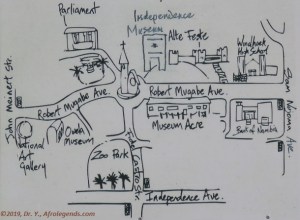
Map of Windhoek’s city center on the plate of the National Museum of Namibia, showing the Robert Mugabe Ave and the Fidel Castro St., as well as the Sam Nujoma Ave.

Everybody is stricken by some amnesia and forgets that the economic problems of Zimbabwe stemmed from economic sanctions imposed on them by Western powers such as the UK, US, and Europe. Before Mugabe fought for land restoration, he was knighted by the Queen of England, when he asked for the land of his forefathers to be returned to their rightful owners, he became a dictator. Go figure!

No wonder, Julius Malema of the EFF said “We must not allow our enemies to tell us how to remember [Robert Mugabe]; we know our heroes.”


Amanishakheto, Warrior Queen of Nubia

Nubia_Stele of Amanishakheto from the temple of Amun in Naqa
Stele of Amanishakheto (center) from the temple of Amun in Wad ban Naqa (Wikipedia)

Amanishakheto was a great queen of Nubia and is known as a great warrior and pyramid builder; she built numerous pyramids and temples at Meroë. She is also the daughter of Amanirenas, the fearless and one-eyed queen who defeated the Romans, and the mother of Amanitore, another great queen. Today, vestiges of her palace which had been destroyed and plundered by the Italian explorer Giuseppe Ferlini can still be seen at Wad ban Naqa, and her jewelry (looted by the same Italian), are now on display at the Egyptian Museum of Berlin, and at the Egyptian Museum of Munich.

Dr. Y.'s avatarAfrican Heritage

Candace Amanishakheto on a mural Candace Amanishakheto on a mural

Great women are often left out of history.  Rarely do we hear or read about African queens.  It is already hard enough to read about great African men and leaders in history books, but as for African women… it is more like impossible.  How many have heard of the great warrior queen of Nubia, Amanishakheto, who defeated a Roman army?  Who has heard of this great queen whose pyramid/tomb was leveled to the ground by an Italian treasure hunter, Giuseppe Ferlini, in 1832? Who has heard of this woman who led her people with a strong arm, and built pyramids in Meroë?  Who has heard of this great candace, whose daughter Amanitore, also queen of Nubia, is mentioned in the Bible (Acts 8:27) … yeah the Queen of Sheba is not the only African…

View original post 379 more words

Scarification: an ‘Ancient’ African Tattoo Culture

Congo_Batetela woman Lualaba Kassai_1905
Tetela woman with intricate ritual scarification designs ca 1905, Lualaba – Kasai

Today, we will reblog our article on scarification, an ‘ancient’ African tattoo culture. Not too long ago, scarification, as practiced in Africa, was much more than art work on skin. For many, it was a way of identification (the ethnic group you belonged to), a right of passage (boyhood to manhood, girlhood to womanhood, …), symbols of beauty and status, protection against evil spirits, and a rich tradition passed on from generations to generations. So next time you think about tattooing yourself, remember the ancient ways and designs of yore.

Dr. Y.'s avatarAfrican Heritage

Image of a young woman's face (agnautacouture.com) Image of a young woman’s face (agnautacouture.com)

These days, many of my fellow African brothers and sisters sport tattoos of some European or foreign symbols on their skins. These symbols are usually alien to our cultures, traditions, thinking, and history. So I thought about talking about scarification, which could be called an “ancient” African culture of tattoos.

For starters, Africa has a rich culture of scarification. Many cite HIV, and ugliness as being the reason why they would not do scarification and why the practice has been abandoned. I neither agree nor disagree with them, but I would like to give a history of scarification and why, this is something to be cherished as part of our history, even if it is no longer practiced and/or needed today.

Sculpture of a Mangbetu person, in Congo (this sculpture is exposed at the MET) Sculpture of a Mangbetu person, in Congo (exposed at the MET)

In the past, a woman or man would have scarification marks that…

View original post 621 more words

History of African Fabrics and Textiles

As I share this other great favorite on African textiles, I am preparing to write another piece on this subject next month… so stay tuned.

Dr. Y.'s avatarAfrican Heritage

Wax Hollandais Wax Hollandais

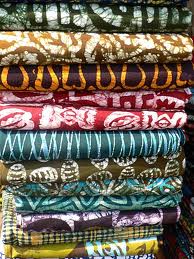
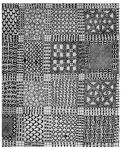
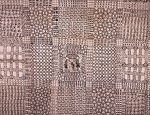
Very often, Africans are depicted on old pictures as naked people, walking around without any clothing.  This seems to be quite at odd with the fact that the Dutch textile company VLISCO has been installed in Africa, more precisely in Togo, since 1846.  So how could pictures from the 1800s and early 1900s only show naked Africans?  The BBC recently ran a story on VLISCO and African textile tradition actually being European.  The New York Times claimed that Africa’s fabric was entirely Dutch.  I find this quite appalling, and I call this a falsification of history.

For starters, before VLISCO, Africa had a very rich textile industry as noted by Kankan Moussa‘s entire delegation being clothed from cotton woven with golden threads in 1300s during his pilgrimage to the Mecca (this will be a story for another day), or the Kanembu clothing tradition which dates as far…

View original post 568 more words

Adinkra Symbols and the Rich Akan Culture

Sankofa symbol
The Sankofa symbol

This is another all-time favorite… The second-most popular post on Afrolegends.com: the history of Adinkra symbols and the Rich Akan culture of the Akan people of Ghana and Côte d’Ivoire. Enjoy!
As we revisit this favorite, please let us know if there are other things you would like to learn on the topic, and we will try to add more.

Dr. Y.'s avatarAfrican Heritage

Adinkra in 1817 Adinkra in 1817

Today, we will talk about Adinkra symbols of the Akan people of Côte d’Ivoire and Ghana.

The Adinkra symbols are believed to originate in Gyaman, a former kingdom in modern day Côte d’Ivoire.  According to an Ashanti (Asante) legend, Adinkra was the name of a king of the Gyaman kingdom, Nana Kofi Adinkra.  King Adinkra was defeated and captured in a battle.  According to the legend, Nana Adinkra wore patterned cloth, which was interpreted as a way of expressing his sorrow on being taken to Kumasi, the capital of Asante.  He was finally killed and his territory was annexed to the kingdom of Asante.  The Asante people, around the 19th century, took to painting of traditional symbols of the Gyamans onto cloth, a tradition which has remained to this day.

Adinkra work, 1825 Adinkra work, 1825

The arrival of the…

View original post 610 more words

Samori Touré: African Leader and Resistant to French Imperialism!

Samori
Samori Touré

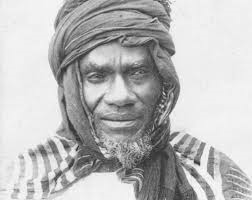
This post on Samori Touré has been an all-time favorite post on Afrolegends.com . I am reblogging it here, because on this 10-year anniversary of the African Heritage Blog, it has been the most viewed and loved article. As you know, Samori Touré, grandfather to the African president Sekou Touré (another resistant to French imperialism – Guinea: the country who dared say ‘NO’ to France), was a leader and ruled over a vast empire which spanned big areas of West Africa from Guinea all the way to modern-day Côte d’Ivoire. He was a strong fighter to France imperialism in Africa, and opposed a great resistance to the French several times. This is to one of Africa’s great kings, warriors, and resistant.

Dr. Y.'s avatarAfrican Heritage

Samori Toure holding the Coran

One of the great kings, and fighters of African freedom was the great Samori Touré. Over 100 years ago, Samori Touré was captured by the French and deported to Gabon where he died of pneumonia.

But who was Samori Touré?

Well, Samori Touré was born in 1830 in Manyambaladugu (some texts mentionSanankoro instead), a village southeast of Kankan in present-day Guinea. Samori was a great warrior who fought imperialism in the 19th century such as many leaders today. He refused to submit to French colonization and thus chose the path of confrontation using warfare and diplomacy.

Until the age of 20, Samori was a trader. After his mother was captured in a slave raid by the king Sori Birama, he offered to serve in his army and excelled by his military prowess and skills.

Samori Touré had a vision of unity for the Malinké people, and…

View original post 935 more words

Archaeologists Explore the Waters under a Nubian Pyramid to Unveil …

Nubia_Pyramids of Meroe
Pyramids at Meroe (Wikipedia)

As I stated before, Sudan has more pyramids than Egypt, and at one point its pharaohs ruled Egypt for over a century. Only in recent years, has Nubia (Africa’s Forbidden Pyramids: Meroe, Nubia, and Sudan) attracted the attention of more archaeologists. One archaeologist used scuba diving to explore one of the pyramids at the ancient royal burial site of Nuri; making it the first time it is used in Sudan. He unearthed some amazing pottery figurines and gold leaves. The expert below is from the BBC; for the full article, follow the link.

=====

Nubia_Nuri archaeological expedition 1
Nuri Archaeological expedition / Pearce Paul Creasman (Source: BBC)

An underwater archaeologist has told the BBC of the extraordinary lengths he went to to access a pharaoh’s tomb underneath a pyramid.

Pearce Paul Creasman and his team were the first people to go into the tomb for 100 years and, in that time, it has become harder to access because of the rising water level. Mr Creasman told BBC Newsday that this was the first time underwater archaeology had been carried out in Sudan, the location of the ancient royal burial site of Nuri.

He found pottery figurines and gold leaf.

The gold offerings were still sitting there – these small glass-type statues had been leafed in gold. And while the water destroyed the glass underneath, the little gold flake was still there,” he told Newsday.

He believes these offerings were for Nastasen, a minor pharaoh who ruled the Kush kingdom from 335 BC to 315 BC.

This gold leaf would have been taken by thieves if it weren’t for the rising water level making the tomb inaccessible to most, underwater archaeologist Kristin Romey writes in the National Geographic.

Mr Creasman told the BBC that the team “dug as far as we could” down a 65-step stairway which led to the tomb entry. …

Nubia_Nuri archaeological expedition
Nuri archaeological expedition / Pearce Paul Creasman (Source: BBC)

He described what he found as “remarkable“:

There are three chambers, with these beautiful arched ceilings, about the size of a small bus, you go in one chamber into the next, it’s pitch black, you know you’re in a tomb if your flash lights aren’t on. And it starts revealing the secrets that are held within.

The tomb is part of the ancient site of Nuri which is spread across more than 170 acres in northern Sudan.

These pyramids mark the burials of Kushite royals who are sometimes referred to as “black pharaohs“. The Kush kingdom lasted for many hundreds of years and, in the 8th Century BC, it conquered Egypt which it ruled for almost a century.

Ancient Egyptians were Black – Egypt unveils tomb still bursting with color after 4,300 years

EGYPT-ARCHAEOLOGY-HERITAGE-HISTORY
This picture taken on April 13, 2019 shows a view inside the newly-dicovered tomb of the ancient Egyptian nobleman “Khewi” dating back to the 5th dynasty (24942345 BC), at the Saqqara necropolis, about 35 kilometres south of the capital Cairo. (Photo credit should read MOHAMED EL-SHAHED/AFP/Getty Images)

As I read the article about the discovery of this 4,300 years-old Egyptian tomb bursting with colors, I was stunned to see that NO article stated the obvious conclusion: Ancient Egyptians were Black! NO articles stated it: they wonder who the nobleman, Khewi, in whose tomb this was found is, what his link to the Pharaoh is, … they ask a thousand other questions, instead of addressing the reality! This reinstate what we already knew and what the great Cheikh Anta Diop always said, that Ancient Egyptians were black and that their descendants are today’s Subsaharan Africans! One of the statues found inside the tomb beautifully shows its very broad nose, clear symbol of its Black-ness/African-ness, and of course its skin color.  Enjoy! Below are excerpts; for the full article, please go to Fox News.

=====

Egypt_tomb with colors Khuwy-1
A view inside the newly discovered tomb of the ancient Egyptian nobleman “Khewi” dating back to the 5th dynasty at the Saqqara necropolis, about 35 kilometers south of Cairo. (Photo by Mohamed el-Shahed / AFP)

Egyptian officials announced a stunning discovery over the weekend: a 4,000-year-old tomb of a dignitary bedazzled in colorful paintings and inscriptions.

Egypt’s Ministry of Antiquities unveiled Saturday the ancient resting place of the senior official named “Khuwy, [Khewi in other sources]” noting that he served during the reign of King Djedkare, a pharaoh who ruled Egypt during the Fifth Dynasty — from the late 25th century to early 24th century BC. The next day, the Egyptian government released footage that showcased what it called “exceptionally painted” limestone walls.

The remarkable well-preserved colours on the inscriptions are considered royal colours,” the ministry said in an original video posted online.

Egypt_tomb with colors Khuwy-5
Mohamed Mujahid, head of the Egyptian mission that discovered the tomb of the ancient Egyptian nobleman “Khewi,” inspects the tomb’s walls inside the Saqqara necropolis on April 13. (Photo by Mohamed el-Shahed / AFP)

[…] “The L-shaped Khuwy tomb starts with a small corridor heading downwards into an antechamber and from there a larger chamber with painted reliefs depicting the tomb owner seated at an offerings table,” Mohamed Megahed, who led a team of archaeologists in digging up the tomb, told the Egyptian newspaper.

Every inch of the tomb is covered in markings, which archaeologists are carefully studying. So far, the inscriptions have raised questions about Khuwy’s impact on the ancient community as well as his specific relationship with the pharaoh — whose elaborate tomb sits just “a stone’s throw away,” per the ministry.

[…] Mostafa Waziri, secretary general of the Supreme Council of Antiquities, called the burial “one of a kind in the last decades.”

Egypt_tomb with colors_181215-egypt-new-tomb-al-1210
Statue inside the tomb. (Photo by Mohamed el-Shahed / AFP)


The color is almost intact even though the tomb is almost 4,400 years old,” Waziri said in a statement at the time.

The Lebombo Bone: The Oldest Mathematical Artifact in the World

Lebombo bone_2
The Lebombo bone

Have you ever heard of the Lebombo Bone? It is even older than the Ishango bone. It is indeed the oldest known mathematical artifact in the world. Discovered in the 1970s in Border Cave, a rock shelter on the western scarp of the Lebombo Mountains in an area near the border of South Africa and Swaziland (now Eswatini). The bone was found on the Eswatini side, and dates from 35,000 BC. It consists of 29 distinct notches that were deliberately cut into a baboon’s fibula.

The bone is between 44,200 and 43,000 years old, according to 24 radiocarbon datings. This is far older than the Ishango bone with which it is sometimes confused. Other notched bones are 80,000 years old but it is unclear if the notches are merely decorative or if they bear a functional meaning.

According to The Universal Book of Mathematics, the Lebombo bone’s 29 notchesmay have been used as a lunar phase counter, in which case African women may have been the first mathematicians, because keeping track of menstrual cycles requires a lunar calendar.” However, the bone is clearly broken at one end, so the 29 notches may or may not be a minimum number. In the cases of other notched bones since found globally, there has been no consistent notch tally, many being in the 1–10 range. The Lebombo bone resembles a calendar used by the early men of the area, coming from the San clans of Namibia; this way of making tallies is still used by the San people today.


Lebombo Ishango bones
Top image: Lebombo bone. Bottom: Ishango bone with prime numbers engraving (J.D. Loreto and D.H. Hurlbert Smithsonian)

According to The Universal Book of Mathematics, the Lebombo bone’s 29 notches “may have been used as a lunar phase counter, in which case African women may have been the first mathematicians, because keeping track of menstrual cycles requires a lunar calendar.” However, the bone is clearly broken at one end, so the 29 notches may or may not be a minimum number. In the cases of other notched bones since found globally, there has been no consistent notch tally, many being in the 1–10 range. This resembles a calendar used by the early men of the area, coming from the San clans of Namibia. These represent the earliest unambiguous evidence for modern human behavior. An article in the Proceedings of the National Academy of Sciences (PNAS) on recent archaeological discoveries, “Early evidence of San material culture represented by organic artifacts from Border Cave, South Africa” , has shown that bone tools were already present 75,000 years ago and were used in San culture.

To anyone who ever doubted it, Africa is indeed the cradle of humanity… and women (if it is indeed a lunar tool) were quite advanced mathematicians 35,000 years ago, using calculators to make lunar calendars!


Queen Amina of Zazzau: Woman As Capable as a Man

Queen Amina_1
Queen Amina of Zazzau

A few years ago, I wrote about Queen Amina of Zazzau: the Great Hausa Warrior born to Rule, the woman remembered today in Nigeria as  ‘Amina, rana de Yar Bakwa ta San’ (Amina, daughter of Nikatau, woman as capable as a man). Crowned queen of Zazzau in 1576, Amina expanded her kingdom’s boundaries down to the Atlantic coast; she founded several cities, and personally led an army of 20,000 soldiers to numerous battles. During her 34-year reign, she commanded the construction of a defensive mural around each military camp that she established.  Later, those camps evolved into prosperous cities within those walls, and some can still be seen today in northern Nigeria.  Those cities are known as walls ‘ganuwar of Amina’ or ‘Amina’s walls‘.

Queen Amina’s achievement was the closest that any ruler had come in bringing the region now known as Nigeria under a single authority. Enjoy this trailer for the movie Amina by Izu Ojukwu and the website for it: AminaQueenOfZazzau.com; the BBC also made a cartoon about her. With Hollywood’s recent lack of imagination and appropriation of other people’s culture, I would not be surprised that they copy her story to bring it onto big screen. However, Africans should put forward their own stories and value them… not wait for some imagination-hungry entity to come grab it, to all of a sudden value their own history (Black Panther).