A blog about African history, and heritage, through audio and video files.
Author: Dr. Y.
I am an African in love with the history of the world, and particularly that of Africa. I am a child of love, an artist, a scientist, a lover, a friend, a human.
I am in love with nature and beautiful things, art, history, geography, travel, dance, food, science, and technology, and much more.
Même si le singe prend la peau du sanglier, il meurt comme singe(Proverbe Pygmées – Afrique Centrale). – Restez ce que vous êtes; ne pas vouloir se montrer plus qu’on est.
Even if the monkey takes the skin of the boar, it dies as monkey(Pygmy proverb – Central Africa). – Remain who you are; never try to show oneself as more than one is.
The Cape Coast Castle is one of the 30 slave forts of Ghana. In 2009, the US president Barack Obama and his family, made a point to visit the Cape Coast Castle. So why should you learn about it?
Well, it took 50 years to build the three-story building that forms today’s Cape Coast Castle. It was originally built by the Swedes (the Swedish Africa Company), starting in 1653 (it was then known as Fort Carlsborg or Carolusborg) for timber and mineral exportation, and then taken over by the Dutch before the British wrestled it away. The original cannons, cannon balls, and mortars used to defend the fort can still be seen today, facing the Atlantic Ocean.
Cape Coast Castle in 1682
The brick courtyard of the castle, which Ghanaians commonly refer to as Cape Coast Dungeon, has two 18-foot water wells and four graves. The first grave is for the Rev. Phillip Quarcoo, the first black Anglican pastor in the area. Beside him lies C.B. Whitehead, 38-year old British soldier who was killed by a Dutch soldier in the courtyard. Besides them are the graves of Letitia Elizabeth Landon, and her husband George MacLean, the British governor of Cape Coast from 1830 to 1844. I am not sure how a woman could possibly live next to such atrocities; maybe by rationalizing that the people being imprisoned, were not human beings?
The open auditorium on the top floor of the former administration building now hosts an exhibit chronicling the history of slavery on Ghanaian shores.
Cape Coast Castle in 1890 (National Archives UK – Wikimedia)
During the 17th and 18th centuries, the Cape Coast slave fort imprisoned about 1000 men and 300 women for any given 3 months period, before they were crammed into ships bound for a life of slavery in the Americas. Its corridors are full of dungeons where only dim light coming from tiny windows let the light and air in. 200 males will be kept in space meant for 50 people or less, where they will spend over 23h a day for three months, and will only be brought briefly out to eat. Ironically, Christian services were held in the fort while these poor souls were screaming for their lives underneath.The majority of captives ranged between 15 and 35 years of age.
Women were locked in 2 similar dungeons, 150 of them per chamber. They will be raped daily by the British soldiers, who would come into the cells and select the ones to spend the night with. Any slave who challenged the authorities was thrown into the condemned cell, which held 30 – 50 in a room no bigger than most walk-in closets. There, they would die deprived of food, water, light, and oxygen, clawing the brick walls and floors as they suffocated.
Cape Coast Castle (WZM – Wikipedia)
To descend into the exposed brick castle feels like entering the depth of the underworld (I can only imagine how those captives felt going through there). There are five dungeon chambers for men. The strongest ones were separated during branding, when hot iron rods were used to mark their chests, and then chained and shackled together in the first chamber. The last cell has a hole in the wall, which leads into a deep dark tunnel which was used to take slaves underneath the castle’s courtyard, leading them to the “door of no return.” Cape Coast Castle was once the most active slave trading hub in West Africa.
Slavery was not just a European affair, but an African one as well, since many African chiefs traded slaves (rarely their own people – but people from other nations) to the Europeans in exchange for goods. Thus, the Ghana House of Chiefs – a body comprising all the country’s traditional kings and chiefs- has placed a plaque on one of Cape Coast castle’s walls, asking for forgiveness to the souls of those who were sold. When will European nations also ask for forgiveness?
I couldn’t pass on the opportunity to share this picture of a beautiful hibiscus flower. The colors were very vibrant, and the mixture of the yellow, orange, white, purple, and red, all blended in perfect harmony. There is so much peace emanating from it. This is part of all the beauty that the natural world has to offer in Africa, and around the globe. May your day be just as harmonious as the colors on this flower. Enjoy!
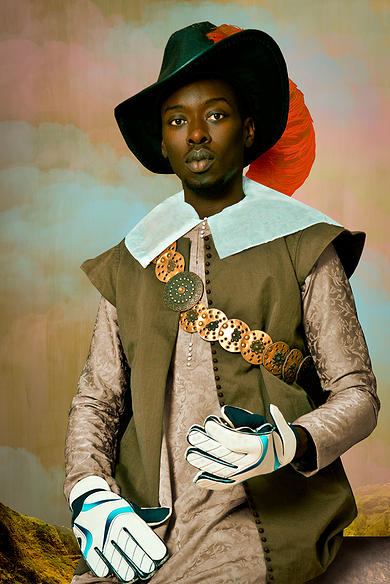
Omar Victor Diop, posing as Don Miguel de Castro (1643) who was part of a delegation sent by a ruler of Sonho in Congo to the Netherlands via Brazil (Source: Omar Victor Diop, Omarviktor.com)
I was impressed by photographer Omar Victor Diop‘s latest work. His Project Diaspora is a self-portrait mimic of original paintings of notable African men in European history, while using football equipment as props. With this work, Diop tries to explore his own development as an artist, but also to rectify misconceptions of an all-white Europe by highlighting accurate African presence in Europe in the 15ththrough 19th century. Thereby demonstrating that Africans in Europe in the 15-19thcenturies were not only slaves, but also noblemen, as seen on real paintings he found in museums and archives across Europe!
Young Alexander Pushkin
See how our views have been distorted for so long? It means that from 1400s until 1800s there were African noblemen, generals, etc (like the Ghanaian professor in Germany Anton-Wilhelm Amo in the 1700s, or General Gannibal the grandfather of the celebrated Russian poet Alexander Pushkin) in Europe! Imagine that! Africans were not just slaves, but noblemen, and much more! I simply love it. Please people, take a look at Omar Victor Diop’s Project Diaspora, his website omarviktor.com, and this article on Okayafrica.com and rediscover some history through his modern depictions of the past.
Precious readers, may the year 2015 be the year of all great conquests, achievements, success, and greatness. I would like to express my sincere gratitude to all those who visited my blog, and to all future visitors. 2014 was a beautiful year: the number of subscribers on Afrolegends.com has tripled, the number of visitors on the blog has doubled, the article Burkina Faso was cited by TIME Magazine online, while the article La SAPE was cited by The Guardian, and many articles were reblogged on multiple sites. For 2015, I wish you wonders without borders, peace, grace, and love.
Happy 2015 (Illustration by Osee Tueam, for Dr. Y, Afrolegends.com)
Here were the top posts of 2014. Keep trusting, reading, sharing, and liking.
Like every year, I have to tell you about the good things that happen in Africa, and all the things we celebrated. Here are 10 of them.
1. I have to say it again: Blaise Compaore’s demotion. Blaise Compaoré was booted out of office in 2014. Thomas Sankara‘s murderer taught that he will be eternal in power, and on October 30th 2014, the people of Burkina Faso said ENOUGH!
2. Presidential Elections finally took place in Tunisia, 3 years after Ben Ali‘s toppling at the beginning of the ‘Arab Spring’, and the election of the people’s choice as president: Beji Caid Essebsi. We are glad the people of Tunisia’s choice was respected.
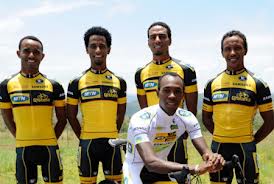
Some members of the South African Team – MTN Qhubeka(Source: bicycling.co.za)
3. Mrs Catherine Samba-Panza was sworn in as interim president of the Central African Republic on 23 January 2014. She was chosen as a neutral person to lead the country of the conflict that rages in the area; she is the first woman appointed in such a position in the history of the country.
4. For the first time in the history of Cycling, there was an African team competing in a great race. 6 Africans (two Erithreans and 4 South Africans) ran in Spain for the South African team, MTN-Qhubeka.
5. Two African teams advancing into the last round of 16 at the Brazil 2014 FIFA World Cup for the first time in the history of the FIFA World Cup: namely, Nigeria and Algeria. Even though both teams were eliminated in the last round of 16, Algeria particularly put up a good fight against Germany (who went on to win the World Cup) and made us proud.
6. The African version of Robocop designed by two female engineers in the Democratic Republic of Congo, one of them being Thérèse Inza. This is a traffic cop who regulates the traffic, and even gives tickets to the cab drivers, and those who do not want to follow the code of the road.
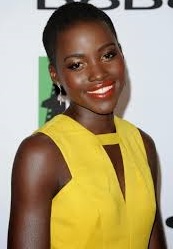
Lupita Nyong’o
7. There were 3 Africans nominated at the Oscars in main categories this year: Chiwetel Ejiofor(Nigeria) in the ‘Best Actor’ category, Barkhad Abdi (Somalia) in the ‘Best Actor in a Supporting role’ category and Lupita Nyong’o (Kenya) in the ‘Best Actress in a Supporting role’ category. Lupita made us proud by winning the Academy Award for ‘Best Actress in a Supporting role’ for her role in 12 Years a Slave. She was also named the ‘Most beautiful Woman’ by People magazine (I never really understood that People Magazine award: as if they had searched through the 3.5Billion women in the world before giving this award!) and ‘Woman of the Year’ in Glamour, and was announced as the ‘New Face’ of Lancôme, a first for a Black woman.
8. Nigeria became Africa’s # 1 economy after rebasing its Gross Domestic Product (GDP) from 1990 to 2010 constant prices. Nigeria just surpassed South Africa as Africa’s top economy, and the world’s 26th largest economy.
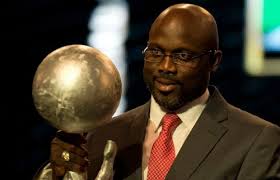
10. George Weah, the only African to have won a FIFA World Player of the Year (in 1995) and won Ballon d’Or, won a senate seat in Liberia yesterday Dec. 29th. The 2005 presidential contender (he had won the first round of the elections then) of Mrs. Johnson-Sirleaf won the senate elections against Robert Sirleaf (President Johnson-Sirleaf’s son). This was a landslide victory; it is a step forward, and progress is always to be acclaimed!
I have to do a recap of the year 2014. You already know that the number one person we said goodbye to was the dictator and murderer Blaise Compaoré, who was booted out of office the tail between his legs.
1. Blaise Compaoré, booted out of office in 2014. Thomas Sankara‘s murderer taught that he will be eternal in power, and on October 30th 2014, the people of Burkina Faso said ENOUGH!
2. Michael Sata, the President of Zambia, passed on in office on October 28, 2014. He was replaced by Guy Scott, the first white president (albeit interim president) of Zambia since independence.
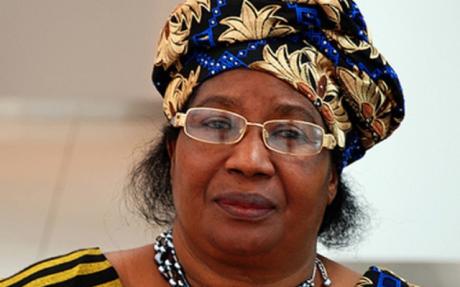
President Joyce Banda
3. Joyce Banda, President of Malawi, who lost the elections this year. She became president of Malawi after Bingu wa Mutharika passed away in 2012. She is succeeded in office by Peter Mutharika. She had been Africa’s second female Head of State.
4. Nadine Gordimer, South Africa’s first Nobel prize of literature, passed away at the age of 90, on 13 July 2014. She was called the one of the great “guerilla of imagination” by poet Seamus Heaney.
Lapiro de Mbanga
5. Lapiro de Mbanga, the voice of the voiceless, the great Cameroonian musician, and activist, left us this year, in March. Lapiro sang for the people, talked about the youth’s shattered dreams, the division, the tribalism, the corruption, the decadence, and the ills of the country. So long Ndinga Man!
6. Abel Eyinga and Charles Ateba Eyene, both of Cameroon, passed away. These were strong outspoken voices of Cameroon, and will forever be remembered.
7. King Kester Emeneya, the king ofla Rumba, passed away on 13 February 2014. I had just recently gotten reacquainted with his music, and danced to Nzinziagain. So long King.
8. Mama Gbagbo, the mother of Laurent Gbagbo, passed away this year. Gbagbo who is currently detained by the CPI at the Hague was refused the opportunity to bury his mother. She was over 90 years old.
Maya Angelou
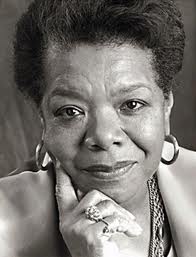
9. The world said goodbye to Maya Angelou in May of this year. Dr. Maya Angelou was one of the world’s best poets. My two favorite poems by Dr. Angelou are ‘Phenomenal Woman‘ and ‘Still I Rise.’ Her African roots are very deep as she was a journalist in Egypt and Ghana. Her life was an embodiment of Truth, and passion.
10. More than 160 immigrants were feared dead after a boat carrying about 200 African immigrants sank off the coast of Libya. How many Lampedusa shipwrecks are we going to have until the world realizes that feeding and destabilizing countries does not help global equilibrium?
I just wanted to wish you all a Happy holiday season 2014. Merry Christmas and Happy new year. May this holiday season be full of joy, happiness, abundance, and blessings. Enjoy the picture below as a present from Dr. Y., Afrolegends.com, for a happy holiday season.
Happy Holidays 2014 (Illustration by Osee Tueam, for Dr. Y, Afrolegends.com)
Last week, an exhibition organized by the Schomburg Center for Research in Black Culture of The New York Public Library, in Delhi recently showcased the “forgotten” stories of Africa’s role in India’s history. The exhibition reminded me a lot of the article I wrote about the Siddis, a tribe of Indians of African descent.
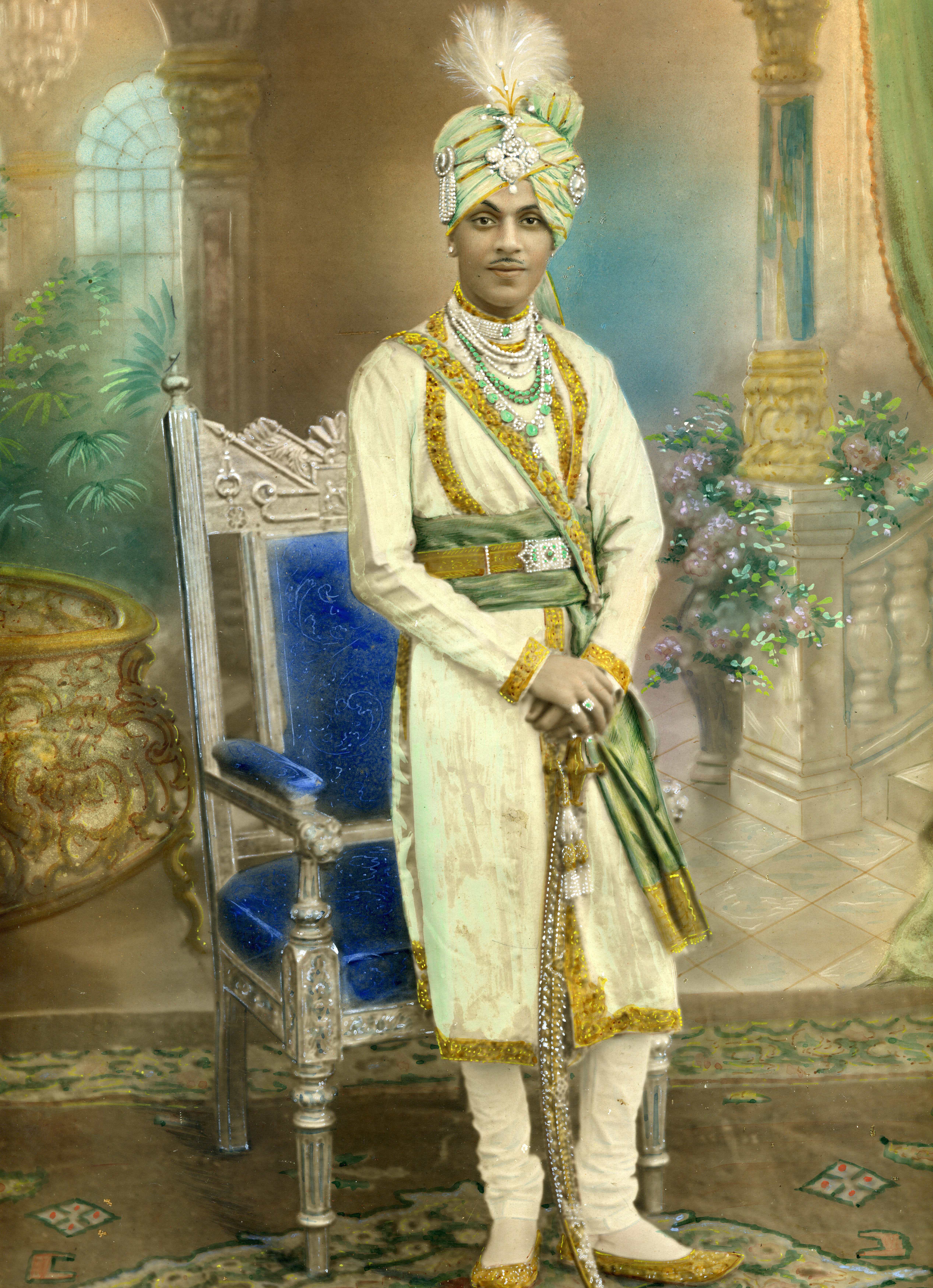
Nawab Sidi Mohammed Haider Khan (Source: The Kenneth and Joyce Robbins Collection)
Well it turns out, that many Africans travelled to India either as traders or as slaves centuries ago; their presence dates as far back as the 4th century AD. They mostly came from the horn of Africa and were referred to as Abyssinians, Siddis, or Habshis (Ethiopians), or Zangis (East Africans). They really flourished as traders, artists, rulers, architects and reformers between the 14th Century and 17th Century. They played an important role in India’s history or kingdoms, conquests, and wars, and rose through the ranks of society, some becoming generals or rulers. Due to their fighting prowess, many became soldiers in the armies of conquerors and sultans all over India’s princely states. The most important one of them is Malik Ambar (1548-1626) of Ahmadnagar, in Western India, who was an important ruler, and military strategist. His mausoleum still exists in Khuldabad, near the Aurangabad district; somehow, Indian history forgot to mention that he was African. There was also Nawab Sidi Haidar Khan, ruler of the African-ruled state of Sachin established in 1791 in Gujarat; the state had its own cavalry and state band which included Africans, its own coat of arms, currency, and stamped paper.
Ibrahim Rauza Tomb, designed by architect Malik Sandal
Other Africans flourished as artists, reformers, and architects, such as Malik Sandal who designed a funerary complex after 1597 in Bijapur, the Ibrahim Rauza tomb (in present-day southern Karnataka state).
Painting of a Sidi couple of Bombay (by M.V. Dhurandhar, from the book ‘By-Ways of Bombay’, 1912)
Africans not only rose to prominence in the Deccan Sultanates of southern India, but also on the western coast of India. They sometimes seized power for their group like they did in Bengal – where they were known as the Abyssinian Party – in the 1480s; or in Janjira and Sachin (on the western coast of India) where they established African dynasties. They also took power on an individual basis, as Sidi Masud (also written Siddi Masud) did in Adoni (in southern India), or Malik Ambar in Ahmadnagar (in western India).
The main African figures of the past have not been forgotten but their ethnicity (as in many places in the world) has been erased, consciously or unconsciously. How many more prominent Africans are there in Indian history, whose ethnicity was erased? Please enjoy this photojournal of the Schomburg exhibition from the BBC, Africans in India: From Slaves to Rulers, and if you get a chance, do attend the exhibition, the pictures are simply amazing.
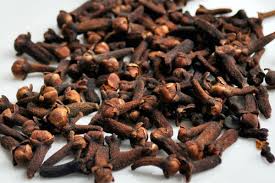
I really enjoyed this week’s BBC Photojournal on the harvesting of cloves in Tanzania. I did not know that so much was involved in getting that tiny spice that I often add to my sauces. Harvesting the flower buds, drying them, and then taking them to weighing stations is not an easy labor, for that spice to find its way into plates around the world, food, drinks, cosmetics, wine, and medicine. The photojournal focuses on the harvest of cloves on the archipelago of Zanzibar in Tanzania, and particularly on Pemba island. Zanzibar was once known as the Spice islands, and was once the world’s largest producer of cloves. Next time you use that tiny spice, remember Zanzibar. Enjoy BBC Photojournal on the harvesting of cloves!














 African Heritage