French President Acknowledges French Genocide in Cameroon

Francois Hollande, President of France
French flag
French flag

It took over 70 years for a French President to finally admit the genocide perpetrated in Cameroon by France between 1950 and 1970, a genocide which claimed over 400,000 lives, and displaced countless others. In his visit to Cameroon last Friday, French president François Hollande acknowledged that French forces had tried to quash colonial separatists in the 1950s and said he was ready to open up the history books. He said, “I recognize that there have been extremely traumatic and even tragic episodes.” Should we jubilate?

Ruben Um Nyobé
Ruben Um Nyobé

I say NO. It is true that this is somewhat a step forward: recognition of wrong done. However, I call it arrogance to wake up one day, and finally say, “Oh, yes, I killed your fathers, mothers, brothers, or sisters, … I showered many of your cities with Napalm, … I decapitated so many of your freedom fighters and hung their heads in the villages’ square, … I killed Ruben Um Nyobé, Felix-Roland Moumié, Castor Osende Afana, Ernest Ouandié, and so many others, … I forced some of you into exile, … and I displaced countless others inside and outside your borders.” And so what? Should we clap for you? where is the apology? Didn’t you think we knew you did that? Where is the reparation?

Decapitated Heads during the genocide in Cameroon
Maquisards’ heads during the genocide in Cameroon

During the Maquis years, many lost a loved one; is there a reparation for that loved one? that father who never saw his children grow up? that mother who never saw her son again? What about those who kept waiting, and waiting, hoping that after so many years the loved ones would come back home?… What about the pain of that young girl walking to school who had to watch the decapitation of ‘maquisards’ on the public place: she was scarred for life! What about those entire villages burnt with napalm? And those who were displaced internally from French Cameroon to British Cameroon, running for their dear lives and leaving behind their lands? What about Ruben Um Nyobé and his family? Felix-Roland Moumié, and his widow who suffered years of imprisonment in the harshest places? and Ernest Ouandié… and all the children who had to watch in horror as he took his last breath under the firing squad’s shots? What about the remaining population whose history was erased from textbooks, those who now have a gap in their past?

UPC Leaders (L. to R.) front row: Castor Osende Afana, Abel Kingué, Ruben Um Nyobé, Felix Moumié, and Ernest Ouandié

And to stand up there, and say “yes I recognize that we killed you”… it’s like Hitler waking up today, and telling Holocaust survivors and their descendants, “I killed you, jailed your parents, forced you into exile, brought fear into your souls, and decimated every part of you… what can you do?” It is simply arrogant! It is just too easy. Until there is a clear “I am sorry”, until there is a clear “here is what we will do to correct the wrong”, until there is a clear “arrest of all perpetrators”, until there is a clear “story in the history textbooks, opening of all the classified documents”…. until there is a clear “respect for those killed,” until then, there will be no respect for arrogant presidents of the hexagon in our dictionaries!

In 2013, the British government apologized for the massacre of the Mau-Mau in Kenya. We are waiting for France’s apologies for the Cameroonian genocide, and while we are at it, we will also expect France’s apologies for the Algerian and Malagasy massacres too.

Proverbe Mongo sur la Gratitude / Mongo Proverb on Gratitude

Dog
Dog

Ne frappe pas le petit chien qui agite la queue pour toi (Proverbe Mongo – République Démocratique du Congo). – On ne fait pas de mal à celui qui vous aime.

Do not beat the puppy who shakes its tail for you (Mongo Proverb – Democratic Republic of Congo). – Do not hurt the one who loves you.

Meet the Kantanka: a 4×4 AWD Made in Ghana by Ghanaians for Ghanaians

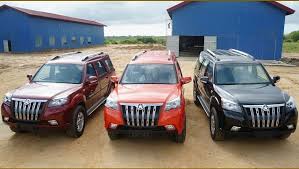
Kantanka Cars (GhanaOnline)

I came across a video of the Kantanka, a 4×4 All-Wheel Drive made in Ghana by Ghanaians for Ghanaians, on BBC. The car is the brainchild of Dr. Kwadwo Safo, a Ghanaian who always dreamt of making cars and planes in Ghana. He wanted to address the local needs, and demonstrate that it was possible for Africans to design and engineer their own cars for their own roads. Move over Toyota, Honda, Ford, Mercedes, and meet the Kantanka. We do hope that these cars will be solicited by Ghanaians themselves, that they will meet the safety standard, and be a breath of fresh air adapted to their roads and needs. The car is engineless and “green”. The founder’s son, Kwadwo Safo Jr., said, “the non-engine vehicle does not rely on a combustion engine to move, but an electric motor powered by rechargeable batteries. The batteries can be recharged with solar energy or electricity. As you drive the car on the road, it converts the energy from the sun into mechanical energy which powers the car.”

Apart from the lights and tires, everything is done and assembled by local people. The police just bought a few vehicles. The big question will be: does it meet international safety standards? Will Ghanaians be sold by it? Read the article on Forbes and Al-Jazeera, and watch the video on BBC. Enjoy Ghana’s first car, made in Ghana by Ghanaians for Ghanaians!

Cameroon in the Round of 16 at 2015 FIFA Women World Cup

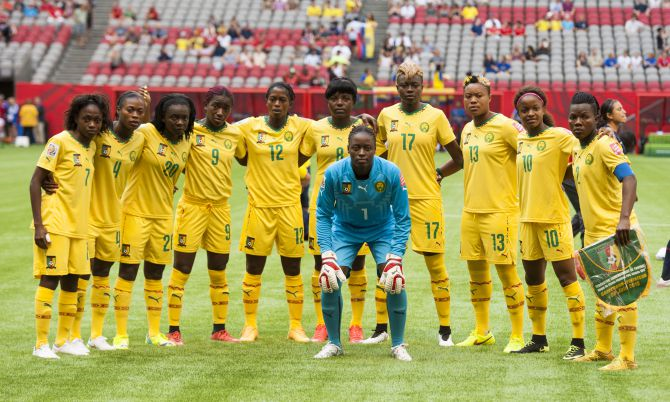
Les Lionnes of Cameroon (Getty Images)

I was quite proud of the Cameroonian team who succeeded in going through the first round of the 2015 Women FIFA’s World Cup in Canada. This was Cameroon’s first World Cup participation. With no government support, barely any equipment, and little organization, they managed to do well with so little. Here is a quote by the Cameroonian coach Enow Ngachu, “The day we prepare and organize very well, I think an African nation will one day win the World Cup. … We just hope that with our performance many things will change in Cameroon and in Africa.”

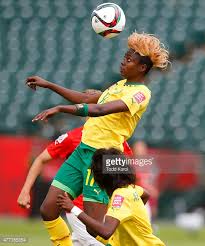
Gaelle Enganamouit in action (Getty Images)

On June 20th, China PR survived a tough examination from Cameroon with a lone early strike from Wang Shanshan, thus ending the Lionnes of Cameroon’s journey. Both teams played with high-tempo and intensity from the opening whistle in Edmonton with chances aplenty at either end, but it was the Chinese who remained resilient at the back to advance into the last-eight. We are very proud of these Cameroonian sisters who showed that African women, and women in general, can play very good, entertaining, and amazing football/soccer, and should be equally cared for by their governments and people.  My hat to Gaelle Enganamouit, Madeleine Ngono Mani, Christine Manie, Gabrielle Aboudi Onguene, and all the other sisters who made us proud. Indomitable Lioness Gaelle Enganamouit became the first African to score a hat-trick at the Women’s World Cup. Below is a highlight from the game Cameroon – Switzerland, which was quite intense and beautiful to watch. Enjoy!

Emerging from Darkness, and into the Light

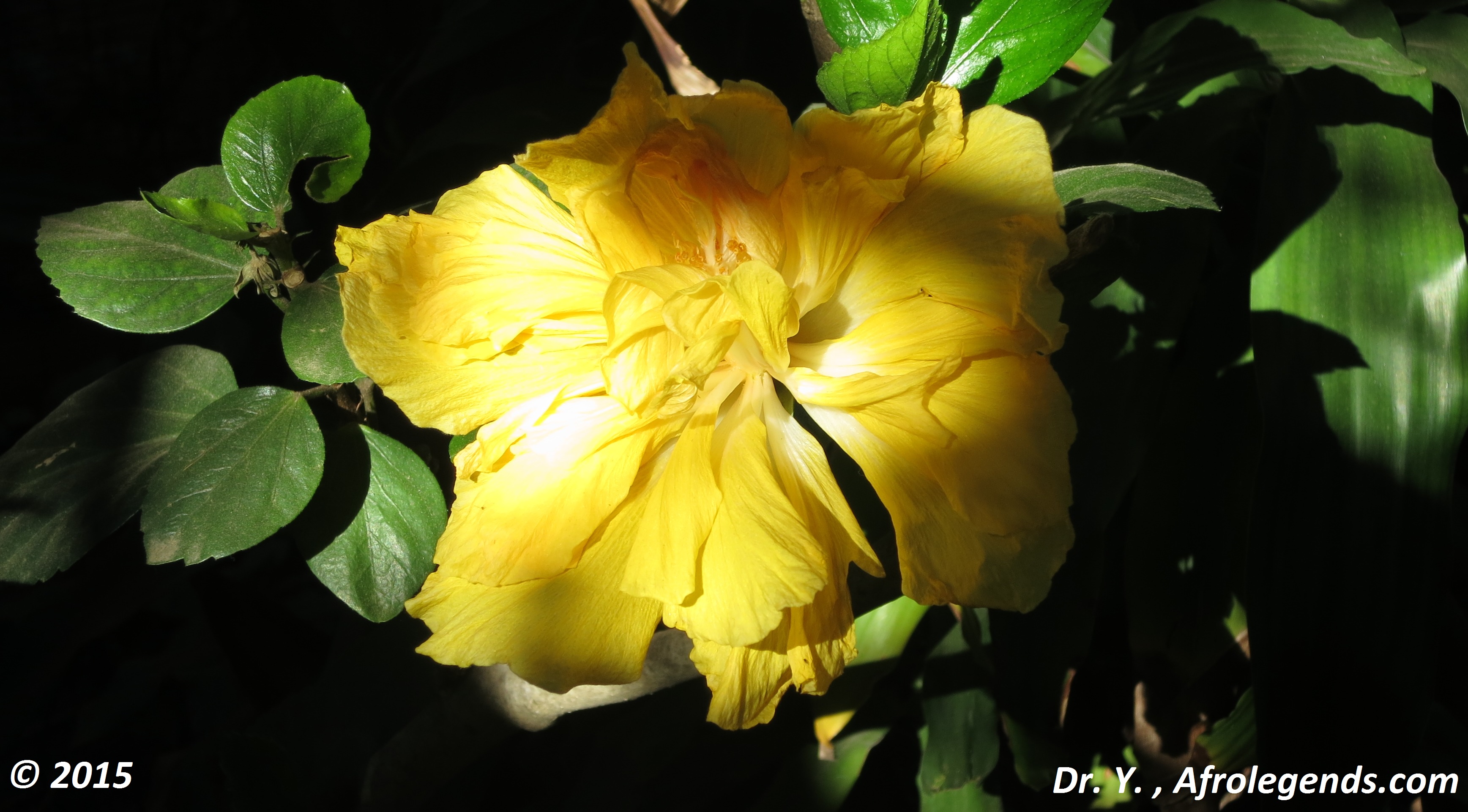
Are there days when you feel quite down? Days when you feel surrounded by darkness? It could be bright daylight, and hot outside, but you feel all alone, and surrounded by obscurity? Well, I saw this yellow hibiscus flower, and the way the sun rays fell on it caught my attention. It was as if the flower was emerging from darkness and into the light. What more, it seemed that the flower had never been touched by the darkness, its beauty was always there, and it just needed a ray of light to be rediscovered. It is the same for you: there is no darkness. Your beauty, intelligence, and being remain intact no matter what your mood might be, and all you need is a ray of light for your grace to be revealed… so let go of the obscurity, the past, the heaviness, and just shine, be revealed. May you emerge from darkness into the light just like this yellow hibiscus flower. Enjoy!

20150624_Fleur

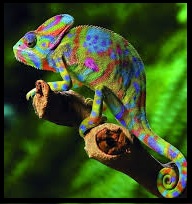
L’Araignée et le Caméléon

Un cameleon
Un cameleon

Il était une fois un caméléon très généreux et très charitable.  Il vivait du produit de son travail dans son champ, avait une grande concession sur laquelle il avait construit une belle case spacieuse.

Araignée, le plus grand paresseux de la région, aimait bien vivre d’expédients, sans se fatiguer à travailler, grâce à ses ruses malhonnêtes.  Il entend vanter autour de lui la générosité de caméléon et décide de l’exploiter.  Il se rend jusqu’à l’habitation de celui-ci, suivi de sa femme et de ses enfants couverts de haillons.  « Ayez pitié de pauvres malheureux sans abri ! Se lamente-t-il.  Ayez pitié, Caméléon ! La saison des pluies va commencer ! Nous n’avons pas de maison ! Mes enfants vont mourir de faim et froid, faibles comme ils sont ! »

N’écoutant que son bon cœur, Caméléon invite Araignée et sa famille à s’installer chez lui et met à leur disposition la moitié de sa belle maison.  Un jour, alors que Caméléon est parti aux champs, Araignée tue l’épouse de son bienfaiteur et vole tous ses pagnes et tous ses bijoux.  Au retour de son hôte, il lui raconte que des bandits ont assassiné Madame Caméléon et emporté tout ce qui se trouvait dans la maison.  Araignée ajoute qu’il aurait défendu la malheureuse s’il n’avait été assommé à coups de gourdin.  Caméléon est très fâché car, malgré tous ses mensonges, il a compris ce qui s’est passé.  Il se jure à lui-même qu’il se vengera cruellement et qu’Araignée mourra en châtiment de son crime.

Un plat de Yeke-yeke

Une semaine plus tard, il rapporte à la maison un énorme plat de yéké-yéké (*).  Araignée, son épouse et ses enfants en mangent tant qu’ils peuvent et se régalent.  Lorsque le plat est vide, Araignée demande : « Où avez-vous trouvé cette nourriture succulente, mon frère ? »

Caméléon répond : «  C’est un génie qui me l’a préparée ! Si, toi aussi, tu tues ta mère en sacrifice aux « Togbesikpé » (**), tu recevras le même cadeau. »

Plein de convoitise, Araignée exécute ce nouveau crime affreux.  Mais, contrairement à son attente, il ne reçoit point de yéké-yéké.  Le cœur de Caméléon se réjouit de cette vengeance et il murmure : « Si tu n’avais pas été aussi bête qu’avide, tu n’aurais pas fait cela ! » Continue reading “L’Araignée et le Caméléon”

“He is … Father” by Epiphany

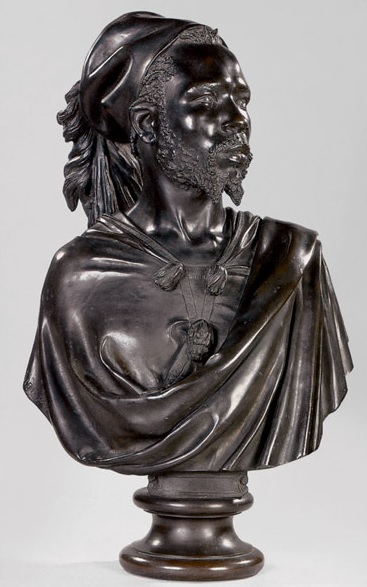
Said Abdallah by Cordier, 1848
Said Abdullah of the Mayac – Kingdom of Darfur, by Charles Cordier, 1848

In honor of the upcoming Father’s day, I found this poem “He is … Father” by Epiphany. I loved her poem, and so I dedicate it to my father, and to all the great fathers out there.

================

He is … Father 

by Epiphany

…He is​

the shine in a little girl’s eyes

the icon of a son in the mirror

a husband to his woman

a provider & a leader

the endearing traits of a real man

personified in how He lives​

…He is​

the strength of the family unit

the shelter in a raging storm

a patriarch to the ancestral tree

his seed produces legacies

to carry on his dynasty​

…He is​

stability in the midst of adversity

He rules with a gentle hand

teaches his daughter how to be loved

to accept nothing less than a true man

He instills pride in his son

to be the best Man that He can be​

Once a year is not enough to give credit where it is due​

…He is​

a monumental influence

to the innocence of youth

a consonant pillar of masculinity

without a heavy hand as proof

if you had to measure A Man

in all He say or do

it is in the path He chooses to follow

it is the fruits of his wealthy spirit

that makes him so unique​

it is He…​

a Father​

The qualities of a hero UnSung​

three hundred sixty four​

days​

of​

the​

year​

On this special day

I salute you


*Fathers*


Proverbe Peul sur Agir à temps / Fula Proverb on Acting on Time

Argile / Clay
Argile / Clay being shaped

On façonne l’argile pendant qu’elle est humide (Proverbe Peul – Afrique de l’Ouest, Afrique Centrale).

Argile / clay
Argile / clay

Clay is shaped while it is wet (Fula Proverb – West Africa, Central Africa).

Why the name: Dakar?

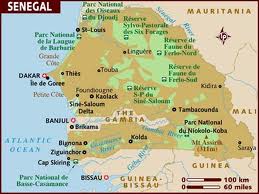
Map of Senegal
Map of Senegal

After talking about one of the great queens of Senegal, Queen Ndate Yalla Mbodj, it made total sense to explore the meaning of the capital and largest city of Senegal: Dakar. Is the name a local Wolof name? or does it have a French origin? Is the name’s meaning linked to Dakar’s strong fishing tradition or something else?

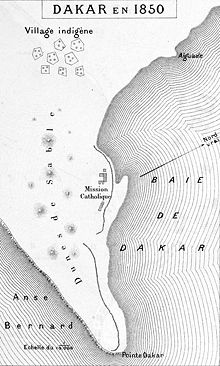
Map of Dakar in 1850

The name Dakar could be the French version of Ndakaarou (Ndakaaru), local name whose etymology still remains uncertain. It could be derived from the wolof deuk raw meaning “whoever settles here will be in peace,” or dekk-raw from dekk (country), and raw (to escape) because of the afflux of populations from the Cayor and Baol regions after the Lebous settled there. It could also arise from the wolof dakhar, the name for the tamarind tree: it is said that upon arrival in the area, the Lebou people were impressed by the huge numbers of Tamarind trees they saw, and thus named the area after it, dakhar. However, some historians think that the area was named after a French marine officer Accar or d’Accard, who lived there at the end of the 17th century, and was mentioned on maps of that era. The name Dakar first appeared on a 1750 map of the Cap-Vert Peninsula, drawn by French botanist Michel Adanson.

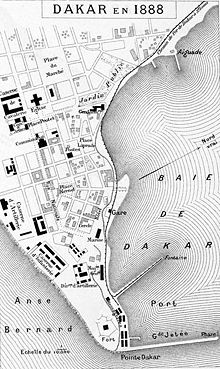
Map of Dakar in 1888

The Cap-Vert peninsula was settled, no later than the 15th century, by the Lebou people, an aquacultural ethnic group related to the neighboring Wolof and Serer. The original villages: Ouakam, Ngor, Yoff and Hann, still constitute distinctively Lebou neighborhoods of the city today. In 1444, the Portuguese reached the Bay of Dakar, initially as slave-raiders, but were repulsed by the natives on the shores. Peaceful contact was finally opened in 1456 by Diogo Gomes, and the bay was subsequently referred to as the “Angra de Bezeguiche” (after the name of the local ruler). Due to its key location, the bay of “Bezeguiche” would eventually serve as a critical stop for the Portuguese India Armadas of the early 16th century.

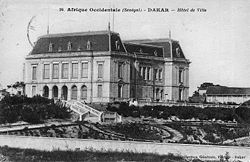
Hotel de Ville of Dakar, 1920

The Portuguese eventually founded a settlement on the island of Gorée (then known as the island of Bezeguiche or Palma), which by 1536 they began to use as a base for the export of slaves. The mainland of Cap-Vert, however, was under control of the Jolof Empire, as part of the western province of Cayor which seceded from Jolof in its own right in 1549. A new Lebou village, called Ndakaaru, was established directly across from Gorée in the 17th century to service the European trading factory with food and drinking water.

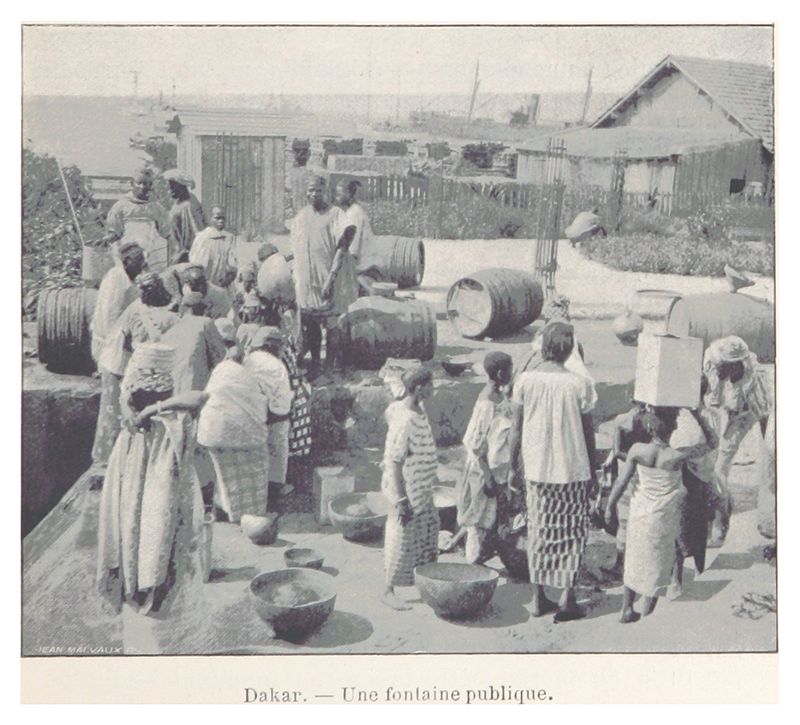
Public well in Dakar in 1899

The city of Dakar is a commune, one of the 67 communes of Senegal. The commune of Dakar was created by the French colonial administration on June 17, 1887 by detaching it from the commune of Gorée. The commune of Dakar is also a department, one of the 34 departments of Senegal; this is quite similar to Paris, which is both a commune and a department. Dakar was also the capital of the short-lived Mali Federation from 1959 to 1960, before becoming the capital of independent Senegal in 1960. The poet, philosopher and first President of Senegal, Léopold Sédar Senghor, tried to transform Dakar into the “Sub-Saharan African Athens” (l’Athènes de l’Afrique subsaharienne).

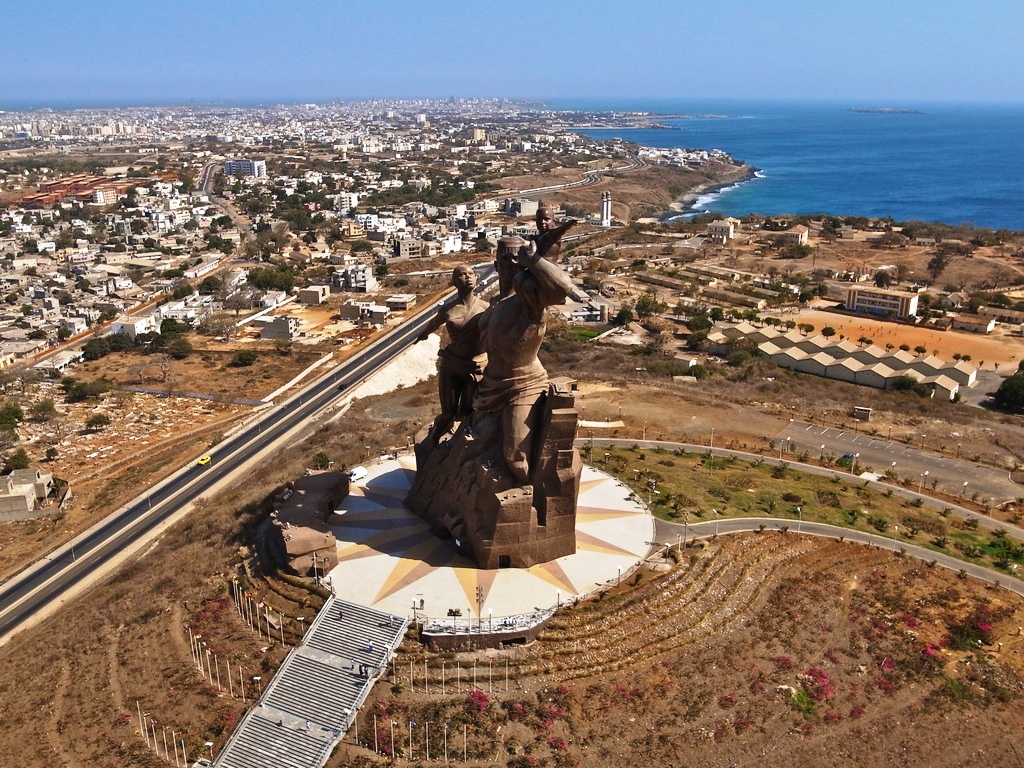
The African Renaissance Monument with a view of Dakar and the ocean (Carrapide.com)

In its colonial heyday Dakar was one of the major cities of the French Empire, comparable to Hanoi or Beirut. French trading firms established branch offices there and industrial investments (mills, breweries, refineries, canneries) were attracted by its port and rail facilities. Today, Dakar is a major financial center, home to national and regional banks, and numerous international organizations, NGOs and international research centers. Beginning in 1978 and until 2007, Dakar was frequently the ending point of the famous Dakar Rally. It is also home to the IFAN Museum of West African culture, and the tallest sculpture in Africa, the African Renaissance Monument.

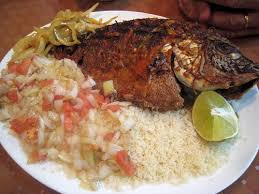
Dakar is a vibrant and cosmopolitan city. Located on the shores of the Atlantic Ocean, its numerous sandy beaches and the warmth of its people make it a rare pearl. Enjoy the video below, and if you get a chance, do visit this “Athens of Sub-Saharan Africa”, and do not forget to taste the amazing fish, and world-renowned Senegalese cuisine, and feel the spirit of the teranga (hospitality).


Proverbe Wolof sur l’Amour / Wolof Proverb on Love

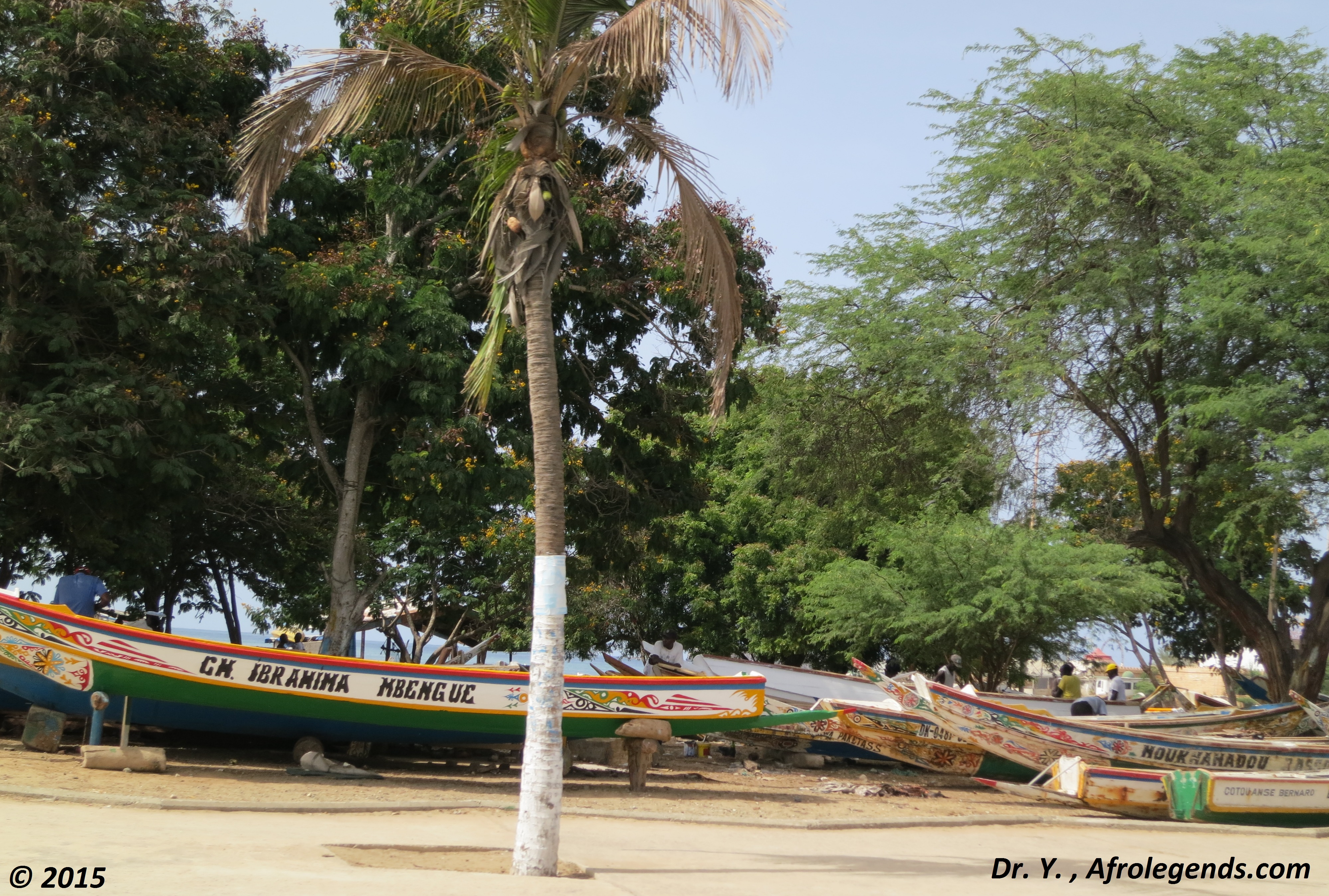
Pirogues de Pecheurs a Dakar, Senegal / Fishermen's boats in Dakar, Senegal
Pirogues de Pecheurs au Senegal / Fishermen’s boats in Senegal

Ceux qui montent dans une même pirogue, ont les mêmes aspirations (Proverbe Wolof – Sénégal). – Unité de vue dans le mariage.

Those who ride in the same canoe, have the same aspirations (Wolof proverb – Senegal). – Unity of vision in the marriage.