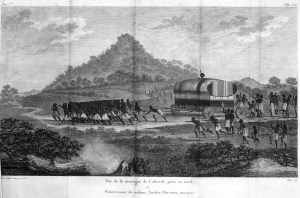
 L’éléphant naît avec ses chaussures (Proverbe Ambundu – Angola).- Le fils d’un homme riche est riche dès sa naissance.
The elephant is born with his shoes (Ambundu proverb – Angola). – The son of a rich man is born rich from birth.

L’éléphant naît avec ses chaussures (Proverbe Ambundu – Angola).- Le fils d’un homme riche est riche dès sa naissance.
The elephant is born with his shoes (Ambundu proverb – Angola). – The son of a rich man is born rich from birth.
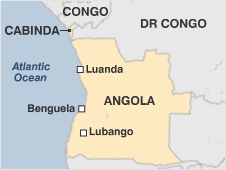 Portugal had a few colonies in Africa: Cape Verde, São Tomé and Príncipe, Guinea-Bissau, Angola, and Mozambique. Since 1885, the State of Cabinda has been a Portuguese Protectorate according to the Luso-Cabindan Treaties of Chifuma, Chicamba, and Simulambuco. Today, it is an exclave and province of Angola, a status that has been disputed by several political organizations in the territory. The capital city is also called Cabinda. Modern Cabinda is the result of a fusion of three kingdoms: N’Goyo, Loango and Kakongo.

On February 1, 1885, the Treaty of Simulambuco established Cabinda as a protectorate of the Portuguese Empire, and the Cabindan independence movements consider the occupation of the territory by Angola illegal. The Treaty of Simulambuco was signed between the emissaries of the Portuguese Crown and the princes and notables of Cabinda, giving rise to three territories within the Portuguese protectorate of Cabinda: Cacongo, Loango, and N’Goyo. The original in Portuguese can be found here: Cabinda_Tratado de Simulambuco.
============
Treaty of Simulambuco between the Portuguese Crown and the Princes of Cabinda
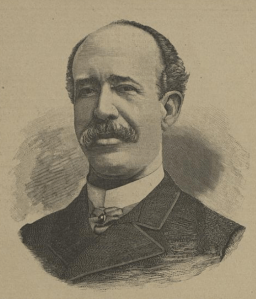
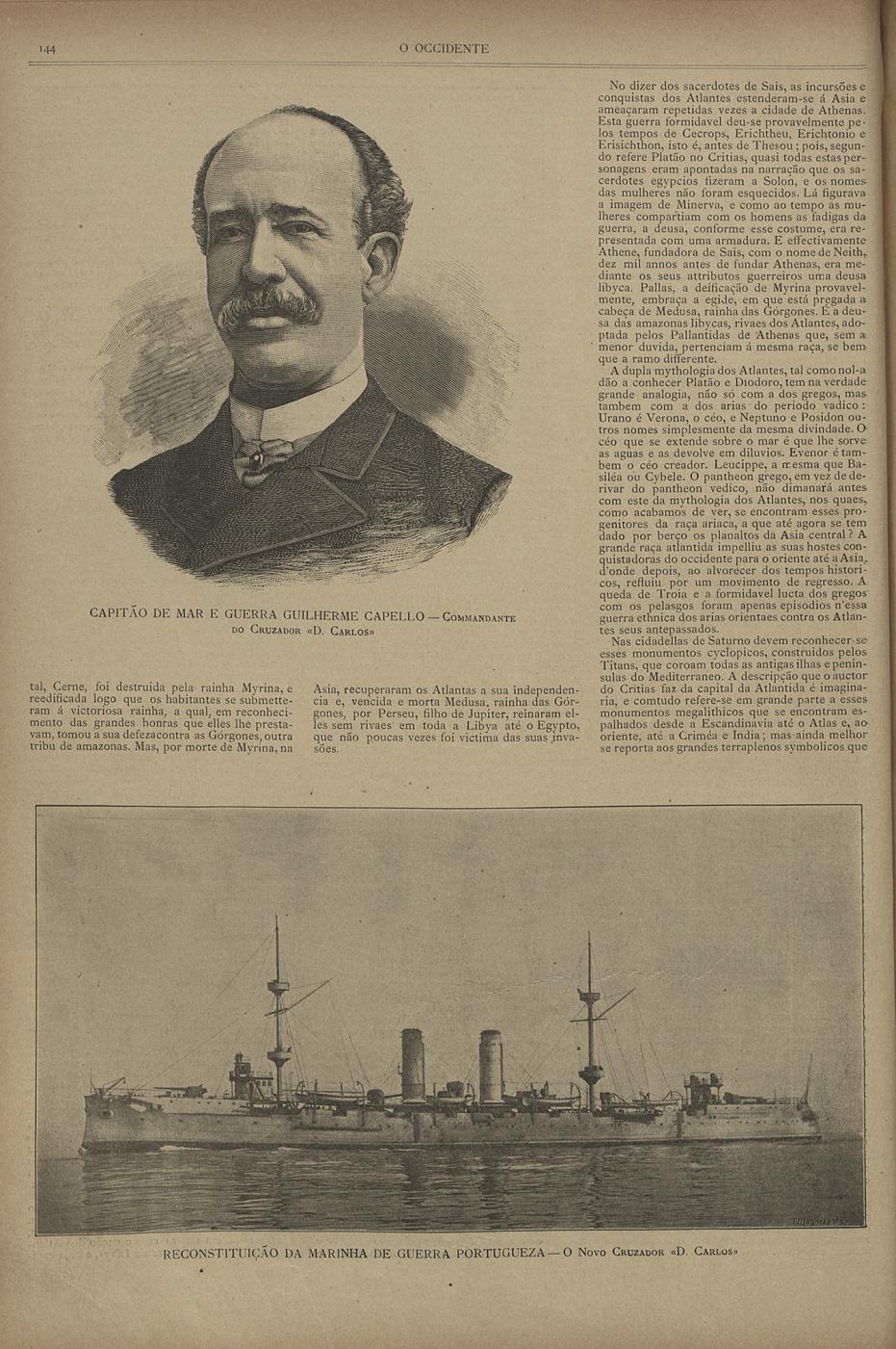
Guilherme Augusto de Brito Capelo, captain-lieutenant of the fleet, commander of the Corvette Queen of Portugal, Commander of Avis and Knight of several orders, authorized by the government of his most faithful Majesty King of Portugal, satisfying the wishes expressed by the princes of Cabinda in Duly signed by them in a large foundation, concluded with their respective Princes, Governors and Heads, their Successors and heirs, the following:
Article I – The princes and chiefs of the country, and their successors, declare, voluntarily, to recognize the sovereignty of Portugal, placing under the Protectorate of this nation all the territories governed by them.
Article II – Portugal recognizes the current Chiefs and confirms those who are elected by the Peoples in accordance with their laws and practices, promising them aid and protection.
Article III – Portugal undertakes to maintain the integrity of the territories placed under its Protectorate.
Article IV – The Landlords of the Country and their Inhabitants shall be kept directly from the lands belonging to them, and may sell or dispose of them in any way for the establishment of business factories or other private industries, by paying customs, marking a Clear and precise the area of land granted in order to avoid future complications, and the contracts must be ratified by the commanders of Portuguese warships or by the authority in which the government of his Majesty delegates his powers.
Article V – The greatest freedom will be granted to traders of all nations to establish themselves in these territories, the Portuguese government being obliged to protect these establishments, reserving the right to proceed as it deems most convenient, if it proves that an attempt is being made to destroy the domain of Portugal in these regions.
Article VI – The princes and more indigenous chiefs undertake not to make treaties nor to assign lands to the representatives of foreign nations when this transfer is of an official character and not for the purpose mentioned in article 4.
Article VII – It is also obliged to protect the commerce of both the Portuguese and foreigners and indigenous people, not allowing interruption in communications with the interior and making use of its authority to unravel the paths, facilitating and protecting relations between buyers and sellers, missions Religious and scientific organizations that establish themselves temporarily or permanently in their territories, as well as the development of agriculture.
Article VII.1 – They force themselves not to allow trafficking in slavery within the confines of their domains.
Article VIII – Any and all questions between Europeans and natives shall always be resolved with the assistance of the Portuguese ship’s war commander who may be able to communicate with the land on that occasion, or who has duly legalized powers.
Article IX – Portugal will respect and respect the customs and customs of the country.
Article X – The Princes and Chiefs ceded to Portugal the whole and complete ownership of portions of land for the payment of their respective amounts, in order that the Portuguese Government may have them build their military, administrative or private establishments.
Article XI – The present treaty signed by the Princes and Chiefs of the Country, as well as by the captain-lieutenant commander of the corvette Queen of Portugal, shall begin execution from the day of its signature, but may not be considered definitive until after it has been approved by Government of his majesty.
Simulambuco, in Cabinda, February 1, 1885
(A) Guilherme Augusto de Brito Capelo, commander of the corvette Queen of Portugal.
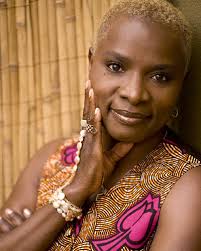
“Don’t let anyone define you from what you live through and everything that they think you stand for. Just be proud of who you are.” Angélique Kidjo


Very often history books suffer from amnesia: they forget women’s contributions to revolutions. History acts as if the men had been all alone, as if only men were there, as if only men stood against injustice.
When people talk of the struggle for independence in Africa, and around the world, only the great men are cited. As one browses from country to country, only men are cited, as if women had been silent spectators. Do you think apartheid would have collapsed without the critical and vital input of women? Do you think without Winnie Mandela, Nelson Mandela’s name would have been anchored in our heads today? What do you think these women were doing while their husbands were in prison? History wants us to think that they were ‘just’ raising children as if that was not an enormous contribution already, but in the case of Winnie Mandela and countless others, they took up the fight, and were jailed, harassed, beaten, and humiliated by the system (some were even raped). Yet today, the world acclaims only the men! And when a woman raises too strong a voice, then she is vilified, told that she acts like a man, or is an ‘angry’ woman. How could you face injustice day after day, and just keep quiet? There comes a time when, as Bob Marley says, “You can fool some people some time, but you can’t fool all the people all the time…” people will rise up!”
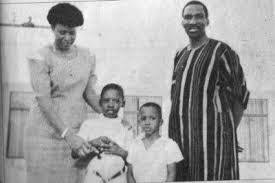
I am so sick of the saying, “behind every great man, there is a great woman.” I think it is again quite sexist, and should rather read, “ALONGSIDE EVERY GREAT MAN IS A GREAT WOMAN.” Raising children, and pumping somebody’s ego after a day’s fight, taking up the fights, and then keeping the men’s memory so that the world does not forget them, are no easy fit; these are extraordinary fits. Alongside Nelson Mandela, there is Winnie Mandela. Alongside Thomas Sankara, there is Mariam Sankara. Alongside Patrice Lumumba, there is Pauline Lumumba. Alongside Felix Moumié, there is Marthe Moumié. Rosa Parks had to be defiant and sit in the front of the bus, for the movement to be taken over by Martin Luther King Jr.; without her part in the fight, there would have been no movement!
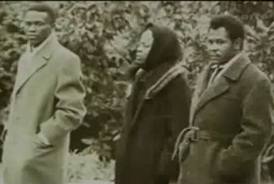
It is our duty to remember this, and to claim it. The world and history wants us to think that men are the only ones in the world, when we know that 50% of the world’s population is female; men are not the only ones fighting for independence, liberation, freedom, revolution, democracy, … Can one make a revolution without the remaining 50%? NO! It is our duty to remember Women’s contributions to history, and stop the global historical amnesia!
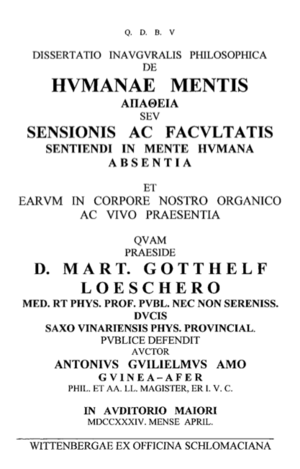
The renowned historian and journalist Elikia M’Bokolo did a short piece on Anton-Wilhelm Amo, the outstanding African philosopher who taught at a university in Germany in the 1700s. This reminded me of the piece I wrote a while back, Anton-Wilhelm Amo, African Professor in Germany in … 1700s.
Amo Anton Wilhelm earned his doctorate degree in philosophy from the University of Halle in Germany. He was a respected Ghanaian German philosopher who taught at the Universities of Halle and Jena in Germany in the 1730s… That’s right… you read it well, 1730! His thesis was the rights of Africans in Europe! He is said to have been the first African person born in Africa to be awarded a doctorate degree from a European university, and to later teach there. Enjoy the Elikia M’Bokolo’s piece, on RFI, on Anton-Wilhelm Amo, also known as Amo Guinea Afer!

In class, the teacher says: “I will give my iPhone 7 to whoever will answer my question correctly.”
Question: “How many men did Jesus feed in Bethsaida?”
Toto raises his hand and answers, “5000 men, sir“(Luke 9: 10-17).
The teacher: “Good answer Toto“, and the teacher gives him in iPhone 7.
The teacher then tells Toto: “Ask me a question Toto, and you give me back my iPhone 7 if I give you the correct answer.”
Toto, all smiles, asks him, “Sir, could you please give me the names of those 5000 men?“😂😂😂😂😂😂😂😂😂😂😂😂😂😂
Laugh a little to chase away the stress!
The original in French is found on Nouchi.com (for iPhone 6S). Translated to English by Dr. Y. Afrolegends.com

Offre un sourire à un inconnu, l’inconnu te sourira (proverbe Maure – Mauritanie, Algerie, Maroc, Tunisie, Niger, Mali, Sahara Occidental).
Smile to a stranger, the stranger will smile back (Moor proverb – Mauritania, Algeria, Morocco, Tunisia, Niger, Mali, Western Sahara).

How many of you know that two great African queens have been cited in the Bible? Most people know about the Queen of Sheba who was the queen of a kingdom in modern-day Ethiopia, and gave birth to a son to the Great King Solomon (Solomon was taken by her beauty). The second queen, who most people ignore or forget, is the Candace, or queen, of Nubia, Amanitore. She is mentioned in the Bible, Acts 8:26–40, or should we say her finance minister is, and so by ramification she is cited. So who was Amanitore, this African queen who was cited in the Bible?
Candace (queen) Amanitore is the daughter of the Nubian warrior queen Amanishakheto and grand-daughter to another warrior queen, Amanirenas. She descends from a long line of kings and queens who ruled over the ancient Kushitic Kingdom of Meroë, which also is referred to as Nubia in many ancient sources. In Egyptian hieroglyphics the throne name of Amanitore reads as Merkare. Like all her predecessors, she was a warrior queen who led forces to battle. Her rule extended over the area between the Nile and the Atbara rivers.

Kandace Amanitore is often mentioned as co-regent with Natakamani although the evidence does not show whether she was his wife or his mother. Many believe that she might have been his mother. Images, on pyramids, of Natakamani frequently include an image of Amanitore. Her royal palace was at Gebel Barkal in modern-day Sudan, which is now a UNESCO heritage site.
Amanitore is mentioned in a number of texts as a ruler. These include the temple at the Nubian capital of Napata in present-day Sudan, in a temple in Meroë near Shendi, again in Sudan, and at the Naqa Lion Temple.
She was part of the Meroitic historical period and her reign began in 1 BC. The rule of her successor, Amanitaraqide, was complete by 50 AD. She is buried in her own pyramid in Meroë. The tomb is approximately 6 m square at its base, and not a pyramid in the mathematical sense.

Amanitore was among the last great Kush builders. She, and Natakamani, were involved in restoring the large temple of Amun at Meroë and the Amun temple at Napata after it was demolished by the Romans. Reservoirs for the retention of water also were constructed at Meroë during her reign. The two rulers also built Amun temples at Naqa and Amara. At Naqa, the great centre of the steppe-country south of Meroe: the frontal approach to the temple of Amun became a pylon whose decoration combines Egyptian influences and purely Meroitic features, while the most famous building is the Naqa lion temple whose reliefs are among the most representative examples of Meroitic art.
The quantity of buildings that was completed during the middle part of the first century indicates that she led the most prosperous time in Meroitic history. More than two hundred Nubian pyramids were built, most plundered in ancient times.
She led a wealthy country, with large resources of gold, and exported jewelry, exotic animals, and textiles.
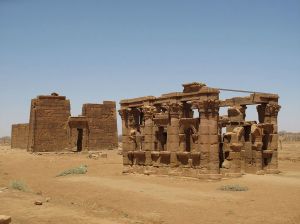
The pyramids of the king, the queen and the princes have been identified at Meroë. The king and queen liked to be portrayed with one of the royal princes, Arikankharor, Arikakhatani or Sherkaror, varying according to the monument; perhaps the princes were viceroys of the provinces in whose principal temples they were pictured. Sherkaror seems to have ascended the throne in succession to his parents shortly after the opening of the Christian era; a rock carving at Gebel Qeili in the south of Butana shows him triumphing over innumerable enemies under the protection of a solar deity.
To learn more, please check out, the UNESCO funded book General History of Africa Vol.2, Ancient Civilizations of Africa, P. 307-308, 50 Greatest Africans — Pharaoh Natakamani and Queen Amanitore & Ngola Ann Nzinga , The Kingdom of Kush by László Török, P. 198 and 461, ISBN 90-04-10448-8.

I would like to share with you the work of Laetitia Ky, an Ivorian artist who makes hair sculptures with her own hair, on her head. What do I mean? Well, just watch the video below. Laetitia has always loved hair braiding and began working with hair from a young age. She started doing hair sculptures last year, and has a big following on Instagram. She uses coat hangers, wires, needles, pins, and threads to make her creations. I knew our hair was special, with the Mathematics of Cornrows, Afro Hair: Crown Jewel of African Women and Men, but my goodness, she makes it amazing! The original is on BBC (I updated it on 12/11/2019 with the video from The Art Insider instead). Enjoy creativity at his best!
As I already told you about Nubia, and the Meroitic civilization which dominated Egypt for over 3 centuries, I also have to add that there are more pyramids in Nubia, modern-day Sudan, than in the whole of Egypt. Remember the great queen Amanishakheto and King Taharqa who ruled over Egypt.
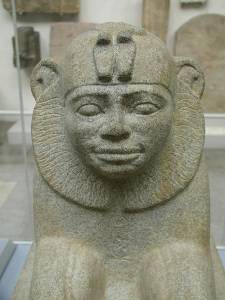
Enjoy the video below, made by a BBC journalist to get acquainted with Sudan’s rich history and pyramids!


 African Heritage