French President Macron Admits French Repression in Cameroon’s Independence Struggle

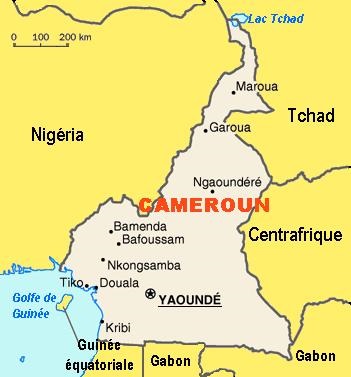
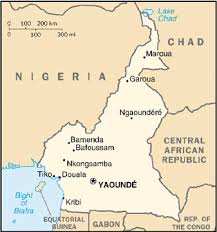
Map of Cameroon, with the capital Yaoundé

This past Tuesday, the French President, Emmanuel Macron, acknowledged the violence committed by France in Cameroon during and after the country’s “independence” in 1960. The French repression of Cameroonian independence movements went from 1945 to 1971 and thousands of lives were taken, and the country set back several years back! Just imagine, hundreds of villages bombed with napalm! Unlike Vietnam, where people knew about this, in Cameroon, a country in central Africa, it was a total media blackout; and the silence went on for decades! This acknowledgment comes after the publication of a joint report by Cameroonian and French historians (France Delivers Classified Colonization Documents to Cameroon).
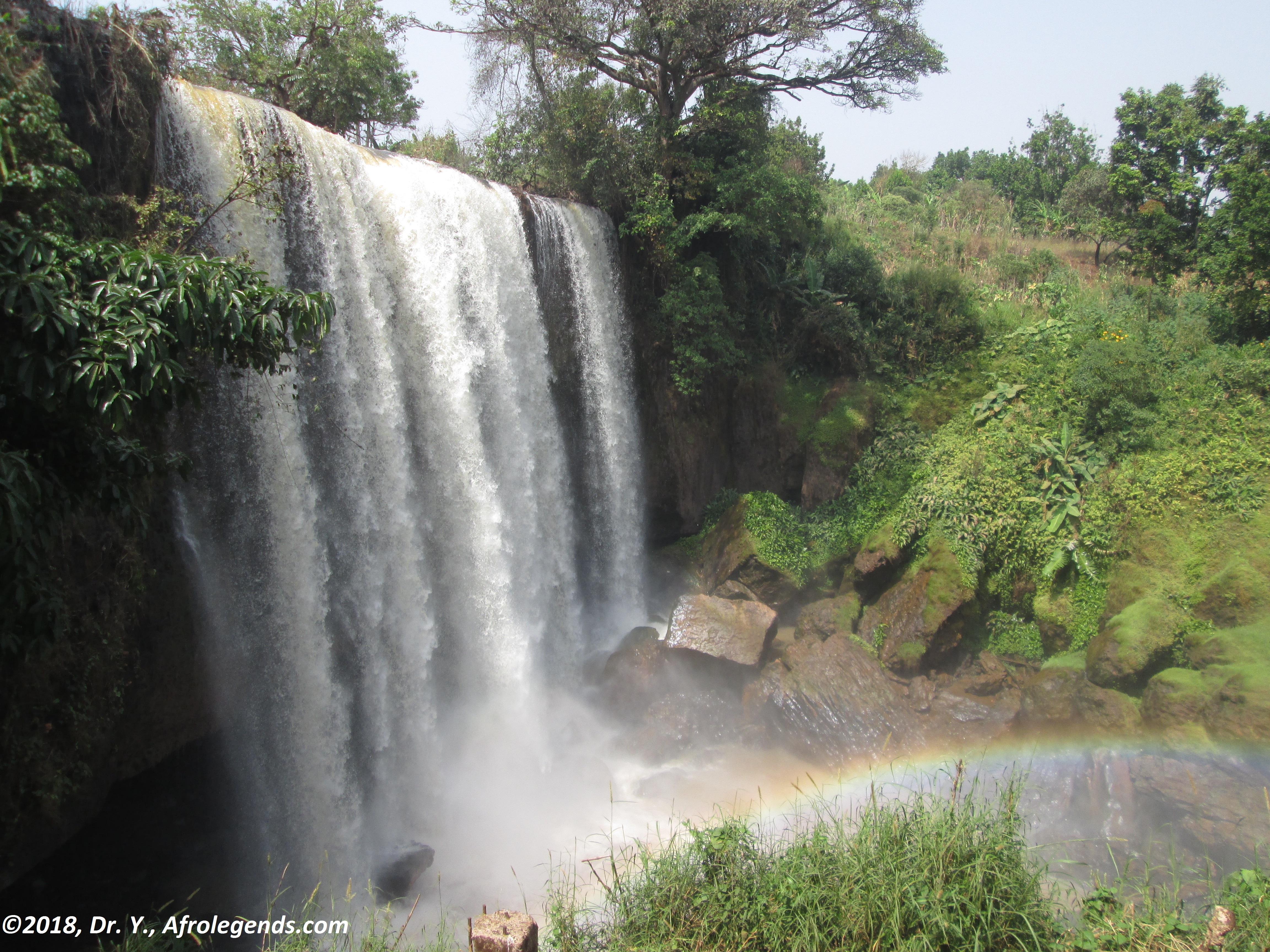
Metche Waterfalls in Cameroon was the site of French genocide there

In a letter to Cameroon’s President Paul Biya made public on Tuesday August 12, 2025, Macron said the report made clear “a war had taken place in Cameroon [like we did not already know that], during which the colonial authorities and the French army exercised repressive violence of several kinds in certain regions of the countryIt is up to me today to assume the role and responsibility of France in these events” .

Why do we get this sentiment of déjà vu? Well, because in 2015, Francois Hollande, then French President Acknowledged French Genocide in Cameroon. Not too long ago, Emmanuel Macron acknowledged the massacre of Thiaroye (Thiaroye: A French Massacre in SenegalA French Commission to investigate the Thiaroye Massacre ?), and the Algerian murders (France Admits Murder of Algerians … A Step Forward?), … but again fell short of apologizing. What next for Macron? An acknowledgment of the massacres in Madagascar? These French presidents are in the business of acknowledging, admitting, and then stopping short of apologies. Why bother?
Flag of Cameroon

Lastly, why is this acknowledgment coming now, in the middle of the electoral turmoil in Cameroon? when France could have simply said something, in good faith, to its puppets of Yaounde last week after the main opposition candidate’s name was removed from the election list? Or is this a way to distract people again? Why now, 10 years after Hollande… are they waiting for most of the survivors to die like for Thiaroye? At this point, it is safe to tell these French presidents to shove their “acknowledgments,” for they are meaningless!… Words, words… no action! It’s more a mockery of our pain!

To learn more check the articles in BBC and RFI. Excerpts below are from the BBC.

=====

French President Emmanuel Macron has acknowledged the violence committed by his country’s forces in Cameroon during and after the Central African nation’s struggle for independence.

However, Macron fell short of offering a clear apology for the atrocities committed by French troops in its former colony, which gained independence in 1960.

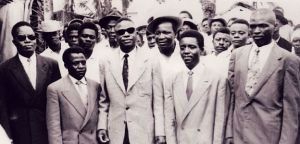
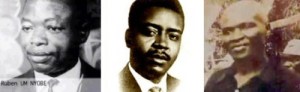
UPC Leaders (L. to R.) front row: Castor Osende Afana, Abel Kingué, Ruben Um Nyobé, Felix Moumié, and Ernest Ouandié

The French leader cited four independence icons who were killed during military operations led by French forces, including Ruben Um Nyobe, the firebrand leader of the anti-colonialist UPC party [somehow they refused to acknowledge their hands in the murder of Félix Moumié in Geneva by one of their agents – talk of a case of selective amnesia!]. France pushed hundreds of thousands of Cameroonians into internment camps and supported brutal militias to quash the independence struggle, the AFP news agency quotes the report as saying. Tens of thousands of people were killed between 1956 and 1961, the historians’ report said.

… Commenting on Macron’s lack of apology, one of the historians who contributed to the report said it was their job to “establish the facts and figures after having gone through the archival documents” and not to “recommend apologies“.

… While Macron did not address calls for reparations, it is likely to be a key talking-point in Cameroon going forward [like after Hollande’s 2015 visit? – Bro… it has been 10 years already!]….

Poster commemorating the 80th anniversary of the Thiaroye Massacre (Source: Seneplus.com)

… Last year, [France] acknowledged for the first time that its soldiers had carried out a “massacre” in Senegal in which West African troops were killed in 1944

… France has also made several attempts over the years to reconcile with its former colony Algeria, but has stopped short of issuing a formal apology. In 2017, Macron, then a presidential candidate, described the colonisation of Algeria as a “crime against humanity“, but two years later, he said there would be no “repentance nor apologies” for it [See… in the business of acknowledging, but not apologizing].


Cameroon – History Repeats Itself ?

Flag of Cameroon

Africans, it is so important to know our history, so as to be better equipped so it does not repeat itself again and again and again. I would like to publish here the words of the Cameroonian filmmaker Jean-Pierre Bekolo, who highlights the fact that history is repeating itself in Cameroon. Although many may not totally agree with him, the similarities between the events of 1955 and 2025 are numerous. In 1955 in Cameroon, the Union of the People of Cameroon (UPC) of Um Nyobe (Ruben Um Nyobé: Fighting for the independence of Cameroon), was shut down as it was fighting for the total independence of Kamerun. In reality, Cameroon never got its independence as the then colonial regime and later the puppet government killed the independence movement, and Cameroon’s freedom was confiscated. Today, the same thing is happening again: the main candidate who represents a change, whatever it is, a new chapter in the life of the country (the current leader has been in power for 43 years now, and was in the high levels of power – minister and prime minister – 20 years before that) has been blocked from participating in the upcoming elections by some “magic” trick. The 12 October 2025 elections will go on without him even though he has a major support of the population, and this is starting to look like a carbon copy of the events of 1955. Truth be told, Cameroon, like many Francophone African countries never got its independence. Thus, maybe the real battle is to break the chains of bondage, and resume the fight our forefathers started? Let’s have Millions of African Leaders: Be the Leader You Want to Have!

The excerpts below is from Actu Cameroun based on Jean-Pierre Bekolo Facebook’s post. Enjoy!

=====

Map of Cameroon, with the capital Yaoundé

“Is it possible to compare what happened in 1955 in Cameroon with what we are experiencing today? Yes, we can say—with all the caution required for such a historical comparison—that the Cameroon of 2025 resembles, in many ways, that of 1955. If we need our history, it is not to complain, but to move forward. However, in Cameroon, history has not freed us: it has chained us. The events we are experiencing today, and which we will experience until October 12, could well be an almost exact repetition of a drama already played out during the colonial era—and never closed.

… It’s 1955. Two camps are facing off. On one side, those who want Cameroon to belong to its children. On the other, a colonial power that gives nothing away without repression. And between the two: collaborators, opportunists, wheeler-dealers, those who know where the truth lies but hope for crumbs. These don’t really believe in the system, but they find it to their advantage. They don’t support the regime out of conviction, but out of comfort, cowardice, or calculation. They know exactly what needs to be done for this country to change—but they prefer to wait for their appointment, their per diem, their prestigious position. They are the same people Fanon described: local elites who serve domination without bearing its name, intellectuals who rent from the established order, journalists of silence. In 1955, the colonial power identified two targets to be destroyed: the radicals, who must be killed, and the moderates, who must be bought or neutralized. Any voice in favor of an independent Cameroon is then a threat. We must divide, oppose, buy, crush…

… In May 1955, while Cameroon is still officially under French rule, the Union of the People of Cameroon (UPC) embodies a strong desire for independence. Its vision is clear: to build a free, sovereign nation, free from colonial rule and compromise. But this ambition is perceived as subversive. On May 20, 1955, the colonial government banned the UPC. In the following days, many cities go up in flames: Douala, Yaoundé, Ebolowa… The repression is brutal. It marks the beginning of what is now called the war of liberation, with its trail of violence, clandestinity, and sacrifices. Um Nyobè and his comrades are forced to flee, then to engage in armed struggle. In July 1955, the official ban on the UPC is confirmed. The nationalist movement is criminalized, the 1956 elections take place without it, and the independence project carried by the Cameroonian people is confiscated.”

On the 65th Commemoration of Ruben Um Nyobe’s Murder, His Widow Passes Away

Ruben Um Nyobé
Ruben Um Nyobé

Marie Um Nyobe (born Marie Ngo Ndjock Yebga), the widow of one of Cameroon’s greatest opposition fighters and freedom fighters, the real Father of Cameroonian independence, Ruben Um Nyobé, has passed away on the exact same day that her husband was murdered 65 years ago, on 13 September 1958. This comes just as Cameroon and the Union des Populations du Cameroon (UPC) is commemorating the 65th year of his murder by the French forces in Cameroon.

Her son, Daniel Ruben Um Nyobe, communicated in a press release (Journal Du Cameroun) « the family of Mpodol Ruben Um Nyobe, the greater family Nlog Ngond, the greater family Ndog Soul have the grief to announce the passing of Widow Marie Um Nyobe born Ngo Ndjock Yebga on 13 September 2023 in … Yaoundé. »

UPC Leaders (L. to R.) front row: Castor Osende Afana, Abel Kingué, Ruben Um Nyobé, Felix Moumié, and Ernest Ouandié

Marie Um Nyobe is the spouse from a second union with the leader, Ruben Um Nyobé: Fighting for the independence of Cameroon. Um Nyobe had a first union in 1944 with Marthe Ngo Mayack which produced 3 daughters, and when the union fell apart, married Marie Ngo Ndjock Yebga with whom he had the son, Daniel, who was born a year before his death. We hope that Cameroonian historians had had a chance to talk to Mpodol’s wife to learn more about the man himself and Cameroon during the days of the fight for independence.

Flag of the UPC
Flag of the UPC

Mpodol, the one who carries the demands or who defends the cause, was a Cameroonian freedom fighter, and an anti-imperialist leader. During his fight, he wrote, “la colonisation, c’est l’esclavage ; c’est l’asservissement des peuples par un groupe d’individus dont le rôle consiste à exploiter les richesses et les hommes des peuples asservis“( “Colonization is slavery; it is an enslavement of the populations by a group of individuals whose role is to exploit the riches and the men of the enslaved populations.”). He further wrote, Political Constant of Unity Practiced by Ruben Um Nyobe – 1959, and Ruben Um Nyobe and Liberation.

For this commemoration, as Cameroonians and Africans, celebrate the lives of Ruben and Marie Um Nyobe, they should also, above all, stand on the message of Mpodol and fight for the total independence of Africa [Remember Ruben: A Rare Video Biography of Ruben Um Nyobé].

Writings by Ruben Um Nyobe: Political Constant of Unity Practiced by Ruben Um Nyobe – 1959

Ruben Um Nyobé
Ruben Um Nyobé

In celebration of the life of  Ruben Um Nyobé, I chose to share with you his writings below on this day, 13 September, the day of his assassination in 1958 by French troops in Cameroon. These writings by  Ruben Um Nyobé, leader of the UPC, were published in 1959. The book was published as “Constante politique d’unité pratiquée par Ruben Um Nyobe – 1959,” by Union des Populations du Cameroun (UPC). The text below by Ruben Um Nyobe served as a preface to the book, and has been translated to English by Dr. Y. Afrolegends.com . For the original, go to gallica.fr

======

Flag of the UPC
Flag of the UPC

Political Constant of Unity practiced by Ruben Um Nyobe – 1959

 Author: Union des Populations du Cameroon

Inform to Enlighten by Ruben Um Nyobe, General Secretary of the Union the Populations du Cameroun (UPC), Leader of the National Resistance for the Liberation of Cameroon

The national aspiration, which has just cumulated in the recognition of our independence, Is the concrete and objective expression of the result of the struggle of our people. No one can claim that independence has been granted to us, we have conquered it. All those who fought for this national liberty, whether dead or alive, have sealed their names in the history of our motherland, their glory will be immortal! But now at the term of a crowned struggle, instead of concord uniting all members of the coalition, a storm of jealousy and hatred, still sweep over our poor little country. Until when obscene passions and the most execrable hypocrisies cease to brave virtue and honesty! Why will cruel selfishness and blind ambitions not recoil before the honor and national dignity? In this flood of provocations and hatreds, where is the future of our children, the tranquility of our homes, the future of the country? Is it possible to build a country without its population? Is there independence without independent citizens? Answer! Yes answer! All those who oppress our people and those who aim to exploit it.

I say that we must give the people the means to hope and the opportunity to have confidence in them. To reach that goal we have some preliminary work to do.

  1. Present the people with clear options for his future.
  2. Prepare for the people a climate of cordiality and put an end to insecurity.
  3. Train the people’s judgment through civic and political culture / instruction.

All this is feasible/possible, so long as it is wanted. No need to dodge the work by creating tribal oppositions.   

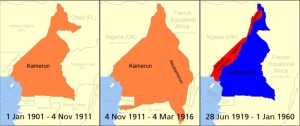
Kamerun_Map 1901-1960
Map of Kamerun from 1901 to 1960 (Wikipedia)

I add that all those who sow hatred and call for crimes, throw the boomerang, which unfortunately does not clarify the future. In politics, there is good sense and virtue, notwithstanding the apprentices of Machiavelli! In politics, truth is also necessary, even if it hurts and displeases because we do not define the future of the people in lies and slanders! Yes, we have to be realistic! To all my compatriots, I formally repeat this: our enemies in this crucial hour of our history, are those who divide us, because they expose us weakened to the solicitations and appetites of the foreigner…

When one reflects on current events, one reaches a first observation: it is the conception of power and sovereignty which is at stake. If it is true (and it cannot be otherwise) that power comes from the people, is it not up to the people to freely designate their interlocutors? Why pretend to take the place of the people? Why seek to abuse and deceives the masses? To get elected and impose a dictatorship, isn’t it? Finally, we believe that the events of the past should make the darkest adventurers retreat. It is only in ignorance that a dictatorship can be imposed, even if it is subtle. In these conditions our task is clear: to enlighten the people. We must do it and we will do it against all adventures. Our goal is to safeguard the national dignity and sovereignty of Kamerun.

Ernest Ouandié: A Cameroonian and African Hero and Martyr

UPC Leaders (L. to R.) front row: Castor Osende Afana, Abel Kingué, Ruben Um Nyobé, Felix Moumié, and Ernest Ouandié

15 January 1971 marks the day of the execution of a Cameroonian and African hero: Ernest Ouandié! Outspoken, and brilliant, Ernest Ouandié is considered by many in Cameroon as a national hero. However, he has never been celebrated the way a hero should. He was a martyr! Ouandié was the last leader of the Union des Populations du Cameroun (UPC). The other renowned leaders of the UPC were Ruben Um NyobéFelix-Roland Moumié, Abel Kingué , and Castor Osendé Afana who, except Abel Kingué, were all assassinated by France or its puppets.  Like those three, Ernest Ouandié was also assassinated, and paid with his life for his passion for the freedom of Cameroon, and Africa, from colonialism.  So who was Ernest Ouandié?

Ouandie3
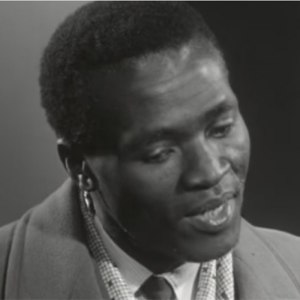
Ernest Ouandie, during an interview, talking about the assassination of Felix Moumie in 1961

Ernest Ouandié was born in 1924 in Badoumla, Bana district in the Haut-Nkam region of the Western province of Cameroon . He attended public school in Bafoussam, and then l’Ecole Primaire Supérieure de Yaoundé where he obtained a Diplôme des Moniteurs Indigènes (DMI) in November 1943 and began work as a teacher. In 1944 he joined the Union of Confederate Trade-Unions of Cameroon, affiliated with the French General Confederation of Labour (CGT). From 1944 to 1948, Ernest Ouandié taught in Edéa. On 7 October 1948, he was posted to Dschang. A month later, he was posted to Douala as director of the New-Bell Bamiléké public school.

Flag of the UPC
Flag of the UPC

In 1948 Ouandié became a member of the Union of the Peoples of Cameroon (Union des Populations du Cameroun – UPC), and 4 years later, was elected vice-president of the UPC. In September 1953 he was assigned to Doumé and Yoko in Mbam-et-Kim. In December 1954 he was posted to Batouri, then Bertoua. Finally, in January 1955 he was assigned to Douala again. He attended the World Congress of Democratic Youth in China in December 1954, and also traveled to Paris and Moscow.

UmNyobe_Moumie_Ouandie
Les leaders de l’UPC: Ruben Um Nyobe, Felix Moumie, et Ernest Ouandie

In April and May 1955 the UPC held a series of militant meetings, circulated pamphlets and organised strikes. On 20 June 1955 the UPC leader, Ruben Um Nyobé, was sentenced in absentia to six months in prison and a large fine. On 13 July 1955 the French government dissolved the UPC by decree. Most of the UPC leaders moved to Kumba in the British-administered Southern Cameroons to avoid being jailed by the colonial power. Armed revolution broke out in Cameroon. The UPC nationalist rebels conducted a fierce struggle against the French, who fought back equally ruthlessly. The insurgents were forced to take refuge in the swamps and forests. Ruben Um Nyobé was cornered in the Sanaga-Maritime area and killed on 13 September 1958.

Ahidjo3
Ahmadou Ahidjo, first president of Cameroon

Ouandié had taken refuge in Kumba in 1956. In July 1957, under pressure from the French, the British authorities in western Cameroon deported Ernest Ouandié and other leaders of the UPC to Khartoum, Sudan. Ouandié then moved in turn to Cairo, Egypt, to Conakry, Guinea and finally to Accra, Ghana. After Cameroon gained independence in 1960, UPC rebels who had been fighting the French colonial government continued to fight the government of President Ahmadou Ahidjo, whom they considered to be a puppet of the French. Ahidjo had asked the French to lend troops to keep peace during and after the transition to democracy. What followed is a campaign of pacification of the Bamiléké territory, and some regions in the Centre and Littoral provinces; this is one of the greatest genocides committed by France, with the death toll in the hundreds of thousands (French President Acknowledges French Genocide in Cameroon)!

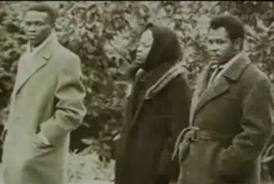
Ernest Ouandié, Marthe Moumié, and Abel Kingue in Geneva after Felix Moumié's death
Ernest Ouandié, Marthe Moumié, and Abel Kingue in Geneva after Felix Moumié’s death

In 1960 Ouandié, Félix-Roland Moumié, Abel Kingué and other UPC leaders were exiled, isolated and desperate. Moumié was poisoned by French agents using thallium on 13 October 1960 and died on 4 November 1960, leaving Ouandié as head of the UPC. On 1 May 1961 the military tribunal in Yaoundé condemned Ouandié and Abel Kingué (in absentia) to deportation. That year, Ouandié secretly returned from Accra to Cameroon to work towards the overthrow of the Ahidjo regime. The Southern Cameroons (now the Southwest and Northwest regions) gained independence from the British and joined a loose federation with East Cameroon on 1 October 1961. Abel Kingué died in Cairo on 16 June 1964, leaving Ouandié the last member of the original leadership. President Ahidjo then declared Ouandié public enemy number one.

A post-colonial struggle by UPC rebels opposing the new Cameroon army (trained and armed by France) continued until August 1970 when the last battalion of the UPC, commanded by Ernest Ouandié, was arrested.  Ouandié was sentenced to death and was shot by a death squad in the market on 15 January 1971, in Bafoussam.  That day was a historic day in Bafoussam, as the populations were forced to witness the execution of their leader: my mother witnessed the event, she was just a child. The civil war, resulting in the destruction of villages and use of napalm is estimated to have resulted in at least 30,000 to 500,000 deaths.  It has been conveniently removed from official history, both in Cameroon and in France (French President Acknowledges French Genocide in Cameroon).

Ouandie2
Ernest Ouandie, on the day of his execution

On that fateful day, 15 January 1971, three people were executed in Bafoussam, the capital of the Western region. The three were Gabriel Tabeu, alias “Wambo, the electricity“, Raphael Fotsing (condemned to capital punishment 10 days prior, by a military tribunal) and Ernest Ouandié. The three were tied to a pole, facing a firing squad. The first two fell first. Ernest Ouandié, who had been accused of attempting to create a revolution, the organization of armed bands, assassinations and other things, refused to be blindfolded. This led to a dispute between the authorities and him. Finally, they granted him his final wish, and as he was falling through the weight of the bullets, he shouted “Others will continue the struggle” staring death in the eye.

Check out the website Grioo.com where there is a good biography on Ernest Ouandie’s life. Don’t forget to check out the website of Dibussi Tande. The great Cameroonian writer Mongo Béti wrote the book Main basse sur le Cameroun, autopsie d’une décolonisation (about the Cameroonian resistance led by the UPC) which was banned in France in the 70s, which led to him to write Remember Ruben in honor of Ruben Um Nyobé’s memory, in which he describes the firing squad to Ouandié’s execution.


French President Acknowledges French Genocide in Cameroon

Francois Hollande, President of France

French flag
French flag

It took over 70 years for a French President to finally admit the genocide perpetrated in Cameroon by France between 1950 and 1970, a genocide which claimed over 400,000 lives, and displaced countless others. In his visit to Cameroon last Friday, French president François Hollande acknowledged that French forces had tried to quash colonial separatists in the 1950s and said he was ready to open up the history books. He said, “I recognize that there have been extremely traumatic and even tragic episodes.” Should we jubilate?

Ruben Um Nyobé
Ruben Um Nyobé

I say NO. It is true that this is somewhat a step forward: recognition of wrong done. However, I call it arrogance to wake up one day, and finally say, “Oh, yes, I killed your fathers, mothers, brothers, or sisters, … I showered many of your cities with Napalm, … I decapitated so many of your freedom fighters and hung their heads in the villages’ square, … I killed Ruben Um Nyobé, Felix-Roland Moumié, Castor Osende Afana, Ernest Ouandié, and so many others, … I forced some of you into exile, … and I displaced countless others inside and outside your borders.” And so what? Should we clap for you? where is the apology? Didn’t you think we knew you did that? Where is the reparation?

Decapitated Heads during the genocide in Cameroon
Maquisards’ heads during the genocide in Cameroon

During the Maquis years, many lost a loved one; is there a reparation for that loved one? that father who never saw his children grow up? that mother who never saw her son again? What about those who kept waiting, and waiting, hoping that after so many years the loved ones would come back home?… What about the pain of that young girl walking to school who had to watch the decapitation of ‘maquisards’ on the public place: she was scarred for life! What about those entire villages burnt with napalm? And those who were displaced internally from French Cameroon to British Cameroon, running for their dear lives and leaving behind their lands? What about Ruben Um Nyobé and his family? Felix-Roland Moumié, and his widow who suffered years of imprisonment in the harshest places? and Ernest Ouandié… and all the children who had to watch in horror as he took his last breath under the firing squad’s shots? What about the remaining population whose history was erased from textbooks, those who now have a gap in their past?

UPC Leaders (L. to R.) front row: Castor Osende Afana, Abel Kingué, Ruben Um Nyobé, Felix Moumié, and Ernest Ouandié

And to stand up there, and say “yes I recognize that we killed you”… it’s like Hitler waking up today, and telling Holocaust survivors and their descendants, “I killed you, jailed your parents, forced you into exile, brought fear into your souls, and decimated every part of you… what can you do?” It is simply arrogant! It is just too easy. Until there is a clear “I am sorry”, until there is a clear “here is what we will do to correct the wrong”, until there is a clear “arrest of all perpetrators”, until there is a clear “story in the history textbooks, opening of all the classified documents”…. until there is a clear “respect for those killed,” until then, there will be no respect for arrogant presidents of the hexagon in our dictionaries!

In 2013, the British government apologized for the massacre of the Mau-Mau in Kenya. We are waiting for France’s apologies for the Cameroonian genocide, and while we are at it, we will also expect France’s apologies for the Algerian and Malagasy massacres too.