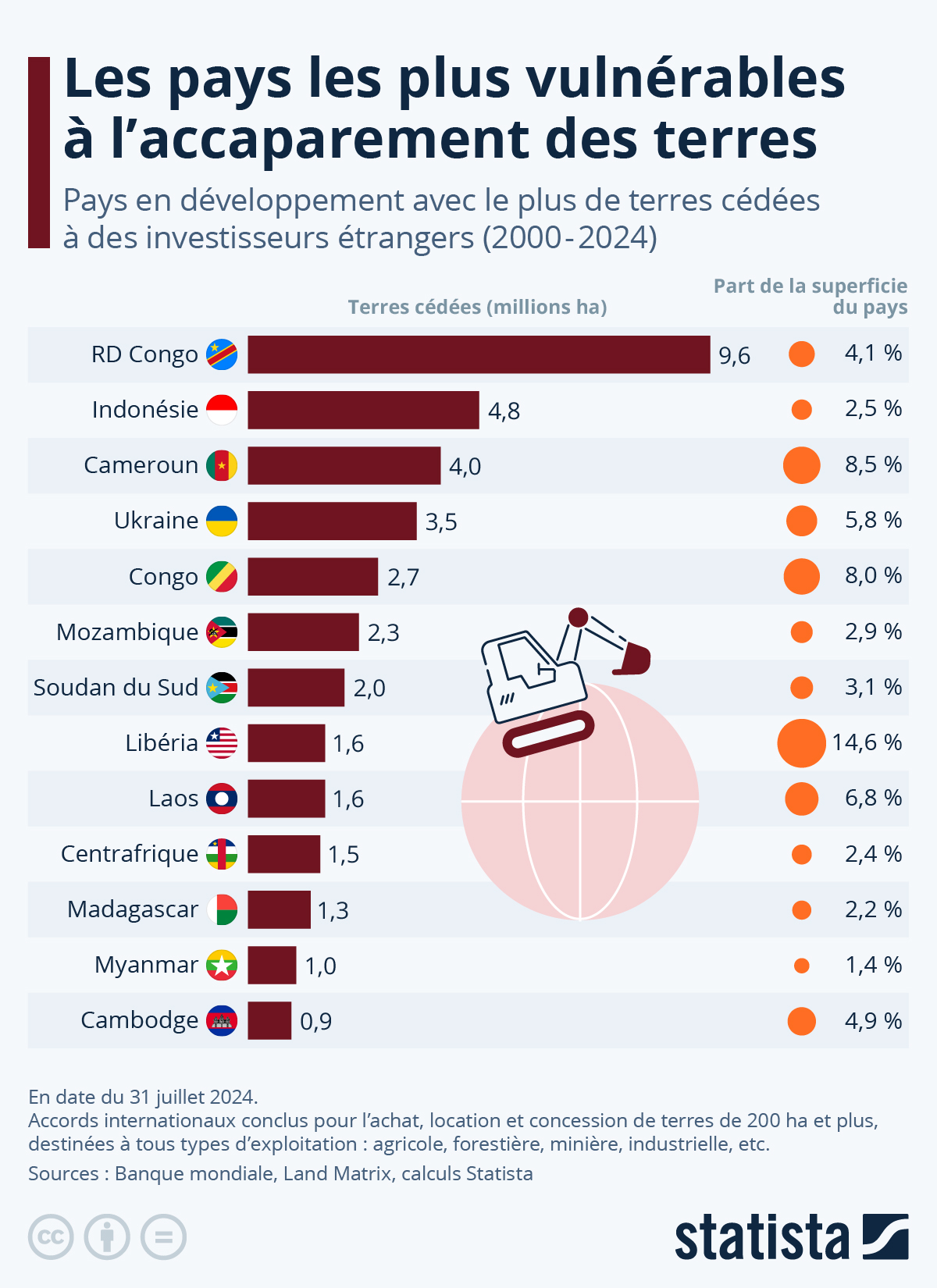
The German platform Statista published a study titled, “Countries Most Vulnerable to Land Grabbing.” Land grabbing refers to a large-scale acquisition of land, often by powerful entities, multinationals, corporations, governments, usually foreigners and frequently involving unethical or exploitative practices. They involve the purchase or lease of massive lands mostly in developing countries. These land-grabs often raise high human issues, such as lack of compensation of the locals, removal of local populations from their lands, and environmental degradation.
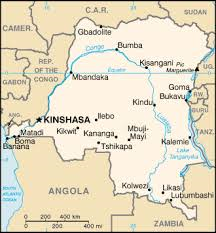
Map of the DRC
From Statista’s study, the countries most at risk of land grabs are, no surprise, in Africa and Asia. Out of the 13 countries on the top list, 8 out of the 13 are African. The Democratic Republic of Congo (DRC) tops the list, followed by Cameroon, the Republic of Congo, Mozambique and South Sudan. Liberia and Cameroon have sold the most: 14.6 % of the country of Liberia is in the hands of foreigners, while 8.5% of Cameroon is, so about 1.6 million hectares and 4 million hectares respectively. For countries like DRC or South Sudan, one could understand as there were wars in the country. But what about Cameroon? To be 3rd on the list, and have 4 million hectares (40,000 km²) of the country in the land of foreigners is crazy… To put it in perspective, 4 million hectares is roughly the size of Netherlands, Switzerland, or Denmark (excluding Greenland). Thus, the government of Cameroon has ceded land the size of the Netherlands to foreign interests between the years 2000 and 2024. This is without counting the ones ceded since independence… This is all done without the populations’ consent, and the countries almost get nothing, if not pennies? In Cameroon, majority of the companies are French, but there are also Chinese, American and more. As we saw in the case of Niger, or Cameroon with Safacam for instance, which has been there 130 years, but the road there is impracticable – they can grab everything, without even giving simple things like roads to the locals!
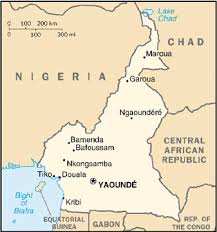
Map of Cameroon, with the capital Yaoundé
The Statisca survey goes on to indicate that the land acquired by foreign investors in Cameroon is primarily used for logging, mining, and industrial agriculture, such as palm oil production.
For once the United Nations has decided to intervene in the situation in the Democratic Republic of Congo (DRC). Please remember that this is an organization that is two-faced, saying one thing from one side of the mouth and another from the other. History has told us never to trust the UN because it is an organization that only serves the “strong” nations of this world, helping them exploit the “weaker” ones. Anyways, this past Friday, the UN has called for a ceasefire in the DRC after Goma and Bukavu, two of the largest cities in the eastern part of Congo, in regions rich in minerals that could power the entire earth, were captured by the M23 rebel group backed by Rwanda and its Western masters.
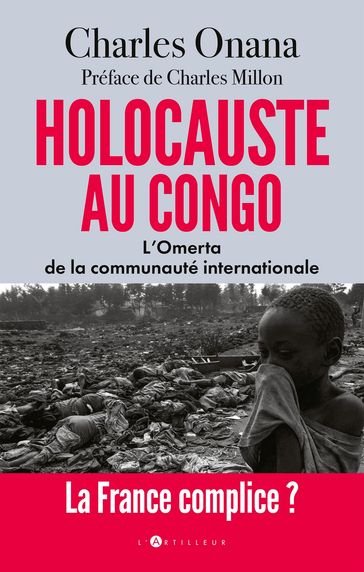
“Holocauste au Congo, L’Omerta de la Communaute Internationale” by Charles Onana
The United Nations Security Council unanimously adopted a resolution on Friday calling for an immediate and unconditional ceasefire in the Democratic Republic of the Congo (DRC).
Rwanda-backed rebels have taken control of two key cities in Congo’s mineral-rich eastern region in less than a month, following a major escalation in their long-standing conflict with Congolese forces.
Nicolas de Rivière is the Representative to the United Nations in France: “There is no military solution to the conflict. The M23 offensive, supported by Rwanda, must end. The priority now is to reach an effective, unconditional, and immediate ceasefire agreement.”
… “While it took the Council some time to reach a consensus, its resilience is evident. On behalf of the Government and all citizens of the Democratic Republic of the Congo, especially those from Bunagana to Kamanyola, Goma, Sake, Minova, Nyabibwe, Kalehe, Kavumu, and Bukavu, I sincerely thank all members of the Council,” said Zénon Mukongo Ngay, the Representative to the United Nations in the Democratic Republic of the Congo.
The rebels are supported by roughly 4,000 troops from neighbouring Rwanda, according to U.N. experts [UN experts, always present on the ground while atrocities are ongoing]. At times, they have threatened to march as far as Congo’s capital, Kinshasa, located over 1,000 miles away.
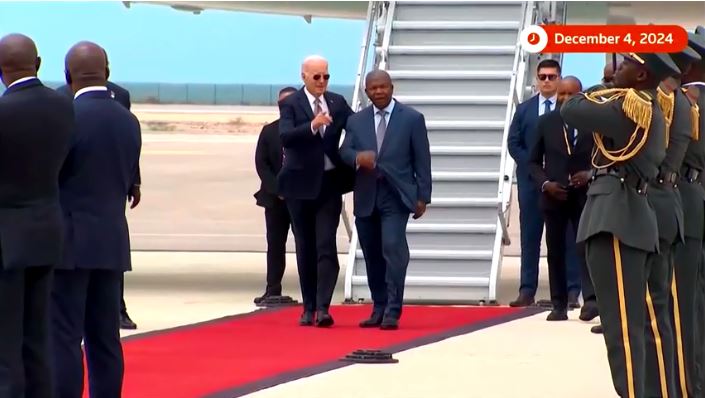
Angola President João Lourenço welcomes U.S. President Joe Biden on the day of his arrival on Dec 4, 2024, at Catumbela Airport in Catumbela, Angola
What could a president who has just pardoned his son from crimes during thanksgiving weekend when everybody was asleep, be doing in a lightning visit to Africa in the ending times of his term? It sounds fishy right? As we have learnt in the past, the transition times are the shady times of an administration. So what was President Biden doing in Angola at this time? Why wait until the end of his term for his first visit to Africa? Why was he not then at the re-opening ceremony of the Notre Dame Cathedral in France with all world leaders at the end of the week? We are told that this lightning first visit to Africa is to cement a deal that will benefit Angola, the Democratic Republic of Congo (DRC), and Zambia: the deal called the Lobito Atlantic Railway project.
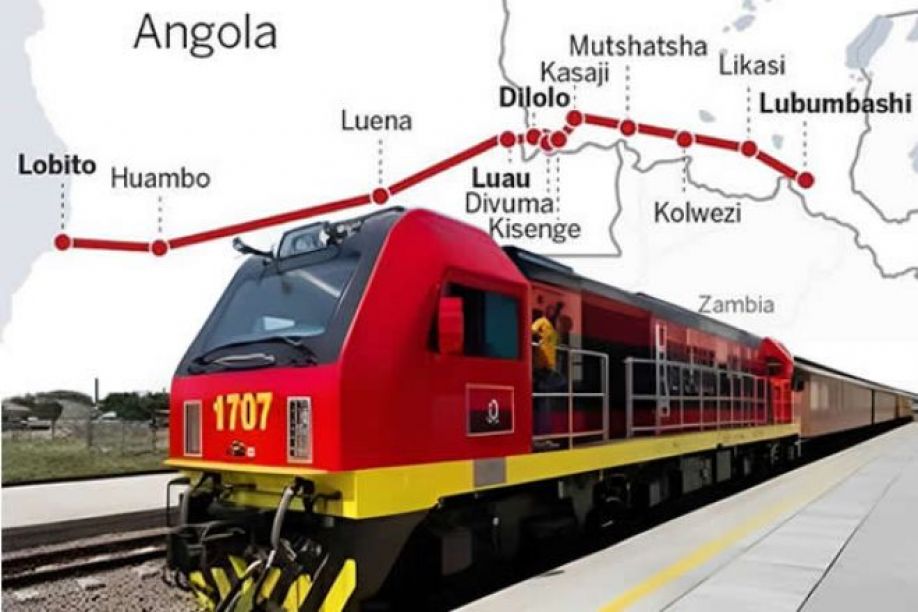
A map of the Lobito Atlantic Railway project (Source: LobitoCorridor.org)
The Lobito Corridor is connected by a stretch of railway infrastructure snaking through mineral (70% of the world’s cobalt is found in the DRC) and oil-rich parts of Angola, the DRC, and Zambia (70% of the world’s copper). Many of these minerals are considered critical for the energy transition adding an additional layer of urgency (The New Scramble for Africa, The Geological Scandal that is the Democratic Republic of Congo (DRC), DRC and Zambia Sign Over Cobalt and Copper Resources Rights to the United States?, When Einstein Wrote to the US President about Congo for its Uranium ). The Lobito project provides a faster access route to the mines in these parts of the world and a pathway to the Atlantic Ocean. The rail route was established in the early 1900s and thrived until the mid-1970s. During the dark days of Angola, in the civil war era, the Angolan parts of the railway were destroyed. From 2006 to 2015, the Lobito project was resurrected/rehabilitated by the Chinese government in the region, who spent over $2 billion rail-for-oil program, but JLo as João Lourenço, the president of Angola is known, has decided to change hands from the Chinese to the Americans and Europeans. In 2022, the Lobito Atlantic Railway concession, a 30-year concession (extendable an additional 20 years), was awarded to a consortium of Western companies.
This investment represents the first alternative from Washington DC to China’s Belt and Road Initiative. As President Biden said in 2023 during JLo’s visit to Washington, “This [the Lobito railway project] first-of-its kind project is the biggest US rail investment in Africa ever,” … “A partnership between Angola and America is more important and more impactful than ever.” President Hichilema of Zambia said, “This corridor is of vital importance to opening up our countries, to opening up our regions, the continent, and truly the global economy,… This project is a huge opportunity for investment, for trade.”
Many see the Lobito Atlantic Railway project more as a West (US/Europe) vs. East (China) war interest on the African continent; while some imagine a money laundering scheme (after all Africa is known for its opacity in accounting) in the last days of an outgoing administration. You, dear reader, what do you think this is?
As the silent genocide in the east of the Democratic Republic of Congo (DRC) continues, under the complicit eyes of the “international” community, last Friday, the town with the one of the biggest coltan reservoirs in the world, Rubaya, … was captured by the M23 rebels. What is coltan? For those who just discover it, coltan is a dull black metal from which niobium and tantalum are extracted. Thus, the name coltan comes from col in columbite (the niobium-dominant mineral) and tan in tantalite(the tantalum-dominant mineral). It is the material at the heart of the mobile phone boom, and is found everywhere in the computer, automotive, and electronics industries. It has been classified by the US Defense department since World War 2 as a material key to the nation’s security.
Democratic Republic of Congo (DRC) mineral map (Source: Atlas du continent africain, Jeune Afrique et editions Jaguar, 2000)
It is no secret that the M23 rebels are backed by neighboring Rwanda, who is in turn supported by … . Why DRC one may ask? As discussed earlier, Congo is a geological scandal, a country rich with some of the most important minerals on earth. When much of eastern Congo came under the control of Rwandan forces in the 1990s, Rwanda suddenly became a major exporter of coltan and many other minerals (a Rwandan I spoke to admitted, minerals Rwanda never thought possible are being “discovered” every day on “their soil”), benefiting from the turmoil and weakness of the Congolese government. According to a UN report, the soaring price and interest in coltan has “brought in as much as $20 million a month to rebel groups” and other factions trading coltan mined in northeastern DRC. Lastly, the government of DRC (The Democratic Republic of Congo Accuses Apple) recently threatened many big companies, including Apple, of illegally obtaining minerals including coltan, and therefore of supporting rebels group. Is it then a surprise that Rubaya was captured last Friday?
A town at the heart of mining coltan, a key ingredient in making mobile phones, has been seized in eastern Democratic Republic of Congo by rebel forces, their spokesman has said.
Rubaya fell into the hands of M23 fighters on Tuesday following heavy clashes with government troops, Willy Ngoma [M23 spokesperson] said.
The government has not yet commented, but a civil society activist confirmed that M23 had captured the strategic town.
It happened on the day France’s President Emmanuel Macron called on neighbouring Rwanda to “halt its support” for the M23 rebel group.
Mr Macron made his comments after holding talks with DR Congo’s President Félix Tshisekedi in France’s capital, Paris.
Rwanda has repeatedly denied backing the rebels, who have captured much territory in the mineral-rich east during fighting over the past 18 months.
DR Congo is the world’s second-biggest producer of coltan, with most of it coming from the mines around Rubaya in the Masisi district.
Coltan is used to make batteries for electric vehicles and mobile phones.
DR Congo’s government accuses Rwanda of backing the rebels to steal its mineral wealth, an allegation the government in Kigali denies.
Early this week, we shared the “Einstein Letter” signed by the Nobel Prize of Physics Albert Einstein and addressed to the President of the United States F. Roosevelt talking about Uranium and its place in the energetic plan of the United States. It also highlighted the important place of the Democratic Republic of Congo (DRC) in this plan, today more than ever, given that the DRC is what many call a “geological scandal”, as first termed by Belgian geologist Jules Cornet in 1892, with all its minerals, some of which can only be found there.
Democratic Republic of Congo (DRC) mineral map (Source: Atlas du continent africain, Jeune Afrique et editions Jaguar, 2000)
Last week, DRC’s president and its government threatened the technology giant Apple with a lawsuit, over “blood” minerals, illegally exploited. There is currently a real genocide in the DRC which has been ongoing for the past 30 years and which has claimed over 10 million lives; however it is a silent genocide given that the “international community” is complicit and has turned a blind eye. As the DRC government sends this out to Apple, where are the other tech giants? Where is Tesla, as we know that Tesla’s batteries cannot work without minerals from the DRC? Where are all the other companies/ multinationals?
… The government of the Democratic Republic of Congo has threatened U.S. tech giant Apple with legal action over what it says are “illegally exploited” minerals from the impoverished nation in its products. U.S. and French lawyers representing the DRC’s government sent a letter to Apple on April 22 warning the company it could face legal action if it continues with the alleged practice.
The letter accuses Apple of purchasing minerals smuggled out of the DRC into Rwanda [we all know that Rwanda has zero minerals… the minerals reported of Rwandan origin are all pillaged from neighboring DRC], where their origin is allegedly obscured so they can find their way into the global technology supply chain. It makes clear that the DRC government intends to address the matter and is looking into legal options to do so.
The letter sent by the lawyers to Apple CEO Tim Cook includes a list of questions laying out the DRC’s concerns over alleged “blood minerals” in Apple’s supply chain, and it demands answers within three weeks. Similar letters, seen by CBS News, were also sent to two of Apple’s subsidiaries in France, demanding answers in the same timeframe.
“Apple has affirmed that it verifies the origins of minerals it uses to manufacture its products,” the letter notes. “It says that the tin, tungsten, tantalum — the 3Ts — and gold that its suppliers purchase are conflict free and do not finance war. But those claims do not appear to be based on concrete, verifiable evidence.”
Amsterdam & Partners, the law firm representing the DRC government, has written a 53-page report outlining the claims against Apple, entitled “Blood Minerals: Everyone sees the massacres in Eastern Congo, but everyone is silent. The laundering of DRC’s 3T Minerals by Rwanda and by private entities.”
In their letter to Apple, the lawyers said that in the process of preparing their report, “it has become clear to us that year after year, Apple has sold technology made with minerals sourced from a region whose population is being devastated by grave violations of human rights. The iPhones, Mac computers and accessories that Apple sells to its customers around the world rely on supply chains that are too opaque, and that are tainted by the blood of the Congolese people.”
Every June30, we commemorate the “independence” of the Democratic Republic of Congo (DRC) by posting a speech or letter by its first prime minister Patrice Emery Lumumba. The word independence is placed in quotes because we know that independence cha-cha never really occurred and that many African countries including the DRC are still suffering from the sequels of neo-colonialism.
Patrice Lumumba gave the speech below on December 11, 1958 in Accra, Ghana, at a conference sponsored by Kwame Nkrumah, Ghana’s first president who also succumbed to imperialism. In his speech, all the evils that plague Congolese and African societies are cited: Western domination, external domination, balkanization of the Congolese territory (and Africa), and all the ‘ism‘ that undermine the unity of Africa. His speech is still very current today. The speech can be found in its entirety on Blackpast.org.
====
Kwame Nkrumah
On December 11, 1958, 34 year old Patrice Lumumba, president of the Congolese National Movement, spoke at the Assembly of African Peoples, an international Pan African Conference sponsored by Kwame Nkrumah, the Prime Minister of newly independent Ghana. His remarks appear below. Two years later Lumumba would become the first Prime Minister of the Congo.
…
Our Program of Action
The Congolese National Movement, which we represent at this great conference, is a political movement, founded on October 5, 1958.
This date marks a decisive step for the Congolese people as they move toward emancipation. I am happy to say that the birth of our movement was warmly received by the people for this reason.
The fundamental aim of our movement is to free the Congolese people from the colonialist regime and earn them their independence.
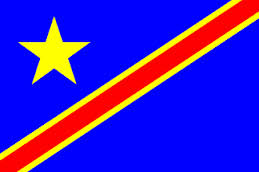
Flag of the Democratic Republic of Congo
We base our action on the Universal Declaration of the Rights of Man — rights guaranteed to each and every citizen of humanity by the United Nations Charter — and we are of the opinion that the Congo, as a human society, has the right to join the ranks of free peoples.
We wish to see a modern democratic state established in our country, which will grant its citizens freedom, justice, social peace, tolerance, well-being, and equality, with no discrimination whatsoever.
In a motion we recently transmitted to the minister of the Congo in Brussels, we clearly stipulated — as did many other compatriots of ours — that the Congo could no longer be treated as a colony to be either exploited or settled, and that its attainment of independence was the sine qua non condition of peace.
In our actions aimed at winning the independence of the Congo, we have repeatedly proclaimed that we are against no one, but rather are simply against domination, injustices and abuses, and merely want to free ourselves of the shackles of colonialism and all its consequences.
These injustices and the stupid superiority complex that the colonialists make such a display of, are the causes of the drama of the West in Africa, as is clearly evident from the disturbing reports of the other delegates.
Map of the Democratic Republic of Congo
Along with this struggle for national liberation waged with calm and dignity, our movement opposes, with every power at its command, the balkanization of national territory under any pretext whatsoever.
From all the speeches that have preceded ours, something becomes obvious that is, to say the least, odd, and that all colonized people have noticed: the proverbial patience and good-heartedness that Africans have given proof of for thousands of years, despite persecution, extortions, discrimination, segregation, and tortures of every sort.
The winds of freedom currently blowing across all of Africa have not left the Congolese people indifferent. Political awareness, which until very recently was latent, is now becoming manifest and assuming outward expression, and it will assert itself even more forcefully in the months to come. We are thus assured of the support of the masses and of the success of the efforts we are undertaking.
This historical conference, which puts us in contact with experienced political figures from all the African countries and from all over the world, reveals one thing to us: despite the boundaries that separate us, despite our ethnic differences, we have the same awareness, the same soul plunged day and night in anguish, the same anxious desire to make this African continent a free and happy continent that has rid itself of unrest and of fear and of any sort of colonialist domination.
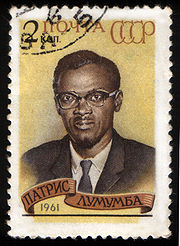
Lumumba on a USSR commemorative stamp in 1961
We are particularly happy to see that this conference has set as its objective the struggle against all the internal and external factors standing in the way of the emancipation of our respective countries and the unification of Africa.
Among these factors, the most important are colonialism, imperialism, tribalism, and religious separatism, all of which seriously hinder the flowering of a harmonious and fraternal African society.
This is why we passionately cry out with all the delegates:
Down with colonialism and imperialism!
Down with racism and tribalism!
And long live the Congolese nation, long live independent Africa!
Democratic Republic of Congo (DRC) mineral map (Source: Atlas du continent africain, Jeune Afrique et editions Jaguar, 2000)
Last week, a reader asked us why the Democratic Republic of Congo (DRC) is often referred to as a “geological scandal” of nature. For starters, the DRC is one of the world’s richest countries in natural resources, with the richest concentrations of precious metals and minerals on earth, with large deposits of gold, diamonds, uranium, copper, cobalt, tungsten, coltan, bauxite, cassiterite, and much more. According to the United Nations Environment Program (UNEP), it has about 75% of the world’s coltan, the material at the heart of the mobile phone revolution; about 70% of the world’s cobalt reserves, over 30% of diamond, 10% of copper. The uranium used for the bombs that detonated over Hiroshima and Nagasaki came from the DRC. The electrical car battery revolution is all based on Congo’s wealth; there is no way the West can sustain an electrical car industry without Congo and its reserves. Apart from mineral wealth, the DRC is also one of the most biodiverse areas in the world.
Unfortunately, this abundance of internationally valued minerals and natural resources has however failed to bring any kind of prosperity to the country. It began with colonial exploitation of the land and its people by King Leopold II (King Leopold II and The Congolese Genocide), and continued in bloody civil war; the Congolese have harvested nothing from their country’s natural riches but misery and poverty. The world’s bloodiest conflict since World War II is still going on today on Congo soil, and has made over five million deaths…
For more, check out the article by Colette Braeckman, The Looting of the Congo, BBC – DR Congo: Cursed by its natural wealth and the extensive articles written by a fellow blogger at WiPoKuli Schluter. We had found a good documentary a while back about Congo’s resources, but somehow it is no longer available. So I live you instead with The Race for Africa by Gravitas Plus, which actually helps to understand the importance of Africa (and Congo) today, and the race for its resources. Enjoy!
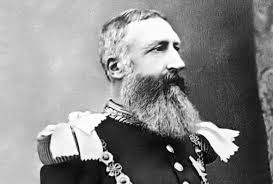
It took over 100 years for a Belgian King to finally ‘express his deepest regrets‘ for Belgium’s colonial past in Congo. As we recall, King Leopold II of Belgium perpetrated a genocide in Congo. Leopold II took Congo, a country at least 10 times the size of Belgium, as his private property and killed millions of Congolese. It is said that he must have executed and maimed over 15 million people!
So now, Belgian King Philippe wrote a letter to the president of Congo Felix Tshisekedi, on 30 June 2020, the anniversary of the Independence of the Democratic Republic of Congo, stating: “During the time of the Congo Free State [1885-1908], acts of violence and brutality were committed that weigh still on our collective memory. The colonial period that followed also caused suffering and humiliations. I would like to express my deepest regrets for the wounds of the past, the pain of today, which is rekindled by the discrimination all too present in our society.” His remarks fell short of an apology! Should we applaud for this?
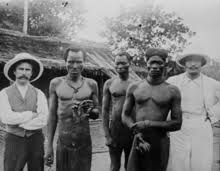
Picture of men holding cut-off hands (image by Alice S. Harris in Baringa 1904)
I say NO! To the Belgian King, I say you can eat your “deepest regrets”! Many are calling this progress, but I call this arrogance to wake up one day, and finally say, “I regret the past. Yes…, my grandfather committed acts of violence and brutality, killed your fathers, mothers, brothers, and sisters, … maimed your forefathers, decapitated so many of you … instilled fear into your psyche… destroyed your livelihood, your culture, and the entire foundation of your society.”
And so what? That’s it? Should we clap for you? where is the apology? Didn’t you think we knew that already? Where is the reparation? Don’t you know that Belgium is nothing without Congo? Coincidentally, King Philippe forgot to include the period following that time, from 1908 to the independence of Congo,and then to nowadays with the treacherous role played by Belgium in the assassination of the Congolese Prime Minister Patrice Lumumba, and countless others, and the unrest in the region to this day.
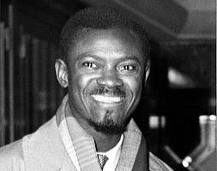
Official portrait of Patrice Lumumba, Prime Minister of Congo
And to stand up there, and say I “express my deepest regrets for the wounds of the past”… it’s like Hitler waking up today, and telling Holocaust survivors and their descendants, “I killed you, jailed your parents, forced you into exile, brought fear into your souls, and decimated every part of you… I regret it. What can you about it? ” It is simply arrogant! … It is just too easy. Until there is a clear “I am sorry”, until there is a clear “here is what we will do to right the wrongs,” until there is a clear “correction and inclusion in the history textbooks, opening of all classified documents”…. until there is a clear “respect for those killed, and for those living today” until then, there will be no respect for arrogant kings who claim to have been awaken by George Floyd’s killing in the USA and not the atrocities they themselves committed in Congo!
We, the people of Congo, cannot forget… we cannot forget that the unrest in Congo today is a direct result of the atrocities committed by Belgium in the region. We cannot forget the souls of our ancestors who still cry to us for justice today.
For the celebration on 30 June 1960 of the independence of Congo, we will do a trip down memory lane with this speech Patrice Lumumba addressed to the Congolese youth in August of 1960. In 1960, Patrice Lumumba was elected the first prime minister of the Democratic Republic of the Congo (DRC). Assassinated by Belgian colonialists and the CIA in 1961, Lumumba was a founding member of the Movement National Congolais (MNC), which led Congo to independence. Today, Patrice Lumumba is the symbol of aspirations for an entire continent, and he continues to serve as an inspiration to contemporary Congolese and African politicians. His message here to the Congolese youth is really a message to the African youth. Enjoy! The full speech can be found in Patrice Lumumba: Fighter for Africa’s Freedom, Moscow, Progress Publishers, 1961, p 33-36, by Patrice Lumumba (transcribed by Thomas Schmidt) here.
=======
Map of the DRC
Today I am addressing the youth, the young men and women of the Republic of the Congo.
In speaking to them, I am addressing these words to future generations because the future of our beloved country belongs to them.
We are fighting our enemies in order to prepare a better and happier life for our youth.
If we had been egoists, if we had thought only about ourselves we would not have made the innumerable sacrifices we are making.
I am aware that our country can completely liberate herself from the chains of colonialism politically, economically and spiritually only at the price of a relentless and sometimes dangerous struggle. Together with the youth of the country, we have waged this struggle against foreign rule, against mercantile exploitation, against injustice and pressure.
Flag of the Democratic Republic of Congo
Young people who have been inactive and exploited for a long time have now become aware of their role of standard-bearer of the peaceful revolution.
The young people of the Congo have fought on our side in towns, villages and in the bush. Many of our young men have been struck down by the bullets of the colonialists. Many of them left their parents and friends in order to fight heroically for the cause of freedom. The resistance that the young people offered the aggressors in Leopoldville on January 4 and in Stanleyville on October 30, 1959, deserves every praise.
With deep emotion I bow in memory of these courageous patriots, these fighters for African freedom.
The time is not far distant when large numbers of young men and women were driven out of schools by their white teachers and instructors on the suspicion of having nationalist ideas. Many brilliantly gifted young people turned down the opportunity to receive a higher education for the simple reason that they no longer wished to be indoctrinated by the colonialists, who wanted to turn our young men and women into eternal servants of the colonial regime.
Patrice Lumumba (center left) with his first government after his investiture outside the Palais de la Nation, 23 June 1960
During the heroic struggle of the Congolese nationalists, the young people, even those who were still sitting at school desks, resolutely opposed all new forms of colonialism, whether political, social, spiritual or religious.
Their only dream was national liberation. Their sole aim was immediate independence. Their only resolve was to wage an implacable struggle against the puppets and emissaries of the colonialists.
Thanks to the general mobilisation of all the democratic youth of the Congo, the Congolese nationalists won independence for the nation. We received this independence at the price of a grim struggle, at the price of all sorts of privations, at the price of tears and blood.
After independence was solemnly proclaimed on June 30, 1960, the colonialists and their black emissaries started a barbarous war in the young Republic of the Congo. They began this perfidious aggression because the nationalist Government now in power did not want them to continue exploiting our country as they did prior to June 30, the historic day when the people of our country said Adieu to the Belgian colonialists.
Not having any support whatever, particularly among the working class, who have had their fill of colonial exploitation, the colonialists and their henchmen now want to force certain sections of the youth to serve them in order to be able to propagandise the revival of colonialism. That is why a certain part of the youth, luckily not a very numerous part, have plunged into national defeatism.
Happily, the vast majority of the young people saw through this last attempt of the imperialists, who are turning into account the dissatisfaction of some malcontents, of those who failed in the elections because they did not have the confidence of the people.
This nationalist youth recently held demonstrations in various towns in the Republic to show their absolute and total opposition to imperialist intrigues.
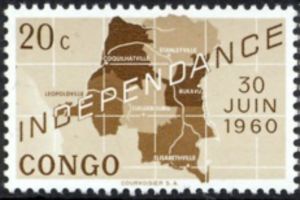
Stamp commemorating the independence of Congo on 30 June 1960
Young people, I salute you, and congratulate you on your civic and patriotic spirit. Young people, specially for you I have created a Ministry for Youth Affairs and Sports under the Central Government. It is your Ministry. It is at your disposal. Many of you, without any discrimination, will be called upon to direct this Ministry, its different services and activities.
Today, in the free and independent Congo we must not have a Bangala, National Unity Party, Association of Bakongo, Mukongo, Batetela or Lokele youth but a united, Congolese, nationalist, democratic youth. This youth will serve the social and economic revolution of our great and beloved country.
You must energetically combat tribalism, which is a poison, a social scourge that is the country’s misfortune today. You must combat all the separatist manoeuvres, which some of the preachers of the policy of division are trying to pass off to young and inexperienced people under the name of federalism, federation or confederation.
In reality, young people, these names are only a new vocabulary brought by the imperialists to divide us in order the better and more conveniently to exploit us. Your entire future will be threatened if you do not oppose these manoeuvres, this new, disguised colonisation.
Lumumba on a USSR commemorative stamp in 1961
You must be proud that you belong to a great nation, a great country, a mighty power. This power, which the imperialists envy today, is embodied in national unity. This unity must be the heritage that you, in your turn, shall leave to your children.
The Government will soon send 300 young people to study in the U.S.A., 150 in the Soviet Union and 20 in Guinea, not to mention other countries.
The Congo is no longer a national reservation, a national park, a zoo which we could not leave. Tomorrow you shall go everywhere to study, to learn a speciality, and to get to know the world. Workers, working people will have an equal share in these study missions.
You shall go everywhere, to all the parts of the world. These contacts with the outside world, this direct confrontation with the reality of life will make you experienced people, whom the free and independent Congo needs today.
You will go there not as representatives of Association of Bakongo, National Unity Party, Congo National Movement or African Regroupment Centre youth. You will be Congolese citizens, simply Congolese. And by your behaviour, devotion, intelligence and political maturity you must be a credit to your Congolese motherland.
Official portrait of Patrice Lumumba
Young people, the Congo belongs to you. The national Government, the people’s Government will do everything in its power to prevent the Congo from being torn away from you.
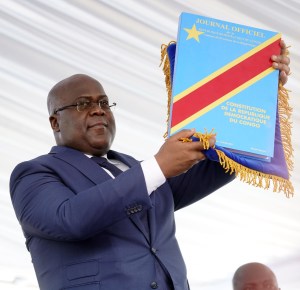
Felix Tshisekedi on investiture day 24 January 2019
On Thursday January 24th 2019, the Democratic Republic of the Congo saw a new day: the investiture of Félix Antoine Tshilombo Tshisekedi marked the first peaceful transfer of power in the history of the DRC in 60 years, since the Belgium granted it independence. This marked a great day not only for the DRC, but for Central Africa, and for Africa as a whole. Felix Tshisekedi won the presidential elections in DRC, which were also entirely funded by the country itself under the leadership of President Joseph Kabila … this is also a first in the nation’s history and the history of many countries on the African continent. So in clear, this was an election of the Congolese people for the Congolese people, entirely funded by the Congolese themselves.
Tshisekedi said, “We want to build a strong Congo in its cultural diversity.” He further declared, “We will promote its development in peace and security. A Congo for each and everyone, where everybody has his or her own place.”
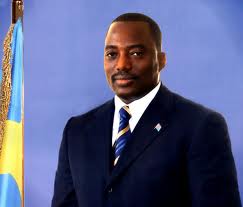
Joseph Kabila, outgoing President of DRC
Felix Tshisekedi is the son of Étienne Tshisekedi, a longtime beloved opposition leader who died in 2017, and has benefitted from the legacy his dad built. Tshisekedi is taking over the presidency from Joseph Kabila, the DRC’s president since 2001.
I take the time here to salute President Joseph Kabila who has allowed, by his selfless resolve to protect the Democratic Republic of the Congo. Joseph Kabila recently outlined some his achievements during his tenure of office, including the organization and total funding of the last democratic elections in 59 years, the construction of new infrastructures, the restoration of peace and the reunification of the country, and the financing of its own elections, and the peaceful passing of the banner to Felix Tshisekedi.
I live you here with Joseph Kabila’s last speech as President, and the passing of the baton, investiture of Felix Tshisekedi.












 African Heritage