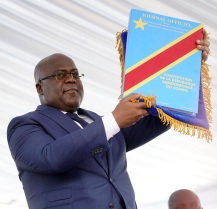
Felix Tshisekedi on investiture day 24 January 2019
On Thursday January 24th 2019, the Democratic Republic of the Congo saw a new day: the investiture of Félix Antoine Tshilombo Tshisekedi marked the first peaceful transfer of power in the history of the DRC in 60 years, since the Belgium granted it independence. This marked a great day not only for the DRC, but for Central Africa, and for Africa as a whole. Felix Tshisekedi won the presidential elections in DRC, which were also entirely funded by the country itself under the leadership of President Joseph Kabila … this is also a first in the nation’s history and the history of many countries on the African continent. So in clear, this was an election of the Congolese people for the Congolese people, entirely funded by the Congolese themselves.
Tshisekedi said, “We want to build a strong Congo in its cultural diversity.” He further declared, “We will promote its development in peace and security. A Congo for each and everyone, where everybody has his or her own place.”
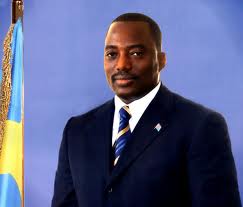
Joseph Kabila, outgoing President of DRC
Felix Tshisekedi is the son of Étienne Tshisekedi, a longtime beloved opposition leader who died in 2017, and has benefitted from the legacy his dad built. Tshisekedi is taking over the presidency from Joseph Kabila, the DRC’s president since 2001.
I take the time here to salute President Joseph Kabila who has allowed, by his selfless resolve to protect the Democratic Republic of the Congo. Joseph Kabila recently outlined some his achievements during his tenure of office, including the organization and total funding of the last democratic elections in 59 years, the construction of new infrastructures, the restoration of peace and the reunification of the country, and the financing of its own elections, and the peaceful passing of the banner to Felix Tshisekedi.
I live you here with Joseph Kabila’s last speech as President, and the passing of the baton, investiture of Felix Tshisekedi.
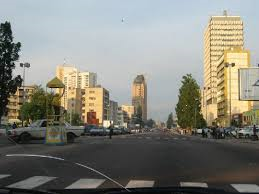
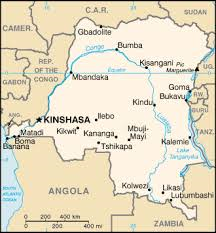
Today I would like to talk about Kinshasa, the capital and largest city of the Democratic Republic of the Congo (DRC). It is located on the Congo River, which happens to be Africa’s largest river, the deepest river in the world, and the third largest in the world by the volume it discharges. Kinshasa is a city of over 9 million inhabitants and directly faces Brazzaville, the capital of the Republic of the Congo: these two sister cities are separated only by the river Congo (the only place in the world where two capitals of two countries face each other). Residents of Kinshasa are known as Kinois.
When did it all start? Well, Kinshasa was founded in 1881 as a trading post by the explorer Henry Morton Stanley who named it Leopoldville in honor of the Belgian king Leopold II, who controled the immense territory of DRC as his private property and not just as a colony. Prior to 1920, all goods arriving by sea in Congo were carried by porters from Matadi (the main port city of Congo), and Leopoldville over 150 km from the coast. From 1886 to 1926, Boma (located on the Congo estuary) was the capital of the Belgian Congo; but after 1926, Leopoldville became the capital.
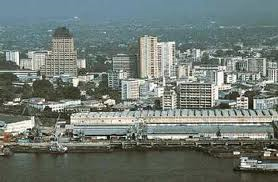
Kinshasa, seen from the Congo river
In 1965, Joseph-Desire Mobutu who had risen to power after coups d’etat against Patrice Lumumba in 1960, and a second one in 1965, renamed the city Kinshasain an effort to africanize the names of the people and places in the country. Kinshassa was the name of a village which used to be near the site of the present city. In Kikongo, Kinshasa means “the salt market“: “nshasa = salt” and locator ‘ki‘.
The region of Pool Malebo, where Kinshasa is located, has been inhabited since at least the first millenium before our era. However, before colonization, different Bantu groups have occupied the area. During the 16th and 17th centuries, the region of Pool Malebo became a major commercial hub between the river basin and the coastal regions. The Bobangis (also called Bangala, or people of the river) managed the major part of the commerce with the equatorial forest by navigating the river up to the Téké villages of Pool. During the 18th and 19th centuries, more villages develop themselves in the area, which became known as the Batéké plateau. The principal Téké villages were Nsasa with almost 5,000 inhabitants, and Ntambo with at least 3,000. By the time Henry Morton Stanley reached the area on 12 March 1878, the region was already home to 66 villages, and a total population of over 30,000 inhabitants. Stanley chose this location as it was the area where the Congo river became navigable.
Map of the DRC
By the time the city changed its name from Leopoldville to Kinshasa in 1966, the city rapidly grew due to rural exodus of people coming from all parts of the country in search of a better life. In 1974, Kinshasa hosted ‘The Rumble in the Jungle‘ boxing match, a historic match between Muhammad Ali and George Foreman, in which Ali defeated Foreman to regain the World Heavyweight title. This has been one of Ali’s most famous matches: if you watch the movie Ali, you can see scenes of Kinshasa there.
Situated in an area belonging to the Batéké and Bahumbu people, the lingua franca of the city is the Lingala, while the administrative language is French. Kinshasa is also a province of DRC (a bit like the district of Columbia in the US), and is the second largest francophone city in the world, after Paris. Its current population is 9 million inhabitants, making it Africa’s second largest cities after Lagos in Nigeria. Please check out the website for the city of Kinshasa, and Kinshasa-Congo travel to learn about the great city of music and art; I also liked the blog kosubaawate which goes through the evolution of Kinshasa then and now (i.e. before independence and now). Enjoy the video below which I enjoyed for its quality, music, and of course its great content.
Today is election day in the Democratic Republic of Congo (DRC). I would like to share with you this article by Antoine Roger Lokongo which I found quite interesting and deep, about the third presidential elections in the DRC after 51 years of independence, with a brief history of DRC since independence. I have included some snippets from the article which I liked. You can read the full article on Panafrican Vision; it is entitled: D.R. Congo Democracy at crossroads – One election, two sources of legitimacy.
==========================
‘Countries do not have permanent friends or allies, they have only permanent interests’
… when Joseph Kabila turned to the Western powers for assistance after the 2006 elections, they said they had other priorities. Perhaps this was a wake-up call for Joseph Kabila. This is how, in an interview given to Gettleman of the New York Times, Joseph Kabila himself explained why he turned to the Chinese for help after being disappointed with the West’s empty promises: ‘We said we had five priorities: infrastructure; health; education; water and electricity; and housing. Now, how do we deal with these priorities? We need money, a lot of money. Not a 100 million U.S. dollars from the World Bank or 300 from the IMF [International Monetary Fund]. No, a lot of money, and especially that we’re still servicing a debt of close to 12 billion dollars, and it’s 50 to 60 million U.S. dollars per month, which is huge. You give me 50 million dollars each month for the social sector and we move forward. Anyway, that’s another chapter. But we said: so, we have these priorities, and we talked to everybody. Americans, do you have the money? No! Not for now! The European Union, do you have three or four billion for these priorities? No! We have our own priorities. Then we said: ‘why not talk to other people, the Chinese?’ So we said, [Chinese] do you have the money? And they [the Chinese] said, well, we can discuss. So we discussed’.
Joseph Kabila, President of DRC
This interview suggests that Joseph Kabila turned to the Chinese only after seeking help from Western powers. That is exactly the dilemma Patrice Lumumba faced. Increasingly desperate, Patrice Lumumba went on an international trip to enlist Western support (including to Washington, London, Brussels…) to have Belgian troops who had orchestrated the secession of Katanga to leave immediately. He did not get the support he expected and turned to the Russians for help.He was immediately accused of being a communist and eventually assassinated.
Congolese leaders turn to other partners other than the ‘traditional Western partners’ because they are in need; and a friend in need is a friend indeed! They do not mean necessarily to play of the West against the East and so on. When Joseph Kabila turned to the West, the DRC was almost on the verge of bankruptcy. …