Every September we celebrate the lives of some of Africa’s great leaders who were either born or assassinated during that month, Ruben Um Nyobe, Agostinho Neto, Amilcar Cabral, Kwame Nkrumah, Gamal Abdel Nasser, and Steve Biko. I found this quote in Steve Biko’s book I Write What I Like p.32, by Sekou Touré, the Guinean leader who said NO to the France of General De Gaulle (Guinea: the country who dared say ‘NO’ to France). This quote by Sekou Touré is so on point, as it matches the revolutionary spirit that should be found in each African who fights to free his land. Each one of us is needed for the revolution, but we cannot just be bystanders, but need to add our hands to the fight. African leaders need to fashion the revolution with the people, if they want to free their lands.
“To take part in the African revolution, it is not enough to write a revolutionary song; you must fashion the revolution with the people. And if you fashion it with the people, the songs will come by themselves and of themselves.
In order to achieve real action you must yourself be a living part of Africa and of her thought; you must be an element of that popular energy which is entirely called forth for the freeing, the progress and the happiness of Africa. There is no place outside that fight for the artist or for the intellectual who is not himself concerned with, and completely at one with the people in the great battle of Africa and of suffering humanity.”
Recently, I was having a conversation with a friend about leadership in Africa: the endless complaints about our poor leadership, or the killing of our good leaders, and then my friend said talking about Mali, “I wish we had more Assimi Goïta, Choguel Maïga, Abdoulaye Maïga, … on the continent.” Although my heart warmed at this statement, it reminded me that the fight starts at the bottom with each of us. We have to be the leader we want to see; we have to be the Assimi we want to have as a leader. Leadership starts with us, at the individual level. We cannot leave all the task to Assimi or whoever is at the head, we have to do our part; that is the only way to move forward. Otherwise, if something happens to the leader, what will become of our cause? In the article “How do We Continue the Fight when the Head has been Cut Off?”, I wrote, “the prize of freedom is too great to lay on the shoulders of one man, one leader, or a few… we do not follow men, we follow ideas… we are not fighting for men, we are fighting for our right to dignity, our right to humanity, our liberty.“
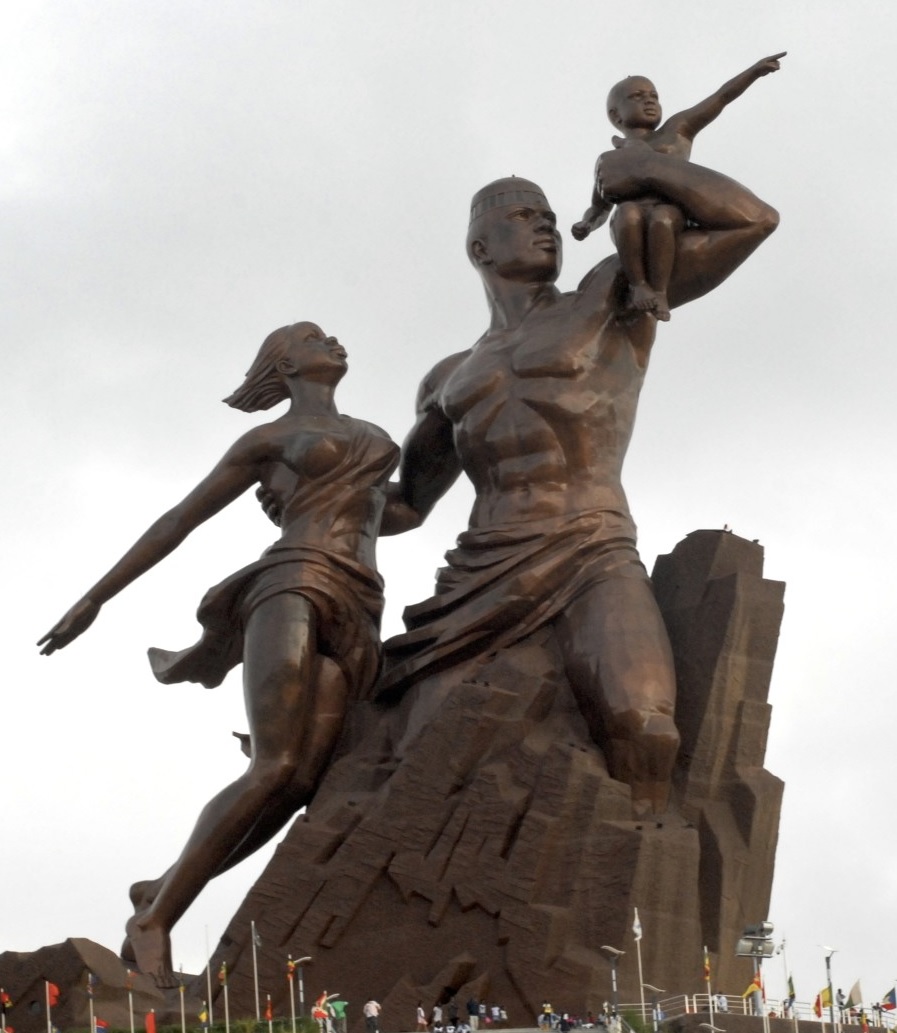
African Renaissance Monument in Dakar (Wikipedia)
Very often it is said among Africans, that we have the leaders we have because that is, at the root, who we are. When you have watched Thomas Sankara, Amilcar Cabral, Patrice Lumumba, Samora Machel, Modibo Keita, Kwame Nkrumah, Ruben Um Nyobe, Felix Moumie, Sylvanus Olympio, Ernest Ouandie, Barthelemy Boganda, Mehdi Ben Barka, Muammar Kadhafi, and many others get assassinated by or in conjunction with foreign forces because of their vision for their countries, it is easy to cower away, and just bend the heads and accept whatever comes in silence. However, cowering in silence, perpetuates the problem endlessly. People often say, we all come on earth and will have to leave at some point, why not leave with dignity? Why cower away? If we start at our level, getting involved in our communities, doing our part (whatever our talents are), being there for each other, do you really think corruption will persist? Let us not wait for Messiahs (and we know how rare those are), but let us start laying the bricks to the foundation of the home we want to live in. If you are an educator, make sure to lay the foundation for the best education possible; if you are a brick layer, do your work with integrity; if you are an okada driver, drive with integrity; if you are a housewife, raise the next leader; if you are a business man, make sure honesty is at the core of your business; if you are a student, arm yourself to be the next leader; … If you want to be led by honest people, then deal with honesty in your daily encounters; if you want to have a transparent government, start with transparency at your level, etc. As my favorite quote by Dr. Martin Luther King Jr goes, “If you are called to be a street sweeper, sweep streets even as Michelangelo painted, or Beethoven composed music or Shakespeare wrote poetry. Sweep streets so well that all hosts of heaven and earth will pause to say, “Here lived a great sweeper who did his job well.” ” We all play a part in this whole that is our homeland, and each one of us is needed!
Thomas Sankara once said in one of his interviews, “if you kill Sankara, you will have a million Sankaras.” Let’s have a million Assimi Goïta, a million Choguel Maïga! Let us have millions of African leaders! Let us have a billion exemplary leaders and more!
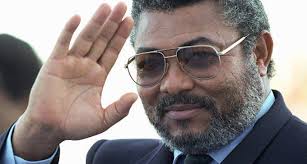
President Jerry Rawlings of Ghana (Source: thecable.ng)
A couple of years ago, we published the words of President J.J. Rawlings of Ghana on Betrayal. Let’s take a trip down memory lane to revisit that article published here on Afrolegends in 2020, where Rawlings talks about African identity, betrayal and much more. As Amilcar Cabral said, “Let no one tell us that Nkrumah died of a cancer to the throat or some other disease; no, Nkrumah has been killed by the cancer of betrayal …“; the cancer of betrayal is a true gangrene to progress in Africa, how many leaders has it claimed?
=====
In the video below, you will hear J.J. Rawlings talk about the issues always discussed on this blog: the loss of the African soul to westernization, the danger of traitors within the ranks, and more importantly the dangers of globalization. People should really pay attention to all he has to say about betrayal, African identity, and also about the manipulations of the people by the triumvirate that is the multinationals, the media, and the intelligence.
Kwame Nkrumah, First President of Ghana
On betrayal, Jerry Rawlings said, “Something that is worse than an enemy is a traitor.” This is very reminiscent of the speech Amilcar Cabral gave at the funeral of Ghana’s first president Kwame Nkrumah on May 13, 1972, which I translated to English here on Afrolegends, “The Cancer of Betrayal” by Amilcar Cabral. J.J. adds, “As bad as an enemy can be, … something worse than an enemy is a traitor.”
On African identity, Rawlings affirmed, “In the process of trying to modernize, we [Africans] have ended up being westernized. … When I wanted to even name my children African names, heroic names, … the catholic church said no…they will have to be catholic names … [which] are European names.“… “I have a right to my identity, don’t take away my identity!“
“Christianize me if you may, but don’t westernize me!” He talks about the issues of African identity, which is powerfully shown in the poem ‘My Name’ by Magoleng wa Selepe.
On globalization, “The world is manipulated by the multinational corporations, the media, and the intelligence apparatus, … they work as a triumvirate and they are neatly sandwiched… in between the governed people and the governors… the sooner we begin to return, restore, some sense of morality in business ethics, in politics, in the media, intelligence apparatus, …” apply the same morality to all, especially when talking about globalization, applying the same moral standards to all.
This week marks the anniversary of the assassination of Amilcar Cabral, the father of the independence of Cape Verde and Guinea Bissau. To celebrate his life, I have decided to re-post Cabral’s speech given during President Kwame Nkrumah‘s state funerals in Conakry on 13 – 14 May 1972“The Cancer of Betrayal” which I transcribed to French (“Le Cancer de la Trahison“) and translated to English (“The Cancer of Betrayal”) and published on Afrolegends in 2012. As Cabral states, betrayal has been at the heart of so many issues faced by Africa today: ” … fromclass struggle, … from contributions to social structures, from the role of party or other instructions, including armed forces…. My idea on this question will allow us to better understand the greatness of Nkrumah’s work, to understand the complexity of problems he had to face so many times alone,… …. we, Africans, firmly believe that the dead continue living by our sides… . Nkrumah will resuscitate each dawn in the hearts and in the determinations of freedom fighters, in the action of all true African patriots.”
=========
In his last public speech in Conakry, at the funeral of the former Ghanaian president Nkrumah, Amilcar Cabral had denounced the cancer of betrayal that eats up African movements. His comments today take a strange resonance in Guinea as in Angola, and Mozambique, where many movements are demanding power which the Portuguese have not yet abandoned.
Amilcar Cabral
“… What to say? but we must speak otherwise at this point, if we don’t talk, our hearts may burst. Our tears should not infiltrate the truth.We, freedom fighters, we do not mourn the death of a man, even a man who was a comrade and an exemplary revolutionary, because as President Ahmed Sekou Toure often says ‘what is man in front of the infinite being and transgressing of the people and of humanity?’ We do not mourn the people of Ghana scoffed in its most beautiful realisations, in its most legitimate aspirations.We are not crying for Africa, betrayed. We are mourning, yes, of hatred towards those who were able to betray NKRUMAH to serve the ignoble imperialism… Mr President, Africa by requiring through the voice of the people of the Republic of Guinea, as always fairly represented by President Ahmed Sekou Toure, whom NKRUMAH had put in his right place on the Kilimandjaro’s highest summits of the African revolution, Africa rehabilitates itself and through history. President NKRUMAH, which we honor is primarily the great strategist of the struggle against classic colonialism, he is the one who created what we call African positivism, what he called “positive action”, affirmative action. We pay tribute to the declared enemy of neocolonialism in Africa and elsewhere, the strategist of economic development in his country. Mr President,we praise the freedom fighter of the African people who always gave his full support to national liberation movements, and we want to tell you here that we, in Guinea and Cape Verde islands, even though it is true that the most important factor for the development of our struggle outside our country was the independence of the Republic of Guinea,the heroic ‘no’ of the people of Guinea on 28 September 1958. It is also true thatif we went through the struggle regenerated, it was essentially due to the concrete support of Ghana and particularly of President Nkrumah …
Mr. President, we should however in this moment remember that all coins in life have two faces, all realities have positive and negative sides… to all positive action, is opposed a negative action. To what extent is betrayal’s success in Ghana linked to problems of class struggle, from contributions to social structures, from the role of party or other instructions, including armed forces as part of a new independent state. To what level, we shall ask ourselves, is betrayal’s success in Ghana linked to a correct definition of this historical entity and craftsman of history that is the people and their daily work, in defending its own independence conquests? Or to what extent is betrayal’s success not linked to the major problem of the choice of men in the revolution? My idea on this question will allow us to better understand the greatness of Nkrumah’s work, to understandthe complexity of problems he had to face so many times alone… problems that will allow us to conclude that, as imperialism exists, an independent state in Africa should be a liberation movement to power or it would not exist. Let no one tell us that Nkrumah died of a cancer to the throat or some other disease; no, Nkrumah has been killed by the cancer of betrayal that we should uproot… by the cancer of betrayal, that we should root out of Africa if we really want to definitely crush the imperialist domination on this continent. But, we, Africans, firmly believe that the dead continue living by our sides, we are a society of dead and living.Nkrumah will resuscitate each dawn in the hearts and in the determinations of freedom fighters, in the action of all true African patriots. Our liberation movement will not forgive those who betrayed Nkrumah, the people of Ghana will not forgive, Africa will not forgive, progressive mankind will not forgive!”
Translated from French by Dr. Y., afrolegends.com (12 October 2012)
As you all know, we have seen in recent coups and throughout history, that the colonizers/oppressors in Africa tend to install fake chiefs, or rather puppets to serve their interests. Remember when Agoli-Agbo (French puppet) was installed after King Behanzin was deposed in 1894? or Patrice Lumumba with Joseph Mobutu in 1961, or more recently Thomas Sankara by Blaise Compaoré in Burkina Faso in 1987, and countless others … history repeats itself. This behavior is not just observed at the top of the country, but even at the levels of the local traditional chiefs… where the successions are contested thus breaking the will of the people, and the passing on of a culture, effectively destroying the oppressed. I could not have said it better than Amilcar Cabral, himself during his February 20, 1970 speech, as part of the Eduardo Mondlane Memorial Lecture Series at Syracuse University, Syracuse, New York, under the auspices of The Program of Eastern African Studies. Enjoy!
Amilcar Cabral
====
… the colonizer who represses or inhibits significant cultural activity on the part of the masses at the base of the social pyramid, strengthens and protects the prestige and the cultural influence of the ruling class at the summit. The colonizer installs chiefs who support him and who are to some degree accepted by the masses; he gives these chiefs material privileges such as education for their eldest children, creates chiefdoms where they did not exist before, develops cordial relations with religious leaders, builds mosques, organizes journeys to Mecca, etc. And above all, by means of the repressive organs of colonial administration, he guarantees economic and social privileges to the ruling class in their relations with the masses. All this does not make it impossible that, among these ruling classes, there may be individuals or groups of individuals who join the liberation movement, although less frequently than in the case of the assimilated “petite bourgeoisie.” Several traditional and religious leaders join the struggle at the very beginning or during its development, making an enthusiastic contribution to the cause of liberation.
But here again vigilance is indispensable: preserving deep down the cultural prejudices of their class, individuals in this category generally see in the liberation movement the only valid means, using the sacrifices of the masses, to eliminate colonial oppression of their own class and to re-establish in this way their complete political and cultural domination of the people.
… among the oppressor’s most loyal allies are found some high officials and intellectuals of the liberal professions, assimilated people, and also a significant number of representatives of the ruling class from rural areas.
… Without minimizing the positive contribution which privileged classes may bring to the struggle, the liberation movement must, on the cultural level just as on the political level, base its action in popular culture, whatever may be the diversity of levels of cultures in the country. The cultural combat against colonial domination–the first phase of the liberation movement–can be planned efficiently only on the basis of the culture of the rural and urban working masses, including the nationalist (revolutionary) “petite bourgeoisie” who have been re-Africanized or who are ready for cultural reconversion. Whatever may be the complexity of this basic cultural panorama, the liberation movement must be capable of distinguishing within it the essential from the secondary, the positive from the negative, the progressive from the reactionary in order to characterize the master line which defines progressively a national culture.
… Confronted with such a necessity, the liberation struggle is, above all, a struggle both for the preservation and survival of the cultural values of the people and for the harmonization and development of these values within a national framework.
Every September 12, we like to celebrate the life of Amilcar Cabral, the father of Cape Verdean and Guinea Bissau’s independence. As you all know, Cabral fought for the independence of his land, of his people, from the imperial Portuguese domination. He also talked a lot about understanding the link between national liberation and culture. The extract below is part of a speech originally delivered on February 20, 1970, as part of the Eduardo Mondlane Memorial Lecture Series at Syracuse University, Syracuse, New York, under the auspices of The Program of Eastern African Studies. It was translated from the French by Maureen Webster. Enjoy!
====
A people who free themselves from foreign domination will be free culturally only if, without complexes and without underestimating the importance of positive accretions from the oppressor and other cultures, they return to the upward paths of their own culture, which is nourished by the living reality of its environment, and which negates both harmful influences and any kind of subjection to foreign culture. Thus, it may be seen that if imperialist domination has the vital need to practice cultural oppression, national liberation is necessarily an act of culture.
On the basis of what has just been said, we may consider the national liberation movement as the organized political expression of the culture of the people who are undertaking the struggle. For this reason, those who lead the movement must have a clear idea of the value of the culture in the framework of the struggle and must have a thorough knowledge of the people’s culture, whatever may be their level of economic development.
… The experience of colonial domination shows that, in the effort to perpetuate exploitation, the colonizers not only creates a system to repress the cultural life of the colonized people; he also provokes and develops the cultural alienation of a part of the population, either by so-called assimilation of indigenous people, or by creating a social gap between the indigenous elites and the popular masses. As a result of this process of dividing or of deepening the divisions in the society, it happens that a considerable part of the population, notably the urban or peasant petite bourgeoisie, assimilates the colonizer’s mentality, considers itself culturally superior to its own people and ignores or looks down upon their cultural values. This situation, characteristic of the majority of colonized intellectuals, is consolidated by increases in the social privileges of the assimilated or alienated group with direct implications for the behaviour of individuals in this group in relation to the liberation movement. A reconversion of minds–of mental set–is thus indispensable to the true integration of people into the liberation movement.Such reconversion–re-Africanization, in our case–may take place before the struggle, but it is completed only during the course of the struggle, through daily contact with the popularmasses in the communion of sacrifice required by the struggle.
A recent case has had my head spinning with this fundamental question: how do we keep going when the movement has been decapitated? Or when the leader is no longer fit to lead? I do not claim to have the answers as this is a crucial question, but it is worth pondering.
Thomas Sankara
I recently read “The Cost of Sugar” by Cynthia McLeod, where she talks about the fight of the Maroons or Boni or Alukus of Surinam for freedom. Surinam was a Dutch colony, and so the Dutch crown sent troops to fight the rebellious slaves; they also hired local slaves to whom they promised liberty and land in return for fighting the Maroons. The Maroons never gave up! They were well organized, even though they had very little and were under-armed, and lived in the bush. Their leaders were very often killed, but they kept the fight… they were fighting for their freedom: men, women, and even children contributed to the fight. Yes… they terrorized the planters for many years, they were defeated, and fled to neighboring French Guyana, but kept the fight. Why? Because the prize of freedom is too great to lay on the shoulders of one man, one leader, or a few… the fight must continue in spite of some men (betrayers and others)… we do not follow men, we follow ideas… we are not fighting for men, we are fighting for our right to dignity, our right to humanity, our liberty.
Amilcar Cabral on a stamp with the flag of Guinea Bissau
We have to keep the fight. Yes, it is okay to cry, it is okay to fall, feel discouraged, but we have to rise up, and keep up the fight. We might be disappointed by the so-called leaders who may turn their backs on us and betray us [“The Cancer of Betrayal” by Amilcar Cabral, J.J. Rawlings in His Own Words: African Identity, Betrayal, and More], or we might get discouraged when our leaders and hopes have been killed, but we have to keep the fight. We rise up! Dust off ourselves, and keep on fighting! The enemy will try many tactics to distract us from our goals, because the enemy lives on our ignorance, the enemy flourishes on our divisions, our disappointments, and discouragements. We cannot afford to cry too long! When a leader no longer matches our ideals, we put him to the side and keep on fighting. We are not fighting for ourselves, we are fighting for our ancestors who died fighting, we are fighting for our children who should not be beggars on their own lands while the enemy feasts on it. We fight because it is more than just us. Dignity, freedom, is a divine right, and it is ours… we need to claim it!
It took 100 years for China to reclaim Hong Kong and Macao from the British… China was able to do so because its leaders kept telling them how Great Britain made them sign treacherous treaties and stole their lands, they did not hide it from their people like many African leaders do [Did You Know about the 999-year Lease granted to Europeans in Kenya ?]. As a result, 100 years later, the Chinese leaders went to the British, and said “time is up, give us back our lands”. The leaders who were forced to sign these treaties 100 years prior were no longer alive, but the history, the preparation, the muscling up, the battle continued!… so we have to plan over decades, generations, to ensure continuity in the battle, implying education, real knowledge of our history (our triumphs as well as our defeats and the causes), the stakes, and keeping a living memory of our history. It may take years, decades, even a century like China with Macao, but we have to grow, know, and muscle up… we cannot keep crying.
President Jerry Rawlings of Ghana (Source: thecable.ng)
In the video below, you will hear J.J. Rawlings talk about the issues I always talk about on this blog: the loss of the African soul to westernization, the danger of traitors within our ranks, and more importantly the dangers of globalization. I think people should really pay attention to all he has to say about betrayal, African identity, and also about the manipulations of the people by the triumvirate that is the multinationals, the media, and the intelligence.
Kwame Nkrumah, First President of Ghana
On betrayal, Jerry Rawlings said, “Something that is worse than an enemy is a traitor.” This is very reminiscent of the speech Amilcar Cabral gave at the funeral of Ghana’s first president Kwame Nkrumah on May 13, 1972, which I translated to English here on Afrolegends, “The Cancer of Betrayal” by Amilcar Cabral. J.J. adds, “As bad as an enemy can be, … something worse than an enemy is a traitor.”
On African identity, Rawlings affirmed, “In the process of trying to modernize, we [Africans] have ended up being westernized. … When I wanted to even name my children African names, heroic names, … the catholic church said no…they will have to be catholic names … [which] are European names.“… “I have a right to my identity, don’t take away my identity!”
“Christianize me if you may, but don’t westernize me!” He talks about the issues of African identity, which is powerfully shown in the poem ‘My Name’ by Magoleng wa Selepe.
On globalization, “The world is manipulated by the multinational corporations, the media, and the intelligence apparatus, … they work as a triumvirate and they are neatly sandwiched… in between the governed people and the governors… the sooner we begin to return, restore, some sense of morality in business ethics, in politics, in the media, intelligence apparatus, …” apply the same morality to all, especially when talking about globalization, applying the same moral standards to all.
Amilcar Cabral on a stamp with the flag of Guinea Bissau
It so happens that in our country the Portuguese colonialists did not expropriate the land; they allowed us to cultivate the land. They did not create agricultural companies of the European type as they did, for instance, in Angola, displacing masses of Africans in order to settle Europeans. We maintained a basic structure under colonialism – the land as co-operative property of the village, of the community. This is a very important characteristic of our peasantry, which was not directly exploited by the colonisers but was exploited through trade, through the differences between the prices and the real value of products. This is where the exploitation occurs, not in work, as happens in Angola with the hired workers and company employees. This created a special difficulty in our struggle – that of showing the peasant that he was being exploited in his own country.
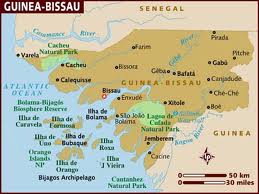
Map of Guinea Bissau
Telling the people that “the land belongs to those who work on it” was not enough to mobilise them, because we have more than enough land, there is all the land we need. We had to find appropriate formulae for mobilising our peasants, instead of using terms that our people could not yet understand. We could never mobilise our people simply on the basis of the struggle against colonialism-that has no effect. To speak of the fight against imperialism is not convincing enough. Instead we use a direct language that all can understand:
Flag of Cape Verde
“Why are you going to fight? What are you? What is your father? What has happened to your father up to now? What is the situation? Did you pay taxes? Did your father pay taxes? What have you seen from those taxes? How much do you get for your groundnuts? Have you thought about how much you will earn with your groundnuts? How much sweat has it cost your family? Which of you have been imprisoned? You are going to work on road-building: who gives you the tools? You bring the tools. Who provides your meals? You provide your meals. But who walks on the road? Who has a car? And your daughter who was raped-are you happy about that?”
Amilcar Cabral on the need to personalize, and adapt the fight to his country’s realities.
« Always bear in mind that people are not fighting for ideas, for the things in anyone’s head. They are fighting to win material benefits, to live better and in peace, to see their lives go forward, to guarantee the future of their children.» (Amilcar Cabral).











 African Heritage