Bamako! By Agostinho Neto

Map of Mali with its capital Bamako

In 1954, Agostinho Neto, Angola’s first president (before he became president) wrote a chez d’oeuvre titled Bamako, after the capital of the country of Mali. The poem appeared in his collection Sagrada Esperança (Sacred Hope), in 1974. The poem is an ode to African unity, resilience, and rebirth, all based on the rich history of the great Empire of Mali, and the continent as a whole. Neto refers to Africa’s tallest mountain, Mt Kilimanjaro. In his poem, he weaves in the great rivers of the continent, Niger and Congo, particularly focusing on the soil’s fertility from the abundant flow of the river Niger, and the tantalizing immensity of the river Congo. Above all, he highlights the warmth of its people, their friendship, their resilience (‘strong roots’), and their kindness. He builds on the pain of slavery and centuries of hurt to offer hope, the living fruit of Africa’s future; in Bamako, he says, we will conquer death! Why Bamako, one may ask? Bamako is special as it was part of the great Empire of Mali, where the oldest constitution in the world saw the light (Kouroukan Fouga, la Constitution de l’Empire du Mali – la plus vieille constitution republicaine au monde?), and is also known as the crossroad of West Africa, where germinated centuries’ old history of great West African kingdoms in Mali, and its rich traditions.

Below is Bamako! by Agostinho Neto, published in Sagrada Esperança, in 1974. You can find it on AgostinhoNeto.org

======

Bamako by Agostinho Neto

Bamako!

ali onde a verdade gotejante sobre o brilho da folha

se une à frescura dos homens

como as raízes fortes sob a tépida superfície do solo

e onde crescem amor e futuro

fertilizados na generosidade do Níger

sombreados na imensidão do Congo

ao sabor da aragem africana dos corações


Bamako!

ali nasce a vida e cresce

e desenvolve em nós fogueiras impacientes de bondade


Bamako!

ali estão os nossos braços

ali soam as nossas vozes

ali o brilho esperança dos nossos olhos

se transforma imenso numa força irrepreensível da amizade


secas as lágrimas choradas nos séculos

na África escrava de outros dias

vivificado o sumo nutritivo do fruto

o aroma da terra

em que o sol desencanta kilimanjaros gigantes

sob o céu azul da paz.


Bamako!

fruto vivo da África de futuro

germinado nas artérias vivas de África


Ali a esperança se tornou árvore

e rio

e fera

e terra


ali a esperança se vitoria amizade

na elegância da palmeira

e na pele negra dos homens


Bamako!

ali vencemos a morte

e o fruto cresce – cresce em nós

na força irresistível do natural e da vida

connosco viva em Bamako.


Bamako!

There, where the dripping truth on the leaf’s shine

unites with the freshness of men

like strong roots beneath the warm surface of the soil

and where love and future grow

fertilized in the generosity of the Niger

shaded in the immensity of the Congo

to the taste of the African breeze of hearts


Bamako!

there life is born and grows

and develops within us impatient fires of kindness


Bamako!

There are our arms

There our voices sound

There the hopeful glow of our eyes

Immensely transforms into an irrepressible force of friendship


dry the tears cried for centuries

in the enslaved Africa of other days

vivified the nutritious juice of the fruit

the aroma of the earth

where the sun disenchants giant Kilimanjaros

under the blue sky of peace.


Bamako!

living fruit of Africa’s future

germinated in the living arteries of Africa


There hope became tree

and river

and beast

and earth


There hope triumphs over friendship

in the elegance of the palm tree

and in the black skin of men


Bamako!

There we conquer death

and the fruit grows – it grows within us

in the irresistible force of nature and life

living with us in Bamako.


“Fashion the Revolution with the People” by Sekou Toure

Sekou Toure, Cover Time Magazine, Feb. 16, 1959

Every September we celebrate the lives of some of Africa’s great leaders who were either born or assassinated during that month, Ruben Um NyobeAgostinho Neto, Amilcar CabralKwame NkrumahGamal Abdel Nasser, and Steve Biko. I found this quote in Steve Biko’s book I Write What I Like p.32, by Sekou Touré, the Guinean leader who said NO to the France of General De Gaulle (Guinea: the country who dared say ‘NO’ to France). This quote by Sekou Touré is so on point, as it matches the revolutionary spirit that should be found in each African who fights to free his land. Each one of us is needed for the revolution, but we cannot just be bystanders, but need to add our hands to the fight. African leaders need to fashion the revolution with the people, if they want to free their lands.

To take part in the African revolution, it is not enough to write a revolutionary song; you must fashion the revolution with the people. And if you fashion it with the people, the songs will come by themselves and of themselves.

In order to achieve real action you must yourself be a living part of Africa and of her thought; you must be an element of that popular energy which is entirely called forth for the freeing, the progress and the happiness of Africa. There is no place outside that fight for the artist or for the intellectual who is not himself concerned with, and completely at one with the people in the great battle of Africa and of suffering humanity.”

How do We Continue the Fight when the Head has been Cut Off?

Patrice Lumumba

As we celebrate the independence of the Democratic Republic of Congo from Belgium, I cannot help but think of Patrice Lumumba, gone too soon, assassinated by the imperialist forces that were Belgium, the CIA and more. As I think about him, I cannot help but think of Amilcar Cabral, killed for his fight for the independence of his country, or Thomas Sankara the legendary President of the Faso… and then I think about how long it took for Burkina Faso to wake up from its slumber after Sankara’s murder: 27 years! Samora Machel, Modibo Keita, Kwame Nkrumah, Ruben Um Nyobe, Felix Moumie, Sylvanus Olympio, Ernest Ouandie, Barthelemy Boganda, Mehdi Ben Barka, Muammar Kadhafi, … the list is so long…The question is great: How do we continue the fight when the head has been cut off? How do we continue fighting when the leader has been killed, or incapacitated, or as in some cases has been corrupted or coerced or turned over by the enemies?

A recent case has had my head spinning with this fundamental question: how do we keep going when the movement has been decapitated? Or when the leader is no longer fit to lead? I do not claim to have the answers as this is a crucial question, but it is worth pondering.

Thomas Sankara

I recently read “The Cost of Sugar” by Cynthia McLeod, where she talks about the fight of the Maroons or Boni or Alukus of Surinam for freedom. Surinam was a Dutch colony, and so the Dutch crown sent troops to fight the rebellious slaves; they also hired local slaves to whom they promised liberty and land in return for fighting the Maroons. The Maroons never gave up! They were well organized, even though they had very little and were under-armed, and lived in the bush. Their leaders were very often killed, but they kept the fight… they were fighting for their freedom: men, women, and even children contributed to the fight. Yes… they terrorized the planters for many years, they were defeated, and fled to neighboring French Guyana, but kept the fight. Why? Because the prize of freedom is too great to lay on the shoulders of one man, one leader, or a few… the fight must continue in spite of some men (betrayers and others)… we do not follow men, we follow ideas… we are not fighting for men, we are fighting for our right to dignity, our right to humanity, our liberty.

Amilcar Cabral on a stamp with the flag of Guinea Bissau

We have to keep the fight. Yes, it is okay to cry, it is okay to fall, feel discouraged, but we have to rise up, and keep up the fight. We might be disappointed by the so-called leaders who may turn their backs on us and betray us [“The Cancer of Betrayal” by Amilcar Cabral, J.J. Rawlings in His Own Words: African Identity, Betrayal, and More], or we might get discouraged when our leaders and hopes have been killed, but we have to keep the fight. We rise up! Dust off ourselves, and keep on fighting! The enemy will try many tactics to distract us from our goals, because the enemy lives on our ignorance, the enemy flourishes on our divisions, our disappointments, and discouragements. We cannot afford to cry too long! When a leader no longer matches our ideals, we put him to the side and keep on fighting. We are not fighting for ourselves, we are fighting for our ancestors who died fighting, we are fighting for our children who should not be beggars on their own lands while the enemy feasts on it. We fight because it is more than just us. Dignity, freedom, is a divine right, and it is ours… we need to claim it!

It took 100 years for China to reclaim Hong Kong and Macao from the British… China was able to do so because its leaders kept telling them how Great Britain made them sign treacherous treaties and stole their lands, they did not hide it from their people like many African leaders do [Did You Know about the 999-year Lease granted to Europeans in Kenya ?]. As a result, 100 years later, the Chinese leaders went to the British, and said “time is up, give us back our lands”. The leaders who were forced to sign these treaties 100 years prior were no longer alive, but the history, the preparation, the muscling up, the battle continued!… so we have to plan over decades, generations, to ensure continuity in the battle, implying education, real knowledge of our history (our triumphs as well as our defeats and the causes), the stakes, and keeping a living memory of our history. It may take years, decades, even a century like China with Macao, but we have to grow, know, and muscle up… we cannot keep crying.

Che Guevara, Fidel Castro, and Cuba in the Independence of African Countries

Amilcar Cabral
Amilcar Cabral

To continue with our theme of the week, I will leave you here with a video showing Cuba’s African victory, first with Amilcar Cabral and the people of Guinea Bissau, and then with Agostinho Neto in Angola, leading to the independence of both countries through long struggles against imperialism. This later also led to the liberation of Nelson Mandela, the end of apartheid in South Africa, and the independence of Namibia! There was a ripple effect! Countless other African countries benefited in some other ways, as well: medical training from Cuba, soldiers’ training, and much more.

Guevara_1
Ernesto Che Guevara

Enjoy! Bear in mind, as I said earlier, that Ernesto Che Guevara’s failed Congo expedition had been decisive in making these Cuban and African victories realities.

Celebrating Angola’s National Heroes Day 2017: ‘Western Civilization’ by Agostinho Neto

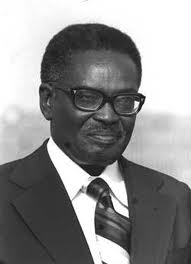
Agostinho Neto
Agostinho Neto

17 September marks National Heroes’ Day in Angola, in memory of its first president Agostinho Neto‘s whose birthday was on that day in Kaxicane. To join in the celebration, I publish here one of his poems, ‘Western Civilization‘. Sad how these words still ring true to factory workers, plantation workers, miners, sweatshop workers, etc, around the world to this day. Enjoy ‘Civilização Ocidental‘ by Agostinho Neto!


Civilização ocidental

Latas pregadas em paus
fixados na terra
fazem a casa

Os farrapos completam
a paisagem íntima

O sol atravessando as frestas
acorda o seu habitante

Depois as doze horas de trabalho
Escravo

Britar pedra
acarretar pedra
britar pedra
acarretar pedra
ao sol
à chuva
britar pedra
acarretar pedra

A velhice vem cedo
Uma esteira nas noites escuras

basta para ele morrer
grato
e de fome.


Western Civilization

Sheets of tin nailed to posts
driven in the ground
make up the house.

Some rags complete the intimate landscape.

The sun slanting through cracks
welcomes the owner

after twelve hours of slave
labour.

breaking rock
shifting rock
breaking rock
shifting rock
fair weather
wet weather
breaking rock
shifting rock

Old age comes early
a mat on dark nights

is enough when he dies
gratefully
of hunger.


Fidel Castro: Ideas cannot be Killed!

 fidel-castro_4« ¡ Las ideas no se matan ! » « Ideas cannot be killed ! »

This is the sentence shouted out to the killing squad which was about to execute Fidel Castro on 26 July 1953, and this saved him. Indeed, El Commandante stood for ideas and above all for love: love of humanity, and planet earth. He understood that imperialism was nullifying the human being, and crushing people under its hands. He worked for the freedom of mankind. Fidel showed us that the size of a country or its people does not matter when fighting for great ideas and principles. Cuba is a small country, but its actions, its help, has been immense to Africa for the past 50 years. Even to this day, doctors across Africa are trained in Cuba, and Cuban doctors have vastly supported the health-care services of many countries including Ghana.

Nelson Mandela wrote from Robben Island, about Cuba: “It was the first time that a country had come from another continent not to take something away, but to help Africans to achieve their freedom.” Indeed, Cuba’s help to Africa has been selfless, and loving, and that of true brotherhood.

fidel-castro_2As a towering figure who stayed true to his Marxist-Leninist ideology even after the collapse of the Soviet Union, Fidel Castro has empowered countless Africans. The struggle for liberation from colonial powers by Africans benefited vastly from help from this little country in the western hemisphere.

When Africa cried, Cuba was there. When Portuguese were killing, subjugating, imprisoning Angolans, Bissau-Guineans, Cape Verdians, Mozambicans, Cuba was there. When Apartheid and the South African regime was oppressing (with support of the Western world) Black South Africans cried, and Fidel heed their calls. When Lumumba was killed, and Congo at lost, they called and Fidel answered. When Namibia was crushed, Fidel and Cuba helped free them from the Apartheid regime. When Ethiopians needed help, Fidel provided troops and expertise. When France was perpetrating a genocide in Algeria, Cuba helped free them.

Castro’s support for Africa’s liberation led him to meet with some of the continent’s leaders including Patrice Lumumba of Congo, Ghana’s Kwame Nkrumah, Sam Nujoma of Namibia, Nelson Mandela of South Africa, Muammar Gaddafi of Libya, and Robert Mugabe of Zimbabwe.

Amilcar Cabral
Amilcar Cabral

Responding to calls for help from the Angolan leader
Agostinho Neto who was trying to liberate his country from the Portuguese, Castro sent troops to Angola. Today, Angola is free of civil war thanks to the unfailing support of Fidel. Cuban soldiers are documented to have fought alongside Namibians and South Africans to prevent the apartheid regime from spreading all over southern Africa. They have also helped in Mozambique, and Guinea Bissau & Cape Verde supporting Amilcar Cabral. Between 1966 and 1974 a small Cuban force proved pivotal in the Guineans’ victory over the Portuguese. This time Cuba’s involvement also stretched to medical support (Cuban doctors) and technical know-how. Ultimately, Cuba’s successful battle against South Africa in Angola also hastened the Apartheid regime’s withdrawal from Namibia after 70 years of occupation, and led to that country’s subsequent independence.

Cuban troops have since the 1960s, served in Algeria, Guinea, Guinea Bissau, Equatorial Guinea, Sierra Leone and Libya. Cuba was a thorn for the imperialists in Africa, France in Algeria, Portugal, Great Britain, South Africa, etc.

Agostinho Neto
Agostinho Neto

In a 1998 speech, Fidel Castro told the South African Parliament (it was his first visit to the country) that by the end of the Cold War at least 381,432 Cuban soldiers and officers had been on duty or “fought hand-in-hand with African soldiers and officers in this continent for national independence or against foreign aggression.

Given this history, it was no surprise that one of Mandela’s first trips outside South Africa – after he was freed – was to Havana. There, in July 1991, Mandela, referred to Castro as “a source of inspiration to all freedom-loving people,” adding that Cuba, under Castro’s leadership “helped us in training our people, gave us resources to keep current with our struggle, trained our people as doctors.”  At the end of his Cuban trip, Mandela responded to American criticism about his loyalty to Castro and Cuba: “We are now being advised about Cuba by people who have supported the Apartheid regime these last 40 years. No honorable man or woman could ever accept advice from people who never cared for us at the most difficult times.”

fidel-castro_5Altogether fitting was Cuban President Raul Castro’s address at Nelson Mandela’s funeral in 2013. In Johannesburg, Raul reminded his audience: “We shall never forget Mandela’s moving homage to our common struggle when on the occasion of his visit to our country on July 26, 1991, he said, and I quote, ‘the Cuban people have a special place in the hearts of the peoples of Africa’.”

Upon arrival in Havana, Robert Mugabe of Zimbabwe said, “Fidel was not just your leader. He was our leader and the leader of all revolutionaries.

So in essence, many countries in Africa became independent thanks to Cuba and Fidel Castro, thanks to his ideals and his love of freedom. I am not sure that there is a single African country which has not benefited in some way shape or form from Cuba. We all owe Fidel our love, our lives, our freedom, and we salute him: So long El Commandante, thanks to you, we are free! Thanks to you, we fought a long battle and won! thanks to you, we started new chapters and became ‘free’ countries! Africa owes you so much!


Commemorating Agostinho Neto’s life – Angola’s National Heroes Day

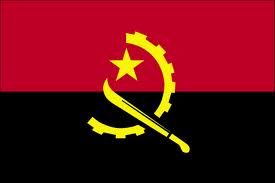
Flag of Angola
Flag of Angola

Today is Angola’s National Heroes’ Day commemorating Angolan heroes, and is a celebration of the life of one of their heroes, President Agostinho Neto who was born on this special day.  To mark this day, and to celebrate in style, I propose yet another poem from Angola’s greatest poet, President Neto himself.  Enjoy! (I translated from Portuguese to English so it might not be the greatest… if you have a better translation, feel free to share).

Noite by Agostinho Neto – Translation by Dr. Y., Afrolegends.com

Noite                                  

Eu vivo
nos bairros escuros do mundo
sem luz nem vida. 

Vou pelas ruas
às apalpadelas
encostado aos meus informes sonhos
tropeçando na escravidão
ao meu desejo de ser.

São bairros de escravos
mundos de miséria
bairros escuros.

Onde as vontades se diluíram
e os homens se confundiram
com as coisas.

Ando aos trambolhões
pelas ruas sem luz
desconhecidas
pejadas de mística e terror
de braço dado com fantasmas.

Também a noite é escura.

Night                                                                     

I live                                                                     in the dark quarters of the world                     without light and life.   

I fumbled through the  streets                                                          leaning on my dreams                                  stumbling on slavery                                                                 to my desire to be.

Slave quarters                                                worlds of misery                                                dark quarters.

Where the wills were diluted                                   and the men were confused                                   with things.

I walk in unknown streets                                                         without tripping                                                                 Streets soaked in with mystical light                    and the terror arm of ghosts.

The night is also dark.

Celebrating Angola’s National Heroes Day

Agostinho Neto
Agostinho Neto

Flag of Angola
Flag of Angola

Angolans are marking this  Monday the National Heroes’ Day, in homage to the country’s first president, the late Dr. Agostinho Neto, who was born on 17 September 1922 in Kaxicane locality.  Celebrate with me Angola’s National Heroes’ Day by enjoying a poem by Angola’s greatest poet, and its first president.

Criar

Criar criar
criar no espírito criar no músculo

criar no nervo
criar no homem criar na massa
criar
criar com os olhos secos
Criar criar
sobre a profanação da floresta
sobre a floresta impúdica do chicote
criar sobre o perfume dos troncos serrados
criar
criar com os olhos secos
Criar criar
gargalhadas sobre o escárneo da palmatória
coragem nas pontas das botas do roceiro
força no esfrangalhado das portas violentadas
firmeza no vermelho sangue da insegurança
criar
criar com os olhos secos

Criar criar
estrelas sobre o camartelo guerreiro
paz sobre o choro das crianças
paz sobre o suor sobre a lágrima do contrato
paz sobre o ódio
criar
criar paz com os olhos secos
Criar criar
criar liberdade nas estradas escravas
algemas de amor nos caminhos paganizados do amor
sons festivos sobre o balanceio dos corpos em forcas simuladas
criar
criar amor com os olhos secos.


Create

Create create
create in mind create in muscle

create in nerve create in man create in the masses
create
create with dry eyes
Create create
over the profanation of the forest
over the shameless fortress of the whip create over the scent of sawn trunks

create
create with dry eyes
Create create
laughter over the scorn of the palmatoria courage in the tips of the planter’s boots strength in the splintering of battered-in doors firmness in the red blood of insecurity
create
create with dry eyes
Create create
stars over the warrior’s sledge-hammer peace over children’s weeping peace over the sweat the tears of forced labour peace over hatred
create
create peace with dry eyes

Create create
create freedom on slave highways
manacles of love on the paganised

paths of love
festive sounds over bodies swinging on simulated gallows create
create love with dry eyes.


Fire and Rhythm (Fogo e ritmo) by Agostinho Neto

Agostinho Neto
Agostinho Neto

Agostinho Neto was the a medical doctor, a poet, and most importantly the first president of Angola. Today, I would like you to sit back and enjoy a poem written by this great African leader

Fogo e ritmo

Sons de grilhetas nas estradas

cantos de pássaros

sob a verdura úmida das florestas

frescura na sinfonia adocicada

dos coqueirais

fogo

fogo no capim

fogo sobre o quente das chapas do Cayatte.

Caminhos largos

cheios de gente cheios de gente

em êxodo de toda a parte

caminhos largos para os horizontes fechados

mas caminhos

caminhos abertos por cima

da impossibilidade dos braços.

Fogueiras

dança

tamtam

ritmo

Ritmo na luz

ritmo na cor

ritmo no movimento

ritmo nas gretas sangrentas dos pés descalços

ritmo nas unhas descarnadas

Mas ritmo

ritmo.

Ó vozes dolorosas de África!


Fire and rhythm

The sound of chains on the roads

the songs of birds

under the humid greenery of the forest

freshness in the smooth symphony

of the palm trees

fire

fire on the grass

fire on the heat of the Cayatte plains

Wide paths

full of people full of people

an exodus from everywhere

wide paths to closed horizons

but paths

paths open atop

the impossibility of arm

fire

dance

tum tum

rhythm

Rhythm in light

rhythm in color

rhythm in movement

rhythm in the bloody

cracks of bare feet

rhythm on torn nails

yet rhythm

rhythm

Oh painful African voices


.

Agostinho Neto by Chinua Achebe

Agostinho Neto
Agostinho Neto

In remembrance of Agostinho Neto (Sept. 17 1922 – Sept. 10th 1979), great leader and first president of Angola, I will leave you with a poem written by the great Nigerian writer Chinua Achebe in honor of Agostinho Neto. Enjoy!!!

———————

AGOSTINHO NETO

by Chinua Achebe

Agostinho, were you no more
Than the middle one favored by fortune
In children’s riddle; Kwame
Striding ahead to accost
Demons; behind you a laggard third
As yet unnamed, of twisted fingers?

No! Your secure strides
Were hard earned. Your feet
Learned their fierce balance
In violent slopes of humiliation;
Your delicate hands, patiently
Groomed for finest incisions,
Were commandeered brusquely to kill,
Your gentle voice to battle-cry.

Perhaps your family and friends
Knew a merry flash cracking the gloom
We see in pictures but I prefer
And will keep that sorrowful legend.
For I have seen how
Half a millennium of alien rape
And murder can stamp a smile
On the vacant face of the fool,
The sinister grin of Africa’s idiot-kings
Who oversee in obscene palaces of gold
The butchery of their own people.

Neto, I sing your passing, I,
Timid requisitioner of your vast
Armory’s most congenial supply.
What shall I sing? A dirge answering
The gloom? No, I will sing tearful songs
Of joy; I will celebrate
The man who rode a trinity
Of awesome fates to the cause
Of our trampled race!
Thou Healer, Soldier and Poet!