Why the Name: Seychelles?


Seychelles_flag
Flag of Seychelles

Have you ever wondered about the meaning for the name of the country Seychelles? Somehow to me, it has always felt like it should be a derivative of ‘sea shells’, especially given that it is an island country located in the middle of the Indian ocean. I picture sandy beaches, blue waters, coconuts, and then ‘sea shells‘ seems like a perfect name for such a beautiful place. How far am I from the truth?

Seychelles_Victoria_1900s
Victoria, capital of Seychelles, in the 1900s

Well, it turns out that the Seychelles islands were named after Jean Moreau de Séchelles, Louis XV‘s Minister of Finance, in 1756 when the French set a Stone of Possession on the islands Mahé. Before then, it was a transit point for trade between Africa and Asia. The first visitors to the island were probably Arab traders, but the earliest recorded sighting by Europeans took place in 1502 by the Portuguese Admiral Vasco da Gama, who passed through the Amirantes and named them after himself (islands of the Admiral). The earliest recorded landing was in January 1609, by the crew of the “Ascension” under Captain Alexander Sharpeigh during the fourth voyage of the British East India Company.

The islands went under British control in 1814 after the Napoleonic wars. Seychelles became a crown colony separate from Mauritius in 1903. In 1976, Seychelles became independent from the United Kingdom as a republic within the Commonwealth.

Seychelles_Black parrot
Seychelles national bird: The Seychelles black parrot

Seychelles is located in the Indian Ocean, northeast of Madagascar and about 1,600 km (994 mi) east of Kenya. The capital of the 115island countryVictoria, lies 1,500 km (932 mi) east of mainland East Africa. The majority of its islands are uninhabited with many dedicated as nature reserves. With a population of roughly 94,228, it has the smallest population of any sovereign African country.  Its population is a melting pot of African, French, Indian, and Chinese, where the largest group is of African descent. The food and music duly reflect this fusion of cultures.
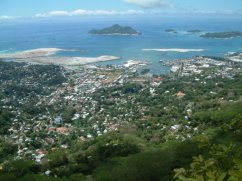
Seychelles_Victoria_1
Victoria, Seychelles, today

After proclamation of independence from the United Kingdom in 1976, Seychelles has developed from a largely agricultural society (main exports were cinnamon, vanilla, and copra) to a market-based diversified economy, with agriculture being supplanted by rapidly rising service and public sectors as well as tourism. Seychelles is among the world’s leading countries to protect lands for threatened species, allocating 42% of its territory for conservation. Seychelles today is known for success stories in protecting its flora and fauna.

Thus, if you visit Seychelles today, be amazed by its ‘sea shells’, sandy beaches, beautiful fauna, and flora. Enjoy!


Proverbe sur l’impossibilité / Proverb on Impossibility

langue_2
La langue (the tongue)

Impossible d’oindre (lécher) votre propre dos (Proverbe Azande, RDC – Soudan du Sud  – RCA).

Impossible to anoint (lick) your own back (Azande proverb, DRC – South Sudan – CAR).

Fossi Jacob and the French Genocide in Cameroon: Testimony

Cameroun_Chutes de la Metche_1Below is the testimony of one of Fossi Jacob ‘s daughters. If you ever get a chance, you should read “My Dad was Fossi Jacob: Itinerary of a martyr of the Cameroonian Independence” written by Fossi Jacob’s first son, Abraham Sighoko Fossi (“Papa s’appelait Fossi Jacob: Itinéraire d’un martyr de l’indépendance du Cameroun“). To learn more about France’s genocide in Cameroon, the books ‘Kamerun. La guerre cachee de la France en Afrique noire‘ (Kamerun. France’s Hidden War in Black Africa) and Mongo Beti ‘s ‘Main Basse sur le Cameroun, autopsie d’une décolonisation (Cruel hand on Cameroon, autopsy of a decolonization).

12 September should be commemorated in Cameroon in memory of Fossi Jacob, a man who, by his selfless act, saved countless lives, and in memory of all the victims of the French genocide.

Fossi Jacob: A Cameroonian Hero and France’s Genocide in Cameroon

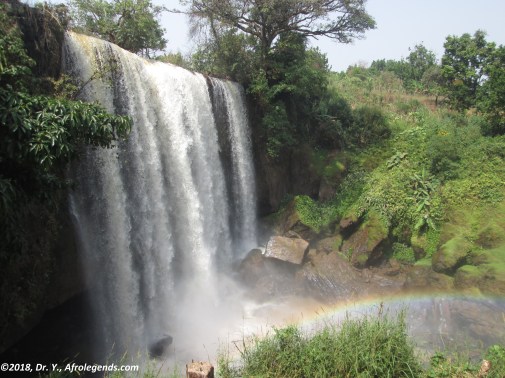
Cameroun_Chutes de la Metche_1
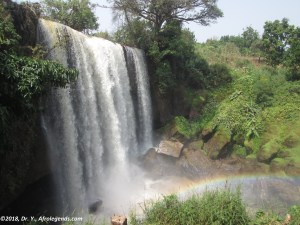
Chutes de la Metche (Metche Waterfalls)

I have to talk about Fossi Jacob, the Chutes de la Métché (The Metché Waterfalls), and the Bamiléké genocide perpetrated by France in Cameroon (French President Acknowledges French Genocide in Cameroon). Fossi Jacob is a hero, and should be celebrated throughout Cameroon. A monument should be erected at the Chutes de la Metché to celebrate his memory and those of countless others who lost their lives there, just outside Bafoussam on the way to Mbouda, in the Western province of Cameroon.

Cameroun_Chutes de la Metche_4.jpg
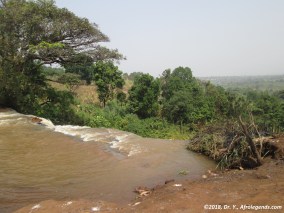
The top of the Chutes de la Metche

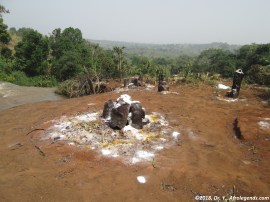
When I visited the Chutes de la Metché, I finally understood the magnitude of the entire thing. Picture this: you are forcefully pushed from a 20 m tall waterfalls, with giant sharp-edged volcanic boulders at its bottom; there is no way anybody thrown down those waterfalls can come out alive; either you die from the fall, or your head hits one of those giants sharp boulders. This is what French officials did to so-called ‘rebels’ between 1950 and 1970 in Cameroon; in reality, most of these ‘rebels’ were simple peasants. During my visit, I was speechless! It was like visiting Gorée island, or Elmina Castle, it felt so sinister, yet so beautiful! Sinister, because it was as if I could feel the souls of all those who had been pushed there. It was as if I could hear their screams, feel their pain! Beautiful because the paths were covered with salt and palm oil, and you could tell that this was a place of pilgrimage, a place where people came to commune with their ancestors, who disappeared there, without sepulchers.

Cameroun_Chutes de la Metche_3.jpg
Chutes de la Metche, view from the top

Why should we celebrate Fossi Jacob? Jacob Fossi had been imprisoned like countless others in the prison of Bafoussam during the dark days of Cameroon; he was a member of the UPC. Every night, the French officers would fill trucks with ‘rebels’ (from accounts, at least 350 every night), and drive them to the edge of the Chutes de la Metché, where, with a gun in hand, they would push the ‘rebels’ one by one down the waterfalls. Those who did not die from the falls were shot!

Cameroun_Chutes de la Metche_5
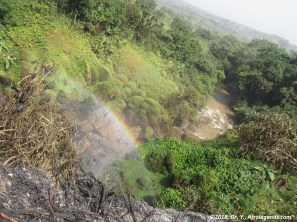
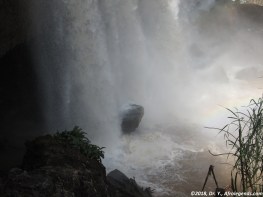
Chutes de la Metche, at the bottom

On that fateful day of 12 September 1959, when it was Jacob Fossi‘s turn (he was second to last), he called for the French official and told him to get close and that he would tell him where all the other ‘rebels’ were hiding. He promised to tell him everything. When the French official came close, Fossi Jacob held onto him, and jumped with him into the waterfalls. They were killed instantly. This caused the French colonial government to stop taking people to the Chutes de la Metché to be killed. The story of Fossi Jacob is known because on that fateful day, Fo Sokoudjou, the actual King of Bamendjou, who was going to be the last one to be pushed down the fall was not pushed in because of Fossi’s courageous act. Lucky one! Imagine the many lives saved because of one man’s selfless act!

Chutes de la Metche_1
Salt and palm oil offerings to commemorate the ancestors at the Chutes de la Metche waterfalls

Today, the Chutes de la Metché has become a place of pilgrimage for countless people, particularly Bamiléké people. During that dark era of the history of Cameroon, many lost their sons, husbands, fathers, relatives, and this is the only place where they can come and pray to their ancestors. Salt and palm oil strew the path as people come to make offerings to commemorate their long-gone loved ones. A monument should be erected there to celebrate the courage of Fossi Jacob who, thanks to his actions, stopped the horrendous actions of the French colonial government in those waterfalls. The Chutes de la Metché should be a place of pilgrimage for all Cameroonians, and beyond!

Cameroun_Chutes de la Metche_1.jpg


Proverbe Bamiléké sur la souffrance / Bamileke Proverb on Suffering

Rain5Personne ne peut oublier le jour où il fut bien mouillé (Proverbe Bamiléké – Cameroun). – Les souffrances sont difficilement oubliées.

Nobody can forget the day when he was well soaked (Bamileke proverb – Cameroon). – Sufferings are hardly forgotten.

Bob Marley and Emperor Haile Selassie I: “WAR”

Haile_Selassie_in_full_dress
Emperor Haile Selassie I in full regalia, 31 December 1969

I recently heard about a speech of Emperor Haile Selassie I incorporated into a song by none other than the great Sir Bob Marley. I was astonished as, somehow in my ‘young’ mind, I had thought it a new occurrence with the likes of Beyoncé who incorporated author Chimamanda Ngozi Adichie‘s speech into her song. In this song, WAR, Bob Marley adapted the speech given by Emperor Haile Selassie I at the United Nations. It is deep, and it is revolutionary. So today when you see other singers doing it, know that Sir Marley had done it before them.

Here is the part of Haile Selassie’s speech put to music by Marley in his original song “War” (Bob Marley slightly modified the original words, changing each “that until” to “until” and added the word “war” several times):

That until the philosophy which holds one race superior and another inferior is finally and permanently discredited and abandoned; That until there are no longer first-class and second-class citizens of any nation; That until the color of a man’s skin is of no more significance than the color of his eyes; That until the basic human rights are equally guaranteed to all without regard to race; That until that day, the dream of lasting peace and world citizenship and the rule of international morality will remain but a fleeting illusion, to be pursued but never attained; And until the ignoble and unhappy regimes that hold our brothers in Angola, in Mozambique and in South Africa in subhuman bondage have been toppled and destroyed; Until bigotry and prejudice and malicious and inhuman self-interest have been replaced by understanding and tolerance and good-will; Until all Africans stand and speak as free beings, equal in the eyes of all men, as they are in the eyes of Heaven; Until that day, the African continent will not know peace. We Africans will fight, if necessary, and we know that we shall win, as we are confident in the victory of good over evil. – Haile Selassie I

Bob Marley
Bob Marley

Here are the lyrics from the Bob Marley and the Wailers on the album Rastaman Vibration:

Until the philosophy which hold one race superior / And another / Inferior / Is finally / And permanently / Discredited / And abandoned / -Everywhere is war – / Me say war.

That until there no longer / First class and second class citizens of any nation / Until the colour of a man’s skin / Is of no more significance / than the colour of his eyes / – Me say war.

That until the basic human rights / Are equally guaranteed to all, / Without regard to race / – Dis a war.

That until that day / The dream of lasting peace, / World citizenship / Rule of international morality / Will remain in but a fleeting illusion to be pursued, / But never attained / – Now everywhere is war – / War.

And until the ignoble and unhappy regimes / that hold our brothers in Angola, / In Mozambique, / South Africa / Sub-human bondage / Have been toppled, / Utterly destroyed / – Well, everywhere is war – / Me say war.

War in the east, / War in the west, / War up north, / War down south – / War – war – / Rumours of war. / And until that day, / The African continent / Will not know peace, / We Africans will fight – we find it necessary / – And we know we shall win / As we are confident / In the victory

Of good over evil -/ Good over evil, yeah! / Good over evil – / Good over evil, yeah! / Good over evil – / Good over evil, yeah!

Celebrating the birth of the OAU

Emperor Selassie I  gave the “War” speech on October 4, 1963, calling for world peace at the 1963 U.N. Conference in New York City. This historical speech was spoken a few weeks after the Organization of African Unity (OAU) was founded in the Ethiopian capital city Addis Ababa where Selassie chaired a summit meeting gathering almost every African head of state (The King of Morocco had declined the invitation).

This U.N. speech resounded even louder as Haile Selassie I had made a name for himself on the international scene in 1936, when he spoke at The League of Nations in Geneva. It was there that Selassie warned the world that if member state Ethiopia was not militarily supported by other member states to fight the fascist Italian invasion of his country then taking place, as the League of Nations statute guaranteed, the League would then cease to exist as a matter of fact and the rest of the member states were to suffer the same fate as his country. Three years later World War II broke out. This visionary speech granted Selassie much respect around the world, eventually leading to British military support, which helped freeing his country in 1941. Addressing the world again in 1963, Selassie’s words bore full weight. In picking this utterance for lyrics, Bob Marley thus projected two dimensions of the Ethiopian Emperor: the head of state as well as the Living God Rastafarians see with him.

Sadly today many developing countries feel that the UN, the descendant of the League of Nations, is a puppet organization, an instrument used by developed countries to bully, and plunder developing countries. So Selassie’s speech and Marley’s song still ring true today!

Proverbe Ouolof sur l’improductivité / Wolof Proverb on Fruitlessness

Fruitless treeAucun chemin ne mène à un arbre sans fruit (Proverbe Ouolof – Sénégal).
No path leads to a fruitless tree (Wolof proverb – Senegal).

The Wassoulou Anthem: to the Glory of the Great Samori Touré

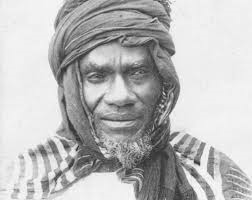
Samori
Samori Touré

The beautiful words of the anthem below were composed by the Griots of the Wassoulou empire (or Mandinka empire) which went from 1852 to 1898, to the glory of the then Fama (King), the Almamy Samori Touré. The words are quite deep and celebrate courage, vigor, and righteousness. Enjoy! In recent times, this anthem was sung by the Bembeya Jazz National.


If you cannot organize, lead, and defend the country of your fathers, call upon the most valiant men;

If you cannot say the truth, at all times and all places, call on the most courageous men ;

If you cannot be impartial, give the throne to righteous men;

If you cannot protect the iron to face the enemy, give your sword of war to women who would point you to the path of honor;

If you cannot courageously express your thoughts, give the floor to the griots talk.

Oh Fama ! The people trust you, it trusts you because you embody its virtues.

From the journal l’Autre Afrique N° 01, juillet 2001, new version. Translated to English by Dr. Y., Afrolegends.com


Proverbe Bété sur la solidarité / Bété Proverb on Solidarity

CryingLorsque l’oeil pleure, le nez ne se réjouit pas (Proverbe Bété – Côte d’Ivoire). – Le malheur de quelqu’un touche aussi les parents et les amis.

When the eye cries, the nose does not rejoice (Bété proverb – Côte d’Ivoire). – Someone’s misfortune also affects parents and friends.

French Colonial Treaties in Africa: 24 February 1852 in Piquini-Bassam, Côte d’Ivoire

La ville d'Abidjan
La ville d’Abidjan (source RFI)

Today I will share with you another treaty signed in Piquini-Bassam (modern-day Côte d’Ivoire), this time between Charles Martin des Pallières, a French colonial officer, and the King of Piquini-Bassam. It is good to note that Piquini-Bassam or Petit-Bassam was also known as Picaniny-Bassam or Picanimy-Bassam, and became Port-Bouët after the French naval Captain Édouard Bouët-Willaumez in 1904. What hurts is to see what the French ‘paid’ for all that land: 10 pieces of cloth? 5 rifles? Seriously? Sadly this was a common play by European colonizers in those days: trade nothing for everything, all your land! Not much has changed today, at least not in Francophone Africa!

The English translation of the treaty is by Dr. Y., Afrolegends.com. For the French original click here: Cote dIvoire_Traite relatif a la souverainete de la France sur le territoire de Piquini Bassam 24 Fevrier 1852.

======

Cote dIvoire_Louis_Édouard_Bouët-Willaumez
Edouard Bouet-Willaumez

Fortified Trading post of Grand-Bassam

Treaty between M. MARTIN DES PALLIÈRES, lieutenant of the 3rd regiment of navy infantry, knight of the Legion of Honor, acting on behalf of Mr. the Governor of Senegal and its dependencies, and the king of Piquini-Bassam.

Article 1

Considering that it is in their interest to align under the protection of France and to start with her useful commercial relations, the king, the chiefs, and inhabitants of Piquini-Bassam, in exchange for protection, recognize the full and entire sovereignty of the French Republic on their territory.

Article 2

The King and his chiefs adopt the French colors to the exclusion of all others, and undertake to expel from their territory whoever will present himself with another flag or intentions hostile to the interests of France.

Article 3

The king and his chiefs cede in all property to the French lands which will be necessary to them [the French] to build such fortification or commercial establishment that they [the French] will judge necessary, upon payment, according to an estimate of the value of said lands.

Article 4

All foreign ships will be able to anchor in Piquini-Bassam.

Cote dIvoire_E._Bouët-Willaumez_et_les_chefs_indigènes de la cote de Krou 1890
Bouet-Willaumez with the Kru chiefs (Cote d’Ivoire)

Article 5

In case of shipwreck, they [the king and chiefs and inhabitants] should lend a hand to the rescue; a third of the cargo will be granted to the rescuers.

Article 6

If some difficulties shall arise between the French traders and the natives, it would be decided by the Trade post commander of Grand-Bassam, who would promptly render justice to the guilty persons, no matter what side they were from.

Article 7

The king and chiefs of Piquini-Bassam undertake (agree) to always receive the french well who would come to his house, whether for trading or for any other reason; They will give them help and assistance and will, as much as they can, promote the trading of palm oil and other products of the country with the french traders.

Article 8

In exchange for these concessions, the king and his people will be granted protection of the outpost and french warships. The king will be, after his signing the treaty, paid five barrels of juniper, five rifles, five barrels of powder and ten pieces of cloth.

The said treaty, read and re-read in the French language and the local language was made double and in good faith between us in the village of Piquini-Bassam, the twenty fourth of February one thousand eight hundred and fifty two.

The Commander of the fortified trading post of Grand-Bassam,

DES PALLIERES.

The Sergent of the trading post of Grand-Bassam,

       BOUNILLEAU.


Signature of PETER, King of Grand-Bassam.

Signature of GADJI, King of Piquini-Bassam.

Signature of MOBA (chief).

Signature of AKA (chief).

Signature of ASSAKOU (chief).

Signature of DIAVAU (chief).


Identical copy,

The Governor

Signed: PROTET