The New Scramble for Africa

The New Scramble for Africa (Source: Source: Dr Jack & Curtis for City Press, National Institute African Studies (NIAS))

American Vice President Kamala Harris is travelling to Africa this week. Her visit comes on the heels of French president Macron’s tour of Africa (Gabon, Angola, DRC, and RC) at the beginning of March, Pope Francis’ visits to the Democratic Republic of Congo and South Sudan at the end of January and February. Less than 2 weeks ago, U.S. Secretary of State Antony Blinken announced—during his visit to Niger—that the United States government will provide $150 million in aid to the Sahel region of Africa. Is it a surprise that this aid is going to Niger, country which borders Mali and Burkina Faso? Jill Biden was in Namibia and Kenya in February; and there were many more American envoys crisscrossing the continent.  Is it a surprise that the US is increasing the number of its AFRICOM bases in Africa? Just northeast of Niger’s capital Niamey, near the city of Agadez, is Air Base 201, with one of the world’s largest drone bases that is home to several armed MQ-9 Reapers.
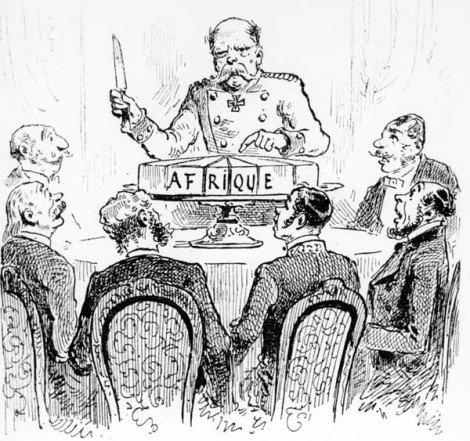
Le partage de l'Afrique a la Conference de Berlin de 1884
Le partage de l’Afrique a la Conference de Berlin de 1884

This sudden open frenzy for Africa reminds us too much of the Scramble for Africa, after the Berlin Conference when Africa was partitioned and shared among European countries. After all, Africa holds over 50% of some of the most valuable minerals in the world, the largest youthful population on earth, and still has the largest mass of arable lands on earth. Truly Africa is the future, and just like during the cold war era when African soil was the theater of the fight between the east and the west, Africa is now once again at the heart of fight for resources. What this does today with Russia, France, the US, China, and all the other nations courting Africa is give Africans more opportunities for better partnerships, or at least deals that actually benefit their populations and not like what France used to do and still does in Africa, exploiting resources for free, not paying taxes to the locals, and not building any schools, hospitals, or even roads. Can Africans unite, and look out for Africa this time around? These promise to be turbulent times, but Africans have to rise up and stand for Africa’s gains, not signing up deals that line up the pockets of only a few, but truly look for the future and the best of our continent. Below is the excerpt about the VP’s visit from the BBC. The American VP promises more investments as usual… they always give aid programs and debt while they take mines, resources, etc… Enough empty promises and paper (valueless) money for resources. Why not teach the people to fish? African people are tired of getting the fish!

====

Map and Flag of Ghana

First it was the US secretary of state who went on a trip to Africa, now it is the vice-president and later in the year the president himself is expected to come.

This flurry of visits by top figures in the US administration reflects a growing awareness that the US needs to deepen its engagement with the continent.

This all comes in the face of growing competition from other global powers, especially China and Russia.

Vice-President Kamala Harris started her nine-day trip in Ghana on Sunday, where she was greeted by drummers and dancers at Kotoko International Airport. She will later go to Tanzania and Zambia.

Ghana, with its focus on strengthening ties with the African diaspora as well as a record of several peaceful democratic transfers of power, provides an ideal launchpad for Ms Harris.

Her trip, according to an official statement, is intended to “build on” December’s US-Africa summit in Washington where President Joe Biden said the US was “all in on Africa’s future“.

But it is that future, boosted by a youthful and growing population as well as the continent’s immense natural resources, that have attracted a lot of other powerful nations vying for influence.

Flag of Ethiopia

While Secretary of State Anthony Blinken’s recent visit to Ethiopia and Niger focused on these countries’ security challenges, the vice-president’s tour will take her to nations facing serious economic problems.

… [University of Ghana Economist and professor of finance, Godfred Alufar Bokpin] told the BBC the interest the US is showing in the country and its debt crisis “is good” but he is worried about what he described as “unfavourable terms of trade” with creditor nations.

There is a growing sentiment on the continent that Africa should have a free choice in its relationships with the rest of the world.

Zambia sees the United States in the same way as it sees China and Russia – a friend,” Dr Sishuwa told the BBC.

When a country turns to China, or Russia, or the US for support, this should not be seen as snubbing one major power bloc or the other.

He said attempts to seek exclusive relationships with African countries may be counterproductive and unsustainable.

This echoed South African President Cyril Ramaphosa’s comments during a visit to Washington last year when he said: “We should not be told by anyone who we associate with.” …

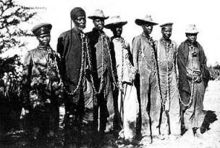
Most are Unaware of Germany’s Colonial Past and the First Genocide of the 20th Century

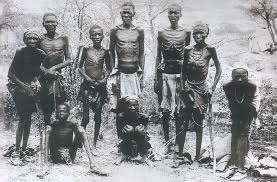
Chained Herero men

We have discussed the first genocide of the 20th century, committed by Germany in … Namibia, on African soil. We are not talking about World War II, but instead the real first genocide of the 20th century which almost wiped out all the Herero and Nama people of Namibia, Germany in Namibia: the First Genocide of the 20th Century. It was a campaign of racial extermination and collective punishment that the German Empire undertook in German South-West Africa (modern-day Namibia) against the Herero and Nama people, which took place between 1904 and 1907 during the Herero Wars. Today it is known as the Namibian genocide or the Herero and Namaqua genocide. It was cruel, gruesome, and yet today, many Germans don’t even know that their country had a colonial past! Hello? Germany had 4 colonies in Africa,  Togoland (Togo), Kamerun (Cameroon), German East Africa (Tanzania), and German South-West Africa (Namibia), and in most of them great atrocities were committed, yet, it is as if the history annals of the world have refused to acknowledge the humanity of the countless Africans who died. Recently, a German movie producer made a movie to reintroduce the German society to its colonial heritage. Recently, Germany agreed to pay Namibia €1.1bn over historical Herero-Nama genocide, while recognizing the actions as genocide, yet falling short of calling it reparations. Excerpts below are from the Guardian. You will also hear of the painful requests of many families for the return of their ancestors’ skulls (why on earth are these museums still holding onto people’s skulls?) Germany Returns Skulls of Namibians Genocide VictimsGermany Returns Artifacts Stolen From a Namibian Freedom Fighter.

=====

Survivors of the Herero genocide (Wikimedia)

It was one of the darkest eras in German history, and the first genocide of the 20th century: the mass killing of tens of thousands of people in German South West Africa after a rebellion against colonial rule by the Herero and Nama tribes.

More than 100 years later, a feature film about the violence perpetrated by Germany in what is now Namibia explores that brutal colonial past for the first time. Its director hopes Measures of Men will bring the calamitous episode to the attention of ordinary Germans.

Germany has denied its colonial past for 120 years,” Lars Kraume said, in advance of the film’s domestic release on Thursday. “Most people are unaware Germany even had a colonial past, let alone anything about the brutality of it – it is not even taught in schools.” [Aren’t Africans humans too? are their deaths meaningless?]

… Measures of Men, filmed mainly on location in Namibia using local crew and expertise, tells the story of Alexander Hoffmann – played by Leonard Scheicher – a young, idealistic but wide-eyed ethnologist who questions the evolutionist racial theories of the time, according to which sizes and shapes of skulls determined intelligence. His attempts to rebut the pseudoscientific legitimisation of the superiority of white people over people from the colony of south-west Africa leads him to take first an intellectual and then a romantic interest in Kezia Kambazemi, the interpreter of a delegation of Nama and Herero people who are shipped to Berlin to participate in the Kaiser’s “Völkerschau”, or human zoo exposition.

Despite studying history for his final exams in Germany, Kraume became aware of Germany’s colonial past only when he visited Namibia in the early 1990s, immediately after its independence from South Africa. …

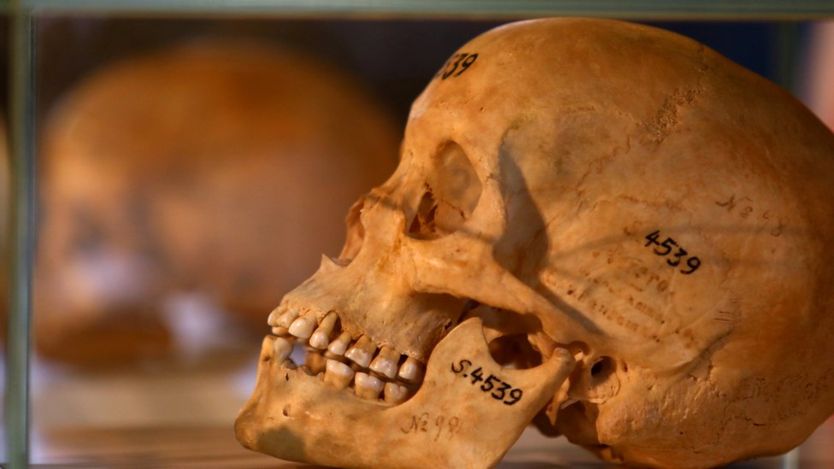
Namibian skulls (Reuters)

Kraume was particularly shocked by the existence of thousands of skulls of people murdered by Germans, which were gathered and shipped to Germany in large quantities and still exist in museums across the country.

I cannot comprehend the fact that we have these skulls, like artefacts, stored in ethnological museums,” he said. I cannot understand why they are still being kept and have not been given back.

You ask yourself: ‘Why were the skulls collected in the first place, and why have we not seen fit to give them back?’”

… The film’s relevance to the present day, Kraume said, is also in its depiction of how those in power choose to ignore scientific facts and truth for political gain and in order to maintain the status quo. …

Motorbikes and Ouagadougou’s women: a journey to freedom

Flag of Burkina Faso

When I was growing up, I was fascinated by images on the television, of women on their motorcycles cruising through the streets of Ouagadougou, the capital of Burkina Faso. Seeing women on motorcycles was always a wonder. It was so refreshing, and seemed like such a simple act, yet a mark of independence. These are not women riding Harleys or fast bikes, but simple women wearing wrappers or boubou (The Boubou: A Traditional African Garment) or Faso dan Fani, everyday women taking their children to school, going to work, etc. Even more amazing is that many of these women are Muslim. It is no secret that women in Ouagadougou love their motorcycles. This means of transportation which particularly boomed in the late 1980s is synonymous with independence, freedom, courage, and near infinite possibilities for the women. After all, for anybody who has ridden on a motorcycle, it feels so freeing to have the wind bashing all over oneself while zipping through the city. Today, the country has trained hundreds of women mechanics.

FESPACO 2023

When Thomas Sankara, the president of the Faso, came in power in 1983, he led a series of changes that emancipated women, bringing them closer to equal rights in the society. It is no wonder that Nigerian filmmaker Kagho Idhebor felt the same way as I did, and was so intrigued by these women on their motorcycles, that he made the documentary”Burkina Babes” which was featured at this year’s FESPACO. Excerpts below are from AfricaNews. Enjoy!

====

‘Burkina Babes’ by Kagho Idhebor

In Burkina Faso’s capital, many ride their motorcycles every day to commute, go to school or move around the city.

In 2020, nearly one Burkinabe in seven owned a motorcycle.

the vehicle is also a tool of emancipation, For women like Valérie Dambré

This defines the Burkinabe woman, the courage of women. In fact, riding a motorcycle demands courage,” the motorist.

When Nigerian filmmaker Kagho Idhebor first came to Ouagadougou he was blown away by how many women whizzed about on motorcycles. So much so that he directed “Burkina Babes“, a documentary on that. It even ran at Africa’s largest film the FESPACO, the pan-African cinema and TV festival of Ouagadougou.

I have been to couple of parts of the world and even in Nigeria you see a lot of motorcycles, guys driving motorcycles but I have not seen women in the last country driving motorcycles with so much attitude and very independent and that captivated me, like I was blown away!,” the man in his thirties exlaims.

Since 1977, the Women’s School for Skills Initiation and Training is based in Ouagadougou. It has trained over 700 women to be mechanics and bodywork repairers.

…. During his four years in power in the 1980s, which ended traumatically with his assassination, Sankara “played an emancipating role, breaking down traditional mindsets and thrusting women into the public space, outside the home,” she said. “Young women today were brought up on his ideas.”

Les efforts sont nécessaires /Effort is needed

Une Chèvre / A Goat

Si l’ombre n’atteint pas la chèvre, la chèvre cherchera l’ombre (Proverbe Mossi – Burkina Faso). – Sans effort on n’a rien.

If the shade does not reach the goat, the goat will seek shade (Mossi proverb – Burkina Faso). – Without effort we have nothing.

FESPACO 2023: Tunisian Film ‘Ashkal’ Wins the Golden Stallion of Yennenga, and Women Filmmakers are Recognized

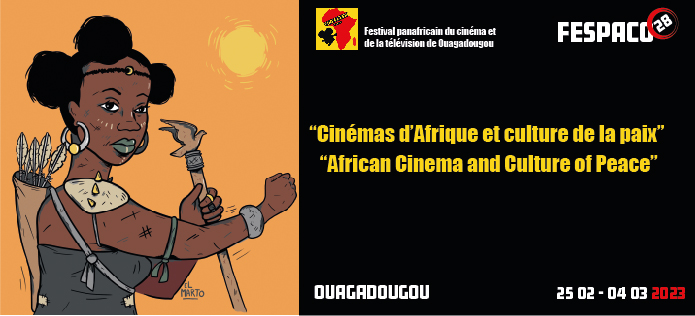
FESPACO 2023 theme ‘African Cinema and Culture of Peace’

The biennial African film festival, FESPACO, took place this year from 25 February to March 4. On March 4, the winner was announced, and Tunisian Youssef Chebbi won the Golden Stallion of Yennenga (Etalon d’or de Yennenga) for his film ‘Ashkal‘ which centres on the investigation into the killing of a caretaker on a construction site at Carthage on the outskirts of his hometown. He won the first prize over Burkinabe filmwriter Apolline Traore, who picked up the Silver Stallion of Yennenga for the film ‘Sira‘, while the Bronze Stallion was awarded to Kenya’s Angela Wamai for ‘Shimoni‘.

FESPACO 2023

The Festival Panafricain du cinema et de la television de Ouagadougou (FESPACO) is the Panafrican Film and Television Festival of Ouagadougou, which happens to be the largest African film festival. It is held biennially in Ouagadougou, the capital of Burkina Faso. First established in 1969, and boasting some of Africa’s greatest writers and filmmakers (like Ousmane Sembene), the FESPACO offers a chance for African filmmakers and professionals to showcase their work, exchange ideas, and meet other filmmakers, and sponsors.

Golden Stallion of Yennenga
The Golden Stallion of Yennenga

There were a total of 170 entries selected for the FESPACO festival in the capital Ouagadougou, including 15 fiction feature films in contention for the Yennenga Golden Stallion award and a prize of around $30,000. A big win for women filmmakers, with the second and third prizes won by Apolline Traore and Angela Wamai respectively. Burkinabe filmmaker Apolline Traore won the Silver Stallion for Siraabout a woman kidnapped by Jihadists, and Kenyan director Angela Wamai took home the Bronze Stallion for Shimoni, about a schoolteacher rebuilding his life in his remote village after a harsh stint in jail. In 2019, Burkinabe director Apolline Traore had said that any award had to be earned, not considered a token gesture; we are glad for the recognition her work and that of others is getting recognized.

The film, ‘Cuba in Africa‘ produced by Negash Abdurahman won the Thomas Sankara Prize. The film talks about the altruism of Cubans who sacrificed their sons and daughters on behalf of Africa; Cuban volunteers gave their lives to help Angola, Namibia, Guinea Bissau and Cape Verde, and others win independence, and contributed to the fall of apartheid in South Africa. It is a story all Africans should learn.

The 29th edition of Fespaco will be held from 22 February to 1 March 2025, also in Ouagadougou, Burkina Faso.

International Women’s Day 2023

March 8th marks International Women’s Day (IWD). Every year around the world it is commemorated in a variety of ways: it is a public holiday in over 25 countries, and is observed socially or locally in others to celebrate and promote the achievements of women, and address key issues pertaining such as women’s rights, gender equality, equal pay, reproductive rights, violence against women, and many others. In some countries, women march on that, while in others it is customary for men and women to give their female colleagues and loved ones flowers and gifts and show equality towards the other gender. This year, we are posting this beautiful musical collaboration from Tanzania titled “Superwoman“. It is truly an amazing work of art, which celebrates women of all walks of life in song, and highlights Tanzanian and African cultures as a whole. Enjoy and share by telling the ladies around you how awesome they are, and superwomen!

Kwanyama Poem in Honor of King Mandume

King Mandume ya Ndemufayo, portrait extracted from a photograph of the King with British representatives in South Africa

I found this Kwanyama poem written in honor of King Mandume. It is simple, and rich in culture. It emphasizes the Kwanyama culture: how can one cowardly abandon his king? the only son of his mother? A mother’s only son is everything, so he needs to be protected by those around. It also shows the respect given to the king, as to him were extended leather carpets. From this poem, it is clear that Mandume was a very good rider, a fearless knight, and a fine gunman. The term soba, is the term for king in Kwanyama (Cuanhama in Angola) culture. The reference to the “ragged brother” is based upon the fact that from Kwanyama accounts, Mandume used to “disguise himself in poor clothing and walk about the country to listen to what the people were saying, to see if they were satisfied by his laws” (Loeb, 1962:35), given that he had made significant positive changes to laws; while the Portuguese account on the other hand, state that Mandume used to dress in rags to trick those who would not recognize him as the king, “picking quarrels and exacting cruel vengeance to those who responded to his provocations with crude insults” (Estermann, 1960: 221). When living in the desert, water is crucial to survival; thus, water finds its way into this poem: why would anyone share the little they have with an enemy who has been trying to crush them and force them off their land? Enjoy the poem, translated to English by Dr. Y., Afrolegends.com. To learn more, read “Lyrical Nationalism in Post-Apartheid Namibia” by W. A. Haugh, Lexington Books (2014).

=====

Ovakwanyama ’malai!

Tamuefele Naingo

Adalwa ko ina ewifa,

Semuweda okakambe

N’ outa wosalupenda!

Mandume himupe ombedi,

Himupe nande kanini.

Adalwo ko ina ewifa,

Semuweda okalambe

N’outa wosalupenda.

Ohamba yokayalambadwa

Yokapekwa ya Melulu

Na Ndilokelwa sime.

Oindele hiipe omeva,

Hiipe nande m’omindo,

Yetudipaela ofimu,

Yetudipaela ohamba,

Ohamba yokalambadwa

Yokapekwa ya Melulo

You, Kwanyamas, you are stupid!

You cowardly abandoned the king

Him, his mother’s only son,

The incomparable knight,

With his beautiful gun Mauser !

To Mandume I will not reproach anything,

No matter how little.

To him, his mother’s only son,

The incomparable knight,

With his beautiful gun Mauser !

The soba to whom leather rugs were extended

Melulo’s ragged brother

And Princess Ndilokelwa.

I will not give whites water,

I will not give them any from my little gourd.

They killed our king,

They slaughtered the sovereign!

The soba to whom leather rugs were extended,

Melulo’s ragged brother.

Les injures ne tuent pas / Insults do not kill

Eau chaude / Hot water

L’eau chaude ne brûle pas la maison (Proverbe Bete – Cote d’Ivoire). – Les injures ne tuent personne.

Hot water does not burn the house (Bete proverb – Ivory Coast). – Insults do not kill anyone.

Mandume and the Ovambo Resistance to Portuguese Colonialism in Angola

King Mandume ya Ndemufayo, portrait extracted from a photograph of the King with British representatives in South Africa

Mandume, king of the Cuanhama (Oukwanyama) principal subgroup of the Ovambo in Southern Angola, was one of the last and most important resistance leader against Portuguese conquest in Angola. By the size of his army, he could be compared to Samori Touré, but he did not have the same historic aura or military genius and given his very short life, he has remained unknown to many. Yet, in 1915, he held in his hands for 10 days the scourge of the balance of power in Southern Angola directly, and indirectly in Angola as a whole. Mandume is celebrated by many nationalists in Luanda as one of their heroes because he fought against Portuguese advances inside Angolan territory. He was a leader of the Ovambo resistance, defending the independence of his people, the Cuanhama so as not to get absorbed within Angola. Given European drawing of African boundaries during the 1884 Berlin Conference, the Cuanhama found themselves between areas of Portuguese West Africa (Angola) and German South West Africa (Namibia); thus Mandume has also entered the pantheon of the Namibian resistance. Who was Mandume?

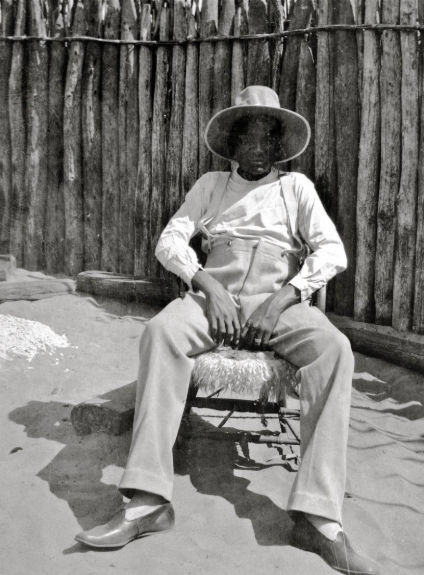
King Mandume ya Ndemufayo, probably in Oihole, sometime before 1916

Mandume ya Ndemufayo was a simple ethno-nationalist, who refused to be colonized and had about 35,000 to 40,000 armed fighters; more than any Angolan nationalists ever had before 1974. He took over the reins of the Cuanhama kingdom in 1911 and his reign lasted until 1917 when he died of either suicide or machine gun fire while under attack from South African forces. Ya Ndemufayo grew up during a time of significant upheaval in the Oukwanyama kingdom due to the presence of European merchants and missionaries. As King Nande’s nephew (his mother was the king’s sister), he was third in line for succession to the Kwanyama throne. To protect his life as royal child heir to the throne, Mandume had to live in various homesteads. King Nande died on 5 February 1911 and Mandume succeeded him at barely 18 years old. Immediately upon ascending the throne, he moved the royal residence to Ondjiva (now in Angola). He could be thought of as a neo-traditionalist leader, who, even though he studied in the German mission schools, he spoke German, and a bit of Portuguese, and championed the independence of his people. Strongly anti-European, he expelled Portuguese traders from Kwanyama territory to denounce price inflation. Given the great drought and famine which lasted from 1911 to 1916, Mandume issued decrees prohibiting the picking of unripened fruits to protect against droughts and the unneeded use of firearms, an important commodity obtained from European traders. Significantly, he also issued harsh penalties for the crime of rape and allowed women to own cattle, which was previously illegal. Overall, King Mandume sought to restore previous Kwanyama wealth and prosperity against a decaying system of local leadership. Ya Ndemufayo had a reputation for expelling Christians within the Oukwanyama kingdom. Numerous Christian families fled to the Ondonga kingdom of the Ovambos. Ya Ndemufayo did not favor Portuguese Roman Catholic missionaries as well as German Rhenish Missionary Society Protestants within his kingdom. In some European archives, it is said that he was a tyrant, but it is unclear whether it is European propaganda (a case of the hunter telling the story of the hunt) or reality.

Flag of Ovamboland

Before Mandume, previous Cuanhama kings had fought valiantly against Portuguese invasion of their land, King Weyulu from 18851904, his brother King Nande (1904 – 1911); unfortunately, they all in the end saw no choice to the inevitable Portuguese colonization. Mandume rejected the idea of Portuguese colonial rule and demanded to be on equal terms with the colonial rulers in their distant capitals.

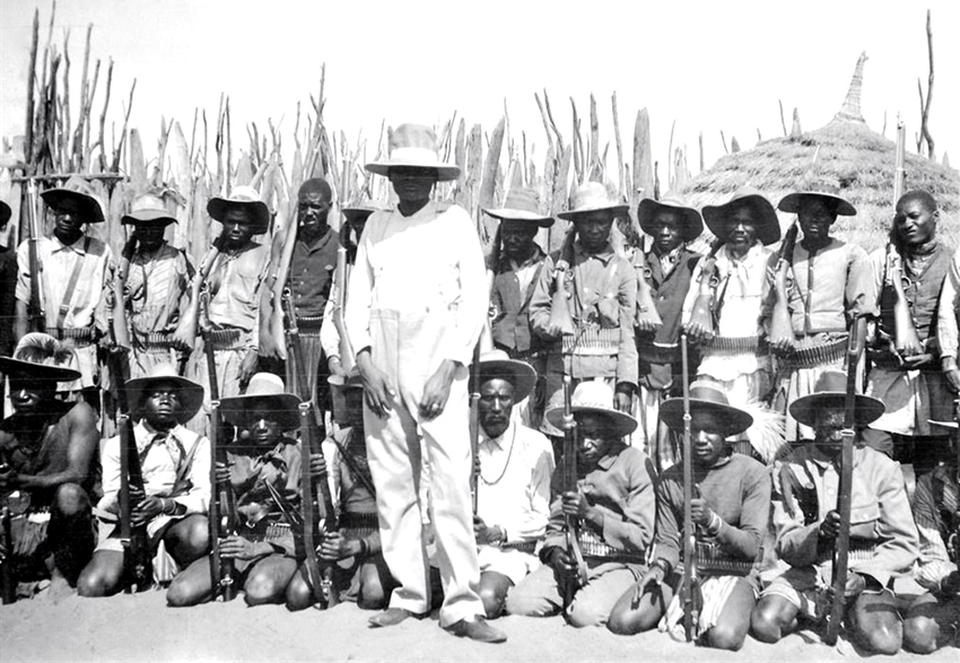
King Mandume with his warriors in Oihole in 1916

No European colonizer seriously challenged the well-organized and well-armed Ovambo kingdoms until 1915 and the beginning of World War I which coincided with a massive local drought. During the Battle of Omongwa in August 1915, ya Ndemufayo and the Kwanyama’s resisted a Portuguese attack led by Pereira de’Eça for three days. On 20 August, Mandume assembled several thousand men and attacked the Portuguese camp shouting “The land does not belong to the white[s]!”. After 10 hours of fighting, the Ovambo were forced to retreat due to a lack of supplies including the water which they had lost. In total, the Portuguese took 35 casualties and 57 wounded; while the Ovambo lost 25 and had 100 wounded. After the battle, the Portuguese also started claiming that German forces were helping the Ovambo because it was unimaginable to them that Africans were able to wage war like Europeans. Simultaneously, the South African forces peacefully conquered the portion of the Oukwanyama kingdom formerly located in German South West Africa; this was at a time when Germany lost the first world war, and thus all its African colonies. German South West Africa’s administration was taken over by the Union of South Africa (part of the British Empire) and the territory was administered as South West Africa under a League of Nations mandate. Due to losses and lack of water, ya Ndemufayo first relocated the Kwanyama capital to an area south called Oihole, and then later into South West Africa. He used the border line to conduct attacks against Portuguese who were encroaching on his old territory in Southern Angola. However his attacks of Portuguese interests from his territory in South West Africa were not appreciated by the South African authorities who summoned him to Windhoek where he refused to go. In February 1917, after ya Ndemufayo refused to submit to South African control, he died in battle against the South Africans who had mounted an attack against him. The cause of his death is disputed; South African records show his death from machine-gun fire, while oral and popular history described his death as suicide, after being wounded so he could not be taken in by enemy forces. After his death, the South African administration abolished the Kwanyama-Kingship which was only restored in 1998, after over 8 decades

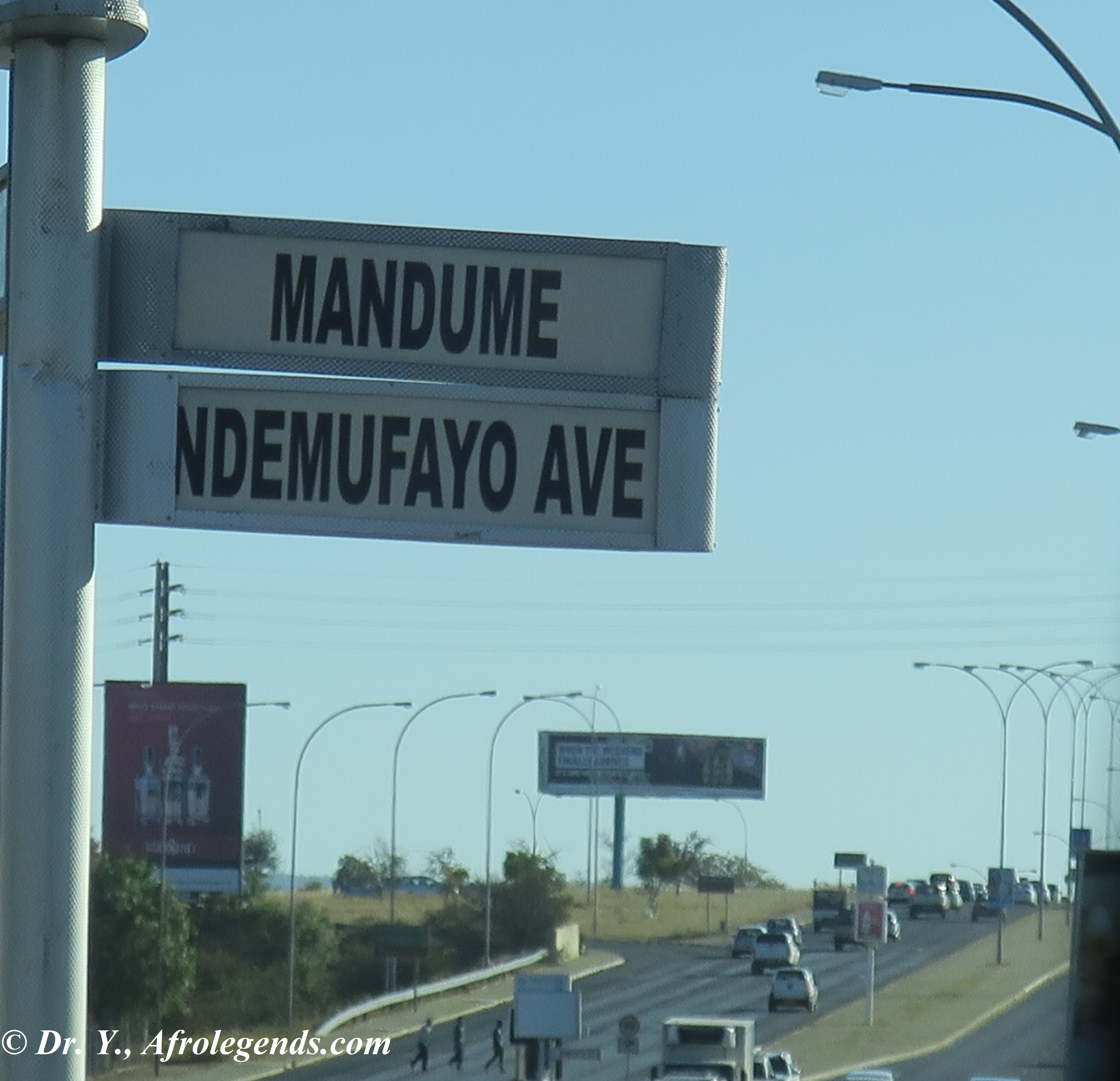
Mandume Ndemufayo Ave in Windhoek, Namibia

Today, Mandume Ya Ndemufayo is honored as a national hero in both Angola and Namibia. He is one of nine national heroes of Namibia that were identified at the inauguration of the country’s Heroes’ Acre near Windhoek. Namibia’s Founding President Sam Nujoma remarked in his inauguration speech on 26 August 2002 that: It is better to die fighting than to become a slave of the colonial forces.” — These were the defiant words of one of Namibia’s foremost anti-colonialist fighters. He said these words in defiance when the combined [European] colonial forces insisted he should surrender. […] To his revolutionary spirit and his visionary memory we humbly offer our honor and respect.

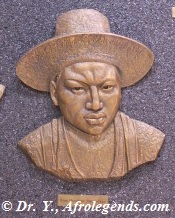
Early resistant, bronze plaque for King Mandume ya Ndemufayo at the Independence Museum in Windhoek, Namibia

The 100th anniversary of the death of Oukwanyama King Mandume ya Ndemufayo on February 2017 was attended by thousands of Namibians at Omhedi in the Ohangwena region including former Namibian presidents, where President Hage Geingob unveiled a bust of King Mandume. If you ever visit Windhoek, Namibia, make sure to walk along the street named after King Mandume, or visit the Universidade Mandume ya Ndemufayo in Angola. Please check out the article “The Legacy of legendary Oukwanyama King still vivid“, the article from The Namibian, Order out of chaos: Mandume Ya Ndemufayo and Oral History by Patricia Hayes, and lastly Les Africains Tome 8, editions J.A. p.207 (1977) to learn more about this great last resistant to Portuguese colonial advances in Southern Angola and Northern Namibia.

Le progrès ne peut être arrêter / Progress cannot be stopped

Elephant

Le coassement des grenouilles n’empêche pas l’éléphant de boire (Proverbe Mandingue – Guinée, Mali, Gambie, Sénégal). – Vous ne m’empêcherez pas d’agir; les chiens aboient, la caravane passe. 

The croaking of frogs does not prevent the elephant from drinking (Mandinka proverb – Guinea, Mali, The Gambia, Senegal). – You will not prevent me from acting; dogs bark, but the caravan moves.