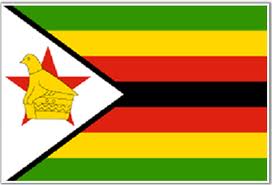
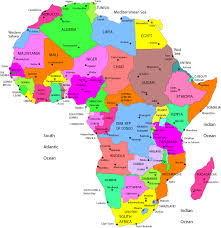
Big deposits of lithium found in Zimbabwe has made it Africa’s largest lithium reserve. It is no secret that there have been big efforts worldwide to develop renewable energy sources, thus leading to a growing demand for batteries to supply the car industry as there is a push for electric vehicles. Zimbabwe hopes to become one of the world’s largest exporters of lithium. In July of this year, a Chinese mining company completed the $300m construction of a lithium mine in Zimbabwe. Presidential elections which will take place this month will determine the future of Zimbabwe’s resources.
To cash in on the global demand, Zimbabwe last year banned the export of raw lithium ore. In doing so, it joined countries like Indonesia and Chile that are trying to maximize their return on deposits of lithium, cobalt and nickel by requiring miners to invest locally in refining and processing before they can export. Let’s hope that these resources will actually help Zimbabweans and not line up the pockets of Mnangagwa and cronies.
Chinese investors racing to secure lithium supplies could help Zimbabwe rise to become the world’s fifth biggest primary producer of the material that’s vital to battery electric vehicles and the green revolution, mining consultancy CRU said.
The lithium industry in Africa’s top producer has rapidly expanded, buoyed by about $1 billion of investments during the past two years by Chinese companies including Zhejiang Huayou Cobalt (603799.SS), Sinomine Resource Group (002738.SZ), Chengxin Lithium Group (002240.SZ) and Yahua Group (002497.SZ).
… The investments could boost capacity to 192,000 tons of lithium carbonate equivalent (LCE) per year of petalite and spodumene in 2027, from 13,000 tons per year LCE in 2022, Cameron Hughes, a battery markets analyst at CRU said in a report.
“These investments will place Zimbabwe as the fifth largest primary producer of lithium by 2025, after Argentina, contributing more than either Canada or Brazil,” Hughes said.
The pastor baptized Yao Koffi Kan by dumping his head in the water three times. After the 3rd time, he says: “You are now baptized, you are now a new creature; your old creature is dead. No more alcohol. Your new name is DAVID.”
David returns home and goes to the fridge, takes a cold beer, dips it in water 3 times ploo, ploo, ploo… and says: “you are now a new creature, your old creature is gone, your new name is ORANGE JUICE.”
The original in French is found on Nouchi.com . Adapted and Translated to English by Dr. Y. Afrolegends.com
We cannot repeat it enough! All eyes are on Niger, particularly after ECOWAS decided to follow Ouattara who urged for a military intervention, and brought in the African Union with Moussa Faki who authorized the use of military in Niger.
ECOWAS Logo
Can we really be surprised by Ouattara who was installed in Côte d’Ivoire by France’s canons and military joined with the UN? After the ECOWAS meeting last week, Côte d’Ivoire’s president, Alassane Ouattara, said his country would take part in the military operation, along with Nigeria and Benin. “Ivory Coast will provide a battalion and has made all the financial arrangements … We are determined to install Bazoum [prior Niger president and France’s puppet] in his position. Our objective is peace and stability in the sub-region,” Ouattara said on state television. The ECOWAS bloc decided last Friday to deploy a “standby force” aimed at restoring constitutional order in Niger after its Sunday deadline to reinstate ousted President Mohamed Bazoum expired. To this, Niger responded by recalling its diplomatic envoy to Côte d’Ivoire.
The African Union (AU) has called for an urgent intervention in Niger to reinstate President Mohamed Bazoum to power. In a statement issued in support of resolutions by ECOWAS, AU Commission Chairperson Moussa Faki (another puppet) said the international community must act to stop an anti-constitutional change in Niger. “The Chairperson calls on the entire international community to unite efforts to save the moral and physical integrity of President Mohamed Bazoum,” Faki’s office said on Friday.
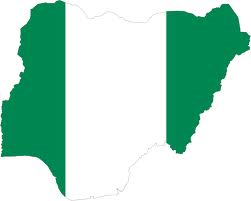
Flag and map of Nigeria
Isn’t it crazy that the AU does not think that the embargo on medical supplies to the whole country of Niger is a problem? Isn’t it surprising that the AU has no voice when it comes to defending Africans from foreign interventions on African soil, but is always on the wrong side of history against Africans?
Now, the newly appointed Niger’s prime minister is in Chad for peace talks. Northern Nigeria’s religious and political leaders are also making considerable efforts for a peaceful resolution of the situation. Similarly, the religious leaders of Togo have asked for a removal of all ECOWAS sanctions against Niger which will then allow for more peaceful talks. Religious and political leaders of Benin and Togo have warned their presidents against any military interventions in Niger, interventions that serve the West. That is why Ouattara had to call on the African Union (AU) trying to find mercenaries from other African countries (not neighboring ones – ECOWAS region) who would not feel so strongly against an intervention in Niger, or have brotherly links that extend beyond borders with the people of Niger.
Flag of Niger
On Sunday night, Niger’s rulers declared they had gathered sufficient evidence to prosecute Bazoum for “high treason and undermining internal and external security“. After all, wasn’t Bazoum working for the West against Niger’s interests? Who knows what sort of back-door deals he made? Then today, Jihadist armed groups have ambushed and attacked a detachment of Niger’s military killing at least 17 Niger soldiers and injuring 20 others near the border with Mali, the country’s Ministry of Defence said.
The situation is very fluid and tense, and requires our entire attention and prayers. Without Niger, France might not have enough electricity this winter (and this will have nothing to do with Ukraine or climate change). Losing Niger is not quite a possibility for France or the West in the region. Niger will be the 4th country in the region and it might not be seen as a good.
Please read the article from the Christian Science Monitor which summarizes the situation well. It ends with, “The putschists’ aim will be to get France and Ecowas to move towards recognizing their de facto regime,” says Mr. Vallet. “[But] France and Ecowas will need to figure out how they can support the Bazoum loyalists if the putschists remain in power and manage to get them reintegrated in any future political process. … This is going to be the condition for their future relationship.” What this article and many fail to recognize is that the era of empty negotiations, or of half governments like France did in Cote d’Ivoire for many years (with Marcoussis I & II, Ouaga, etc) where a legitimate government was forced to share power with military rebels is long gone, as this later led to an un-governable situation and then France installing its puppet Ouattara while bombing the presidential palace… We are no longer negotiating for half territories… we will no longer sit back and negotiate and give away inches upon inches of our territories to satisfy the West.
Tout ce qui arrive dans le haut pays, sera connu dans la vallée (Proverbe Peul – Niger, Nigeria, Sénégal, Guinée, Cameroun, Mali, Burkina Faso, Mauritanie, Bénin, Guinée-Bissau, Gambie, Tchad, Sierra Leone, Ghana, Côte d’Ivoire).
Everything that happens in the high country, will be known in the valley (Fulani Proverb – Niger, Nigeria, Senegal, Guinea, Cameroon, Mali, Burkina Faso, Mauritania, Benin, Guinea-Bissau, Gambia, Chad, Sierra Leone, Ghana, Ivory Coast).
Yesterday saw new turns in the situation in Niger with the airspace closure, and the rebuffing of the west’s puppet organizations that are the AU, ECOWAS, and the UN by Niger. One thing is for sure, everyone is watching carefully, and no one wants a regional spillover; after all, there are a lot of presidents installed to serve foreign interests in many bordering African countries, and many are starting to sweat. As a side note, the U.S., along with France has about 1,500 troops in Niger and Germany with about 100 (and even Italy) use facilities in that country to “combat jihadi groups” (that the West created to destabilize the entire region). The US with Secretary of State Antony Blinken said that Wagner (and thus Russia) is misleading the people of Niger… he told the BBC’s Focus on Africa programme, “I think what happened, and what continues to happen in Niger was not instigated by Russia or by Wagner, but… they tried to take advantage of it. … Every single place that this Wagner group has gone, death, destruction and exploitation have followed,” said Mr Blinken. “Insecurity has gone up, not down“. And where the US has gone there has not been insecurity, death, or destruction? It is like the pot calling the kettle black! US Acting Deputy Secretary of State Victoria Nuland flew to Niamey on Monday but was denied permission to meet with current president Abdourahamane Tchiani, coup leader, or with former president Bazoum, who is in detention. Instead, she spoke for two hours with other army officers. “These conversations were extremely frank and at times quite difficult because, again, we’re pushing for a negotiated solution. … They are quite firm in their view of how they want to proceed, and it does not comport with the Constitution of Niger,” Nuland told reporters. So when it serves the West’s interests, the constitution of a country is a valid piece of paper, but when it does not like in Ivory Coast in 2010, it is just toilet paper?
… Despite the international pressure, [Niger] coup leaders have seemed unwilling to back down, and on Sunday night, they closed Niger’s airspace until further notice, citing the threat of military intervention.
“In the face of the threat of intervention that is becoming more apparent … Nigerien airspace is closed effective from today,” a junta representative said in a statement on national television on Sunday evening [when Africans fight for their freedoms, they are called junta; but when in other countries people fight for their people’s freedoms, they are called patriots] .
He said there had been a pre-deployment of forces in two central African countries in preparation for an intervention, but did not give details. “Niger’s armed forces and all our defence and security forces, backed by the unfailing support of our people, are ready to defend the integrity of our territory,” the representative said.
The coup leaders warned any attempt to violate Niger’s airspace would face “an energetic and instant response”.
Ecowas defence officials agreed a possible military action plan, including when and where to strike, if Bazoum was not released and reinstated by the Sunday deadline.
On Monday, an Ecowas spokesperson, Emos Lungu, said the bloc would hold an extraordinary summit to discuss Niger on Thursday at the organisation’s headquarters in Abuja.
However, the bloc’s unity has been shattered by support for the coup leaders from the ruling juntas in Mali and Burkina Faso, both [sanctioned] members of Ecowas, and a pledge to come to Niger’s defence if necessary.
Flag of Burkina Faso
The Malian army said it would send a delegation to Niamey to show solidarity and a military plane from Burkina Faso was reported to have landed in the Niger capital at about 11.20am GMT.
The coup, the seventh in west and central Africa in three years, has rocked the Sahel region, one of the poorest in the world. Given its uranium and oil riches and its pivotal role in a war with Islamist militants, Niger holds great importance for the US, Europe, China and Russia.
… Gen Dominique Trinquand, a former French military representative at the UN, said the junta was “totally isolated” [yeah right! so why is the West afraid of this seemingly “isolated” force?].
He added: “Nigeria, which supplies 70% of Niger’s electricity, has cut the supply. All aid has been cut while Niger is one of the poorest countries in the world.”
On Sunday, Paris announced it was suspending its €482m (£416m) development aid programme to neighbouring Burkina Faso, which – along with Mali – has expressed its support for the junta. [And Burkina Faso told Paris to shove it!]
Last week Niger revoked military cooperation agreements with France, which has between 1,000 and 1,500 troops in the country.
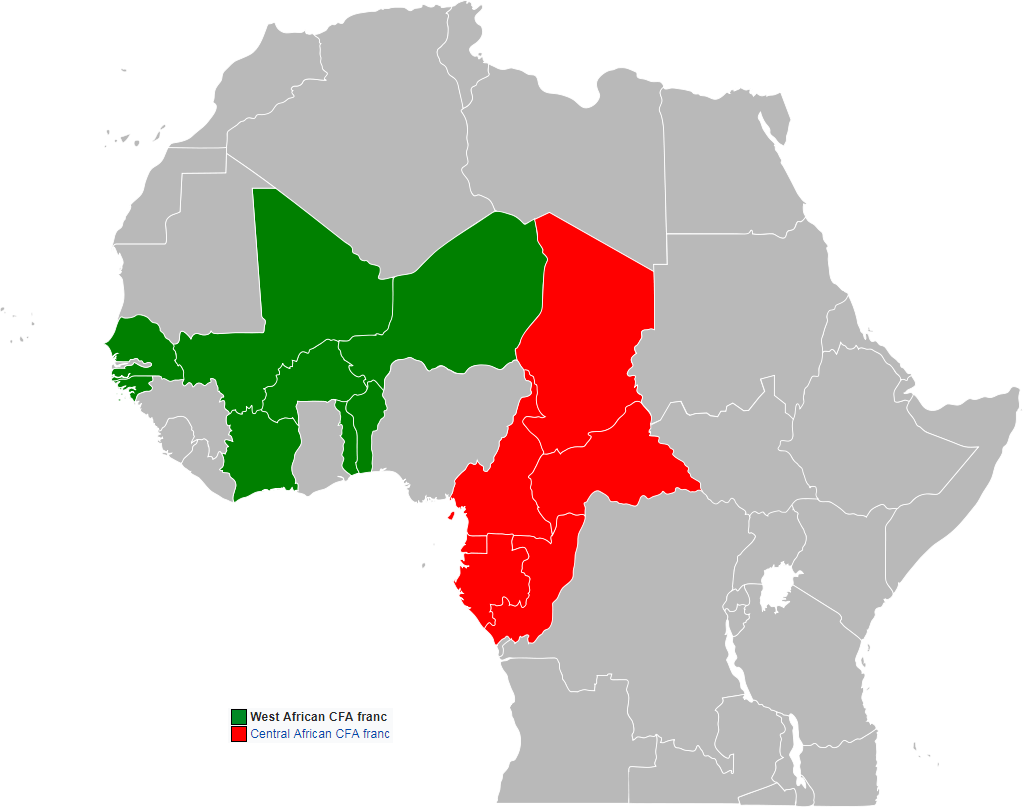
In the Lion King, the song goes as “Can you feel the love tonight?” The recent events in Niger have made us, Africans, sing, “Can you feel the wind of change tonight?” A hurricane is passing through West Africa. It has now landed in Niger! Oh yes! Niger! France is seeing red! Over 1/3 of its uranium is coming from Niger. France, the great country of nuclear energy, has been pillaging Niger, taking over the uranium without so much as building simple roads for Niger people; Niger is still the second poorest country in the world. Did you know that France’s nuclear power is funded by the uranium of Niger? and that Niger gets nothing for it? When Mamadou Tandja, one of the former presidents of Niger asked that the French nuclear company Areva start to pay something to Niger, as Areva had enjoyed a de facto four-decades monopoly in the country, he was deposed in a coup. Remember The 11 Components of the French Colonial Tax in Africa which gives France monopoly over riches, resources and mines, in 15 countries?
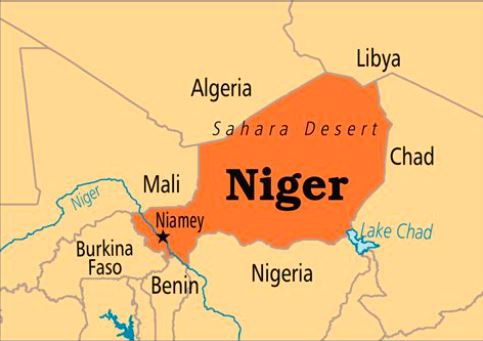
Map of Niger
The International community, France and its cronies the EU, US, etc, have all condemned the 26 July 2023 coup in Niger. They are all panicking! Let’s just say that this might be the start of a big world War reminiscent of the cold war. Why do I say that? Remember how the Cold War between the East and the West was not really played on their soils but rather on African, Latin American, and even Asian soils? This is it! The war in Ukraine is too close to Russia, and the West has put too much in trying to, unsuccessfully, asphyxiate Russia. Now their new energy routes are in jeopardy of being cut off! This is an energetic war! The great oil pipeline that was supposed to go from Nigeria all the way to Europe passes through Niger [Europe turns to Africa for Energetic Needs to Reduce Reliance on Russia].
Can you feel the wind of change? Oh yes! It is blowing through the Sahara. The West asked ECOWAS to militarily intervene in Niger, which it at first agreed to (president Tinubu of Nigeria who is presiding over ECOWAS agreed), but the Nigerian senate said that they would emphasize dialogue over military intervention. Algeria, Niger’s northern neighbor, was tapped in, but they too, prefer dialogue. Chad was called in to intervene in Niger, but Chad said “how can I fight my brother?” The military governments in Mali and Burkina Faso told ECOWAS that an armed intervention in Niger would be met with force. Guinea also sided Mali and Burkina Faso. All three countries plus Niger are suspended from ECOWAS, and form part of a military-led belt spanning Africa’s Sahel from Guinea in the west to Sudan in the east. After the destabilization of Libya by NATO (led by France of Sarkozy, and the US), the entire Sahel region has been unstable. After all, why should neighbors be asked to fight neighbors for foreign interests? We are all African brothers, the fact that we were colonized by different powers does not change the fact that we were colonized by foreigners. One colonizer is not better than another, and we cannot continue to fall over stupid divisions. We are all brothers, the enemy is the same (in the eyes of the colonizer, we are all the same anyways). We have been enslaved for far too long. How can a country like Niger with some of the world’s largest deposits of uranium be the second poorest country in the world (In 2021, Niger was the main supplier of uranium to the EU)? How can it be France’s entire backyard? How can France exploit the country, without so much as building roads, or paying for it? France who has no uranium, no gold, yet is top world producer of all these resources, and gets annually $500 billion from Africa [Africa is funding Europe!] while Africans are impoverished! As you think about it, there comes a time when Bob Marley’s prophetic words ring true “You can fool some people sometimes, but you can’t fool all the people all the time… Now [we] see the light… [we will] stand up for [our] rights!” Enough is enough! Niger O Bosso! As Agostinho Neto said, “A luta continua, e la vitoria e certa.” Brothers and sisters, let us all unite for the freedom of Niger, and Africa as a whole.
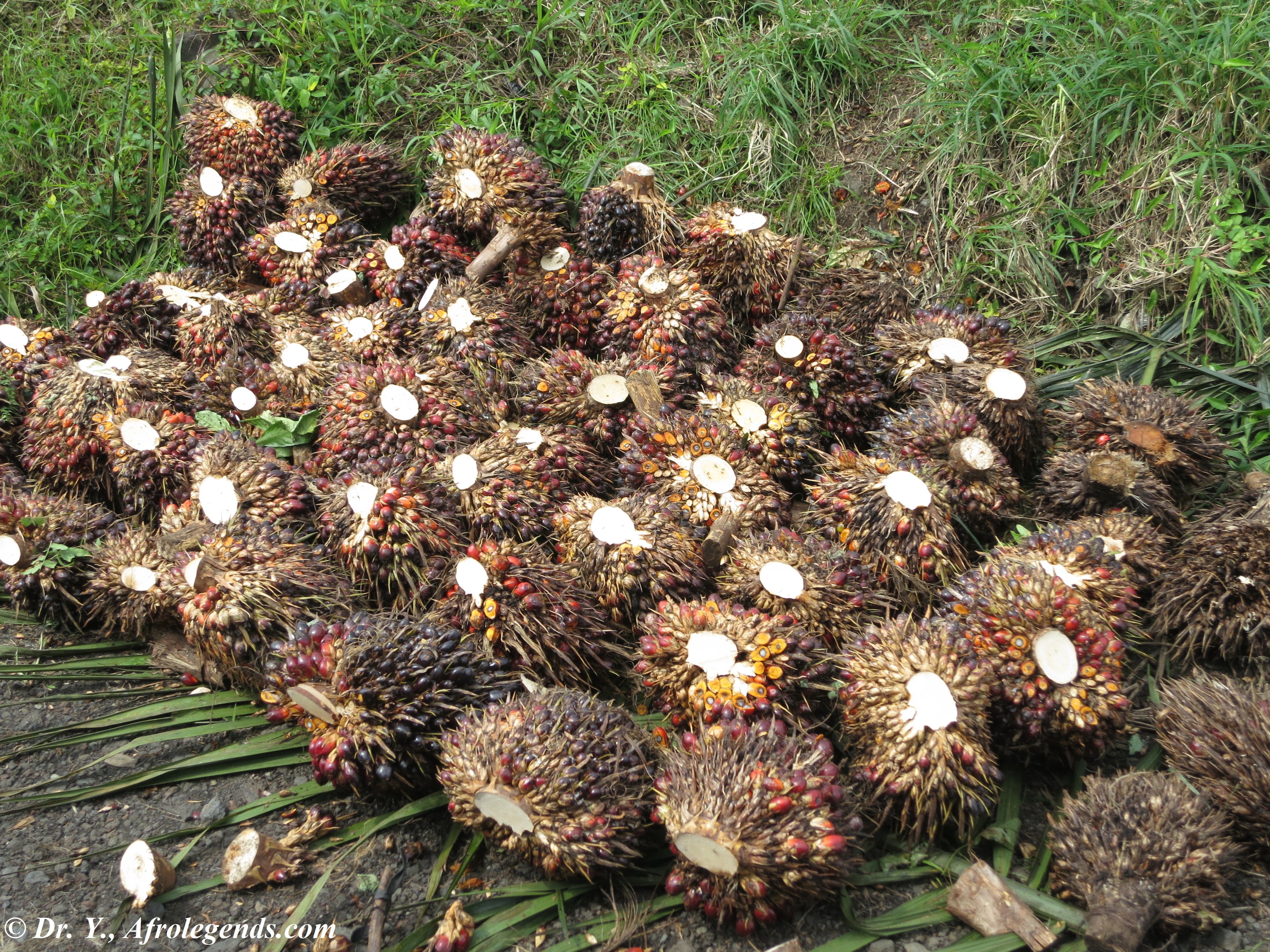
Deux écureuils se rendent facilement maîtres d’un régime de noix palmistes (Proverbe Ivili – République du Congo, République Démocratique du Congo (RDC), Angola, Gabon).
Two squirrels quickly master a bunch of palm nuts (Ivili proverb – Republic of Congo, Democratic Republic of Congo (DRC), Angola, Gabon).
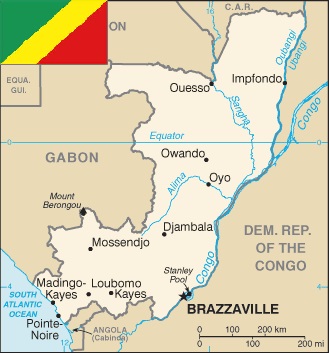
Have you ever wondered why the second city of the Republic of the Congo‘s name is Pointe-Noire? After all, why would a city in Congo be named Black point? Is there a volcanic mountain in the city, whose tip is black? Or does the city extend through the bay while making it so hard to distinguish that sailors of the past could have called it Black point, because maybe they could not see it, and just crashed into its coasts? Or is it the French translation to a local word? All those questions are quite valid ones.
It turns out that the city of Pointe-Noire got its name from the Portuguese navigators who saw a block of black rocks on the headland in 1484. They named the place Ponta Negra (as it first appeared on maps), which became Punta Negra in Spanish, which later became Pointe Noire in French. It became a maritime point of reference for the Portuguese sailors, and later in 1883 it became a small fishing village, after the French signed a treaty with the local Loangos people. Pointe-Noire is nicknamed Pontonor Pontoonby its inhabitants, or Ndji-Ndji or Njinji, in reference to the ancient village of fishermen on which the city is built. It is located between the small bay of Pointe-Noire Bay and the Atlantic Ocean
Wharf of Pointe-Noire in 1924 (Wikipedia)
Over the years, the city of Pointe-Noire overtook the place of Loango located about 15 km away, which used to be the capital of the great Loango empire (story for another day). First in 1910, the French Equatorial Africa (Afrique équatoriale française, AEF) was created, and French companies started exploiting the Middle Congo (modern-day Congo Brazzaville) in that region, then there was a need for the creation of a railroad that could link Brazzaville inland to the Atlantic ocean. In 1923, Pointe-Noire was chosen to be the
Railway Station of Pointe-Noire in 1947 (Wikipedia)
terminus of the Congo-Ocean Railway, instead of Libreville. The city was also chosen to be the AEF seaport as opposed to Loango (this marked the forever decline of Loango). In 1950, Pointe-Noire had 20,000 inhabitants, and became the capital of the Middle Congo, while Brazzaville was the capital city of the AEF. It was the most modern city in Congo by 1960. Oil discoveries and the implantation of Elf Aquitaine (now Total Energies) in the 1980 have created an economic boom for the city, and influx of populations especially after the civil war of 1997 between Pascal Lissouba and Denis Sassou Nguesso. It is good to note that the oil of Congo belongs to France, and this was the reason of the 1997 war between Lissouba and Sassou Nguesso, because Lissouba wanted fair compensation for Congolese oil, and sought an American company to exploit oil (The 11 Components of the French Colonial Tax in Africa).
Today, Pointe-Noire is a very modern city whose main industries are still oil, the seaport, railway, and fishing; it also has a large potash industry as well. Pointe-Noire is the economic lung of the country. A while back, we visited Pointe-Noire, and were amazed by the difference between Pointe-Noire and Brazzaville; it is better built, and organized. It also has a large expatriate community. In the past it was left untouched by the civil unrest that shook the entire country. The city has two distinct sides, with the European quarter and the African quarter (La Cité) offering wholly different feels – Pointe-Noire is a great example of urban dimorphism if there ever was one. As you visit Pointe-Noire, and walk on its sandy beaches, enjoy the city, and if you have time, try to look for that Black Point after which it was named.
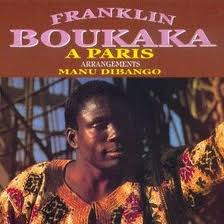
As stated earlier in the week, Franklin Boukaka was a visionary ahead of his time, and his songs are very politically engaged. His most acclaimed song is “Le Bûcheron” / “The Woodcutter” which has been timeless and covered by many singers over the years. Most know the song as “Aye Africa”. “Le Bûcheron” (the woodcutter; the Kenyan version of the single was titled “Le Bûcheron (Africa)”), is a complaint about the state of Africa and its poor, the refrain lamenting “Oh, Africa, where is your independence? … where is your liberty?” Boukaka even goes further, showing that the politicians of today who have replaced yesterday’s colonizers cannot really be differentiated from them. He laments the fact that some he believed in, have turned their back on the people and instead developed greed for power, only showing good sides during election times (isn’t this true of politicians around the globe, who only remember the people come election time with empty promises?), ” Some to whom I gave my voice, have developed the greed of power and cars; When the elections come I become important then in front of them.” Lastly, it is impossible to hear the saxophone notes coming from Manu Dibango.
As you read the lyrics and listen to the song, why do you think Franklin Boukaka titled his song The Woodcutter?
Ayé Africa eh … Ayé Africa eh Eh Africa oh Lipanda … Eh Africa oh where is your independence? Ayé Africa eh … Ayé Africa eh Eh Africa oh liberté … Ayé Africa eh where is your freedom?
Ko kata koni pasi … Cutting firewood is hard work Soki na kati, ko teka pasi … To sell this wood is another Na pasi oyo ya boye … With this lot of misfortunes and children Ngaï na bana mawa na koka te … I’m far from getting out
Basusu oyo na ponaka … Some to whom I gave my voice Bawela bonkonzi mpe na ba voitures … Have developed the greed of power and cars Ba voti tango e komaka … When the elections come Ngaï na komi moto mpo na bango … I become important then in front of them
Na ko mituna mondele a kende … I wonder: has the colonizer gone, Lipanda to zuaka, oh ya nani eh? … For whom did we obtain independence? Africa eh … Oh Africa
Ayé Africa eh … Ayé Africa eh Oh Africa oh Lipanda … Eh Africa oh where is your independence? Ayé Africa eh … Ayé Africa eh Oh Africa oh liberté … Ayé Africa eh where is your freedom?