Maryse Conde: The Grande Dame of Caribbean Literature is no more

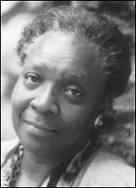
Maryse Condé
Maryse Condé

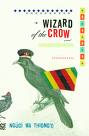
The great Guadeloupean writer, the Grande dame of Caribbean literature, Maryse Condé has transitioned to the land of our ancestors at the age of 90. Condé’s work has touched so many throughout the world, as it was a bridge between Africa, the Caribbean, and Europe. Her best work, Segu, has been one of my favorites. My first encounter with Maryse Condé’s work, was when I read her book “La Belle Créole.” Then I read Segu, and really that was it! I was sold… It was unforgettable, strong, and vivid. This book might actually be among the first historical fiction books written by a person of African descent on one of the ancient African kingdoms spanning several decades. Set in the 18th century, it followed the life of Dousika Traore, a royal adviser in an ancient historical kingdom based in Segu in modern-day Mali, torn apart by the arrival of the slave trade and Islam. It reminded me of the Alex Haley’s Kunta Kinte or Roots saga. It was deep, rich, and truly captivating.

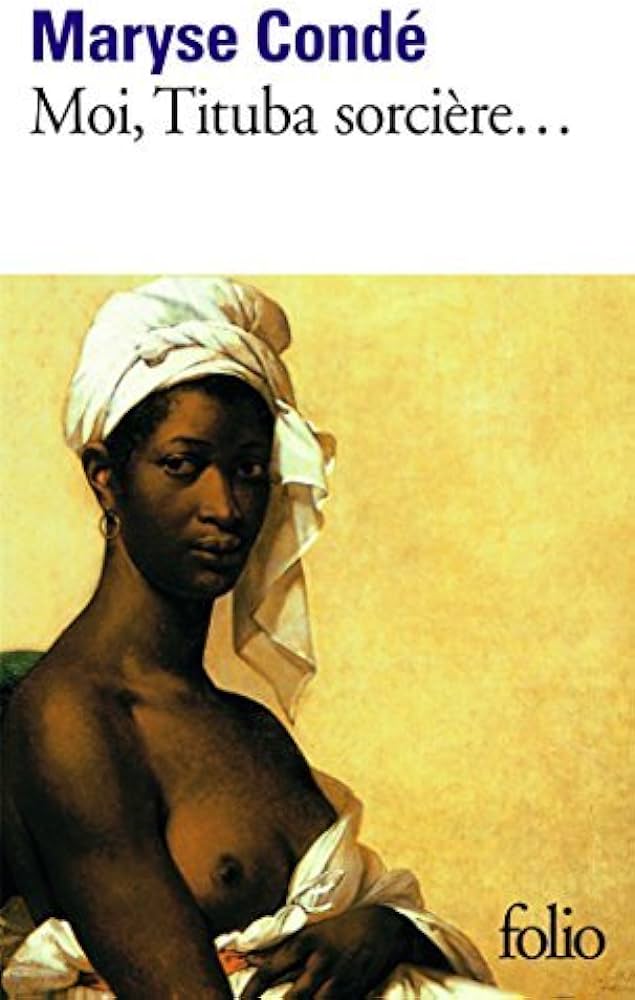
Moi, Tituba Sorciere de Maryse Conde

In “I, Tituba: Black Witch of Salem,” Condé told the story of a slave who was one of the first women to be accused of witchcraft during the 1692 Salem witch trials. It was based on the story of an American slave who was tried for witchcraft. Honestly, up until then, I could not fathom that a Black woman could have been on trial back then in the United States; but in reality, given how Africans were uprooted from the continent, and their religion, and spirituality, it should not have come as a surprise.

I read her other book, The last of the African Kings which is a fictional account following King Behanzin’s offsprings and entourage when he was in exile in Martinique, and their lives in the caribbeans and then the United States, after the French deported him there. It skillfully intertwined the themes of exile, memory, hope, loss, with Africa always in the background.

The Last of the African Kings, by Maryse Condé

After that, I read her other books A Season in Rihata, The Crossing of the Mangrove, La Vie Scélérate (Tree of Life: A Novel of the Caribbean), Desiderada.

Her themes always embraced motherhood, femininity, race relations, slavery, the Caribbeans, and Africa. Her novels drew upon African and Caribbean history. She has written over 20 novels,

Throughout her life, she was awarded France’s Legion of Honour in 2004, and twice nominated for the International Booker Prize – first for her entire body of work in 2015, then in 2023 for her final novel, The Gospel According to the New World. In 2018, she won an award set up in place of the Nobel Prize in Literature, which was engulfed in scandal. Condé was the first and remains the only winner of the New Academy Prize in Literature, whose judges praised the way she “describes the ravages of colonialism and post-colonial chaos in a language which is both precise and overwhelming“.

The excerpts below are from the Guardian.

=====

'Segu' by Maryse Conde
‘Segu’ by Maryse Conde

… Born Maryse Boucolon in Guadeloupe in 1934, the youngest of eight children, Condé described herself as a “spoilt child … oblivious to the outside world”. Her parents, she told the Guardian, never taught her about slavery and “were convinced France was the best place in the world”. She went to Paris at 16 for her education, but was expelled from school after two years: “When I came to study in France I discovered people’s prejudices. People believed I was inferior just because I was black. I had to prove to them I was gifted and to show to everybody that the colour of my skin didn’t matter – what matters is in your brain and in your heart.”

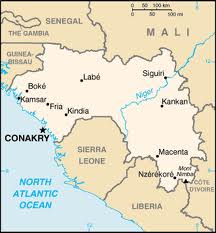
Guinea-Conakry
Guinea-Conakry

Studying at the Sorbonne, she began to learn about African history and slavery from fellow students and found sympathy with the Communist movement. She became pregnant after an affair with Haitian activist Jean Dominique. In 1958, she married the Guinean actor Mamadou Condé, a decision she later admitted was a means of regaining status as a black single mother. Within months their relationship was strained, and Condé moved to the Ivory Coast, spending the next decade in various African countries including Guinea, Senegal, Mali and Ghana, mixing with Che Guevera, Malcolm X, Julius Nyerere, Maya Angelou, future Ivory Coast president Laurent Gbagbo and Senegalese film-maker and author Ousmane Sembène.

Map and Flag of Ghana

Unable to speak local languages and presumed to hold francophile sympathies, Condé struggled to find her place in Africa. “I know now just how badly prepared I was to encounter Africa,” she would later say. “I had a very romantic vision, and I just wasn’t prepared, either politically or socially.” She remained outspoken until she was accused of subversive activity in Ghana and deported to London, where she worked as a BBC producer for two years. She eventually returned to France and earned her MA and PhD in comparative literature at Paris-Sorbonne University in 1975.

Her debut novel, Hérémakhonon, was published in 1976, with Condé saying she waited until she was nearly 40 because she “didn’t have confidence in myself and did not dare present my writing to the outside world”. The novel follows a Paris-educated Guadeloupean woman, who realises that her struggle to locate her identity is an internal journey, rather than a geographical one. Condé later recalled the Ghanaian author Ama Ata Aidoo telling her: “Africa … has codes that are easy to understand. It’s because you’re looking for something else … a land that is a foil that would allow you to be what you dream of being. And on that level, nobody can help you.” “I think she may have been right,” Condé later wrote.

… She gained prominence as a contemporary Caribbean writer with her third novel, Segu, in 1984. The novel follows the life of Dousika Traore, a royal adviser in the titular African kingdom in the late-18th century, who must deal with encroaching challenges from religion, colonisation and the slave trade over six decades. It was a bestseller and praised as “the most significant novel about black Africa published in many a year” by the New York Times.

L’action a plus de poids que les mots / Actions Speak Louder than Words

Flag of Senegal
Flag of Senegal

Nit la mu jëf la du la mu wax 

Un homme se mesure à ce qu’il fait et non à ce qu’il dit (Proverbe Wolof – Senegal). Vos actions définissent qui vous êtes.

A man is measured by what he does, not what he says (Wolof Proverb – Senegal). – Your actions define who you are. 

Senegal Presidential Elections: Bassirou Diomaye Faye is set to be the next president

Bassirou Diomaye Faye (Source: Seneweb.net)

Senegal opposition presidential candidate Bassirou Diomaye Faye, a political newcomer popular among the masses, came out of Sunday’s elections in Senegal with a strong lead. On Monday morning, his main rival, Amadou Ba conceded defeat. Faye who has been brought to the front of the Senegalese politics just over a week after he was released from prison, has been mentored by the true candidate of the masses Ousmane Sonko who everybody loved, but who the government had managed to disqualify from standing for election because of a bogus conviction. Faye contested the elections as an independent given that his party Patriots of Senegal (PASTEF), founded by Ousmane Sonko, had been dissolved. He ran under the slogan of “Diomaye mooy Ousmane” (meaning, Diomaye is Ousmane in Wolof) given that most Senegalese who voted for him, were in reality voting for his beloved mentor Sonko. At 44 years-old, he will be the youngest African president, and fifth president of Senegal.

Ousmane Sonko (Source: Leral.net)

We applaud the victory of the people of Senegal who stood strong in the face of Macky Sall, the incumbent’s holdup tactics on the constitution and the power. We applaud the victory of the Senegalese masses who have shown that they would not stand still while their democracy is torn into pieces. We hope that Bassirou Diomaye Faye will keep his promises of including Sonko whom the people voted; Sonko campaigned by telling all that voting for Faye was like voting for him. We hope that Faye will keep the promises made of weeding out corruption, getting out of the CFA Franc zone, renegotiating mining and hydrocarbon contracts. The country is expected to start hydrocarbon production this year. He has his work cut out for him, with the high unemployment rate. Senegal is a young nation, and Senegalese dream of finally helping their country launch into the 21st century with pride; they are ready, and hopefully Faye will offer new opportunities to the disillusioned youth.

Below are excerpts from the BBC.

====

Diomaye mooy Ousmane (Source: Kalenews.net)

Few had heard of him a year ago, and now he is set to become president.

Bassirou Diomaye Faye’s extraordinary rise caps a rollercoaster period in Senegalese politics that caught many off-guard. Months in jail alongside ally and kingmaker Ousmane Sonko ended suddenly, with the pair released the week before the presidential election.

Now Mr Clean, as he’s nicknamed, must get to work on the sweeping reforms he has promised.

Methodical” and “modest” are words often used to describe the tax collector, who celebrates his 44th birthday on Monday.

Fighting poverty, injustice and corruption are top of Mr Faye’s agenda. While working at the Treasury, he and Mr Sonko created a union taskforce to tackle graft.

Gas, oil, fishing and defence deals must all be negotiated to better serve the Senegalese people, says Mr Faye. He is ushering in an era of “sovereignty” and “rupture” as opposed to more of the same, he told voters, and that is especially true of ties to France. Senegal’s president-elect says he will drop the much-criticised CFA franc currency, which is pegged to the euro and backed by former colonial power France. Mr Faye wants to replace it with a new Senegalese, or regional West African, currency, although this will not be easy… Strengthening judicial independence and creating jobs for Senegal’s large young population are also key priorities for Mr Faye …

Bassirou Diomaye Faye was announced in February as the so-called “Plan B” candidate, replacing the charismatic opposition firebrand Ousmane Sonko.

Both men founded the now-disbanded Pastef party, both men are tax collectors, and both men found themselves jailed last year on charges they said were politically motivated.

Mr Sonko ended up being convicted of two offences, which meant he was barred from the election, so Mr Faye stepped in.

Flag of Senegal
Flag of Senegal

Bassirou is me,” Mr Sonko told supporters recently. “They are two sides of the same coin,” Pastef colleague Moustapha Sarré agrees.

… the pair’s relationship could usher in a new style of leadership.

Maybe they will establish a tandem and break away from the hyper-presidential model of having an all-powerful head of state.

Sonko is of course the uncontested leader of Pastef – an icon, even… [But] the two have had a [dynamic of] complicity and collusion.”

Despite the shortened campaign period, Senegal’s citizens were adamant they would turn out and use their vote, Christopher Fomunyoh – of the National Democratic Institute for international affairs – told BBC Newsday.

Senegal is in the process of confirming that democracies can self-correct and come out stronger and more resilient.”

Proverbe sur la force/ Proverb on Strength

Scorpion

La force du scorpion est dans sa queue (Proverbe Peul – Niger, Mali, Cameroun, Burkina Faso, Nigeria, Sénégal, Guinée, Mauritanie, Guinée Bissau, Gambie, Tchad, Sierra Leone, Ghana, Côte d’Ivoire, Centrafrique).

The strength of the scorpion is in its tail (Fula proverb – Niger, Mali, Burkina Faso, Cameroon, Nigeria, Senegal, Guinea, Mauritania, Guinea Bissau, Gambia, Chad, Sierra Leone, Ghana, Ivory Coast, Central African Republic (CAR)).

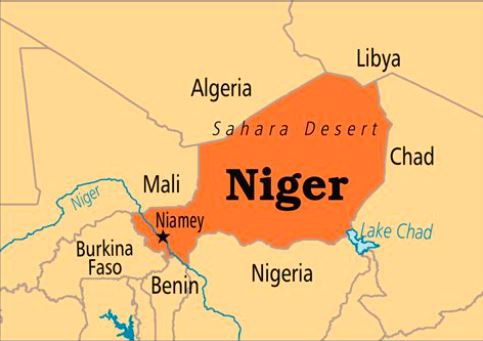
Niger suspends military “cooperation” with the US, effective immediately

Map of Niger

Over the weekend, Niger suspended military “cooperation” with the USA, with immediate effect. As one who follows the progress in the region, it comes as no surprise, after Niger had previously kicked out the French troops from its territory [Bye Bye to French Troops in NigerFrance set to Withdraw Troops and Ambassador from Niger]. It actually feels like the normal evolution of things. Operating from years of condescending treatments of those deemed inferior, particularly of Africans, the Americans had decided to dictate their will, like the French before, to Niger people and deny their sovereign rights to choose partnerships in their fight against terrorism. The spokesman of Niger’s government, Colonel Amadou Abdramane, exposed the fact that the military “cooperation” with the US was not even a real one, i.e. the US had installed their largest drone base in Africa, and possibly in the world, in Niger via a verbal agreement only, and the Niger people had to pay for the American base in their country, while the Americans never raised a hand to help Niger fight against terrorist attacks that were maiming their citizens. So, this was not really a partnership to help Niger at all, but rather an imposition on Niger, deemed the poorest country on earth, to pay for US military on its soil. Many call it a huge blow to the US, but as Americans had already refused to recognize the government of Niger back in October, and imposed sanctions against it, they should not have expected much else.

Below is an excerpt from Al Jazeera. Please also take the time to read the good article written on Reason website.

=====

Flag of Niger

Niger has suspended its military agreement with the United States “with immediate effect”, according to the ruling military spokesman Colonel Amadou Abdramane, in a blow to US security interests in the region.

The pact allowed US military personnel and civilian defence staff to operate from Niger, which plays a central role in the US military’s operations in Africa’s Sahel region and is home to a major airbase.

… Speaking on local television, Abdramane said the US delegation did not follow diplomatic protocol, and that Niger was not informed about the composition of the delegation, the date of its arrival or the agenda [in their eyes, we, Africans are not humans, and do not deserve minimum courtesy].

Niger regrets the intention of the American delegation to deny the sovereign Nigerien people the right to choose their partners and types of partnerships capable of truly helping them fight against terrorism,” Abdramane said [similar to the French politics in Niger, Niger is not supposed to think on its own, but every partnership must be done in agreement with the metropolis].

… The US military had some 650 personnel working in Niger in December, according to a White House report to Congress. The US military operates a major airbase in the Niger city of Agadez, some 920km (572 miles) from the capital of Niamey, using it for manned and unmanned surveillance flights and other operations.

A drone base known as Air Base 201 near Agadez was built at a cost of more than $100m. Since 2018 the base has been used to target ISIL (ISIS) fighters and Jama’at Nusrat al-Islam wal Muslimeen (JNIM), an al-Qaeda affiliate, in the Sahel region.

Reporting from Washington, DC, Al Jazeera correspondent Shihab Rattansi said the move is “a huge blow to the US”.

Niger is the centre of US operations in west and north Africa, notably at its Air Base 201, the most expensive construction project ever undertaken by the US government. It’s there for war on terror operations but it’s really there also for great power projection against countries like Russia and China.”

Last October, Washington officially designated the military takeover as a coup. But in December, the top US envoy for Africa, Phee, said the US was willing to restore aid and security ties if Niger met certain conditions.

The military said the delegation had accused Niger of partnering with Russia and Iran on “secret” deals, which the government denies. Officials also said the US had “threatened” action against Niger if the Niamey fails to cut ties with both countries.

The military government “forcefully denounces the condescending attitude accompanied by the threat of retaliation from the head of the American delegation towards the Nigerien government and people”, spokesman Abdramane added.

….

Happy Taombaovao Malagasy: Celebrating the Malagasy New Year

Madagascar
Madagascar

Last week, March 10-11 marked the celebration of Malagasy New Year… the Malagasy new year is not in January, because the Malagasy calendar is a lunar calendar with thirteen lunar months of 28 days. Each lunar month starts with the first moon. Up until 1810, every region of Madagascar had its own calendar; then under the Kingdom of Madagascar whose kings reigned from 1810 to 1896, the calendar was standardized. From 1810 to 1881, the Kingdom of Madagascar’s new year always started with the first day of the month of Alahamady, i.e. the first moon of the month. This month corresponds to the end of the rainy season, and the rice harvest, rice being the staple food of the Malagasy people. Compared to the Gregorian calendar, the fararano and the Alahamady occur between March and April around the first moon closest to the 21 March equinox. With the fararano, in the olden days, Malagasy people would congratulate themselves on having emerged victorious from the violent winds, the torrential rains, landslides, devastating fires, but also from the period of Maintso ahitra or famine. The month of Alahamady is a month of celebration, and symbolizes power, wealth, and even royal power. The great king  Andrianampoinimerina, at the origin of the unification of Madagascar, is quoted with this famous formula, “I have no enemy, except famine.” He was also born on the first day of the month of Alahamady, thus his formula symbolized victory in general, but victory over famine in particular.

Depiction of the 1895 French war in Madagascar.

Starting in 1897, the celebration was officially abolished by the French colonial period which viewed it as pagan, and as a tradition that would undermine the Malagasy conversion/obedience as it linked them to their pasts, their ancestors, and culture; it was thus celebrated in secret by some. Since the 1990s, the celebration is now seeing a resurgence. Today, it is a national celebration known as the Taombaovao Malagasy, literally Malagasy New Year. It lasts 2 days and is observed throughout the entire territory. It helps to convey and spread the 7 foundations of the Malagasy philosophy: faith in zanahary (The Creator, God), the value of Aina (life), the fahamasinana (the sense of the sacred), the fihavanana (solidarity and mutual aid), the fahamarinana (the sense of fairness and justice), the fahasoavana (happiness) and the link to ancestral heritages.

Queen Ranavalona III of Madagascar

This year, it was celebrated on 10 and 11 March. In the opening, Princess Ratsimamanga, a descendent of Queen Ranavalona III, the Last Monarch of the Kingdom of Madagascar, performed the rite of Tsodrano, the blessing, and said during the official ceremony to all officials and public present, “I bless you in the name of the seven royal tombs so that you and your families be in good health, so that you could have the strength to contribute the the well-being of the nation.” She added, this Taombaovao ceremony symbolizes “a spiritual renewal in the hearts of Malagasy people… Us, Malagasy, our ancestors have not gone far, and are always with us. It is our ancestors who pray for us to be together, for us to produce good things in the future, for the harvest to be good.”

After the blessing, comes the ceremony of Tatao, where the people share a plate of rice cooked in milk and sprinkled with honey. Princess Ratsimamanga explained, “rice represents abundance so that there will be no famine. Milk is for offspring. And the honey is to make things sweet. These three things that we put in the pot and share with everyone symbolize the fact that we are productive, that we have the strength to fight evil in the country.”

La taille n’est pas tout / Size is not everything

Python

Il ne faut pas s’effrayer d’un python à cause de sa longueur (Proverbe Bété – Côte d’Ivoire).

You should not be frightened by a python because of its length (Bété proverb – Ivory Coast).

“Raconte-moi”/”Tell Me” by Véronique Tadjo

Senufo face mask (Kpeliye’e) exposed at the MET

Slavery dealt a big blow to Africa. It dealt a big blow to her strength (imagine losing millions upon millions of some of your strongest children), to her self-confidence (imagine her children fearing for their lives chased into the depths of forests and savannahs), and to her soul. Then came colonization with forced labor, depersonnalization, confiscation of History, disregard for local cultures, cultural alienation, and colonial oppression. Slowly, the awakening is upon us; and slowly Africans are linking back to that glorious past of African civilizations, science, and cultures. The poem below by Ivorian author Véronique Tadjo is anchored upon that re-discovery of the African self in all its splendor, and connection to its roots in order to continue the legacy.

The poem “Raconte-moi” was published in Latérite / Red Earth, written in homage to Senufo culture, which won a literary prize from the Agence de Coopération Culturelle et Technique. The poem below was re-published  re-published in Anthologie Africaine: Poésie Vol2, Jacques Chevrier, Collection Monde Noir Poche, 1988, and translated to English by Dr. Y. Afrolegends.com .

“Raconte-moi” de Véronique Tadjo / “Tell me” from Véronique Tadjo

Raconte-moi

La parole du Griot

Qui chante l’Afrique

Des temps immémoriaux

Il dit

Ces rois patients

Sur les cimes du silence

Et la beauté des vieux

Aux sourires fanés

Mon passé revenu

Du fond de ma mémoire

Comme un serpent totem

A mes chevilles lié

Ma solitude

Et mes espoirs brisés

Qu’apporterais-je

A mes enfants

Si j’ai perdu leur âme ?

Tell me

The word of the Griot

Who sings Africa

From times immemorial

He says

These patient kings

On the peaks of silence

And the beauty of the old ones

With faded smiles

My past returned

From the depths of my memory

Like a totem snake

To my ankles linked

My loneliness

And my hopes shattered

What will I brink

To my children

If I lost their soul?

Proverbe sur une fondation faible/ Proverb on a Weak House

Bamboo forest in Africa

Un bambou tendre ne peut pas être ardemment désiré (pour la construction).Un homme qui essaie de bâtir un mariage solide tout en courant après d’autres femmes est comme celui qui utilise des pousses de bambou pour construire une hutte. (Proverbe Chewa – Malawi, Mozambique, Zambie.)

A tender bamboo cannot be eagerly desired (for building). – A man trying to build up a strong marriage while going after other women is like one who uses bamboo shoots to make a hut. (Chewa proverb – Malawi, Mozambique, Zambia.)

History Repeats Itself: Destabilization of Africa during Slavery times – Alcohol as a tool

Gungunyane, the Lion of Gaza

We have seen that there were quite a few African kings who forbade the sale of liquor by Europeans on their territories: Gungunyane of the kingdom of Gaza in MozambiqueMirambo: the Black Napoleon, king of the Nyamwezi people in Tanzania, and now the Almanny (which means leader) cited during Wadstrom report to the British Committee in 1790s (Royal Resistance to Slavery: the Case of an Almany of West Africa in 1780s). Just like Gungunyane, Mirambo thought that alcohol weakened societies. There are quite a few other African leaders throughout history. Why would they prohibit the sale of alcohol on their territories? In history, we have seen this tactic used by the Europeans in the Americas where they gave cheap liquor to the Native Americans turning them drunkards, violent, in order to dispossess them of their lands.  Below is an account by the abbey Gregoire who clearly saw alcohol as a tool used to destabilize African societies during slavery times. It is good to note that history repeats itself: today in many African countries, the main breweries are owned by European companies, and particularly in countries with a lot of resources, the people have been slowly turned into drunkards (this will be a story for another day) while their resources get siphoned out.

Mirambo, towards the end of his life

Abbe Gregoire, for his part, emphasizes that Barrow attributes: “…the current barbarity of some parts of Africa to the slave trade. To obtain it, the Europeans created it, and they perpetuate the usual state of war; they poisoned these regions with their strong liquors, by the accumulation of all kinds of debauchery, seduction, rapacity, cruelty. Is there a single vice whose example they do not daily reproduce before the eyes of the Negroes brought to Europe, or transported to our colonies? I am not surprised to read in Beaver, certainly a friend of the Negroes, and who in his African memoranda is full of praise for their native virtues and their talents: “I would rather carry thither a rattlesnake than a Negro who would have lived in London “.

Bwemba Bong, Quand l’Africain etait l’or noir de l’Europe. L’Afrique: actrice ou victime de la traite des noirs? MedouNeter (2022), p. 165; Barrow, African memoranda, relative to an attempt to establish a British settlement in the Island of Boulam, by Phylips Beaver, in 4, London 1805. I would rather carry thither a rattle snake, etc., p. 397, cited by abbey Gregoire, p. 43-44.