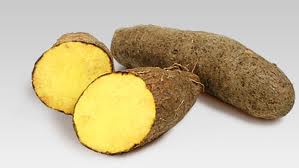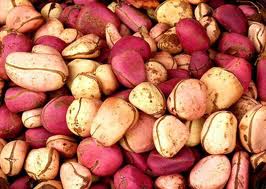
Have you ever been to an African ceremony where there was no kola nut? Have you ever tasted that bitter nut? The Kola nut? Well… first off, there are rarely African ceremonies without kola nut; kola nut is to African ceremonies what silicon is for the semiconductor industry… ubiquitous! Kola nut is usually eaten by adults and is used to welcome guests in African villages… I have tried that bitter nut! My dad would not let me touch it when I was a child,… I don’t think children taste those! Once older, I tried it, and really I could not understand what was so special about it… It is soooooo bitter! All I know is that it is the “Welcoming” nut! It is often presented to chiefs or to guests as a welcoming sign. It has a sweet aroma, and an attractive pink color… maybe that’s why I was attracted to it as a child (before tasting it)! Kola nuts are broken from their shell and then consumed by chewing just like gum. One can usually recognize an avid Kola nut consumer, because his teeth will be stained with a yellowish color: an advise… just like in everything ‘do not overdo!’ It is a caffeine containing nut, which is used to re-energize oneself, and also to ease hunger pangs. It is said that it contains three times the caffeine found in coffee! So all the coffee lovers should rejoice! Kola nut is an important part of traditional life in Africa, particularly in West and Central Africa… it is used in religious rites, sacred offerings, weddings, naming ceremonies, funerals, etc. Chinua Achebe often mentions it in his books. In the Western world, it is well-known as the main ingredient of the soft-drink Coca Cola! How is it called in your country? Describe your first encounter with kola nut.
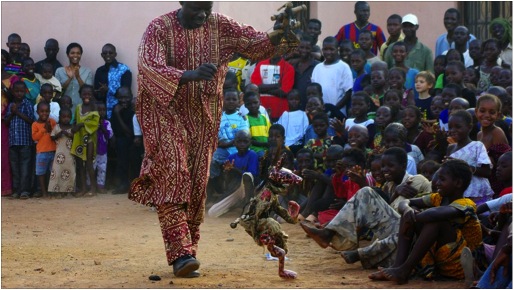
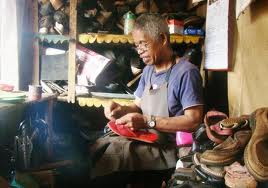
The following video is not the greatest, but it shows a Kola nut trader…. Enjoy!
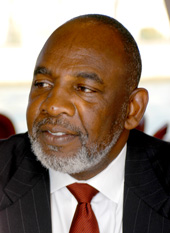
NASA’s First African astrophysicist and key player in the exploration of Mars with the Pathfinder and Sojourner projects, Cheikh Modibo Diarra is without doubt a brilliant scientist. As a physicist from similar background, this Malian scientist has inspired me by his intelligence and hard work. Cheikh Modibo Diarra earned his baccalaureate in Mali; he then went on to study mathematics, physics and analytical mechanics at the Pierre and Marie Curie University in Paris. After a while, he got bored by his classes (a sign of genius?) and went on an adventure exploring the world, and ended up in the USA at a friend’s invitation. He then attended Howard University in Washington DC where he earned a PhD in aerospatial engineering. Later, he taught at Howard as a physics professor, until one day he met two recruiters from Jet Propulsion Laboratory (a NASA Lab) in the corridor of his building. That’s when his career with NASA started. Recruited as NASA’s first African researcher, Diarra participated in programs such as the Magellan probe to Venus, the Ulysses probe to the Sun, the Galileo spacecraft to Jupiter, the Mars Observer and the Mars Pathfinder. He later became the director of NASA’s “Mars Exploration Program Education and Public Outreach.”
The Sojourner rover
In 1999, he created the Pathfinder Foundation for the education and development of Africa. Three years later, he founded the solar energy research laboratory of Bamako in Mali. He is involved in programs for the development of Africa. On the 20th of February 2006, he was appointed the head of Microsoft Africa. Cheikh Diarra is currently based in Johannesburg where he works with Microsoft South Africa and WECA (West , East and Central Africa).
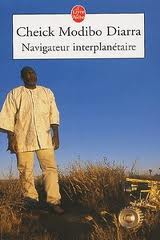
“Navigateur Interplanetaire” de Cheikh Modibo Diarra
Please help me applaud this proud African scientist, hailing from Segou, in the heart of the Bambara kingdom! If you have a chance, check out his book Navigateur Interplanétaire, which is available in French, and other languages. Other sites such as Grioo.com, africansuccess.org, and Wikipedia will provide you with more biographical information about this world-renowned Malian scientist!
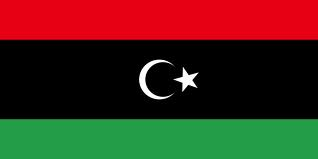
As I see so many wars in Africa today: the war in Libya against an entire people for oil and money (let’s be frank on this), and the genocide perpetrated against Ivorian people… I read last week, that they were already numbering 28,000 – 30,000 deaths in the city of Abidjan only. I don’t even dare thinking about how many died in the whole country, for Ouattara to be president! Now I understand why President Gbagbo always said that “Ouattara was the candidate of foreign powers”… and that is true: his entire security is done by French forces, French policemen are regulating traffic in Abidjan, sources say that there will be 1,000 French and Americans brought in to control Ivorian government officers and affairs… Am I dreaming or what? It’s like back in colonization time! As I cry for my friends in Libya on whom bombs are being dropped everyday in the name of ‘the protection of civilians’… I had to take you down memory lane, to talk about a neighboring country of Libya: Algeria, and the wars waged by France on Algeria which is exactly what we are seeing today in Cote d’Ivoire, and Libya. Such a brutal force shown by France and its allies on African soil is staggering… but it is not new! It was done earlier in Algeria, Madagascar, Cameroon and many other countries in Africa… except it was perpetrated over 50 years ago, and we thought that … well… we thought that that time was long gone. It is said that at least 150,000 people died in Algeria in 1954, and over 400,000 were killed in Cameroon in the 1960s… I warn those with frail hearts. Today, the page of imperialism has been re-opened, and it ain’t pretty!
Aujourd’hui je vois tant de guerres en Afrique: la guerre en Libye contre tout un peuple pour le pétrole et l’argent (soyons franc à ce sujet), et le génocide perpétré contre le peuple de Côte d’Ivoire pour son pétrole, cacao, café, diamants… Juste la semaine derniere on denombrait déjà 28.000–30.000 morts dans la ville d’Abidjan seulement! Je n’ose meme pas pensé au nombre de morts qu’il y a eu dans tout le pays afin que Ouattara soit président! A présent je comprends pourquoi le President Gbagbo disait toujours que “Ouattara est le candidat de l’étranger.” Et c’est vrai: sa sécurité est assurée par les forces françaises, des gendarmes français réglementent la circulation à Abidjan; selon certaines sources d’ici peu, il y aura 1000 français et Américains pour s’assurer du contrôle des fonctionnaires ivoiriens et des affaires … Je rêve ou quoi? On se croirait au temps de la colonisation! Je pleure pour mes amis libyens sur qui on largue des bombes au nom de la “protection des civils“. Aujourd’hui, je vais faire un rappel de mémoire, et je vais parler d’un pays limitrophe à la Libye: l’Algérie et les guerres menées par la France en Algérie qui sont exactement ce qui se passe aujourd’hui en Côte d’Ivoire et en Libye. Une force d’une telle brutalité montrée par la France et ses alliés en Afrique est horrible… mais pas nouvelle! Cela a eu lieu plus tôt en Algérie, Madagascar, Cameroun et d’autres nations africaines…. mais c’était il y a plus de 50 ans, et nous avions cru que cette époque-la était révolue! Il est dit qu’au moins 150.000 personnes sont mortes en Algérie en 1954, et plus de 400.000 ont été tuées au Cameroun dans les années 1960… Je mets en garde les âmes sensibles. Aujourd’hui, la page de l’impérialisme a été ré-ouverte, et ce n’est pas joli!
Il était une fois un grand roi Kotokoli (au Togo) qui possédait deux belles filles. Elles étaient toutes deux si ravissantes que, pour éviter qu’une mère jalouse leur jette un mauvais sort, le prénom des jeunes filles était tenu secret. Comme elles ont atteint maintenant l’âge nubile, le roi déclare :
Celui qui sera capable de deviner le nom de mes enfants, deviendra leur époux à toutes deux !
Bien des vaillants guerriers, bien des hardis chasseurs, bien des riches cultivateurs tentent leur chance. Mais il y a tant de prénoms possibles pour de belles jeunes filles que personne ne parvient à deviner ceux qui sont les bons.
Kakou Ananzè, l’araignée, vient à passer par là. Il entend parler de la promesse royale, et décide d’épouser les deux beautés. L’esprit de l’araignée, tout le monde le sait, est plein de ruse et d’astuce.
Kakou Ananze
Voici donc ce qu’il a inventé pour parvenir à ses fins. Il va se cacher en haut d’un manguier, aux branches bien touffues, tout au bord du marigot ou les jeunes filles ont l’habitude d’aller faire leurs ablutions.
Du haut de l’arbre, il laisse tomber sur une pierre plate, deux beaux bracelets qui se mettent à scintiller au soleil. L’aînée des jeunes filles aperçoit quelque chose qui brille dans la lumière, sur la berge. Etonnée, elle appelle sa sœur :
Dimdiya ! Dimdiya ! Ne vois –tu pas un curieux reflet sur cette pierre plate ? Qu’est-ce que cela peut bien être ?
La jeune sœur regarde à son tour et répond : Je n’en sais rien, Anakoussey ! Si nous allions voir de plus près !
Kakou Ananzè profite du fait qu’elles sont penchées sur les bracelets pour descendre de son arbre et s’en aller bien vite.
Un manguier
Le lendemain, Kakou Ananzè revêtu de son pagne de cérémonie, va rendre visite au roi et lui dit : “sire, je suis un puissant magicien de passage dans le pays. Par mon savoir, j’ai pu découvrir le nom de tes deux filles. Je viens voir si tu tiendras ta promesse.”
“Bon!” dit le roi, favorable à l’idée d’avoir pour genre un puissant magicien, “mes filles seront tes épouses si tu ne te trompes pas.”
“L’aînée de tes enfants s’appelle Anakoussey et la plus jeune Dimdiya” déclare alors solennellement Kakou Ananzè.
A ces paroles, le roi est émerveillé. Quelques jours plus tard, ont lieu les noces de Kakou Ananzè, d’Anakoussey et de Dimdiya.
Puis les deux sœurs, très heureuses d’avoir épousé un savant magicien, ont suivi leur mari dans Son village. Quelques années ont passé. Des enfants sont nés et ont grandi.
Un soir Kakou Ananzè, assis dans sa concession, jouait avec ses fils tandis que ses épouses préparaient le repas. Il dit alors : “Enfants, savez-vous ce que j’ai pour épouser vos mères ?”
Et vaniteux, pour obtenir l’admiration des jeunes garçons, il leur raconte la ruse qu’il avait autrefois inventée.
African princess
Anakoussey et Dimdiya ont entendu tout le récit et ont compris qu’elles ont été dupées et que leur époux n’est pas un puissant magicien. Furieuses, pendant la nuit, elles quittent la maison pour aller se réfugier chez leur père à qui elles révèlent la tromperie de l’araignée.
A son, plein de rage, le roi fait appeler ses guerrier; ils vont ensemble chez Kakou Ananzè, l’attrapent et le frappent jusqu’à le laisser pour mort.
Araignée, meurtri et tremblant se relève à grand-peine quand ils sont partis. Plein de frayeur, il se traîne dans un grand trou qui s’ouvre au tronc d’un vieil arbre et s’y cache.
Où sont les araignées maintenant encore? Vous voyez bien qu’elles continuent à se cacher dans les trous de l’écorce des vieux arbres.
Conte tiré de“Contes des Lagunes et Savanes,” Collection ‘Fleuve et Flamme,’ édition Edicef, 1975.
J’ai décidé de créer cette série intitulée “Devoir de Mémoire”… Nous n’avons pas le droit d’oublier les victimes du génocide et bombardements francais en Côte d’Ivoire. Nous ne devons pas oublier Laurent et Simone, Affi N’Guessan et Blé Goudé, Jean-Jacques et Geneviève, … C’est notre devoir! La presse internationale peut oublier (c’est d’ailleurs ce qu’elle fait) alors que des massacres de proches du President Gbagbo continuent d’être perpétrer en Côte d’Ivoire, alors qu’une épuration ethnique est en cours… en bref, un génocide est en cours en Côte d’Ivoire, et ce n’est pas parce que les occidentaux n’en parlent pas que nous africains avont le droit d’oublier. Ce sont nos frères, soeurs, pères, mères, et enfants qui sont tués pour leurs ideaux… juste parce qu’ils ont osés rever d’autre chose, à cause de leur appartenance ethnique, ou tout simplement pour avoir exercé leur droit de vote et d’expression! Je vous laisse donc avec une vidéo musicale réalisée en 2008 par de grandes stars ivoiriennes en support au President Gbagbo! Love it!
This week, I will be talking about the great civilization of the Solomonic era in Ethiopia and particularly Lake Tana. Butwhat does a lake have to do with civilization? Well, lake Tana is Ethiopia’s largest lake and is also the source of the Blue Nile. There are several islands on the lake: the Portuguese missionary Manuel de Almeida in the 17th century counted about 21 of which 8 had monasteries on them; today some count 45 of which 19 have monasteries dated from the 14th and 17th centuries on them. So what does it have to do with civilization?
Well, the sepulchers and remains of many emperors (14th-17th centuries), treasures of the Ethiopian church, as well as ancient manuscripts are kept on some of the most isolated islands of Lake Tana (Ura Kidane Mehret, Narga Selassie, Kebran Gabriel, Daga Estifanos, Medhane Alem of Rema, Kota Maryam, Mertola Maryam, etc)! It is being said that Frumentius, who introduced Christianity to Ethiopia, is buried on Tana Cherqos. The body of Yekuno Amlak rests in the monastery of St. Stephen on Daga island. Emperors Dawit I, Zara Yaqob, Za Dengel and Fasilides, also lay on Daga island.
Mural at Uda Kidane Mihret
Lake Tana was already known by Ptolemee in the 2nd century BC, which he called Pseboe or ‘hollow swamps‘ (marais creux en francais). It was very important in the 14th through the 17th centuries, as it played a key role in maintaining the Christian faith, and the rise of the Solomonic dynasty and the Christian Abyssinian empire. During the Solomonic dynasty, building churches and monasteries was emphasized, just like building pyramids in Egypt was emphasized by pharaohs. Many crown jewels, treasures and precious manuscripts were stored on islands on Lake Tana. The oldest of these forty churches from the Solomonic era was built in the 14th century. The architecture reflects its era: the use of round shapes in the building technique. Each monastery/church consists of three main rooms or areas: the inner sanctuary, the inner ambulatory, and the outer ambulatory. The outside walls of the sanctuary are covered with magnificent colorful paintings reflecting that era. Seven of these churches (and the most accessible) have been chosen by the UNESCO campaign for renovation.
Around the 16th century, lake Tana became an important trade center for travellers who were coming to the famous market of Bahir Dar by foot or tankwa (reed boats made out of papyrus). Lake Tana was an important stop linking the north to the south of Ethiopia.
This is a great article by Frantz Fanon, which I published earlier in French. (You will find the original here). In view of all the events occurring in Africa (bombing of Cote d’Ivoire and Libya) with the UN approval, I thought that this article, published in 1964, was so important that I had to translate it into english for all to read! Enjoy…
—————————————————
The great success of the enemies of Africa is to have corrupted the Africans themselves. It is true that these Africans had vested interest in the murder of Lumumba. Heads of puppet governments, in a fake independence, faced everyday by massive opposition from their peoples, it did not take long to convince themselves that the real independence of the Congo would put them personally at risk. And there were other Africans, a little less puppet, but who get frightened when it comes to disengaging Africa from the West. It seems as if these African Heads of State are still afraid to face Africa. These, also, though less actively, but consciously, contributed to the deterioration of the situation in Congo. Little by little, we were reaching the agreement in the West that there was a need to intervene in Congo, we could not let things evolve at this pace.
Gradually, the idea of a UN intervention was taking shape. So we can say today that two simultaneous errors were committed by Africans.
Patrice Lumumba
And first by Lumumba when he sought the intervention of the UN. He should have never called on the United Nations.The UN has never been able to properly solve problems brought to man’s consciousness by colonialism, and whenever it has intervened, it was to actually come to the aid of the colonial power to the oppressed country. Look at Cameroon. What kind of peace do the subjects of Mr. Ahidjo kept in check by a French expeditionary force, which most of the time, made its debut in Algeria, enjoy? The UN, however, controlled the autodetermination of Cameroon and the French government has set up a “Provisional Executive” there.
Look at Viet-Nam. Look at Laos.
It is not true to say that the UN fail because the causes are too difficult.
In reality the UN is the legal card used by imperialist interests when brute force has failed. The sharing, the mixed controlled joint committees, under guardianship are international means of torture to break the will of the people, cultivating anarchy, banditry and misery.
Today being the World press freedom day, I thought about the freedom of Press in Côte d’Ivoire which is being muzzled by the ADO-rebellion, and the series of media-lies I have heard from the big Western media. I chose to share with you, the different blogs, and newspapers, which present the other side of the story… the side of the people of Côte d’Ivoire who are currently being oppressed, traumatized, raped, attacked, and whose country is being invaded by external forces, and rebels. If you know of other good ones, please let me know.
Aujourd’hui étant la journée de la liberté de presse, j’ai pensé à la liberté de la presse en Côte d’Ivoire qui est muselée par le pouvoir ADO, et toute la série de média-mensonges que j’ai suivi sur les grandes chaînes occidentales. J’ai donc choisi de partager avec vous les différents blogs, et journaux, qui présentent l’autre côté de l’histoire… celle du peuple ivoirien qui est en ce moment opprimé, traumatisé, violé, attaqué et dont le pays est envahi par des forces étrangères et des rebelles. Si vous connaissez d’autres sites importants, partagez…
One of the great kings, and fighters of African freedom was the great Samori Touré. Over 100 years ago, Samori Touré was captured by the French and deported to Gabon where he died of pneumonia.
But who was Samori Touré?
Well, Samori Touré was born in 1830 in Manyambaladugu (some texts mentionSanankoro instead), a village southeast of Kankan in present-day Guinea. Samori was a great warrior who fought imperialism in the 19th century such as many leaders today. He refused to submit to French colonization and thus chose the path of confrontation using warfare and diplomacy.
Until the age of 20, Samori was a trader. After his mother was captured in a slave raid by the king Sori Birama, he offered to serve in his army and excelled by his military prowess and skills.
Samori Touré had a vision of unity for the Malinké people, and thus started organizing his empire using traditional and innovative methods. He effectively organized Malinké chiefdoms into a single state under his authority, at the core of which was the army. He managed to increase loyalty to the state in the Malinké people who now thought as one united people… this intensified their allegiance to him. His state was well-organized and efficient. Samori’s army was powerful, disciplined, professional, and trained in modern day warfare. They were equipped with European guns. The army was divided into two flanks, the infantry or sofa, with 30,000 to 35,000 men, and the cavalry or sere of 3,000 men. Each wind was further subdivided into permanent units, fostering camaraderie among members and loyalty to both the local leaders and Samori himself. Talk about African organization and discipline… this was really a strong army! His empire reached his apogee between 1883 and 1887, and he took the title of Almami or religious leader of a Muslim empire.
"L'Almami Samori Toure" de Khalil Fofana
Samori Touré created the Mandinka empire (the Wassoulou empire) between 1852 and 1882. His empire extended to the east as far as Sikasso (present-day Mali), to the west up to the Fouta Djallon empire (middle of modern day Guinea), to the north from Kankan to Bamako (in Mali); to the south, down to the borders of present-day Sierra Leone, Liberia, and Cote d’Ivoire. His capital was Bisandugu, in present day Gambia.
In the 1850s, slavery being abolished, European powers decided to establish colonies in Africa, and could not tolerate strong states like the Mandinka empire, and strong leaders like Samori Touré. These African leaders had to be crushed!
In 1882, at the height of the Mandinka empire, the French accused Samori Touré of refusing to comply to their order to withdraw from an important market center, Kenyeran (his army had blockaded the market). They thus started war on him. This was an excuse to start war! From 1882 to 1885, Samori fought the French and had to sign infamous treaties in 1886 and then 1887. In 1888, he took up arms again when the French reneged on the treaty by attempting to foster rebellion within his empire. He defeated the French several time between 1885 and 1889. After several confrontations, he concluded several treaties with the French in 1889.
Stamp from the Republic of Guinea
In 1890, he reorganized his army, and signed a treaty with the British in Sierra Leone, where he obtained modern weapons. He re-organized his army so as to stress defense, and employed guerilla tactics.
In December 1891, French forces overran the major cities of the Mandinka empire, leaving death and desolation in their wake (sounds familiar? Côted’Ivoire April 2011). These incursions into Touré’s empire led to exodus of the entire nation eastward. In 1893, Samori moved his capital east from Bisandugu to Dabakala. In 1894, the French assembled all their troops in western sudan (Senegal, Mali, Niger, etc…) to fight Samori.
Capture of Samori
Between 1893 and 1898, Samori’s army retreated eastward, toward the Bandama and Como (in modern day Cote d’Ivoire), conquering huge territories in the northern part of modern-day Cote d’ivoire. He led the scorched earth tactic, destroying every piece of land he evacuated. Although that tactic cut him from his new source of weapons in Liberia, he still managed to delay the French. He formed a second empire, and moved his capital to Kong, in upper Cote d’Ivoire. On May 1, 1898, the French seized the town of Sikasso and his army took up positions in the Liberian forests to resist a second invasion. This time Samori’s army fought valiantly but was no match to the power of the French arsenal. Samori forced to fight a total war against a foreign invader, and fighting against all odds, was captured on September 29, 1898, in his camp in Gué(lé)mou in present-day Côte d’Ivoire. He was exiled to Gabon where he died two years later on June 2, 1900.
Samori Touré was a warrior, a fighter, an empire builder, and one of the greatest African military leaders ever seen… he fought and won against the French army several times before his capture.
Interestingly enough, over 50 years later, the grandson of Samori, Sekou Touré, was the only one to say ‘NO’ to France, and to General De Gaulle: they preferred freedom over slavery under the European master… that was in Guinea!
Samori’s empire
Please check out the work of Pr. Yves Person on WebMande.net who wrote a book on Samori Touré, BlackHistoryPages, and this article published by the New York Times in 1898 about the Capture of Samori Toure by the French. According to the New York Times, Samori, “for nearly 13 years, was the most dangerous antagonists Europeans had had to deal with“. I could not find a good map of Samori’s empire anywhere… so I made my own based on all the boundaries and main cities conquered and his capitals: Bisandougou, Kankan, Bamako, Sikasso, Kong, Dabakala, Guelemou, etc… some of the cities may not be the same today (or even exist after 100 years), particularly the city of Dabadugu: Samori Toure defeated the French at Dabadugu, was it the city of Dabadugu near Kankan, or was it the city of Dabadugu near Nzerekore? I used Google map and made my own, respecting all the information found in all the different books and atlases I read. This is the entire kingdom, without taking into account the first and second empires. If you have further information, I will be happy to hear more.
«La vraie passion du XXème siècle, c’est la servitude», écrit Camus à propos de notre époque, laquelle «n’offre à choisir que des conformismes». Or comme toute passion, celle de la servitude est souffrance et produit doublement des patients, soit qu’on s’acharne à asservir les autres, soit qu’on se résigne à l’asservissement. L’on ne s’étonnera sans doute plus que les nations qui se sont autoproclamées propriétaires du monde, et qui de ce fait expriment bien de la souffrance, s’activent, à leur insu parfois, à produire de la souffrance en multipliant des risques de servitude génocidaire chaque fois que leurs intérêts sont interpellés.
Ces puissances du monde n’ont plus de scrupule à promouvoir l’industrie de la violence. Cette dernière ouvre des marchés, produit des armes qu’elle vend, et permet aux multinationales de revenir sur le terrain des violences rebâtir ce que leurs armes ont activement aidé à détruire. Au bout du compte, il ne s’agit que de marchés, et donc de bénéfices. Et depuis des siècles, l’Afrique est désignée comme terrain d’expérimentation multiforme pour de nouvelles règles diplomatiques, de nouveaux médicaments et des armes nouvelles dont les propriétaires du monde équipent des Forces naturellement Nouvelles…
L’Union européenne fait la force coloniale
L'Afrique
Notre monde n’aura pas beaucoup vu les forces de l’ONU censées maintenir la paix s’activer et s’imposer par leur efficacité au Rwanda où il se perpétrait bien des horreurs. Ces ”soldats de la paix” savaient regarder ailleurs. Tout aura même été fait pour les exfiltrer, les éloigner des zones des massacres, probablement pour «avoir la paix !»… Ce sont cependant ces mêmes ”soldats de la paix” que la même ONU entend largement, et cette fois efficacement, déployer en Côte d’Ivoire, pour cette paix à l’onusienne, dont l’objectif mal maquillé consiste à remettre une jeune nation africaine en revendication de sa souveraineté sous les fourches caudines d’une puissance coloniale à veto. Les forces de maintien de la paix de l’ONU vont donc, à ce qu’on dit, pacifier la Côte d’Ivoire. Il existe déjà en Afrique des pays où les populations savent que cette formule s’est toujours illustrée par des cimetières et des enterrements sommaires dans des fosses communes. Ainsi, c’est pour une raison hautement pacificatrice – quoique d’une éthique plutôt singulière – que l’Organisation des Propriétaires du monde s’est concertée et qu’elle s’est constituée en une internationale colonialiste pour les besoins de sa cause.
La Côte d’Ivoire est donc devenue un cas d’école pour l’Afrique et le monde, au lendemain des cinquantenaires de ce qu’on a pompeusement présenté comme les indépendances africaines. Certes la Côte d’Ivoire se serait volontiers passée d’une telle distinction ; mais à travers elle, c’est toute l’Afrique qui se trouve en devoir de constater qu’elle est traitée de la main gauche par la «Communauté internationale» dont elle est censée faire partie, mais dont elle devra se savoir exclue, parce que dans le lexique de l’Internationale colonialiste, «international» signifie «occidental». Du fait de l’ONU, l’Afrique se voit donc enfin officiellement et férocement confirmée dans son statut d’ensemble de territoires sans Etats véritablement souverains, la souveraineté d’aucun pays africain n’ayant véritablement figuré à l’ordre du jour de l’ordre colonial et néolibéral dominant. La diplomatie de la «Communauté internationale», inspirée par l’Internationale colonialiste veut que toutes les chancelleries le sachent ; que toutes l’entendent bien ainsi, mais que toutes se gardent bien de le dire, par diplomatie, en confirmation de l’adage où l’Union (européenne) fait la force (coloniale).
La notion de souveraineté appelle cependant quelques observations: chaque fois qu’un potentat africain monte un mauvais coup contre son peuple, il se drape de la « souveraineté» nationale dans l’espoir d’échapper à toute observation critique ou à toute évaluation extérieure. Ces potentats se plaisent d’autant plus à ce jeu qu’ils s’y livrent impunément, le plus souvent avec l’onction d’une métropole coloniale prompte à donner une crédibilité «internationale» à l’impénitent potentat. Le peuple peut toujours hurler son indignation et sa désolation : «l’homme fort» se sait couvert par son mentor métropolitain, qui lui-même se cache derrière des «accords de défense». Car sous prétexte de «coopération militaire», la métropole n’hésite jamais à défendre un dictateur contre un peuple, son propre peuple, qui l’a rejeté.
"Decoloniser la France" du Pr. Charly G. Mbock
La Côte d’Ivoire post électorale nous fait témoins d’un scénario différent, presque inverse : il s’y observe un flagrant déni de souveraineté du peuple ivoirien, moins cette fois par un potentat que par une communauté « internationale» à la rescousse d’une métropole en perte de vitesse en Afrique. Les calculs électoraux et les combinaisons politiciennes ayant mal abouti, il restait à la légalité de prévaloir, force devant rester à la loi. Et la loi fondamentale de la Côte d’Ivoire fait du Conseil constitutionnel le seul organe habileté à proclamer les résultats des élections, quelles qu’en soient la nature et les conditions de déroulement. Contrairement au scenario habituel, ce n’est plus un potentat qui cherche à spolier son peuple de sa souveraineté en comptant sur des appuis métropolitains étrangers. C’est une métropole coloniale qui s’appuie sur un lobby ethno diplomatique et financier pour imposer son diktat à un Etat dont les institutions ont formellement dit le droit, conformément à ses lois. Ce qu’aucune nation occidentale n’accepterait doit donc être imposé à une nation d’Afrique. C’est l’Afrique. Ce n’est donc pas important…
La question semblait banalement arithmétique ; elle a pris toute une dimension juridique et politique qui appelle d’autres questions :
La Côte d’Ivoire est-elle un état souverain membre de l’ONU ?
Si oui, disposerait-elle d’un arsenal juridique propre à en faire un état où se dit le droit ?
Ces lois ivoiriennes peuvent-elles être invoquées par les Ivoiriens pour des élections en Côte d’Ivoire ?
Si tel pouvait être le cas, d’où viendrait-il qu’une métropole, fût-elle aussi amicale et aussi désintéressée que la française, s’arroge le droit de lancer un ultimatum à un Chef d’Etat que le Conseil Constitutionnel de son pays a légalement proclamé élu, en validation corrective d’une arithmétique des urnes dont il pourrait s’avérer qu’elle a été viciée par des fraudes?