African Small trades: the Static Shoemaker/ Les Petits métiers africains: le Cordonnier Statique

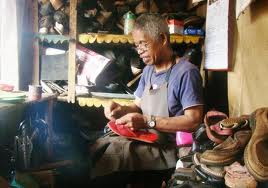
African shoemaker
African shoemaker

Dear All,

The other day, I realized that my favorite shoe’s sole was falling apart. I thought about taking it to some shoemaker, but my friends said ‘here in the west, there are barely any shoemaker… it will cost you more to repair a pair of shoes than buying… we just throw that shoe away, and then better just buy another one!’ I know in the West, capitalism prevails… but I don’t see the point in throwing away such a rare shoe (out-of-stock) and buying a not-so confortable one. For those with particularly delicate feet, when one finds a good pair of shoes, one tries to hang to it as much as possible. Then I thought about shoemakers back home. Oh, how I wish I was back home. There are shoemakers everywhere! In every neighborhood, there are shoemakers. Today, I will expose you to the small trade of shoemaker in Cameroon (Central Africa). It is actually an art… not everyboday can be a good shoemaker. In Cameroon, there is the static shoemaker who has a shop in almost every neighborhood, and then the mobile shoemaker who just has a tool box and walks around the neighborhoods with his tools. The static shoemaker also makes shoes of his own, usually by using goat skin to make shoes known as ‘Samara‘ or rubber to make those known as ‘tchang shoes‘. It is beautiful to watch them at work. It is really an art! Enjoy this video about the static shoemaker. Next time, it will be the mobile shoemaker.
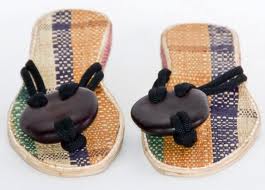
Des Samaras
Des Samaras

L’autre jour j’ai realisé que ma paire de chaussures préferée tombait en lambeau. J’ai pensé  à l’apporté chez un cordonnier, mais mes amis m’ont dit: ‘Ici en Occident, il y a très peu de cordonniers… ca va te plus coûter  cher de reparer ta chaussure que d’acheter une nouvelle… Nous on jette ces paires-là, et on en achete de nouvelles!’ Je sais qu’en occident, le capitalisme prévaut… mais je ne comprends pas pourquoi je devrais jeter une paire de chaussures aussi rare et encore en bon etat, et acheter une autre moins confortable. Pour ceux qui ont les pieds délicats, dès qu’on trouve une bonne paire de chaussures, on essaie de la garder aussi longtemps que possible. Et cela m’a fait pensé aux cordonniers là-bas au pays. Oh combien j’aimerais être au pays! Il y a des cordonniers partout… dans tous les quartiers! Aujourd’hui, je vais vous parler du métier de coordonnier au Cameroun (Afrique Centrale). C’est en fait un art… ce n’est pas tout le monde qui peut être coordonnier. Au Cameroun, il y a le cordonnier statique qui a une boutique ou échoppe et qu’on retrouve dans tous les quartiers, et le cordonnier ambulant qui a juste sa boîte à outils et se promène dans tous les quartiers de la ville avec ses outils. Le cordonnier statique fabrique aussi des chaussures, en utilisant soit la peau de chèvre tannée ou du raffia avec lesquels il fabrique des chaussures communément appelee ‘Samara‘, ou du caoutchouc pour faire celles qu’on appelle ‘tchang-shoes‘. Aujourd’hui, je vous offre de regarder une vidéo sur le coordonnier statique. Le cordonnier ambulant sera pour la prochaine fois!

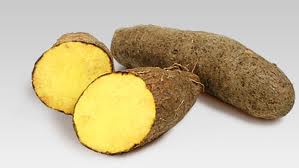
L’origine de l’igname

L'igname (yam)
L'igname (yam)

Y a – t-il quelque chose de plus important que l’igname dans nos village? Pourrait-on vivre sans des cérémonies : la fête des ignames; C’est comme si on célébrait l’anniversaire de ces gros tubercules à la brune et à la chair  blanche. Sans eux les hommes perdraient leur force, les femmes deviendrait  malades, les villages se dé-peupleraient. Et pourtant, vous aurez sans doute du mal à le croire ; C’est un chasseur courageux  qui l’a apportée aux hommes. Voici comment les choses se sont passées, ou du moins voici ce qu’on raconte à ce sujet, le soir, dans nos villages.

Selon la coutume, le cinquième jour de la semaine ne ressemble pas du tout aux autres: en effet, ce jour-là il est interdit de travailler. Personne ne peut donc se rendre en brousse pour y chasser ou cultiver la terre. On dit que les génies de l’eau et de la forêt se sont réservés ce jour pour faire leurs cérémonies. Alors, gare à celui qui ose s’aventurer en brousse: il court de graves dangers.

Gossan, le plus fameux des chasseurs de la région, n’ignore pas ces dangers quand il décide d’aller à la chasse, le cinquième jour de la semaine. Il est très brave. Il ne connaît ni la peur ni la fatigue. Il veut savoir si la coutume de ne pas travailler durant le cinquième jour de la semaine est justifiée ou non.

Au lever du soleil il prend son arc et ses flèches. D’un pas décidé, il s’enfonce dans la forêt. Peu de temps après, il est déjà si loin que les cocoricos des coqs du village ne lui parviennent plus. Il continue à marcher, s’enfonçant toujours plus profondément  dans la forêt mystérieuse. Le soleil est maintenant au plus haut dans le ciel. Continue reading “L’origine de l’igname”

Beatrice of Congo: the African Priestess and Prophet

Beatriz Kimpa Vita
Beatriz Kimpa Vita

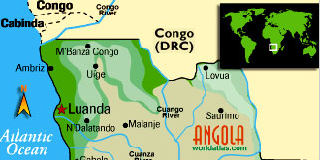
Beatriz Kimpa Vita, also known as Beatrice of Congo, or Dona Beatriz, or Tchimpa M’vita, was an African prophet (yeah… a female prophet) or priestess born around 1684 in the Kingdom of Kongo in a territory near Mt Kibangu which is in modern day Angola.  She created her own religious movement which used Christian symbols but revitalized traditional Kongo cultural roots. Born into a noble clan, the Mwana Kongo clan, she was baptized in her youth. In her childhood, Kimpa Vita was already having visions and dreams of playing with angels, and it is said that these as well as her high spirits caused her two youthful marriages to fail. This made her lean deeper into spiritual life. She was trained as a nganga marinda or as a person able to communicate with spirits (the supernatural world). However, she soon renounced that role to move closer to the catholic faith.

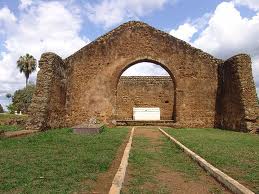
Church of Mbanza Kongo, ca 1549

She received visions of St Anthony of Padua, and believed to be a medium for his spirit. She started preaching soon after, in the city of Mbanza Kongo (which means ‘City of Kongo‘) or Sao Salvador. She occupied the old church of Mbanza Kongo. She said that God wanted Mbanza Kongo to be restored as the capital of the Kongo kingdom; she called it the biblical Bethlehem. She had direct revelations from God on her side; apparently, she died every Friday and spent each weekend in Heaven conferring with the Heavenly Father about the affairs of Kongo. From these sessions in Heaven she learned the stories of Jesus being born in Nsundi, baptized in Sao Salvador and Mary being a slave of a Kongo marquis. She basically made the catholic religion a Kongo religion based on Kongo’s rich culture for the Kongo people: she made God closer to the Kongo people! She healed people, and was able to make sterile women conceive.

Map of Angola showing Mbanza Kongo

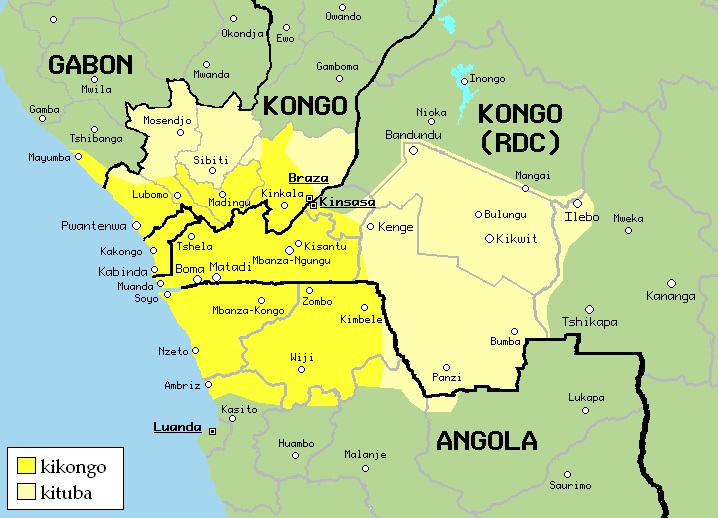
Her call to unity drew strong support among thousands of peasants, who flocked to the city. She told her followers that Jesus, Mary and other Christian saints were really Kongolese. In one of her visions, she saw that Kongo (which had been divided and under wars after the death of King Antonio I, with slave ships increasingly taking people to Brazil, Surinam, etc) must reunite under one king in order to prosper. She was ordered by God to build a specific Kongolese Catholicism and unite the Kongo under one king. Her message became so popular it could be called a Spiritual renaissance. This threatened the influence of the Catholic Church amongst the African people. Her Movement was called Antonian. Even though it integrated Kongolese culture with catholicism, the catholic priests drove the supporters of Kimpa Vita away. Some were imprisoned and beaten daily for their convictions. This is quite similar to the fate of the early apostles of Jesus Christ.

Kongo Kingdom map
Kongo Kingdom map

In 1706 Kimpa Vita gave birth to a son after two miscarriages. She continued to emphasize the closeness of God to the African people, which was a unifying factor amongst Antonians. The establishment of the Antonian movement and its consequent success led to the arrest of Kimpa Vita, her son and her followers. They were charged with heresy. The miracles performed by Kimpa Vita were denounced as “kindoki” or the use of supernatural powers. Kimpa Vita and her infant son were burned at the stake as a “witch” under the watchful eye of capuchin priests who had helped convicting her. The Antonian movement started by Kimpa lived throughout times and outlasted her. The Kongo king Pedro IV used it to unify and renew his kingdom. Her ideas remained among the peasants, appearing in various messianic cults until, two centuries later, it took new form in the preaching of Simon Kimbangu. It was also exported to the new world, in Brazil, Surinam, Haiti, Jamaica, and the US. It is said that the Haitian revolutionaries during their fights were screaming “Kanga Mundele, Kanga Ndoki” which are words used in the salva Antonina, one of Mama Kimpa Vita’s prayers.

Check out the writings of Norman C. Brockman, the book The Kongolese Saint Anthony: Dona Beatriz Kimpa Vita and the Antonian Movement, 1684-1706 by Pr. John K. Thornton and his very insightful interview to the website Execute Today, and R.S. Basi’s book “The Hand of God.” The article Kongo dia Ntotila posted on the website of ‘Le Front National Kongolais’ is a true jewel. The city of Mbanza Kongo which is the first church ever built south of the equator is now part of UNESCO World Heritage. There is piece of theatre made in Kimpa Vita’s great honor.

Truth Dispatch: Update on Libya

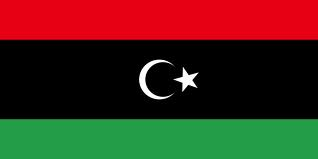
Flag of Libya
Flag of Libya

This article is by Cynthia McKinney on Pambazuka’s website.  You can read the full article there or watch videos.

——–

DAY ONE: On Libyan–Tunisian border, it’s back to the future with refugees
3–4 June 2011 – Djerba, Tunisia

During the last air sanctions against Libya, imposed by the United Nations in 1992 over alleged Libyan involvement in the bombings of PanAm 103 and UTA 772, many Libyans travelling to and from Tripoli were forced to fly through Tunisia, travelling overland to and from the Tunisian border to their homes in Libya. With European Union sanctions now imposed on Libya, the old travel regime is back in force.

However, there is a new dimension to the air embargo on Libya. Attracted to the Libyan–Tunisian border by refugees, most African guest workers from sub-Sahara and pan-Sahel African nations, fleeing the fighting in their country, find that scores of international aid workers now occupy the tourist hotels of Djerba, the once popular Tunisian resort that has fallen on hard times after tour operators cancelled excursions following the Tunisian revolution earlier this year.

Today, prior to crossing into Libya, this reporter is witnessing representatives of the ‘misery industry’, young international aid workers with groups like the International Committee of the Red Cross, EU and International Organisation for Migration, lounging around the tourist hotels mingling with German and French pensioners eager to take advantage of the special travel packages being offered by a depressed Tunisian tourist industry.

Not only is war good for the weapons industry but refugee crises brought about by Western-implemented wars, fattening the wallets of NGOs anxious to cash in on the human misery created by Pentagon and NATO (North Atlantic Treaty Organisation) overt and covert military operations. Meanwhile, here in Djerba, near the Libyan frontier, it’s pool-side and cold Heinekens for the NGO community here to ‘save’ the Libyan refugees.

DAY TWO: Western Libya portrait is not what is being painted by the Western media
4–5 June 2011 – Tripoli, Libya

Western media reports continue to indicate that Libyan rebels trying to oust Libyan leader Muammar Gaddafi from power, backed by daily NATO airstrikes, are gaining ground in western Libya. During a six-hour drive from the Tunisian border to Tripoli, the Libyan capital, this reporter saw no signs of Libyan rebel successes in western Libya. In fact, I witnessed a spontaneous pro-Gaddafi demonstration on the main Tunisia–Tripoli highway in a town about one and a half hours west of Tripoli.

The green flag of the Libyan Arab Jamahiriya not only adorn flag poles in towns from Tripoli to the Tunisian border, but a number of private residences are flying the green flag from their rooftops, on flag poles and even from outside of top-floor windows in medium-size and small towns alike along the main highway.

There are some telltale signs of previous fighting in the western part of the country – bullet holes in the walls of some buildings and even some more extensive structural damage – but there are no signs that the rebels, backed by the United States, NATO and the European Union, have any substantial support in western Libya.  …..

To read more go to Pambazuka

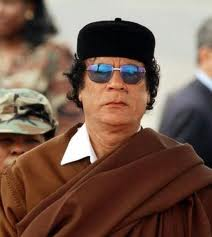
Message du Guide Libyen/ Message from the Libyan Guide

Traduit de l’arabe en anglais par le professeur Sam Hamod. English version sur The African Independent. Faites un tour sur le site Mathaba pour avoir la version libyenne des faits!

Au nom d’Allah, le Clément, le Miséricordieux… Depuis 40 ans, à moins que ce ne soit plus, je ne me souviens pas, j’ai fait tout mon possible pour donner aux gens des maisons, des hôpitaux, des écoles, et, quand ils avaient faim, je leur ai donné à manger. À Benghazi, j’ai même transformé le désert en terres arables, j’ai tenu tête aux attaques de ce cow-boy, Reagan, quand il a tué ma fille adoptive orpheline. Essayant de me tuer, il a tué à la place cette pauvre enfant innocente. Ensuite, j’ai épaulé mes frères et sœurs d’Afrique avec de l’argent pour l’Union africaine.

J’ai fait tout mon possible pour aider les gens à comprendre le vrai concept de démocratie, qui consiste en des comités populaires dirigeant leur pays. Mais ce n’était jamais assez, comme me l’ont dit certains. Même ceux qui possédaient une maison de 10 chambres, des costumes et du mobilier neufs, n’étaient jamais satisfaits. Ils étaient si égoïstes qu’ils en voulaient toujours plus. Ils ont dit aux Zuniens et aux autres visiteurs qu’ils avaient besoin de « liberté » de « démocratie » et n’ont jamais réalisé qu’il s’agit d’un système de panier de crabes, où le plus gros bouffe les autres. Ils étaient seulement ensorcelés par ces mots, sans réaliser jamais qu’en Zunie, il n’y a pas de médicaments gratuits, ni d’hôpitaux gratuits, ni de logement gratuit, ni d’enseignement gratuit, ni non plus de nourriture gratuite, sauf quand les gens sont obligés de mendier ou de faire longtemps la queue pour avoir de la soupe.

Non, peu importe ce que j’ai réalisé ! Pour certains ce n’était jamais assez. Mais les autres savaient que j’étais le fils de Gamal Abdel Nasser, le seul vrai leader musulman arabe que nous avons eu depuis Salah-al-Din. Nasser était sur ses traces quand il a exigé le canal de Suez pour son peuple, tout comme j’ai réclamé la Libye pour mon peuple. J’ai essayé de l’imiter pour garder mon peuple libre de la domination coloniale, des voleurs qui nous détroussent.

Maintenant, je suis attaqué par la plus grande force de l’histoire militaire. Obama, mon petit-fils africain, veut me tuer, priver notre pays de liberté, nous priver de la gratuité de nos biens : logements, médecine, éducation, nourriture, et remplacer tout ça par la grivèlerie à la zunienne appelée « capitalisme. » Or, nous tous, dans le tiers monde, savons ce que cela veut dire. Cela signifie que les multinationales dirigeront le pays, dirigeront le monde, et le peuple souffrira. Voilà pourquoi il n’y a pas d’autre solution pour moi, je dois prendre mes dispositions. Et si Allah le veut, je mourrai en suivant Sa Voie, la voie qui a rendu notre pays riche en terres arables, avec de quoi manger et la santé, et nous a même permis d’aider nos frères et sœurs africains et arabes en les faisant travailler ici avec nous, dans le Jamahiriya libyen.

Je ne désire pas mourir, mais si cela devait advenir, pour sauver cette terre, mon peuple, tous ces milliers de gens qui sont tous mes enfants, alors qu’il en soit ainsi.

Que ce testament soit ma voix dans le monde. J’ai tenu tête à l’agression des croisés de l’OTAN, résisté à la cruauté, contrecarré la trahison ; je me suis élevé contre l’Occident et ses ambitions colonialistes, et, avec mes frères africains, mes vrais frères arabes et musulmans, je suis dressé comme un phare de lumière. Quand d’autres construisaient des châteaux, je vivais dans une maison modeste et dans une tente. Je n’ai jamais oublié ma jeunesse à Syrte, je n’ai pas stupidement dépensé notre trésor national, et comme Salah-al-Din, notre grand leader musulman qui sauva Jérusalem pour l’Islam, je n’ai guère pris pour moi-même… En Occident, sachant pourtant la vérité, certains me qualifient de «fou» de «bizarre», ils continuent de mentir, ils savent que notre pays est indépendant et libre, et non pas sous emprise coloniale, que ma vision, ma conduite, est et a été sincère et pour mon peuple, et que je me battrai jusqu’à mon dernier souffle pour garder notre liberté.

Puisse Allah Tout-Puissant nous aider à rester fidèles et libres.

Colonel Kadhafi Mouammar, Guide de la Révolution, 5 avril 2011

Original : mathaba.net/news/?x=626396

Traduction copyleft de Pétrus Lombard

Traduit de l’arabe en anglais par le professeur Sam Hamod.

Note du traducteur : Les dirigeants occidentaux savent la valeur humaine de Kadhafi, et le danger d’éveil de conscience du public qu’elle représente. Voilà pourquoi elle est soigneusement cachée et pourquoi tous les grands médias diabolisent Kadhafi. On peut constater en creusant un peu que pratiquement tout ce dont la Libye a été accusée a été soigneusement tramé en Occident ou en Israël. Comme d’habitude, il s’agissait de coups montés. Comme l’ont démontré les pièces à conviction pipées dans les procès, il est très improbable que les attentats contre des avions de ligne étaient des complots libyens.

Kola nut: the ‘Welcome’ nut of Africa

Kola nut
Kola nut

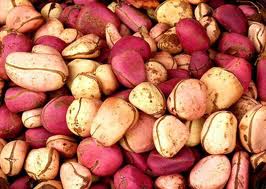
Have you ever been to an African ceremony where there was no kola nut?  Have you ever tasted that bitter nut?  The Kola nut?  Well… first off, there are rarely African ceremonies without kola nut; kola nut is to African ceremonies what silicon is for the semiconductor industry… ubiquitous!  Kola nut is usually eaten by adults and is used to welcome guests in African villages…  I have tried that bitter nut! My dad would not let me touch it when I was a child,… I don’t think children taste those!  Once older, I tried it, and really I could not understand what was so special about it…  It is soooooo bitter!   All I know is that it is the “Welcoming” nut! It is often presented to chiefs or to guests as a welcoming sign.  It has a sweet aroma, and an attractive pink color… maybe that’s why I was attracted to it as a child (before tasting it)!  Kola nuts are broken from their shell and then consumed by chewing just like gum.  One can usually recognize an avid Kola nut consumer, because his teeth will be stained with a yellowish color: an advise… just like in everything ‘do not overdo!’  It is a caffeine containing nut, which is used to re-energize oneself, and also to ease hunger pangs.  It is said that it contains three times the caffeine found in coffee! So all the coffee lovers should rejoice!  Kola nut is an important part of traditional life in Africa, particularly in West and Central Africa… it is used in religious rites, sacred offerings, weddings, naming ceremonies, funerals, etc.  Chinua Achebe often mentions it in his books.  In the Western world, it is well-known as the main ingredient of the soft-drink Coca Cola!  How is it called in your country? Describe your first encounter with kola nut.

The following video is not the greatest, but it shows a Kola nut trader…. Enjoy!

Cheikh Modibo Diarra: NASA’s First African Astrophysicist

Cheikh Modibo Diarra

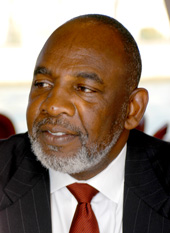
NASA’s First African astrophysicist and key player in the exploration of Mars with the Pathfinder and Sojourner projects, Cheikh Modibo Diarra is without doubt a brilliant scientist.  As a physicist from similar background, this Malian scientist has inspired me by his intelligence and hard work.  Cheikh Modibo Diarra earned his baccalaureate in Mali; he then went on to study mathematics, physics and analytical mechanics at the Pierre and Marie Curie University in Paris.  After a while, he got bored by his classes (a sign of genius?) and went on an adventure exploring the world, and ended up in the USA at a friend’s invitation.  He then attended Howard University in Washington DC where he earned a PhD in aerospatial engineering. Later, he taught at Howard as a physics professor, until one day he met two recruiters from Jet Propulsion Laboratory (a NASA Lab) in the corridor of his building.  That’s when his career with NASA started.  Recruited as NASA’s first African researcher, Diarra participated in programs such as the Magellan probe to Venus, the Ulysses probe to the Sun, the Galileo spacecraft to Jupiter, the Mars Observer and the Mars Pathfinder.  He later became the director of NASA’s “Mars Exploration Program Education and Public Outreach.”

The Sojourner rover
The Sojourner rover

In 1999, he created the Pathfinder Foundation for the education and development of Africa.  Three years later, he founded the solar energy research laboratory of Bamako in Mali.  He is involved in programs for the development of Africa. On the 20th of February 2006, he was appointed the head of Microsoft Africa.  Cheikh Diarra is currently based in Johannesburg where he works with Microsoft South Africa and WECA (West , East and Central Africa).

"Navigateur Interplanetaire" de Cheikh Modibo Diarra
“Navigateur Interplanetaire” de Cheikh Modibo Diarra

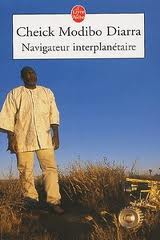
Please help me applaud this proud African scientist, hailing from Segou, in the heart of the Bambara kingdom!  If you have a chance, check out his book Navigateur Interplanétaire, which is available in French, and other languages.  Other sites such as Grioo.com, africansuccess.org, and Wikipedia will provide you with more biographical information about this world-renowned Malian scientist!

French-Algerian wars / Les guerres France – Algérie

As I see so many wars in Africa today: the war in Libya against an entire people for oil and money (let’s be frank on this), and the genocide perpetrated against Ivorian people… I read last week, that they were already numbering 28,00030,000 deaths in the city of Abidjan only. I don’t even dare thinking about how many died in the whole country, for Ouattara to be president! Now I understand why President Gbagbo always said that “Ouattara was the candidate of foreign powers”… and that is true: his entire security is done by French forces, French policemen are regulating traffic in Abidjan, sources say that there will be 1,000 French and Americans brought in to control Ivorian government officers and affairs… Am I dreaming or what? It’s like back in colonization time! As I cry for my friends in Libya on whom bombs are being dropped everyday in the name of ‘the protection of civilians’… I had to take you down memory lane, to talk about a neighboring country of Libya: Algeria, and the wars waged by France on Algeria which is exactly what we are seeing today in Cote d’Ivoire, and Libya. Such a brutal force shown by France and its allies on African soil is staggering… but it is not new! It was done earlier in Algeria, Madagascar, Cameroon and many other countries in Africa… except it was perpetrated over 50 years ago, and we thought that … well… we thought that that time was long gone. It is said that at least 150,000 people died in Algeria in 1954, and over 400,000 were killed in Cameroon in the 1960s… I warn those with frail hearts. Today, the page of imperialism has been re-opened, and it ain’t pretty!

– – – – – – – – – – – – – – – – – – – – – – – – – – – – – – – – –

Aujourd’hui  je vois tant de guerres en Afrique: la guerre en Libye contre tout un peuple pour le pétrole et l’argent (soyons franc à ce sujet), et le génocide perpétré contre le peuple de Côte d’Ivoire pour son pétrole, cacao, café, diamants… Juste la semaine derniere on denombrait déjà 28.00030.000 morts dans la ville d’Abidjan seulement! Je n’ose meme pas pensé au nombre de morts qu’il y a eu dans tout le pays afin que Ouattara soit président! A présent je comprends pourquoi le President Gbagbo disait toujours que “Ouattara est le candidat de l’étranger.” Et c’est vrai: sa sécurité est assurée par les forces françaises, des gendarmes français réglementent la circulation à Abidjan; selon certaines sources d’ici peu, il y aura 1000 français et Américains pour s’assurer du contrôle des fonctionnaires ivoiriens et des affaires … Je rêve ou quoi? On se croirait au  temps de la colonisation! Je pleure pour mes amis libyens sur qui on largue des bombes au nom de la “protection des civils“.  Aujourd’hui, je vais faire un rappel de mémoire, et je vais parler d’un pays limitrophe à la Libye: l’Algérie et les guerres menées par la France en Algérie qui sont exactement ce qui se passe aujourd’hui en Côte d’Ivoire et en Libye. Une force d’une telle brutalité montrée par la France et ses alliés en Afrique est horrible… mais pas nouvelle! Cela a eu lieu plus tôt en Algérie, Madagascar, Cameroun et d’autres nations africaines…. mais c’était il y a plus de 50 ans, et nous avions cru que cette époque-la était révolue! Il est dit qu’au moins 150.000 personnes sont mortes en Algérie en 1954, et plus de 400.000 ont été tuées au Cameroun dans les années 1960… Je mets en garde les âmes sensibles. Aujourd’hui, la page de l’impérialisme a été ré-ouverte, et ce n’est pas joli!

Araignée se marie

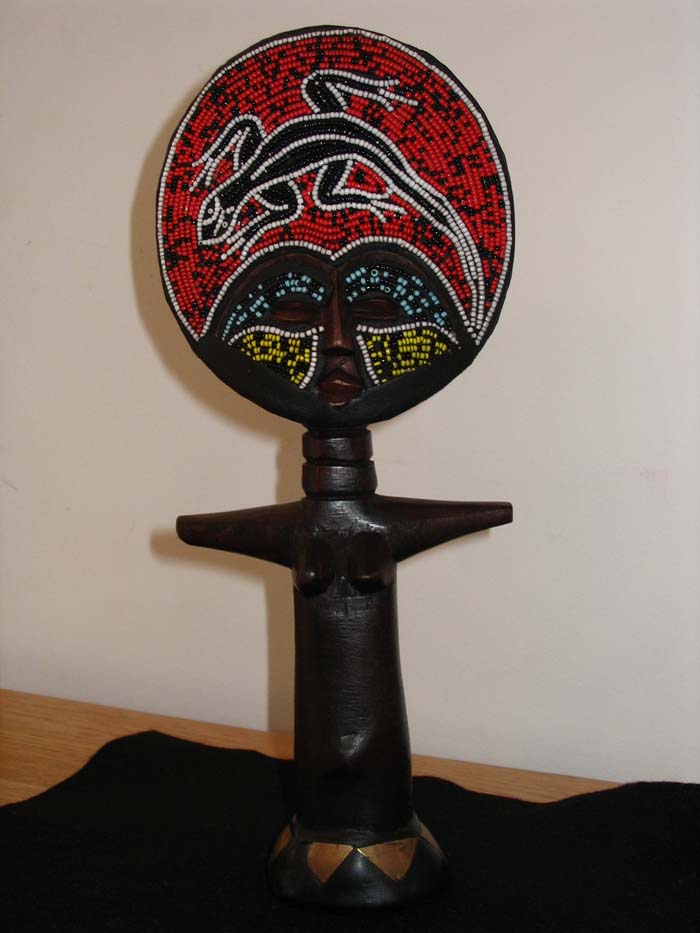
Poupee Ashanti
Poupee Ashanti

Il était une fois un grand roi Kotokoli (au Togo) qui possédait deux belles filles.  Elles étaient toutes deux si ravissantes que, pour éviter qu’une mère jalouse leur jette un mauvais sort, le prénom des jeunes filles était tenu secret.  Comme elles ont atteint maintenant l’âge nubile, le roi déclare :

Celui qui sera capable de deviner le nom de mes enfants, deviendra leur époux à toutes deux !

Bien des vaillants guerriers, bien des hardis chasseurs, bien des riches cultivateurs tentent leur chance.  Mais il y a tant de prénoms possibles pour de belles jeunes filles que personne ne parvient à deviner ceux qui sont les bons.

Kakou Ananzè, l’araignée, vient à passer par là.  Il entend parler de la promesse royale, et décide d’épouser les deux beautés.  L’esprit de l’araignée, tout le monde le sait, est plein de ruse et d’astuce.

Kakou Ananze
Kakou Ananze

Voici donc ce qu’il a inventé pour parvenir à ses fins.  Il va se cacher en haut d’un manguier, aux branches bien touffues, tout au bord du marigot ou les jeunes filles ont l’habitude d’aller faire leurs ablutions.

Du haut de l’arbre, il laisse tomber sur une pierre plate, deux beaux bracelets qui se mettent à scintiller au soleil.  L’aînée des jeunes filles aperçoit quelque chose qui brille dans la lumière, sur la berge.  Etonnée, elle appelle sa sœur :

Dimdiya ! Dimdiya ! Ne vois –tu pas un curieux reflet sur cette pierre plate ? Qu’est-ce que cela peut bien être ?

La jeune sœur regarde à son tour et répond : Je n’en sais rien, Anakoussey ! Si nous allions voir de plus près !

Kakou Ananzè profite du fait qu’elles sont penchées sur les bracelets pour descendre de son arbre et s’en aller bien vite.

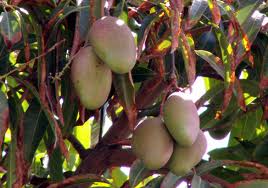
Un manguier
Un manguier

Le lendemain, Kakou Ananzè revêtu de son pagne de cérémonie, va rendre visite au roi et lui dit : “sire, je suis un puissant magicien de passage dans le pays. Par mon savoir, j’ai pu découvrir le nom de tes deux filles.  Je viens voir si tu tiendras ta promesse.”

“Bon!” dit le roi, favorable à l’idée d’avoir pour genre un puissant magicien, “mes filles seront tes épouses si tu ne te trompes pas.”

“L’aînée de tes enfants s’appelle Anakoussey et la plus jeune Dimdiya” déclare alors solennellement Kakou Ananzè.

A ces paroles, le roi est émerveillé.  Quelques jours plus tard, ont lieu les noces de Kakou Ananzè, d’Anakoussey et de Dimdiya.

Puis les deux sœurs, très heureuses d’avoir épousé un savant magicien, ont suivi leur mari dans Son village.  Quelques années ont passé. Des enfants sont nés et ont grandi.

Un soir Kakou Ananzè, assis dans sa concession, jouait avec ses fils tandis que ses épouses préparaient le repas.  Il dit alors : “Enfants, savez-vous ce que j’ai pour épouser vos mères ?”

Et vaniteux, pour obtenir l’admiration des jeunes garçons, il leur raconte la ruse qu’il avait autrefois inventée.

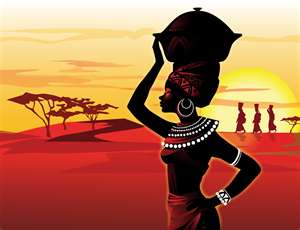
African princess
African princess

Anakoussey et Dimdiya ont entendu tout le récit et ont compris qu’elles ont été dupées et que leur époux n’est pas un puissant magicien.  Furieuses, pendant la nuit, elles quittent la maison pour aller se réfugier chez leur père à qui elles révèlent la tromperie de l’araignée.

A son, plein de rage, le roi fait appeler ses guerrier; ils vont ensemble chez Kakou Ananzè, l’attrapent et le frappent jusqu’à le laisser pour mort.

Araignée, meurtri et tremblant se relève à grand-peine quand ils sont partis.  Plein de frayeur, il se traîne dans un grand trou qui s’ouvre au tronc d’un vieil arbre et s’y cache.

Où sont les araignées maintenant encore? Vous voyez bien qu’elles continuent à se cacher dans les trous de l’écorce des vieux arbres.

Conte tiré de “Contes des Lagunes et Savanes,” Collection ‘Fleuve et Flamme,’ édition Edicef, 1975.

Devoir de Mémoire: Laurent et Simone Gbagbo

J’ai décidé de créer cette série intitulée “Devoir de Mémoire”… Nous n’avons pas le droit d’oublier les victimes du génocide et bombardements francais en Côte d’Ivoire.  Nous ne devons pas oublier Laurent et Simone, Affi N’Guessan et Blé Goudé, Jean-Jacques et Geneviève, … C’est notre devoir!  La presse internationale peut oublier (c’est d’ailleurs ce qu’elle fait) alors que des massacres de proches du President Gbagbo continuent d’être perpétrer en Côte d’Ivoire, alors qu’une épuration ethnique est en cours… en bref, un génocide est en cours en Côte d’Ivoire, et ce n’est pas parce que les occidentaux n’en parlent pas que nous africains avont le droit d’oublier.  Ce sont nos frères, soeurs, pères, mères, et enfants qui sont tués pour leurs ideaux… juste parce qu’ils ont osés rever d’autre chose, à cause de leur appartenance ethnique, ou tout simplement pour avoir exercé leur droit de vote et d’expression!  Je vous laisse donc avec une vidéo musicale réalisée en 2008 par de grandes stars ivoiriennes en support au President Gbagbo! Love it!