First of all, I would like to praise the victory of Macky Sallin Senegal againstAbdoulaye Wade… Apparently, and the foreign press does not want to give the real results,Wade received a real K.O.… He was apparently knocked out withless than 30% of voicesin thesecond round of the presidential elections in Senegal. Congratulations to Macky Sall and the people of Senegal who defeated the octogenarian Abdoulaye Wade. I am particularly joyous becauseAbdoulaye Wade has viciously destabilized some of the most stable countries in Africa in the past few years: Guinea, Cote d’Ivoire, Libya, and recently Mali.This man totally served the western interests of stopping the formation of a United States of Africa, or rather the FMA (Fonds monetaire Africain), and the formation of a common currency. He betrayedKadhafi, and many others. I have no pity for somebody who was ready to transform his country into a monarchy… like Togo and Gabon… he just made the mistake of thinking that Senegal was Togo or Gabon. He should pay for his crimes and should also be prosecuted for crimes against humanity in Cote d’Ivoire and Libya. So long Gorgui… You will not be missed!
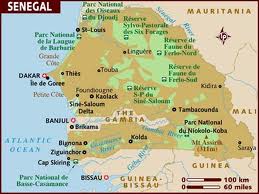
Map of Senegal
As I said,this is a people’s win… however, history (on the continent) has shown that simple alternance of power does not mean a true system change.Macky Sall may be good willing, full of good intentions, but how can he act if he does not even control his country’s currency? how can he act when the true power resides elsewhere, in the hexagon?Well we wish Macky Sall the best, and all children of Africa rejoice for his victory and that of the Senegalese people.We also hope that there could be light at the end of the tunnel, and give Macky Sall our entire support in leading his country.
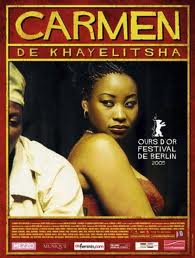
All praise to the 2005 South African version of Carmen of Bizet: U-Carmen e-Khayelitsha. This operatic is set entirely in a South African township, in Cape town, Khayelitsha, and it is entirely in Xhosa, one of South Africa’s main languages! Thrilled is a word that cannot explain my joy… In all honesty, I was amazed to see an entire opera entirely set in Africa, with African actors. A modern-day Carmen, the film carries the energy known to belong to South African singers. These authentic voices shed a new light on opera, and bring in a full South African touch. It brings out the dynamic heat of township life through the exciting combination of a violent gangster tale intertwined with an almost supernatural love story. As it unfolds, it explores the issue of the position of a strong woman in a male-dominated society, the issue of wealth and fame, and abuser and victim. I am sure Georges Bizet himself would have been stunned by director Mark Dornford-May’s rendition of his work. It definitely deserved all the awards it got, among which the 2005 Golden Bear at the Berlin film festival.
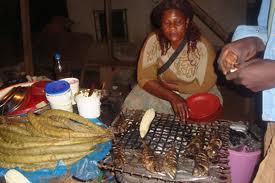
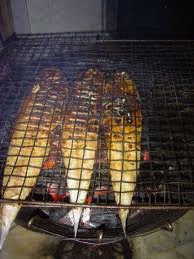
Une braiseuse camerounaise / A Cameroonian braiseuse
Vous êtes-vous jamais retrouvé(e) dans les rues de Douala le soir? ou les rues des capitales africaines la nuit? Vous rencontrerez certainement la braiseuse ou rôtisseuse ou vendeuse de rôti en tout genre: du plantain braisé, au poisson braisé, au maïs grillé et safous (prunes africaines) braisées… hhhhhhuuuuuuummmmmmhhhhh quel délice! Généralement, ces dames, communément appelées braiseuses, grillent du poisson, plantain, maïs, ou prunes, sur un petit ‘réchaud’ ambulant de charbon à bois. Chaque soir vous la rencontrerez au bord de la rue occupée à soufflez sur des braises ardentes de charbon pour griller le plantain ou le poisson à soin. En Afrique, du moins en Afrique francophone, très peu de gens fréquentent les restaurants (qui ont souvent des prix exhorbitants) pour les petits plats simples. La braiseuse offre des petits repas rapides bon marché ou des delicatesses (tel du maïs grillé). Imaginez-vous un seul instant avec un maquereau entier (poisson le plus prise, car étant moins cher) et un ou deux doigts de plantains braisés en main…. Qu’en dites-vous? Simplement délicieux! Savourez avec moi cette vidéo d’une braiseuse dans une des rues de Bafoussam, une des villes majeures du Cameroun… et surtout regardez attentivement tout le processus qui permet de déguster de si bonnes choses.
=========
Grilled fish on a charcoal stove / du poisson braisé sur un réchaud à charbon
Have you ever roamed the streets of Douala at night? or the streets of any African capital at night? You will certainly come across the braiseuse or the grill-maker or barbecue maker or sellers of grilled food of any sort: grilled plantain, grilled fish, roasted corn, or roasted safou… hhhhhhuuuuuuuuummmmmmmhhhhh delicious! Usually, these ladies, commonly called braiseuses (could be translated griller or roastmaker), grill plantains, fish, corn, or safou, on a mobile charcoal stove stall. She can be found on street corners every evening, busy blowing on embers of charcoal to grill fish or plantain to perfection. In Africa, or at least in French Africa, few people go to restaurants (which could be quite pricey) for a quick meal. The braiseuse offers quick meals at affordable prices or delicacies (like grilled corn). Just picture yourself for a second, holding an entire grilled mackerel with one or two plantains in your hands… doesn’t that taste delicious? Please enjoy this video of a braiseuse in the streets of Bafoussam, a major city of Cameroon, and carefully watch the entire process that leads to such delicious delicacies!
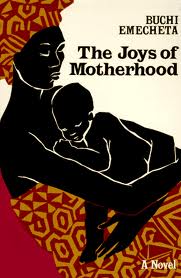
Today I would like to talk about a strong woman… a determined woman… an independent African female writer: Buchi Emecheta. Dr.Buchi Emechetais an established Nigerian author who has published over 20 books. She wrote such books asSlave Girl, The Joys of Motherhood, Second Class Citizen, The Bride Price, and more recentlyKehinde. Her themes have always revolved around motherhood, child slavery, and women independence. Buchi got married at the tender age of 16, and by the age of 22 was the mother of five children (they had moved to London after the birth of the first child for her husband to pursue higher education). Her marriage was unhappy and oftentimes violent. She used writing as an escape, to keep her sanity.The day her husband burnt her first manuscript marked Buchi’s rebirth. As she watched him burn her novel, she said ‘I am going to leave this marriage‘ and the man replied ‘what for? that stupid book?‘, and she told him, ‘I just feel you just burn my child.‘ (Source:Buchi Emecheta BBC). That was really her turning point. At the age of 22, she left her husband, raised her 5 children by herself, got a degree in sociology studying at night, andwrote 4 novels in the space of 5 years. She would often rise at dawn to pursue her dream of becoming a writer. She wore several hats: mother, student, writer, and worker.
'The Joys of Motherhood' by Buchi Emecheta
Like her Nigerian ancestors, she uses storytelling to teach morals, to entertain and to instruct. She brings to her writing the Igbo qualities of vividness, economy and directness. She speaks for the marginalized woman. Some of her first novels, such asIn the DitchandSecond Class Citizen, were quite autobiographical. She views her writing as the “release for all my anger, all my bitterness, my disappointments, my questions and my joy.”Please help me acclaim Buchi Emecheta, a powerful woman, a powerful writer, and a proud daughter of Africa. In her own words, Buchi advises ‘whatever you want to do with your life. “Just keep trying and trying. If you have the determination and commitment you will succeed.”‘(Source: ‘Just’ an Igbo Woman Interview by Julie Holmes in The Voice July 9, 1996.) Check out some of Buchi’s quotes on GoodReads.com.
African Venus, a sculpture by Charles-Henri Joseph Cordier 1851 (Source: Walters Art Museum, Baltimore, MD)
In honor of our mothers, sisters, daughters, and wives, and to celebrate this great day, I thought about this great poem I once read. I dedicate it to the women of Côte d’Ivoire and Libya … of all of Africa, and to all women out there who are making a change, however small it may be. This poem is entitled “WOMAN” by Gold Touch International. Enjoy!
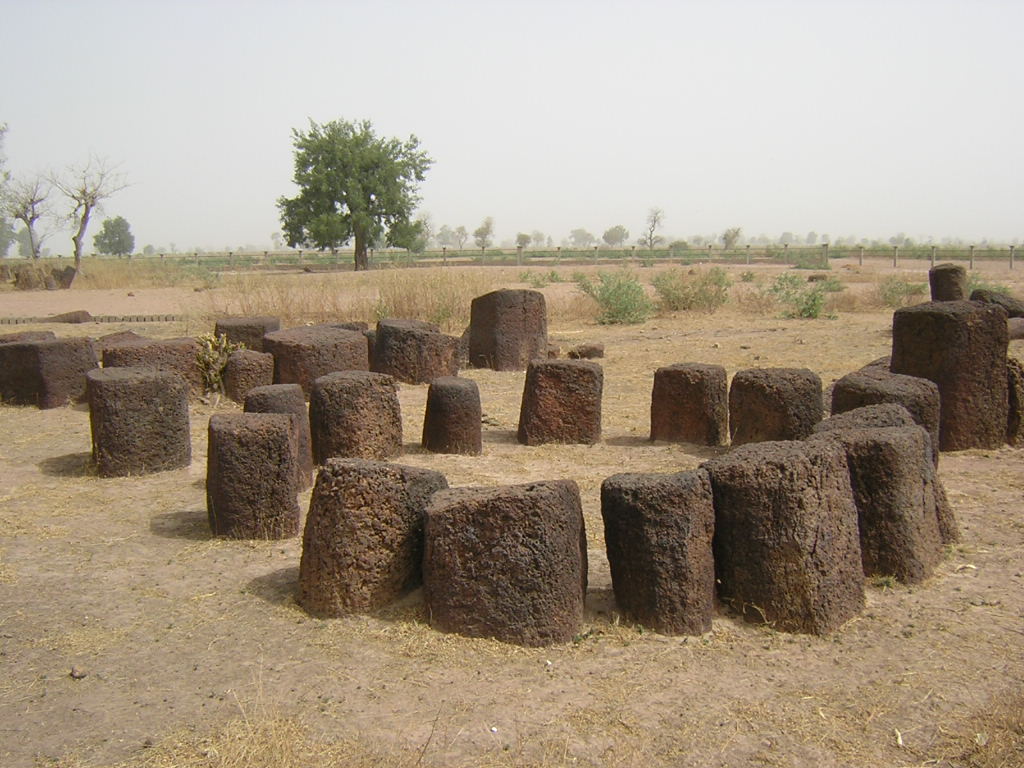
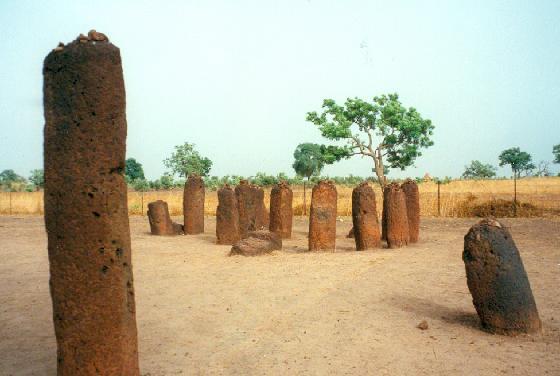
Senegambian stone circles at Sine Ngayène - Senegal (source: Les Cercles Megalithiques)
Today I would like to talk about a national treasure of Senegal and Gambia: the Senegambian stone circles. The Stone Circles of Senegambia are the largest group of megalithic complexes yet recorded in any region of the world… yes… that’s right: forget Stonehenge (no offense to the Brits)… Senegambia has the largest! There are 1,053 Stone circles and a total of 28,931 monoliths. Their quality suggests sophisticated stone working traditions. These stones lie in The Gambia, north of the town of Janjanbureh (previously known as Georgetown), and central Senegal. The site consists of four large groups of stone circles that represent an extraordinary concentration of over 1,000 monuments in a band 100 km wide along some 350 km of the River Gambia. The four groups, Sine Ngayène Kaolack (Senegal), Wanar Kaolack (Senegal), Wassu (Gambia) and Kerbatch (Gambia), cover 93 stone circles and numerous burial mounds, some of which were recently excavated to reveal material that suggest dates between 3rd century BC and 16th century AD. Together the stone circles of laterite pillars and their associated burial mounds present a vast sacred landscape created over more than 1,500 years.
Senegambian stone circles at Wassu - Gambia
Each stone circle contains about 10 to 24 standing stones. All the stones in any given circle are usually the same height, and size, varying between 60 cm and 245 cm high and weighing up to 10 tons. The largest stones, located at N’Jai Kunda, may weigh at least 10 tons. These stones were all made up of laterite (soil rich in iron and aluminum), whose particular property is to harden upon exposure to air, and before exposure, they are quite easy to quarry; they were fashioned with a great degree of sophistication using iron tools. One such stone circle has a ‘V’ shape. According to local historians, the circles were built around mounds of kings, chiefs, and later religious muslim leaders, following royal burial traditions from the ancient empire of Ghana. In Europe, these kinds of megalithic stones served a calendrical purpose; however in Senegambia, nothing suggests an astronomical function. The late Islamic scholar Alhaji Kemoring Jaiteh suggests that these were burial sites where the circle represents harmony, the absolute and perfection; the circle implies heaven and eternity. This reflects a prosperous, highly organized and lasting society.
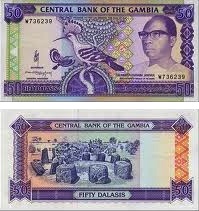
50 dalasis note, with the Senegambian stone circles on the verso
The area around Wassu and Djalloumbéré sees many visitors as it has the densest concentration of more than thousand stones erected in nearly fifty stone circles. Check out the website Les Cercles Megalithiques which provide very good details about the stone circles of Senegambia, as well as beautiful pictures of the different sites. In 2006, the Senegambian Stone Circles were finally inscribed in the UNESCO World Heritage list. These should be in all African history textbooks, and all African children should learn about these megalithic circles, the largest concentration in the world, and a show of their ancestors’ mastery and greatness.
Il y avait une fois un village qui se trouvait loin de toute rivière et de tout marigot. Tous les jours, les habitants devaient faire une longue, longue marche pour aller prendre l’eau qui leur était nécessaire. Et lorsqu’ils revenaient, portant les canaris pleins sur leur tête, ils étaient très fatigués. Tous désiraient vivement que l’on creuse un puits dans le village afin de cesser tout va-et-vient pour transporter l’eau. Mais, pour faire creuser un puits, il faut de l’argent. Et personne n’en avait.
Le chef, Lion, songeait sans arrêt à ce problème. Un beau jour, il lui vient une idée. Il convoque les habitants et leur dit : « Frères animaux, voici ce que je vous propose. Chacun d’entre nous va ôter sa peau et aller la vendre au marché ou bien il la tannera pour en faire un tam-tam qu’il vendra également. Ainsi nous aurons l’argent nécessaire pour faire construire le puits. »
Tous les animaux acceptent. Ils ôtent leur peau, la portent au marché et la vendent. D’autres s’en servent pour fabriquer des tambours. Bientôt, tous ont un peu d’argent. Tous, sauf Compère Lièvre qui n’avait pas voulu sacrifier son cher pelage et s’était sauvé. Les villageois achètent les outils et tout ce qu’il faut et entreprennent immédiatement la confection du puits. Une fois, que celui-ci ait terminée, on fait une grande fête pour célébrer l’évènement. Chaque soir, les épouses vont puiser de l’eau. A la tombée de la nuit, on referme soigneusement le puits.
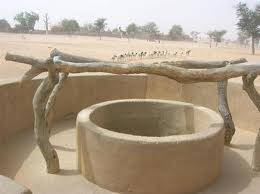
Puits africain
Or, un beau matin, les gens aperçoivent des traces humides sur la terre et sur la margelle. Quelqu’un est venu prendre de l’eau pendant la nuit ! Mais qui a fait cela ? Nul ne le sait.
Chef Lion demande à la panthère de monter la garde et de s’emparer de toute personne qui s’approchera de l’eau.
Lorsque les ténèbres sont très épaisses, Compère Lièvre, car c’était lui le voleur, arrive tout doucement avec son canari. Il voit la Panthère et se met à faire des bruits étranges pour qu’elle pense qu’il y a un fantôme par là. Celle-ci entend ces bruits et, terrifiée, s’enfuit. Alors, le lendemain, voyant qu’on avait encore touché à l’eau, les villageois préparent un piège. Ils prennent un gros morceau de bois et le badigeonnent de glu puis le placent tout contre la margelle du puits.
Quand l’obscurité règne à nouveau, Compère lièvre arrive. Il s’approche du puits, se penche sur le rebord en s’appuyant sur le bois. Et ses mains se trouvent collées. Compère lièvre croit que quelqu’un l’a saisi et ne veut plus le lâcher. « Lâche-moi, il, lâche-moi ou je te donne des coups de pied.»
Se voyant encore prisonnier, Lièvre se débat violemment et tente de frapper son ennemi avec ses pieds qui, bientôt, se trouvent collés aussi. A l’aube, les animaux arrivent au puits et découvrent Lièvre, bien fixé au morceau de bois par la glu.
« Nous allons le tuer ce vaurien ! crient-ils pour nous venger, nous allons le préparer comme de la viande fumée. Vite, allumons un grand feu.»
Compère lièvre n’en mène pas large et il réfléchit au moyen de se tirer de ce tirer de ce mauvais pas. « Voyons, mes amis, déclare-t-il, vous ne savez donc pas comment on fume un lièvre ? Il faut toujours l’envelopper de coton et on met le feu à celui-ci. »
Alors les animaux du village le décollent du morceau de bois, apportent un sac de coton, le roulent dedans. Avant qu’on n’ait eu le temps d’y mettre le feu, compère lièvre se libère et se sauve à toute vitesse. Mais les lièvres ont toujours dans leur pelage les petites touffes de coton blanc.
Conte Komkomba tiré de “Contes des Lagunes et Savanes,” Collection ‘Fleuve et Flamme,’ édition Edicef, 1975
Growing up, I remember watching documentaries about the Nana Benz of Togo: these powerful ladies who ‘owned’ the country solely by selling textiles. I also remember that my grandmother was (and still is) very fond of ‘Wax Hollandais‘, and how many women will go through hoops to have access to these pricey wax prints traveling to Togo or Ghana to acquire them. They all loved to dress in these bright colors, with these bright and often lavish wax prints.
Well,… the Nana Benz of Togo, made their mark internationally by trading in wax printed cloth starting in the 1930’s and 1950’s, before independence. They started from nothing to rise to be among the country’s richest. They imported the fabric from Dutch companies based in Indonesia. From there the material arrived on Togo’s shores and the women distributed it throughout West and Central Africa. They became known as Nana Benz because in the mid-50’s through 80’s they had made so much money that they were the only people who could afford Mercedes Benz cars, so much so that the government used to hire their Mercedes Benz for important guests and state functions. The phrase ‘Nana Benz’ came to symbolize the freedom, ingenuity, creativity, pride, achievement, success, and courage of these women.A woman did not become a Nana Benz through inheritance, or society’s choice, but through ingenuity, and struggle.
Nana Benz in the 1970s
The Nana Benz positioned Lomé, Togo’s capital, into a regional centre of textile distribution and dominated the trade in wax prints. Between 1976 and 1984, at least 40% of the commercial business in Togo which was in the informal sector, was in the hands of the Nana Benz.During the 1970’s, the scope of this trade in textile was so important that it exceeded Togo’s phosphate industry, the country’s primary source of revenue. The Nana Benz rose in wealth and power. Although many were uneducated, they travelled abroad on business, and played a leading role in national politics under the one-party rule of the Rassemblement du Peuple Togolais (RPT). They rose in society’s echelons. During his presidency, Gnassingbé Eyadéma, appointed them to high offices in the women’s wing of the RPT. A leading Nana Benz, Madame A. Amedome, was appointed Minister of Social Welfare in 1977 even though she could not read or write.
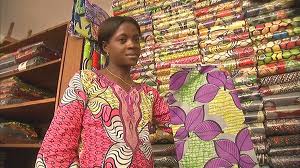
A Nanette in Lomé Market (Source: Arte TV)
They sold the ‘wax hollandais’ made by the dutch, in particular by the dutch company VLISCO implanted in Togo since 1846 to sell textiles to Africans. No offense, but implanted since 1846? Why are Togolese or Africans not making their own wax prints 150 years later? We love it… so we should make it too! What were African textiles before then? was it mostly ‘bogolan‘-type of textile? This should be the subject of another post. In the meantime, let us celebrate the ingenuity of the Nana Benz. Check out this photo-journal entitled The Nana Benz, An African Epopée by Bruno Zanzottera. If you are ever in Lomé, make a stop at the market and buy the right fabric known as Vlisco that made the Nana Benz famous. Listen to this song praising the Nana Benz by the Togolese singer King Mensah. Don’t forget to check out the documentary Reflets Sud on ‘le tissu pagne’, as well as the Togolese opera Madame Paradji ou la Reine des Nana Benz which describes to life of a powerful Nana Benz.
I was not planning on writing anything, but then I remembered the blood of Ivorians, and all the big cocoa’s sellers scheme in that country, and their influence in the current bloody atmosphere inCôte d’Ivoire, the world number one producer of cocoa… then I cringed… I had to write. As Hallmark and the media try to make us celebrate a day when Cupidon supposedly hit us with his arrow of love, and we all then run to the store to buy chocolates, and everything lovey-dovey… I remembered that over 3000 miles away some children were dying in some cocoa plantations for people in the developed world to show love to their loved ones.
A box of Valentine's day chocolate
Is it really necessary? do people need all that chocolate to feel loved? do they need the heart-shaped box full of heart-shaped chocolates to feel loved? and why not any other day? could people not renew their love for each other any other day of the year? or fall in love any other day? does it have to happen at the expense of some kid and poor family in another hemisphere? Well…after the event of April 11, 2011in Côte d’Ivoire, I have decided to refrain myself from my love of chocolate… and we all should. We can all refrain from it… there will be less wars!… and less caries!
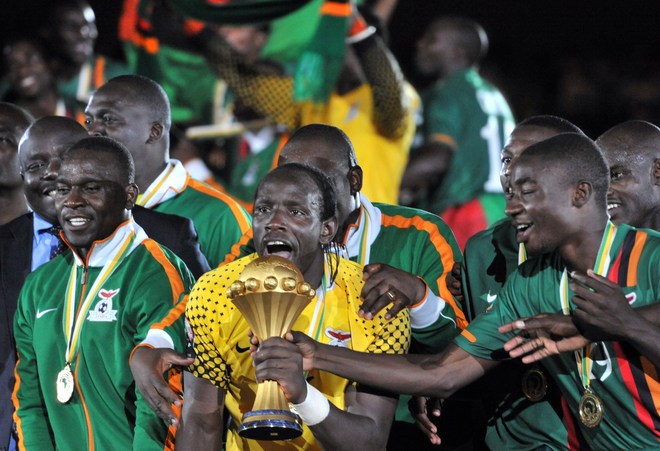
Zambia’s national team celebrate their win of the African Cup of Nations (Source: Issouf Sanogo/AFP)
Wow, I started watching the finals yesterday rooting for Zambia to win against Côte d’Ivoire… I had watched them throughout the cup, and the last one as well, and knew that they were a young strong team to reckon with. Throughout the game, I prayed that the memory of those Zambian players who died in a plane crash in 1993 in Gabon be honored. At the time when the crash occurred, the Zambian team was on its way to Senegal from Libreville (Gabon) to play a world-cup qualifier. We, Africans, were all stunned, and cried as an entire country had lost their heroes. One of the only survivors was Kalusha Bwalya who would have been on the plane during the crash, but had found his own way to Senegal (he was playing for PSV Eindhoven in the Netherlands, and had to make separate arrangements to meet the team in Dakar). We watched and cried with Kalusha who had lost all his teammates.
Zambia’s national team, the Chipolopolo
Imagine rebuilding an entire mature team who had just crashed? It will take a lot of years to foster the same talent and train them. The country had just lost a generation of extremely talented football players. Kalusha went on to become coach of Zambia (at the 2006 CAN), and is currently the president of the football association of his country. It is extremely symbolic that Zambia won last night in Libreville (Gabon) against Côte d’Ivoire (who played outstandingly well), only a few hundred metres inland from the crash site. The Chipolopolo (the Copper Bullets) dedicated their victory to the ones who lost their lives in the 1993 tragedy.