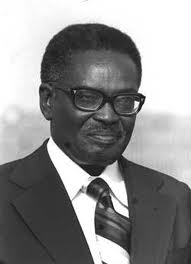
Agostinho Neto was the a medical doctor, a poet, and most importantly the first president of Angola. Today, I would like you to sit back and enjoy a poem written by this great African leader
I have learnt with dismay reports that deposed President Gbagbo of Cote d’Ivoire has been transferred to The International Criminal Court (ICC) on Tuesday, November 29th, following a speedy indictment, in total violation of relevant internationalcode of procedures and in total disregard for the demands of peace in Cote d’Ivoire.
This transfer followed a procedure so hasty that it could be rightfully described as abduction.
My suspicion grows even more, when the prosecuting attorney claiming to be targeting six officials in Cote d’Ivoire, unduly focuses on Gbagbo, the one who is least likely to escape due to his being already in custody.
This eagerness to indict and transfer Gbagbo, who did not run in the face of the bombing of his palace like a common criminal, defies logic and the quest for true reconciliation and sustainable peace in Cote d’Ivoire.
After fifty years of independence, Africa should have all the know-how to bring justice to its own citizens and do away with imported justice.
President Laurent Gbagbo
What kind of prosecution would rather be in haste to bring to justice the victim of an attack, and be lenient on the perpetrator of the attack?
No one is trying to evade justice. But when such justice is drenched in a sea of humiliation and abuses, so as to be governed by self-righteous hatred with its untenable logic, it only befits human conscience to stand up against it for the good of all.
We will not be silent about this because we must not be silent about it as participating members in this human drama.
Un article du journal Notre Voie vient d’annoncer la dévaluation imminente du Franc CFA, prévue pour le 1 er Janvier 2012. Bien que cela m’étonne, c’était à envisager, vu que l’Europe va mal, que la France est en faillite, quoi de mieux que de dévaluer le FCFA et multiplier son argent par 2, et les dettes des pays francophones envers la France qui vont aussi être multipliées. Les seules personnes à déplorer là-dedans sont bel et bien ces africains, intello ou ignorants, qui ont applaudis lorsque les bombes françaises tombaient sur les civils ivoiriens et le président Gbagbo, tous ceux-là qui ont gloussé de joie quand le peuple libyen se faisait bombarder par 42 nations (l’OTAN) pendant plus de 8 mois. Ils ont applaudis, disaient-ils, parce que le ‘dictateur’ Gbagbo devait partir… dommage car c’est bien Gbagbo qui avait commencé à imprimer une monnaie ivoirienne (le MIR). Ils applaudissaient parce que, disaient-ils, le ‘dictateur’ Kadhafi devait partir… dommage car c’est bien Kadhafi qui avait crée et financé le fonds monetaire africain et la Banque centrale africaine qui devaient ouvrir leurs portes ce Décembre… dommage car c’est bien Kadhafi qui préconisait l’indépendance réelle de l’Afrique et une monnaie telle l’or pour les échanges. Au lieu de cela, les africains sont restés silencieux ou ont gloussé de joie quand deux pays souverains africains étaient bombardés par des forces externes sans aucune déclaration de guerre. N’avions-nous pas vu le peuple ivoirien se réunir à l’appel de Charles Blé Goudé le 26 Mars pour une veillée en support à leur président? N’avions-nous pas vu le peuple libyen se reunir a Bab-Al-Aziziyah le 1er Juillet, liant leurs mains et leurs drapeaux verts sur plusieurs kilomètres, en support a leur Guide? Que dire de quelqu’un qui applaudit quand la maison de son voisin vole en flammes? Que dire de quelqu’un qui ne bouge pas d’un pouce lorsque la maison de son voisin brûle? Ou lorsqu’elle est pillée de toutes parts? Est-ce un lâche? Est-ce un idiot? Non… plutôt un fou!
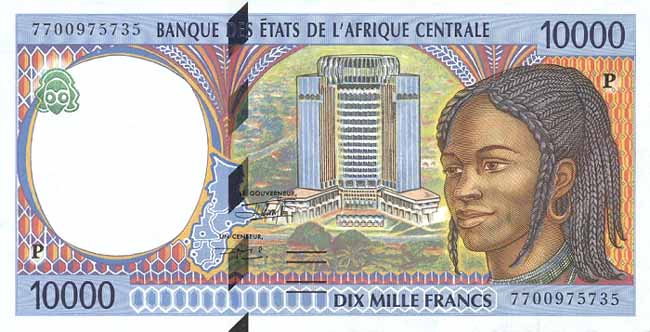
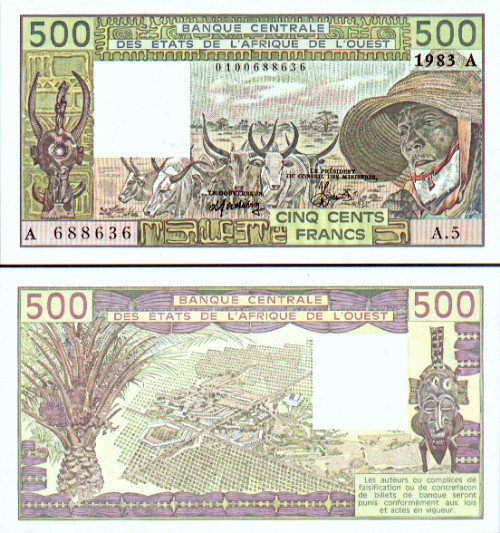
1000cfa (BEAO – 1983)
Aujourd’hui la dévaluation du Franc CFA est imminente… que faire de ce continent plein de lâches et fous? Qu’est-ce-que le peuple qui a supporté Gbagbo ou Kadhafi doit faire… car là-dedans il y a bien eu des gens censés, il y en a qui ont denoncé et continue de denoncer… Que faire quand il y en a parmi nous qui sont hypnotisés par le mot ‘démocratie’ sans vraiment comprendre ce que c’est que la democratie? … le 26 Mars nous avons vu le peuple ivoirien à Abidjan clamer son amour du beau et de l’indépendance; le 1er Juillet nous avons vu le peuple libyen clamer sa joie et son amour du Guide… c’est ça la vraie démocratie… et non la fusicratie (‘Je ne t’aime pas, je te tue’… ou plutot ‘je désire ton or, alors je te bombarde’).
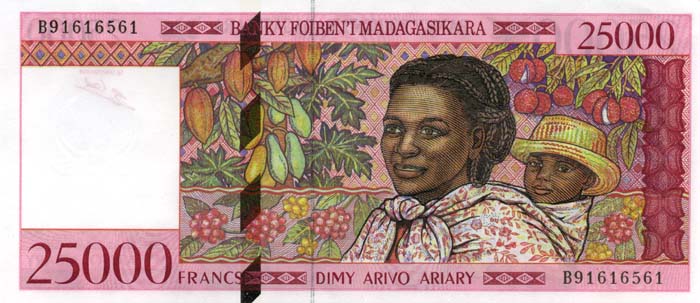
25000 FCFA (Banque Malgache-1994)
J’ai appris il y a de cela quelques jours que la compagnie aérienne Swiss ne s’arrêterait plus au Cameroun, que Air Ivoire avait été vendue à Air France… et j’ai crié le ciel pour cette grosse malédiction, car comme je le disais en Avril lorsqu’on bombardait la Cote d’Ivoire, ‘si on ne fait rien la recolonisation de l’Afrique aura bel et bien commencé!‘ Que penser de ce continent ou on doit prendre Air France pour se déplacer d’une capitale africaine à une autre?Comment comprendre que l’on prenne Air France pour aller de Yaoundé à Brazzaville? de Dakar à Abidjan? ou de Lomé à Ouagadougou? ou de Niamey à Nouakchott? Quelle incongruité? et avec la dévaluation, mes freres africains seront servis! … bonjour l’asservissement total! Comment traiter avec la Chine avec une monnaie de singe? Comment prétendre vouloir de nouveaux rapports et se tourner vers la Chine pour les profits commerciaux quand on doit encore verser 70% de ses revenus à la métropole à cause de cette monnaie? Quelle incongruité! Oh je pleure pour toi, pauvre Afrique… tu es trop pleine de lâches et de fous! Je vous invite a voir cette vidéo sur l’histoire du Franc CFA (N’oubliez pas de regarder Parties 2, and 3).
Today is election day in the Democratic Republic of Congo (DRC). I would like to share with you this article by Antoine Roger Lokongo which I found quite interesting and deep, about the third presidential elections in the DRC after 51 years of independence, with a brief history of DRC since independence. I have included some snippets from the article which I liked. You can read the full article on Panafrican Vision; it is entitled: D.R. Congo Democracy at crossroads – One election, two sources of legitimacy.
==========================
‘Countries do not have permanent friends or allies, they have only permanent interests’
… when Joseph Kabila turned to the Western powers for assistance after the 2006 elections, they said they had other priorities. Perhaps this was a wake-up call for Joseph Kabila. This is how, in an interview given to Gettleman of the New York Times, Joseph Kabila himself explained why he turned to the Chinese for help after being disappointed with the West’s empty promises: ‘We said we had five priorities: infrastructure; health; education; water and electricity; and housing. Now, how do we deal with these priorities? We need money, a lot of money. Not a 100 million U.S. dollars from the World Bank or 300 from the IMF [International Monetary Fund]. No, a lot of money, and especially that we’re still servicing a debt of close to 12 billion dollars, and it’s 50 to 60 million U.S. dollars per month, which is huge. You give me 50 million dollars each month for the social sector and we move forward. Anyway, that’s another chapter. But we said: so, we have these priorities, and we talked to everybody. Americans, do you have the money? No! Not for now! The European Union, do you have three or four billion for these priorities? No! We have our own priorities. Then we said: ‘why not talk to other people, the Chinese?’ So we said, [Chinese] do you have the money? And they [the Chinese] said, well, we can discuss. So we discussed’.
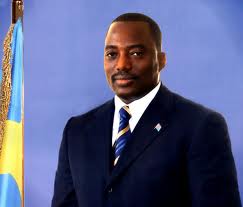
Joseph Kabila, President of DRC
This interview suggests that Joseph Kabila turned to the Chinese only after seeking help from Western powers. That is exactly the dilemma Patrice Lumumba faced. Increasingly desperate, Patrice Lumumba went on an international trip to enlist Western support (including to Washington, London, Brussels…) to have Belgian troops who had orchestrated the secession of Katanga to leave immediately. He did not get the support he expected and turned to the Russians for help.He was immediately accused of being a communist and eventually assassinated.
Congolese leaders turn to other partners other than the ‘traditional Western partners’ because they are in need; and a friend in need is a friend indeed! They do not mean necessarily to play of the West against the East and so on. When Joseph Kabila turned to the West, the DRC was almost on the verge of bankruptcy. …
Dear All, I was so surprised when I learned that Alexandre Dumas, yes… the writer of the “Three Musketeers” was just recently (2002) inducted into the Pantheon of Paris, you know… the place where the remains of the most famous/distinguished French citizens are buried. I wondered why?… because the Three Musketeers is the most acclaimed French book adapted to screen, movies, and theater. I wondered why?… because The Three Musketeers and The Count of Monte Cristo are among the most read books by a French author in the world… why only in 2002, 132 years after his death? when Victor Hugo had been indicted in 1885? why since Rousseau, Voltaire, Emile Zola, had all been indicted, while the most read French author, Alexandre Dumas’ remains were not? Well… you’ve guessed it right: Alexandre Dumas was Black! Yes… the great French writer was just like the Russian Father of modern literature Alexander Pushkin: Black! Yes… you can paint it all you want… he was of African descent: he was Black! Just look at his hair! He was actually Haitian, the grandson of a French nobleman and a Haitian slave. See… they hide this to you in the classroom.
The Three Musketeers, by Alexandre Dumas
Alexandre Dumas was born in 1802 in Picardy, France. His paternal grandparents were Marquis Alexandre-Antoine Davy de la Pailleterie, a French nobleman and Général commissaire in the Artillery in the colony of Saint Domingue (Haiti), and Marie-Cesette Dumas, an Afro-Carribean creole of mixed African and French ancestry. His father Thomas-Alexandre Dumas served in Napoleon’s army as general, and later fell out of favor. By the time Alexandre was born, his family was very poor. His being of mixed race affected him all his life. He once said to someone who had insulted his mixed-race background: “My father was a mulatto, my grandfather was a Negro, and my great-grandfather a monkey. You see, Sir, my family starts where yours ends.”
The Count of Monte Cristo, by Alexandre Dumas
In 2002, then French president Jacques Chirac had him exhumed from his original burial place and transported to the Pantheon of Paris. Chirac said: “With you, we were D’Artagnan, Monte Cristo, or Balsamo, riding along the roads of France, touring battlefields, visiting palaces and castles—with you, we dream.” Chirac acknowledged the racism and injustice that had been done to one of the greatest French writers of all time. Imagine that, Dumas’ works have been translated into over 100 languages, and have inspired over 200 motion pictures.
Alexandre Dumas
Please check out some of these websites which give a detailed biography of Alexandre Dumas: the Alexandre Dumas pere website, and The Literature Network. In 2005, a lost novel by Dumas was found: it is titled The Chevalier de Sainte Hermine (The Knight of Sainte Hermine), was first serialized by Dumas in a French newspaper in 1869 but was never finished by the time of his passing a year later. Imagine if I had known in high school that Alexandre Dumas, the author of the Three Musketeers was black… Imagine how I would have delved further into his writings! Goodness Gracious… Goodness Gracious! As Dumas would say himself, “One for all, all for one!“
The symbol of my secondary school in Douala, Cameroon, was the Baobab tree. In the old days, there were baobab trees everywhere in the school yard… by the time I arrived, there were only two left, and by the time I graduated, only one could be seen among all the mango trees that filled the school’s playground. Found in African savannahs, the baobab is a tree which can grow as tall as 30 m, have a diameter as large as 15 m, and live for over several thousand years. I believe the ones in my school were at least a thousand years old. It is leafless during the dry season. A common description of the baobab is that it looks like it has been pulled from the ground, and re-planted upside down. It actually looks like this for a good reason: during the rainy season (wet months), the water is stored in the thick, corky, fire-resistant trunk to last throughout the dry and harsh season. The baobab flowers are white and luminous, and bloom for only a few hours, after which they fall to the ground leaving pods which are feasted on by baboons, monkeys, antelopes, and elephants. There is a tale about the rabbit and the baobab… which is very funny.
Fruit from baobab tree (source: Wikipedia)
The baobab’s leaves, bark, fruits, and trunk, are all very useful. The bark is used for clothes (just like the obom tree) and ropes, the leaves as seasoning in food or medicine, while the fruit (also known as “monkey’s bread“) is eaten directly or in porridge, or sold in some parts of Africa in a sugary mix as a snack; It is very rich in vitamin C and its fruit pulp is used to make juice. Its trunk will provide shelter for people as well as animals.
Baobab forest in Madagascar
In parts of Zambia and Zimbabwe, local traditions state that God was so displeased with the taste of the fruit of the baobab that it turned it upside down such that its roots were on top. I am not sure if I believe this, but in Cameroon, the baobab is a symbol of strength, power, grace, and presence! No wonder the Disney’s Lion King used the baobab as the tree of life… it is what it is: the tree of life, older than Christ and maybe even older or as old as the Egyptian pyramids! I think my school really embodied just that, it was the oldest secondary public school in the city of Douala, with the strongest records!
The video below is about the alley of baobabs in Madagascar: Enjoy!!!
Il était une fois une araignée qui s’appelait Kakou Ananzè. Il habitait dans un village complètement ruiné par la sécheresse qui sévissait dans le pays. La famine était atroce et les gens mouraient comme des mouches.
Kakou à moitié mort de faim, décide de se traîner jusqu’à la rivière pour pecher. Il n’y avait plus qu’un petit filet d’eau. Araignée s’assied sur une grosse pierre et surveille sa ligne. Le flotteur ne bouge pas. Les heures passent sans qu’il attrape le moindre petit poisson. La faim le dechire. Il va abandonner cette vaine recherche de nourriture quand tout d’un coup, la ligne bouge, le flotter s’enfonce. Fort ! Kakou Ananzè d’un coup sec, tire et sort de l’eau un petit silure gros comme le doigt d’un nouveau-né. Au moment ou il allait l’avaler tout cru, le poisson se, met à parler : Compère Araignée, laisse-moi la vie sauve ! aie pitié de, moi ! si tu à l’eau, je te donnerai un bon conseil et tu ne te repentiras pas de m’avoir écouté.
Araignée hésite. Mais le silure est si petit qu’il n’apaisera pas sa faim. Alors il le libère et le remet à l’eau. Avant de s’en aller en frétillant, le silure remercie Kakou Ananzè en ces termes : Grand merci, comprend Araignée ! Maintenant, grimpe jusqu’à la troisième branche de ce gros fromager. Quand tu seras là haut, ferme les yeux et saute. Tu verras que tu ne regretteras pas de m’avoir obéi.
Poisson-Silure
Kakou fait tout ce que le silure lui a conseillé. Une fois sur la branche, il ferme les yeux et saute dans le vide. Quand il touche le sol, il regarde vite autour de lui et sa surprise est grande. Il se trouve dans une ville magnifique aux maisons luxueuses, aux jardins pleins de fleurs et de fruits. Les habitants, qui sont tous riches l’emmènent au palais de la reine de ce pays magique qui lui dit alors : Ici tu peux faire tout ce que tu veux et vivre comme tu l’entends. Une seule chose t’est interdite. Ne te regarde pas dans le miroir qui est accroché à ce mur. Si tu respectes cet ordre ; tu seras désormais des nôtres.
Kakou Ananzè obéit pendant plusieurs mois et vit heureux dans le luxe et l’abondance. Cependant la curiosité le tenaille et il pense toujours au miroir. Pourrquoi ne puis-je me contempler dans cette glace, se dit-il. Pourquoi me le défend-on ? Je voudrais bien essayer, une fois seulement pour savoir.
Un beau jour, il n’y tient plus. Il va dans la grande salle, s’approche du mur ou est accroché le miroir et lève les yeux. Frrrt ! Il se retrouve aussitôt sur les bords de la rivière de son pays natal, exactement à l’endroit ou il avait péché le petit silure. Alors, dans son chagrin, il appelle : Poisson ! compère Poisson ! Reviens ! cher petit Silure ! aide-moi !
L’eau frémit et la tête du petit silure apparaît. Il ouvre la bouche et lui dit : Je veux bien t’aider, araignée ! Alors kakou Ananzè se précipite vers le fromager, grimpe jusqu’à la troisième branche, ferme les yeux et sans hésiter une seconde, saute … Et son corps s’écrase sur le sol au pied de l’arbre.
C’est pourquoi l’on dit chez nous qu’il ne faut pas être curieux car la curiosité est souvent punie.
Conte tiré de “Contes des Lagunes et Savanes,” Collection ‘Fleuve et Flamme,’ édition Edicef, 1975
With yet another lie today (the presumed death of colonel Mouammar Kadhafi… buried in the desert), I thought about recapitulating all the lies we’ve been served by western media since the attack of NATO on Libya:
21/02/2011 : The British minister of foreign affairs, William Hague, announced that Mouammar Kadhafi with his wife and daughter, had left the Libyan territory, and were in Venezuela (Lie!!!)
21/02/2011 : Saif Al Islam Kadhafi had been wounded in a fight with rebels (Lie!!!)
23/02/2011 : Aïcha Kadhafi had ran away to Malta (Lie!!!)
20/03/2011 : Khamis Kadhafi died in Brega in a plane crash (Lie!!!)
10/08/2011 or 05/08/2011? : Khamis Kadhafi died in Zliten, after a NATO raid (Lie!!!).
22/08/2011 : Saif Al Islam was captured by rebels, and his brother Mohamed had surrendered. Obama even came out of vacation to confirm in a speech… the next day, guess who was free? Saif!!! Never captured, etc…
27/08/2011 : Mouammar Kadhafi had ran to Algeria (Lie!!!)
29/08/2011 : Khamis Kadhafi had died in Tarhuna after intense combats, and was burried in Zliten… officially listed on the Wikipedia page. (Lie!)
29/09/2011: Mouammar Kadhafi was hiding near Algeria (Lie ?)
Libyan flag
Last week: Moutassim Kadhafi had died (another Lie!!!)
Kadhafi is in Niger (Lie!!!) – Kadhafi is sick and will be transported to Saudi Arabia (Lie!!!) – Kadhafi is in the south of Libya (Lie!!!) – Kadhafi has been cornered in his campground (Lie!!!) – and the biggest of all, the start of it all, Kadhafi has killed 6000 of his own people (or was it 10,000?) (Lie!!!)
The list is so long… How many times has Khamis died again? 8 times! and how many times was Saif captured? at least twice! How many times did Kadhafi run away? Did we ever see OBL’s body after his supposed death in May? No wait… it was disposed off at sea! Now Kadhafi’s body has been disposed of in the desert! I guess one lie couldn’t fly twice. Well… my friends, the message is simple: stop being gullible… open your eyes and learn. Read Mathaba!
This poem by David Mandessi Diop was my favorite. By the time I was 9 years old, I knew it by heart… I loved it so much! It symbolizes so much about Africa, and the love we, all African children, should have for her. Oh how I wish David Diop had lived longer to see the effect of his ‘ode to Africa‘ on other generations. Enjoy!!!
Afrique mon Afrique Afrique des fiers guerriers dans les savanes ancestrales Afrique que me chantait ma grand-mère Au bord de son fleuve lointain Je ne t’ai jamais connue Mais mon regard est plein de ton sang Ton beau sang noir à travers les champs répandu Le sang de ta sueur La sueur de ton travail Le travail de l’esclavage L’esclavage de tes enfants Afrique dis-moi Afrique Est-ce donc toi ce dos qui se courbe Et se couche sous le poids de l’humilité Ce dos tremblant à zébrures rouges
Qui dit oui au fouet sur les routes de midi Alors gravement une voix me répondit Fils impétueux cet arbre robuste et jeune Cet arbre là -bas Splendidement seul au milieu de fleurs blanches et fanées C’est l’Afrique ton Afrique qui repousse Qui repousse patiemment obstinément Et dont les fruits ont peu à peu L’amère saveur de la liberté.
Africa my Africa Africa of proud warriors in ancestral savannahs Africa of whom my grandmother sings On the banks of the distant river I have never known you But your blood flows in my veins Your beautiful black blood that irrigates the fields The blood of your sweat The sweat of your work The work of your slavery The slavery of your children
Africa, tell me Africa Is this your back that is unbent This back that never breaks under the weight of humiliation This back trembling with red scars And saying no to the whip under the midday sun But a grave voice answers me Impetuous child that tree, young and strong That tree over there Splendidly alone amidst white and faded flowers That is your Africa springing up anew Springing up patiently, obstinately Whose fruit bit by bit acquires The bitter taste of liberty.
UPC Leaders (L. to R.) front row: Castor Osende Afana, Abel Kingué, Ruben Um Nyobé, Felix Moumié, and Ernest Ouandié
After my article on one of Africa’s greatest freedom fighter, the Cameroonian leader, Ruben Um Nyobé, I thought that this small rare video with pictures of Um Nyobé would be very fit to add to our knowledge. Ruben Um Nyobé with the UPC in 1948 were the first in Africa to ask for the independence of their country, Cameroon. He was murdered by the French colonial administration, and his story was totally buried for many years: it was as if he had had no impact on the lives of Cameroonians, and Africans as a whole. It is just amazing to realize that, 50 years later, he had spoken at the United Nations tribune three times for the independence and reunification of Cameroon in 1952, 1953, and 1954. It is amazing to think that in Cameroon, there was someone of the caliber of N’Krumah, Lumumba, and Nyerere… Yes… Ruben Um Nyobé’s place should be at the Pantheon (if it existed) of African legends. Enjoy!!!












 African Heritage